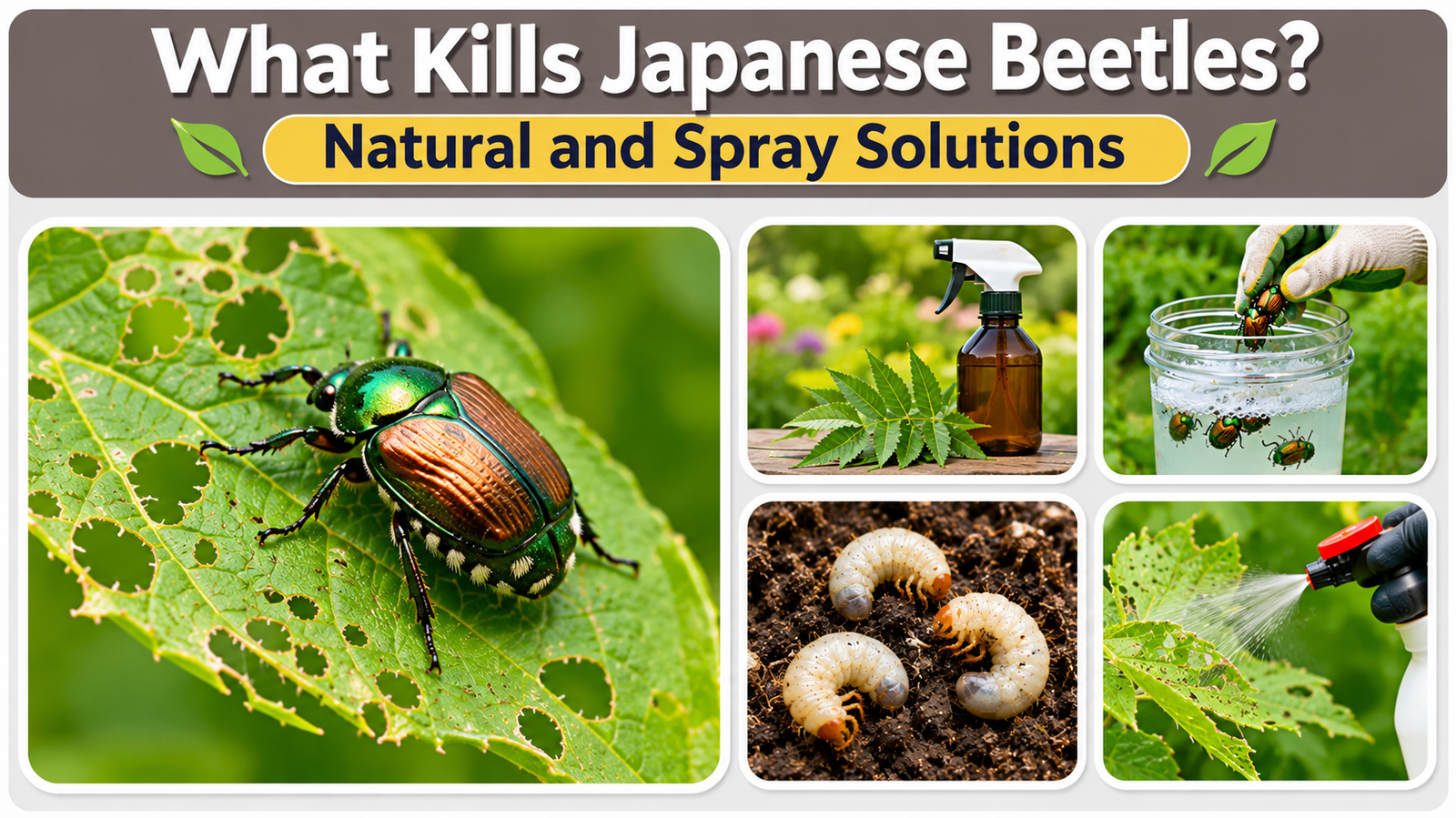
Japanese beetles can quickly turn healthy leaves into lace-like skeletons and damage roses, grapes, and garden trees. If you’re wondering what kills Japanese beetles, the best answer depends on how many beetles you see and whether you’re targeting adults or grubs. Hand removal and soapy water work well for small infestations, while certain labeled sprays can protect heavily attacked plants. Neem oil may discourage feeding, but it is not a reliable instant killer. This guide explains effective treatments, common home remedies, and practical ways to prevent repeat damage.
What Kills Japanese Beetles the Fastest?
Japanese beetles can be controlled through physical removal, biological treatments, and insecticides. The most effective method depends on the size of the infestation and the plants being attacked. Early treatment helps prevent severe leaf damage and reduces the number of beetles gathering on plants.
Best Ways to Kill Japanese Beetles
- Handpicking: Remove beetles early in the morning when they are less active.
- Soapy water: Drop collected beetles into a container of water mixed with dish soap.
- Pyrethrin sprays: Certain products kill beetles through direct contact.
- Spinosad products: Labeled formulations can control adults, although results are not immediate.
- Synthetic insecticides: Certain pyrethroid products provide longer-lasting protection when used correctly.
For small gardens, hand removal is often sufficient. Larger infestations may require additional protection.
Does Neem Oil Kill Japanese Beetles?
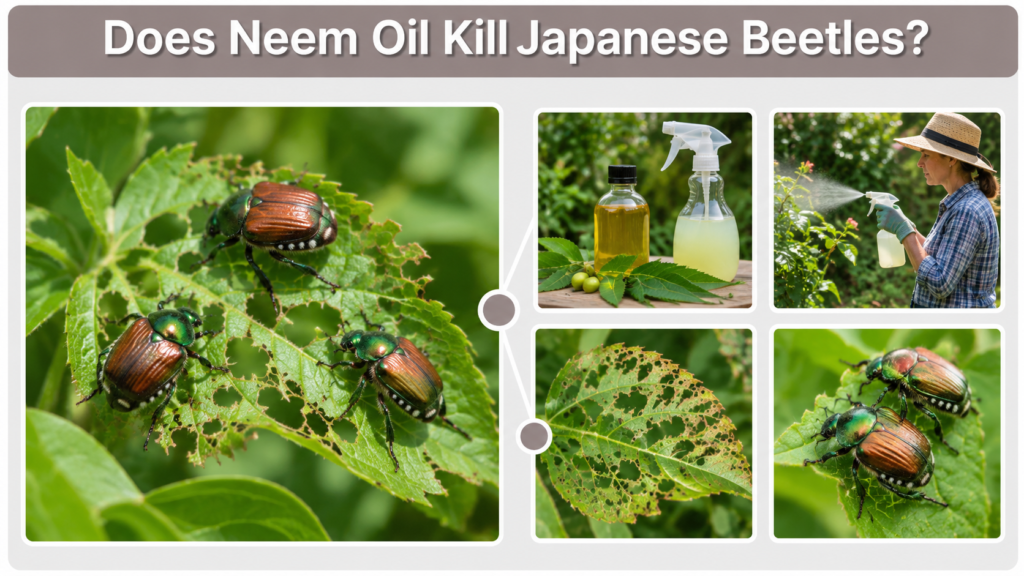
Neem oil is a popular natural pest-control product, but it does not reliably kill adult Japanese beetles on contact. Instead, it mainly discourages feeding and can help reduce damage when beetle populations are relatively low.
Its effectiveness depends on the formulation, application timing, and infestation severity.
How Neem Oil Works Against Japanese Beetles
Neem-based products may contain compounds that interfere with insect feeding or development. Azadirachtin, a neem-derived ingredient, acts primarily as a feeding deterrent against adult Japanese beetles.
Neem oil generally provides short-term protection rather than immediate elimination. Heavy infestations often require other control methods.
When to Apply Neem Oil
Apply a product specifically labeled for the plant and pest, following its instructions. Avoid treating flowers visited by pollinators, and prevent applications during excessive heat.
Repeat applications may be necessary, particularly after rainfall. Neem products are best considered part of an integrated pest-management approach rather than a complete solution.
Which Japanese Beetle Killer Sprays Work?
Several insecticide products can kill Japanese beetles or protect plants from feeding damage. Some act rapidly through direct contact, while others provide residual protection.
Selecting a spray based on its active ingredient is more reliable than choosing one by brand name alone.
Effective Japanese Beetle Spray Ingredients
- Pyrethrins: Contact insecticides that provide relatively quick control but limited residual protection.
- Spinosad: Effective in some labeled formulations, although it generally works more slowly.
- Bifenthrin: A synthetic pyrethroid that can provide residual protection against adults.
- Permethrin: Another broad-spectrum insecticide used in certain labeled beetle-control products.
- Bt galleriae: A microbial ingredient that can control Japanese beetles in suitable formulations.
Products such as Sevin and Bonide Japanese Beetle Killer vary by formulation. Check the actual active ingredient and approved uses before purchasing or applying them.
How to Use Beetle Sprays Safely
Always follow the pesticide label, including application rates, protective equipment, and restrictions for edible crops. Avoid spraying flowering plants or areas where bees are actively foraging.
Broad-spectrum insecticides can harm beneficial insects, so use them only when necessary.
How to Kill Japanese Beetle Grubs
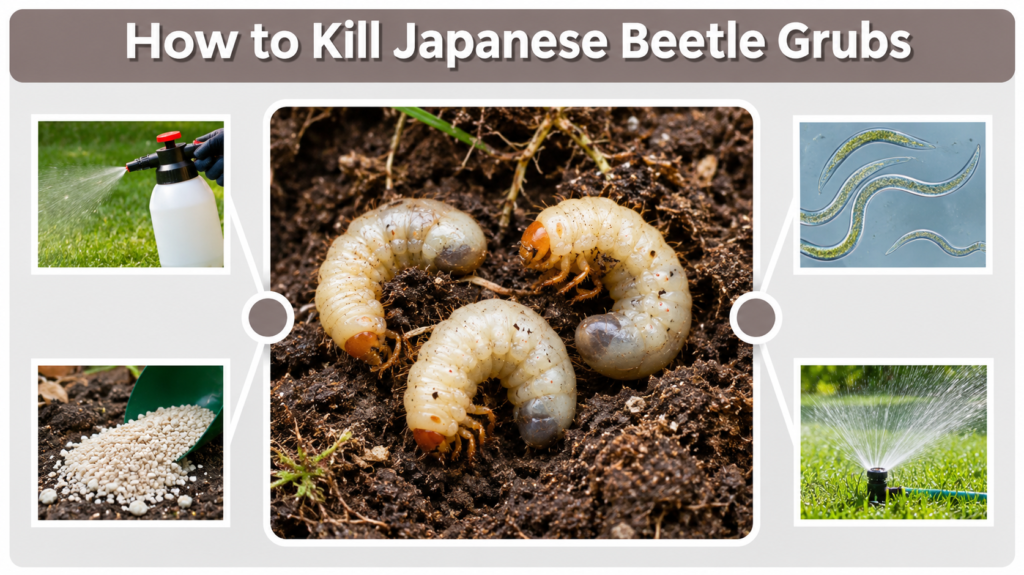
Japanese beetle grubs are white, C-shaped larvae that develop underground and feed on grass roots. Unlike adult beetles, which damage leaves and flowers, grubs can cause brown patches and weakened turf.
Grub management requires different treatments and timing from adult beetle control.
Best Treatments for Japanese Beetle Grubs
- Beneficial nematodes: Certain species, particularly Heterorhabditis bacteriophora, can infect soil-dwelling grubs.
- Bt galleriae: Appropriate formulations may control young grubs, although effectiveness varies.
- Milky spore: A biological treatment that targets Japanese beetle grubs but has shown inconsistent results.
- Labeled grub insecticides: Preventive or curative products may be effective when applied at the correct developmental stage.
Best Time to Treat Japanese Beetle Grubs
Late summer is often an effective period for targeting newly hatched grubs near the soil surface. Older grubs are generally harder to control.
Inspect lawn roots before applying treatments. Eliminating grubs from one lawn does not prevent adult beetles from flying in from neighboring properties.
Do Natural Home Remedies Kill Japanese Beetles?
Several household remedies are commonly recommended for Japanese beetle control. However, not all treatments are equally effective, and some may damage plants.
Understanding their limitations helps gardeners avoid ineffective or unnecessary applications.
Does Soapy Water Kill Japanese Beetles?
Yes. Dropping Japanese beetles into a bucket of soapy water is an effective method for killing collected insects.
However, spraying homemade dish-soap solutions directly onto plants is different and may damage foliage. Use the bucket method instead of assuming ordinary dish soap is a safe insecticide.
Does Diatomaceous Earth Kill Japanese Beetles?
Diatomaceous earth can damage the protective outer layer of insects under dry conditions. However, it is not a consistently effective treatment for adult Japanese beetles.
Rain and moisture reduce its effectiveness, and the dust may harm beneficial insects.
Does Vinegar Kill Japanese Beetles?
Concentrated vinegar may injure insects through direct exposure, but it is not a recommended Japanese beetle treatment.
Vinegar can also burn leaves and damage flowers. Hand removal or properly labeled insect-control products are safer choices for protecting garden plants.
How to Protect Plants From Japanese Beetles
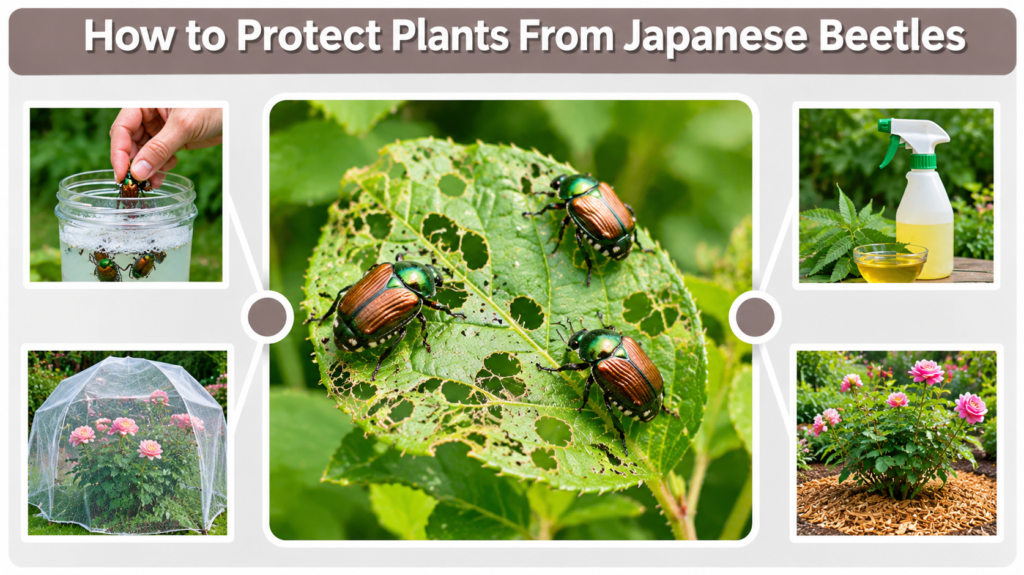
Japanese beetles feed on hundreds of plant species, including roses, grapes, fruit trees, and ornamental shrubs. They often eat the tissue between leaf veins, creating a characteristic skeletonized appearance.
Preventing repeated feeding helps plants remain healthy throughout the growing season.
Effective Ways to Protect Your Plants
- Remove beetles daily: Early removal can help discourage additional beetles from gathering.
- Use protective netting: Cover vulnerable plants when pollination is not required.
- Maintain plant health: Provide suitable watering and care to support recovery.
- Choose resistant plants: Select less-preferred ornamental species where infestations are common.
- Monitor regularly: Examine leaves and flowers during the adult beetle season.
Can Japanese Beetles Kill Trees?
Healthy, established trees usually survive Japanese beetle feeding, even when leaves become heavily damaged.
However, repeated severe defoliation can weaken young, stressed, or newly planted trees. Protecting vulnerable plants early is especially important.
Should You Use Japanese Beetle Traps?
Japanese beetle traps attract adults using floral scents and sex pheromones. Although they capture beetles, they may also attract more insects into the surrounding area.
Placing traps near roses or valuable plants can increase feeding damage rather than prevent it.
For most home gardens, regular hand removal, physical barriers, and targeted treatments provide more practical control than pheromone traps.
FAQs
1. What Kills Japanese Beetles Instantly?
Direct-contact pyrethrin sprays can kill Japanese beetles relatively quickly when used according to their labels. Dropping collected beetles into soapy water is another effective method, although death is not necessarily instantaneous. No treatment guarantees instant elimination of an entire infestation.
2. Does Sevin Kill Japanese Beetles?
Certain Sevin products are labeled to control Japanese beetles. However, active ingredients and approved uses differ among formulations. Always read the current product label to confirm suitability for your plants and follow precautions for pollinators.
3. Does Insecticidal Soap Kill Japanese Beetles?
Insecticidal soap generally provides poor control of adult Japanese beetles because their hard outer bodies offer protection. Soapy water is useful for drowning beetles after handpicking, but spraying soap onto plants is not equally effective.
4. What Is the Best Natural Japanese Beetle Killer?
Handpicking beetles into soapy water is one of the most dependable natural methods for small gardens. Neem-based products may discourage feeding, while appropriately labeled biological treatments can offer additional protection. Combining methods usually produces better results than relying on one treatment.
5. Can Japanese Beetles Come Back After Spraying?
Yes. Adult Japanese beetles can fly into treated gardens from surrounding areas, even after existing beetles have been killed. Monitor vulnerable plants regularly and repeat treatments only when necessary and permitted by the product label.