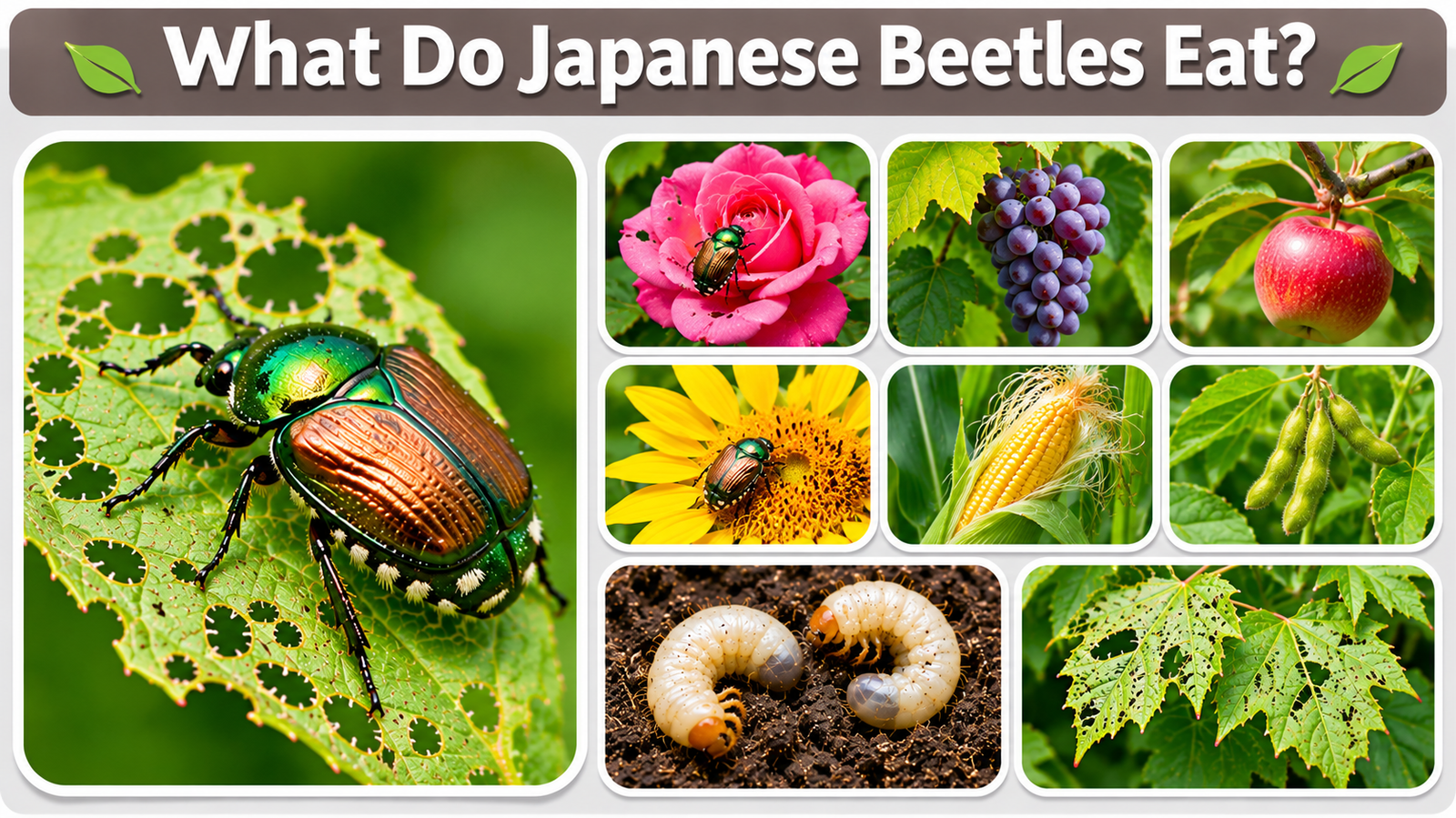
Japanese beetles are destructive garden pests that feed on a wide variety of plants, flowers, trees, and crops. These shiny, metallic-green beetles can damage leaves, flower petals, and developing fruits, leaving gardens looking unhealthy. Adult Japanese beetles feed above ground, while their larvae live in the soil and consume plant roots. Knowing what Japanese beetles eat helps gardeners identify vulnerable plants and prevent serious damage. This guide explores their favorite foods, feeding habits, preferred flowers, trees, vegetables, and plants they generally avoid.
What Do Japanese Beetles Eat?
Japanese beetles (Popillia japonica) are herbivorous insects that consume leaves, flowers, and fruits from more than 300 plant species. Their preferred foods include roses, grapes, apple trees, raspberries, and various ornamental plants.
Adult beetles use their chewing mouthparts to remove soft leaf tissues, often leaving the veins behind. This feeding pattern creates a lace-like appearance known as skeletonization.
What Do Japanese Beetles Eat in the Wild?
In natural environments, Japanese beetles consume leaves, flowers, and fruits from numerous wild plants. They commonly feed on wild grapevines, raspberry bushes, and other broadleaf vegetation.
Their food preferences depend on plant availability, seasonal growth, and environmental conditions. Adult beetles are especially active during warm, sunny weather when suitable plants are abundant.
What Plants Do Japanese Beetles Eat?
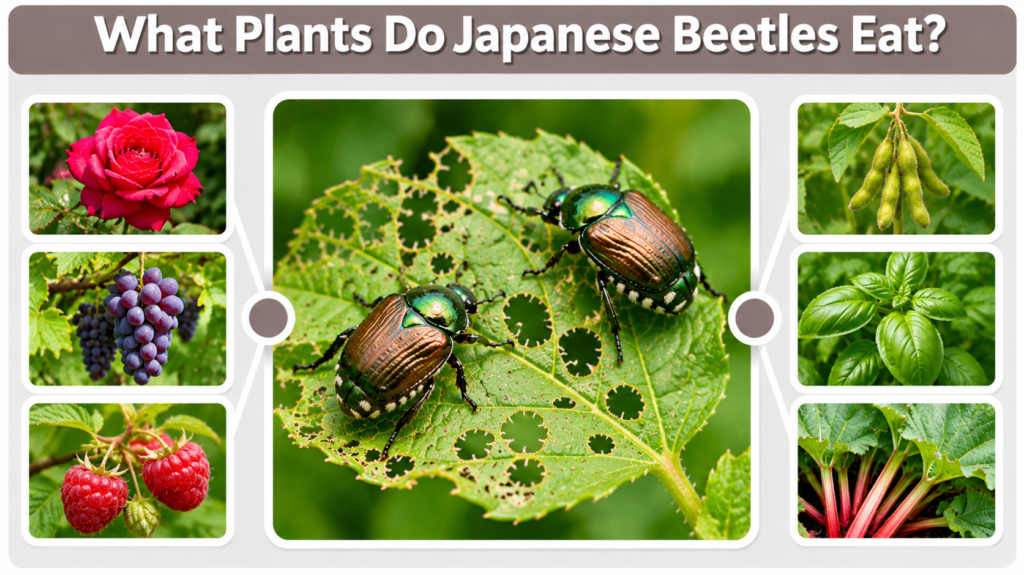
Japanese beetles feed on numerous garden plants, including ornamentals, vegetables, herbs, and fruit-bearing crops. Some plants are especially attractive because they provide tender foliage, exposed flowers, or ripening fruits.
Common Garden Plants Japanese Beetles Eat
- Roses: Beetles consume leaves, flower petals, and buds.
- Grapevines: Tender leaves are frequently skeletonized.
- Raspberries: Both foliage and ripe fruits may be damaged.
- Soybeans: Beetles feed on leaves, reducing healthy leaf tissue.
- Basil: Soft, aromatic leaves are attractive to feeding adults.
- Virginia Creeper: Vines often develop extensive leaf damage.
- Rhubarb: Beetles may chew holes in the broad leaves.
- Blackberries: Leaves and developing fruits can attract beetles.
These plants should be monitored regularly during the summer beetle season. Severe infestations may cause significant foliage loss and reduce plant productivity.
What Flowers Do Japanese Beetles Eat?
Japanese beetles commonly feed on flowering plants, damaging both petals and surrounding foliage. Their feeding can leave flowers shredded, discolored, or unable to develop normally.
Roses are among their favorite flowering plants, but several other ornamentals are also susceptible.
Flowers Japanese Beetles Like to Eat
- Roses: Soft petals and flower buds attract large groups.
- Hollyhocks: Beetles feed on broad leaves and flowers.
- Hibiscus: Tender foliage and blossoms may be damaged.
- Zinnias: Colorful flowers can experience feeding damage.
- Sunflowers: Beetles occasionally feed on petals and foliage.
- Dahlias: Flowers and leaves are susceptible to attack.
- Marigolds: Certain varieties attract feeding beetles.
Japanese beetles often gather on flowering plants because damaged flowers release odors that can attract additional beetles. Early removal helps prevent feeding groups from becoming larger.
What Trees Do Japanese Beetles Eat?
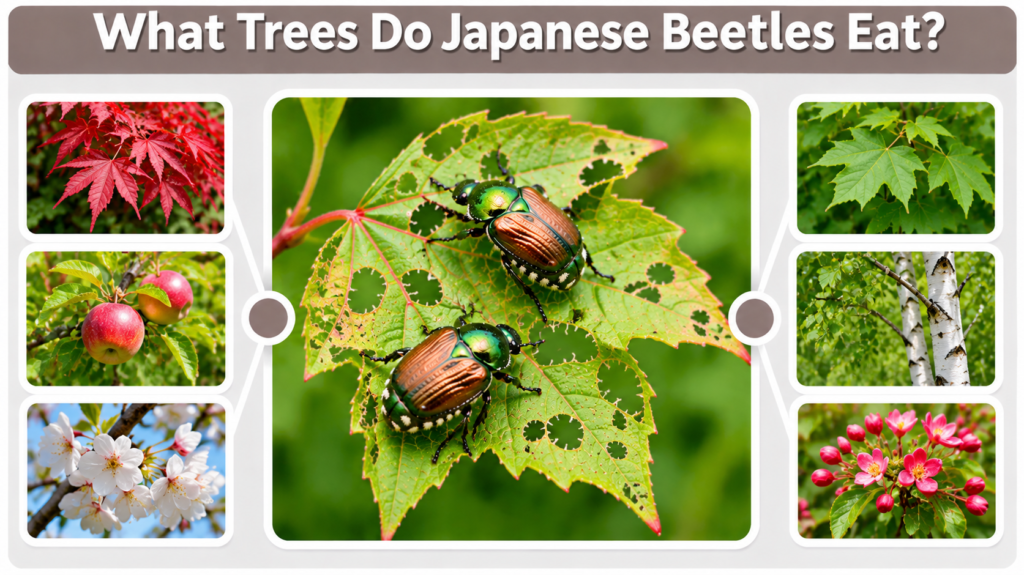
Japanese beetles feed on many deciduous trees, particularly species with broad, accessible leaves. They usually begin feeding near the upper portions of trees before moving downward.
Although mature, healthy trees often tolerate considerable feeding, younger or stressed trees may suffer lasting damage.
Trees Commonly Attacked by Japanese Beetles
- Japanese Maple: Leaves are especially vulnerable to skeletonization.
- Norway Maple: Beetles frequently consume the soft leaf tissue.
- Apple Trees: Foliage and occasionally fruit surfaces may be damaged.
- Cherry Trees: Beetles attack leaves and can affect young trees.
- Birch Trees: Feeding produces irregular holes and skeletonized foliage.
- Linden Trees: Large numbers of beetles may gather on leaves.
- Crabapple Trees: Leaves are commonly attacked during summer.
- Plum Trees: Beetles may damage both foliage and developing fruit.
Repeated severe defoliation can weaken trees over time. Monitoring young trees during peak beetle activity is especially important.
What Vegetables Do Japanese Beetles Eat?
Japanese beetles occasionally damage vegetable gardens, although their preference varies among crops. They commonly feed on soybean leaves, corn silks, asparagus, and certain leafy garden plants.
Their feeding may interfere with plant growth or crop development when infestations become severe.
Do Japanese Beetles Eat Beans?
Yes, Japanese beetles feed on beans, particularly soybeans. They chew the soft tissues between leaf veins, producing irregular holes and skeletonized leaves.
Healthy plants can usually tolerate limited damage. However, extensive defoliation may reduce photosynthesis and affect crop production.
Do Japanese Beetles Eat Corn?
Japanese beetles feed on corn silks rather than the kernels themselves. Severe silk feeding can interfere with pollination when beetles remove substantial portions before pollination is complete.
This damage may lead to poorly filled ears. Monitoring beetles during the silking stage helps protect developing corn.
What Do Japanese Beetle Larvae Eat?
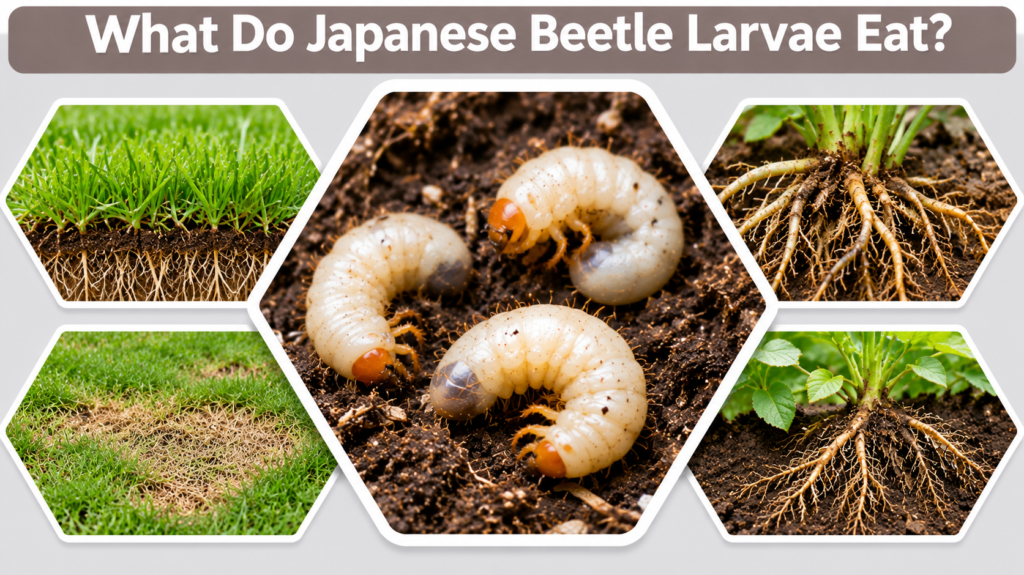
Japanese beetle larvae, commonly called white grubs, live underground and feed primarily on plant roots. Unlike adults, which consume aboveground foliage, grubs damage the underground structures responsible for absorbing water and nutrients.
What Do Japanese Beetle Grubs Eat?
Japanese beetle grubs mainly consume the roots of turfgrasses, although they may also feed on roots of ornamental plants and other vegetation.
Heavy infestations weaken root systems, causing grass to turn yellow or brown. Severely damaged turf may peel away easily because most supporting roots have been consumed.
When Do Japanese Beetle Grubs Feed?
Grubs generally feed during late summer and autumn after hatching from eggs. They move deeper into the soil during winter and return toward the surface as temperatures rise in spring.
Feeding activity depends on soil temperature, moisture, and larval development. Young grubs are often easier to control than mature larvae.
What Plants Do Japanese Beetles Not Eat?
Although Japanese beetles consume hundreds of plant species, certain trees, shrubs, and flowers are less attractive to them. Choosing resistant plants can reduce feeding damage and the need for repeated pest treatments.
Plants Japanese Beetles Usually Avoid
- Boxwood: Generally resistant to adult beetle feeding.
- Red Maple: Less attractive than Japanese or Norway maple.
- Dogwood: Usually experiences limited Japanese beetle damage.
- Forsythia: Commonly considered a resistant ornamental shrub.
- Columbine: A relatively resistant flowering perennial.
- Ageratum: Generally less attractive to Japanese beetles.
- Begonias: Often recommended for beetle-resistant landscapes.
- Hickory: Typically less preferred than susceptible deciduous trees.
No plant is guaranteed to remain completely untouched. However, planting less-preferred species can help reduce recurring Japanese beetle problems.
How Do Japanese Beetles Damage Plants?
Japanese beetles damage plants primarily by chewing leaves, petals, and exposed fruit surfaces. Their characteristic feeding removes soft leaf tissues while leaving larger veins intact.
Damaged foliage may become brown, dry, or skeletonized. Severe feeding can reduce the plant’s ability to produce energy through photosynthesis.
Why Do Japanese Beetles Gather on Plants?
Japanese beetles often gather in groups because feeding-damaged plants release chemical odors that attract additional beetles.
This behavior explains why one plant may become heavily infested while nearby plants experience little damage. Removing beetles early can help reduce continued feeding.
How to Stop Japanese Beetles From Eating Plants
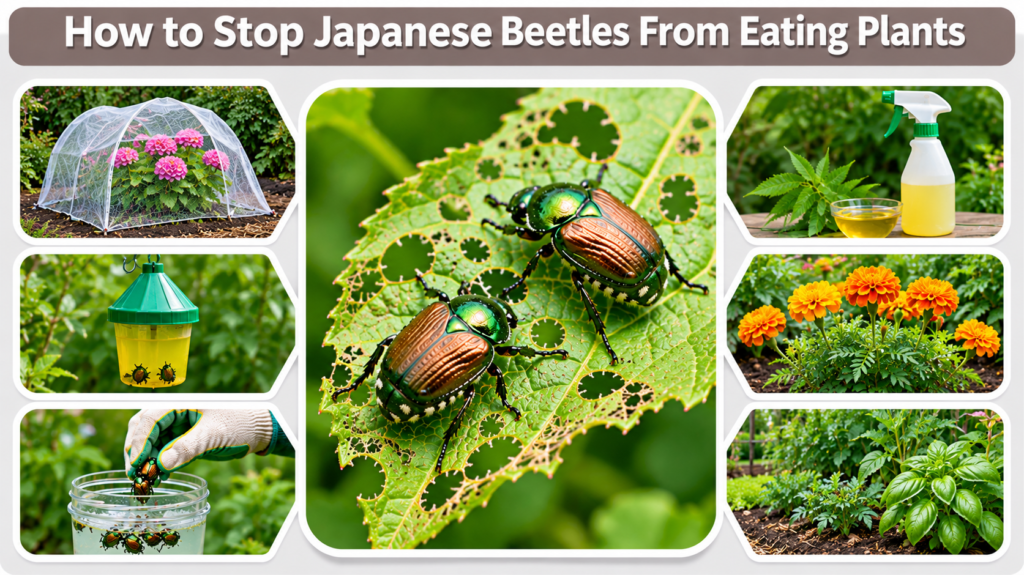
Protecting plants requires regular monitoring and timely control. Small infestations can often be managed without extensive pesticide applications.
Natural Ways to Reduce Japanese Beetle Feeding
Handpicking beetles into a container of soapy water is an effective approach for small gardens. Early morning is particularly suitable because beetles are generally less active in cooler temperatures.
Protective netting can prevent adults from reaching vulnerable plants, provided the covering does not interfere with pollination. Selecting less-preferred plants and maintaining healthy growing conditions also help reduce damage.
FAQs
1. What Do Japanese Beetles Like to Eat Most?
Japanese beetles particularly favor roses, grapes, raspberries, Japanese maple, and several fruit trees. They consume tender leaves, petals, and soft fruits. Their feeding preferences vary depending on plant availability and environmental conditions.
2. Do Japanese Beetles Eat Grass?
Adult Japanese beetles do not normally damage grass blades. However, their larvae feed on grass roots underground. Heavy grub infestations may cause brown patches, weakened turf, and grass that lifts easily from the soil.
3. What Do Japanese Beetles Eat in Japan?
In their native Japanese habitats, Japanese beetles feed on the foliage and flowers of various broadleaf plants. Their natural diet includes wild vegetation and cultivated plants, although local predators and environmental conditions help limit populations.
4. What Flowers Do Japanese Beetles Not Eat?
Japanese beetles generally avoid or cause limited damage to flowers such as ageratum, columbine, and begonias. However, resistance varies among varieties and growing conditions. Choosing less-preferred flowers can reduce the likelihood of serious infestations.
5. Do Japanese Beetles Eat Fruit?
Yes, adult Japanese beetles sometimes feed on ripe or damaged fruits, including grapes, raspberries, and peaches. They may create surface wounds that reduce fruit quality. Harvesting ripe produce promptly can help limit feeding opportunities.