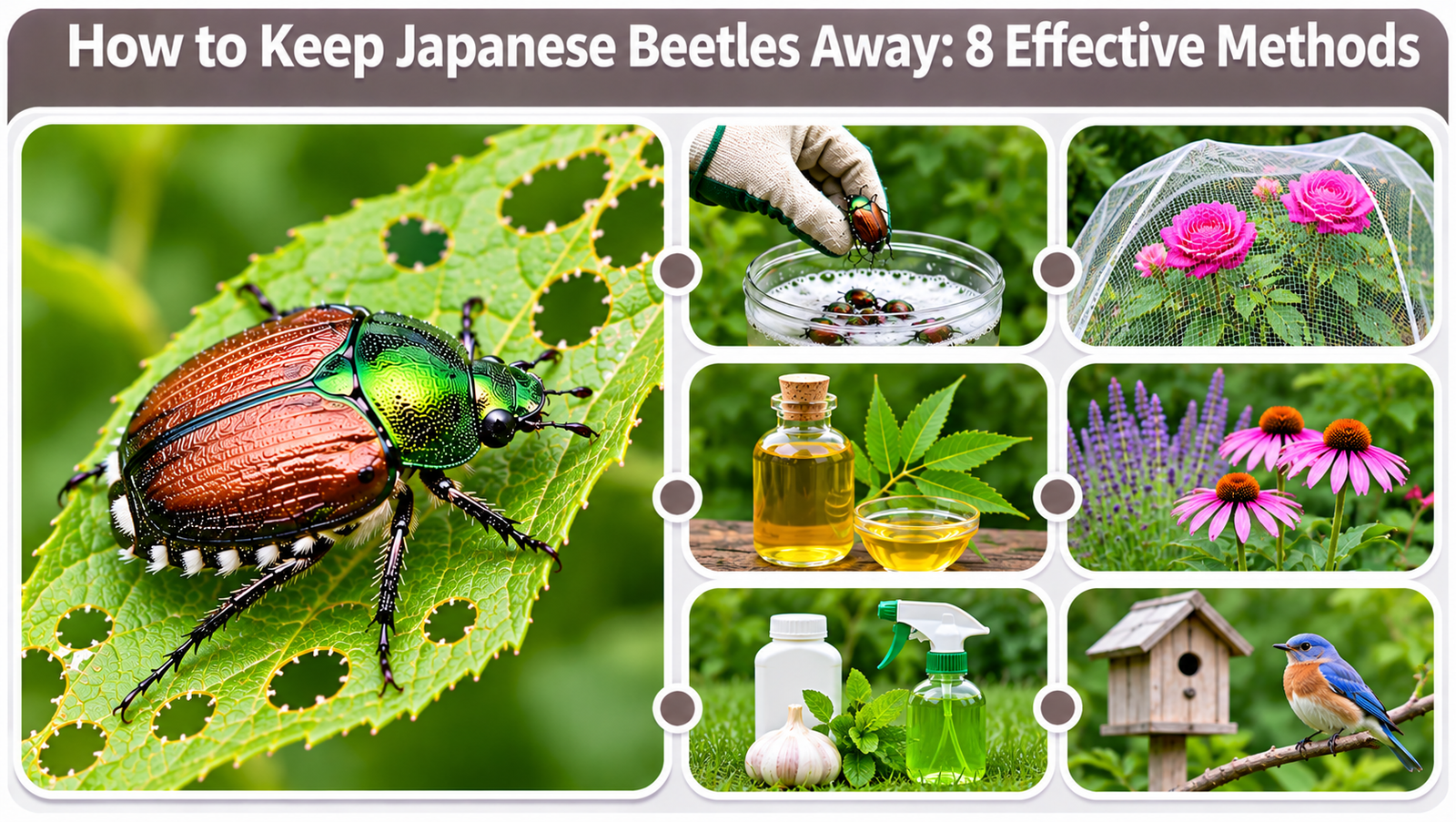
Japanese beetles can quickly damage roses, fruit trees, vegetables, and ornamental plants by feeding on their leaves and flowers. These metallic green insects often gather in large numbers, leaving behind holes and skeletonized foliage. Fortunately, several practical methods can help keep Japanese beetles away without harming your entire garden ecosystem. From handpicking and protective netting to neem oil and careful plant selection, different approaches offer varying levels of protection. Learning how to prevent Japanese beetle infestations can help maintain healthier plants throughout the summer growing season.
8 Effective Ways to Keep Japanese Beetles Away
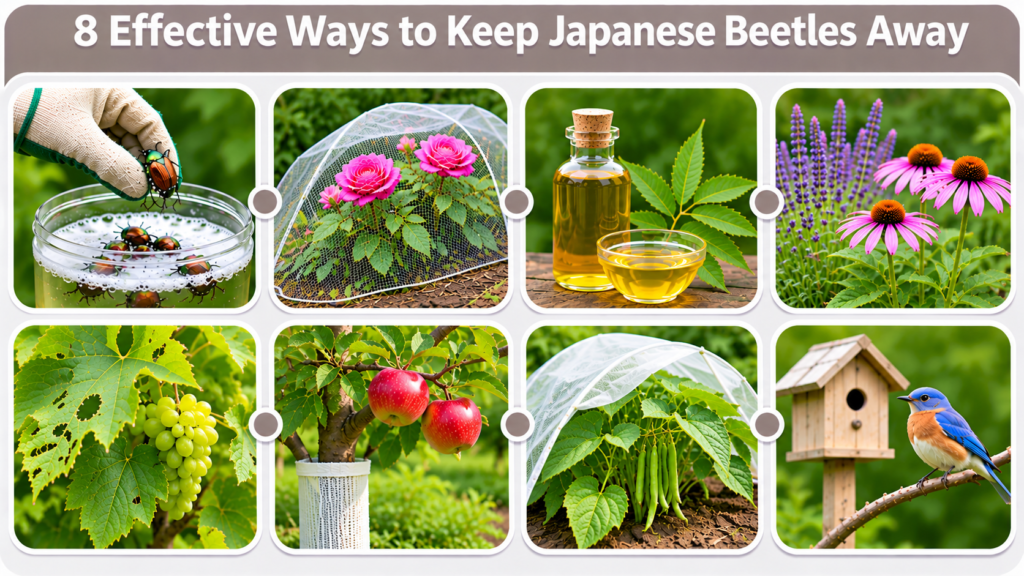
Keeping Japanese beetles away requires consistent garden monitoring and a combination of prevention methods. Adult beetles usually become active during early summer and continue feeding for several weeks. They are attracted to certain plants and can quickly gather around damaged foliage. The following methods can help reduce feeding, protect vulnerable plants, and discourage additional beetles from gathering in your garden.
1. Remove Japanese Beetles by Hand
Handpicking is one of the most reliable ways to reduce Japanese beetle damage.
- Inspect plants early in the morning when beetles are sluggish.
- Hold a bucket containing soapy water beneath infested leaves.
- Gently shake branches or knock beetles into the water.
- Repeat daily during periods of heavy beetle activity.
Removing beetles early helps prevent large feeding groups from developing.
2. Cover Plants With Fine Garden Netting
Fine-mesh netting creates a physical barrier that keeps Japanese beetles from reaching leaves and flowers.
Use insect netting around valuable ornamental plants and vulnerable crops. Make sure the covering is securely fastened and does not leave openings.
Avoid covering flowering crops that require pollination. Install barriers after pollination when appropriate.
3. Use Neem Oil as a Feeding Deterrent
Neem oil can temporarily discourage Japanese beetles from feeding on treated plants.
Apply a neem product specifically labeled for the plants and pests you are treating.
Neem oil generally provides only a few days of feeding deterrence and is less effective during heavy infestations.
Follow product instructions and avoid spraying flowers visited by bees.
4. Choose Plants Japanese Beetles Dislike
Some plants experience significantly less Japanese beetle damage than others.
Consider growing these less-preferred plants:
- Boxwood
- Forsythia
- Common lilac
- Magnolia
- Daylilies
- Rhododendrons
- Red maple
These plants do not actively repel Japanese beetles, but choosing less susceptible varieties can reduce damage throughout your landscape.
How to Keep Japanese Beetles Off Plants
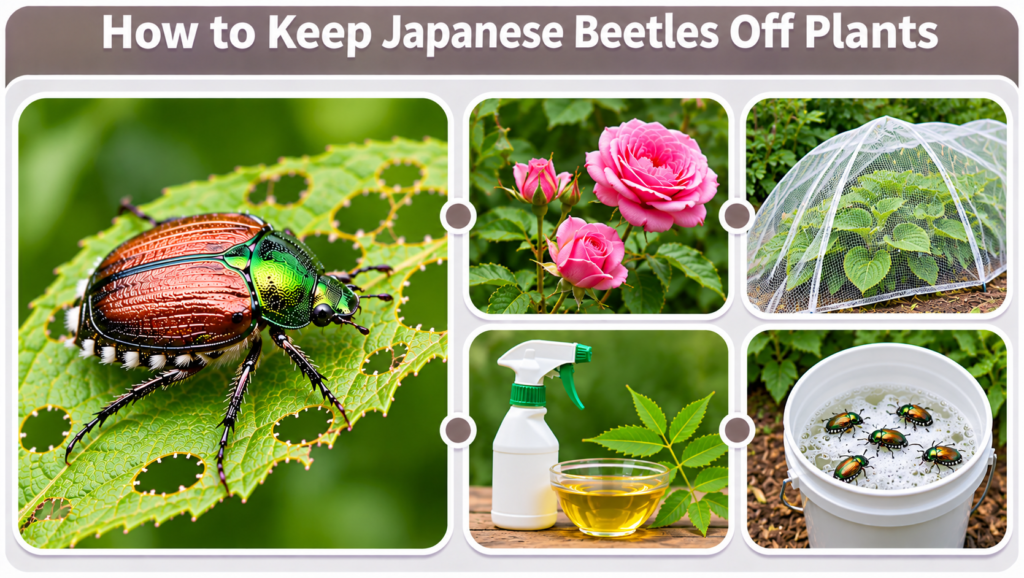
Protecting individual plants requires understanding where Japanese beetles feed and when damage occurs. They commonly attack roses, grapes, raspberries, beans, and various fruit trees. Adults chew the soft tissue between leaf veins, creating a distinctive lace-like appearance. Regular inspection and timely protection are especially important for young plants, which may struggle to recover from severe feeding damage.
5. Protect Roses From Japanese Beetles
Japanese beetles are particularly attracted to rose flowers and foliage.
To protect rose bushes:
- Check flowers and leaves every morning.
- Remove beetles before large groups form.
- Use fine netting around valuable rose bushes.
- Consider labeled neem treatments for temporary deterrence.
- Continue monitoring throughout summer.
Mature roses generally recover from moderate feeding damage, although flowers may become severely damaged during heavy infestations.
6. Keep Beetles Off Fruit Trees
Japanese beetles can attack apple, cherry, peach, and other susceptible fruit trees.
Small trees can sometimes be protected with appropriately sized insect netting after pollination.
For larger trees, regularly inspect young growth and monitor the extent of leaf damage.
Established trees often tolerate moderate feeding, but newly planted trees may require additional protection.
7. Protect Vegetables and Berry Plants
Japanese beetles may damage green beans, grapes, raspberries, blackberries, and certain vegetable crops.
Floating row covers or fine insect netting can protect vulnerable plants when pollination requirements are considered.
Handpick beetles from uncovered plants regularly.
Avoid applying pesticides to edible crops unless the product label specifically permits that use.
Natural Methods to Prevent Japanese Beetle Infestations
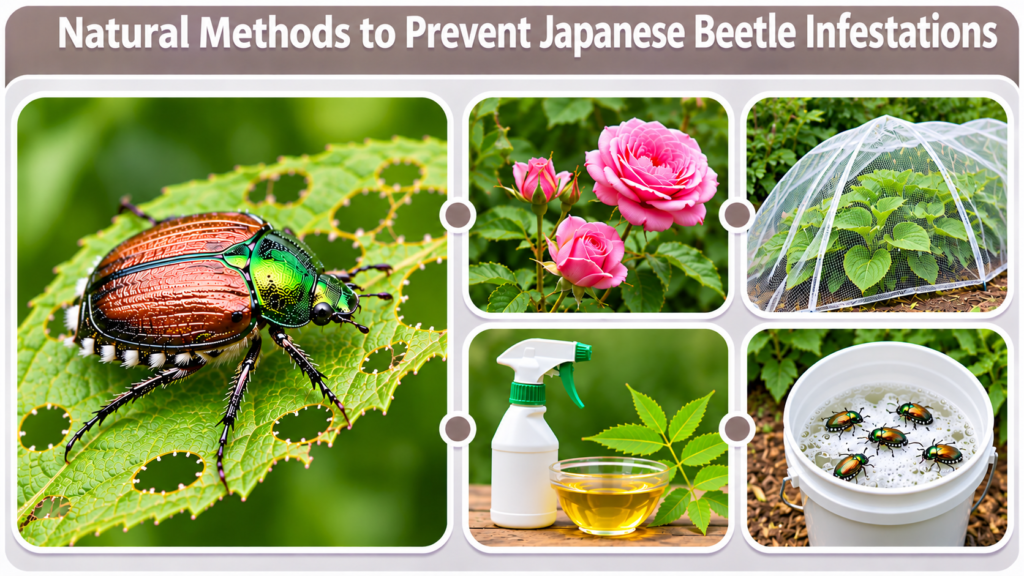
Natural Japanese beetle prevention focuses on limiting feeding opportunities and managing susceptible plants. Adult beetles can fly into gardens from surrounding areas, so eliminating every beetle is usually unrealistic. However, reducing attractive feeding sites, protecting valuable plants, and encouraging beneficial organisms can help maintain healthier gardens while minimizing unnecessary pesticide applications.
8. Encourage Natural Enemies
Japanese beetles have several natural predators and parasitoids that contribute to population control.
Natural enemies include:
- Birds: Grackles and starlings sometimes consume adult beetles.
- Tiphia wasps: These parasitoids attack Japanese beetle grubs.
- Winsome flies: These parasitic flies develop inside adult beetles.
- Predatory insects: Certain generalist predators feed on beetles.
Maintaining diverse garden habitats may support beneficial species. However, natural predators alone rarely prevent significant feeding damage.
Avoid Japanese Beetle Traps Near Gardens
Commercial Japanese beetle traps use floral attractants and sex pheromones to lure beetles.
Although these traps capture insects, they may attract more beetles into the surrounding area than they collect.
Additional beetles can land on nearby roses, shrubs, and vegetable plants.
For most home gardens, handpicking and protective barriers are better options than baited traps.
What Keeps Japanese Beetles Away Naturally?
Gardeners frequently use household ingredients and aromatic plants in attempts to repel Japanese beetles. Unfortunately, many popular remedies have limited scientific evidence supporting their effectiveness. Understanding which treatments actually work helps prevent unnecessary damage to foliage and reduces wasted effort. Physical barriers and regular beetle removal generally provide more dependable protection than relying on homemade repellents.
Does Garlic or Peppermint Oil Keep Japanese Beetles Away?
Garlic, peppermint oil, and other strongly scented ingredients are frequently promoted as natural repellents.
However, reliable evidence that these treatments consistently prevent Japanese beetle feeding is lacking.
Some concentrated essential oils can damage sensitive plant leaves.
Instead of relying on homemade sprays, use proven protective barriers or properly labeled pest-control products.
Does Soapy Water Keep Japanese Beetles Away?
Soapy water is useful for killing Japanese beetles after they have been collected from plants.
However, spraying ordinary dish soap onto foliage does not reliably repel adult beetles and may damage leaves.
A safer approach is to knock beetles directly into a bucket containing water and a small amount of soap.
How to Keep Japanese Beetles Out of Your House
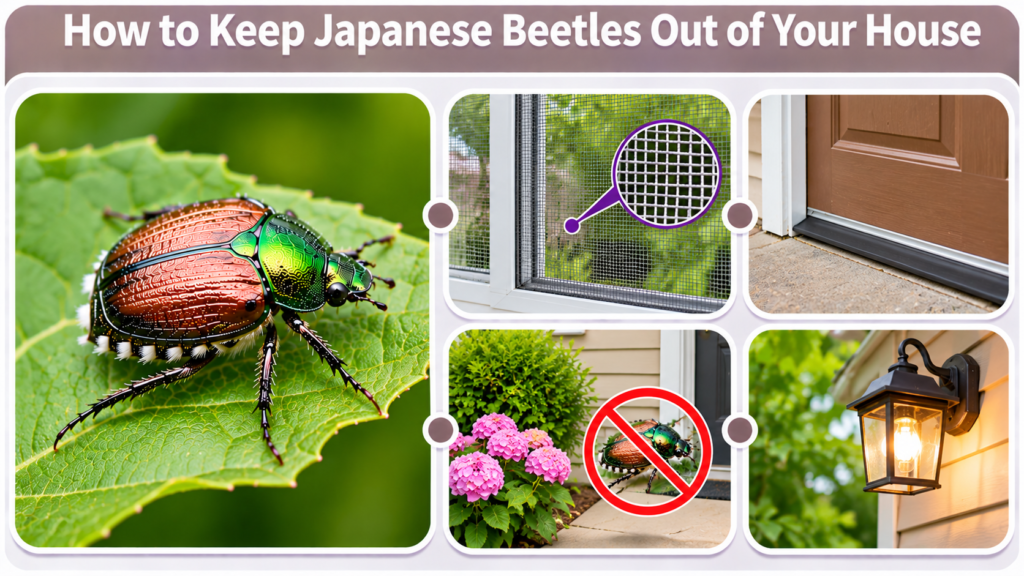
Japanese beetles primarily feed outdoors and rarely establish indoor infestations. Occasionally, adults may enter through open windows, damaged screens, or gaps around doors. Keeping these entry points properly sealed is generally sufficient to prevent indoor encounters. Unlike many household pests, Japanese beetles do not normally reproduce or complete their life cycle inside residential buildings.
Seal Common Entry Points
Check doors, windows, and exterior openings for potential insect entry points.
Repair damaged window screens, install door sweeps, and seal visible gaps around frames.
If a Japanese beetle enters your home, capture it and remove it without spraying indoor insecticides unnecessarily.
Keep Beetle-Attracting Plants Away From Entrances
When planning landscaping, avoid placing highly susceptible plants directly beside frequently opened doors.
Roses and other favored host plants may attract feeding beetles during summer.
Choosing less-preferred ornamental plants near entrances may reduce beetle activity immediately outside your home.
FAQs
What Is the Best Way to Keep Japanese Beetles Away?
The most dependable methods include handpicking beetles, covering vulnerable plants with fine netting, and choosing less-preferred landscape plants. Neem oil can offer temporary feeding deterrence. Combining several approaches provides better protection than relying entirely on a single homemade repellent or commercial product.
What Smell Keeps Japanese Beetles Away?
No common household smell has been consistently proven to repel Japanese beetles. Garlic, peppermint, and citrus fragrances are sometimes recommended, but results are unreliable. Neem-based products can temporarily discourage feeding, although their effectiveness decreases over time and may be limited during heavy infestations.
How Do You Keep Japanese Beetles Off Roses Naturally?
Inspect rose bushes daily and knock visible beetles into soapy water. Protect valuable plants with fine netting during periods of heavy beetle activity. Neem oil products may provide temporary feeding deterrence, but avoid treating open flowers visited by pollinators. Continue monitoring until beetle activity declines.
How Long Do Japanese Beetles Stay Around?
Adult Japanese beetles typically remain active for approximately six to eight weeks during summer. Their emergence and disappearance depend on geographic location and seasonal weather. In many northern U.S. regions, beetles begin appearing in June or July, with most feeding ending by mid-to-late August.
Do Marigolds Keep Japanese Beetles Away?
Marigolds are sometimes recommended as companion plants for controlling Japanese beetles, but there is insufficient evidence that they reliably repel these insects. Some marigolds may even experience beetle feeding. For dependable protection, focus on regular removal, fine-mesh barriers, and selecting less susceptible landscape plants.