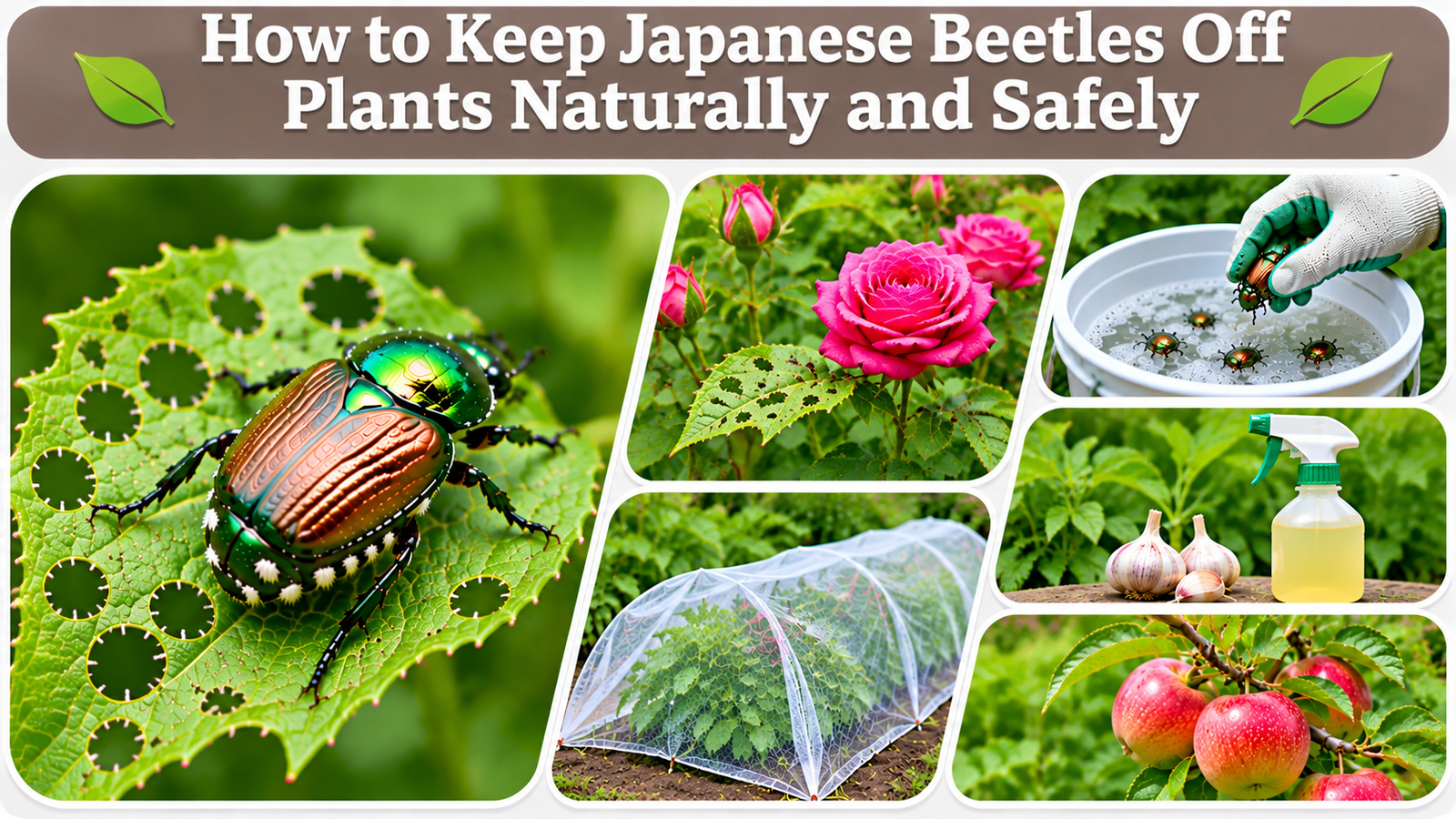
Japanese beetles can quickly damage beautiful gardens by feeding on leaves, flowers, and fruits. These metallic-green insects attack roses, grapevines, fruit trees, and many other ornamental plants, leaving behind skeletonized foliage. Knowing how to keep Japanese beetles off plants can help protect your garden without relying entirely on chemical pesticides. Simple methods such as handpicking, protective netting, and choosing resistant plants can significantly reduce damage. This guide explains effective prevention methods, plants that Japanese beetles generally avoid, and practical ways to maintain a healthier, beetle-resistant garden.
How to Keep Japanese Beetles Off Plants
Japanese beetles are most active during warm summer days, when they gather on susceptible plants to feed. Early removal is important because beetles often accumulate on already damaged foliage. A combination of physical removal, protective barriers, and regular monitoring is usually the most practical approach for home gardeners.
Effective Ways to Keep Japanese Beetles Away
- Handpick beetles: Remove adults early in the morning when temperatures are cooler.
- Use soapy water: Drop collected beetles into a bucket containing water and a little dish soap.
- Install protective netting: Cover vulnerable plants with fine insect mesh.
- Inspect plants daily: Check leaves, stems, and flowers for feeding beetles.
- Remove beetle clusters: Prevent large groups from gathering on the same plant.
- Choose resistant plants: Grow species that Japanese beetles seldom damage.
These methods work best when started before substantial feeding damage occurs. Consistent monitoring throughout the beetle season helps protect vulnerable garden plants.
What Plants Repel Japanese Beetles?
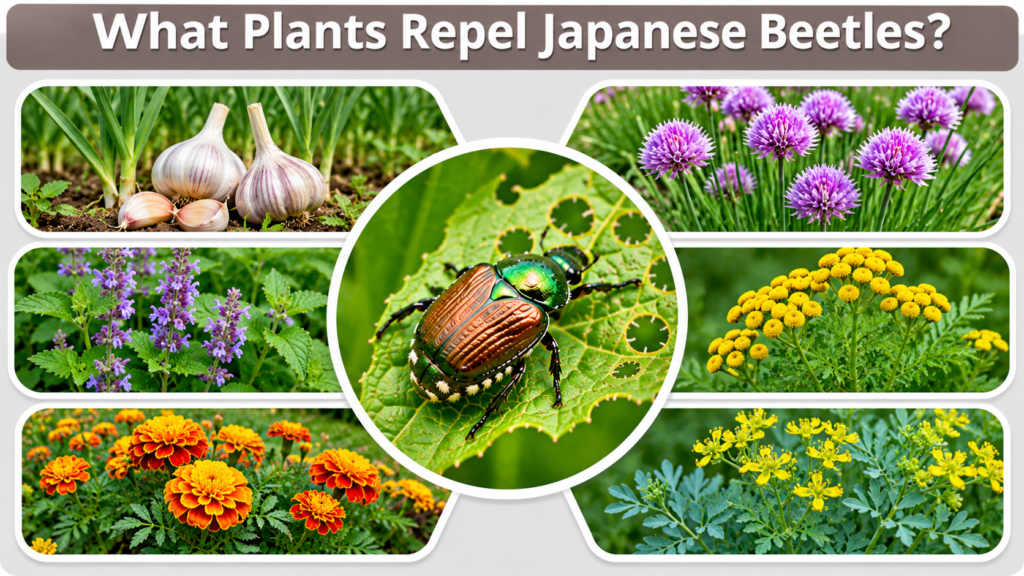
Several plants are commonly described as Japanese beetle repellents because of their strong fragrances or natural chemical compounds. However, there is limited reliable evidence that planting these species beside susceptible crops consistently prevents beetle attacks.
Choosing plants that beetles naturally avoid is generally more dependable than relying on companion plants to repel them.
Plants Commonly Claimed to Deter Japanese Beetles
- Garlic: Its strong odor is often promoted as a natural insect deterrent.
- Chives: Aromatic foliage makes this herb popular in companion planting.
- Catnip: Frequently recommended for insect-repellent gardens.
- Tansy: Traditionally associated with insect deterrence.
- Marigolds: Sometimes recommended as companion plants around vegetables.
- Rue: An aromatic herb occasionally suggested for pest prevention.
Although these plants may have useful gardening qualities, they should not be considered proven Japanese beetle repellents. Combine them with physical removal and protective barriers rather than expecting them to keep beetles away independently.
Japanese Beetle Resistant Plants for Gardens
Japanese beetles feed on hundreds of plant species, but certain ornamental plants, trees, and shrubs experience relatively little damage. Selecting these less-preferred species can reduce beetle problems and make garden maintenance easier.
Plant resistance varies by location, cultivar, and environmental conditions. Nevertheless, several widely grown landscape plants are consistently identified as less attractive to Japanese beetles.
Best Japanese Beetle Resistant Plants
- Boxwood: A popular evergreen shrub that Japanese beetles seldom damage.
- Forsythia: A flowering shrub generally avoided by feeding adults.
- Common Lilac: An ornamental shrub with relatively low susceptibility.
- Magnolia: Often experiences less damage than highly preferred trees.
- Dogwood: Commonly recommended for Japanese beetle-resistant landscapes.
- Clematis: A flowering vine that is generally less preferred.
- Rhododendron: Typically suffers limited Japanese beetle feeding.
- Arborvitae: An evergreen shrub rarely targeted by adult beetles.
These species are useful alternatives to heavily attacked ornamentals. However, resistant plants do not necessarily repel beetles from nearby roses, grapes, or other susceptible plants.
How to Get Rid of Japanese Beetles on Plants Naturally
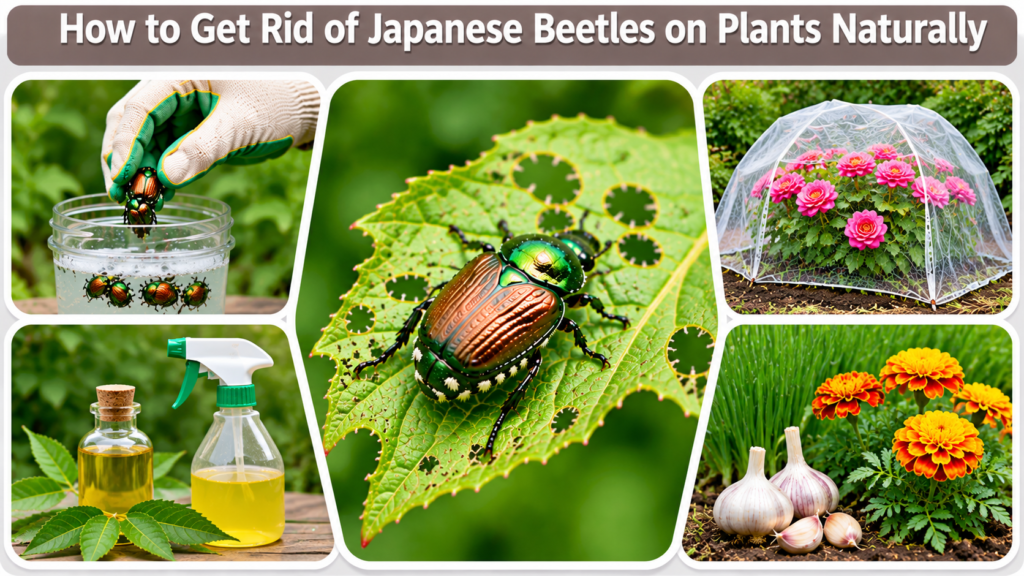
Natural Japanese beetle control focuses on removing adult insects and preventing them from reaching vulnerable foliage. These approaches are particularly useful in small gardens where frequent monitoring is possible.
Hand removal is among the most reliable methods, while some botanical products provide limited feeding deterrence. Natural treatments should still be evaluated for plant safety and their effects on beneficial insects.
Handpicking Japanese Beetles
Handpicking is effective when beetle numbers are manageable. Early morning is often ideal because cooler temperatures make the insects slower and easier to collect.
Gently shake branches or remove beetles by hand, dropping them directly into soapy water. Repeat the process regularly during peak summer activity to limit feeding damage.
Using Neem Oil on Plants
Neem-derived products may discourage Japanese beetles from feeding, but they are not reliable instant killers. Their protective effect is generally temporary, particularly during heavy infestations.
Use only products labeled for the specific plant and pest. Follow application instructions carefully and avoid spraying open flowers where pollinators are visiting.
How to Protect Vegetable Plants From Japanese Beetles
Japanese beetles occasionally attack vegetable crops, particularly beans and corn. They may chew holes in leaves or damage corn silks, interfering with normal plant development.
Protecting vegetables requires selecting methods that are safe for edible crops and do not interfere with pollination.
Protecting Beans and Other Vegetables
Bean plants can suffer extensive leaf skeletonization when Japanese beetles gather in large numbers. Removing adults regularly helps reduce feeding pressure and protect healthy foliage.
Fine insect netting can provide additional protection. However, coverings should be managed carefully on crops that depend on insect pollination.
Protecting Tomato and Pepper Plants
Tomatoes and peppers are generally less preferred by Japanese beetles than roses, grapes, or beans. However, occasional feeding can occur, especially when beetle populations are high.
Inspect damaged leaves to confirm the responsible pest before applying treatments. Other insects commonly cause holes and leaf damage on vegetable plants.
How to Keep Japanese Beetles Off Roses and Fruit Plants
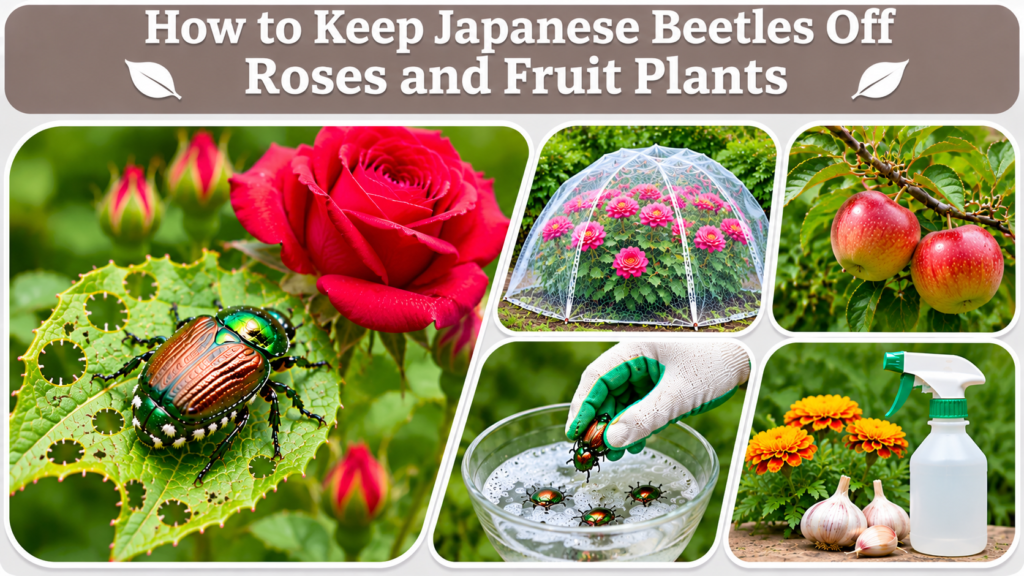
Roses, raspberries, grapevines, and certain fruit trees are highly attractive to Japanese beetles. Adults may gather on flowers and leaves, creating severe damage within a relatively short period.
Early protection is particularly important because damaged foliage can attract additional beetles.
Protecting Rose Bushes
Inspect rose bushes frequently during the Japanese beetle season. Handpick adults before large groups accumulate, paying particular attention to flowers and tender foliage.
Fine netting may protect valuable bushes temporarily. If insecticides become necessary, choose products specifically labeled for roses and avoid applications that expose pollinators.
Protecting Raspberry and Strawberry Plants
Japanese beetles commonly attack raspberry foliage and may damage ripening fruits. Strawberry plants may occasionally experience feeding, although susceptibility varies.
Remove visible beetles and harvest ripe fruit promptly. Protective netting can reduce insect access, but it should be positioned to avoid interfering with pollination.
Best Japanese Beetle Spray for Plants
Japanese beetle sprays vary in effectiveness and environmental impact. Certain products provide direct contact control, while others offer temporary protection against feeding.
Botanical products such as neem-based formulations may provide limited deterrence. Pyrethrins can control exposed adults, while some labeled synthetic insecticides offer longer-lasting protection.
Choosing a Safe Japanese Beetle Spray
Choose a product labeled for Japanese beetles and the particular plant being treated. For edible crops, carefully follow harvest intervals and all safety precautions.
Avoid spraying when bees are actively visiting flowers. Broad-spectrum insecticides can harm beneficial insects, so physical and cultural controls should be considered first.
How to Prevent Japanese Beetles From Returning
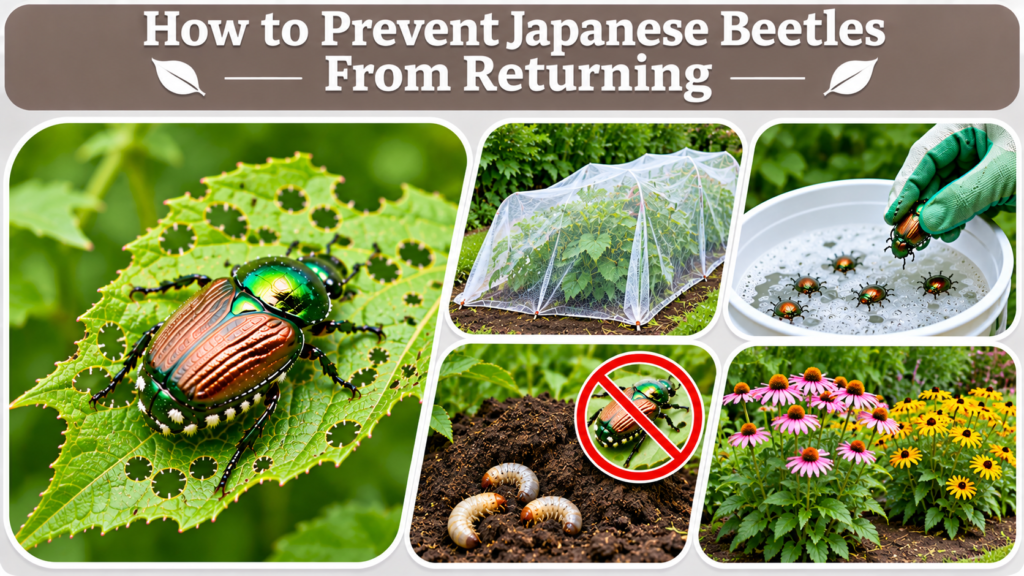
Japanese beetles can fly into gardens from surrounding areas even after existing adults have been removed. Long-term management therefore requires regular monitoring rather than expecting a single treatment to eliminate them permanently.
Prevention is especially important for gardens containing roses, grapevines, or other highly attractive plants.
Japanese Beetle Prevention Tips
- Inspect plants early: Begin checking susceptible plants when adults first appear.
- Remove beetles regularly: Prevent feeding groups from building up.
- Select resistant varieties: Favor less-preferred plants when designing landscapes.
- Protect young plants: Use temporary insect netting during heavy beetle activity.
- Avoid pheromone traps: They may attract more beetles than they capture.
- Maintain healthy plants: Provide suitable watering, soil conditions, and nutrients.
Combining these strategies can reduce feeding damage and help maintain a healthier garden throughout the growing season.
FAQs
1. What Plants Do Japanese Beetles Hate?
Japanese beetles generally avoid or cause little damage to plants such as boxwood, forsythia, lilac, magnolia, and arborvitae. However, these plants are better described as resistant rather than repellent. They do not necessarily protect susceptible plants growing nearby.
2. Does Neem Oil Keep Japanese Beetles Off Plants?
Neem-derived products can temporarily discourage Japanese beetle feeding, but they usually do not provide complete protection. Their effectiveness depends on the formulation, application timing, and infestation severity. Other control methods may be needed when beetle populations are high.
3. Do Japanese Beetles Eat Tomato Plants?
Japanese beetles generally prefer other plants over tomatoes, but occasional feeding is possible. If tomato leaves develop holes, inspect them carefully because hornworms, flea beetles, and other pests may be responsible.
4. Can Japanese Beetles Kill Garden Plants?
Japanese beetles can severely damage foliage, flowers, and fruits. Healthy established plants often recover from moderate feeding, but repeated heavy defoliation can weaken young or stressed plants. Early removal helps limit damage.
5. What Is the Best Way to Keep Japanese Beetles Off Plants?
Regular handpicking, protective netting, and choosing resistant plants are among the most dependable methods. Begin controlling beetles early in the season and inspect susceptible plants frequently. Combining several methods generally provides better protection than relying on one treatment.