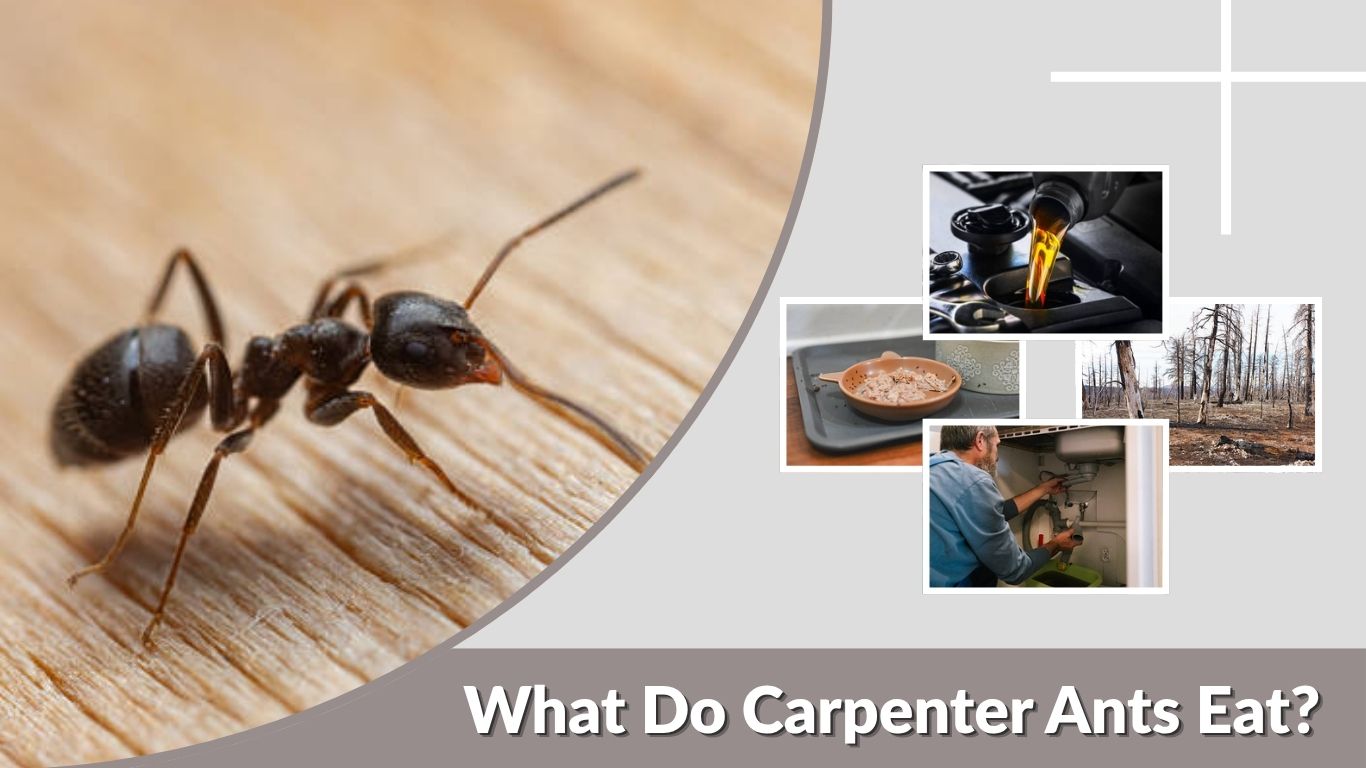
Carpenter ants are often connected with wood damage, but they do not actually eat wood. Instead, they chew and remove wood to build tunnels and nesting galleries. Their real diet includes sweet liquids, proteins, insects, grease, fruit, nectar, crumbs, and many household foods. If you are seeing carpenter ants in your kitchen, bathroom, pantry, or around trees, food and moisture may be attracting them. This guide explains what carpenter ants eat and why they come indoors.
Do Carpenter Ants Eat Wood?
Carpenter ants do not eat wood like termites. This is one of the most important facts to understand. Termites consume cellulose from wood as food, but carpenter ants only excavate wood to create nesting space. They push out small piles of sawdust-like material called frass.
Carpenter ants prefer moist, soft, decayed, or damaged wood because it is easier to tunnel through. That is why they are often found near leaking windows, bathroom walls, roof leaks, damp decks, tree stumps, logs, and rotting trim.
Even though they do not eat wood, carpenter ants can still damage wooden structures if a colony grows large and stays active for a long time.
What Do Carpenter Ants Eat? 10 Foods
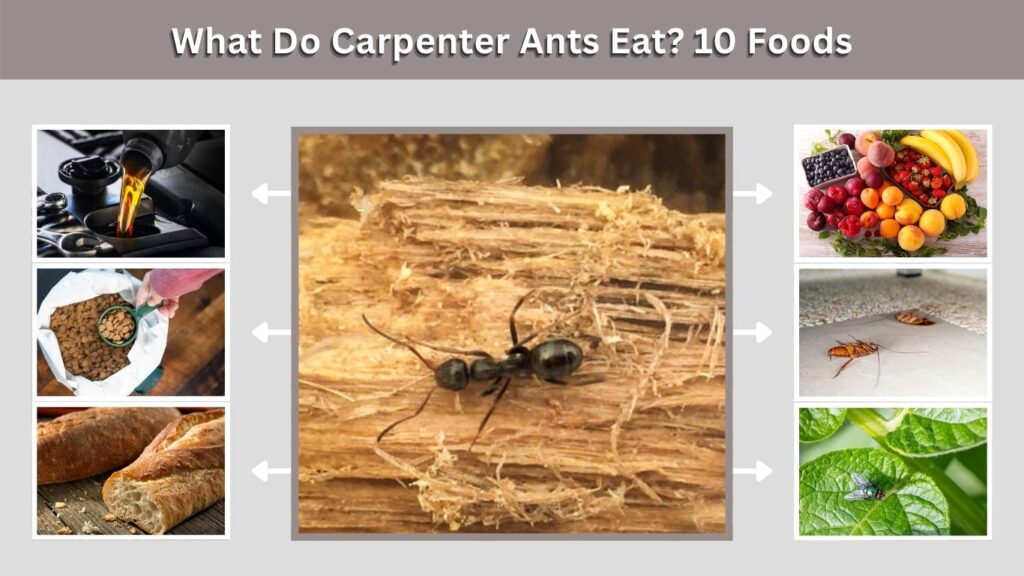
Carpenter ants are omnivores, which means they eat both plant-based and animal-based foods. Outdoors, they feed on natural sweets and insects. Indoors, they may look for sugar, grease, meat, pet food, and crumbs.
| Food | Why Carpenter Ants Eat It |
| Honeydew | Sweet liquid from aphids and scale insects |
| Nectar | Natural sugar from flowers and plants |
| Fruit | Provides sugar and moisture |
| Dead insects | Good source of protein |
| Live small insects | Protein-rich prey or scavenged food |
| Meat scraps | Protein and fat source |
| Grease and oils | High-energy food source |
| Pet food | Protein, fat, and crumbs |
| Sweets and syrup | Strong sugar attraction |
| Bread and crumbs | Easy indoor food source |
The exact food they choose depends on colony needs. Sometimes they search more for sugar. At other times, especially when feeding larvae, they may seek more protein.
1. Honeydew from Aphids and Scale Insects
Honeydew is one of the most important outdoor foods for carpenter ants. Honeydew is a sweet liquid produced by plant-feeding insects such as aphids, scale insects, and mealybugs.
Carpenter ants may climb trees, shrubs, and garden plants to collect this sweet liquid. This is why you may see ant trails running up tree trunks or along branches. The ants are often not eating the tree itself. They may be visiting insects on the leaves or bark.
If carpenter ants are active around a tree, check for aphids or scale insects. Controlling honeydew-producing pests may reduce ant activity around plants.
2. Flower Nectar
Carpenter ants also feed on nectar from flowers and plants. Nectar gives them quick energy because it is rich in sugar. Outdoor carpenter ants may visit flowers, shrubs, vines, and garden plants while foraging.
Nectar feeding does not usually harm plants. However, heavy ant activity around plants may indicate that other insects are present. Ants may also protect aphids because aphids produce honeydew.
If you see many carpenter ants around flowers, nearby shrubs, or fruit trees, look for sticky leaves, black sooty mold, or clusters of aphids.
3. Fruit and Overripe Produce
Carpenter ants may eat fruit, especially if it is ripe, damaged, or rotting. Fruit provides both sugar and moisture, which makes it attractive.
They may feed on:
- Apples
- Berries
- Peaches
- Grapes
- Melons
- Bananas
- Fruit peels
- Fallen fruit under trees
Indoors, carpenter ants may visit fruit bowls, trash cans, compost bins, and kitchen counters. Outdoors, fallen fruit under apple, pear, peach, or cherry trees can attract ants and other pests.
4. Dead Insects
Carpenter ants commonly eat dead insects. This gives them protein, which is especially important for developing young ants inside the colony.
Dead flies, beetles, moths, spiders, and other small insects can become food. Carpenter ants are strong scavengers and may carry insect parts back to the nest.
If you see carpenter ants carrying small insect pieces, they are likely gathering protein. This is normal for an outdoor colony, but repeated indoor activity can mean a nest is nearby.
5. Live Small Insects
Carpenter ants may also prey on small insects or weak arthropods. They are not as aggressive as some predatory insects, but they can capture or scavenge soft-bodied pests.
They may feed on small insects found around plants, under logs, in soil, or near homes. This diet helps the colony grow because larvae need protein to develop.
In the house, carpenter ants may be attracted to areas where other insects are present. Seeing carpenter ants indoors can sometimes mean there is moisture, food, or another pest problem nearby.
6. Meat Scraps
Indoors, carpenter ants may feed on meat scraps. Small pieces of cooked meat, lunch meat, chicken, fish, or food waste can attract them.
Carpenter ants are especially likely to visit trash cans, kitchen floors, dirty dishes, and pet feeding areas. They may appear at night when the house is quiet and food is left out.
To reduce attraction, clean food preparation areas, rinse containers before throwing them away, and use trash cans with tight lids.
7. Grease, Oils, and Fatty Foods
Carpenter ants may eat greasy and oily foods because they provide energy. Grease around stoves, grills, trash bins, or food packaging can attract ants.
Common greasy foods that may attract carpenter ants include:
- Bacon grease
- Cooking oil residue
- Fried food crumbs
- Butter or margarine
- Greasy wrappers
- Meat fat
- Grill drippings
Grease is easy to overlook because it may build up behind appliances, under counters, or near trash areas. Cleaning these spots can help reduce indoor ant activity.
8. Pet Food
Pet food is a common indoor food source for carpenter ants. Dog food and cat food often contain protein, fat, and carbohydrates. Even small crumbs around a pet bowl can attract ants.
Dry kibble, wet food, and treats can all be attractive. Carpenter ants may also visit water bowls because they need moisture.
To prevent ants, feed pets on a clean surface, remove leftover food, wash bowls regularly, and store pet food in sealed containers instead of open bags.
9. Sweets, Syrup, and Sugar
Carpenter ants are strongly attracted to sweet foods. Sugar gives worker ants quick energy for foraging.
Indoor sweet foods that may attract carpenter ants include:
- Sugar
- Syrup
- Honey
- Jam
- Jelly
- Soda spills
- Candy
- Cake crumbs
- Sweet cereal
- Juice residue
Even a small sticky spill can attract ants. Wipe counters, clean under appliances, and rinse bottles or cans before recycling.
10. Bread, Cereal, and Crumbs
Carpenter ants may also feed on crumbs and starchy foods. These are common in kitchens, dining rooms, pantries, and under furniture.
They may eat bread crumbs, cereal pieces, crackers, chips, cookies, flour dust, and other small food particles. While sweets and proteins may be more attractive, crumbs can still support ant activity indoors.
Keeping floors clean and storing pantry foods in airtight containers can make your home less inviting.
What Do Carpenter Ants Eat Outside?
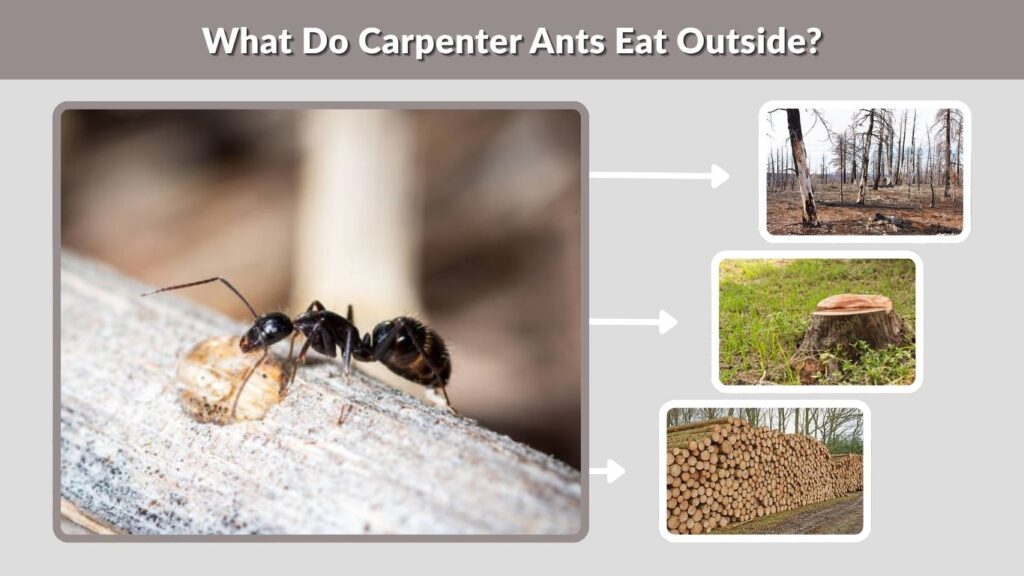
Outside, carpenter ants have a wide diet. They may feed on honeydew, nectar, fruit, dead insects, live insects, plant sap, and organic debris. They often forage at night or during cooler parts of the day.
Outdoor carpenter ants may nest in:
- Dead trees
- Tree stumps
- Logs
- Firewood piles
- Fence posts
- Rotting deck boards
- Landscape timbers
- Hollow tree sections
A colony outside is not always a problem. However, outdoor colonies near the home can become an issue if ants start entering through cracks, branches, wires, roof gaps, or foundation openings.
What Do Carpenter Ants Eat Inside the House?
Inside the house, carpenter ants usually search for easy food and water. Kitchens, bathrooms, laundry rooms, pantries, and pet areas are common places to find them.
Indoor food sources include sweets, meat, grease, pet food, crumbs, fruit, syrup, and trash. They may also visit sinks, tubs, dishwashers, and damp walls for moisture.
If you see carpenter ants indoors often, do not focus only on food. Also check for damp wood, leaks, and hidden nests. Carpenter ants may be nesting inside moisture-damaged wood and only foraging in the kitchen.
Do Carpenter Ants Eat Clothes, Paper, or Cardboard?
Carpenter ants are not major fabric or paper pests like silverfish, clothes moth larvae, or carpet beetle larvae. They may walk across paper, cardboard, or clothing while searching for food, but they usually do not feed on these materials as a main diet.
However, cardboard boxes can create hiding places and may hold food crumbs or moisture. If cardboard is stored in a damp basement, garage, or crawl space, it can also attract other pests.
If you see damaged clothes, holes in fabric, or chewed books, look for silverfish, carpet beetle larvae, or clothes moth larvae instead of blaming carpenter ants first.
Why Carpenter Ants Come Into Kitchens
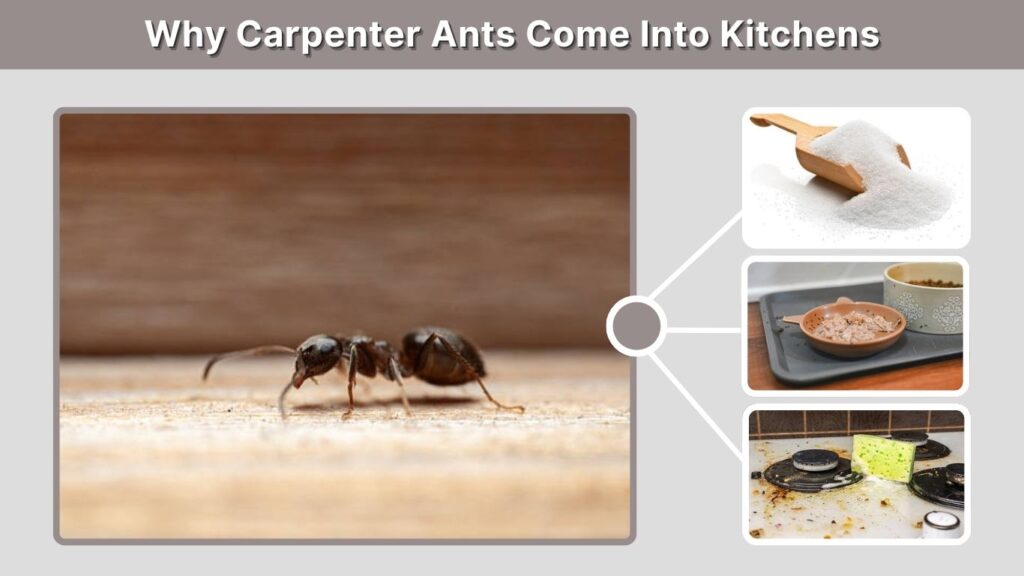
Kitchens attract carpenter ants because they offer food, water, warmth, and hiding places. Even a clean kitchen can have tiny crumbs, sticky spills, or grease under appliances.
Common Kitchen Attractants
Carpenter ants may enter kitchens because of:
- Sugar spills
- Dirty dishes
- Open trash cans
- Pet food bowls
- Fruit bowls
- Greasy stovetops
- Crumbs under appliances
- Leaky sinks
- Damp cabinets
- Food stored in open packages
If ants keep returning to the kitchen, follow the trail. The trail may lead to a wall void, window frame, door trim, crawl space, deck, tree branch, or outdoor nest.
Do Carpenter Ants Eat Bait?
Yes, carpenter ants may eat ant bait, but bait success depends on what the colony needs at that time. Sometimes they prefer sweet bait. Other times they prefer protein or grease-based bait.
This is why one bait may work for a few days and then stop attracting ants. Carpenter ant food preferences can change with colony needs, season, and availability of natural food.
Avoid spraying ants before using bait. Sprays may kill visible workers but prevent them from carrying bait back to the nest. Bait works best when ants can take it back to the colony.
How to Stop Feeding Carpenter Ants
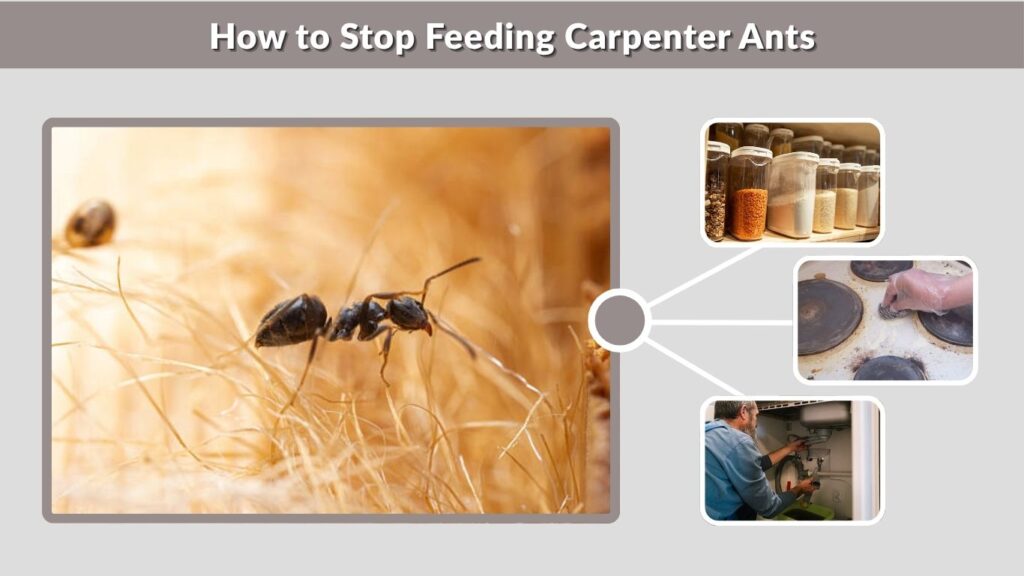
To reduce carpenter ant activity, remove food and moisture sources. This will not always eliminate a hidden nest, but it makes your home less attractive.
Food Prevention Tips
Use these steps:
- Clean counters every night
- Store sugar, cereal, flour, and snacks in sealed containers
- Rinse sticky bottles and cans
- Take out trash regularly
- Clean grease near stoves and grills
- Vacuum crumbs under furniture
- Remove pet food after feeding
- Keep fruit from over-ripening indoors
- Fix leaky sinks and pipes
- Trim branches away from the house
If carpenter ants are nesting in the structure, food cleanup alone will not remove the colony. You may need to locate and treat the nest.
What Attracts Carpenter Ants More: Food or Moisture?
Both food and moisture attract carpenter ants, but moisture is often the bigger reason they stay. Carpenter ants like damp or decayed wood because it is easier to tunnel through. Food brings workers into kitchens, but moisture-damaged wood can support a nest.
Common moisture problems include roof leaks, plumbing leaks, wet crawl spaces, poor ventilation, clogged gutters, and wood touching soil.
If you remove food but still see ants, inspect for moisture. A hidden nest may be inside a wall, window frame, porch post, bathroom area, or roofline.
FAQs
What do carpenter ants eat the most?
Carpenter ants commonly eat honeydew, nectar, fruit, insects, meat, grease, pet food, sweets, and crumbs. Outdoors, honeydew from aphids is one of their most important food sources.
Do carpenter ants eat wood?
No, carpenter ants do not eat wood. They chew and remove wood to build tunnels and nesting galleries. This is different from termites, which actually consume wood.
What food attracts carpenter ants inside?
Inside homes, carpenter ants are attracted to sugar, syrup, honey, fruit, meat scraps, grease, pet food, trash, and crumbs. They may also enter kitchens for water.
Do carpenter ants eat other bugs?
Yes, carpenter ants may eat dead insects and sometimes small live insects. Protein from insects helps feed the colony, especially the developing young.
Why are carpenter ants in my kitchen?
Carpenter ants may be in your kitchen because of sweets, grease, crumbs, pet food, fruit, trash, or water. If they keep coming back, there may also be a nest in damp wood nearby.