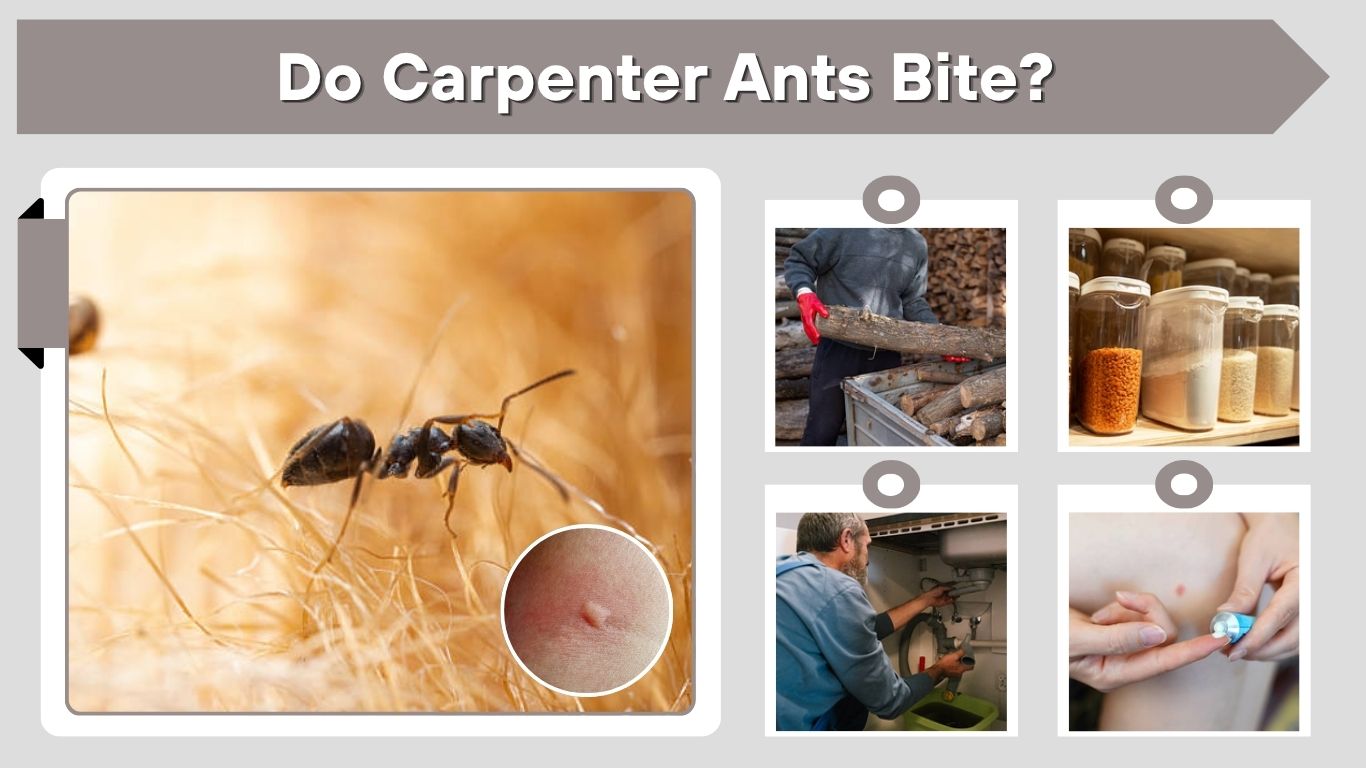
Yes, carpenter ants can bite humans, but they usually do not bite unless they are handled, trapped against the skin, or their nest is disturbed. They do not sting like fire ants or wasps, but their large jaws can pinch the skin and may cause pain, redness, itching, or mild swelling. Some carpenter ants can also spray formic acid into the bite, which may create a burning feeling. This guide explains what carpenter ant bites look like and how to treat them.
Do Carpenter Ants Bite Humans?
Carpenter ants can bite people, but they are not aggressive toward humans. Most bites happen when a person picks up an ant, presses against one accidentally, or disturbs a nest in wood, mulch, logs, walls, or trees.
Carpenter ants do not sting. They use their jaws, also called mandibles, to bite. Florida carpenter ants, for example, do not sting, but they can bite and spray formic acid into the fresh bite wound if the ant is not removed quickly.
| Question | Answer |
| Do carpenter ants bite? | Yes, they can bite |
| Do carpenter ants sting? | No, they do not sting |
| Are bites common? | Not usually |
| Do bites hurt? | They can feel like a sharp pinch or burn |
| Are they dangerous? | Usually not, but allergies are possible |
For most people, a carpenter ant bite is painful for a short time but not serious.
Why Do Carpenter Ants Bite?
Carpenter ants bite mainly for defense. They may bite when they feel threatened or when their nest is disturbed. Since carpenter ants are larger than many household ants, their bite may feel stronger.
Common Reasons They Bite
Carpenter ants may bite if:
- You pick one up
- One gets trapped inside clothing
- You disturb a nest
- You move infested firewood
- You break open rotten wood
- You handle logs, mulch, or tree stumps
- You accidentally press one against your skin
Carpenter ants are usually more interested in food, moisture, and nesting sites than biting people.
What Does a Carpenter Ant Bite Look Like?
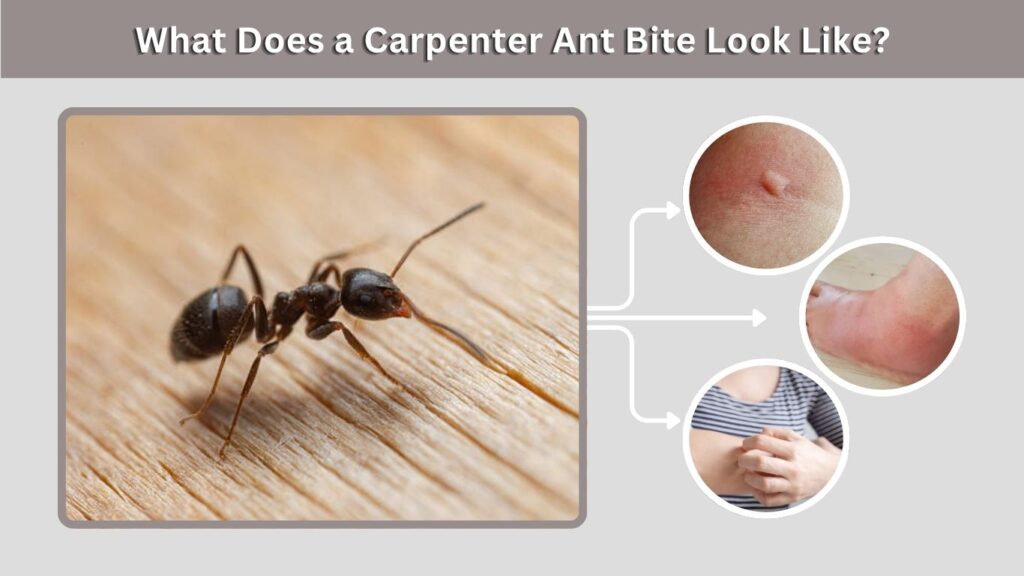
A carpenter ant bite may look like a small red bump or irritated spot on the skin. It may be slightly swollen, itchy, or painful. Some people describe it as a pinch, while others feel a burning sensation because of formic acid.
General ant bites can cause local pain, itching, redness, swelling, and firmness around the bite area. Most local reactions are small and short-lived.
Carpenter Ant Bite Symptoms
A carpenter ant bite may cause:
- Sharp pinch-like pain
- Burning feeling
- Small red bump
- Mild swelling
- Itching
- Tenderness
- Skin irritation
- Small mark where the jaws pinched
A carpenter ant bite usually does not create the white pus-filled blister often associated with fire ant stings. If you see many pustules, severe swelling, or spreading redness, another insect may be involved.
Do Carpenter Ant Bites Hurt?
Yes, carpenter ant bites can hurt. The pain is usually brief, but it may feel stronger than a small sugar ant bite because carpenter ants are larger and have strong jaws.
Some carpenter ants can spray formic acid into the bite area, which may make the bite sting or burn. Cleveland Clinic explains that some ants release formic acid during a bite, and some people may be allergic to it.
Pain level depends on the person, the ant size, where the bite happens, and whether the skin breaks.
Are Carpenter Ant Bites Dangerous?
Carpenter ant bites are usually not dangerous. The University of Kentucky Entomology notes that carpenter ants may be a nuisance, but they do not pose major human health threats and usually bite only if picked up or if the nest is disturbed.
However, any insect bite can become a problem if you scratch it, if bacteria enter the skin, or if you have an allergic reaction. People with sensitive skin may notice more swelling, itching, or redness.
When to Be Concerned
Get medical help if you notice:
- Trouble breathing
- Swelling of lips, face, throat, or tongue
- Dizziness or fainting
- Rapidly spreading redness
- Severe swelling
- Pus or signs of infection
- Fever
- Pain that keeps getting worse
- A bite near the eye
Serious allergic reactions are uncommon with carpenter ants, but any whole-body reaction after an insect bite should be treated urgently.
Carpenter Ant Bite Treatment
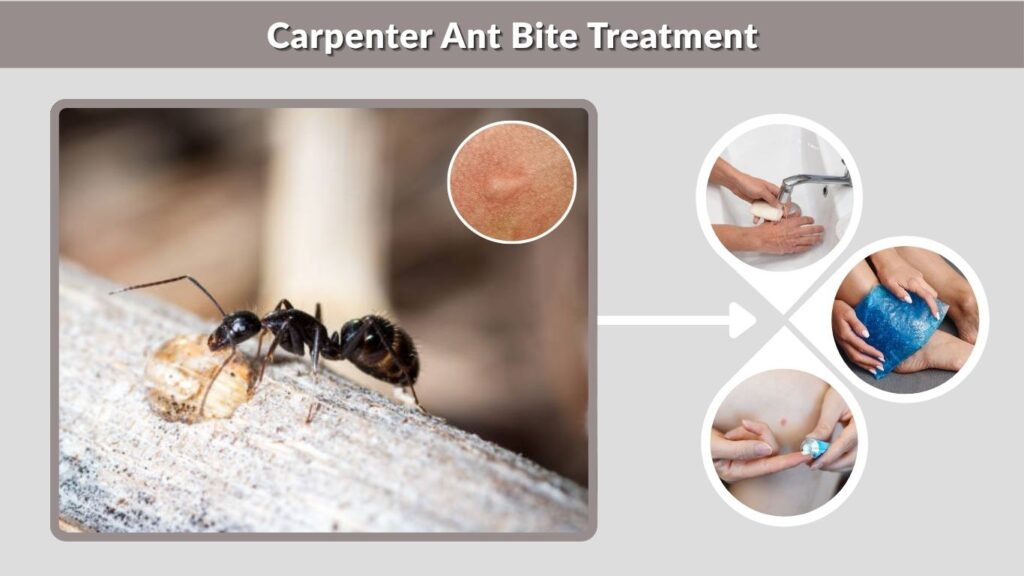
Most carpenter ant bites can be treated at home. The goal is to clean the area, reduce pain, and prevent infection.
Step-by-Step Treatment
- Move away from the ants or nest.
- Wash the bite with soap and water.
- Apply a cold compress for 10–15 minutes.
- Avoid scratching the bite.
- Use an over-the-counter anti-itch cream if needed.
- Take an oral antihistamine if itching is strong.
- Watch for swelling, infection, or allergic symptoms.
For ant bites in general, basic care often includes cleaning the skin, reducing itching, and monitoring for allergic symptoms.
If the bite is on a child, dog, cat, or someone with a history of insect allergies, watch more carefully.
Carpenter Ant Bite Allergic Reaction
An allergic reaction to a carpenter ant bite is possible, but it is not common. Mild reactions may include extra itching, swelling, redness, or a rash around the bite. A severe allergic reaction is rare but serious.
Possible Allergy Signs
Watch for:
- Hives away from the bite
- Widespread rash
- Tight chest
- Wheezing
- Trouble breathing
- Nausea or vomiting
- Facial swelling
- Dizziness
If any breathing problem, throat swelling, or faintness occurs, seek emergency help.
Do Black, Red, or Florida Carpenter Ants Bite?
Yes, black carpenter ants, red carpenter ants, and Florida carpenter ants can bite if threatened. Color does not change the basic answer. A large carpenter ant of any common type may bite when handled or disturbed.
Florida carpenter ants are known to bite and can spray formic acid, but they do not sting. Black carpenter ants can also bite because they have strong mandibles.
Do Carpenter Ants With Wings Bite?
Winged carpenter ants can bite, but they are usually focused on mating and leaving the colony. Winged ants are reproductive males and females, also called swarmers. They may appear indoors when a mature colony is nearby or inside the structure.
A winged carpenter ant is not more poisonous or more dangerous than a wingless one. The bigger concern is that winged carpenter ants in the house may signal a mature nest.
Carpenter Ant Bite vs Fire Ant Bite
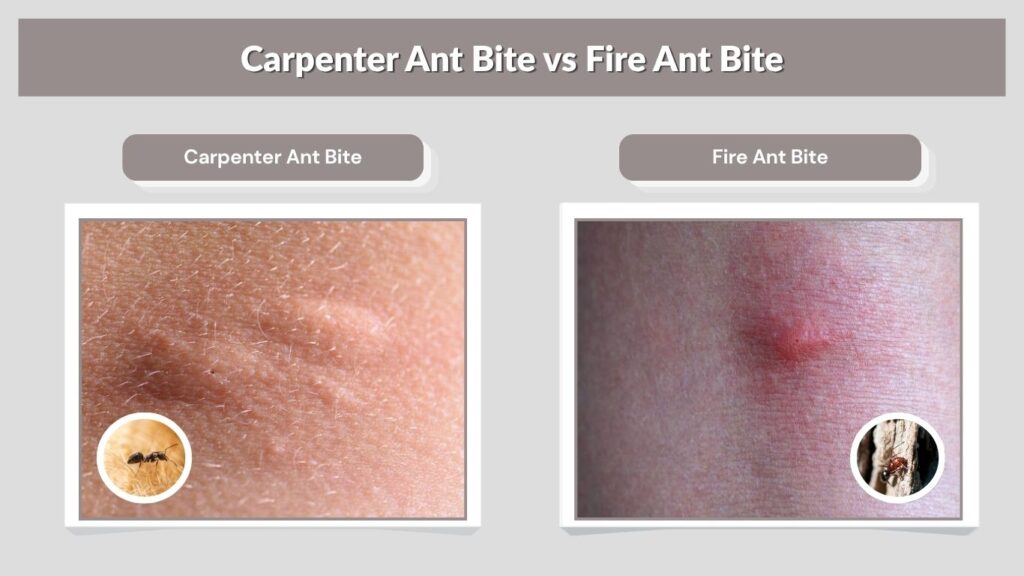
Carpenter ant bites and fire ant stings are different. Carpenter ants bite with jaws and do not sting. Fire ants sting and inject venom, often causing burning pain and small pustules.
| Feature | Carpenter Ant Bite | Fire Ant Sting |
| Attack method | Bites with jaws | Stings with venom |
| Sting? | No | Yes |
| Pain | Pinch or burning | Burning, sharp pain |
| Common mark | Red bump or irritation | Red bump, often with pustule |
| Multiple attacks | Less common | Common with fire ants |
| Main concern | Pain, irritation, rare allergy | Pain, pustules, allergy risk |
If you have multiple painful bumps with white centers, fire ants or another stinging insect may be more likely than carpenter ants.
Carpenter Ant Bite on Dogs and Cats
Carpenter ants can bite dogs or cats, but serious problems are uncommon. Pets may get bitten if they sniff, paw, or lie near an ant trail or nest.
A pet may lick, scratch, or bite in the area. You may notice mild redness or swelling. If your pet has facial swelling, vomiting, weakness, trouble breathing, or repeated pawing at the mouth, contact a veterinarian.
How to Prevent Carpenter Ant Bites
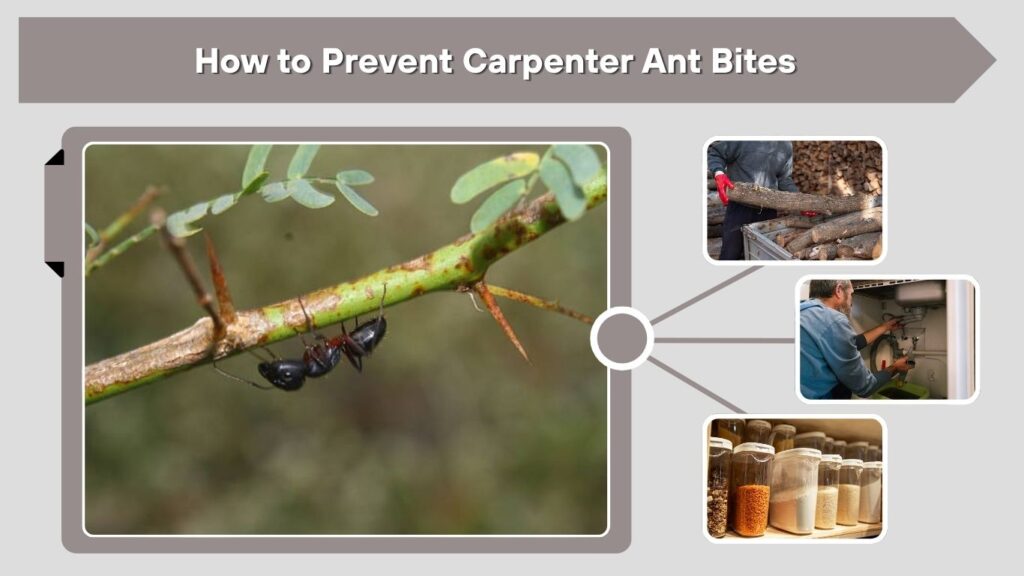
The best way to prevent bites is to avoid handling carpenter ants and reduce the chance of an infestation near your home. Carpenter ants often nest in damp or damaged wood, so moisture control is important.
Prevention Tips
- Wear gloves when moving firewood or logs
- Avoid disturbing rotten wood with bare hands
- Keep firewood away from the house
- Remove dead stumps near the foundation
- Fix roof and plumbing leaks
- Seal cracks around doors and windows
- Trim branches away from the house
- Store food in sealed containers
- Clean crumbs and pet food
- Call pest control if you see many carpenter ants indoors
If you repeatedly see large carpenter ants inside, especially at night or near damp wood, look for a hidden nest instead of only treating the visible ants.
FAQs
Do carpenter ants bite?
Yes, carpenter ants can bite. They usually bite only when handled, trapped, or when their nest is disturbed. They do not usually attack people for no reason.
Do carpenter ants bite or sting?
Carpenter ants bite, but they do not sting. They use their jaws to pinch the skin and may spray formic acid, which can make the bite feel like it is burning.
What does a carpenter ant bite look like?
A carpenter ant bite may look like a small red bump or irritated mark. It may be painful, itchy, swollen, or tender for a short time.
How long does a carpenter ant bite last?
A mild carpenter ant bite may improve within a few hours to a couple of days. If swelling, redness, or pain gets worse, or if signs of infection appear, seek medical advice.
Are carpenter ant bites dangerous?
Carpenter ant bites are usually not dangerous. However, allergic reactions and infections are possible. Seek urgent help for trouble breathing, facial swelling, dizziness, or rapidly worsening symptoms.