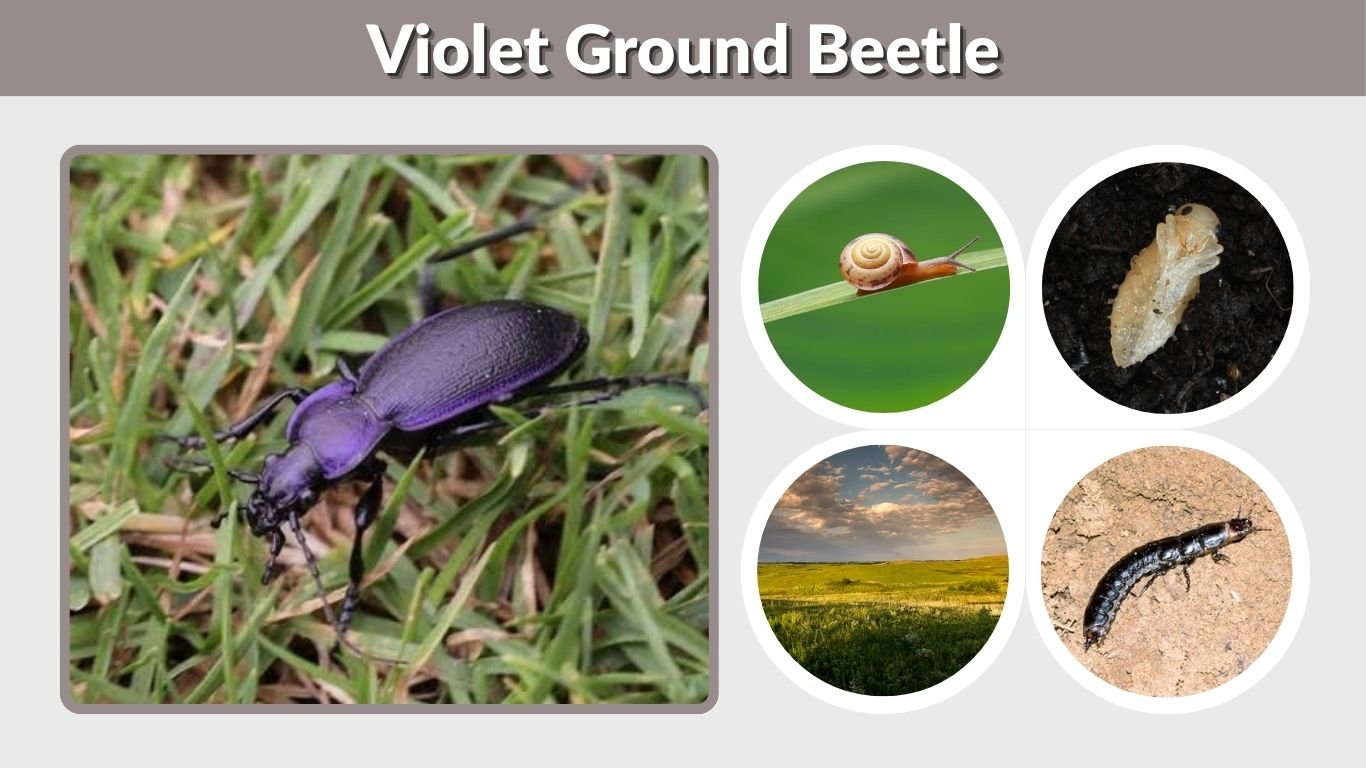
The violet ground beetle (Carabus violaceus) is a fascinating insect recognized by its dark black body and beautiful metallic-purple edges. Commonly found in the UK and other parts of Europe, this large ground beetle plays an important role in controlling garden pests. Despite its intimidating appearance, it is generally harmless to humans and beneficial to the environment. Understanding violet ground beetle identification, size, diet, habitat, larvae, and life cycle can help you recognize this remarkable species and appreciate its contribution to healthy gardens and natural ecosystems.
What Is a Violet Ground Beetle?
The violet ground beetle is a large, predatory beetle belonging to the Carabidae family. Its scientific name is Carabus violaceus. It is particularly recognizable because of the violet or blue metallic coloring along its wing cases and thorax.
Unlike many flying beetles, this species cannot fly. Instead, it relies on powerful legs to run across the ground while hunting smaller invertebrates. These beetles are mainly nocturnal and spend daylight hours sheltering beneath stones, logs, and vegetation.
Violet Ground Beetle Facts
- Scientific name: Carabus violaceus
- Family: Carabidae
- Size: Approximately 20–30 mm
- Color: Black with metallic violet or blue edges
- Diet: Slugs, snails, worms, and insect larvae
- Habitat: Woodlands, grasslands, gardens, and moorlands
- Activity: Primarily nocturnal
- Flight ability: Flightless
These characteristics make violet ground beetles useful predators in many natural environments.
Violet Ground Beetle Identification and Appearance
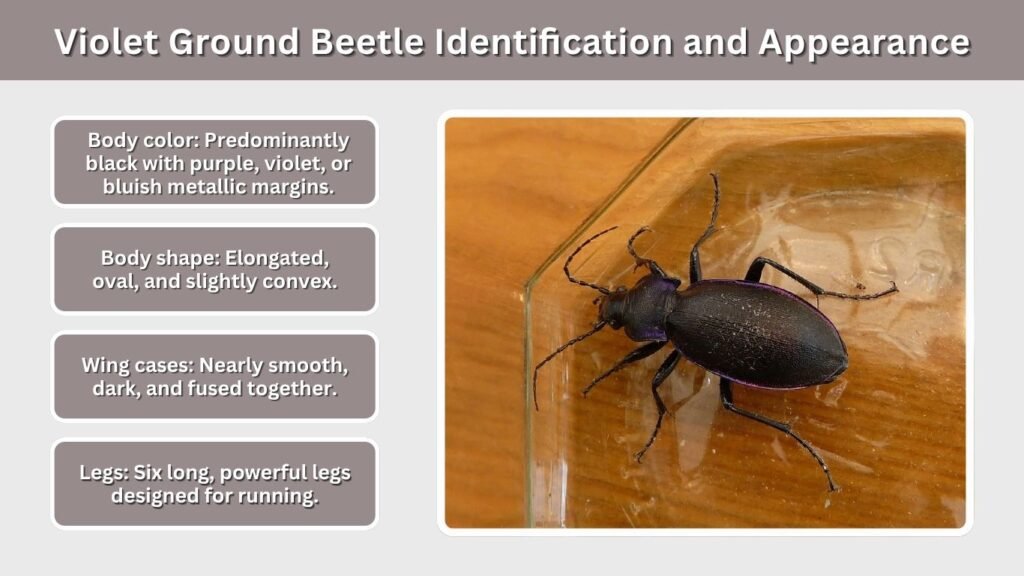
Identifying a violet ground beetle is relatively straightforward when its distinctive body shape and coloring are visible. However, several related beetles have similar appearances, making careful observation important.
Physical Characteristics
- Body color: Predominantly black with purple, violet, or bluish metallic margins.
- Body shape: Elongated, oval, and slightly convex.
- Wing cases: Nearly smooth, dark, and fused together.
- Legs: Six long, powerful legs designed for running.
- Antennae: Long, segmented antennae that help detect surroundings.
- Jaws: Strong mandibles used for capturing and consuming prey.
Violet Ground Beetle vs. Rough Violet Ground Beetle
The rough or ridged violet ground beetle (Carabus problematicus) closely resembles Carabus violaceus. Both have black bodies with violet-colored edges.
The main difference lies in the wing-case texture. The common violet ground beetle has relatively smooth, dull wing cases, while the ridged species possesses more pronounced grooves and raised patterns.
The ridged violet ground beetle also tends to have a flatter body and shinier appearance. Because these features can vary, accurate identification sometimes requires examining additional body characteristics.
Violet Ground Beetle Size and Habitat
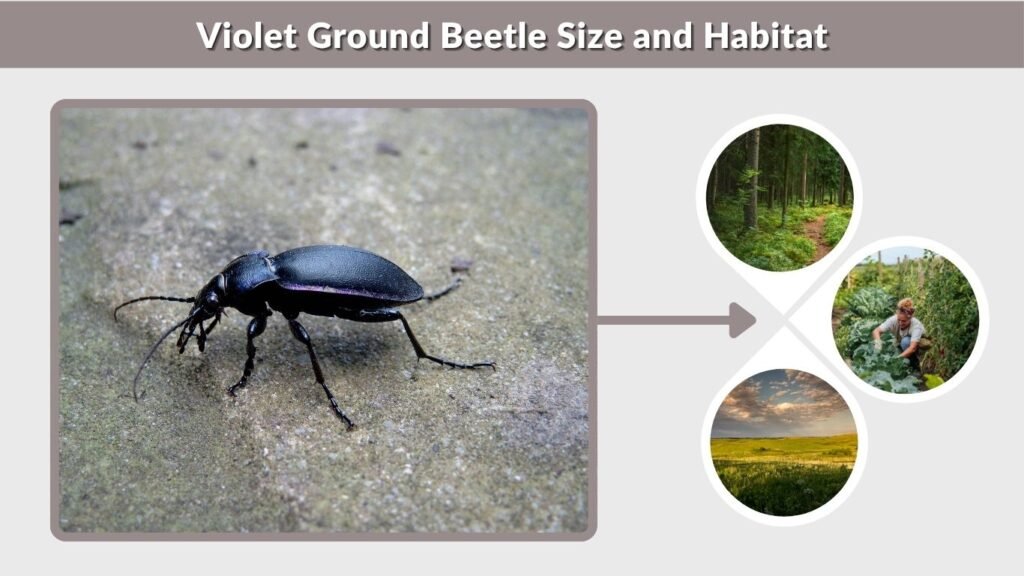
Violet ground beetles are among the larger ground beetles commonly encountered in Britain. Their impressive size, dark coloration, and rapid movement make them noticeable when crossing garden paths.
How Big Is a Violet Ground Beetle?
An adult violet ground beetle typically measures between 20 and 30 millimeters long. Its relatively large body, prominent jaws, and long legs can make it appear particularly intimidating.
Females and males have broadly similar appearances. Body size alone is not a reliable way to distinguish the sexes or separate closely related violet ground beetle species.
Where Are Violet Ground Beetles Found?
Violet ground beetles occur across much of Europe and are widespread throughout mainland Britain, including many parts of Scotland.
Their preferred environments include:
- Woodlands: Under fallen trees, bark, and leaf litter.
- Gardens: Beneath flowerpots, stones, and vegetation.
- Grasslands: In undisturbed grassy areas.
- Moorlands: Among vegetation and sheltered ground.
- Parks: In shaded soil and beneath natural debris.
They usually prefer places offering shelter and access to prey. They are especially noticeable during milder weather, often from spring through autumn.
What Do Violet Ground Beetles Eat?
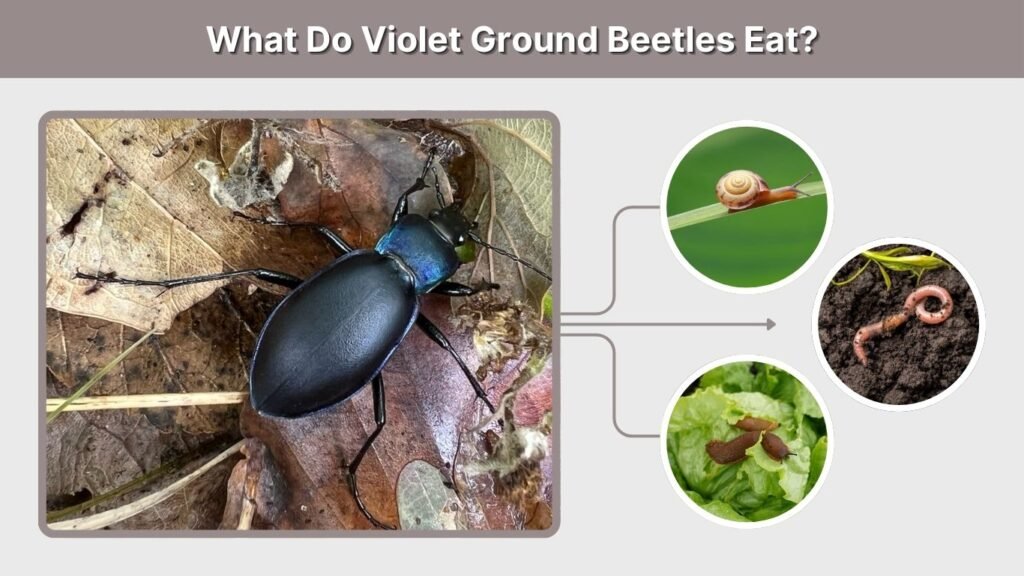
Violet ground beetles are carnivorous predators that feed on various ground-dwelling invertebrates. Their powerful mandibles allow them to capture, grip, and consume soft-bodied prey.
Their diet primarily includes slugs, small snails, earthworms, and different insect larvae. They may also hunt caterpillars and other small invertebrates encountered while searching through vegetation.
Most hunting takes place at night when their prey is active. Using their sensitive antennae and strong legs, these beetles move through soil, fallen leaves, and damp vegetation in search of food.
Why Are Violet Ground Beetles Beneficial?
Violet ground beetles help maintain ecological balance by reducing populations of certain garden pests. They can consume slugs, cutworms, leatherjackets, and caterpillars that may damage ornamental plants and vegetables.
Their predatory behavior makes them valuable natural allies for gardeners. Maintaining undisturbed garden areas and reducing unnecessary pesticide applications can help protect these beneficial insects.
Do Violet Ground Beetles Bite Humans?
Violet ground beetles are not aggressive toward humans and do not normally bite people. Their jaws are primarily designed for capturing smaller animals rather than defending against humans.
However, like other large ground beetles, they may deliver a minor pinch if trapped or handled roughly. They are not venomous and do not pose a significant danger to people or pets.
A defensive pinch might cause temporary discomfort, but serious reactions are unusual. If the skin is broken, gently wash the affected area with soap and water.
Do Violet Ground Beetles Produce a Smell?
Ground beetles possess defensive glands that can release chemical secretions when threatened. Some species produce noticeable unpleasant odors.
A disturbed violet ground beetle may release a defensive secretion, so handling one unnecessarily is best avoided. Observing the beetle without touching it helps prevent stress and allows it to continue hunting naturally.
Violet Ground Beetle Larvae and Life Cycle
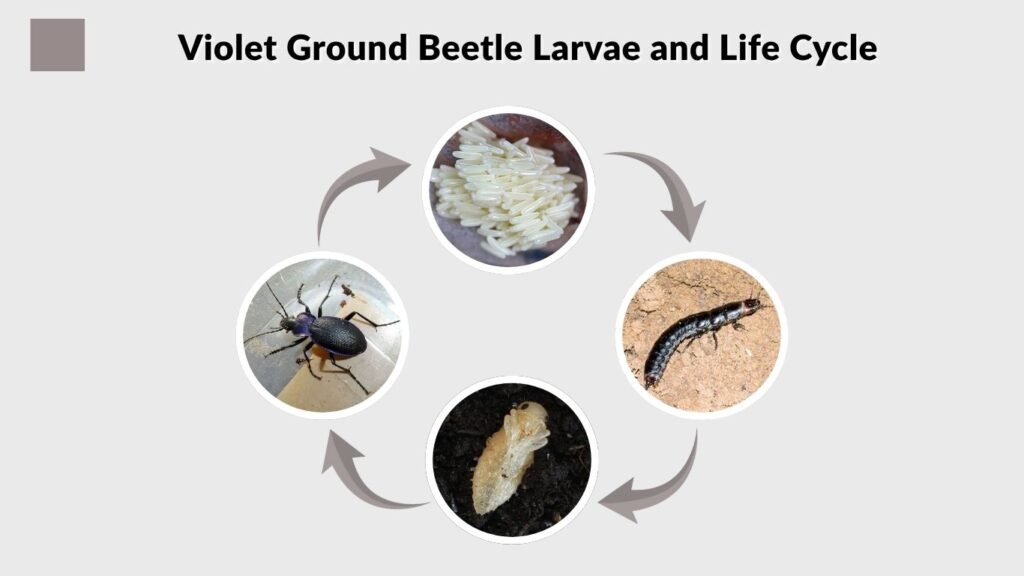
Like other beetles, violet ground beetles undergo complete metamorphosis, progressing through egg, larval, pupal, and adult stages.
In Britain, Carabus violaceus generally breeds during autumn. Eggs develop in soil or organic material, and the larvae continue developing through colder months before pupating.
What Do Violet Ground Beetle Larvae Look Like?
Violet ground beetle larvae look significantly different from adults. Rather than having rounded wing cases, they possess long, segmented bodies with well-developed jaws.
They are typically dark-colored above, with three pairs of legs positioned near the front of the body. Their active movements and predatory feeding habits resemble those of adult ground beetles.
Larvae live in soil, leaf litter, and other sheltered habitats, where they hunt small invertebrates.
Stages of the Violet Ground Beetle Life Cycle
- Egg: Females deposit eggs individually or in small groups within soil or organic material.
- Larva: Young larvae hatch and feed actively on small animals while growing through several molts.
- Pupa: Mature larvae pupate in protected locations, where their bodies transform into adults.
- Adult: Newly developed beetles emerge and eventually reproduce, continuing the cycle.
Adults may survive through winter and can live beyond a single breeding season.
Violet Ground Beetle in House: What Should You Do?
Finding a violet ground beetle indoors can be surprising, especially because of its large size and unusual coloration. However, these insects normally live outdoors and do not establish household infestations.
They may enter through open doors, damaged window screens, or gaps around foundations while searching for shelter.
If you discover one indoors, gently place a container over it, slide a piece of paper underneath, and release it into a sheltered outdoor area. Avoid crushing or spraying the beetle.
Sealing openings around windows and doors can reduce accidental entry. These beetles do not damage furniture, clothing, stored food, or buildings.
FAQs
1. Are violet ground beetles poisonous?
No. Violet ground beetles are not poisonous or venomous to humans. They are generally harmless, although rough handling can occasionally cause a defensive pinch.
2. Can violet ground beetles fly?
No. Their wing cases are fused, and they cannot fly. Instead, they move quickly across the ground using their long legs.
3. Are violet ground beetles rare in the UK?
No. Carabus violaceus is widespread and relatively common in mainland Britain. Its close relative, Carabus problematicus, is also widespread but less common in some regions.
4. Are violet ground beetles found in Scotland?
Yes. Violet ground beetles occur across much of Scotland, including woodlands and moorlands. They are particularly noticeable while moving along paths or beneath sheltered vegetation.
5. Should you remove violet ground beetles from your garden?
Generally, no. Violet ground beetles are beneficial predators that help control slugs and insect pests. Leaving them undisturbed supports garden biodiversity and natural pest management.