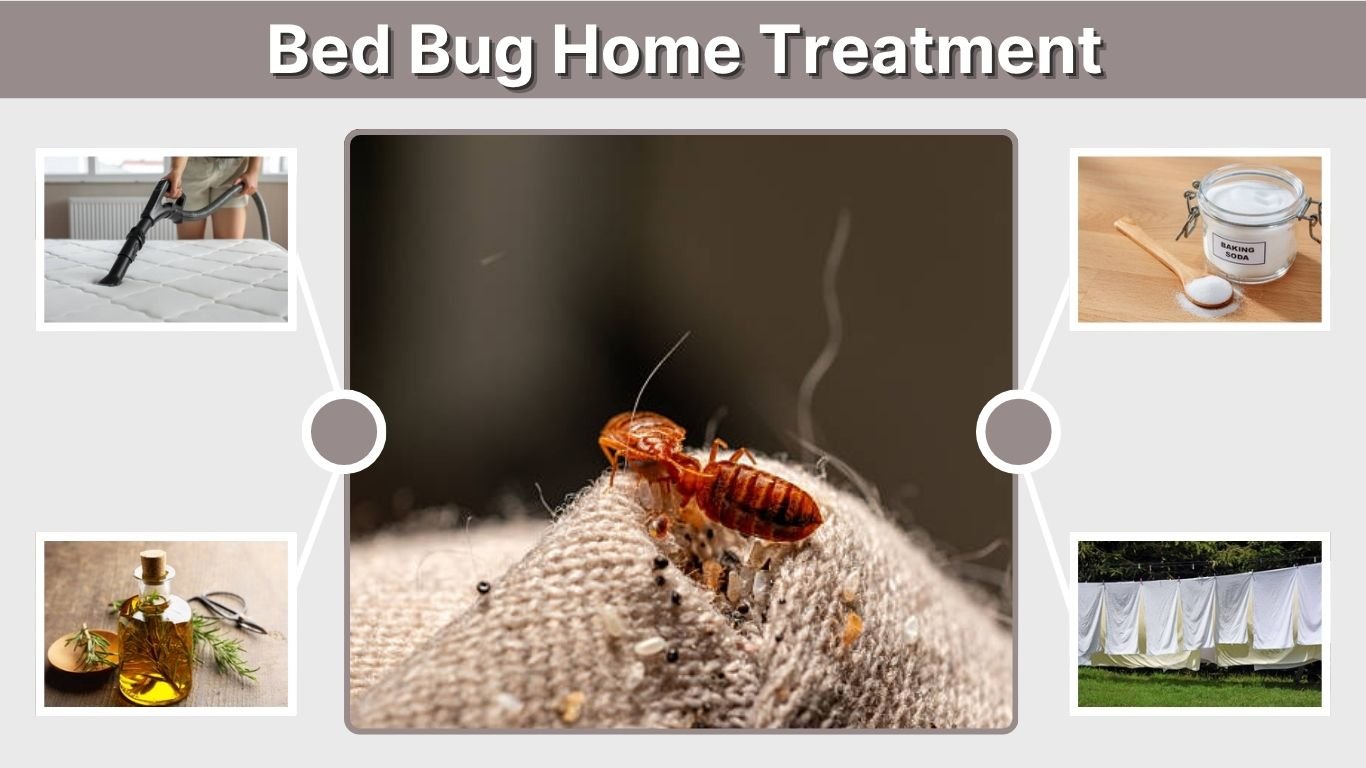
Bed bugs can turn a comfortable home into a stressful environment, especially when they hide inside mattresses, furniture, and bedroom cracks. Fortunately, several bed bug home treatment methods can help control these stubborn insects without immediately hiring an exterminator. From high-heat laundry treatment and steam cleaning to mattress encasements and targeted pest control, the right combination can significantly reduce an infestation. However, not every homemade remedy works effectively. This guide explains eight practical bed bug treatment steps, important safety precautions, and ways to prevent bed bugs from returning.
How to Identify Bed Bugs in Your Home
Before starting bed bug treatment at home, confirm that bed bugs are present. These small, reddish-brown insects usually hide close to sleeping areas and emerge to feed.
Common Signs of Bed Bugs
- Live insects: Small, flat, oval-shaped bugs hiding in mattress seams or furniture.
- Dark spots: Tiny black or brown fecal marks on bedding and nearby surfaces.
- Blood stains: Small reddish stains on sheets or pillowcases.
- Shed skins: Pale, translucent exoskeletons left behind as bed bugs grow.
- White eggs: Tiny eggs hidden inside cracks, fabric folds, and furniture joints.
- Musty odor: A noticeable sweet or unpleasant smell in some severe infestations.
Bites alone cannot confirm bed bugs because other insects and skin conditions can cause similar reactions. Physical evidence provides a more reliable diagnosis.
8 Best Bed Bug Home Treatment Methods
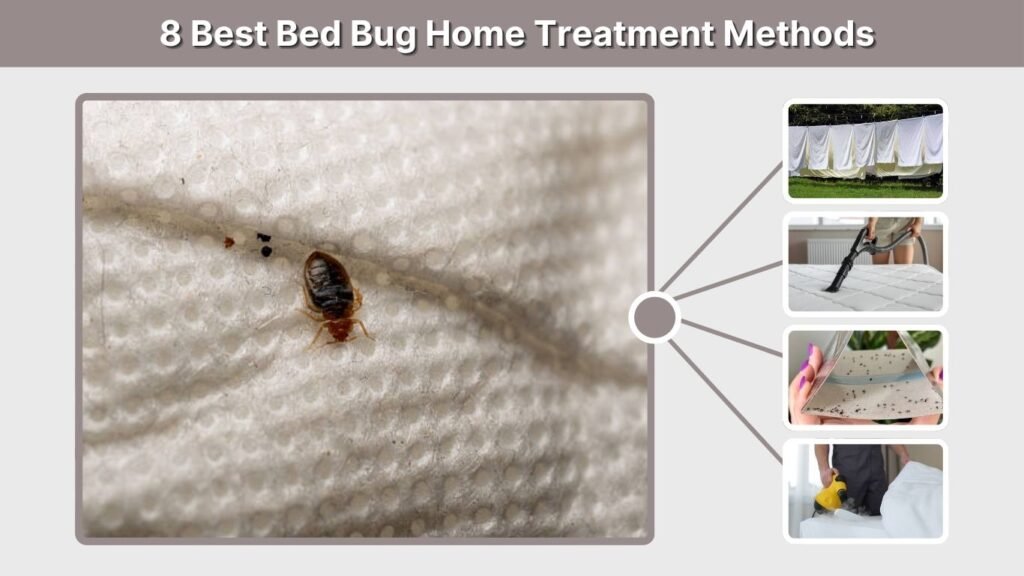
Effective home treatment requires multiple techniques that address insects, eggs, and hidden populations. The Environmental Protection Agency recommends integrated pest management, combining physical removal, heat, monitoring, and appropriate pesticides.
1. Wash and Heat-Dry Bedding
High-temperature laundry treatment is one of the simplest ways to kill bed bugs hiding in washable belongings.
Place infested sheets, blankets, pillowcases, and suitable clothing in sealed bags before transporting them.
Use a clothes dryer on high heat for at least 30 minutes, following fabric-care instructions. Washing alone may not eliminate every bed bug or egg.
After treatment, place clean items inside fresh, sealed plastic bags to prevent reinfestation.
2. Vacuum Mattresses and Furniture
Thorough vacuuming helps remove visible bed bugs and some eggs from accessible hiding places.
Pay particular attention to mattress seams, bed frames, upholstered furniture, carpet edges, and baseboards.
Use a crevice attachment to clean narrow spaces where insects often hide.
Immediately seal and dispose of vacuum contents in an outdoor trash container. Vacuuming reduces infestations but cannot eliminate every hidden insect.
3. Use a Steam Cleaner
Steam cleaning can kill bed bugs and eggs when sufficient heat reaches them.
The EPA recommends steam temperatures of at least 130°F (54°C). Use equipment with gentle airflow to avoid scattering insects.
Slowly treat accessible mattress seams, furniture joints, upholstery, and carpet edges.
Avoid applying steam to electrical outlets, electronics, or materials that could suffer moisture or heat damage.
4. Install Bed Bug Mattress Encasements
Bed-bug-proof mattress encasements trap insects already inside mattresses and box springs.
Choose durable, tightly sealed covers specifically designed for bed bug protection.
Keep the encasements installed for at least one year, checking regularly for tears or damaged zippers.
Encasements cannot eliminate bed bugs living elsewhere in the bedroom, so additional treatment remains necessary.
5. Reduce Clutter and Hiding Places
Clutter makes bed bug infestations more difficult to inspect and control.
Organize belongings, remove unnecessary items, and seal cracks around baseboards or furniture.
Keep potentially infested belongings contained rather than transferring them into unaffected rooms.
Reducing hiding places improves treatment accessibility and makes future inspections easier.
6. Use Bed Bug Interceptor Traps
Interceptor traps fit underneath bed legs to capture bed bugs attempting to climb onto furniture.
Move the bed slightly away from walls and prevent bedding from touching the floor.
Check interceptors regularly for insects. These traps are especially valuable for monitoring whether treatment is working.
However, they cannot capture every bed bug hiding in the room.
7. Apply Approved Bed Bug Pesticides
Some infestations require targeted chemical treatment alongside cleaning and heat.
Choose pesticides registered for bed bugs and approved for indoor residential use in your jurisdiction.
Follow the label carefully, including instructions about application surfaces, protective equipment, ventilation, and reentry.
Never spray bedding or mattresses unless the product specifically permits it. Avoid mixing pesticides or increasing application rates.
8. Repeat Inspections and Monitoring
Bed bug home treatment rarely succeeds after a single cleaning session.
Inspect the bedroom every few days for live insects, eggs, and fresh fecal spots.
Continue checking mattress seams, furniture joints, and interceptor traps.
Additional treatment may be necessary when insects survive or eggs hatch. If activity persists, contact an experienced pest management professional.
Do Bed Bug Home Remedies Really Work?
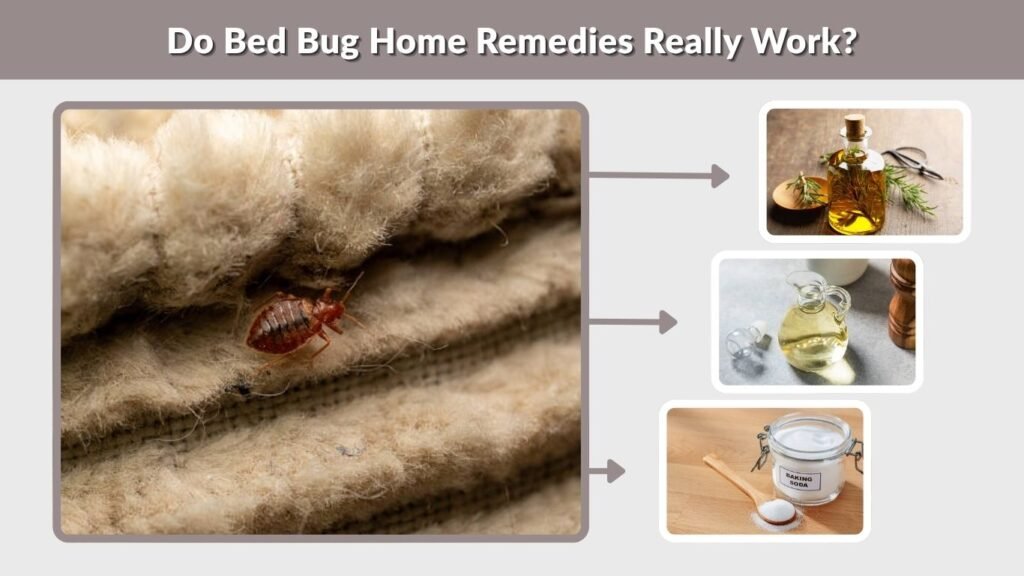
Homemade remedies are popular because they are inexpensive and readily available. Unfortunately, many provide little or no reliable control of established bed bug infestations.
Common Home Remedies to Avoid
- Baking soda: No convincing evidence shows that baking soda eliminates bed bug infestations.
- Vinegar: Direct contact may affect some insects, but vinegar cannot reliably eliminate hidden populations.
- Essential oils: Some laboratory findings suggest insecticidal activity, but ordinary household applications are not dependable treatments.
- Rubbing alcohol: Highly flammable and dangerous to spray around furniture or bedding.
- Kerosene or gasoline: Serious fire and poisoning hazards; never use them for pest control.
Heat-safe laundry drying, appropriate steam treatment, and physical removal are better-supported nonchemical home methods.
How to Prepare Your Home for Bed Bug Treatment
Proper preparation helps treatment reach hidden insects and prevents accidental spreading.
Home Preparation Checklist
- Remove unnecessary clutter without transferring infested belongings elsewhere.
- Seal bedding and clothing in plastic bags before moving them for treatment.
- Empty and inspect suitable furniture compartments as directed by your treatment plan.
- Vacuum around mattresses, furniture, baseboards, and carpet edges.
- Identify heat-sensitive belongings before any professional heat treatment.
- Follow pesticide-label instructions or your exterminator’s preparation requirements.
Avoid throwing away mattresses unnecessarily. Untreated furniture may spread bed bugs when carried through shared spaces.
Can Heat Treatment for Bed Bugs Damage Your Home?
Professional heat treatment can damage heat-sensitive items when preparations are inadequate.
Electronics, certain plastics, candles, cosmetics, and delicate furnishings may require special handling. A professional should assess vulnerable belongings and recommend appropriate precautions.
Never attempt whole-room heat treatment using space heaters, fireplaces, propane heaters, or your home’s thermostat. These methods are unreliable and create significant fire risks.
Professional equipment and temperature monitoring are necessary for safe, effective whole-room heating.
How Long Does Bed Bug Home Treatment Take?
Eliminating bed bugs at home may take several weeks or months, depending on infestation severity and treatment consistency.
Dryer heat can eliminate bed bugs in individual treated items relatively quickly, but insects hiding in furniture and wall cracks may survive.
Repeat inspections and maintain monitoring devices until there is sustained evidence that the infestation has ended.
For widespread infestations or recurring bed bug activity, professional treatment is usually the more reliable option.
Bed Bug Bite Treatment at Home
Bed bug bites commonly produce itchy, red skin reactions. However, some people develop no visible reaction.
Wash affected skin gently and avoid scratching. A cool compress may relieve discomfort.
An appropriate over-the-counter antihistamine or mild hydrocortisone cream may help itching when used as directed.
Seek medical attention if you develop severe swelling, signs of infection, or a significant allergic reaction. Treating bites does not eliminate bed bugs from the home.
FAQs
1. What Is the Best Bed Bug Treatment at Home?
The best approach combines high-heat laundry drying, thorough vacuuming, appropriate steam cleaning, mattress encasements, and repeated monitoring. These methods work together to reduce insects and hiding places. Established infestations may still require professional pesticide or heat treatment.
2. Can Baking Soda Kill Bed Bugs?
Baking soda is not a proven solution for eliminating bed bug infestations. It cannot reliably reach hidden insects or eggs. Instead, use effective heat-based methods, physical removal, and approved pest control products when necessary.
3. How Long After Bed Bug Treatment Can I Return Home?
Reentry depends on the treatment used. Professional heat treatment requires the property to cool and be cleared by the technician. Chemical treatments have product-specific reentry instructions. Always follow the exterminator’s directions and pesticide label before returning.
4. Does Homeowners Insurance Cover Bed Bug Treatment?
Standard homeowners insurance generally excludes pest infestations, including bed bugs, because they are commonly considered maintenance-related problems. Coverage can vary by insurer, policy, and circumstances. Review your policy or contact your insurance provider for confirmation.
5. Can I Completely Eliminate Bed Bugs Without an Exterminator?
Some small infestations can be eliminated using careful DIY methods, but success is not guaranteed. Bed bugs hide in difficult-to-access spaces and eggs may survive incomplete treatment. Repeated monitoring and professional assistance are recommended when infestations persist.