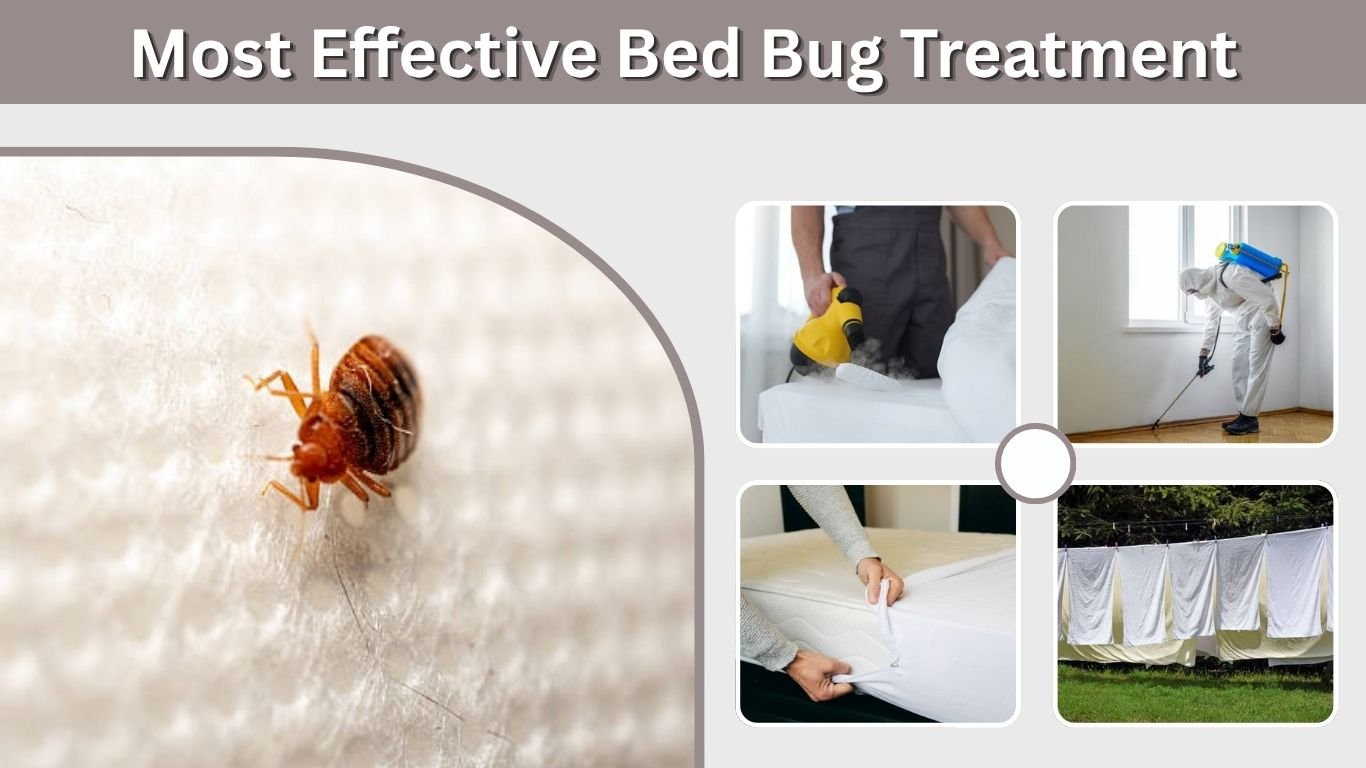
Finding the most effective bed bug treatment can be challenging because these insects hide in mattresses, furniture, and tiny wall cracks. Many homeowners try sprays or natural remedies without realizing that bed bugs require a comprehensive treatment approach. Fortunately, professional heat treatment, targeted insecticides, steam cleaning, and other proven methods can help eliminate infestations. The right solution depends on the severity of the problem, available equipment, and treatment preparation. This guide explains seven effective bed bug treatments, including professional services and practical home solutions.
What Is the Most Effective Treatment for Bed Bugs?
The most effective bed bug treatment is generally an integrated pest management (IPM) approach combining heat, physical removal, targeted pesticides, and follow-up monitoring.
Professional heat treatment is particularly effective because sufficient temperatures can kill adult bed bugs, nymphs, and eggs. However, heat provides no lasting protection against surviving or newly introduced insects.
The US Environmental Protection Agency recommends combining appropriate chemical and nonchemical methods instead of relying on a single solution.
7 Most Effective Bed Bug Treatment Methods
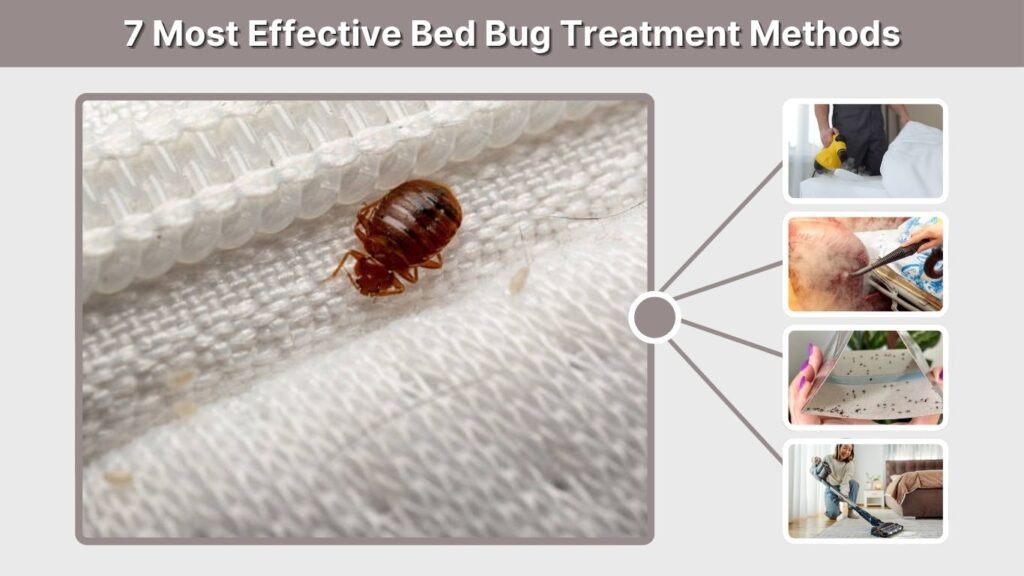
Different treatment methods offer advantages depending on infestation size, hiding locations, and available resources. Combining compatible techniques generally produces better results than using one method alone.
1. Professional Heat Treatment
Professional heat treatment is among the most effective options for eliminating bed bugs throughout an infested room or property.
Technicians use specialized equipment to heat affected areas while monitoring temperatures inside furniture and other hiding places.
The EPA identifies heating infested areas to at least 120°F (49°C) for 90 minutes as an effective approach for killing eggs, provided the required temperature reaches the insects.
Unlike chemical treatments, heat can kill bed bugs without direct pesticide exposure. However, untreated hiding places and reintroduction remain possible.
2. Professional Chemical Treatment
Professional chemical treatment uses approved insecticides to target bed bugs hiding around beds, baseboards, furniture, and structural gaps.
Pest control specialists may select different pesticide classes depending on the infestation and evidence of insecticide resistance.
Some products provide residual activity, helping control bed bugs that encounter treated surfaces later.
Because certain populations resist common insecticides, chemical treatment should be combined with inspections and nonchemical methods.
3. Steam Treatment
Steam treatment uses high temperatures to kill bed bugs directly on accessible surfaces.
A suitable steam cleaner can treat mattress seams, upholstered furniture, bed frames, and carpet edges.
Steam should reach at least 130°F (54°C), according to EPA guidance. A diffuser and gentle airflow help prevent insects from scattering.
Although steam kills exposed insects and eggs, it cannot reliably reach every concealed hiding place.
4. High-Heat Laundry Treatment
Hot dryer treatment is an inexpensive and effective method for eliminating bed bugs from washable, heat-safe belongings.
The EPA recommends placing clothing, bedding, and other suitable fabrics in a dryer on high heat for approximately 30 minutes.
Washing alone may not kill every insect or egg. After drying, place treated items into clean, sealed bags to prevent reinfestation.
5. Bed Bug Mattress Encasements
Bed bug mattress encasements prevent insects trapped inside a mattress or box spring from escaping and feeding.
Specially designed covers also reduce hiding places and simplify future inspections.
However, encasements do not kill bed bugs living elsewhere in the room. They should remain sealed for an extended period and be used alongside other treatment methods.
6. Vacuuming and Clutter Removal
Thorough vacuuming physically removes accessible bed bugs, eggs, and debris from mattresses, carpets, and furniture.
A vacuum with a crevice attachment is particularly useful around bed frames and baseboards.
Immediately seal and dispose of vacuum contents in an outdoor trash container.
Although vacuuming reduces insect populations, it does not reliably eliminate every hidden bed bug.
7. Bed Bug Interceptor Traps
Interceptor traps are placed beneath bed and furniture legs to capture bed bugs attempting to climb.
These devices help detect ongoing activity and determine whether treatment is working.
They are particularly useful when combined with mattress encasements and proper bed isolation.
However, traps are primarily monitoring and population-reduction tools, not complete infestation treatments.
Most Effective Bed Bug Treatment at Home
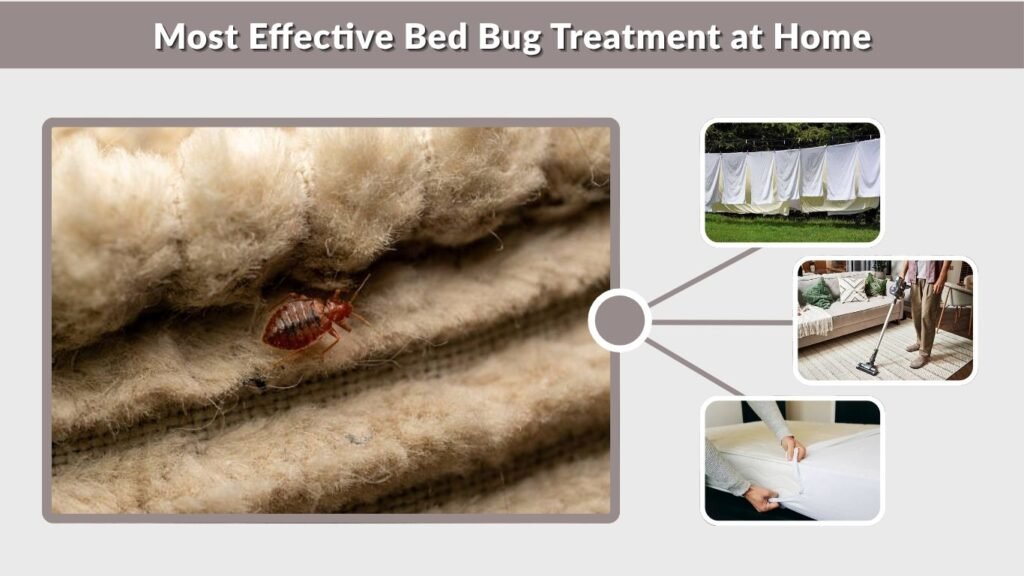
Home treatment can help control a small, recently discovered infestation. However, DIY methods require careful preparation, repeated inspection, and consistent monitoring.
Step-by-Step DIY Bed Bug Treatment
- Confirm bed bug activity: Inspect mattresses, bed frames, furniture joints, and nearby cracks.
- Contain infested belongings: Seal affected fabrics and movable items in bags before transporting them.
- Use dryer heat: Treat heat-safe clothing, bedding, and pillowcases on high heat for 30 minutes.
- Vacuum thoroughly: Clean accessible hiding places and immediately dispose of vacuum contents outdoors.
- Steam suitable surfaces: Carefully treat accessible mattress seams and upholstered furniture.
- Install mattress encasements: Use bed-bug-proof covers on mattresses and box springs.
- Monitor and repeat: Check interceptor traps and inspect hiding places regularly. Arrange professional treatment if activity continues.
Home treatment is most practical when the affected area is limited and all hiding places can be inspected.
Professional Heat Treatment vs Chemical Treatment
Both heat and chemical treatments can eliminate bed bugs when performed correctly. Their effectiveness depends on thorough application and the infestation’s characteristics.
| Feature | Heat treatment | Chemical treatment |
| Kills bed bug eggs | Yes, with adequate exposure | Depends on product |
| Treatment speed | Often completed in one day | May require several visits |
| Residual protection | None | Some products provide it |
| Hidden bed bugs | Effective if heat reaches them | Effective if appropriate products reach them |
| Professional expertise | Required for whole-room heating | Recommended |
| Follow-up monitoring | Necessary | Necessary |
Professional services sometimes combine both approaches. This can provide immediate heat-based control alongside targeted residual protection in areas where bed bugs might survive.
Are Natural Bed Bug Treatments Effective?
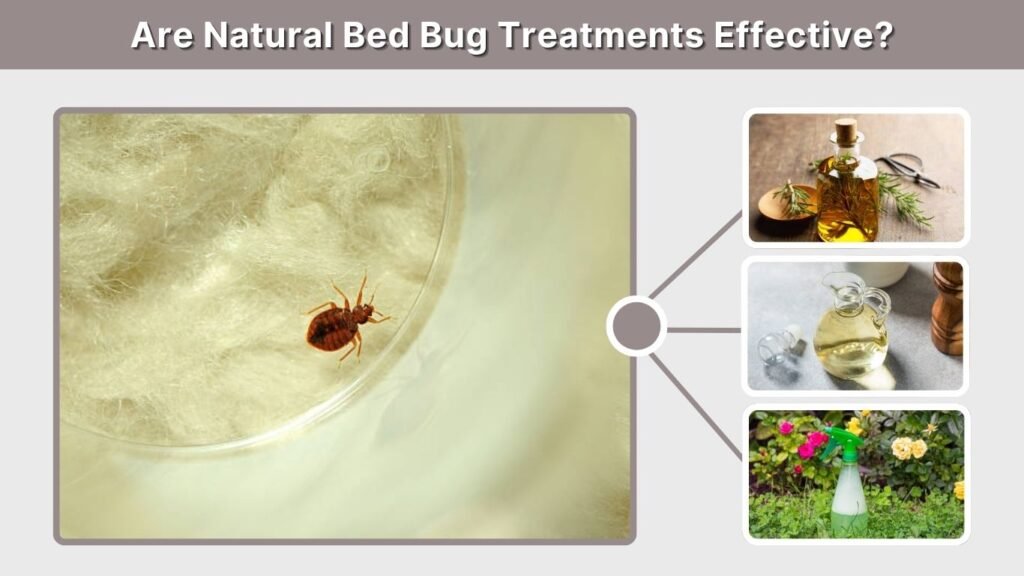
Natural remedies attract homeowners seeking affordable and chemical-free alternatives. However, most household remedies cannot reliably eliminate an established infestation.
Essential oils, vinegar, and homemade sprays generally lack strong evidence of whole-home eradication.
Rubbing alcohol and kerosene should never be used because they present serious fire hazards. Likewise, heating rooms with household space heaters is dangerous and ineffective.
Pesticidal desiccant dusts may support bed bug control, but only products approved and labeled for this purpose should be used. Food-grade or pool-grade diatomaceous earth is unsuitable because of inhalation hazards.
Most Effective Bed Bug Treatment for Mattresses
Mattresses require special attention because bed bugs frequently hide along seams, piping, labels, and fabric folds.
A combination of vacuuming, appropriate steam treatment, mattress inspection, and bed-bug-resistant encasements can reduce activity considerably.
Avoid applying insecticides directly to mattresses unless the product label specifically authorizes that application.
Replacing a mattress is not always necessary. Even a new mattress can become infested if bed bugs remain inside the bed frame or nearby furniture.
How Long Does Effective Bed Bug Treatment Take?
Professional heat treatment may be completed within a day, but confirming elimination requires additional monitoring.
Chemical treatment often requires multiple applications over several weeks, particularly when eggs hatch after the initial treatment.
The exact duration depends on infestation severity, treatment coverage, and whether untreated hiding places remain.
Inspecting affected rooms regularly and maintaining interceptor traps helps identify surviving insects before populations increase.
When Should You Hire Professional Bed Bug Exterminators?
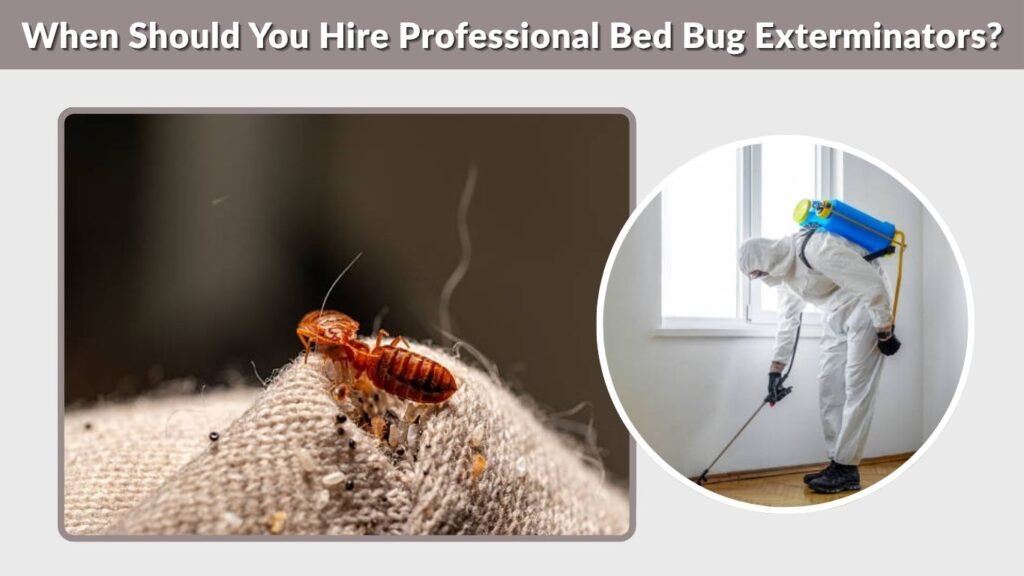
Professional assistance becomes particularly valuable when an infestation is extensive, recurring, or difficult to access.
Consider professional treatment when:
- Multiple rooms are affected: Bed bugs have spread beyond the original sleeping area.
- DIY treatments have failed: Live insects remain after repeated control attempts.
- Infestations are severe: Numerous insects, eggs, and fecal stains are present.
- Apartments are involved: Bed bugs may spread between connected units.
- Hidden areas are inaccessible: Insects occupy structural gaps or furniture interiors.
Choose a provider experienced in integrated pest management who offers inspection, written preparation instructions, and follow-up arrangements.
How to Treat Bed Bug Bites Effectively
Treating bed bug bites is different from eliminating the insects themselves.
Most bites improve with gentle washing, avoiding scratching, and basic itch relief. A mild topical corticosteroid or suitable antihistamine may help uncomfortable reactions.
Seek medical care for severe allergic symptoms, spreading redness, increasing pain, or suspected infection.
Treating the bites does not prevent additional bites while bed bugs remain in the home.
FAQs
1. What Is the Most Effective Bed Bug Treatment?
An integrated pest management approach is generally the most reliable solution. It combines professional heat or targeted chemical treatment with cleaning, encasements, and monitoring. Using complementary methods helps eliminate hidden insects and reduces the likelihood of treatment failure.
2. Is Heat Treatment the Most Effective for Bed Bugs?
Professional heat treatment is highly effective when sufficient temperatures reach all infested areas. It can kill adults, nymphs, and eggs. However, heat provides no residual protection, so inspections and additional control measures may still be necessary.
3. What Is the Most Effective DIY Bed Bug Treatment?
For small infestations, high-heat drying, vacuuming, suitable steam treatment, mattress encasements, and interceptor traps provide a practical combination. These methods reduce bed bug populations, but severe infestations usually require professional assistance to achieve complete elimination.
4. What Is the Cheapest Effective Bed Bug Treatment?
High-heat laundry drying and thorough vacuuming are among the cheapest useful control methods. Mattress encasements and interceptor traps add protection and monitoring. However, these inexpensive techniques may not eliminate insects hidden inside walls or furniture.
5. Can Bed Bugs Survive Professional Treatment?
Yes. Bed bugs can survive when treatments fail to reach hidden insects or eggs. Reinfestation can also occur through untreated belongings. Proper preparation, complete treatment coverage, and regular follow-up inspections are important for achieving lasting control.