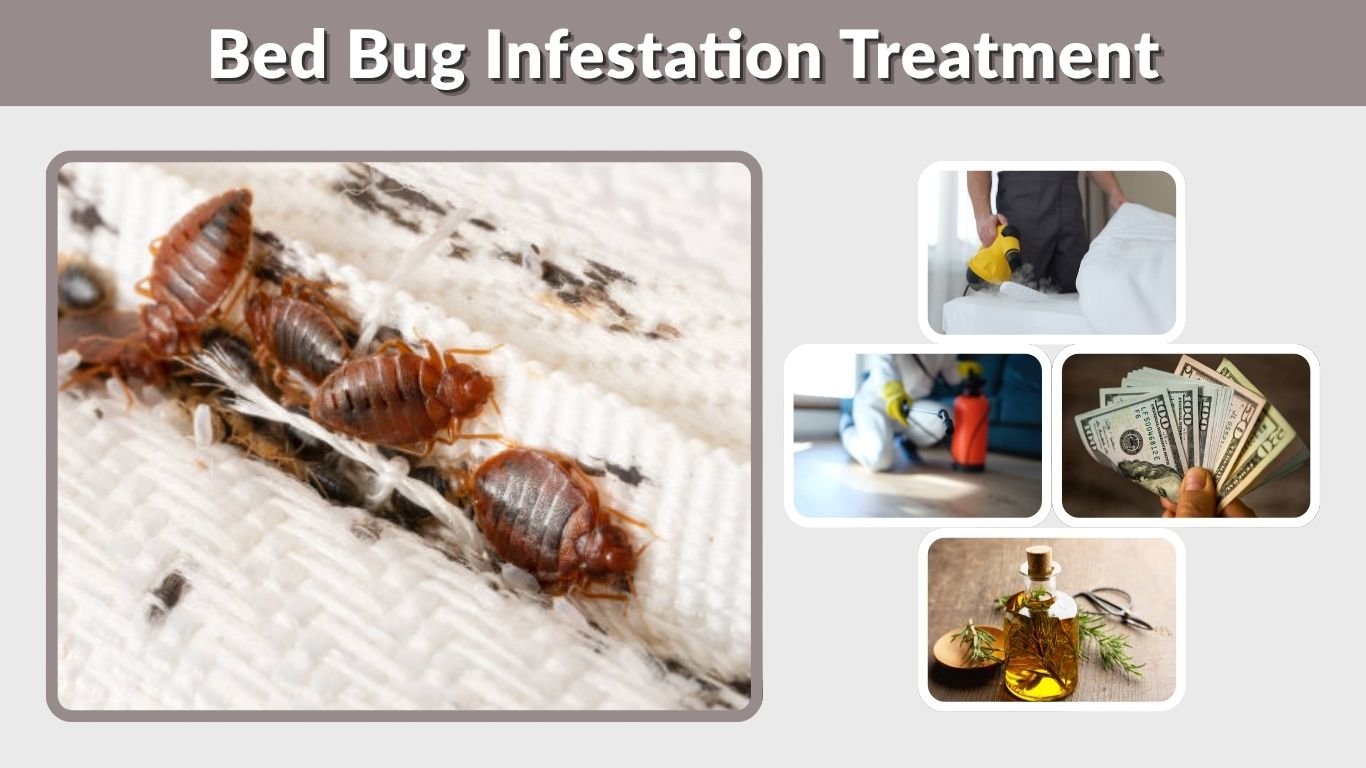
A bed bug infestation can quickly become a frustrating household problem, especially when these tiny insects hide inside mattresses, furniture, and bedroom cracks. Fortunately, effective bed bug infestation treatment methods can eliminate these pests when applied correctly. From professional heat treatment to practical home cleaning techniques, several options are available depending on the infestation’s severity. Understanding the early warning signs, treatment costs, and prevention strategies helps homeowners choose the right solution. This guide explains how to treat bed bugs safely and prevent another infestation.
How to Identify a Bed Bug Infestation
Identifying an infestation early makes treatment easier and reduces the risk of bed bugs spreading throughout your home. These insects usually hide near sleeping areas and become active at night.
Common Signs of a Bed Bug Infestation
- Reddish-brown insects: Adult bed bugs are small, flattened, and approximately the size of an apple seed.
- Dark spots: Tiny black or dark brown fecal stains appear on mattresses, sheets, and furniture.
- Blood stains: Small reddish marks may appear on bedding after bed bugs feed or are crushed.
- Shed skins: Growing bed bugs leave behind pale, translucent exoskeletons.
- Bed bug eggs: Small, whitish eggs may be hidden inside mattress seams and furniture cracks.
- Unusual odors: Heavy infestations sometimes produce a sweet, musty smell.
Itchy bites may suggest bed bug activity, but bites alone cannot confirm an infestation. Finding actual insects, eggs, or characteristic stains provides stronger evidence.
Best Treatment Methods for Bed Bug Infestations
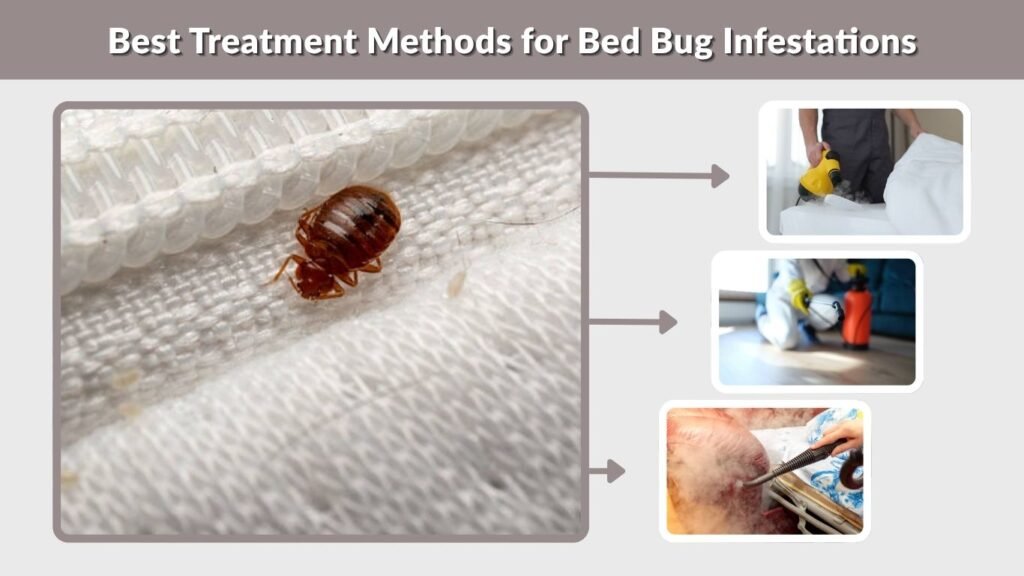
Effective bed bug removal usually requires a combination of treatment methods rather than relying on one product. Professional pest control companies often use integrated pest management, combining heat, targeted insecticides, physical removal, and ongoing monitoring.
1. Professional Heat Treatment
Professional heat treatment is one of the most effective methods for eliminating bed bugs, including their eggs.
Technicians use specialized equipment to raise temperatures throughout the infested area. Properly applied heat reaches hiding places inside furniture, mattresses, and structural gaps.
The EPA describes heating infested areas to at least 120°F (49°C) for 90 minutes as an approach for killing eggs, although professional procedures depend on temperatures achieved throughout the treatment area.
Heat treatment does not provide lasting protection against bed bugs introduced afterward. Professional preparation and follow-up monitoring remain important.
2. Chemical Bed Bug Treatment
Chemical treatment involves applying pesticides specifically registered for controlling bed bugs.
Professionals may treat cracks, baseboards, bed frames, and other hiding places using appropriately labeled products.
Some bed bug populations resist certain insecticides, making repeated applications or alternative products necessary.
For safe results, only use pesticides registered for bed bug control and follow every label instruction. Never spray mattresses or bedding unless the specific product label permits that use.
3. Steam Treatment
Steam treatment uses high temperatures to kill bed bugs and eggs on contact.
A suitable steam cleaner can treat mattress seams, upholstered furniture, carpets, and accessible cracks. The EPA recommends steam temperatures of at least 130°F (54°C) and avoiding forceful airflow that scatters insects.
Steam cannot reliably reach every hidden insect, so it works best as part of a comprehensive treatment plan.
How to Treat a Mild Bed Bug Infestation at Home
Early bed bug infestation treatment may be manageable with consistent cleaning and monitoring. However, DIY treatments require patience because insects and eggs can remain hidden in small spaces.
Step-by-Step Home Treatment
- Inspect the bedroom: Examine mattress seams, headboards, furniture joints, and nearby cracks.
- Remove clutter: Organize belongings and seal potentially infested items in plastic bags.
- Vacuum thoroughly: Clean mattresses, carpets, baseboards, and furniture. Immediately seal and dispose of vacuum contents outdoors.
- Heat-treat washable fabrics: Place suitable bedding and clothing in a dryer on high heat for 30 minutes.
- Use mattress encasements: Install bed-bug-proof covers on mattresses and box springs.
- Install interceptor traps: Position traps beneath bed legs to capture and monitor insects.
- Monitor regularly: Inspect affected areas weekly and arrange further treatment when necessary.
According to the EPA, combining these measures offers better control than relying on household sprays alone.
Bed Bug Infestation Treatment for Mattresses and Clothes
Mattresses, bedding, and clothing frequently contain bed bugs because these items provide convenient hiding places near sleeping areas.
Mattress and Furniture Treatment
- Inspect seams: Check mattress piping, folds, labels, and nearby bed frames.
- Apply suitable steam: Treat accessible fabric seams using appropriate equipment.
- Use protective encasements: Choose tightly sealed, bed-bug-resistant covers.
- Clean surrounding furniture: Inspect drawers, upholstered chairs, and headboards.
Keep mattress encasements intact for at least a year, as trapped bed bugs can survive for extended periods.
Clothing and Bedding Treatment
For bed bug infestation clothing treatment, heat is generally more reliable than washing alone.
Place heat-safe clothing, sheets, and pillowcases in a hot dryer for approximately 30 minutes. Transport untreated items in sealed bags and store treated belongings separately in clean, sealed containers until the infestation is controlled.
Bed Bug Infestation Treatment Cost
Professional bed bug infestation treatment costs depend on the affected space, infestation severity, treatment method, and required follow-up visits.
| Treatment scope | Estimated cost (US) |
| Single-room treatment | 300–650 |
| Typical professional home treatment | 1,000–4,000 |
| Severe infestation | 4,000–6,000 |
Approximate 2026 US pricing; actual quotes vary significantly by provider and location.
Professional heat treatment may cost more upfront than limited DIY measures, but it can be worthwhile when bed bugs occupy multiple hiding places.
Request written estimates explaining preparation requirements, included rooms, follow-up inspections, and any retreatment guarantee.
Bed Bug Infestation Treatment in Apartments
Apartment infestations require coordinated treatment because bed bugs can move between neighboring units through openings and shared structures.
Tenants should promptly notify property management, document evidence, and request an inspection.
Nearby apartments may also require inspection. Avoid transferring untreated furniture or belongings between rooms or units.
Landlord responsibilities vary by jurisdiction, so tenants should review applicable rental housing regulations before arranging or paying for treatment independently.
Common Bed Bug Treatment Mistakes to Avoid
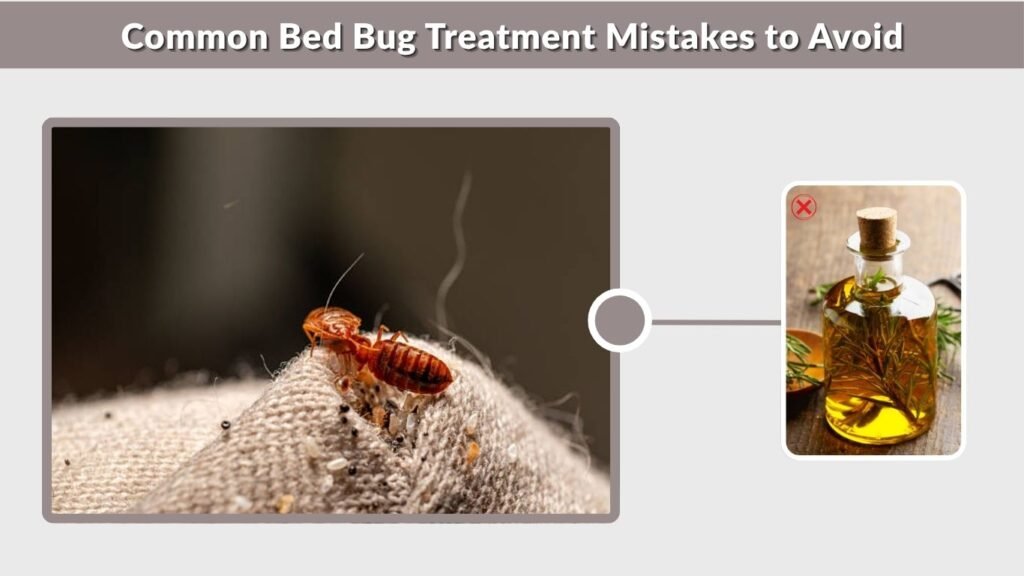
Unsuccessful treatment often results from overlooking hidden insects, using ineffective products, or stopping treatment too early.
Common mistakes include:
- Using bug bombs alone: Foggers often fail to reach insects hiding inside cracks.
- Relying on essential oils: Natural home remedies have insufficient evidence for eliminating established infestations.
- Using unsafe heating methods: Space heaters and fireplaces can create serious fire hazards.
- Applying excessive pesticides: More insecticide does not necessarily improve effectiveness.
- Discarding furniture without precautions: Moving untreated furniture can spread bed bugs.
Always follow product instructions and avoid using outdoor pesticides indoors.
How Long Does Bed Bug Infestation Treatment Take?
Treatment duration depends on infestation severity and the methods used.
Professional heat treatment may be completed in a day, although preparation and subsequent monitoring require additional time.
Chemical treatments often involve multiple visits over several weeks because surviving insects and newly hatched nymphs may require additional control.
Continue inspecting rooms and checking interceptor traps at least every seven days. Do not assume an infestation is eliminated immediately after visible insects disappear.
FAQs
1. What Is the Best Treatment for a Bed Bug Infestation?
The best treatment generally combines professional inspection, targeted heat or pesticide applications, cleaning, mattress encasements, and follow-up monitoring. Professional heat treatment can eliminate all life stages when sufficient temperatures reach every infested location.
2. Can I Treat a Bed Bug Infestation Myself?
Yes, small infestations may respond to thorough vacuuming, dryer heat, mattress encasements, and monitoring. However, DIY treatment cannot guarantee complete elimination. Persistent or widespread infestations usually require professional pest control services.
3. Is Heat Treatment Effective Against Bed Bugs?
Yes. Properly applied heat kills adult bed bugs, nymphs, and eggs. Professional equipment maintains appropriate temperatures throughout treated spaces, including difficult hiding areas. Successful treatment depends on thorough heating and preventing future introductions.
4. How Much Does Bed Bug Treatment Cost?
In the United States, professional home treatment commonly costs around 1,000–4,000. Smaller treatment areas may cost less, while severe infestations can exceed this range. Pricing depends on property size, treatment method, and follow-up requirements.
5. Can Bed Bugs Return After Treatment?
Yes. Bed bugs can return when some survive treatment or are reintroduced through luggage, furniture, or clothing. Regular inspections, protective mattress covers, interceptor traps, and careful handling of secondhand belongings help reduce recurrence.