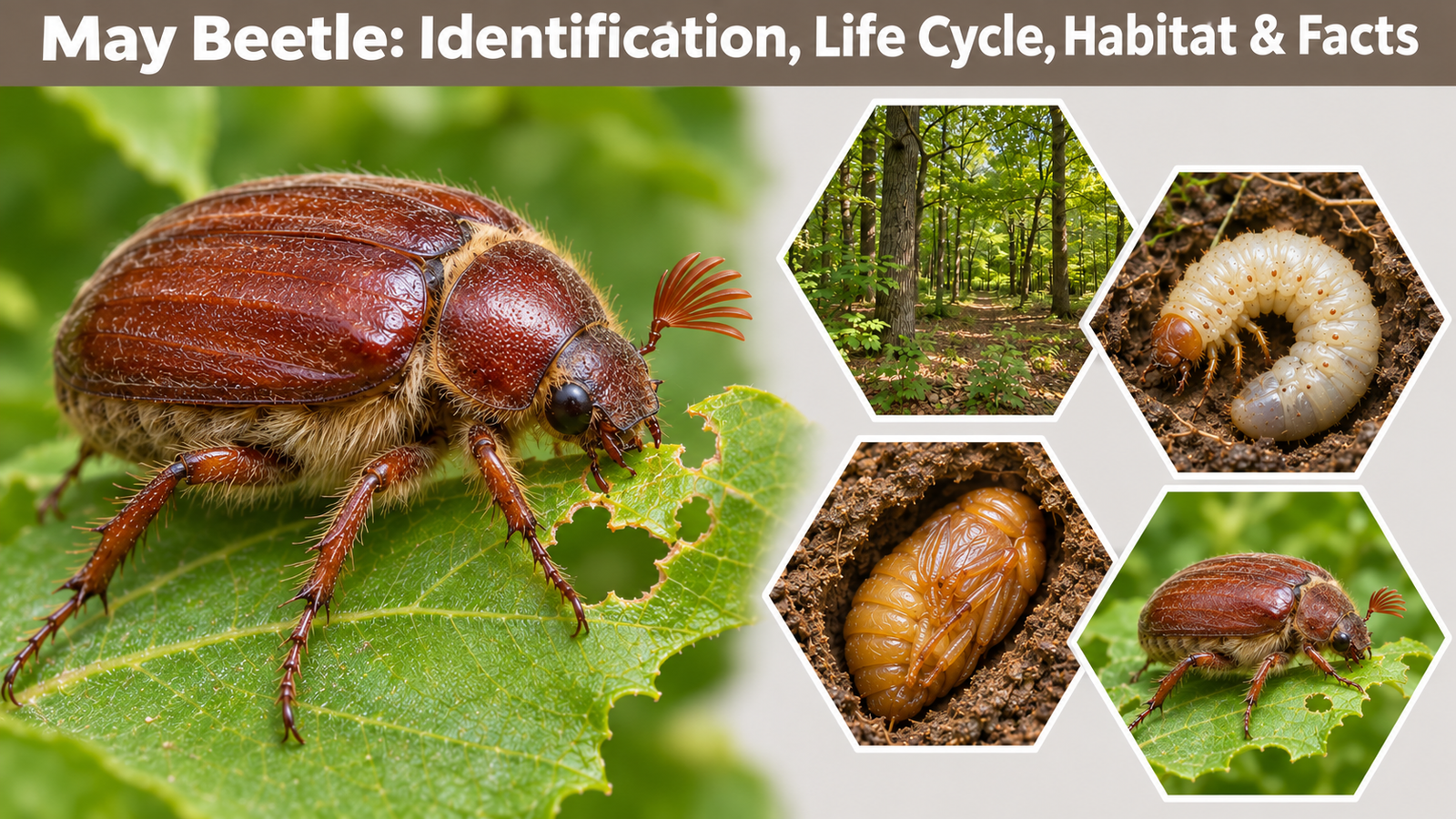
May beetles are common insects that appear during late spring and early summer, often flying around outdoor lights at night. Also known as May bugs or June beetles, these insects belong mainly to the genus Phyllophaga. They have sturdy bodies, brown or reddish-brown wing covers, and distinctive clubbed antennae. Although adult May beetles are generally harmless to humans, their larvae can damage lawns, gardens, and agricultural crops by feeding on plant roots. Understanding their appearance, habitat, diet, and life cycle can help homeowners identify and manage them.
What Is a May Beetle?
A May beetle is a type of scarab beetle belonging to the family Scarabaeidae. Most insects commonly called May beetles belong to the genus Phyllophaga, which includes hundreds of species.
These beetles receive their common name because many adults emerge during May, although their appearance varies depending on climate and geographic location. They are particularly common throughout North America.
May beetles are nocturnal and spend much of their adult lives feeding, mating, and searching for suitable places to lay eggs. Their immature stages develop underground as white grubs.
May Beetle Identification
May beetles have several recognizable physical characteristics:
- Size: Most adults measure approximately 12–25 mm (0.5–1 inch) long.
- Color: Usually reddish-brown, dark brown, or nearly black.
- Body: Oval, robust, and slightly elongated.
- Wings: Hard protective wing covers called elytra.
- Antennae: Short antennae ending in expandable, leaflike clubs.
- Legs: Six strong legs adapted for walking and digging.
Their body shape resembles other scarab beetles, but their relatively plain coloration and seasonal activity help distinguish them.
May Beetle Larvae Identification
May beetle larvae are commonly called white grubs. They have creamy-white, C-shaped bodies with brown heads and three pairs of legs near the front.
These grubs live underground and feed primarily on plant roots. Mature larvae can become considerably larger than newly hatched grubs.
Where Do May Beetles Live?
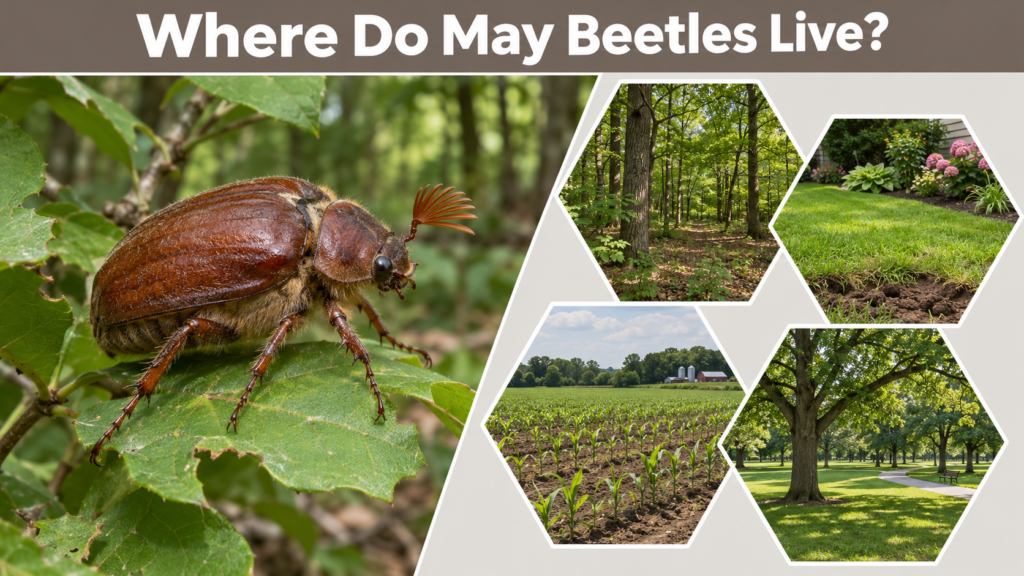
May beetles inhabit various environments, including forests, agricultural fields, grasslands, gardens, and residential landscapes. They are especially widespread across North America, where suitable soil and vegetation support their development.
Adult beetles generally remain near trees, shrubs, and other vegetation that provide food. Their larvae spend most of their development underground.
Common May Beetle Habitats
May beetles commonly occur in:
- Lawns and grassy yards
- Forests and woodland edges
- Agricultural fields and pastures
- Gardens and landscaped properties
- Parks and open green spaces
Females deposit eggs in soil, allowing newly hatched larvae to begin feeding on nearby roots.
Why Are May Beetles Attracted to Lights?
Adult May beetles are frequently attracted to artificial lights during nighttime flights.
Porch lights, streetlights, and illuminated windows can attract these insects, particularly during their spring and early summer emergence.
Although they occasionally enter houses through open doors or windows, May beetles do not normally establish indoor infestations.
What Do May Beetles Eat?
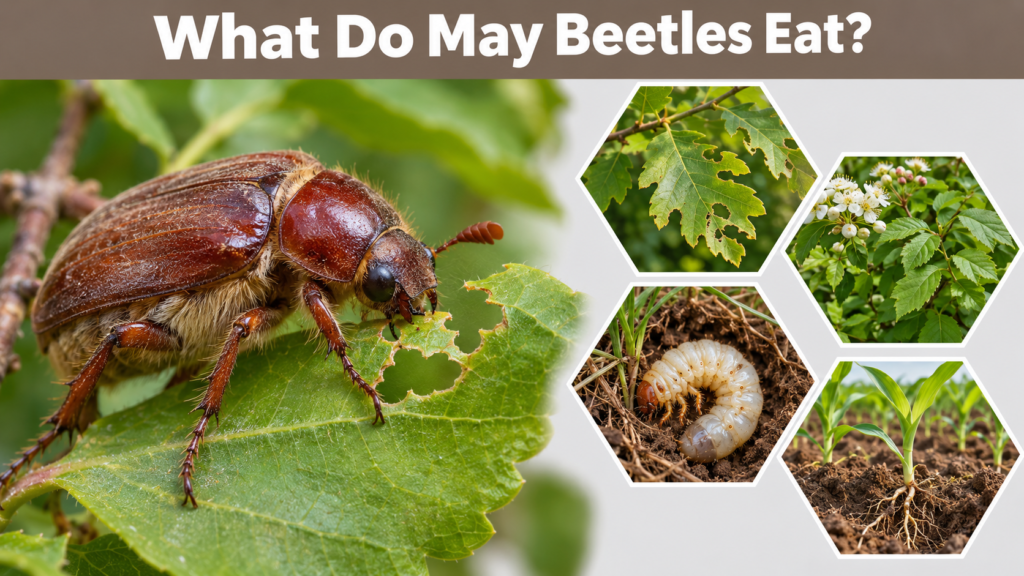
May beetles are herbivorous insects that consume plant material. However, adults and larvae have different feeding habits because they occupy separate environments.
Adult May beetles feed mainly on aboveground vegetation, while larvae consume roots beneath the soil.
What Do Adult May Beetles Eat?
Adult May beetles primarily consume:
- Leaves of deciduous trees
- Shrub foliage
- Tender plant growth
- Flowers of certain plants
- Leaves of some agricultural crops
Some species feed on oak, maple, willow, and other broadleaf trees.
Adults may leave irregular holes or damaged leaf edges, although their feeding usually causes less concern than severe underground grub infestations.
What Do May Beetle Grubs Eat?
May beetle grubs primarily feed on the roots of grasses, crops, and other plants.
Large populations can significantly reduce root systems, making vegetation more vulnerable to drought and environmental stress.
Root feeding is particularly troublesome in lawns because damaged grass may turn yellow or brown and eventually die.
May Beetle Life Cycle
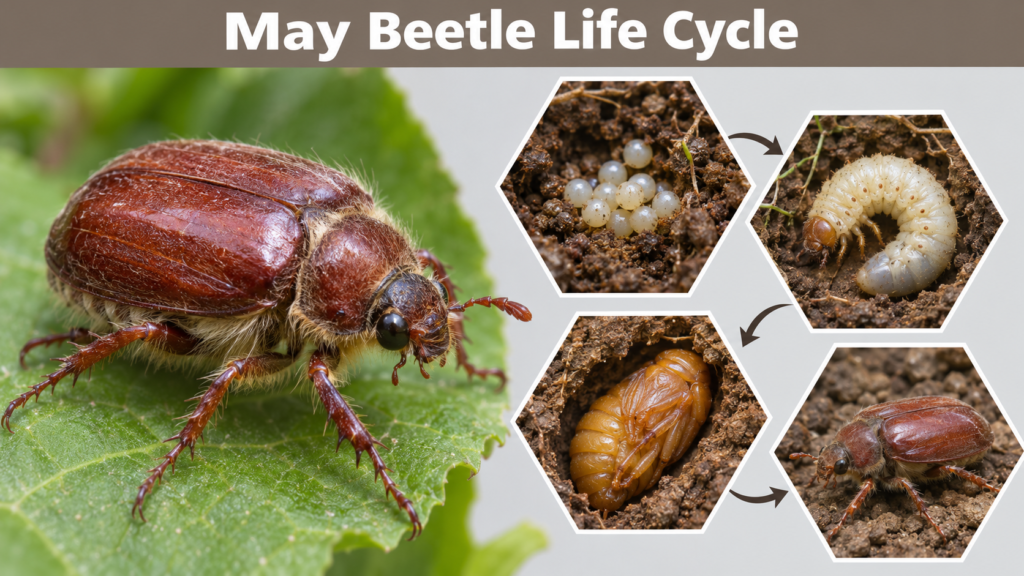
May beetles undergo complete metamorphosis, developing through four distinct stages: egg, larva, pupa, and adult.
Unlike many insects that complete development within several months, numerous May beetle species require two or three years to finish their life cycles.
1. Egg Stage
After mating, female May beetles burrow into the soil and deposit eggs.
The eggs are generally small, pale, and oval-shaped. Their development depends on temperature, moisture, and local environmental conditions.
2. Larval Stage
Newly hatched larvae begin feeding on roots and organic material in the surrounding soil.
As they grow, they molt several times and develop into larger C-shaped white grubs.
The larval stage is usually the longest period of their development.
3. Pupal Stage
Once fully developed, the larvae form pupal chambers underground.
During this stage, their bodies transform into adult beetles.
The developing insects remain protected beneath the soil until they are ready to emerge.
4. Adult Stage
Adult beetles emerge when environmental conditions become favorable, often during late spring or early summer.
They feed on vegetation, search for mates, and reproduce.
Some species develop into adults before winter but remain underground until the following spring.
Are May Beetles Harmful?
May beetles are not generally dangerous to humans. They are not venomous and do not possess stingers.
However, their feeding behavior can occasionally make them troublesome garden and agricultural pests.
Do May Beetles Bite?
May beetles are not aggressive toward humans and are not known for causing medically significant bites.
Although their mouthparts are designed for chewing vegetation, they rarely attempt to bite people.
They may cling to skin with their legs when handled, but this behavior is not dangerous.
Can May Beetles Damage Plants?
Adult May beetles may chew leaves on trees and shrubs, occasionally causing noticeable defoliation.
Their larvae can create more serious problems by feeding on underground roots.
Common signs of grub damage include:
- Yellow or brown patches of grass
- Thin or weakened lawn areas
- Grass that lifts easily from the soil
- Reduced plant growth
- Increased digging by birds or mammals searching for grubs
These symptoms can also result from drought, disease, or other pests, so inspecting the soil is important before treatment.
How to Get Rid of May Beetles Naturally
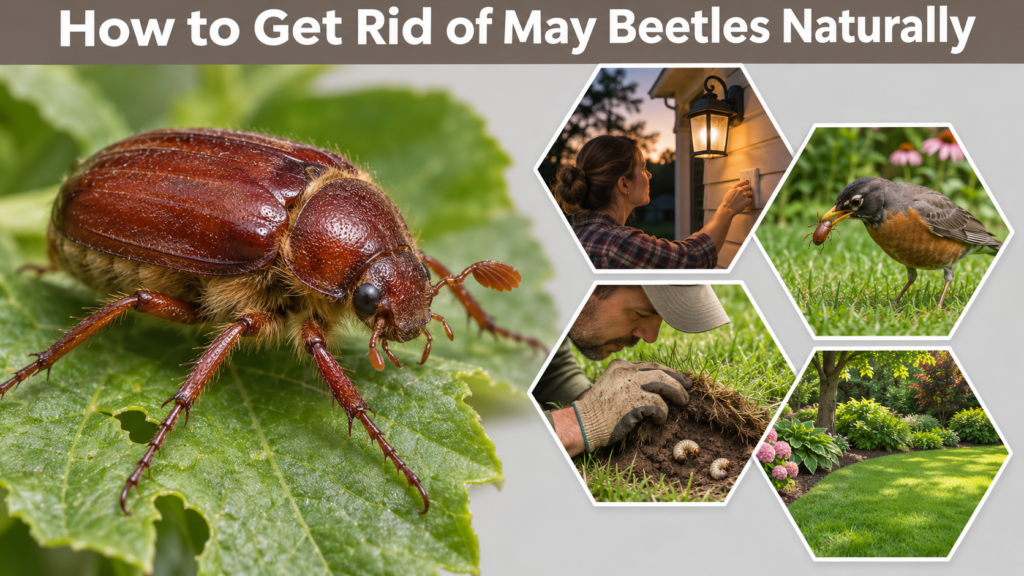
May beetle management is most effective when it targets the stage causing damage. Adult beetles may be a nuisance around lights, but large numbers of root-feeding grubs can require closer attention.
Reduce Outdoor Lighting
Turning off unnecessary outdoor lights can reduce the number of adult May beetles gathering around homes.
Warm-colored or shielded lighting may also help minimize attraction.
Encourage Natural Predators
Birds and other insect-eating wildlife consume May beetles and their larvae.
Maintaining a diverse landscape can support natural predators that help regulate beetle populations.
Inspect Lawn Soil
If your lawn develops suspicious brown patches, lift a small section of turf and examine the soil around the roots.
Finding a few grubs does not automatically indicate a serious infestation.
Maintain Healthy Grass
Proper watering, mowing, and soil care can help lawns tolerate moderate root feeding.
Avoid unnecessary insecticide applications when grub populations are low and grass remains healthy.
Where treatment is justified, identify the grub species and select an appropriate method for its developmental stage.
May Beetle vs. June Beetle: What’s the Difference?
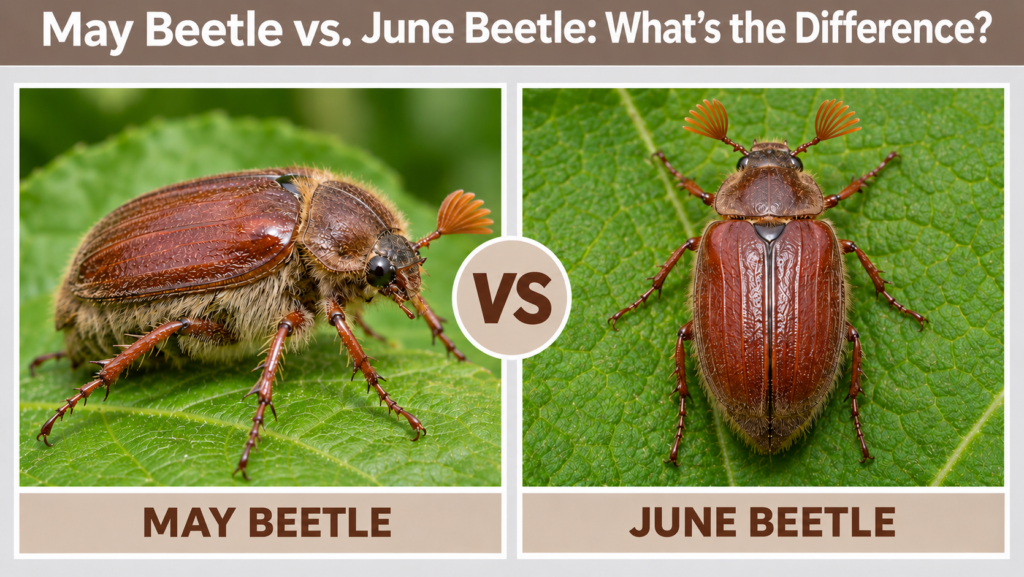
May beetles and June beetles are frequently the same insects, especially when the names refer to species in the genus Phyllophaga.
The terminology varies by region, and some unrelated scarab beetles are also commonly called June bugs.
| Feature | May Beetle | June Beetle |
|---|---|---|
| Scientific group | Often Phyllophaga | Often Phyllophaga |
| Common appearance | Brown or reddish-brown | Brown or reddish-brown |
| Adult activity | Mainly spring to early summer | Mainly late spring to summer |
| Larvae | White grubs | White grubs |
| Diet | Leaves and plant roots | Leaves and plant roots |
| Main difference | Regional common name | Regional common name |
Therefore, identifying the scientific genus or species is more reliable than distinguishing beetles solely by their common names.
Interesting Facts About May Beetles
May beetles have several fascinating characteristics that distinguish them from other garden insects.
- They are mostly nocturnal: Adults commonly fly and feed after sunset.
- Their larvae live underground: White grubs remain hidden in soil for much of their development.
- They have long life cycles: Many species take two or three years to mature.
- They are attracted to lights: Outdoor lighting frequently draws adults toward houses.
- They belong to the scarab family: May beetles are relatives of dung beetles and rhinoceros beetles.
- They provide food for wildlife: Birds, mammals, and other predators consume May beetles and grubs.
- They can affect lawns: Heavy larval infestations may damage grass roots and reduce turf health.
FAQs
1. Are May beetles and June bugs the same?
Yes, May beetles and June bugs often refer to the same group of insects, particularly species belonging to the genus Phyllophaga. Their common names reflect seasonal emergence patterns rather than clear scientific differences. However, the name June bug is also used for several other scarab beetles.
2. How long do May beetles live?
The complete May beetle life cycle commonly lasts two to three years, although duration varies by species and environmental conditions. Most of this time is spent underground as a larva. The adult stage is relatively brief and mainly involves feeding, mating, and reproduction.
3. Why are May beetles coming into my house?
May beetles sometimes enter houses because artificial lights attract them during nighttime flights. Open doors, windows, and damaged screens provide convenient entry points. They usually enter accidentally and do not reproduce indoors. Reducing unnecessary outdoor lighting and repairing screens can help prevent entry.
4. Are May beetles beneficial or harmful?
May beetles are natural components of ecosystems and provide food for many wildlife species. However, large populations can become harmful to lawns, gardens, and agricultural crops. Adult beetles consume foliage, while larvae feed on plant roots. Their overall impact depends on population size and habitat.
5. What is the best way to prevent May beetles?
The best prevention methods include maintaining healthy lawns, reducing unnecessary outdoor lighting, and monitoring soil for grub activity. Encourage natural predators and avoid applying pesticides without confirming a significant infestation. Early identification makes it easier to choose effective control methods while protecting beneficial insects.
Is this conversation helpful so far?