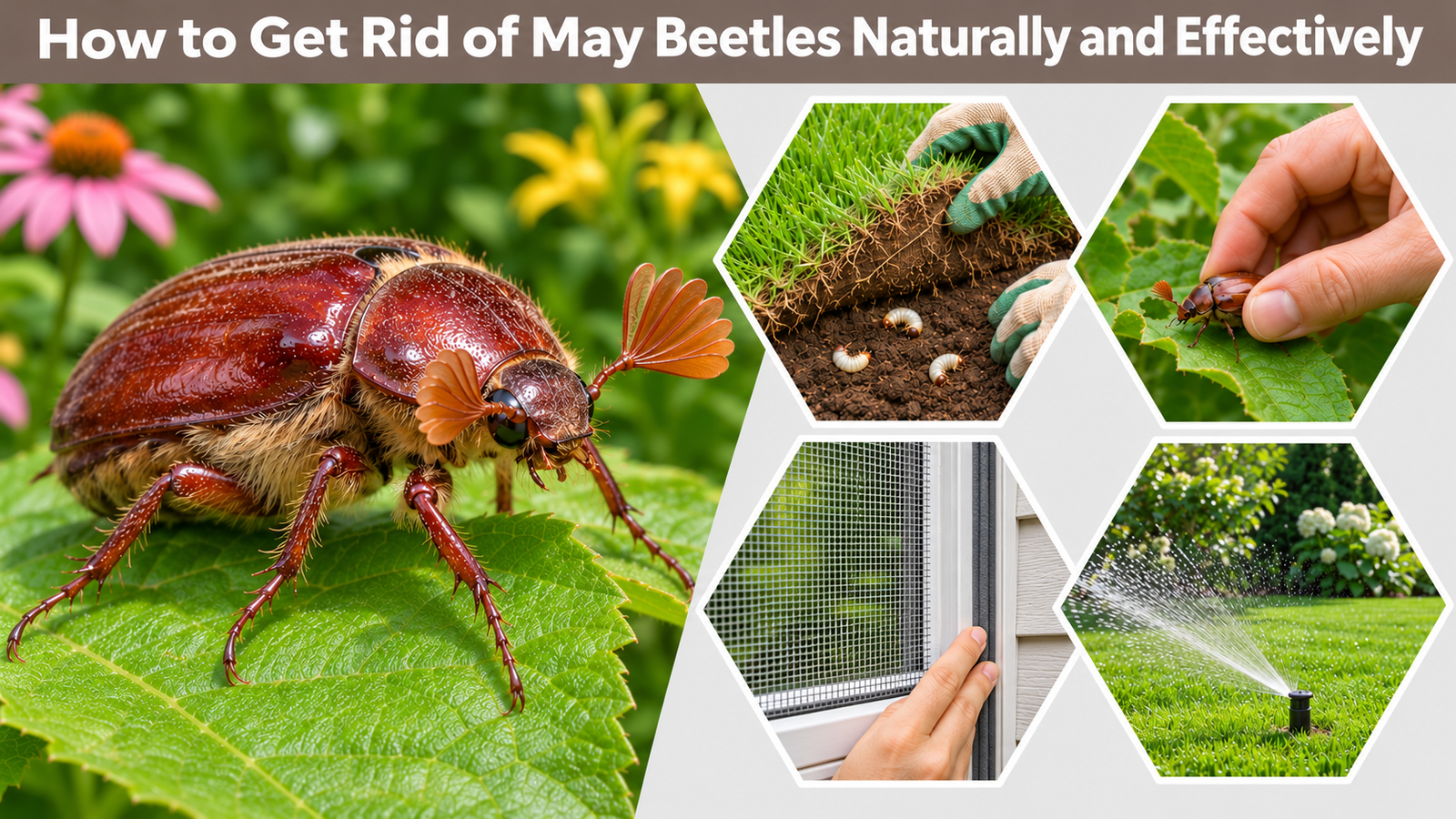
May beetles, also known as June bugs, are common garden insects that appear during spring and early summer. While adult beetles mostly feed on leaves, their larvae, called white grubs, can damage lawns, gardens, and agricultural plants by feeding on roots. Large infestations may cause yellow grass, weakened plants, and damaged foliage. Fortunately, several natural and practical control methods can help reduce May beetle populations without unnecessary chemical treatments. This guide explains how to get rid of May beetles, eliminate their grubs, and prevent them from returning.
How to Identify May Beetles and Their Damage
Before treating an infestation, it is important to identify May beetles correctly. These insects belong mainly to the genus Phyllophaga and are members of the scarab beetle family. Adult May beetles are generally active at night, while their larvae develop underground.
How to Identify May Beetles
Common identification features include:
- Size: Adults usually measure 12–25 mm long.
- Color: Reddish-brown, dark brown, or nearly black.
- Body: Oval, robust, and slightly elongated.
- Antennae: Short with distinctive fanlike clubs.
- Wings: Hard wing covers protecting the flight wings.
- Behavior: Usually active at night and attracted to outdoor lights.
May beetles are frequently confused with other brown scarab beetles, particularly species commonly called June bugs.
Signs of May Beetle Infestation
Adult May beetles feed on plant foliage, while their larvae damage underground roots. Common infestation signs include:
- Irregular holes in leaves
- Yellow or brown lawn patches
- Grass that pulls away easily from the soil
- Weak or stunted garden plants
- White C-shaped grubs beneath the grass
- Increased bird or animal activity around lawns
Severe infestations can damage grass roots enough to cause noticeable turf decline.
How to Get Rid of May Beetles Naturally
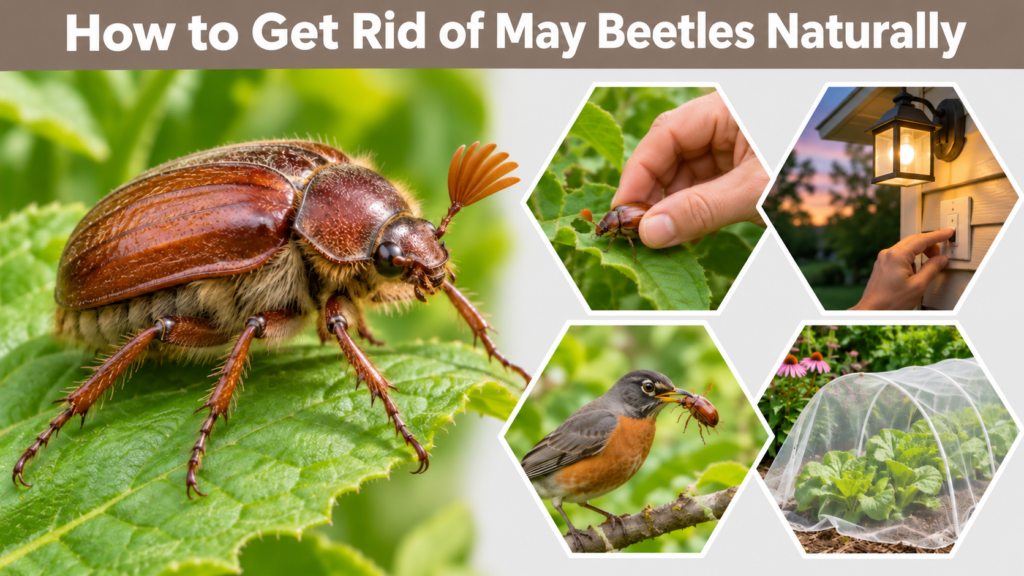
Natural May beetle control focuses on reducing adult populations, limiting favorable conditions, and protecting plants from feeding damage. Most homeowners can begin with simple methods before considering additional treatments.
1. Remove May Beetles by Hand
Handpicking is one of the simplest ways to control small populations of adult May beetles.
Inspect plants during the evening when beetles become active. Gently remove visible beetles and collect them in a container.
For heavily affected plants, inspect leaves regularly to prevent continued feeding damage.
Hand removal works best when beetle numbers are relatively low.
2. Reduce Outdoor Lighting
May beetles are strongly attracted to artificial lights during nighttime flights.
Reducing unnecessary lighting around houses can make outdoor areas less attractive to these insects.
Consider these adjustments:
- Turn off unnecessary porch lights.
- Use motion-activated outdoor lighting.
- Choose warm-colored bulbs when possible.
- Keep windows closed when nearby lights are illuminated.
- Repair damaged window and door screens.
These changes can reduce beetles gathering near entrances, although they do not eliminate larvae already present underground.
3. Encourage Natural Predators
Several animals naturally feed on May beetles and their larvae.
Birds, small mammals, and certain predatory insects can help reduce beetle populations.
Maintaining a diverse garden with native plants can create suitable habitat for insect-eating wildlife.
However, predators alone may not control a severe grub infestation.
4. Protect Vulnerable Garden Plants
Young plants and tender foliage may be more vulnerable to adult beetle feeding.
Inspect affected plants regularly and remove beetles when possible.
Lightweight insect netting can protect valuable plants during periods of heavy beetle activity. Secure the edges carefully to prevent beetles from entering.
Remove or adjust protective covers when necessary to allow pollinators access to flowering plants.
How to Get Rid of May Beetle Grubs in Your Lawn
May beetle grubs can cause more serious damage than adults because they feed directly on plant roots. These creamy-white larvae remain underground for much of their development, sometimes taking several years to mature.
Effective control begins with identifying the grubs and determining whether their population is large enough to justify treatment.
Identify White Grubs in Soil
Inspect affected lawn areas by lifting a small section of turf.
Look for C-shaped larvae with white bodies, brown heads, and three pairs of legs.
Count the grubs in a measured area to estimate their population.
Not all white grubs belong to May beetles, so accurate identification is important.
Remove Grubs Manually
Hand removal can help in small garden beds or isolated patches of affected turf.
Carefully loosen the soil and collect visible grubs without unnecessarily disturbing healthy plant roots.
This method is practical for small areas but usually insufficient for large infestations.
Use Beneficial Nematodes
Beneficial nematodes are microscopic organisms that parasitize certain soil-dwelling insects.
Some commercially available species, such as Heterorhabditis bacteriophora, are used against white grubs.
However, effectiveness against May beetle grubs varies with the beetle species, larval size, soil temperature, and moisture.
For the best chance of success, use a product specifically recommended for the identified grub and follow its application instructions.
Maintain Healthy Lawn Conditions
Healthy grass can better tolerate moderate grub feeding.
Water deeply when necessary, mow at an appropriate height, and avoid excessive fertilizer applications.
Good lawn maintenance supports stronger root development and helps damaged areas recover.
How to Get Rid of May Beetles Around Your House
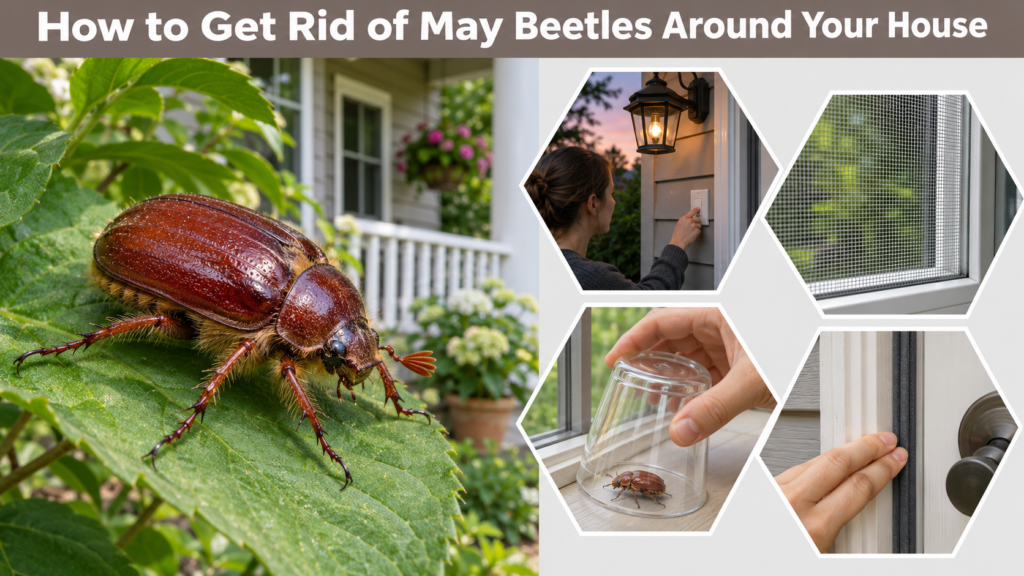
Adult May beetles sometimes gather around porches, windows, garages, and exterior walls during warm evenings. They are attracted to artificial lighting and may accidentally enter buildings through open doors or damaged screens.
Unlike household pests, May beetles do not normally breed indoors.
Prevent May Beetles From Entering
Several simple measures can reduce their presence:
- Install tight-fitting window screens.
- Seal gaps around exterior doors.
- Repair damaged weatherstripping.
- Keep doors closed during nighttime beetle activity.
- Reduce lighting near frequently used entrances.
Remove May Beetles Indoors
If May beetles enter your home, capture them using a container and release them outside away from entrances.
A vacuum cleaner can also remove beetles from difficult-to-reach locations.
Indoor insecticide treatments are generally unnecessary for occasional May beetle visitors.
Best Methods for Controlling May Beetles
Different control methods target different stages of the May beetle life cycle. Choosing the right approach depends on whether adults are gathering around lights, feeding on plants, or causing root damage as larvae.
| Control Method | Targets | Best Application |
|---|---|---|
| Hand removal | Adult beetles | Small garden infestations |
| Reduced outdoor lighting | Adult beetles | Porches and entrances |
| Insect netting | Adult beetles | Vulnerable plants |
| Beneficial nematodes | Certain grub species | Suitable lawn soil conditions |
| Manual grub removal | Larvae | Small garden beds |
| Proper lawn maintenance | Reduces damage | Lawns and grassy areas |
Natural control methods may require repeated attention, particularly where adult beetles emerge from surrounding landscapes.
How to Prevent May Beetles From Returning
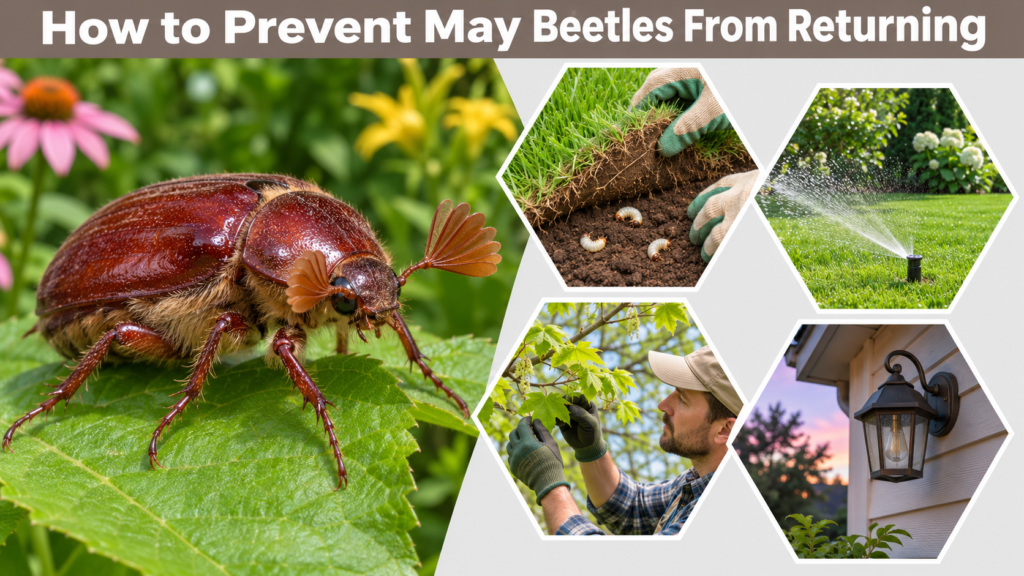
Preventing May beetles involves regular monitoring and maintaining conditions that reduce damage. Because larvae live underground for extended periods, repeated infestations may occur even when adult populations appear to decline.
Monitor Your Lawn Regularly
Examine suspicious yellow or brown areas before assuming May beetles are responsible.
Lift a small section of turf and check for grubs around the roots.
A few grubs do not necessarily require treatment. The need for control depends on their species, numbers, and the condition of the lawn.
Maintain Healthy Plants
Healthy trees, shrubs, and lawn grasses can tolerate some beetle feeding.
Use appropriate watering practices, maintain suitable soil conditions, and avoid stressing plants through excessive fertilization or improper maintenance.
Inspect During Spring and Summer
May beetle adults commonly emerge during late spring and early summer.
Monitor outdoor lighting and susceptible plants during this period.
Checking soil for developing grubs later in the growing season can help identify potential problems before extensive damage occurs.
Avoid Unnecessary Pesticides
Applying insecticides without confirming an infestation can harm beneficial organisms and may provide little benefit.
If grub damage becomes severe, identify the species and select a treatment specifically labeled for that pest and location.
Treatment timing matters because younger grubs are often easier to manage than mature larvae.
FAQs
1. What kills May beetles naturally?
Hand removal, natural predators, and physical barriers can help reduce adult May beetle populations. Beneficial nematodes may control certain grub species when conditions are suitable. Reducing outdoor lighting also helps keep beetles away from homes. No single natural method guarantees complete elimination.
2. Does soapy water kill May beetles?
Soapy water can kill May beetles when they are submerged, but spraying dish soap directly onto plants may damage foliage. It is not a reliable treatment for underground grubs. For small infestations, collecting adult beetles by hand is a practical alternative.
3. Why do I have so many May beetles in my yard?
Large numbers of May beetles may appear when adults emerge from nearby soil during warm spring or summer evenings. Outdoor lighting can attract additional beetles from surrounding areas. Lawns, gardens, trees, and shrubs also provide suitable habitats and food sources.
4. How do I get rid of May beetle grubs naturally?
You can remove visible grubs manually from small garden areas or consider beneficial nematodes appropriate for the grub species. Maintaining healthy grass helps minimize damage. Before treatment, inspect the soil to confirm the pest and determine whether grub populations are high enough to justify control.
5. Will May beetles go away on their own?
Adult May beetle activity naturally declines as the seasonal emergence period ends. However, larvae may remain underground for several years before becoming adults. Consequently, beetles may return in future seasons, especially where favorable soil conditions and vegetation support their development.