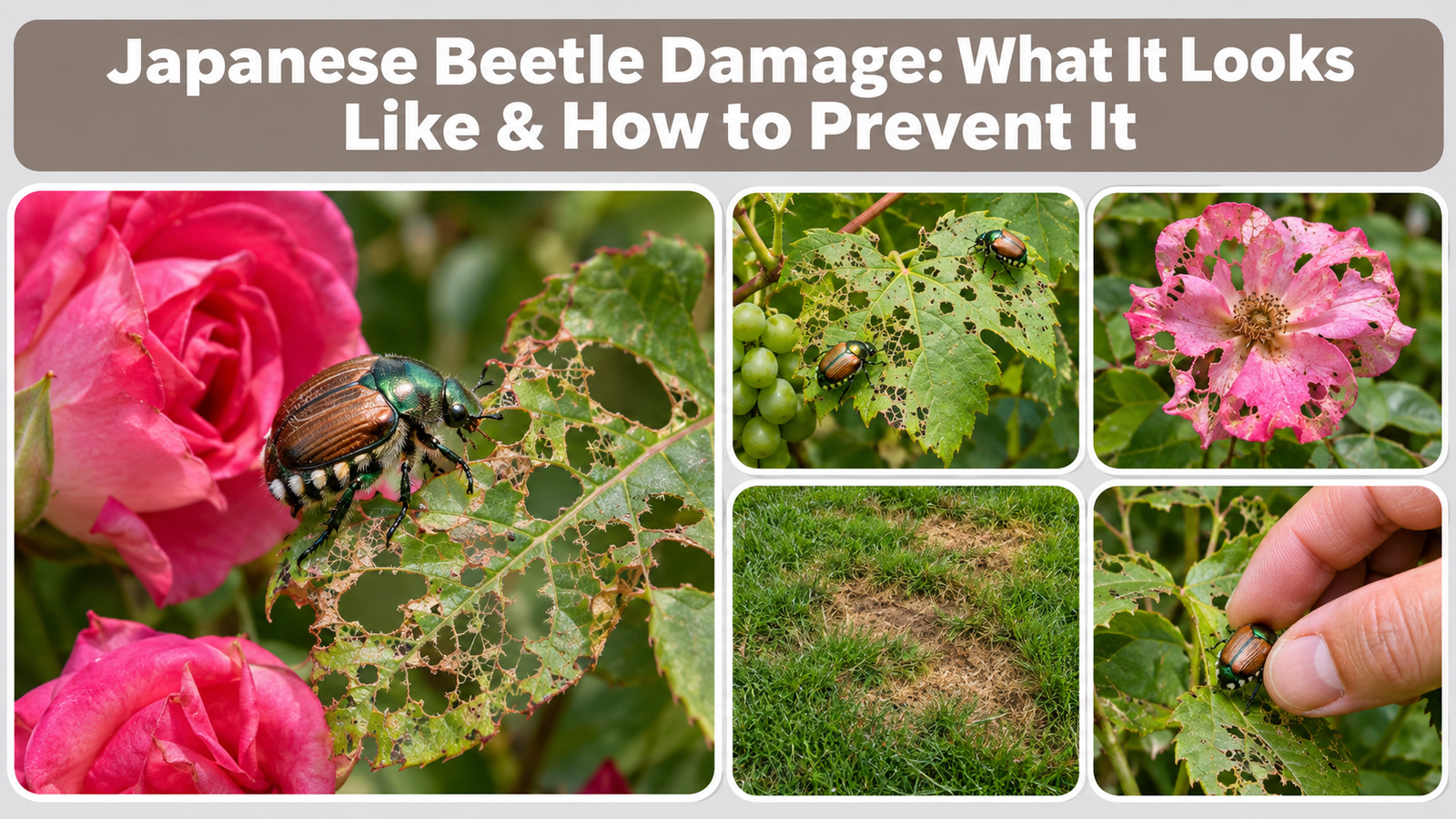
Japanese beetles can cause noticeable damage to gardens, lawns, trees, shrubs, flowers, and crops. Adult beetles chew through leaves, often leaving behind a distinctive skeletonized appearance, while their underground grubs feed on grass roots and can damage lawns and turf. Roses, grapes, lindens, fruit trees, and many ornamental plants are especially attractive to adults. Fortunately, identifying Japanese beetle damage early makes it easier to protect plants and reduce future infestations. This guide explains what Japanese beetle damage looks like, which plants are most affected, and how to prevent and manage it.
What Damage Do Japanese Beetles Cause?
Japanese beetles cause two main types of damage because adults and larvae live and feed in different environments. Adult beetles feed above ground on leaves, flowers, and sometimes fruit, while immature beetles, called grubs, live underground and feed primarily on grass roots.
Adult feeding is usually the most recognizable type of Japanese beetle damage. Beetles chew the soft tissue between leaf veins, leaving the veins intact. As feeding continues, the leaf becomes brown, thin, and skeletonized.
Grub damage is different. When large populations develop in lawns or turf, their root feeding can weaken grass and cause yellow, brown, or thinning patches.
Adult Japanese Beetle Damage
Adult Japanese beetles commonly feed on:
- Rose bushes
- Grapevines
- Linden trees
- Fruit trees
- Birch trees
- Japanese maple
- Zinnias
- Hibiscus
- Beans
- Soybeans
- Other ornamental and garden plants
They often gather in groups, so a single plant can become heavily damaged within a relatively short period.
Japanese Beetle Grub Damage
Japanese beetle grubs live in soil and primarily feed on grass roots. Heavy infestations can reduce the root system’s ability to absorb water and nutrients.
Signs of grub-related damage include:
- Brown patches in lawns
- Thinning grass
- Loose or poorly rooted turf
- Grass that pulls up easily
- Wilting during dry weather
- Increased activity from animals digging in the lawn
The adult and grub stages should therefore be considered separately when diagnosing Japanese beetle problems.
What Does Japanese Beetle Damage Look Like?

The most characteristic sign of Japanese beetle damage is skeletonized foliage. Adults eat the tissue between the leaf veins but often leave the major veins behind.
At first, damaged areas may appear as small transparent or brown patches. Continued feeding causes more of the leaf to disappear until only a network of veins remains.
Signs of Japanese Beetle Leaf Damage
Look for:
- Skeletonized leaves
- Brown or dried leaf tissue
- Irregular holes between leaf veins
- Leaves with only veins remaining
- Ragged feeding areas
- Large groups of metallic green and copper-colored beetles
- Damaged flowers
- Premature leaf browning in severe cases
Japanese beetles frequently feed from the upper surface of leaves, making their damage easy to see from a distance.
Japanese Beetle Damage on Roses
Roses are among the plants commonly attacked by adult Japanese beetles. Beetles may gather on rose flowers and foliage, feeding heavily during warm, sunny weather.
Japanese beetle rose damage can make flowers look ragged and unattractive. Leaves may become skeletonized, while petals can develop holes or missing sections.
How Japanese Beetles Damage Rose Leaves
Adult beetles chew between the veins of rose leaves. A heavily attacked leaf may lose most of its green tissue while the veins remain visible.
Severe feeding can reduce the plant’s photosynthetic capacity because less healthy leaf tissue remains available to produce energy.
Fortunately, established healthy rose bushes can often tolerate some feeding. The greatest concern is repeated or severe defoliation, particularly on young or stressed plants.
How to Reduce Rose Damage
Inspect roses regularly when adult Japanese beetles become active. Handpicking beetles in the morning or evening and dropping them into soapy water can reduce populations on individual plants.
Removing heavily infested beetles early can also prevent their numbers from building rapidly on the same plant.
Japanese Beetle Damage to Trees and Shrubs

Japanese beetles can feed on the leaves of many trees and shrubs. Commonly affected plants include lindens, birches, Japanese maples, fruit trees, and other susceptible species.
Japanese beetle tree damage is usually concentrated on foliage rather than trunks or bark.
What Does Japanese Beetle Damage to Trees Look Like?
Tree damage may include:
- Skeletonized leaves
- Brown patches
- Ragged foliage
- Partial defoliation
- Prematurely damaged leaves
- Large clusters of beetles on branches
A healthy mature tree can often tolerate moderate leaf feeding. However, repeated severe defoliation can place additional stress on young, newly planted, or already weakened trees.
Japanese beetles generally do not tunnel into tree trunks or chew bark like bark-boring insects. If you see holes in a trunk or extensive bark damage, another pest or tree problem may be responsible.
Japanese Beetle Damage to Flowers and Garden Plants
Japanese beetles attack many ornamental and edible plants. Their feeding can affect both leaves and flowers.
Plants may develop holes, skeletonized leaves, missing flower tissue, and reduced visual quality. In vegetable gardens, beetles may feed on beans and other susceptible crops.
Japanese Beetle Damage on Basil, Zinnias, and Other Plants
Japanese beetles can feed on a wide variety of plants, but damage varies according to plant species and local beetle populations.
Flowers may be particularly noticeable because beetles congregate on blossoms. Leaves can become increasingly transparent as feeding removes tissue.
If only a few beetles are present, hand removal may be enough. Larger infestations require more consistent monitoring and a broader management strategy.
Japanese Beetle Lawn Damage
Adult Japanese beetles damage plants above ground, but their larvae can damage lawns below ground.
Japanese beetle grubs feed on grass roots, reducing the plant’s ability to absorb water and nutrients. Severe infestations can result in patches of weak or dying turf.
What Does Japanese Beetle Grub Lawn Damage Look Like?
Look for:
- Irregular brown patches
- Yellowing grass
- Thin areas of turf
- Grass that lifts easily from the soil
- Reduced root development
- Birds, skunks, raccoons, or other animals digging into turf
Animals may dig into lawns because grubs are an attractive food source. This can sometimes make the damage appear worse than the direct root feeding alone.
Not every brown lawn patch is caused by Japanese beetle grubs, however. Drought, disease, other insects, poor irrigation, and soil problems can produce similar symptoms.
Do Japanese Beetles Damage Trees?
Yes, adult Japanese beetles can damage trees by feeding on their leaves. However, the severity depends on the tree species, beetle population, tree age, and duration of feeding.
Healthy mature trees can often recover from moderate summer defoliation. Young trees and already stressed trees may be more vulnerable to repeated heavy feeding.
Japanese beetle damage to trees usually affects the leaves rather than the trunk. Extensive trunk holes should be investigated for other insects or diseases.
How Do Japanese Beetles Damage Plants?
Japanese beetles damage plants with their chewing mouthparts. Adults consume leaf tissue between the larger veins, producing the characteristic skeletonized appearance.
The beetles are often attracted to plants by plant odors and visual cues. Once feeding begins, additional beetles may gather on the same plant.
Their feeding can reduce the amount of healthy foliage available for photosynthesis. When damage is severe, plants may have difficulty maintaining normal growth, particularly if they are young or already under environmental stress.
How to Treat Japanese Beetle Damage
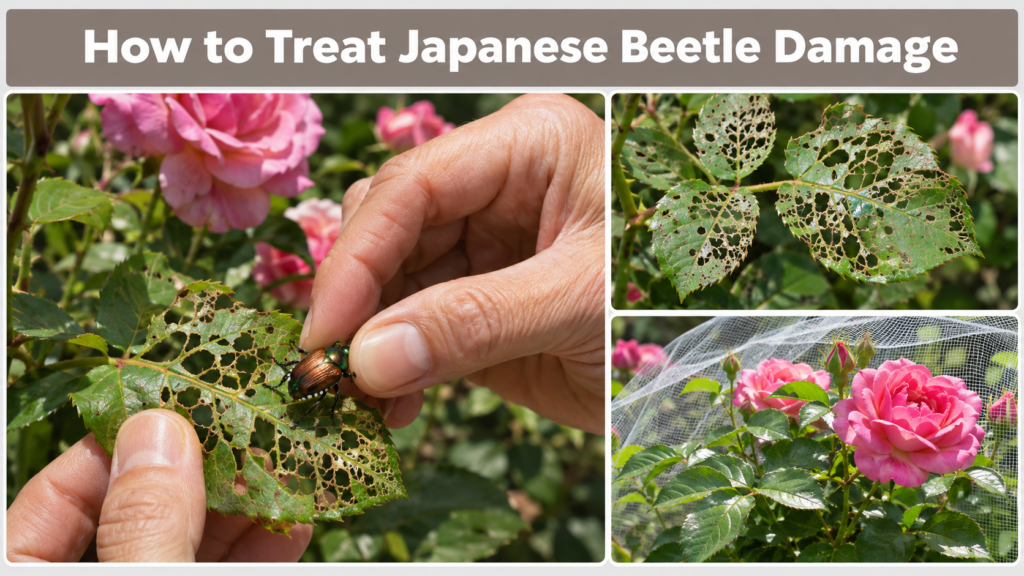
You cannot restore leaf tissue that has already been eaten, but you can reduce additional feeding and help the plant recover.
Remove Adult Beetles
For small infestations, handpicking is one of the simplest methods. Check plants regularly and remove beetles before their numbers increase.
Early morning and evening can be convenient times to collect beetles because they may be less active.
Protect Valuable Plants
Lightweight insect netting or physical barriers can protect particularly valuable plants when practical. Make sure the material does not interfere with pollination if the plant requires insect pollinators.
Remove Severely Damaged Foliage Carefully
Do not automatically remove every damaged leaf. Partially green leaves can still contribute to photosynthesis.
Remove leaves only when they are dead, diseased, or severely damaged and no longer useful to the plant.
Consider Appropriate Insecticides
For severe infestations, a properly labeled insecticide may provide additional control. Always identify the pest first, read the product label carefully, and follow directions concerning application rate, protective equipment, pollinators, edible crops, and harvest intervals.
Avoid spraying flowers when bees and other pollinators are actively visiting them.
How to Prevent Japanese Beetle Garden Damage
Preventing Japanese beetle garden damage is easier when you combine monitoring, plant protection, and long-term management.
Monitor Plants Early
Start checking susceptible plants when adult beetles begin appearing in your area. Finding the first few beetles allows you to respond before large groups gather.
Remove Beetles Regularly
Handpick beetles from high-value plants whenever practical. Regular removal can reduce the number of beetles feeding and mating on your property.
Protect Vulnerable Plants
Use physical barriers on susceptible plants where appropriate. This can be particularly useful for small garden plants and valuable ornamental specimens.
Maintain Healthy Plants
Healthy plants are generally better able to tolerate moderate insect feeding. Provide appropriate water, nutrients, sunlight, and growing conditions for each plant rather than overfertilizing.
Manage Lawn Grubs When Necessary
If your lawn has confirmed Japanese beetle grub damage, determine whether the population is high enough to justify treatment. Grub control should be based on local conditions, pest density, and the timing of the grub stage.
Treating every lawn automatically is not necessary and may provide little benefit when grub populations are low.
Can Japanese Beetle Damage Kill Plants?
Usually, moderate Japanese beetle feeding does not kill healthy established plants. Many plants can tolerate a certain amount of leaf loss and produce new foliage after the beetle season.
However, severe or repeated defoliation can weaken plants, especially young trees, newly planted shrubs, seedlings, and plants already affected by drought or disease.
The risk depends on the plant species and the amount and duration of feeding.
Japanese Beetle Damage vs. Other Pest Damage

Not every hole or brown leaf is evidence of Japanese beetles.
Japanese beetle damage is particularly recognizable because adults tend to remove the tissue between leaf veins, producing skeletonized leaves.
Other insects may create:
- Round holes
- Irregular holes
- Leaf-edge notches
- Mines inside leaves
- Rolled leaves
- Chewed stems
- Webbing
- Discolored spots
Look for the actual insect whenever possible. Finding adult Japanese beetles on the affected plant is much stronger evidence than leaf damage alone.
Japanese Beetle Damage: Quick Summary
Japanese beetles cause damage during both their adult and larval stages. Adults feed above ground and create the familiar skeletonized appearance on leaves, while grubs feed underground on grass roots.
Roses, flowers, trees, shrubs, grapes, vegetables, and other plants can be affected by adult feeding. Lawns and turf can suffer from grub damage when populations are high.
The best approach is to identify the type of damage, monitor plants regularly, remove adults when practical, protect valuable plants, and manage confirmed grub problems when necessary. Early detection can prevent a small Japanese beetle infestation from becoming a major garden problem.
FAQs
1. What does Japanese beetle damage look like?
Japanese beetle damage usually appears as skeletonized leaves. Adult beetles eat the soft tissue between leaf veins while leaving many veins intact. Severe feeding can turn leaves brown and ragged and may eventually cause substantial defoliation.
2. Do Japanese beetles damage lawns?
Adult beetles do not normally damage lawns by feeding on grass leaves. However, their underground grubs feed on grass roots. Heavy grub populations can cause yellowing, thinning, brown patches, and turf that pulls easily from the soil.
3. Do Japanese beetles damage trees?
Yes. Adult Japanese beetles can feed heavily on tree leaves, particularly on susceptible species. Moderate damage is often tolerated by healthy mature trees, but severe or repeated defoliation can stress young or weakened trees.
4. How do you treat Japanese beetle damage?
Existing leaf damage cannot be reversed, so treatment focuses on preventing additional feeding. Handpick adults, protect valuable plants with barriers, maintain healthy growing conditions, and use appropriately labeled pest-control products when severe infestations justify them.
5. How can you prevent Japanese beetle garden damage?
Monitor susceptible plants early, remove adult beetles regularly, protect vulnerable plants, maintain healthy vegetation, and investigate lawn grub populations when turf damage occurs. Managing both adult and larval stages can reduce future Japanese beetle problems.