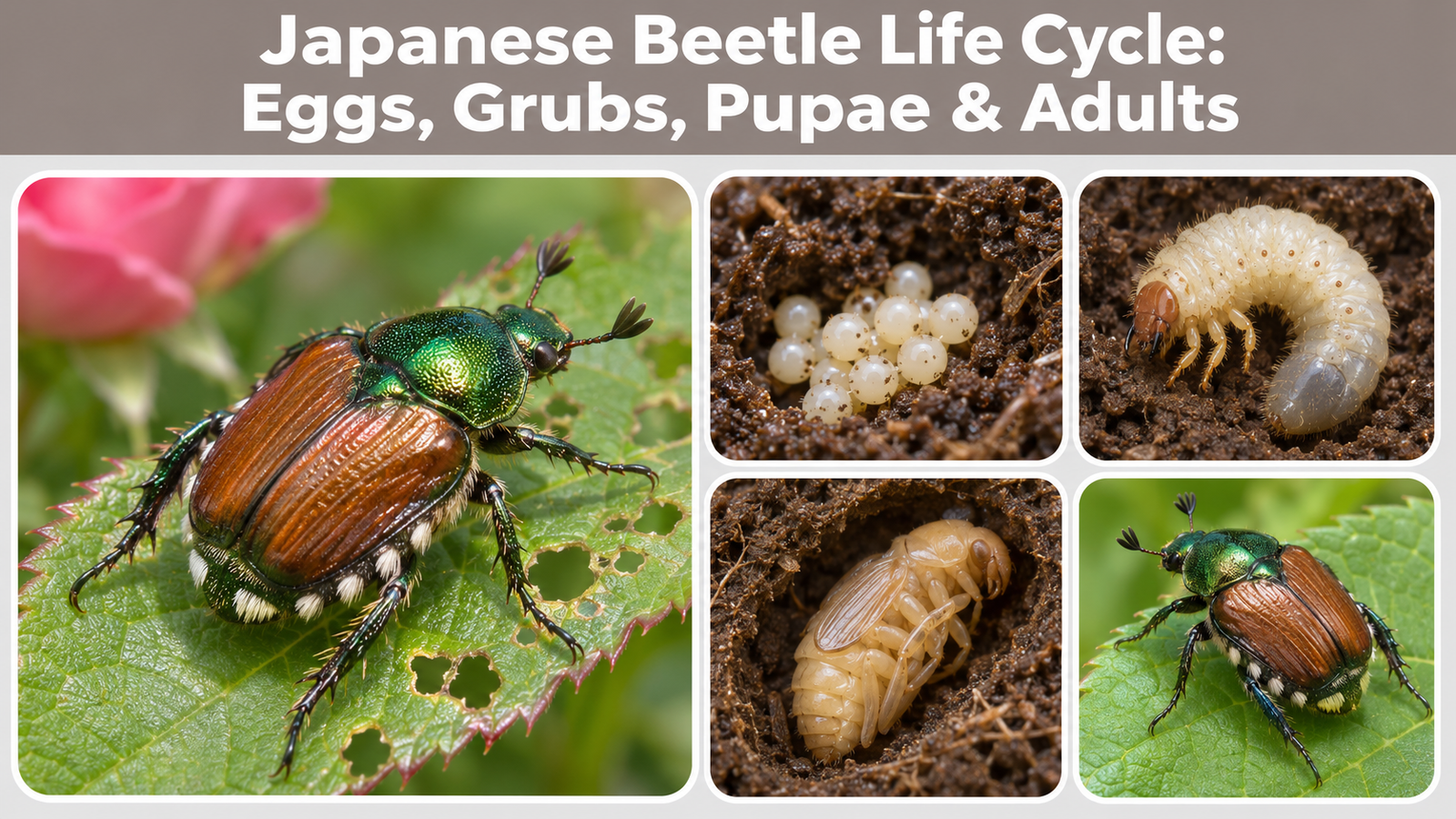
The Japanese beetle life cycle takes about one year and includes four distinct stages: egg, larva, pupa, and adult. Unlike insects with gradual development, Japanese beetles undergo complete metamorphosis, meaning the immature grub looks completely different from the adult beetle. Most of their lives are spent underground as grubs, while adults appear above ground during summer to feed, mate, and lay eggs. Understanding the Japanese beetle life cycle makes it easier to identify each stage and determine the best time to manage them.
What Is the Japanese Beetle Life Cycle?
Japanese beetles (Popillia japonica) have a complete life cycle, also called complete metamorphosis. Their development progresses through four stages: egg, larva, pupa, and adult.
The adult beetles are the familiar metallic green and copper-colored insects commonly seen feeding on roses, grapes, fruit trees, vegetables, and ornamental plants. Their larvae, commonly called white grubs, live underground and primarily feed on grass roots.
In most areas, Japanese beetles complete one generation each year. The exact timing varies with temperature, soil conditions, and geographic location, but the general sequence remains similar.
Japanese Beetle Life Cycle Stages
The four main stages are:
- Egg – Laid in soil during summer.
- Larva or grub – Feeds underground on roots and develops through three instars.
- Pupa – Develops underground after the mature grub stops feeding.
- Adult – Emerges during summer, feeds on plants, mates, and lays eggs.
After adults reproduce, the cycle begins again.
1. Japanese Beetle Egg Stage
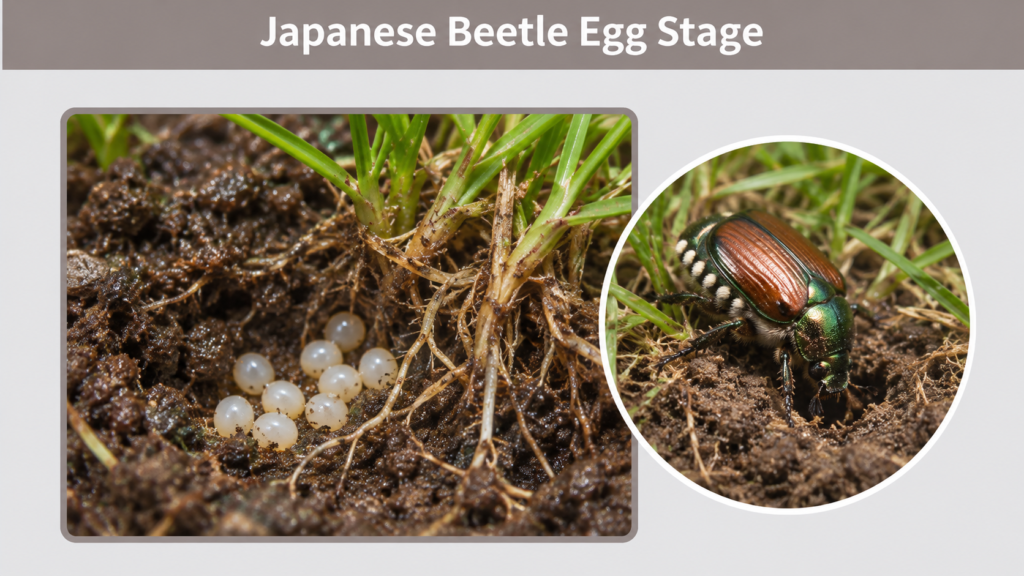
The life cycle begins when adult females lay eggs in the soil. After emerging in early summer, adults feed on plants and mate. Females then burrow into the ground and deposit eggs, often in grassy areas.
A female may lay approximately 40 to 60 eggs over several weeks. The eggs are small, pale or pearly white, and usually remain hidden underground, making them difficult to find without disturbing the soil.
Where Do Japanese Beetles Lay Eggs?
Females commonly choose soil containing grass roots because the resulting grubs will eventually feed on those roots.
Typical egg-laying locations include:
- Lawns
- Pastures
- Turfgrass
- Grassy edges
- Irrigated landscapes
- Areas with moist soil
Japanese beetle eggs generally survive better in moist soil. Very dry conditions can reduce egg survival and influence the number of beetles that appear the following year.
How Long Do Japanese Beetle Eggs Take to Hatch?
Japanese beetle eggs generally hatch in approximately two weeks, although temperature and moisture can influence development.
After hatching, tiny white grubs immediately begin feeding underground.
2. Japanese Beetle Grub or Larval Stage
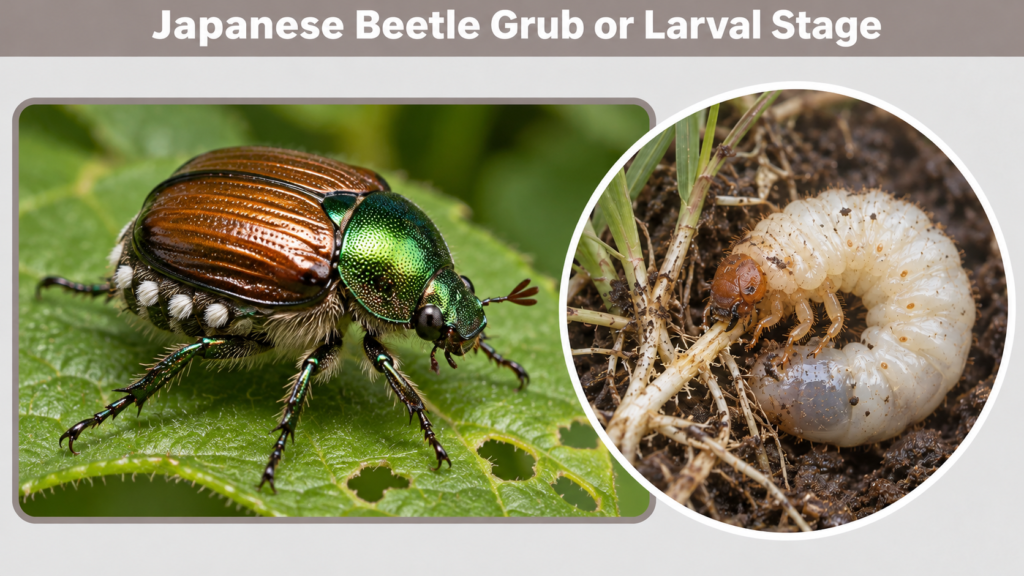
The grub stage is the longest part of the Japanese beetle life cycle. Newly hatched larvae remain in the soil and feed primarily on grass roots and other organic material.
Japanese beetle grubs are white to cream-colored, have brown heads, six legs near the front of the body, and curl into a characteristic C-shape when disturbed. Mature grubs can reach roughly one inch in length.
Japanese Beetle Grub Life Cycle
The larval stage includes three growth stages called instars.
During each instar, the grub grows larger and sheds its outer skin. The young grubs remain relatively close to the soil surface where food and moisture are available.
As temperatures decline during autumn, larger grubs move deeper into the soil to protect themselves from freezing conditions.
What Do Japanese Beetle Grubs Eat?
Japanese beetle grubs primarily feed on the roots of grasses.
They are particularly associated with lawns, pastures, golf courses, and other grassy environments. Heavy populations can damage turf by destroying roots, causing grass to become thin, brown, or loose.
The damage is different from that caused by adult beetles. Adults feed above ground on leaves, flowers, and fruit, while grubs spend their time underground feeding on roots.
3. Japanese Beetles Overwinter as Grubs
One of the most important parts of the Japanese beetle life cycle is winter survival.
Japanese beetles generally spend the winter underground as partially developed or nearly mature grubs. As soil temperatures fall, the grubs move deeper into the ground where temperatures are more stable.
They remain relatively inactive during the coldest period.
What Happens to Japanese Beetle Grubs in Winter?
During winter, Japanese beetle grubs stay below the soil surface and use stored energy to survive.
The depth can vary according to soil temperature, moisture, and local weather. As spring arrives and the soil warms, the grubs gradually move upward again.
They resume limited feeding before completing their development and changing into pupae.
This explains why Japanese beetle problems above ground during summer are connected to conditions in lawns and soil months earlier.
4. Japanese Beetle Pupal Stage

Once a mature grub has completed its feeding period, it enters the pupal stage.
The pupa remains underground while the insect undergoes a major transformation. During this stage, the soft white grub gradually develops the body structure of an adult beetle, including its wings, legs, antennae, and characteristic coloration.
The pupal stage generally lasts around three to four weeks, although development varies with environmental conditions.
Where Do Japanese Beetles Pupate?
Japanese beetles pupate in the soil, usually near the surface after mature grubs move upward during spring.
The pupal stage is not a feeding stage. The developing insect remains inside its protective pupal covering until the transformation is complete.
When development finishes, the adult beetle emerges from the soil.
5. Adult Japanese Beetle Stage
The adult stage is the most visible part of the Japanese beetle life cycle.
Adults typically emerge from the soil from late June into July, although emergence varies by region and weather. They are approximately one-third to one-half inch long and have a metallic green body with copper-brown wing covers.
Adults also have distinctive white tufts of hair along the sides and rear of the abdomen.
What Do Adult Japanese Beetles Do?
After emerging, adult beetles immediately begin searching for food and suitable mates.
They feed on hundreds of plant species, including:
- Roses
- Grapes
- Linden trees
- Apple trees
- Cherry trees
- Plum trees
- Birch
- Elm
- Raspberry
- Soybeans
- Vegetable crops
Adults often gather in large groups because feeding damage and beetle activity can attract additional beetles.
They are especially active during warm, sunny weather.
How Long Do Adult Japanese Beetles Live?
Adult Japanese beetles generally remain active for approximately four to six weeks, although the exact period varies with weather and location.
Most adult activity occurs during July and August. Some beetles may remain active into early September in cooler regions.
During this relatively short adult period, females mate and lay eggs, starting the next generation.
How Long Is the Japanese Beetle Life Cycle?
The Japanese beetle life cycle generally takes about one year from egg to adult and back to the next generation.
However, the insect spends most of that year underground.
A simplified timeline looks like this:
| Life Stage | Approximate Timing |
| Eggs | July–August |
| Young grubs | Summer |
| Larger grubs | Late summer–fall |
| Overwintering grubs | Fall–spring |
| Pupae | Late spring–early summer |
| Adults | Late June–August or early September |
The exact calendar can shift considerably by location. For example, Illinois Extension describes a one-year cycle with adults emerging around late June, while Pennsylvania sources place adult emergence from mid-June into July depending on local conditions.
Japanese Beetle Life Cycle in Different Seasons

Understanding the seasonal cycle helps explain why Japanese beetles appear suddenly in gardens each summer.
Spring
In spring, overwintered grubs move toward the warmer upper soil layers. They continue developing before transforming into pupae.
Late spring and early summer are primarily the pupal period.
Summer
Adults emerge from the soil and begin feeding on plants.
They mate and females return to the soil to lay eggs. Eggs hatch after roughly two weeks, producing a new generation of grubs.
Fall
Newly developed grubs continue feeding on grass roots.
As temperatures fall, larger grubs move deeper into the soil to overwinter.
Winter
Japanese beetles remain underground primarily as grubs.
They do not remain above ground as active adult beetles during freezing winter conditions.
When Is the Best Time to Control Japanese Beetles?
The best control timing depends on which stage you are targeting.
Adult beetles are easiest to notice during summer when they are feeding on plants. Handpicking can be practical when populations are small, while physical barriers and appropriately labeled insecticides may be considered when damage becomes unacceptable.
Grub management is different because the target is underground. Treatments intended for grubs need to be timed according to local development and product instructions.
Importantly, treating lawn grubs does not necessarily prevent adult beetles from arriving from elsewhere because adults can fly considerable distances.
Japanese Beetle Life Cycle and Treatment Timing
A simple management calendar is:
- Spring: Monitor soil and turf for developing grubs.
- Early summer: Watch for pupae and emerging adults.
- Late June–July: Begin monitoring plants for adult beetles.
- July–August: Manage active adults and feeding damage.
- Late summer: Eggs hatch and new grubs begin feeding.
- Fall: Grubs grow and move deeper into the soil.
- Winter: Grubs remain underground.
The exact timing should be adjusted to local climate and soil temperatures.
Is the Japanese Beetle Life Cycle Complete or Incomplete?
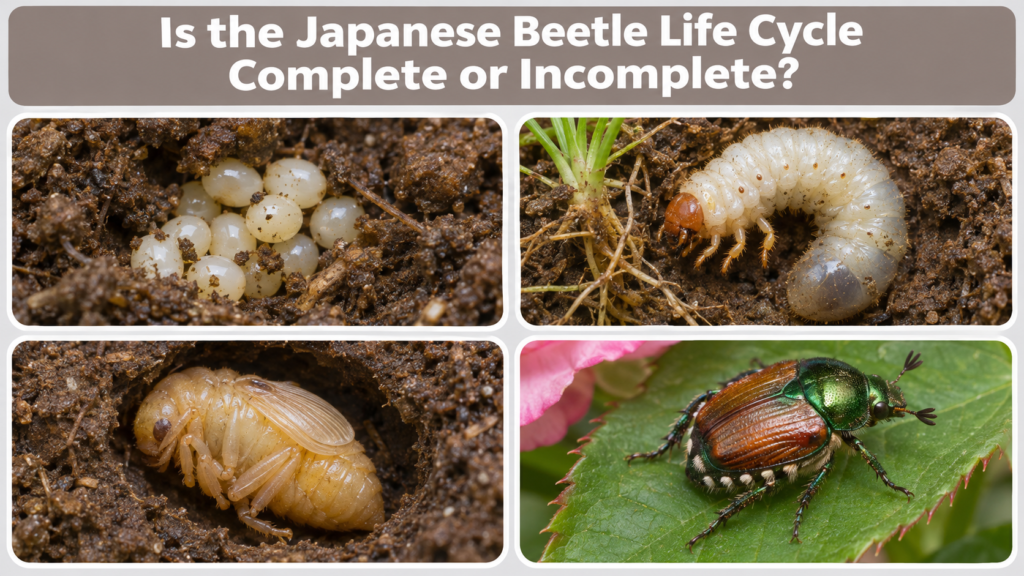
The Japanese beetle has a complete life cycle, meaning it undergoes complete metamorphosis.
Complete metamorphosis includes four distinct stages:
Egg → Larva → Pupa → Adult
The larva is completely different from the adult. Japanese beetle larvae are white, C-shaped grubs living underground, whereas adults are winged beetles that feed above ground.
This is different from insects with incomplete metamorphosis, such as grasshoppers, whose young resemble smaller versions of adults.
Japanese Beetle Life Cycle: Quick Summary
The Japanese beetle spends most of its life underground.
Females lay eggs in soil during summer. The eggs hatch into white grubs that feed on grass roots. As autumn arrives, the grubs move deeper into the soil and spend winter underground. In spring, they return toward the surface, finish developing, and pupate. Adults emerge in early summer, feed on plants, mate, and lay eggs. The cycle then repeats with a new generation.
Because Japanese beetles have one generation per year in most regions, understanding the timing of each stage can make monitoring and control much more effective.
FAQs
1. What is the life cycle of a Japanese beetle?
The Japanese beetle has four stages: egg, larva, pupa, and adult. Females lay eggs in soil during summer, grubs feed on roots and overwinter underground, pupae develop in late spring, and adults emerge during summer to feed and reproduce. The cycle generally takes about one year.
2. How long is the Japanese beetle life cycle?
The Japanese beetle generally completes its life cycle in one year. Most of this time is spent underground as a grub. Adults are visible for only several weeks during summer, while the egg and pupal stages are much shorter.
3. Do Japanese beetles have a complete life cycle?
Yes. Japanese beetles undergo complete metamorphosis, which consists of four distinct stages: egg, larva, pupa, and adult. Their grubs look completely different from adult beetles and live underground while feeding primarily on grass roots.
4. How long do Japanese beetle grubs live in the soil?
Japanese beetle grubs spend most of their development underground and typically remain in the soil from summer through the following spring. They feed on grass roots during much of this period, move deeper to overwinter, then return toward the surface before pupating.
5. When do Japanese beetles emerge?
Japanese beetles generally emerge from the soil from late June through July, although timing varies by region and weather. Adult activity is usually greatest during July and August. Warm soil and favorable summer conditions can influence when the first adults appear.