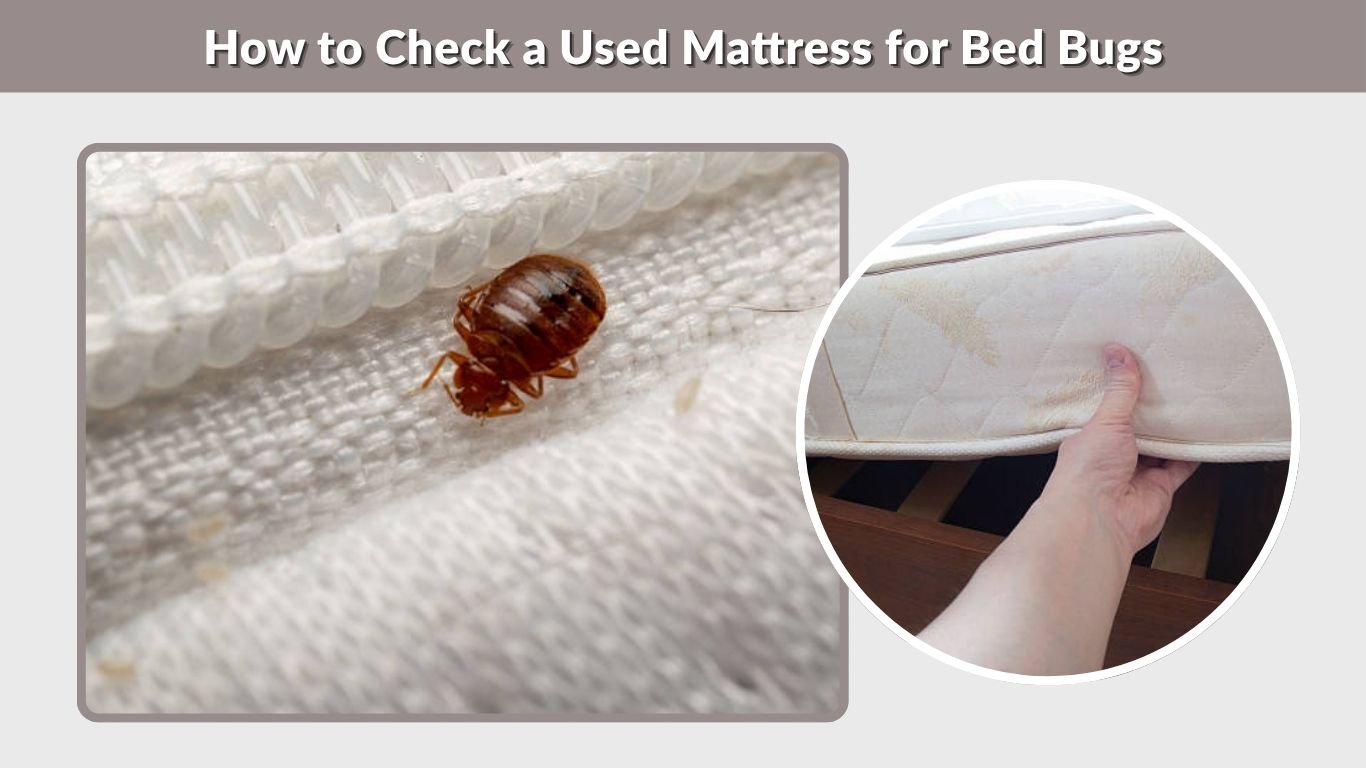
Knowing how to check for bed bugs on couch can help you find an infestation before it spreads throughout your home. Bed bugs can hide deep inside cushion seams, zippers, fabric folds, frame joints, and underneath upholstered furniture. Look for live reddish-brown bugs, tiny white eggs, shed skins, dark fecal spots, and rusty stains. Because couches are places where people sit or sleep for long periods, they can provide suitable feeding and hiding areas. A flashlight and careful inspection are essential for finding these pests.
What Do Bed Bugs Look Like on a Couch?
Bed bugs are small, flat insects capable of squeezing into narrow spaces. Adults are generally reddish-brown and measure about 1–7 mm long, while young nymphs are smaller and much lighter in color. On couches, you may notice physical evidence before you actually see a moving bed bug because they typically hide inside protected cracks during the day.
Common Signs of Bed Bugs
When inspecting your couch, look for:
- Live reddish-brown bed bugs
- Tiny white or pearl-colored eggs
- Pale shed skins
- Black or dark-brown fecal spots
- Rust-colored blood stains
- Small bugs inside seams and folds
- Clusters of insects inside protected crevices
EPA guidance specifically identifies the seams and fabric folds of sofas and chairs as places where bed bugs can hide.
What Do Bed Bug Droppings Look Like?
Bed bug fecal spots are usually tiny, dark brown or black marks. On light-colored fabric, they can resemble small ink dots.
These marks may occur around seams, underneath cushions, and near areas where several bugs have been hiding.
Can Bites Confirm Bed Bugs on a Couch?
No. Itchy bumps after sitting on a couch do not prove that bed bugs are responsible.
Bed bug bites vary considerably between people and can resemble flea, mosquito, or other insect bites. The CDC recommends looking for physical evidence of infestation rather than relying on skin reactions alone.
What You Need to Check a Couch for Bed Bugs
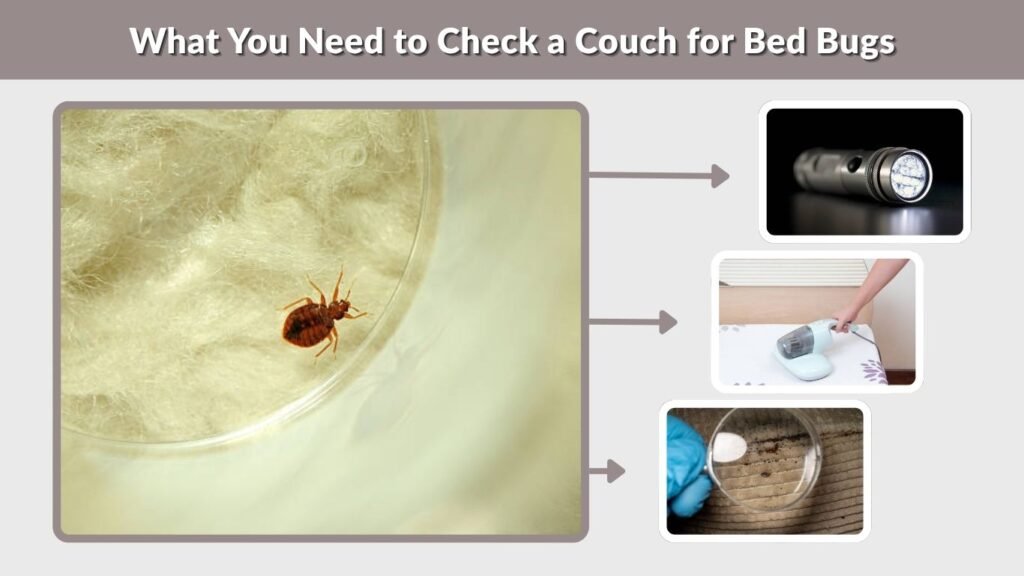
A careful couch inspection does not require expensive equipment. Good lighting is particularly important because tiny nymphs, eggs, and fecal marks can easily disappear against patterned or dark upholstery. Prepare your tools before moving cushions so you can inspect each section systematically without accidentally spreading suspicious insects around the room.
Helpful Inspection Tools
You may need:
- Bright flashlight
- Disposable gloves
- Magnifying glass
- Old credit card or thin plastic card
- Clear tape
- Sealable plastic bag
- White paper or tissue
- Vacuum cleaner for later cleaning
If you find a suspicious insect, capture it with clear tape or place it inside a sealed container for identification.
Do Not Move the Couch First
Avoid carrying a suspected infested couch into another room before inspecting it.
Bed bugs are excellent hitchhikers and can travel on furniture, clothing, bedding, luggage, and other belongings. Moving infested furniture can therefore spread the problem.
How to Check for Bed Bugs on Couch Step by Step
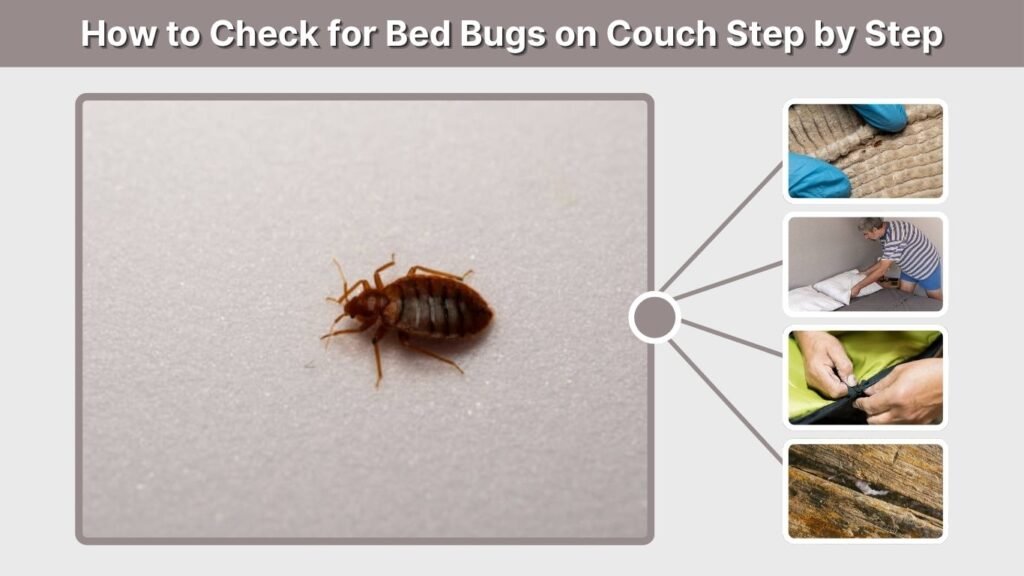
Bed bugs can occupy numerous hiding places within upholstered furniture, so simply looking across the seat surface is not enough. University of Minnesota Extension recommends a detailed inspection of upholstered furniture, particularly zippers, skirting, fabric seams, and spaces underneath cushions. Work from the visible surfaces toward deeper cracks and structural components.
1. Inspect the Outside of the Couch
Start with the visible upholstery.
Use your flashlight to check:
- Backrest
- Armrests
- Seat surfaces
- Fabric folds
- Decorative stitching
- Piping
- Buttons and tufts
Pay attention to any black spotting or unusual clusters of shed insect skins.
2. Remove and Check Every Cushion
Take cushions off one at a time.
Inspect the seams, corners, piping, zipper tracks, labels, and underneath each cushion. Bed bugs commonly use these tight, protected areas as hiding places.
Pay particular attention to the areas where cushions touch one another.
3. Check Under the Cushions
Once the cushions are removed, inspect the couch base carefully.
Use a flashlight around every seam and crevice. Look where the backrest joins the seat because this deep gap can provide an excellent hiding location.
4. Inspect Zippers and Fabric Seams
University of Minnesota Extension specifically recommends checking zippers, fabric seams, skirting, and crevices under cushions when inspecting upholstered furniture.
Run a thin card gently along accessible seams if needed to reveal debris or hidden insects.
5. Turn the Couch Over Carefully
If the couch can be safely tilted or turned with assistance, inspect the bottom.
Check:
- Underside fabric
- Staples
- Wooden frame
- Couch legs
- Frame joints
- Screws and bolt holes
- Torn fabric
- Corners and crevices
Do not damage the couch simply to inspect inaccessible areas.
6. Examine the Internal Frame
Bed bugs can hide within cracks in wooden or metal couch frames.
Focus on connecting joints, screw holes, corners, and narrow gaps. Their flat bodies allow them to fit into surprisingly small spaces. EPA notes that bed bugs can occupy cracks and crevices throughout infested furniture and rooms.
7. Check the Area Around the Couch
An infestation may extend beyond the furniture.
Inspect nearby baseboards, carpets, tables, curtains, wall cracks, and other upholstered furniture. The EPA lists furniture folds, carpeting, baseboards, and other narrow spaces among common hiding areas.
How to Check a Used Couch for Bed Bugs
Secondhand furniture deserves extra attention because bed bugs can travel from one home to another inside couches and other upholstered items. EPA specifically recommends inspecting secondhand couches and furniture before bringing them into your home.
Inspect Before Bringing It Inside
Whenever possible, check a used couch before transporting it into your living space.
Examine:
- Cushion seams
- Zippers
- Underneath cushions
- Fabric folds
- Bottom covering
- Wooden frame joints
- Screw holes
- Torn upholstery
A quick look at the outside surface is not sufficient.
Be Careful With Free Furniture
A couch left beside a road or dumpster can carry hidden pests even if it looks clean.
Avoid bringing discarded upholstered furniture home unless you can confidently determine its history and thoroughly inspect it.
Do Not Rely on Clean Appearance
Bed bugs do not require dirty surroundings. Their main requirement is access to a blood meal and suitable hiding spaces.
A couch can therefore appear perfectly clean while still containing bed bugs.
How to Check a Leather Couch for Bed Bugs
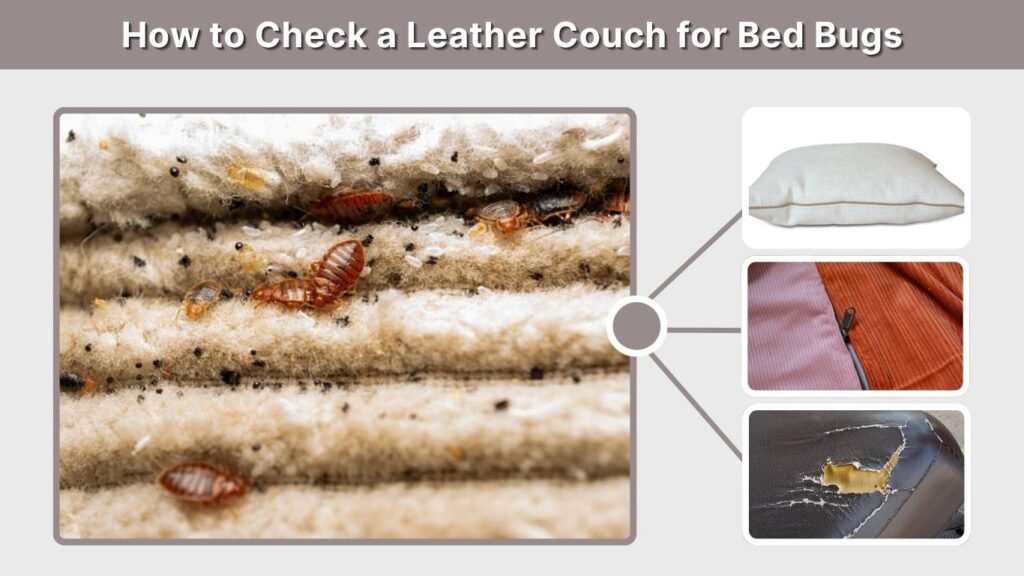
Leather does not make a couch immune to bed bugs. Although smooth leather provides fewer fabric folds than some upholstered materials, bed bugs can still hide along seams, beneath cushions, behind zippers, underneath the furniture, and within the internal frame.
Check Leather Seams
Inspect every stitched edge closely.
Pay particular attention to:
- Cushion seams
- Piping
- Zipper areas
- Button holes
- Cracks between cushions
- Areas where leather attaches to the frame
Do not assume that bed bugs must be living directly on the smooth leather surface.
Check Beneath the Leather
Most leather couches contain wooden or metal frames and other fabric materials underneath.
These concealed components can provide numerous cracks and protected spaces, so the underside and frame are just as important as the leather upholstery itself.
What About Bed Bugs in a Sleeper Sofa?
A sleeper sofa offers even more potential hiding places because it combines an upholstered couch with a folding bed and mattress. Inspect both parts of the furniture rather than concentrating only on the seating area.
Inspect the Mattress
Check mattress:
- Seams
- Piping
- Labels
- Corners
- Underside
- Folding areas
Then inspect the surrounding metal frame and mechanisms.
Inspect the Folding Mechanism
Use a flashlight around joints, hinges, screws, and spaces where the folding frame meets the couch.
Do not place your fingers blindly inside mechanical components because the folding mechanism can cause injury.
What to Do If You Find Bed Bugs on Your Couch

Finding bed bugs does not automatically mean you should throw the couch away. EPA advises against discarding furniture when it can be safely treated. Bed bug management usually works best when the entire infestation is addressed rather than focusing on one piece of furniture.
Immediate Steps
If you find bed bugs:
- Capture a specimen for identification.
- Avoid moving the couch to another room.
- Vacuum visible bugs and accessible hiding areas.
- Seal and discard vacuum contents outdoors.
- Inspect surrounding furniture and baseboards.
- Reduce nearby clutter.
- Consider couch-leg interceptor traps.
- Contact a qualified pest-management professional for established infestations.
EPA recommends thorough vacuuming of upholstered furniture and cracks and notes that interceptor traps can be placed under couch or chair legs for monitoring.
Avoid Unsafe DIY Treatments
Do not attempt to heat the room with fireplaces, propane heaters, space heaters, or excessively high thermostat settings. EPA warns that these methods are dangerous and are not reliable bed bug treatments.
Use pesticides only when they are labeled for bed bugs and appropriate for the particular surface being treated.
FAQs
Bed bugs on couches can be harder to locate than those on mattresses because upholstered furniture contains many hidden seams, folds, and structural cavities. A careful inspection should therefore include both the fabric and internal framework rather than focusing only on visible seat cushions.
1. Where do bed bugs hide on a couch?
They commonly hide inside cushion seams, zippers, fabric folds, piping, underneath cushions, frame joints, screw holes, and the underside of the couch.
2. How can I tell if my couch has bed bugs?
Look for live bugs, tiny white eggs, pale shed skins, black fecal spots, and rusty stains. Finding several types of physical evidence makes an infestation more likely.
3. Can bed bugs live inside a leather couch?
Yes. They may hide around leather seams, underneath cushions, inside frame cracks, or beneath the couch rather than on exposed smooth leather.
4. Should I throw away a couch with bed bugs?
Not automatically. EPA states that infested furniture may sometimes be treated safely and should not necessarily be discarded. If disposal is necessary, damage or clearly mark the furniture so another person does not take it.
5. Can a couch have bed bugs even if I cannot see them?
Yes. Small infestations can be difficult to detect because bed bugs hide in tiny crevices. If you continue finding suspicious evidence despite a negative visual inspection, professional inspection or ongoing monitoring may be useful.