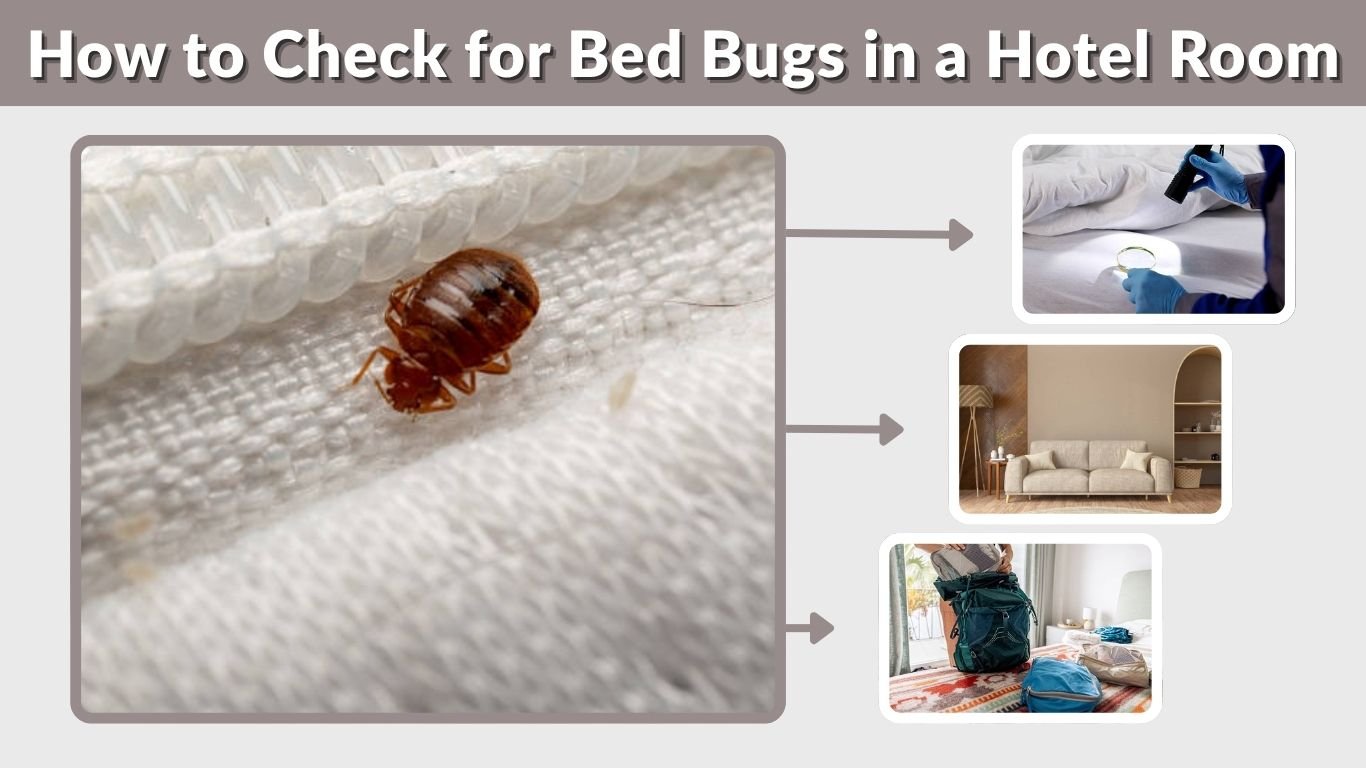
Knowing how to check for bed bugs in a hotel room can help you avoid bringing these pests home after a trip. Bed bugs can occur in hotels of any price range because they often travel inside luggage, clothing, and personal belongings. Before unpacking, inspect the mattress seams, headboard, bed frame, luggage rack, and nearby furniture for live bugs, dark spots, shed skins, or tiny eggs. A careful five-minute inspection can help you identify suspicious signs before settling into the room.
What Do Hotel Bed Bugs Look Like?
Before checking the room, you need to know what you are searching for. Adult bed bugs are small, oval, flattened insects that are usually reddish-brown. Younger bed bugs are smaller and may appear pale or nearly translucent. Because they hide during the day, travelers often notice stains, eggs, or shed skins before seeing a live insect.
Common Signs of Bed Bugs
Look for:
- Small reddish-brown insects
- Tiny pale or white nymphs
- Pearl-white eggs
- Pale shed skins
- Black or dark-brown fecal spots
- Rust-colored blood stains
- Bugs hiding inside seams or cracks
- Several suspicious signs concentrated near the bed
Adult bed bugs are often compared in size and shape to an apple seed.
What Do Bed Bug Stains Look Like?
Bed bug fecal marks usually appear as tiny dark brown or black dots. They may look like ink spots on fabric.
Rusty or reddish stains can sometimes appear when a feeding bed bug is accidentally crushed on sheets or bedding.
Can You Smell Bed Bugs?
Large infestations may produce a noticeable sweet or musty odor. However, smell alone is not a reliable way to check a hotel room.
A small infestation may have no obvious odor at all.
How to Check for Bed Bugs in a Hotel Room
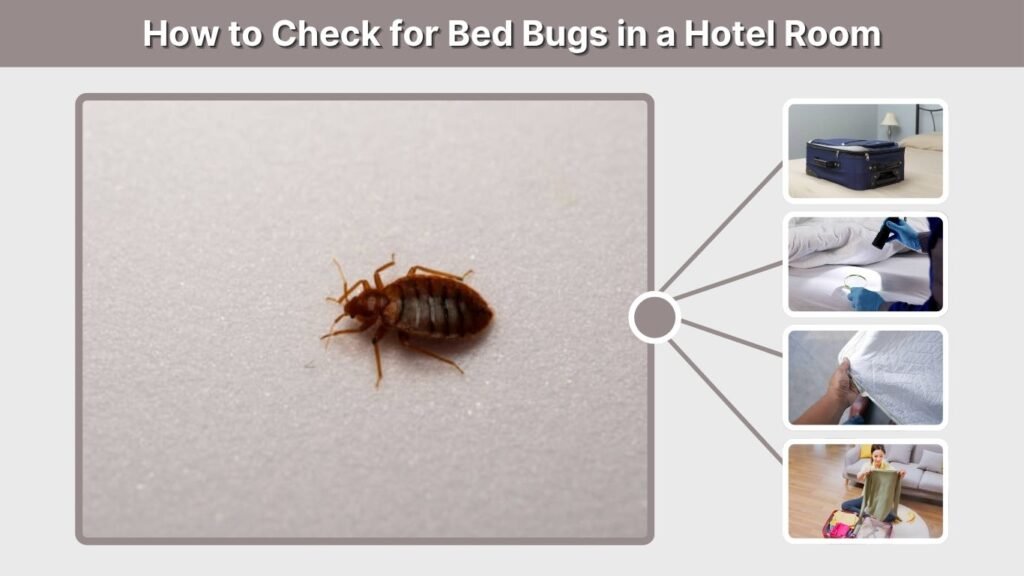
The best time to inspect a hotel room is immediately after entering and before opening your suitcase. Bed bugs usually stay close to areas where people sleep or rest. Begin with the bed and gradually expand your inspection to furniture and nearby hiding places. Use your phone flashlight or another bright light to inspect small cracks.
1. Keep Your Luggage Away From the Bed
Do not immediately place your suitcase on:
- The bed
- Upholstered chairs
- Carpet beside the bed
- Sofa
- Soft luggage benches
Instead, temporarily place luggage in the bathroom or another hard-surfaced area while you inspect the room.
Bathrooms generally provide fewer hiding spaces for bed bugs than upholstered sleeping areas.
2. Check the Sheets and Pillows
Pull back the sheets slowly and examine the sleeping surface.
Look for dark fecal spots, rusty stains, shed skins, tiny eggs, or live bugs. Pay particular attention to areas around the head of the bed because bed bugs often hide close to where a person sleeps.
Clean-looking sheets do not guarantee that the room is bed-bug-free, so continue inspecting underneath them.
3. Inspect the Mattress Seams
Checking the mattress is one of the most important steps.
Use a flashlight to examine:
- Mattress seams
- Piping
- Corners
- Buttons
- Stitching
- Tags and labels
- Handles
- The underside of the mattress
Run your eyes slowly along each seam because small nymphs and eggs can be easy to miss.
4. Check the Box Spring and Bed Frame
If accessible, look underneath the mattress and around the box spring.
Inspect joints, corners, screw holes, cracks, and places where the frame pieces connect. Bed bugs prefer tight spaces where their bodies can remain concealed.
Do not dismantle hotel furniture, but examine everything that can be inspected safely without causing damage.
5. Examine the Headboard
The headboard is one of the most frequently overlooked hotel hiding places.
Use a flashlight around the:
- Edges
- Wall connection
- Decorative grooves
- Screw holes
- Gaps behind the headboard
- Upholstered seams
If the headboard is firmly fixed to the wall, do not force it loose. Inspect the visible edges and surrounding wall instead.
6. Inspect Nearby Furniture
Bed bugs are not restricted to mattresses.
Check nightstands, upholstered chairs, sofas, and drawers located close to the bed. Concentrate on seams, joints, corners, and narrow cracks.
The farther an infestation spreads, the more likely bed bugs are to occupy furniture beyond the sleeping area.
7. Check the Luggage Rack
Before placing luggage on the hotel rack, inspect it carefully.
Look underneath straps, around joints, and inside cracks in wooden or metal sections. If possible, keep your suitcase zipped and positioned away from the wall throughout your stay.
How to Check a Hotel Mattress for Bed Bugs
The mattress deserves a more detailed inspection because people spend several hours there every night. Bed bugs are attracted to human hosts rather than the mattress itself, but mattress seams provide convenient hiding places close to a reliable food source.
Start at the Head of the Mattress
Begin near the pillow area and upper corners.
Pull the sheet back enough to expose the mattress seam and carefully inspect along the piping. Check both the top and side edges.
Examine All Four Corners
Corners contain multiple fabric folds and stitching lines where bed bugs can hide.
Slowly inspect each corner with a flashlight rather than giving the mattress a quick glance.
Look Under Tags and Labels
Mattress tags create narrow protected spaces.
Lift them slightly without tearing anything and check behind them for bugs, eggs, shed skins, or dark marks.
Where Else Do Bed Bugs Hide in Hotels?
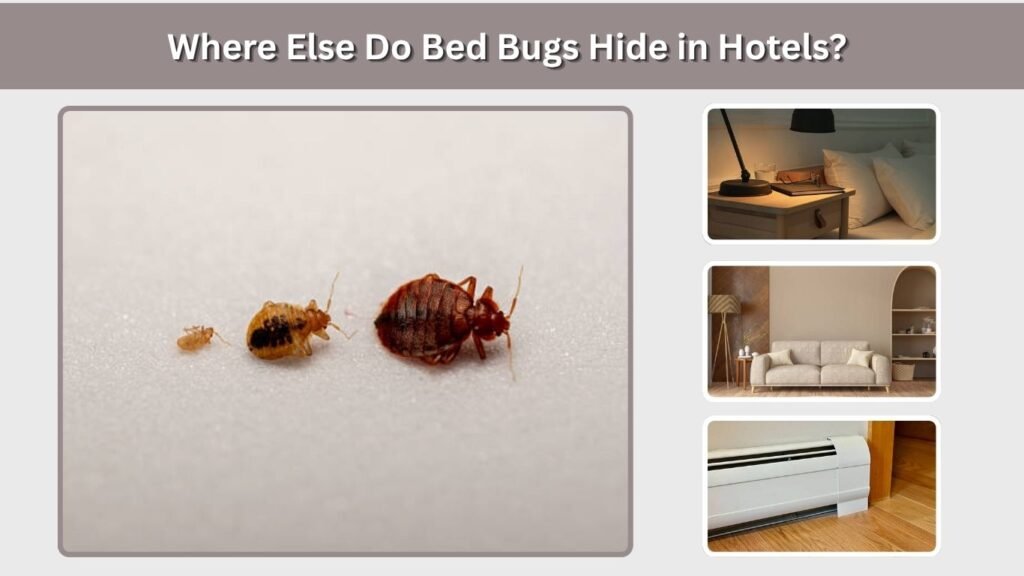
If bed bugs are present, they may move beyond the mattress. Their flat bodies allow them to enter narrow spaces around furniture, walls, and fixtures. This means a complete hotel inspection should include the immediate area surrounding the bed, particularly when you notice suspicious marks or insects.
Common Hotel Hiding Places
Check areas such as:
- Bedside tables
- Headboards
- Upholstered chairs
- Sofas
- Curtain folds
- Carpet edges
- Baseboards
- Cracks near the bed
- Luggage racks
- Drawer joints
- Wall decorations near the bed
You do not need to inspect the entire hotel room inch by inch. Concentrate on places within several feet of the bed.
Can Bed Bugs Hide Behind Pictures?
Yes. In established infestations, bed bugs may hide behind wall decorations, mirrors, or loose wallpaper near sleeping areas.
However, mattress seams, frames, and headboards should remain your first inspection priorities.
Can You Check a Hotel for Bed Bugs With a Black Light?
A black light is not necessary for an ordinary hotel bed bug inspection. UV light may make some stains or biological material more noticeable, but it does not provide a dependable method for confirming bed bugs.
A Flashlight Works Better
A normal bright flashlight is more practical because it allows you to see:
- Live insects
- Eggs
- Shed skins
- Dark fecal spots
- Mattress seams
- Narrow furniture cracks
Your phone flashlight is generally sufficient for a quick inspection.
Do Not Rely on One Tool
No flashlight, black light, or phone app can guarantee that a hotel room has no bed bugs.
Physical inspection of several likely hiding locations remains much more useful.
What Should You Do If You Find Bed Bugs in a Hotel?
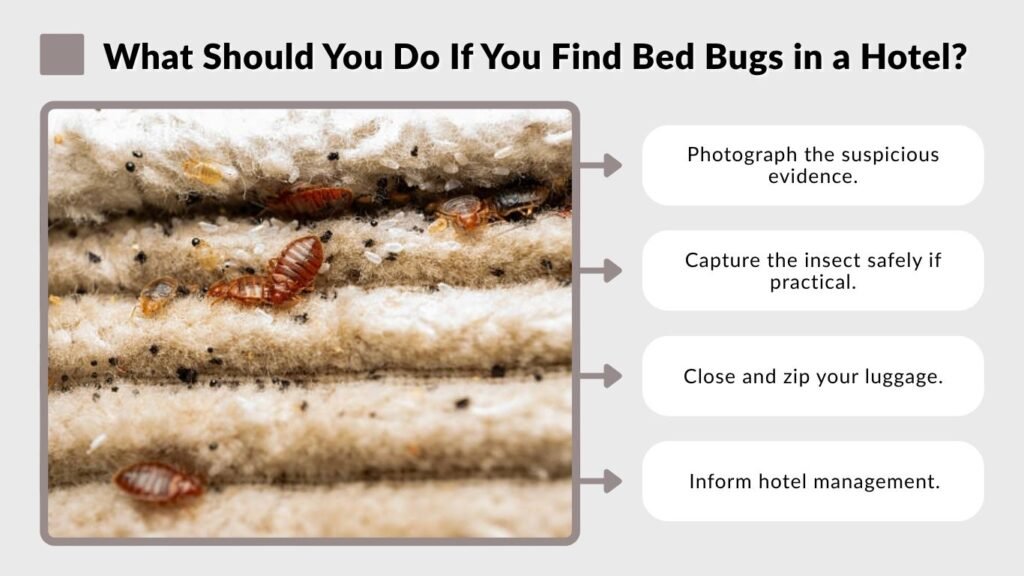
If you find a live bed bug, eggs, several suspicious stains, or other convincing evidence, avoid unpacking further. Keep belongings contained and contact hotel management. Moving immediately to another room without considering its location may not completely solve the problem.
What to Do Immediately
Take these steps:
- Photograph the suspicious evidence.
- Capture the insect safely if practical.
- Close and zip your luggage.
- Avoid placing clothing on the bed or floor.
- Inform hotel management.
- Request another room or alternative accommodation.
- Inspect any replacement room before unpacking.
A room directly beside, above, or below an affected room may potentially be less desirable because bed bugs can spread through nearby areas.
Should You Stay in Another Room?
A hotel may offer a different room. Inspect the replacement just as carefully as the first one.
If you remain uncomfortable or find additional evidence, consider requesting different accommodation.
How to Avoid Bringing Hotel Bed Bugs Home
Even when your hotel inspection looks clean, simple travel habits can reduce the chance of accidentally transporting bed bugs. Bed bugs are excellent hitchhikers and can hide in luggage seams, folded clothing, backpacks, and other personal belongings.
During Your Stay
To reduce risk:
- Keep luggage zipped when not in use.
- Use an inspected luggage rack.
- Keep bags away from the bed.
- Avoid leaving clothing on the floor.
- Place dirty clothes in sealed bags.
- Inspect luggage before checking out.
These steps make it harder for a wandering bed bug to enter your belongings.
When You Return Home
Avoid placing your suitcase directly on your bed.
Unpack in a controlled area and inspect luggage seams and pockets. Clothing that can safely tolerate dryer heat can be dried according to fabric-care instructions. Heat is an effective component of bed bug control when temperatures and exposure times are sufficient.
Store luggage away from bedrooms when possible after inspecting it.
What If You Find Bites After Staying in a Hotel?
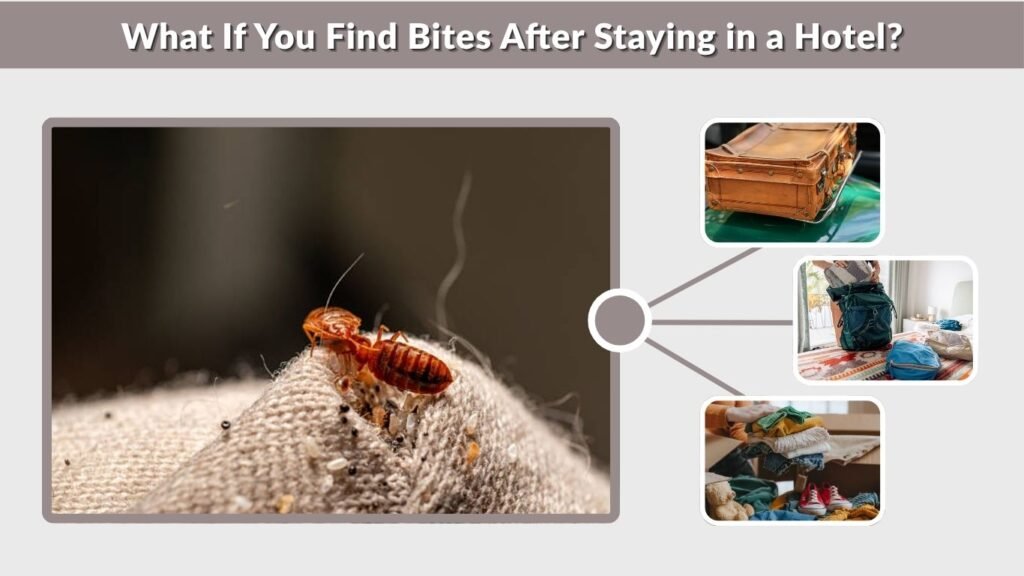
Discovering itchy bumps after a hotel stay does not automatically confirm bed bugs. Fleas, mosquitoes, mites, allergic reactions, and other conditions can produce similar marks. Some people also react to bed bug bites later than others.
Check Your Belongings
If you suspect hotel exposure, examine:
- Suitcase seams
- Backpacks
- Clothing
- Shoes
- Toiletry bags
- Travel pillows
Look for live insects, eggs, dark spots, or shed skins.
Monitor Your Home
Avoid spreading luggage and clothing throughout bedrooms until you have checked everything carefully.
If you later discover physical evidence of bed bugs at home, early professional assessment can make an infestation easier to manage.
FAQs
Hotel bed bugs can be difficult to detect because small infestations may involve only a few insects hidden deep inside cracks. A systematic inspection significantly improves your chances of spotting warning signs. These common questions cover some of the most important points travelers should remember.
1. How do I quickly check a hotel room for bed bugs?
Start with the mattress seams, sheets, headboard, bed frame, and luggage rack. Look for live bugs, dark fecal spots, rusty stains, eggs, and shed skins before unpacking.
2. Where should I put my luggage while checking the room?
Temporarily place luggage in the bathroom or another hard-surfaced location away from the bed and upholstered furniture. After inspection, use a checked luggage rack and keep your suitcase zipped.
3. Can a clean hotel have bed bugs?
Yes. Bed bugs are not necessarily a sign of poor cleanliness. They can be transported into almost any hotel inside guests’ luggage or belongings.
4. Should I check every hotel room for bed bugs?
A brief inspection is a sensible travel habit. Checking the mattress, headboard, bed frame, and luggage rack usually requires only a few minutes and can help identify obvious warning signs.
5. What should I do if I see a bed bug in my hotel room?
Keep your belongings contained, photograph or safely capture the insect if possible, and contact hotel management. Request alternative accommodation or another room and inspect the replacement before unpacking.