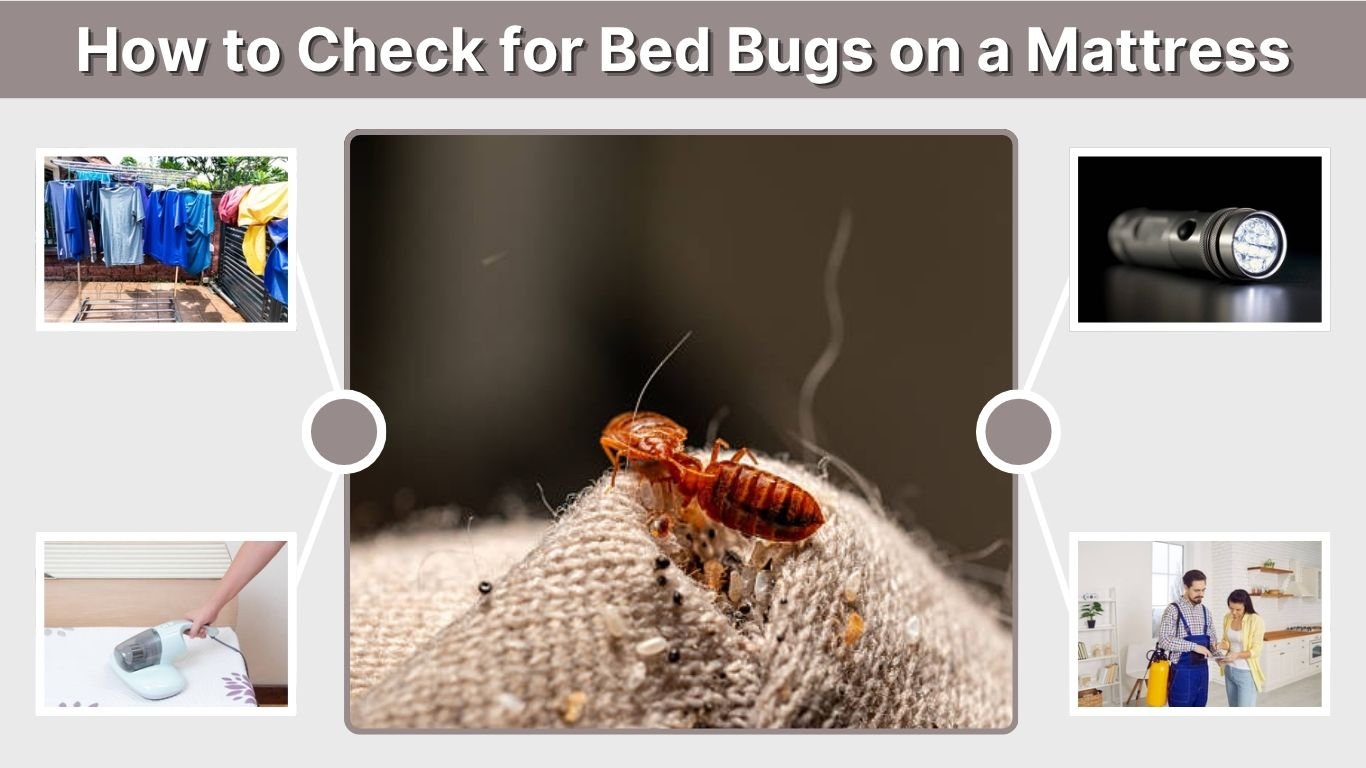
Knowing how to check for bed bugs on a mattress can help you detect an infestation before it becomes difficult to control. Bed bugs often hide along mattress seams, piping, labels, buttons, box springs, and nearby bed-frame cracks during the day. Look for live reddish-brown bugs, tiny eggs, shed skins, dark fecal spots, and rusty blood stains. A flashlight and careful inspection are usually more useful than looking for bites alone. Here is how to inspect your mattress thoroughly and safely.
What Do Bed Bugs Look Like on a Mattress?
Before inspecting your mattress, it helps to know exactly what you are searching for. Adult bed bugs are small, flat, oval insects about 5–7 mm long, roughly comparable to an apple seed. Younger bed bugs are much smaller and lighter, while their eggs are tiny and pearl-white. Several other physical clues may reveal an infestation even when no live bugs are immediately visible.
Common Signs of Bed Bugs
Look for these signs while inspecting:
- Live reddish-brown, oval bed bugs
- Tiny pearl-white eggs or eggshells
- Pale or whitish shed skins
- Small black or dark-brown fecal spots
- Rust-colored blood stains on bedding
- Bugs clustered along mattress seams
- A sweet or musty odor in heavier infestations
The CDC and EPA identify live bugs, shed exoskeletons, rusty blood spots, eggs, and dark fecal evidence as important signs of infestation.
Do Bed Bug Bites Confirm an Infestation?
No. Bites alone cannot reliably confirm that bed bugs are present.
Bed bug bites can resemble mosquito, flea, or other insect bites, and some people show little or no visible reaction. The CDC notes that bite marks can even take days to appear. Finding physical evidence around the sleeping area provides much stronger confirmation.
What You Need to Check a Mattress for Bed Bugs
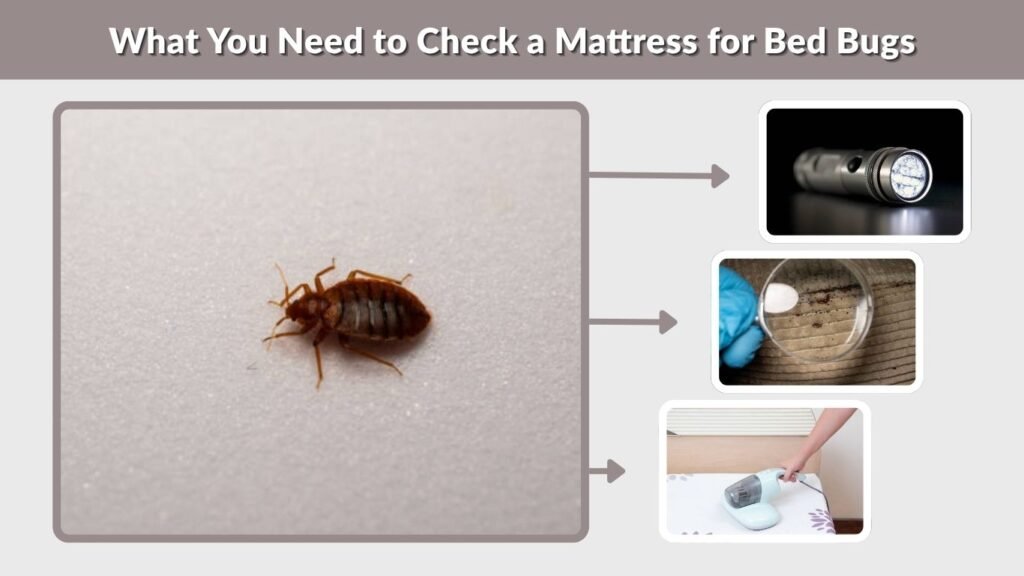
A detailed mattress inspection does not require complicated equipment. Good lighting and patience are more important than specialized devices. Bed bugs hide in extremely narrow spaces, so you should be prepared to examine seams and folds closely rather than simply looking across the top surface of the mattress. Inspect slowly enough that small nymphs, eggs, or dark spots are not overlooked.
Bed Bug Inspection Tools
Useful items include:
- A bright flashlight
- Magnifying glass if available
- Disposable gloves
- Clear plastic bags
- White paper or tissue
- An old credit card or similar thin tool
- Vacuum cleaner for later cleanup
- Clear tape or a small sealed container for specimens
If you find a suspicious insect, preserving it with clear tape or inside a sealed container can make professional identification easier. EPA guidance recommends capturing suspected bed bugs rather than immediately discarding all furniture.
Prepare the Bed Carefully
Remove sheets, pillowcases, blankets, and other bedding slowly. Avoid carrying potentially infested bedding through multiple rooms.
Place the bedding directly into a bag or container until it can be handled appropriately. This reduces the possibility of accidentally moving bed bugs elsewhere in the home.
How to Check for Bed Bugs on a Mattress Step by Step
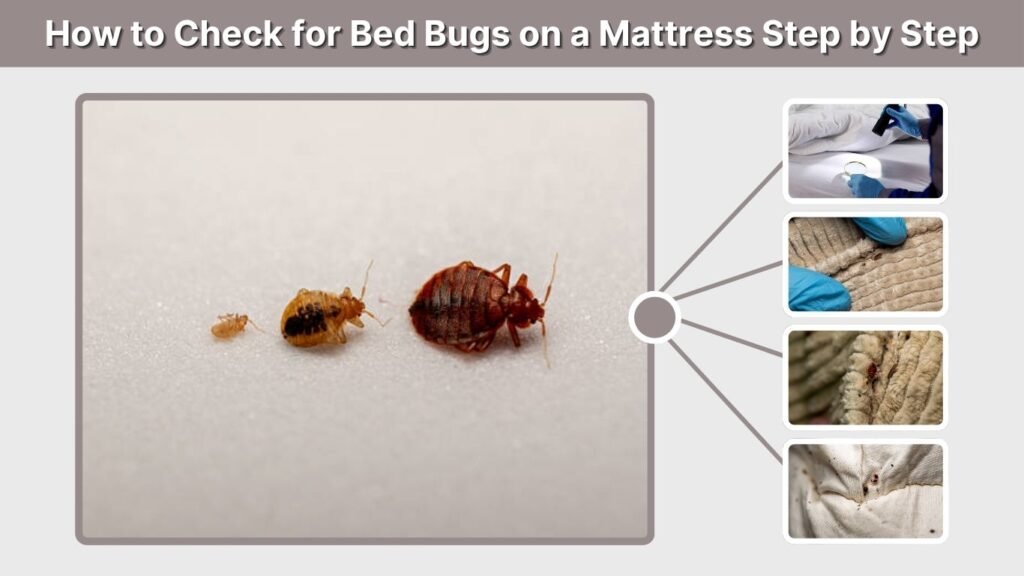
A systematic inspection is the best way to avoid missing hiding places. Bed bugs often remain close to where people sleep, particularly during smaller infestations. University of Minnesota Extension recommends beginning with mattress piping and stitching before inspecting the sides, surfaces, labels, buttons, box spring, frame, and surrounding sleeping area.
1. Inspect the Sheets
Begin before removing all bedding.
Look closely for:
- Tiny rusty or reddish stains
- Dark brown or black spots
- Shed skins
- Live insects
- Small blood smears
Rust-colored spots can result from blood or crushed bugs, while dark spots can be bed bug fecal material.
2. Check the Mattress Seams
Slowly inspect every seam around the mattress.
Use your flashlight to look underneath folds and piping. Bed bugs prefer protected cracks and seams, making these areas among the most important places to examine. The CDC specifically lists mattress seams among their common hiding locations.
3. Inspect Piping, Buttons and Tufts
Run the flashlight around the mattress edge and inspect buttons, handles, decorative stitching, folds, and tufted areas.
Use a thin card gently along seams if necessary to expose hidden spaces without damaging the mattress.
4. Check Mattress Labels and Tags
Lift mattress labels and examine underneath them.
University of Minnesota Extension specifically recommends checking labels, tags, buttons, and other mattress decorations because these features create narrow hiding spaces.
5. Turn the Mattress Over
Carefully inspect the underside.
Follow every stitching line and examine corners, seams, handles, and fabric folds. Do not assume a clean upper surface means the mattress is free of bed bugs.
6. Inspect the Box Spring
The box spring can sometimes contain more hiding spaces than the mattress itself.
Check its seams, corners, underside, frame, fabric folds, plastic edge guards, and areas where it contacts the bed frame. EPA guidance identifies box springs as an important bed bug hiding location.
7. Check the Bed Frame and Headboard
A mattress inspection is incomplete if you stop at the mattress.
Examine joints, screw holes, cracks, rails, headboard edges, and areas where different pieces of the bed connect. Bed bugs can hide in both wooden and metal frames.
How to Check Different Types of Mattresses
Bed bugs are not limited to traditional spring mattresses. They are attracted to sleeping areas because people provide their blood meals, not because they prefer a particular mattress material. Memory foam, hybrid mattresses, air mattresses, and hotel beds can all become associated with bed bugs when suitable seams, folds, nearby furniture, or structural gaps provide hiding places.
How to Check a Memory Foam Mattress
With a memory foam mattress, concentrate on the outer cover rather than the foam itself.
Inspect zipper tracks, seams, piping, labels, handles, corners, and underneath the mattress. If the cover can be removed according to the manufacturer’s instructions, inspect the zipper area carefully.
Bed bugs generally hide in accessible crevices rather than burrowing deep through solid foam.
How to Check an Air Mattress
Check seams, valves, folded edges, and any textured areas where insects could hide.
Because an air mattress may offer fewer permanent crevices than a box spring, also inspect the floor, baseboards, nearby furniture, luggage, and other objects surrounding it.
How to Check a Hotel Mattress for Bed Bugs
Before unpacking, inspect the mattress seams, headboard, bed frame, and nearby furniture.
The CDC specifically recommends looking for bed bugs and shed exoskeletons in mattress folds and sheets while traveling. Bed bugs can occur in hotels regardless of how clean or expensive the property appears.
How to Check a Used Mattress for Bed Bugs
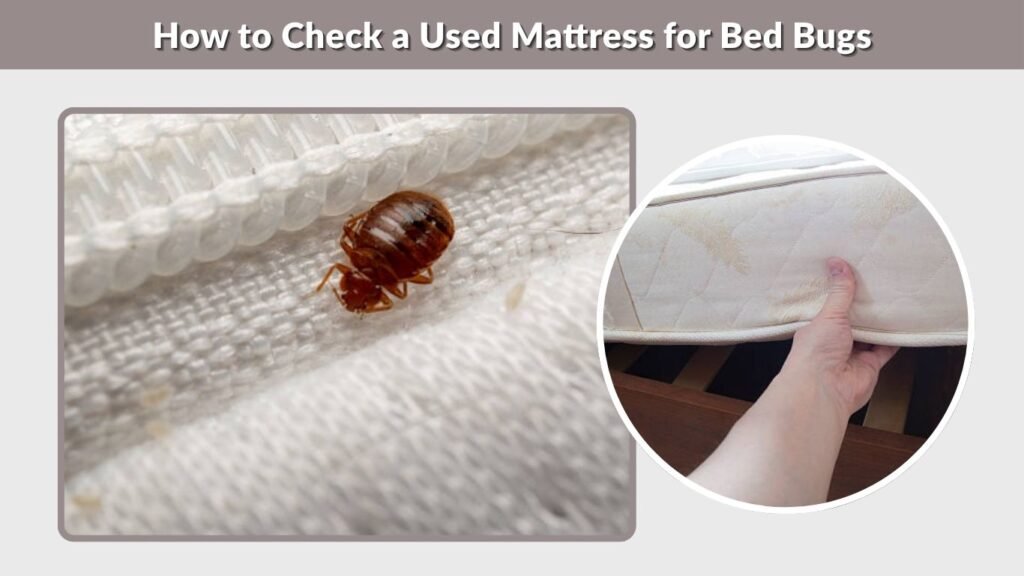
Used mattresses deserve particularly careful inspection because bed bugs can travel with secondhand furniture. Even when a mattress appears clean, insects or eggs may be concealed beneath seams, labels, folds, or nearby components. EPA materials specifically identify used furniture, including mattresses, as one possible way bed bugs can be transported between locations.
Inspect Before Bringing It Indoors
Examine the mattress outdoors or in another controlled location before moving it into your sleeping area.
Pay special attention to seams, piping, underside fabric, tags, tears, and folds. A heavily stained or damaged mattress with inaccessible internal spaces can be particularly difficult to inspect confidently.
What About a New Mattress?
A genuinely new mattress is much less likely to have bed bugs, but inspection still takes only a few minutes.
Look around packaging, seams, labels, and the delivery environment. More importantly, remember that finding bed bugs after purchasing a mattress does not necessarily mean the mattress introduced them; they may already have been present in the room or bed frame.
Where Else Should You Check for Bed Bugs?
If the mattress appears clear but you continue finding suspicious evidence, expand the inspection. Bed bugs commonly remain close to sleeping and resting areas but can hide in many nearby cracks and objects. The EPA and University of Minnesota recommend checking box springs, frames, headboards, baseboards, upholstered furniture, carpeting edges, and other nearby hiding locations.
Around the Bed
Inspect:
- Bed-frame joints and screw holes
- Headboard and footboard
- Nightstands and drawers
- Baseboards and wall cracks
- Carpet edges
- Upholstered chairs
- Curtains near the bed
- Behind pictures or loose wallpaper
Bed bugs can fit into very narrow spaces, so small cracks deserve attention.
Why the Mattress May Look Clean
An early infestation may involve only a few bugs, and they might be hiding in the frame, box spring, headboard, or another nearby object rather than directly on the mattress.
For this reason, one quick inspection cannot always rule out bed bugs.
What to Do If You Find Bed Bugs on Your Mattress
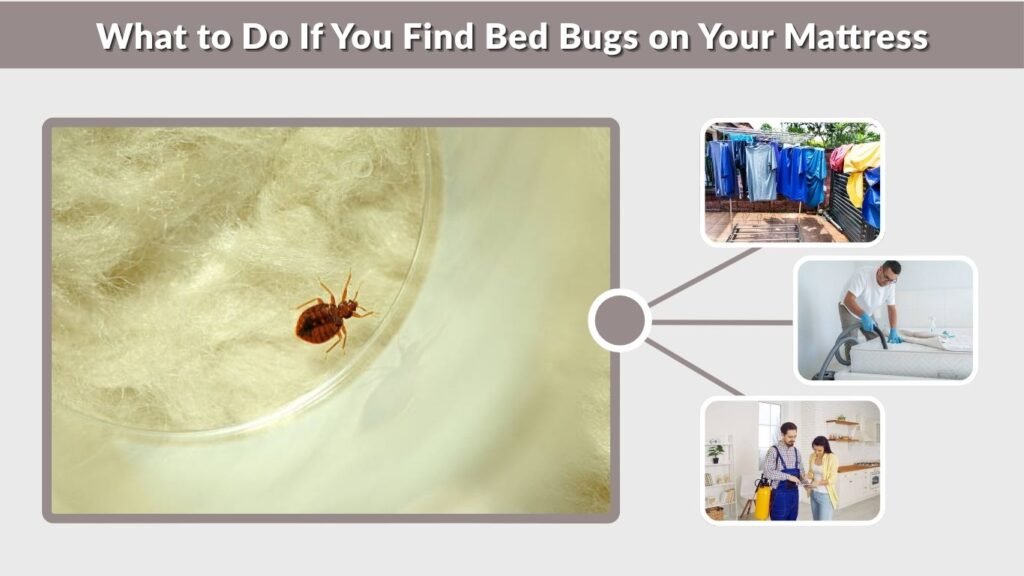
Finding a suspected bed bug can be stressful, but immediately throwing away your mattress is usually unnecessary. Bed bug control works best when the infestation is correctly identified and managed across the entire affected area. Removing only the mattress may leave bugs behind in frames, furniture, walls, or other hiding locations, allowing the infestation to continue.
Take These Next Steps
If you find convincing evidence:
- Capture a specimen for identification if possible.
- Avoid moving belongings into other rooms.
- Bag bedding before transporting it.
- Dry suitable bedding and clothing on high heat.
- Vacuum visible bugs where appropriate.
- Consider a bed-bug-proof mattress encasement.
- Inspect the bed frame and surrounding furniture.
- Contact an experienced pest-management professional.
EPA guidance states that suitable items can be placed in a household dryer on high heat for about 30 minutes to kill bed bugs and eggs; washing alone may not be sufficient.
Do Not Spray Random Chemicals on the Mattress
Do not apply pesticides, alcohol, gasoline, or homemade chemical mixtures simply because bed bugs are suspected.
Use only products specifically registered and labeled for bed bugs, and follow the product label exactly. For an established infestation, professional treatment is often the safest and most effective approach.
FAQs
Checking a mattress carefully is one of the best first steps when bed bugs are suspected, but mattresses are only one part of the sleeping environment. Bed bugs can move into frames, headboards, furniture, baseboards, and cracks. These common questions address some of the issues people encounter when conducting their first inspection.
1. How can I tell if my mattress has bed bugs?
Look for live reddish-brown insects, tiny white eggs, shed skins, black fecal spots, and rusty blood stains, especially along seams, piping, labels, buttons, and the underside of the mattress.
2. Can you see bed bugs with the naked eye?
Yes. Adult bed bugs are normally visible and measure about 5–7 mm long. Young nymphs are considerably smaller and may be pale or nearly translucent, making them harder to spot.
3. Where do bed bugs hide on a mattress?
They commonly hide along seams, piping, stitching, folds, labels, buttons, and other narrow protected areas. They may also hide in the box spring, bed frame, and headboard.
4. Can a mattress look clean and still have bed bugs?
Yes. Small infestations can be difficult to detect, and bugs may be hiding elsewhere around the bed. A clean-looking mattress alone does not completely rule out an infestation.
5. Should I throw away my mattress if I find bed bugs?
Usually not immediately. EPA guidance advises against automatically discarding furniture when bed bugs are discovered. Proper identification, encasements, heat, cleaning, and professional pest management may allow many mattresses and furnishings to be treated successfully.