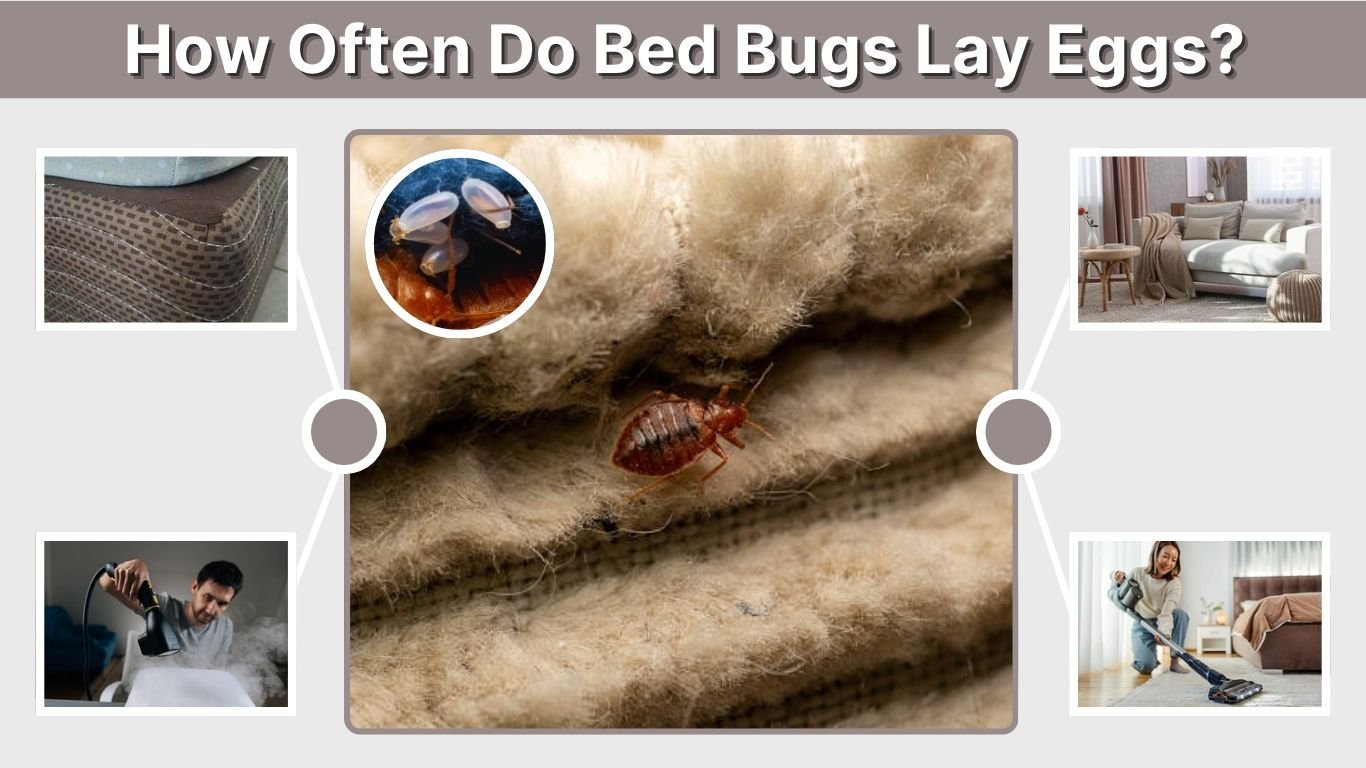
Bed bugs reproduce quickly, making even a small infestation difficult to control. Understanding how often bed bugs lay eggs, how many eggs they produce, and where they hide them can help prevent a serious infestation. A single female bed bug can lay hundreds of eggs during her lifetime, allowing populations to grow rapidly under favorable conditions. This guide explains the bed bug egg-laying process, reproductive cycle, preferred nesting locations, and whether these insects can lay eggs on human skin, hair, or clothing.
How Often Do Bed Bugs Lay Eggs?
Female bed bugs can lay eggs almost daily when they have regular access to blood meals and suitable living conditions. Egg production depends on temperature, feeding opportunities, and reproductive maturity. Although females may produce eggs frequently, they do not necessarily lay the same number every day.
How Many Eggs Does a Bed Bug Lay Per Day?
An adult female bed bug typically lays 2–5 eggs per day under favorable conditions. According to the University of New Hampshire Extension, females can maintain this reproductive activity when they have access to regular blood meals.
A healthy female may produce approximately 14–35 eggs in one week at that rate, although actual production varies.
Egg laying generally continues during the female’s reproductive life as long as conditions remain suitable. This explains why a small population can develop into a significant infestation within several weeks.
How Many Eggs Do Bed Bugs Lay?
Bed bugs have a relatively high reproductive capacity compared with many household pests. A single mated female can produce hundreds of offspring, especially when temperatures remain favorable and humans or other suitable hosts are available for feeding.
How Many Eggs Can a Bed Bug Lay in Its Lifetime?
A female bed bug may lay approximately 200–500 eggs during her lifetime, depending on environmental conditions and access to blood meals.
| Reproduction factor | Typical estimate |
| Eggs per day | 2–5 |
| Eggs per week | Up to 14–35 |
| Lifetime egg production | 200–500 |
| Egg hatching period | About 1–2 weeks |
| Egg size | Approximately 1 mm |
Daily and weekly numbers describe favorable laying rates, not guaranteed continuous production.
How Many Eggs Do Bed Bugs Lay at a Time?
Bed bugs generally deposit eggs individually or in small groups. However, multiple eggs may accumulate together in the same hiding place, forming visible clusters.
Females attach their eggs to surfaces using a sticky substance that helps keep them in place. Consequently, eggs may remain attached to mattress seams, wooden furniture, and other concealed surfaces.
Where Do Bed Bugs Lay Eggs?
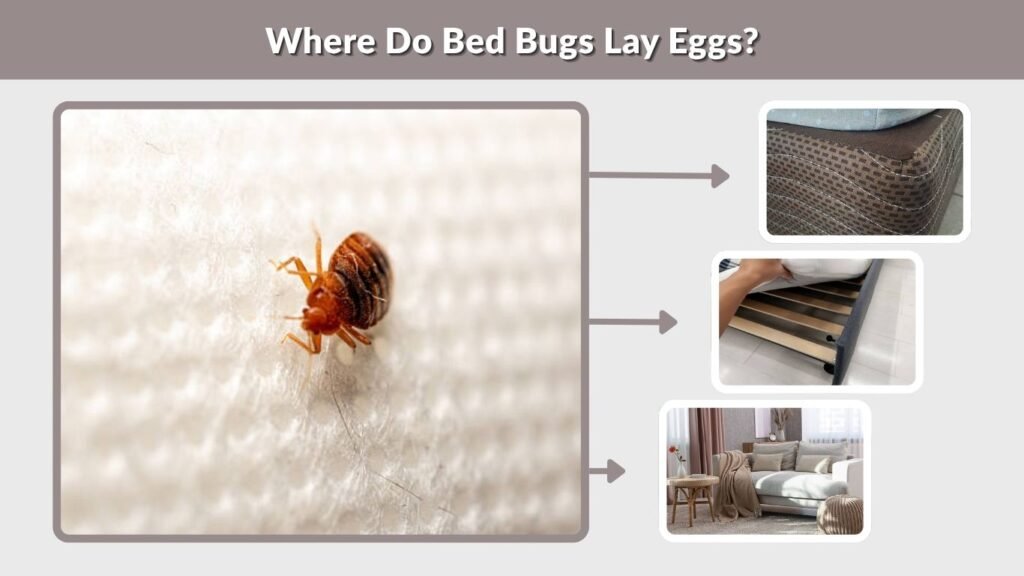
Bed bugs prefer dark, protected locations close to where people sleep or rest. Female bed bugs usually select narrow cracks, folds, and crevices where eggs remain relatively undisturbed. These hiding places also provide newly hatched nymphs with convenient access to blood meals.
Common Places Bed Bugs Lay Eggs
Some of the most frequent egg-laying locations include:
- Mattress seams: Hidden stitching and fabric folds.
- Box springs: Crevices underneath and inside the structure.
- Bed frames: Wooden joints, screw holes, and narrow openings.
- Headboards: Cracks and spaces behind attached panels.
- Sofas: Cushion seams and upholstered furniture.
- Baseboards: Gaps between walls and flooring.
- Nearby furniture: Drawer joints, bedside tables, and shelving.
The CDC identifies mattress seams, box springs, and spaces beneath baseboards as common sheltered egg-laying sites.
Do Bed Bugs Lay Eggs in Clothes, Books, or Carpets?
Yes, bed bugs can deposit eggs in clothing, books, carpeting, and other household belongings when suitable hiding spaces are available.
Clothing stored near infested furniture may contain eggs, particularly in folds and seams. Books can provide sheltered gaps near their bindings, while carpet edges may offer concealed spaces.
However, bed bugs generally favor protected locations near sleeping or resting areas rather than exposed surfaces.
Do Bed Bugs Lay Eggs in Human Skin or Hair?
Bed bugs feed on human blood but do not normally live or reproduce on the human body. Unlike certain parasites that remain attached to their hosts, bed bugs usually return to nearby hiding places after feeding.
Can Bed Bugs Lay Eggs Under Your Skin?
No. Bed bugs cannot lay eggs inside or underneath human skin.
Their reproductive behavior involves attaching eggs to surfaces rather than depositing them inside living tissue.
Bed bug bites may cause itching, swelling, and irritation, but these symptoms do not indicate that eggs have been deposited beneath the skin.
Can Bed Bugs Lay Eggs in Your Hair?
Bed bugs do not normally lay eggs in human hair. They are not adapted to living on the scalp or attaching eggs to hair shafts like head lice.
Although a bed bug may occasionally crawl through someone’s hair, it generally leaves after feeding and seeks a protected hiding place.
If insects or eggs are repeatedly discovered attached to hair, another explanation, such as head lice, should be investigated.
What Do Bed Bug Eggs Look Like?
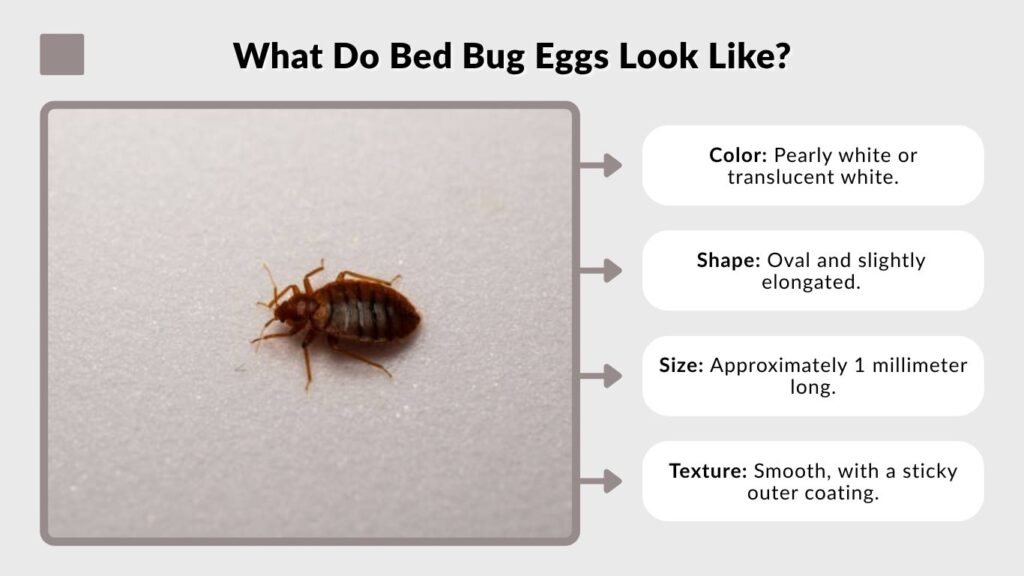
Bed bug eggs are extremely small, making them difficult to identify without careful inspection. Their appearance is distinctive when viewed under magnification, but they may resemble tiny dust particles against light-colored materials.
Typical characteristics include:
- Color: Pearly white or translucent white.
- Shape: Oval and slightly elongated.
- Size: Approximately 1 millimeter long.
- Texture: Smooth, with a sticky outer coating.
- Location: Attached individually or in groups within sheltered areas.
Older developing eggs may also show a small eye spot. The EPA identifies the pearl-white appearance and tiny size as important identification characteristics.
When Do Bed Bugs Start Laying Eggs?
Female bed bugs begin reproducing after reaching adulthood, mating, and obtaining the blood meals needed for egg production. Immature bed bugs, called nymphs, cannot reproduce.
How Long Does It Take for Bed Bug Eggs to Hatch?
Bed bug eggs commonly hatch within approximately 6–10 days under favorable conditions, although the timing can vary with temperature.
Newly emerged nymphs are pale, extremely small, and must obtain blood meals to continue developing.
The University of Minnesota Extension describes a hatching period of about 6–10 days and five immature stages before adulthood.
Can Bed Bug Eggs Stay Dormant?
Bed bug eggs can experience delayed development in cooler conditions, but they do not remain dormant indefinitely.
A lack of warmth may slow hatching, while suitable temperatures encourage development.
Therefore, leaving an infested room unused for a short period does not reliably eliminate the eggs or the infestation.
What Factors Affect How Often Bed Bugs Lay Eggs?
Several environmental and biological factors influence bed bug reproduction. Understanding these conditions helps explain why some infestations grow faster than others.
Blood Meals and Food Availability
Female bed bugs need blood meals to support egg production. When feeding opportunities are regular, females can continue laying eggs frequently.
Without access to blood, egg production eventually slows or stops, although adult bed bugs may survive for extended periods without feeding.
Temperature and Mating
Warm indoor temperatures generally support faster development and reproduction, while cooler environments slow biological activity.
Mating is also necessary for normal egg production. A previously mated female may continue producing fertilized eggs without a male being present because she can retain sperm.
However, unmated females do not ordinarily produce viable offspring.
How to Find and Remove Bed Bug Eggs
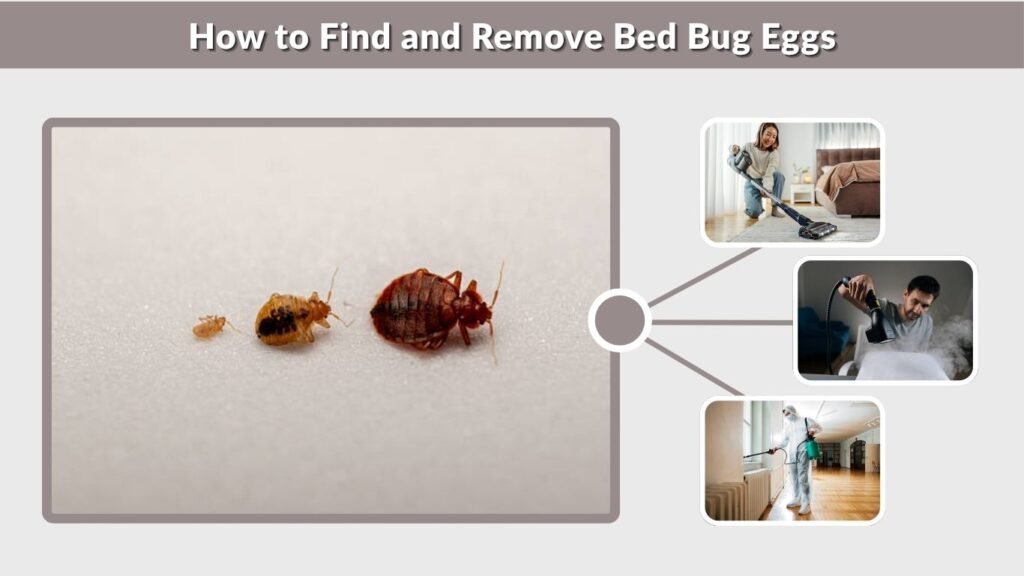
Discovering eggs early can help limit an infestation before additional generations develop. Because the eggs are small and securely attached to surfaces, removing visible eggs alone may not eliminate the entire population.
Use the following methods:
- Inspect hiding places: Examine mattress seams, bed frames, headboards, furniture joints, and baseboards with a flashlight.
- Vacuum thoroughly: Remove visible insects and eggs from accessible surfaces, then immediately seal and dispose of the vacuum contents.
- Use dryer heat: Place heat-tolerant clothing and bedding in a dryer on high heat for at least 30 minutes.
- Apply appropriate steam treatment: Carefully treat suitable cracks, fabric seams, and furniture using equipment designed for bed bug control.
- Seek professional treatment: Consider professional pest management for established infestations, including follow-up inspections.
The EPA recommends integrated pest management because chemical treatments alone may miss eggs hidden in narrow crevices.
FAQs
1. Can Male Bed Bugs Lay Eggs?
No. Male bed bugs cannot lay eggs because they lack the reproductive organs necessary for egg production. Only adult female bed bugs produce eggs. Males contribute to reproduction through mating, which allows females to produce fertilized eggs.
2. Do All Female Bed Bugs Lay Eggs?
Not necessarily. Female bed bugs must reach adulthood, mate, and obtain suitable blood meals to reproduce successfully. Unmated females do not ordinarily produce viable offspring, while poor environmental conditions can reduce or interrupt egg production.
3. Can One Bed Bug Start an Infestation?
Yes. A single previously mated female bed bug can potentially establish an infestation if she survives, obtains blood meals, and produces viable eggs. However, one male or immature bed bug cannot independently establish a reproducing population.
4. Do Bed Bugs Die After Laying Eggs?
No. Female bed bugs do not die immediately after laying eggs. They can reproduce repeatedly throughout their adult lives when suitable conditions and blood meals are available. Their ability to lay eggs over extended periods contributes to rapid population growth.
5. Do Bed Bugs Lay Eggs on Dogs or Other Pets?
Bed bugs may feed on dogs, cats, and other mammals, but they do not normally lay eggs on their bodies. Instead, they prefer concealed surfaces around sleeping areas, including pet bedding, furniture seams, and nearby cracks.