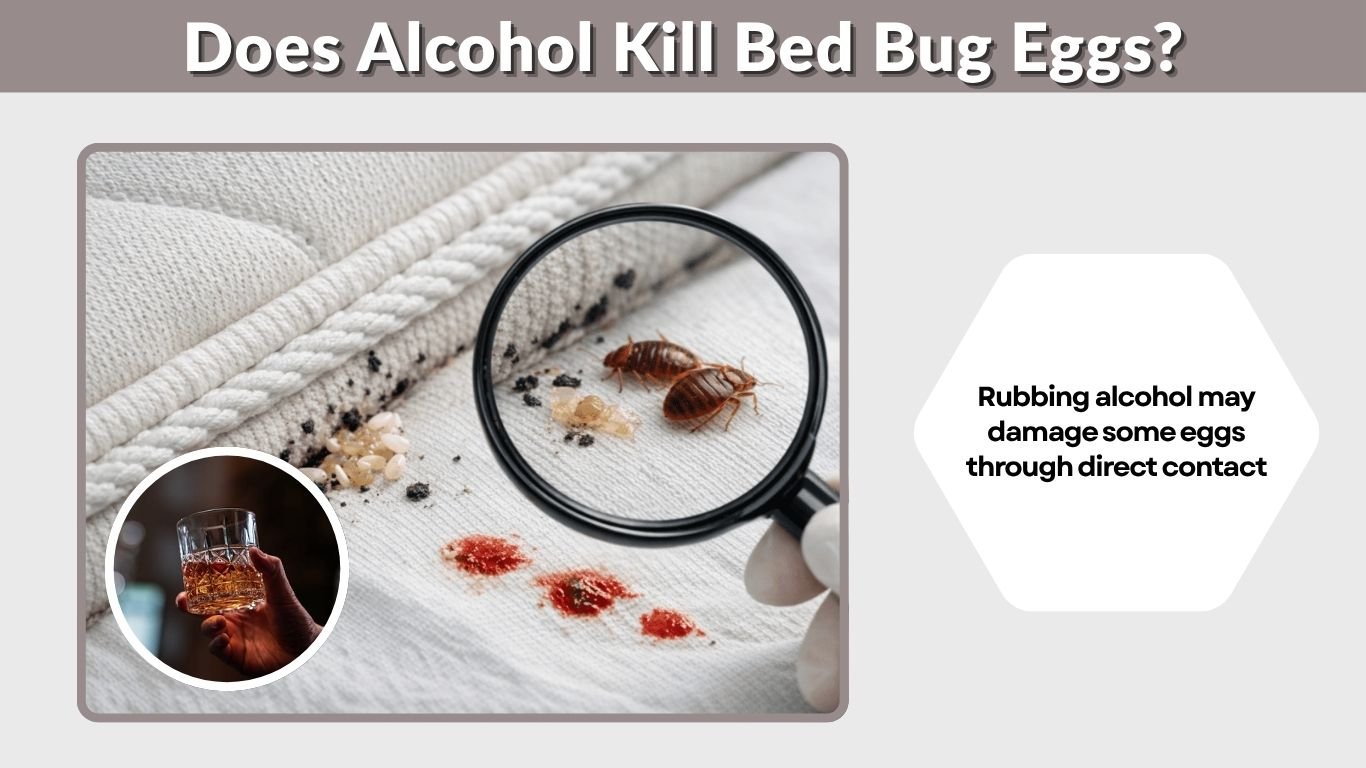
Does alcohol kill bed bug eggs? Rubbing alcohol may damage some eggs through direct contact, but it is not a reliable way to eliminate them. Although alcohol can kill exposed bed bugs, hidden eggs may survive and hatch later, causing another infestation. Different concentrations, including 70% and 91% isopropyl alcohol, are commonly suggested as home remedies. However, their effectiveness is limited, and spraying alcohol indoors creates serious fire risks. This guide explains how alcohol affects bed bugs and their eggs, why it often fails, and which treatments work better.
Does Alcohol Kill Bed Bug Eggs?
Alcohol may kill some bed bug eggs when it directly contacts them, but there is insufficient evidence that ordinary rubbing alcohol consistently destroys bed bug eggs. Even heavy spraying cannot guarantee that every egg has been affected.
Bed bug eggs are approximately 1 millimeter long and are commonly attached to hidden surfaces. Their small size and protected locations make them especially challenging to treat.
Why Alcohol Is Not Reliable Against Bed Bug Eggs
Alcohol can disrupt biological membranes and damage insect tissues. However, the effect depends on the concentration, exposure, and whether the alcohol reaches the target.
Several factors limit its effectiveness against eggs:
- Hidden locations: Eggs may be concealed deep inside furniture joints or mattress seams.
- Incomplete contact: Spraying may leave some eggs completely untouched.
- Rapid evaporation: Alcohol evaporates quickly, limiting exposure time.
- No residual protection: After evaporation, alcohol provides no lasting control against emerging bed bugs.
Consequently, eggs can survive treatment and hatch into newly feeding nymphs.
Does Rubbing Alcohol Kill Bed Bug Eggs?
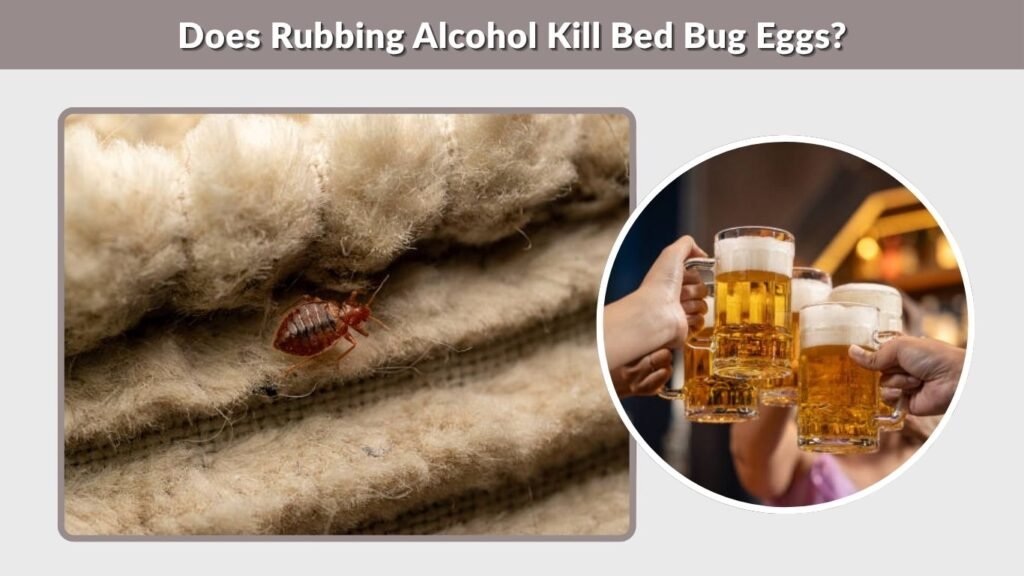
Rubbing alcohol, commonly called isopropyl alcohol, is widely available in concentrations such as 70% and 91%. It is sometimes recommended for household pest control because it can kill certain exposed insects through direct contact.
However, laboratory findings indicate that rubbing alcohol provides poor overall control of bed bugs. Rutgers University researchers found that direct spraying with 70% or 91% isopropyl alcohol killed no more than 50% of the bed bugs tested. These findings concern bed bugs rather than establishing an egg-killing percentage.
Does 70% Rubbing Alcohol Kill Bed Bug Eggs?
Seventy-percent isopropyl alcohol contains 70% alcohol and approximately 30% water. It may affect some eggs through direct exposure, but it has not been established as a dependable bed bug egg treatment.
The solution evaporates, cannot consistently penetrate concealed egg-laying sites, and does not prevent surviving eggs from developing.
Does 90% or 91% Alcohol Kill Bed Bug Eggs?
Higher concentrations, including 90% and 91% alcohol, are sometimes assumed to be more effective because they contain less water.
However, a higher concentration does not automatically mean better bed bug egg control. There is no sound basis for guaranteeing that 91% alcohol kills every egg.
Furthermore, concentrated alcohol remains highly flammable, making widespread indoor spraying particularly dangerous.
Does Alcohol Kill Bed Bugs and Their Eggs?
Alcohol may kill exposed adult bed bugs and nymphs, but eliminating an entire infestation requires controlling insects at every life stage.
Bed bugs develop from eggs into nymphs before reaching adulthood. Eggs that survive treatment can hatch and begin feeding, eventually creating a new generation.
Does Alcohol Kill Adult Bed Bugs on Contact?
Yes, alcohol can kill some adult bed bugs when applied directly. However, direct-contact activity does not mean that all exposed insects will die.
The Rutgers laboratory results demonstrate this limitation, with no more than half the directly sprayed bed bugs killed in the reported tests.
Additionally, alcohol cannot reliably reach insects hiding inside narrow structural cracks. This makes it unsuitable as a complete infestation treatment.
Is Spraying Alcohol on Bed Bug Eggs Safe?
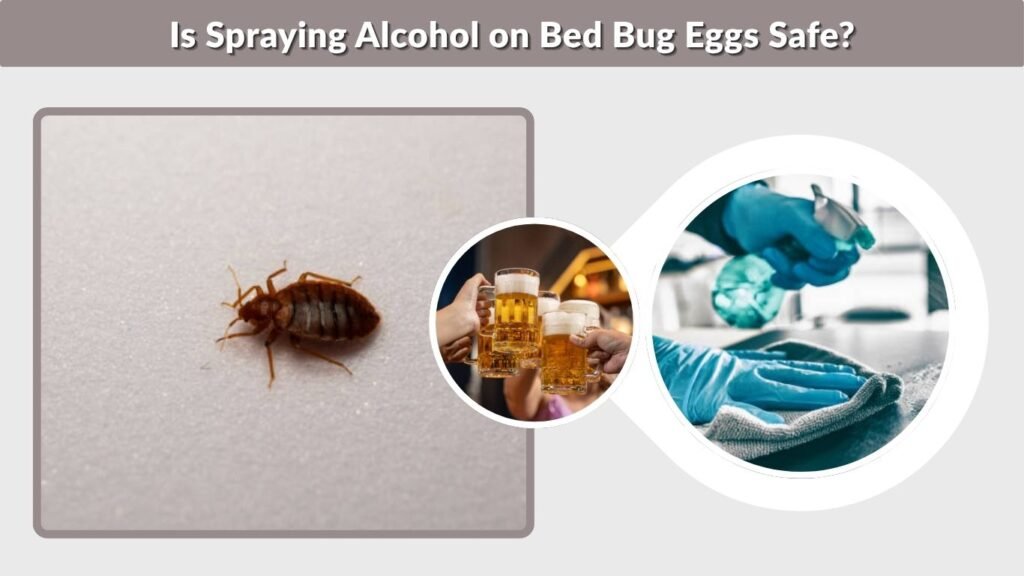
Spraying rubbing alcohol around sleeping areas presents significant safety concerns. Although the substance is commonly used for cleaning and disinfection, those uses do not make it suitable for widespread pest treatment.
The U.S. Environmental Protection Agency warns that rubbing alcohol is highly flammable and has caused numerous house fires when used against bed bugs.
Major Risks of Using Alcohol Indoors
Potential hazards include:
- Fire and ignition: Alcohol vapors can ignite near flames, sparks, cigarettes, or electrical equipment.
- Respiratory irritation: Heavy exposure to alcohol vapors may cause discomfort, headaches, or dizziness.
- Material damage: Alcohol can affect certain finishes, coatings, and household fabrics.
- Incomplete treatment: Surviving bed bugs and eggs may allow an infestation to continue.
Avoid spraying rubbing alcohol on mattresses, bedding, electrical outlets, or furniture as a bed bug treatment. Never mix alcohol with ammonia, bleach, or other household cleaning chemicals.
What Kills Bed Bug Eggs More Effectively Than Alcohol?
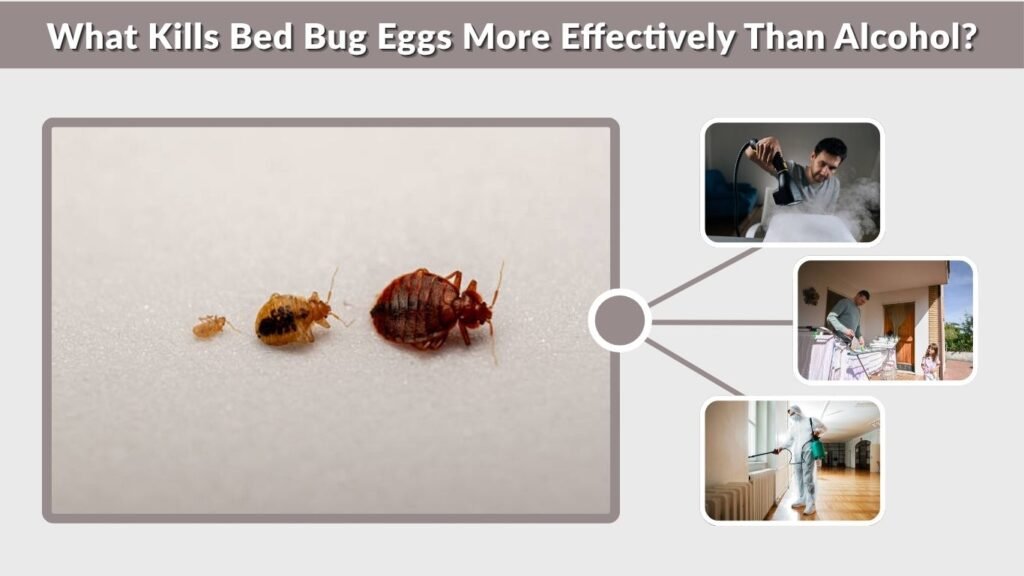
Several pest management methods provide more dependable egg control than household alcohol. The most effective approach combines suitable physical treatments, careful inspection, monitoring, and professional pest management when necessary.
Heat is especially valuable because appropriately applied temperatures can kill both bed bugs and their eggs.
1. Heat Treatment
Heat treatment is one of the most reliable methods for destroying bed bug eggs when the correct temperatures and exposure times are achieved.
According to the EPA, heating infested items or spaces to at least 120°F (49°C) for 90 minutes can ensure that eggs are killed, provided the target temperature reaches the affected areas.
Professional equipment helps maintain suitable conditions, including inside furniture and other concealed spaces.
2. Clothes Dryer Treatment
A household dryer provides a practical option for treating suitable clothing, bedding, and other heat-tolerant fabrics.
The EPA recommends placing infested items in a dryer on high heat for 30 minutes to kill bed bugs and eggs. Washing alone may not eliminate them.
Transfer infested laundry in sealed bags and store treated items separately to prevent recontamination.
3. Steam Cleaning
Steam can help treat mattress seams, upholstered furniture, carpeting, and accessible cracks.
The EPA recommends steam temperatures of at least 130°F (54°C), while avoiding forceful airflow that could scatter bed bugs. The treated surfaces must receive sufficient heat to be effective.
Steam treatment should be performed carefully to avoid burns, excessive moisture, and damage to sensitive materials.
4. Professional Bed Bug Treatment
Professional pest control services can combine inspections, targeted pesticides, steam, heat, and follow-up monitoring.
Certain registered insecticides are effective against bed bugs, but not all products kill eggs.
Choose products specifically labeled for bed bugs, follow their instructions, and avoid applying chemicals to mattresses or other surfaces unless expressly permitted by the product label.
Alcohol vs. Other Bed Bug Egg Treatments
The following comparison explains why rubbing alcohol should not be considered a primary treatment.
| Treatment method | Effect on eggs | Overall assessment |
| 70% rubbing alcohol | Unreliable | Not recommended |
| 91% rubbing alcohol | Unreliable | Not recommended |
| Proper heat treatment | Effective | Recommended |
| High-heat clothes dryer | Effective for suitable items | Recommended |
| Proper steam treatment | Effective on reached surfaces | Useful |
| Bed bug pesticides | Depends on product label | Use as directed |
No single treatment is guaranteed to eliminate every infestation. Combining appropriate methods generally produces better results than relying on one household remedy.
How to Prevent Bed Bug Eggs From Hatching in Your Home
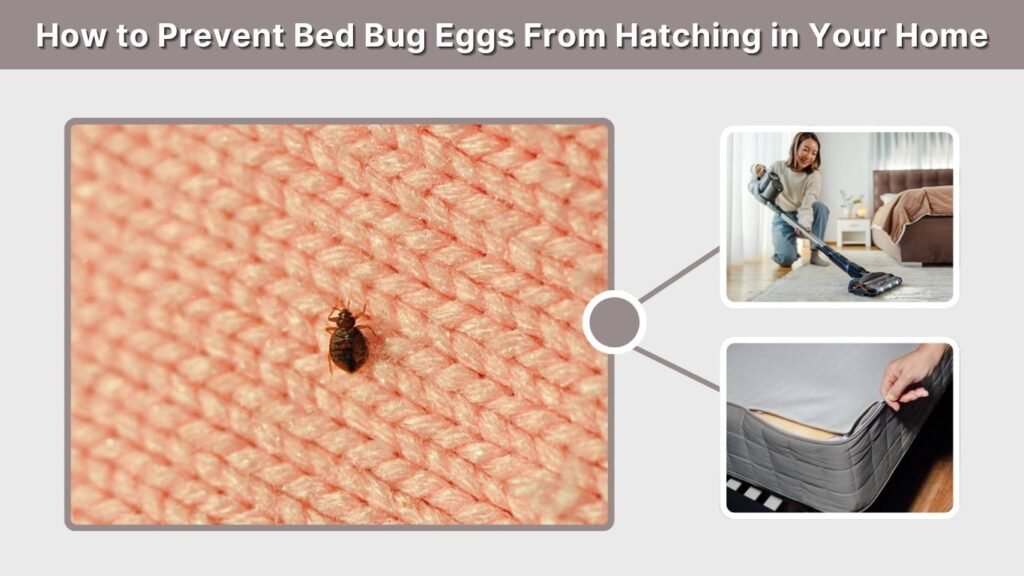
Preventing additional generations requires finding and eliminating hidden eggs rather than treating only visible adult bed bugs.
Bed bugs often deposit eggs in mattress seams, headboards, bed frames, baseboards, and nearby furniture. Regular inspection of these locations helps identify continuing activity.
Practical Bed Bug Prevention Steps
Follow these precautions:
- Inspect mattress seams, headboards, and furniture joints for eggs, insects, and shed skins.
- Vacuum accessible hiding places carefully and dispose of the contents in a sealed bag outside.
- Use bed bug-proof mattress and box spring encasements.
- Reduce clutter around beds to limit hiding locations.
- Install bed bug interceptors under appropriate bed legs to monitor activity.
- Continue inspections after treatment because missed eggs may hatch.
The EPA emphasizes that successful bed bug control requires follow-up checks because surviving eggs and insects can cause recurring infestations.
FAQs
1. Does Alcohol Kill Bed Bug Eggs Instantly?
No reliable evidence shows that rubbing alcohol instantly kills all bed bug eggs. Direct exposure may damage some eggs, but others can survive. Proper heat treatment is substantially more dependable for eliminating eggs hidden in household materials.
2. Can 91% Rubbing Alcohol Kill Bed Bug Eggs?
Ninety-one-percent rubbing alcohol may affect exposed bed bug eggs, but it is not a proven or consistently effective egg treatment. Its high flammability also makes indoor spraying hazardous. Use established heat-based treatments instead.
3. Does Isopropyl Alcohol Kill Bed Bugs and Eggs?
Isopropyl alcohol can kill some directly exposed bed bugs, but it cannot reliably eliminate hidden insects or their eggs. Surviving eggs may hatch after treatment, allowing the infestation to continue.
4. Does Alcohol Dry Out Bed Bug Eggs?
Alcohol can affect biological membranes and moisture, but there is insufficient evidence that spraying household alcohol reliably dries out and kills bed bug eggs. Rapid evaporation and incomplete exposure make this method unpredictable.
5. What Is the Best Way to Kill Bed Bug Eggs?
Proper heat treatment is among the most reliable methods for killing bed bug eggs. A high-heat clothes dryer works for suitable fabrics, while professional heat or carefully applied steam can treat other affected areas.