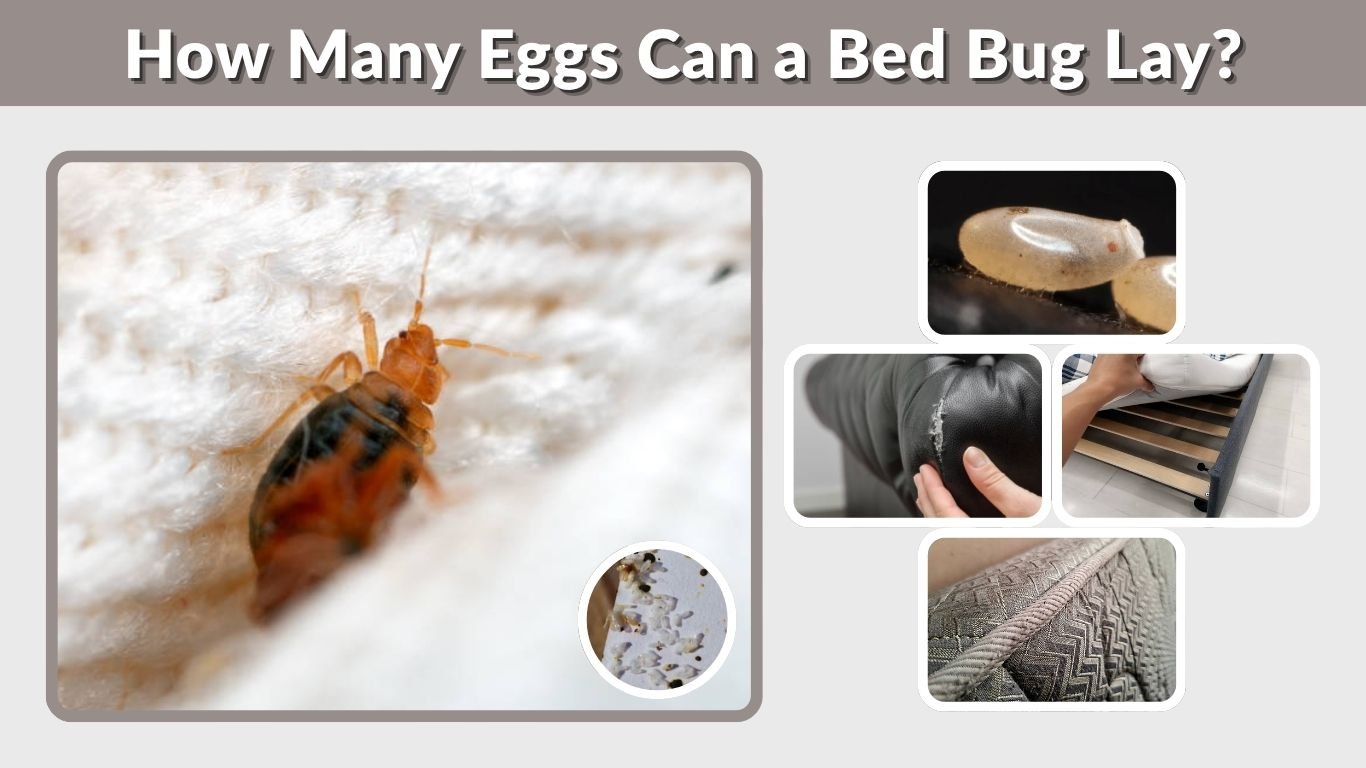
How many eggs can a bed bug lay? A single female bed bug can produce hundreds of eggs during her lifetime, which explains how a small infestation can grow surprisingly quickly. The U.S. EPA reports that a female may lay about 1–3 eggs per day and roughly 200–500 eggs during her life, although reproduction varies with temperature, blood meals, age, and environmental conditions. Understanding where bed bugs lay eggs, what the eggs look like, and how quickly they hatch can help you recognize an infestation earlier.
How Many Eggs Can a Bed Bug Lay?
A female bed bug does not produce hundreds of eggs at once. Instead, she deposits relatively small numbers repeatedly throughout her reproductive life. How many eggs she produces depends heavily on access to blood meals and favorable environmental conditions. This gradual but continuous reproduction allows an unnoticed population to become much larger over several weeks or months.
How Many Eggs Do Bed Bugs Lay a Day?
According to the EPA, an adult female may typically lay around 1–3 eggs per day and approximately 200–500 eggs during her lifetime. Some published estimates differ because laboratory conditions, temperature, feeding frequency, and the individual female can affect reproduction.
University of Minnesota Extension gives a somewhat more conservative estimate of approximately 200–250 eggs over an individual female’s lifetime. The important point is that even one fertile female can potentially establish a growing infestation.
How Many Babies Do Bed Bugs Have?
Each viable egg can potentially produce one bed bug nymph. Therefore, a female producing hundreds of eggs has the potential to contribute hundreds of offspring.
Not every egg necessarily survives to adulthood. Temperature, food availability, pest-control treatments, physical disturbance, and other environmental conditions can affect survival.
How Do Bed Bugs Lay Eggs?
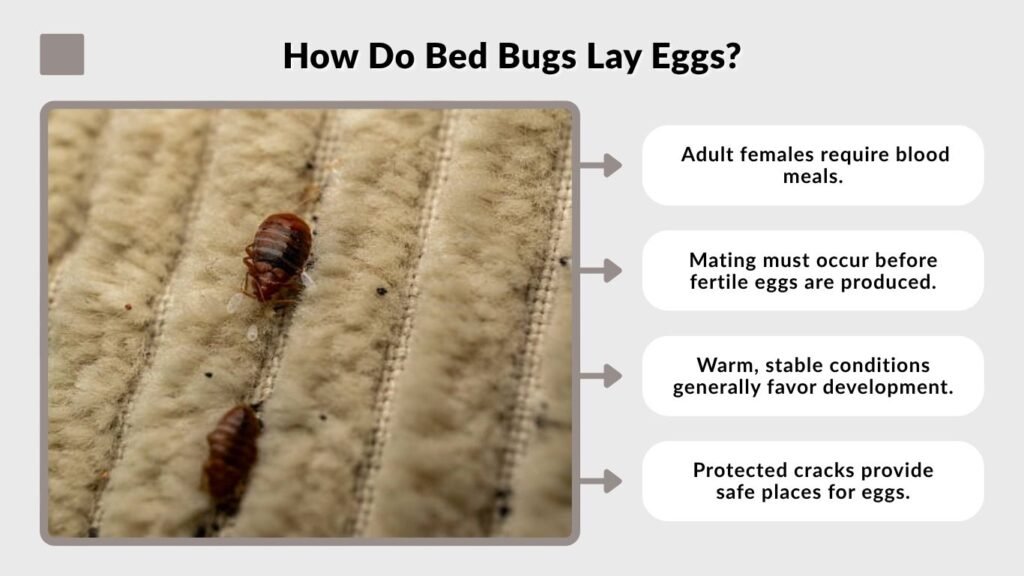
Bed bugs reproduce after mating and obtaining blood meals. A female uses nutrients from blood to support egg development and then searches for protected hiding locations where she can attach her eggs. Rather than making a nest like ants or wasps, bed bugs scatter eggs through cracks, seams, and other sheltered areas close to their hosts.
What Happens Before Egg Laying?
Several conditions support continued reproduction:
- Adult females require blood meals.
- Mating must occur before fertile eggs are produced.
- Warm, stable conditions generally favor development.
- Easy access to a sleeping or resting host supports regular feeding.
- Protected cracks provide safe places for eggs.
The EPA notes that continued reproduction depends on regular feeding by adult bed bugs.
Do Bed Bugs Lay Eggs in Clusters?
Bed bugs can place several eggs close together, making them appear clustered, but they do not create one organized egg mass containing all their offspring.
Females may deposit eggs individually or in small groups in favorable hiding places. Newly laid eggs have an adhesive quality that helps them stick to surfaces, making them harder to simply shake or brush away.
Where Do Bed Bugs Lay Eggs?
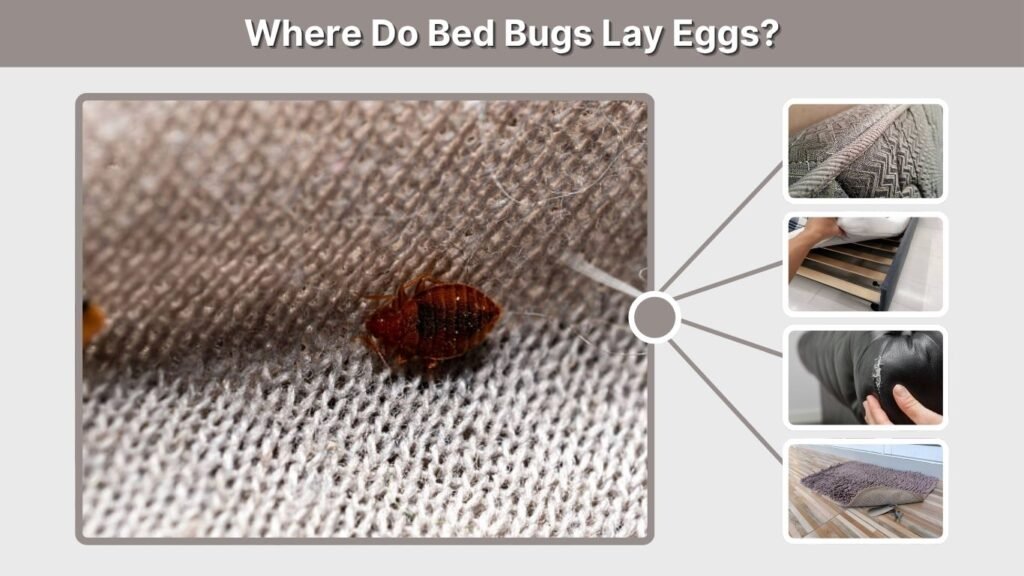
Bed bugs prefer dark, narrow, protected spaces near locations where people sleep or remain still for long periods. The closer a hiding location is to a dependable blood source, the easier it is for adults and newly hatched nymphs to feed. As an infestation increases, eggs may also appear farther from the original bed or sleeping area.
Common Bed Bug Egg Locations
Check areas such as:
- Mattress seams and piping
- Box springs
- Bed-frame joints
- Headboards
- Cracks in furniture
- Couch seams
- Baseboards
- Carpet edges
- Behind loose wallpaper
- Inside small wall or furniture gaps
Bed bugs typically hide close to sleeping, resting, or sitting areas, although established infestations may spread farther throughout a room.
Do Bed Bugs Lay Eggs on People?
Bed bugs do not normally lay eggs on humans. Unlike lice, they are not adapted to remain attached to the human body.
After feeding, a bed bug generally returns to a nearby hiding place. Females deposit eggs on stable surfaces such as wood, fabric seams, cracks, and furniture rather than directly on human skin.
Can Bed Bugs Lay Eggs on Clothes?
Yes, eggs can occasionally occur on clothing, especially if clothes remain undisturbed in an infested room or close to a bed.
However, mattress seams, bed frames, furniture joints, and other protected cracks are usually more favorable because they provide better shelter and are less frequently disturbed.
How Big Are Bed Bug Eggs?
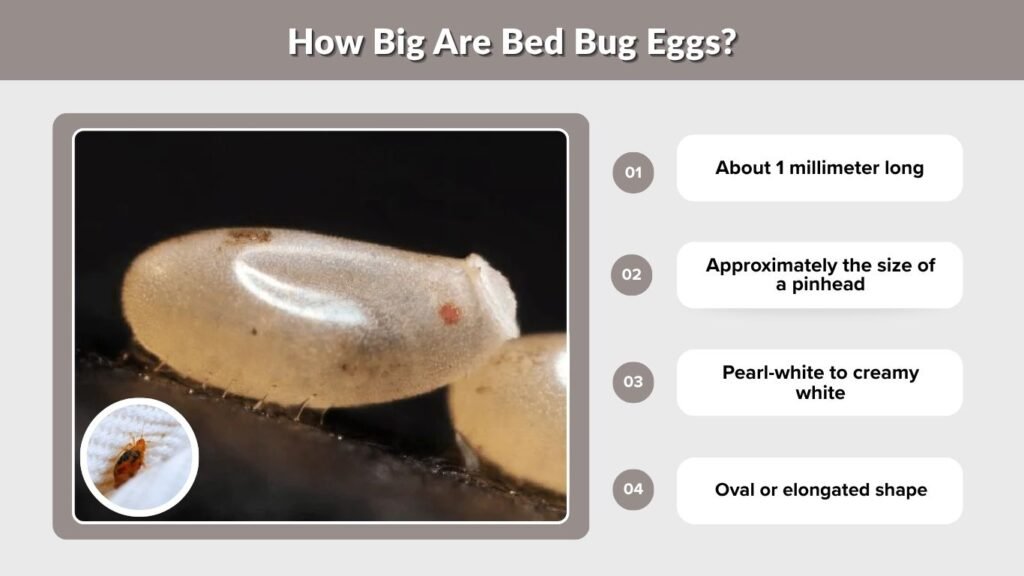
Bed bug eggs are visible without a microscope, but their tiny size makes them extremely easy to miss. People frequently mistake them for dust, crumbs, fabric particles, or other debris. Knowing their approximate size and color is especially useful when inspecting mattress seams or furniture with a flashlight and magnifying glass.
Bed Bug Egg Size and Appearance
Bed bug eggs typically have these characteristics:
- About 1 millimeter long
- Approximately the size of a pinhead
- Pearl-white to creamy white
- Oval or elongated shape
- Slightly translucent when fresh
- Often attached firmly to a surface
- May develop an eye spot after about five days
The EPA describes eggs as approximately 1 mm long and pearl-white, with an eye spot becoming noticeable as development progresses.
How Big Is One Bed Bug Egg?
One egg is much smaller than an adult bed bug. Adult bed bugs are roughly 5–7 mm long, while an egg measures approximately 1 mm.
Because light-colored eggs can blend into pale fabrics or mattresses, they may be easier to detect against dark wood or when several occur together.
How Long Do Bed Bug Eggs Take to Hatch?
Finding eggs is important because they can produce another generation shortly afterward. Under favorable indoor conditions, bed bug development moves relatively quickly. Temperature strongly influences hatch time, with warmer suitable conditions generally supporting faster development than cooler environments.
Bed Bug Egg Hatching Time
University of Minnesota Extension reports that bed bug eggs generally hatch in about 6–10 days. Newly hatched bed bugs are called nymphs and immediately begin searching for blood meals.
The young insects pass through five nymph stages before becoming adults. Each stage normally requires a blood meal before the insect can molt and continue developing.
How Long Is the Bed Bug Life Cycle?
Under favorable conditions, the EPA reports that the egg-to-egg life cycle can take approximately four to five weeks.
That rapid development explains why waiting several weeks after finding the first signs can allow substantially more bed bugs to appear.
Why Bed Bug Egg Production Matters
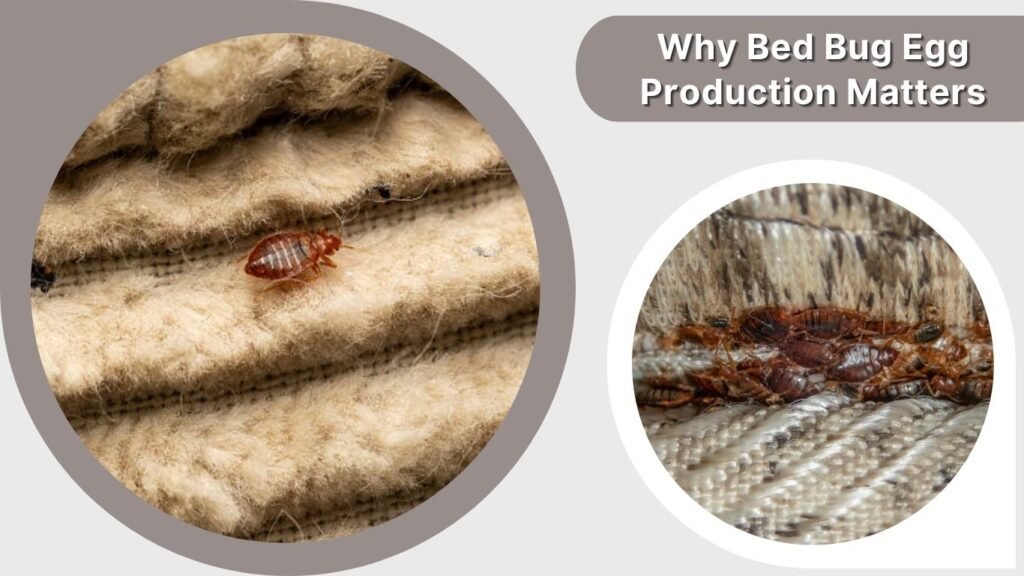
Bed bug reproduction makes early detection particularly important. Killing only the visible adults may not eliminate an infestation when hidden eggs and immature bed bugs remain. Newly hatched nymphs can continue the population, requiring careful inspection and follow-up treatment rather than assuming the problem has disappeared after one cleaning.
Signs Eggs May Be Nearby
Look for combinations of:
- Live adult or young bed bugs
- Tiny pearl-white eggs
- Empty eggshells
- Dark fecal spotting
- Shed skins
- Rust-colored marks on bedding
- Bugs hiding in mattress or furniture seams
Finding several of these signs together provides much stronger evidence of an active infestation than unexplained skin bites alone.
FAQs
How many eggs does a bed bug lay per day?
The U.S. EPA reports that a female bed bug may commonly lay approximately 1–3 eggs per day, although reproduction varies with feeding, temperature, age, and environmental conditions. Over time, those small daily numbers can add up to hundreds of offspring from a single female.
How many eggs can one bed bug lay in its lifetime?
Published estimates vary, but the EPA reports approximately 200–500 eggs per female over her lifetime. University of Minnesota Extension gives an estimate closer to 200–250 eggs. These differences reflect variation in environmental conditions, access to blood meals, longevity, and individual reproductive performance.
How often do bed bugs lay eggs?
A fertile female can continue depositing eggs repeatedly when she has access to regular blood meals and favorable conditions. Egg production is therefore an ongoing process rather than one large reproductive event. This continuous laying helps explain how a relatively small infestation can gradually become much more difficult to eliminate.
Do bed bugs lay eggs on humans?
No. Bed bugs normally do not remain on people or use human skin as a place to deposit eggs. They feed briefly and then return to protected hiding places. Females generally attach their eggs inside mattress seams, furniture cracks, bed frames, and other sheltered locations close to sleeping hosts.
How long do bed bug eggs take to hatch?
Bed bug eggs generally hatch in approximately 6–10 days under favorable conditions. Temperature and environmental conditions can influence development time. After hatching, the young nymphs require blood meals and pass through five immature stages before reaching adulthood and eventually becoming capable of reproduction themselves.