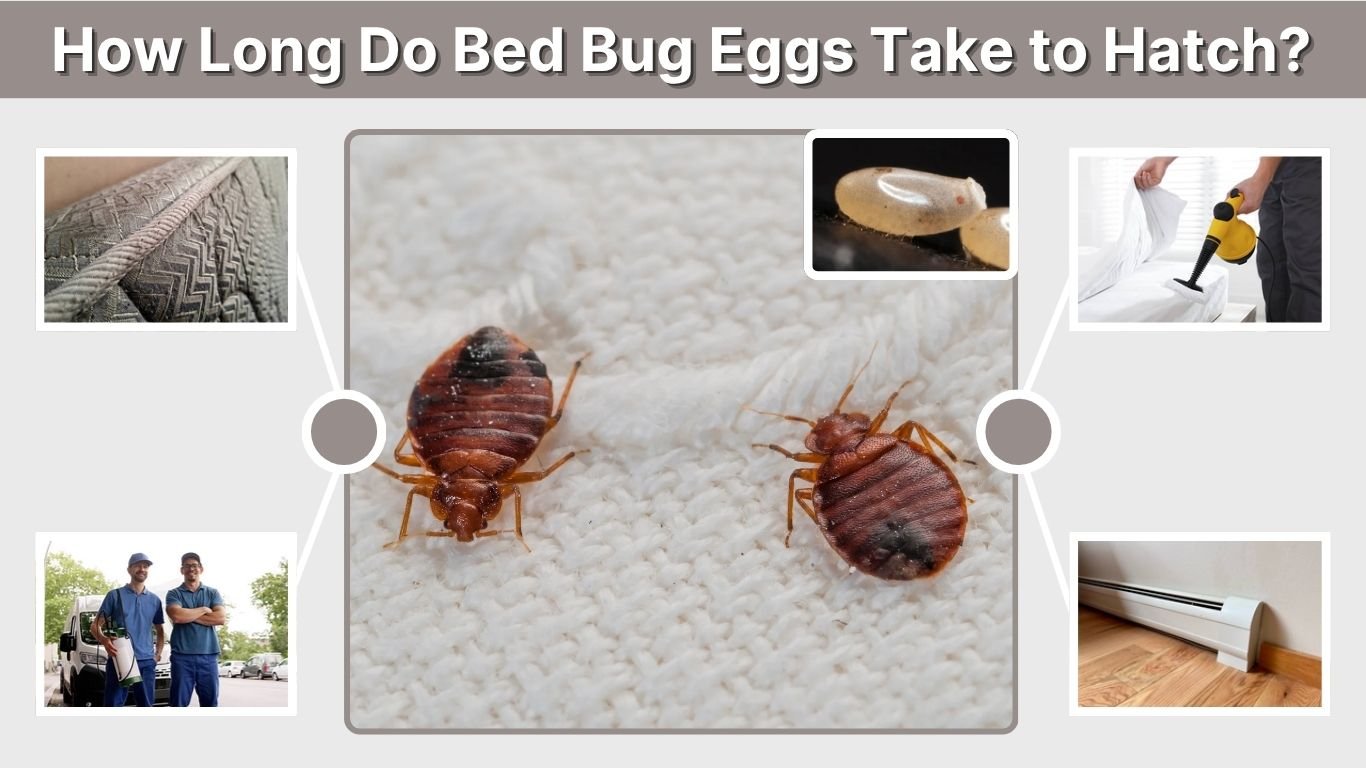
How long do bed bug eggs take to hatch? Under favorable indoor conditions, bed bug eggs usually hatch in about 6 to 10 days, although temperature and environmental conditions can influence development. The newly emerged bed bugs, called nymphs, are extremely small and begin searching for blood meals soon after hatching. Because eggs may survive some control attempts and hatch afterward, understanding their hatching period, appearance, life cycle, and treatment is important when dealing with an active bed bug infestation.
How Long Do Bed Bug Eggs Take to Hatch?
Bed bug eggs generally hatch within 6 to 10 days when temperature and humidity are suitable. Development may occur more slowly in cooler surroundings. Because females continuously deposit new eggs during an infestation, eggs within the same room may be at different developmental stages, meaning they will not necessarily all hatch on the same day.
Typical Bed Bug Egg Hatching Time
The general hatching timeline includes:
- Freshly laid egg: Development begins after deposition.
- First several days: The embryo develops inside the egg.
- Around day 5: Darker eye spots may become noticeable.
- About days 6–10: Many viable eggs hatch.
- After hatching: A first-stage nymph emerges and starts seeking blood.
These time periods are approximate because temperature, egg viability, and other environmental conditions influence development.
How Quickly Do Bed Bug Eggs Hatch?
Under warm indoor conditions, development can occur toward the faster end of the range. This means eggs may hatch within approximately a week after being laid.
A home with an established infestation may therefore contain eggs, newly hatched nymphs, older nymphs, and adult bed bugs simultaneously. This overlapping development is one reason infestations can continue even after many visible adults have been removed.
What Causes Bed Bug Eggs to Hatch?
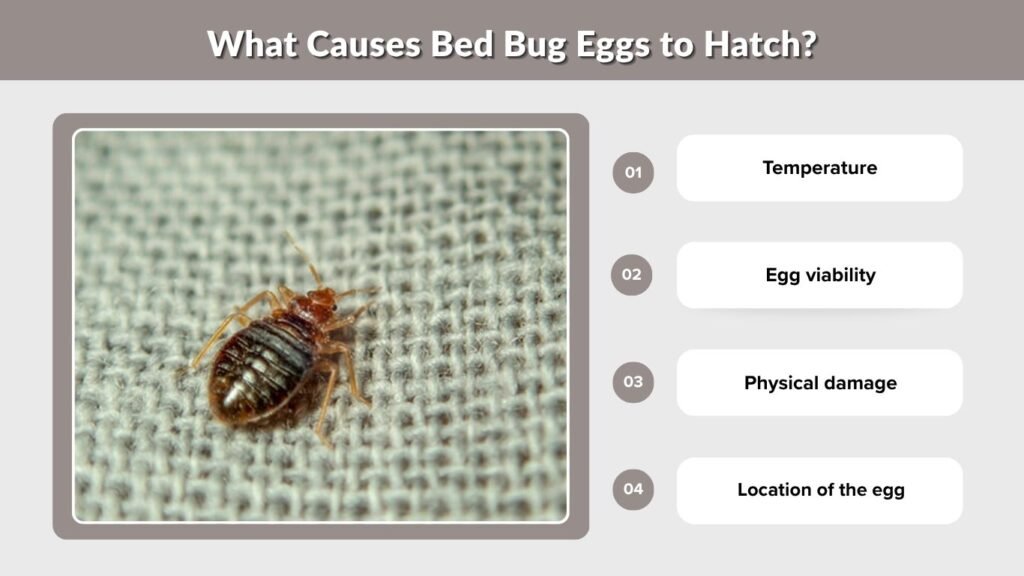
Bed bug eggs do not require special care from adult bed bugs after they are laid. Once deposited in a protected location, a viable egg develops on its own when environmental conditions are suitable. Temperature is particularly important because bed bugs are insects whose development rate is influenced by surrounding warmth.
Conditions That Affect Hatching
Important factors include:
- Temperature
- Egg viability
- Humidity and moisture conditions
- Exposure to lethal heat or insecticides
- Physical damage
- Location of the egg
- General environmental stability
Moderately warm indoor environments tend to support normal development, while unfavorable temperatures can slow development or prevent eggs from surviving.
Do Bed Bug Eggs Hatch on Their Own?
Yes. Once a fertilized female has deposited an egg, the adult does not remain nearby to care for it.
The embryo continues developing inside its shell until the young nymph is ready to emerge. The tiny nymph then leaves the empty eggshell and begins independently searching for a blood meal.
What Do Bed Bug Eggs Look Like Before Hatching?
Bed bug eggs are extremely small, making them easy to overlook during inspection. They are generally around 1 millimeter long and have a whitish or pearl-like appearance. Females commonly attach them to protected surfaces, which makes the eggs harder to remove accidentally and helps keep them hidden while they develop.
Signs of an Unhatched Egg
An unhatched bed bug egg commonly appears:
- Tiny and oval or elongated
- Pearl-white or creamy white
- About the size of a pinhead
- Slightly translucent when fresh
- Attached to a surface
- Fuller than an empty shell
- Darker near one end as hatching approaches
A flashlight and magnifying glass can make these eggs easier to distinguish from dust or fabric particles.
What Happens Just Before Hatching?
As the embryo develops, an egg may become slightly more distinguishable. Eye spots can sometimes become visible several days after the egg is laid.
Eventually, the developing nymph breaks through the shell and emerges. The process leaves an empty eggshell behind, which may remain attached to the original surface.
What Do Hatched Bed Bug Eggs Look Like?
After a bed bug nymph emerges, the remaining shell looks different from a healthy developing egg. It may appear empty, pale, dry, or partially collapsed. An opening can sometimes be visible where the nymph escaped. Finding these shells can indicate that reproduction has already occurred in the area.
Hatched vs. Unhatched Bed Bug Eggs
A healthy unhatched egg looks fuller and contains a developing embryo. A hatched egg is simply an empty shell.
Old hatched shells may remain in mattress seams, furniture cracks, or other hiding places long after the young bed bugs have moved away. Therefore, finding empty shells does not necessarily indicate that every bed bug in the area is dead.
Are Hatched Bed Bug Eggs Hard?
Empty eggshells can become dry, but they are not typically hard like grains of sand. They are extremely small and lightweight.
Texture is not the best identification method. Instead, consider their size, color, shape, attachment to surfaces, and whether other bed bug signs are nearby.
Where Do Bed Bug Eggs Hatch?
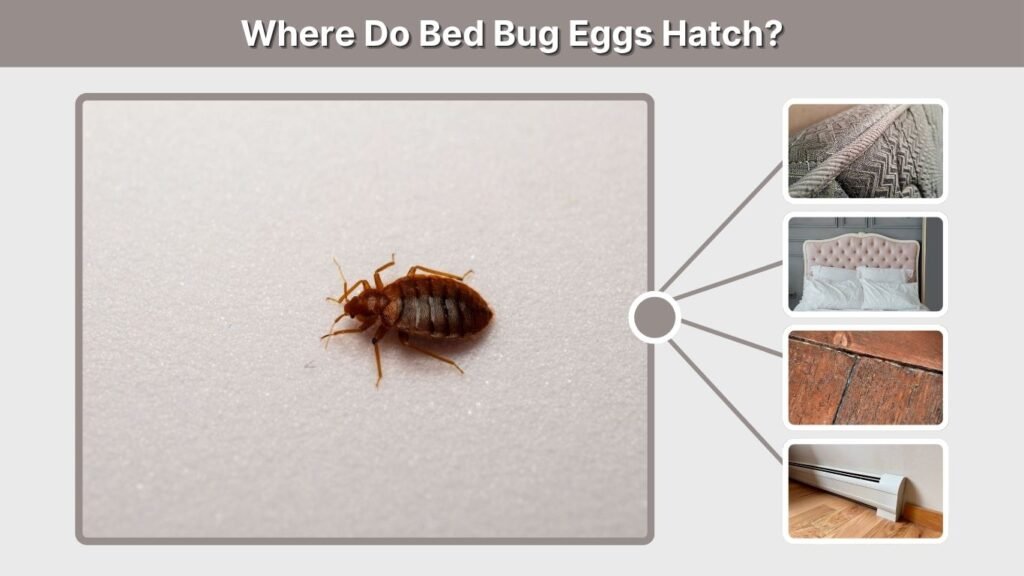
Eggs usually hatch in the same protected locations where females deposited them. Bed bugs prefer areas close enough to sleeping or resting hosts that newly emerged nymphs can obtain blood without traveling far. As an infestation grows, however, eggs may also appear in increasingly distant areas around a room.
Common Egg-Hatching Locations
Look carefully around:
- Mattress seams and piping
- Box springs
- Bed-frame joints
- Headboards
- Couch seams
- Furniture cracks
- Baseboards
- Carpet edges
- Wall gaps
- Nearby clutter
- Clothing left undisturbed
Eggs are less likely to be openly exposed in the middle of a clean sheet because protected cracks provide greater security.
Do Eggs Hatch on People?
Bed bugs do not normally lay eggs on human skin, so their eggs do not usually hatch on people.
Unlike lice, bed bugs do not live permanently on the human body. They generally feed for a short period and then retreat into a protected hiding location where females can deposit their eggs.
Can Bed Bug Eggs Hatch After Treatment?
Yes, depending on the treatment. Some methods may kill exposed adults and nymphs without eliminating every egg hidden deep in cracks or furniture. If viable eggs remain, they may hatch days later. This is why seeing young bed bugs after treatment does not always mean completely new bugs entering the home.
Why Eggs May Survive Treatment
Eggs may remain after treatment when:
- Treatment does not reach hidden cracks.
- The selected insecticide has limited egg-killing activity.
- Furniture or clutter blocks treatment.
- Treatment is applied incorrectly.
- Eggs are hidden inside inaccessible areas.
- Follow-up inspection is not performed.
Newly hatched nymphs can restart activity if control measures do not address them afterward.
How Long After Treatment Can Eggs Hatch?
If viable eggs were already present at the time of treatment, many could hatch during the following 6 to 10 days under favorable conditions.
This is why pest-control programs often involve monitoring and follow-up rather than relying on a single application. The exact follow-up schedule depends on the control method being used.
How to Prevent Bed Bug Eggs From Hatching
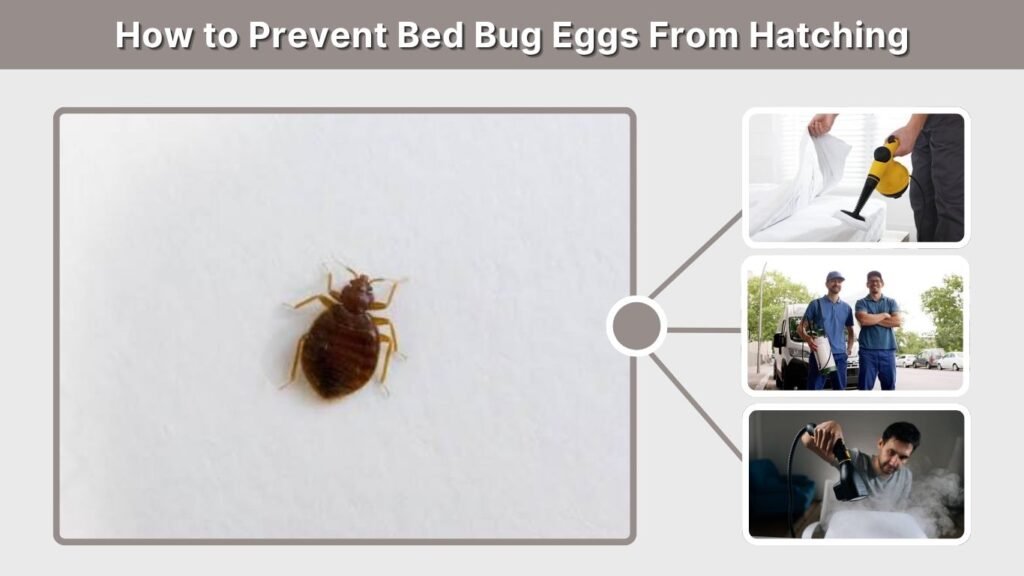
Preventing surviving eggs from developing requires methods capable of reaching or killing eggs, followed by control of any nymphs that emerge. Because eggs may be hidden in extremely narrow spaces, combining inspection, physical removal, heat, and appropriately labeled pest-control measures is generally more effective than relying on one household remedy.
Useful Bed Bug Egg Control Methods
Common approaches include:
- Drying washable items on appropriate high heat
- Using steam correctly on suitable surfaces
- Vacuuming visible eggs and bugs
- Inspecting mattress and furniture seams
- Reducing clutter around sleeping areas
- Using bed bug-proof mattress encasements
- Applying labeled bed bug products correctly
- Monitoring for newly hatched nymphs
- Scheduling follow-up professional treatment when needed
Avoid unsafe methods such as attempting to heat an entire room with household heaters or applying flammable substances.
Bed Bug Egg Hatch Cycle and Infestation Growth
A bed bug infestation can grow rapidly because females continue laying eggs while previously deposited eggs are hatching. Newly emerged nymphs then progress through five immature stages before becoming adults. Each stage requires a blood meal before molting to the next stage.
From Egg to Adult Bed Bug
After hatching, the pale first-stage nymph begins feeding. With suitable temperature and regular access to blood, development continues through five nymphal stages.
Once adulthood is reached, females can eventually begin producing another generation of eggs. Consequently, an untreated infestation may contain several generations at the same time, making early detection particularly important.
FAQs
How many days does it take for bed bug eggs to hatch?
Bed bug eggs generally hatch in approximately 6 to 10 days under favorable indoor conditions. Temperature can affect the exact timing, with cooler environments potentially slowing development. Because females lay eggs on different days, all eggs within an infestation will not necessarily hatch simultaneously.
Can bed bug eggs delay hatching?
Environmental conditions can slow egg development. Cooler temperatures in particular may extend the normal development period. However, homeowners should not assume that eggs that have failed to hatch after a few days are dead. Continued monitoring is important after treatment because viable eggs may hatch later.
What do bed bug eggs look like after hatching?
After hatching, the egg becomes an empty pale shell. It may look dry, translucent, partially collapsed, or open at one end. These shells can remain attached to mattresses, furniture, or cracks and provide evidence that bed bugs have previously reproduced in that location.
Do all bed bug eggs hatch?
No. Not every egg necessarily survives. Eggs may be infertile, physically damaged, exposed to lethal temperatures, or killed by effective treatment. However, untreated viable eggs under favorable conditions have a strong chance of developing, which is why hidden eggs are important when controlling an infestation.
Will more bed bug eggs hatch after treatment?
Yes, it is possible. If a treatment kills active bed bugs but does not destroy every egg, surviving eggs can hatch several days afterward. Follow-up inspection and treatment are therefore important. Newly appearing nymphs shortly after treatment may have emerged from eggs that were already present before the treatment began.