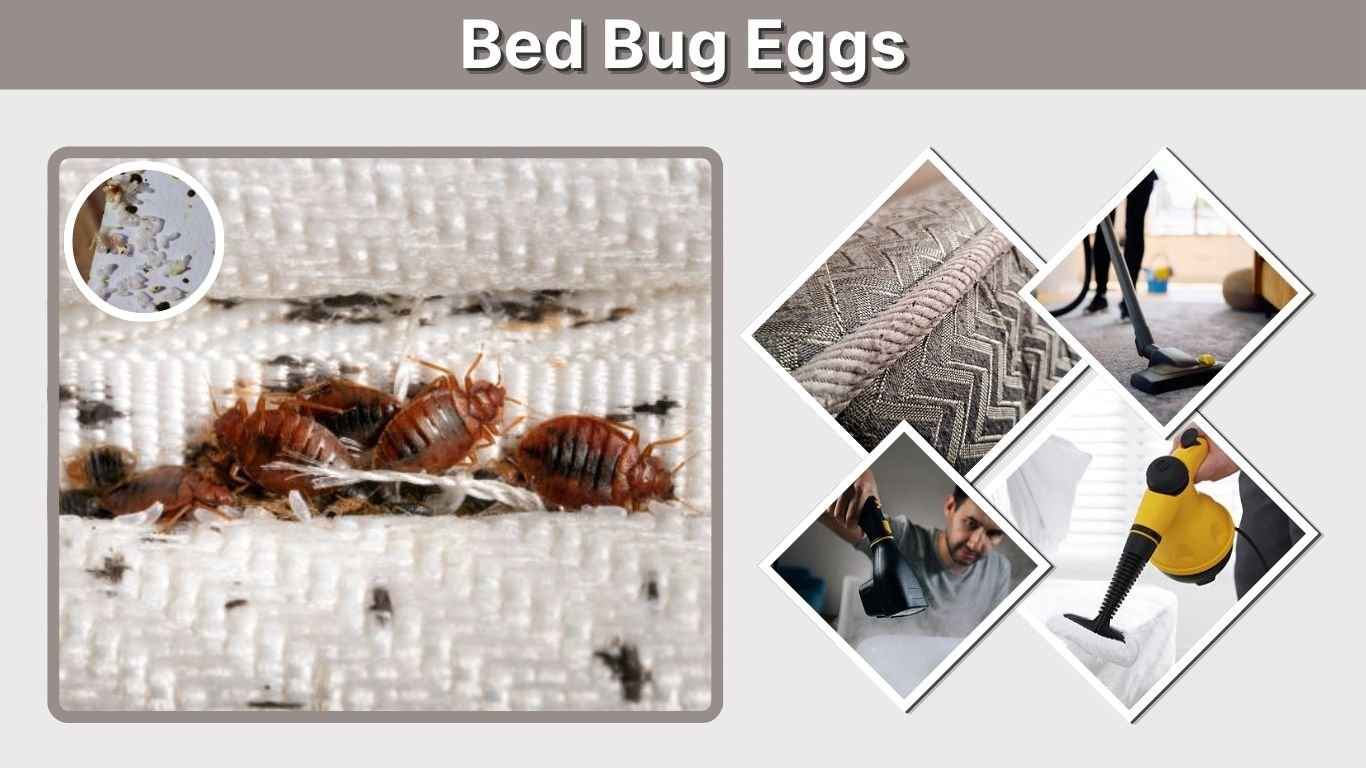
Bed bug eggs are extremely small, pearl-white objects usually hidden in cracks, mattress seams, bed frames, furniture, and other protected locations. Because they measure only about 1 millimeter, they can easily be mistaken for dust, lint, or tiny grains. Finding eggs can indicate an active or developing bed bug infestation, especially when live bugs, dark fecal spots, or shed skins are nearby. Learning what bed bug eggs look like, where females lay them, how quickly they hatch, and what treatments kill them is essential for effective control.
What Do Bed Bug Eggs Look Like?
Bed bug eggs are tiny enough to be overlooked during a casual inspection. According to the EPA, they are approximately 1 millimeter long, roughly the size of a pinhead, and pearl-white in color. Eggs older than about five days may develop a visible eye spot as the embryo develops.
Bed Bug Egg Identification
Typical characteristics include:
- About 1 mm long
- Pearl-white or creamy-white color
- Oval to slightly elongated shape
- Extremely small and difficult to spot
- Often attached to surfaces
- May develop a darker eye spot before hatching
- Frequently found near other signs of bed bugs
A magnifying glass and bright flashlight can make inspecting mattress seams and furniture cracks easier.
Are Bed Bug Eggs Hard?
Bed bug eggs are not hard like grains of sand or seeds. They have an outer shell protecting the developing insect but remain delicate.
Fresh eggs may appear slightly shiny or translucent. Their small size means texture is usually not a practical identification method, so appearance, location, and other signs of infestation provide better evidence.
Where Are Bed Bug Eggs Usually Found?
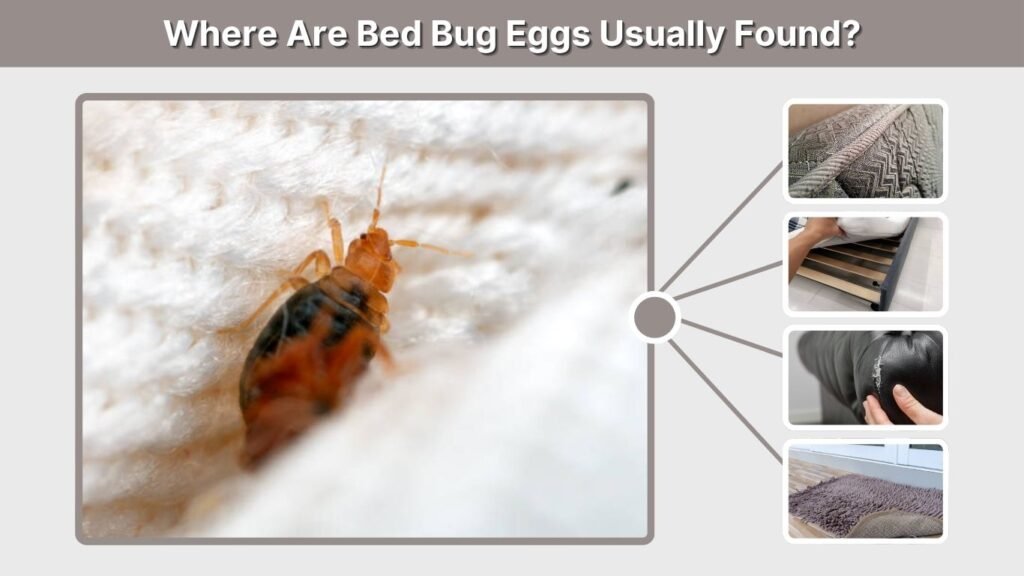
Female bed bugs generally place eggs in protected locations close to where people rest or sleep. These hiding places allow newly hatched nymphs to locate a blood meal without traveling far. Eggs may occur individually or in groups, particularly inside narrow cracks where bed bugs spend the daytime hidden.
Common Places to Find Bed Bug Eggs
Check areas such as:
- Mattress seams and piping
- Box springs
- Bed frames
- Headboards
- Cracks in furniture
- Couch seams
- Baseboards
- Carpet edges
- Behind loose wallpaper
- Around nearby furniture
Bed bugs commonly stay close to sleeping areas, although established infestations can spread farther throughout a room.
Bed Bug Eggs on Mattress and Sheets
Bed bug eggs on a mattress are most likely to occur along seams, labels, folds, and other protected areas rather than openly across the sleeping surface.
Eggs can occasionally be found on sheets, but exposed bedding is less protected. Dark fecal marks, blood spots, shed skins, or live insects may be more noticeable indicators when inspecting bedding.
Bed Bug Eggs on Clothes and Furniture
Bed bugs can hide in clothing, luggage, couches, chairs, and furniture, meaning eggs can sometimes occur there as well.
They do not normally choose people or human hair as egg-laying sites. Instead, females seek stable cracks and protected surfaces where eggs are unlikely to be disturbed.
How Long Do Bed Bug Eggs Take to Hatch?
Bed bug development depends partly on environmental conditions, particularly temperature. Under favorable conditions, eggs commonly hatch fairly quickly. This is one reason eliminating only visible adult bugs may fail: unnoticed eggs can hatch and restart activity after the initial treatment appears successful.
Typical Bed Bug Egg Hatch Time
Under suitable conditions:
- Eggs generally hatch in about 6 to 10 days
- Newly hatched insects are called nymphs
- Nymphs need blood meals as they develop
- Bed bugs pass through five immature nymph stages
- Each stage requires molting before adulthood
EPA information states that eggs normally hatch in approximately 6–10 days.
What Happens After Eggs Hatch?
Newly hatched nymphs are extremely small and pale. They begin seeking a blood meal and then progress through five nymphal stages.
Each developing stage requires feeding before molting. Under favorable conditions, the entire egg-to-egg life cycle can occur surprisingly quickly, helping a small infestation expand when it is left untreated.
How Many Eggs Does a Bed Bug Lay?
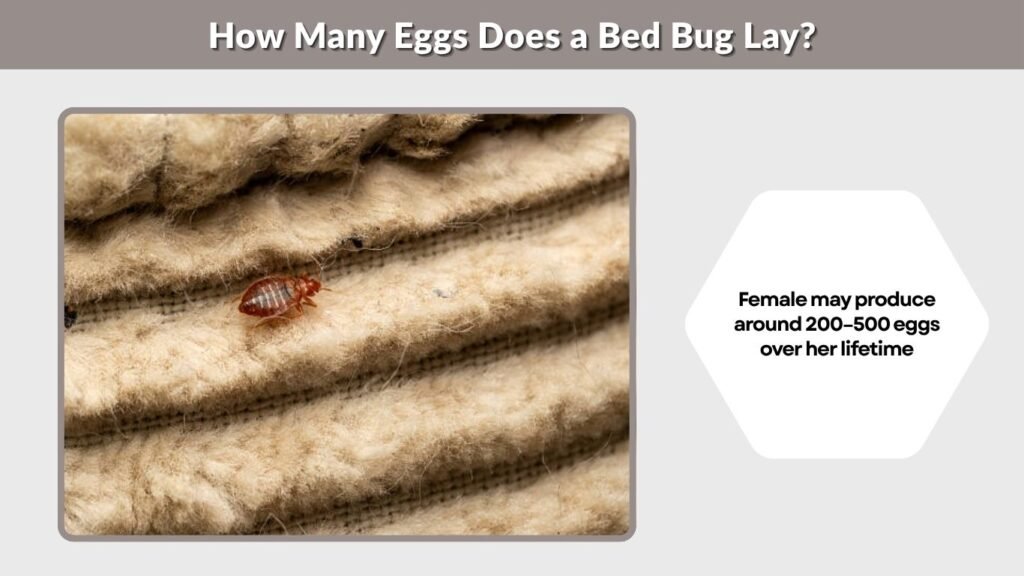
Female bed bugs can produce substantial numbers of eggs during their lives. Exact reproduction varies according to feeding opportunities, temperature, age, and other conditions. Regular access to blood meals allows females to continue producing eggs and can cause an infestation to grow steadily.
Bed Bug Egg Production
A female may:
- Lay roughly 1–3 eggs per day under suitable conditions
- Lay hundreds of eggs during her lifetime
- Deposit eggs in multiple protected locations
- Continue reproducing when regular blood meals are available
EPA information reports that a female may produce around 200–500 eggs over her lifetime under favorable circumstances.
Why a Few Bed Bugs Can Become a Problem
The danger is not simply the number of eggs produced on one particular day. Multiple females can reproduce while earlier eggs hatch and developing nymphs mature.
Because eggs are tiny and hidden deep within cracks, infestations can continue even when homeowners remove the bed bugs they can easily see.
What Do Dried or Hatched Bed Bug Eggs Look Like?
Old, dried, dead, and hatched eggs can look different from healthy developing eggs. Empty shells may remain attached to surfaces after young bed bugs emerge, making it possible to find egg remnants even after hatching has already occurred.
Hatched vs. Unhatched Eggs
A developing unhatched egg typically looks fuller and pearl-white. As development continues, darker internal features may become noticeable.
After hatching, an empty eggshell can appear pale, dry, flattened, or opened at one end. Finding numerous empty shells may indicate that bed bugs have already reproduced in that location.
Are Old Dried Eggs Still Dangerous?
An empty hatched shell cannot produce another bed bug. However, finding old eggshells is still important because it demonstrates previous reproductive activity.
Do not assume an infestation is gone simply because eggs appear dry. Look carefully for live bugs, active eggs, nymphs, fecal spotting, and shed skins.
What Kills Bed Bug Eggs?
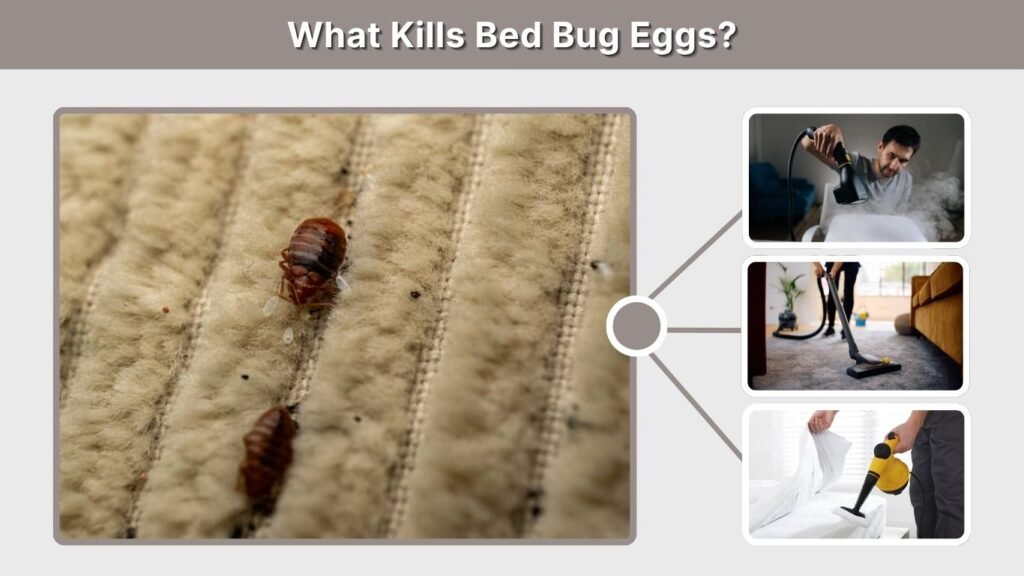
Bed bug eggs can be more difficult to eliminate than exposed adult insects because they are hidden inside cracks and protected locations. Successful control normally requires treating the infestation as a whole rather than concentrating only on visible eggs. Heat, careful cleaning, inspection, monitoring, and properly selected pest-control treatments can work together.
Effective Control Methods
Useful measures include:
- Drying appropriate clothing and bedding on high heat
- Using steam correctly on suitable surfaces
- Vacuuming visible bugs and eggs
- Inspecting mattresses and furniture carefully
- Reducing clutter and hiding places
- Using EPA-registered bed bug products according to labels
- Rechecking treated areas for newly hatched bugs
- Hiring a qualified pest professional for persistent infestations
EPA recommends a high-heat clothes dryer for suitable items and notes that washing alone may not eliminate all bed bugs and eggs.
Does Heat Kill Bed Bug Eggs?
Yes. Proper heat treatment can kill bed bugs at every life stage, including eggs. Household dryers on high heat can be useful for clothing and bedding that can safely tolerate the treatment.
Professional whole-room heat treatment requires specialized equipment to ensure lethal temperatures reach cracks and other hiding locations. Simply increasing a household thermostat or using unsafe space heaters is not an effective substitute.
Does Alcohol or Bleach Kill Bed Bug Eggs?
Rubbing alcohol and household bleach should not be considered dependable whole-room bed bug treatments. Applying chemicals incorrectly may create health, fire, or property-damage risks without reaching hidden eggs.
A structured integrated pest management approach using inspection, heat, cleaning, monitoring, and properly labeled pest-control products is more reliable than improvised household remedies.
FAQs
Can you see bed bug eggs?
Yes, bed bug eggs are visible to the naked eye, but they are extremely difficult to notice because they measure only around 1 millimeter. They look like tiny pearl-white or creamy objects. A flashlight and magnifying glass can make inspection easier, especially along mattress seams, bed frames, and furniture cracks.
How long do bed bug eggs take to hatch?
Bed bug eggs typically hatch in about 6–10 days under favorable environmental conditions. Temperature can affect development speed. After emerging, the tiny nymph must obtain blood meals and molt through five immature stages before becoming an adult capable of reproducing.
What do bed bug eggs look like on a mattress?
On a mattress, bed bug eggs look like tiny white or pearl-colored oval specks approximately the size of a pinhead. They are most likely to occur along seams, folds, piping, labels, or other protected areas rather than openly in the center of the mattress.
Can bed bug eggs live on clothes?
Bed bug eggs may occasionally be deposited on clothing, especially clothes left undisturbed near an infested sleeping area. However, cracks and protected furniture surfaces are more typical sites. Clothing that can safely tolerate high heat can be treated in a household dryer following appropriate fabric-care instructions.
What is the best way to get rid of bed bug eggs?
The most effective approach combines several methods rather than relying on one home remedy. High-heat drying, appropriate steam treatment, vacuuming, detailed inspection, monitoring, and EPA-registered treatments can all contribute. Persistent or widespread infestations often benefit from professional pest management using an integrated approach.