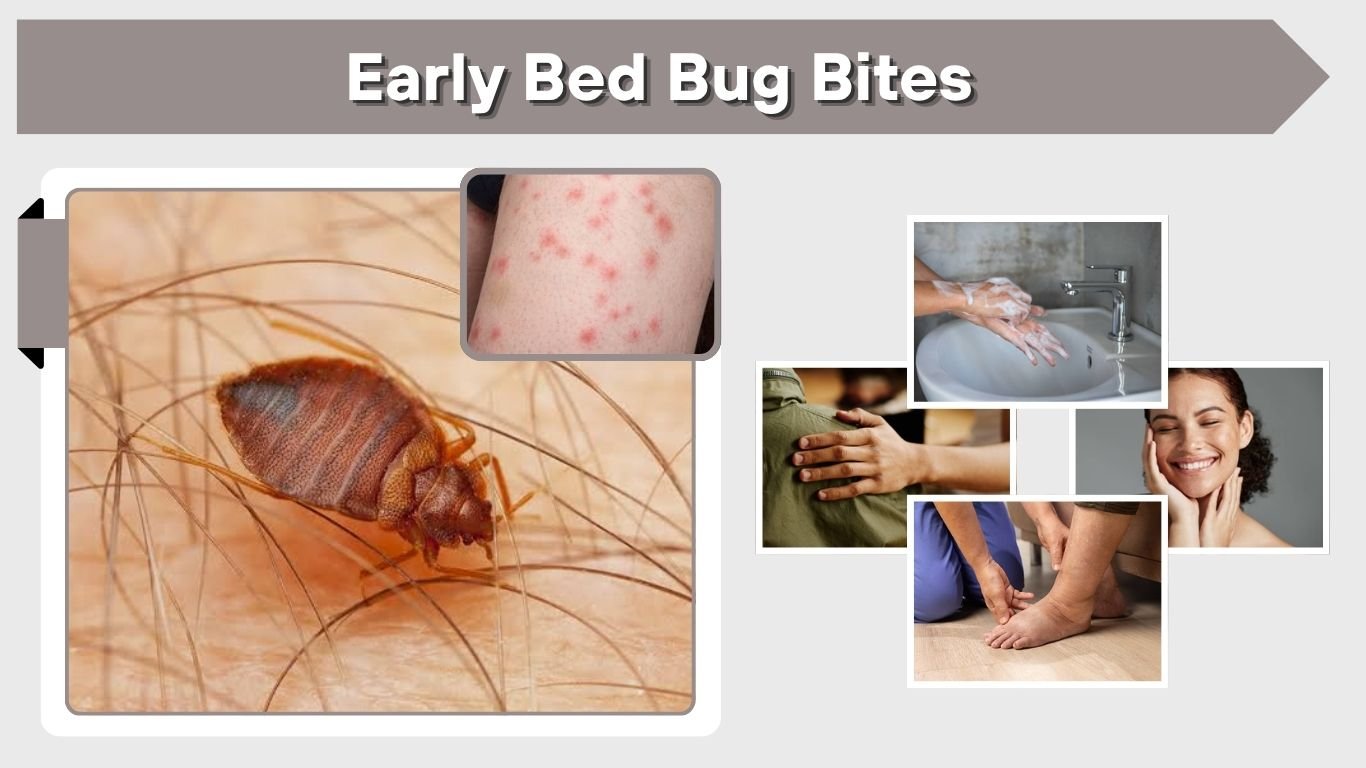
Early bed bug bites may first appear as small red, pink, brown, or purplish bumps on exposed skin after sleeping. Some people develop itching within hours, while others may not notice marks for several days. In certain cases, no visible reaction develops at all. Early bites can resemble mosquito, flea, or other insect bites, so skin appearance alone cannot confirm bed bugs. Knowing the early stages, common bite locations, progression, and infestation signs can help you identify the possible cause and respond appropriately.
What Do Early Bed Bug Bites Look Like?
Early bed bug bites vary considerably between people because the visible marks result from an individual’s reaction to the bite rather than a uniquely shaped wound. They can begin as small, slightly raised spots and later become itchier or more swollen. Bed bug bites may occur randomly, but clusters and rough lines are also commonly reported.
Early Signs of Bed Bug Bites
Common early features may include:
- Small raised bumps or welts
- Red, pink, brown, or purple discoloration
- Mild swelling around individual bites
- Itching or irritation
- A darker area near the center
- Several bites close together
- Bites arranged in a rough line or zigzag pattern
- Marks appearing after sleeping
Not everyone develops these signs. CDC notes that reactions can range from no physical evidence to small bite marks or, rarely, stronger allergic reactions.
Day 1 Early Bed Bug Bites
There is no single appearance that every bed bug bite has on the first day. Some previously sensitized people can develop itchy welts quickly, while first-time reactions may not become noticeable for several days.
Therefore, waking up without bite marks does not necessarily mean you were not bitten. The skin reaction can appear later as the immune system responds.
Early Stages of Bed Bug Bites
The phrase bed bug bites early stages generally describes how the skin reaction develops after feeding. Unlike a wound that progresses through predictable stages, bed bug bites vary greatly according to immune sensitivity. Some become obvious quickly, while others remain invisible for days. Repeated exposure may also cause faster and stronger reactions than someone’s first exposure.
When Do Bed Bug Bites First Appear?
CDC reports that most people do not feel a bed bug feeding because the insect introduces anesthetic and anticoagulant substances during its blood meal. Bite marks often become noticeable from one to several days later, although reactions can sometimes take as long as 14 days.
This delay makes it difficult to determine exactly when or where someone was bitten.
How Early Bites May Change
A bite may initially look like a small, subtle bump and become more noticeable as inflammation increases. Itching may also intensify after the bite has been present for a while.
Most uncomplicated bites eventually fade without specific medical treatment, usually within about one or two weeks.
Where Do Early Bed Bug Bites Appear?
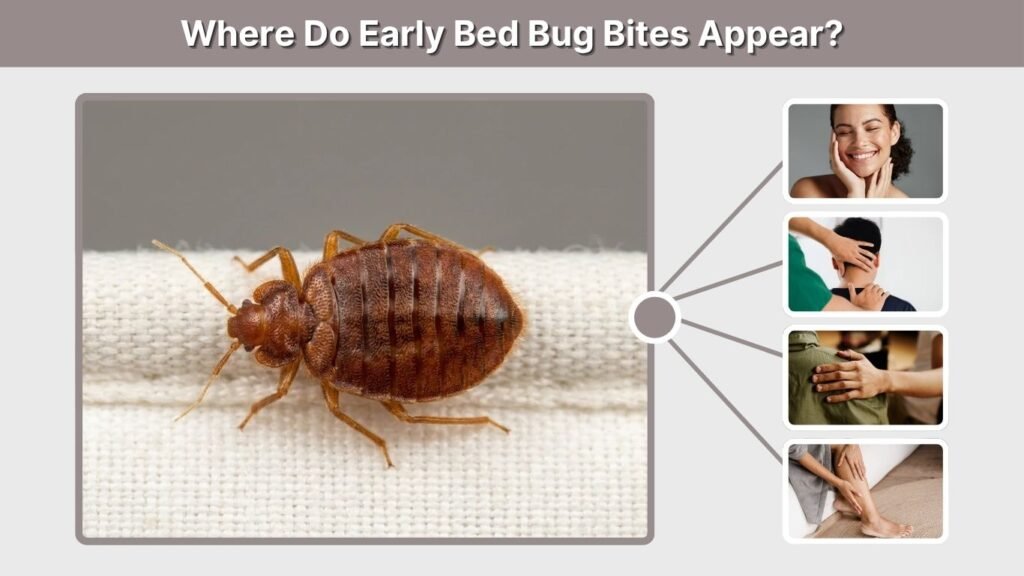
Bed bugs usually feed on skin that is accessible while a person sleeps. They do not live permanently on the human body and generally return to cracks, furniture, mattresses, or other hiding places after feeding. Bite location therefore often reflects which parts of the body were exposed rather than a preference for one particular body region.
Common Bite Locations
Early bites frequently appear on the:
- Face
- Neck
- Arms
- Hands
- Shoulders
- Legs
- Back
- Chest
- Stomach
Mayo Clinic particularly notes the face, neck, arms, and hands as common locations. However, bites can occur elsewhere when skin is exposed during sleep.
Early Bed Bug Bites on the Stomach
Bites can appear on the stomach when the abdomen becomes exposed during sleep or when bed bugs gain access beneath loose-fitting clothing.
Small itchy marks on the stomach alone do not prove bed bugs are responsible. Contact dermatitis, mosquitoes, fleas, folliculitis, heat rash, and other skin conditions can produce similar spots.
Early Bed Bug Bites on Black or Darker Skin
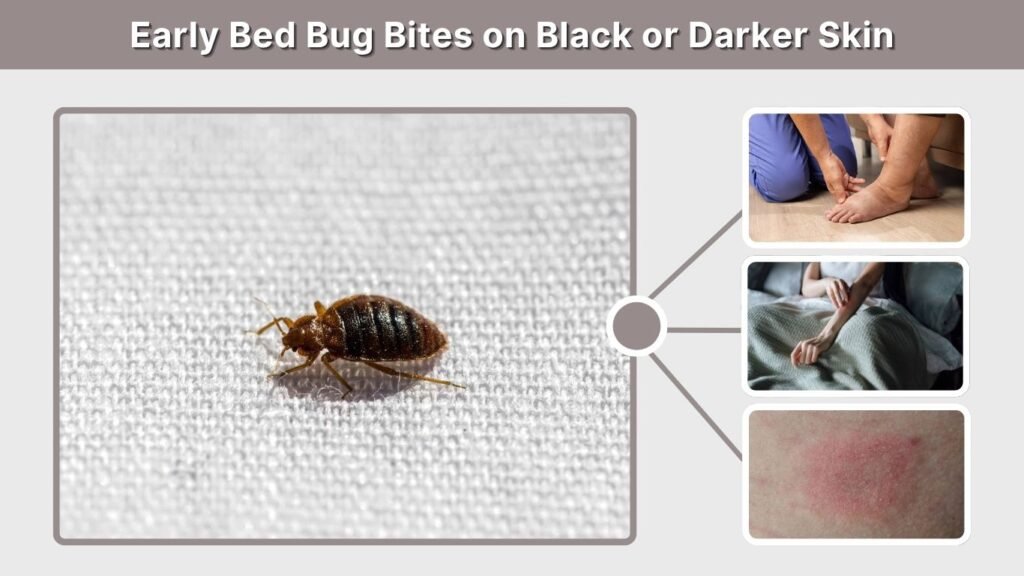
Bed bug bites may be harder to recognize visually on darker skin because inflammation does not always produce the bright redness commonly shown in photographs of lighter skin. Instead, affected areas may appear purple, darker brown, slightly raised, or otherwise different from the surrounding skin. Lighting can also significantly affect how visible discoloration appears.
What Early Bites May Look Like
On darker skin tones, pay attention to:
- Raised or swollen areas
- Purple or dark brown discoloration
- Changes in skin texture
- Itching or tenderness
- Groups of similar bumps
- A rough line or zigzag arrangement
- Areas that feel irritated even when redness is subtle
AAD notes that bed bug reactions may appear as red or purple welts. Examining the skin in good lighting and paying attention to texture and swelling can sometimes be more useful than looking for redness alone.
Do Symptoms Differ by Skin Tone?
The underlying reaction—such as itching, swelling, or inflammation—can occur regardless of skin tone. What differs most is how the inflammation appears visually.
Because many online images disproportionately show lighter skin, comparing your skin only with photographs may be misleading. Environmental evidence of bed bugs is more reliable for confirming an infestation.
Do Early Bed Bug Bites Itch?
Many bed bug bites eventually become itchy, but early bites do not always itch immediately. Some people develop noticeable itching within a short time, while others may not experience symptoms for days. A person who has been repeatedly exposed can become more sensitive and may react much faster than someone experiencing their first bites.
Why Itching Can Be Delayed
The body’s immune system reacts to substances introduced while the bed bug feeds. That inflammatory response may take time to develop.
AAD reports that first-time bites may take several days to itch and occasionally up to 14 days. With repeated exposure, sensitized people may develop itchy welts much sooner.
Do Early Bites Hurt?
Bed bug bites are generally more associated with itching than pain. Most people do not feel the insect feeding.
However, scratching can make bites sore, irritated, or painful. Larger inflammatory reactions can also produce tenderness, burning, blistering, or swelling.
Early Bed Bug Bites vs Flea Bites
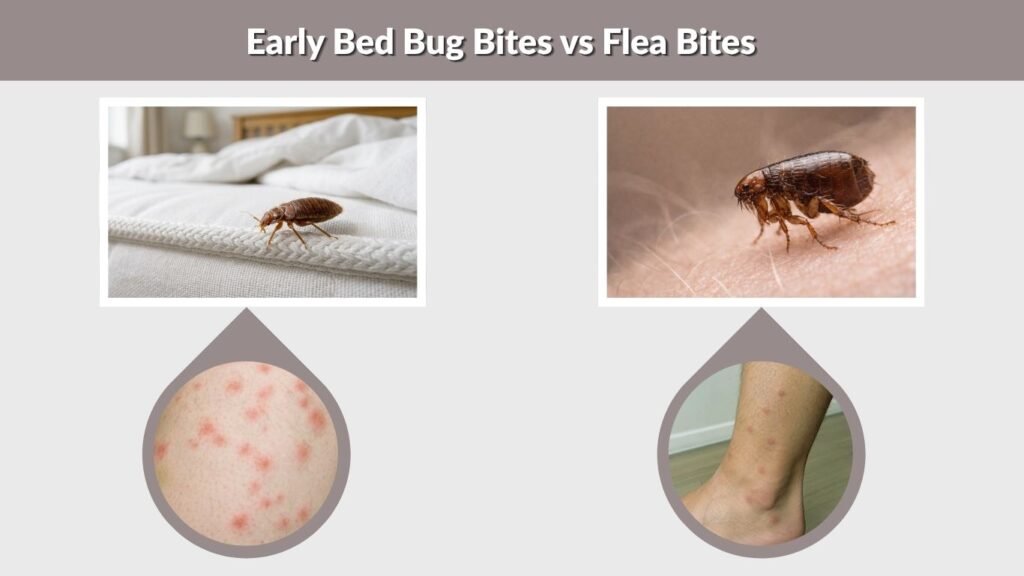
Early flea and bed bug bites can look remarkably similar, making visual identification unreliable. Both may produce small itchy bumps that appear in groups. Bite distribution and environmental evidence are often more useful than the skin reaction itself when distinguishing between these pests.
Key Differences to Consider
Early bed bug bites may:
- Appear after sleeping
- Affect exposed upper-body areas
- Occur in rough lines or clusters
- Develop several days after exposure
- Be associated with signs around a mattress or bed frame
Flea bites may:
- Frequently affect ankles and lower legs
- Produce intensely itchy small bumps
- Be associated with pets or animal resting areas
- Occur in small clusters
- Develop after exposure to infested carpeting or furniture
Neither pattern is definitive. Mayo Clinic emphasizes that bed bug bites can be difficult to distinguish from other insect bites.
Look Beyond the Bites
Instead of relying only on skin marks, inspect the sleeping environment. Finding actual bugs or characteristic infestation evidence provides much stronger confirmation.
This is especially important during an early infestation, when relatively few bites may be present.
How to Detect an Early Bed Bug Infestation
Early detection can make a bed bug infestation easier to address. Bed bugs hide in narrow cracks close to sleeping areas and often remain unnoticed during the day. Carefully checking mattress seams, headboards, bed frames, and nearby furniture can reveal evidence before the infestation becomes much larger.
Early Infestation Signs
Look for:
- Live bed bugs
- Tiny dark fecal spots
- Rusty or reddish stains on sheets
- Pale shed skins
- Small eggs or eggshells
- Bugs hiding along mattress seams
- Activity behind headboards or bed frames
CDC specifically recommends checking for shed exoskeletons, bed bugs in mattress and sheet folds, rusty-colored spots, and a characteristic musty odor.
Are Bites Enough to Confirm Bed Bugs?
No. Skin reactions alone cannot reliably diagnose a bed bug infestation.
Mosquitoes, fleas, mites, allergic reactions, and several dermatologic conditions can produce similar-looking bumps. Finding physical evidence around the sleeping area is therefore essential before assuming bed bugs are responsible.
How to Treat Early Bed Bug Bites
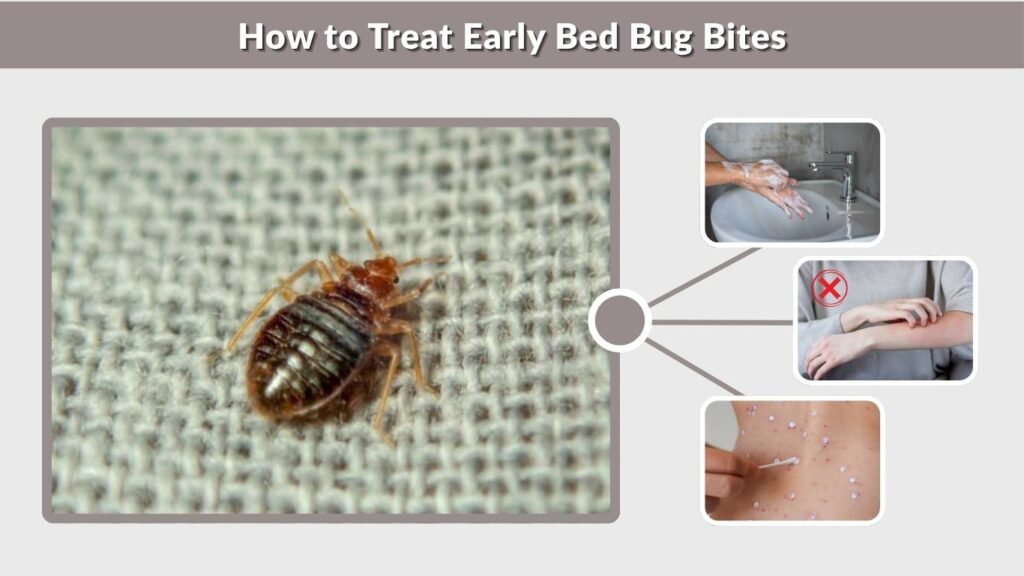
Most early bed bug bites require only simple symptom management and good skin hygiene. They generally resolve naturally without medical treatment. The main goals are reducing itching and preventing scratching from damaging the skin. At the same time, any confirmed infestation needs to be addressed because treating existing bites will not prevent additional ones.
Simple Treatment Steps
For uncomplicated bites:
- Gently wash the affected skin.
- Avoid scratching the bites.
- Keep fingernails short and clean.
- Consider an appropriate anti-itch treatment.
- Use a topical corticosteroid when medically appropriate.
- Consider an antihistamine for significant itching.
- Watch for increasing redness, pain, or drainage.
CDC states that most cases need minimal symptomatic treatment, although topical steroids or antihistamines may help more significant reactions.
When to Seek Medical Care
Contact a healthcare professional if bites develop large blisters, significant swelling, increasing tenderness, pus, or other signs of infection.
Urgent medical attention is appropriate for difficulty breathing, tongue or facial swelling, or other symptoms suggesting a serious allergic reaction.
FAQs
1. What do early bed bug bites look like?
Early bed bug bites may appear as small raised red, pink, brown, or purple spots. They can occur individually, in clusters, or in rough lines. Some have a darker center and become increasingly itchy. However, bite appearance varies widely, so skin marks alone cannot confirm a bed bug infestation.
2. What do bed bug bites look like on day 1?
There is no universal day-one appearance. A sensitive person may quickly develop visible itchy welts, while someone bitten for the first time may have no noticeable marks. CDC reports that bite reactions commonly appear one to several days after feeding and can occasionally take up to 14 days.
3. Do early bed bug bites itch immediately?
Not necessarily. First-time reactions can take several days to become itchy, while repeated exposure may make a person react much faster. AAD notes that some people can take as long as 14 days to develop itching after an initial exposure.
4. What do early bed bug bites look like on darker skin?
Early bites on darker skin may appear purple, brown, slightly darker than the surrounding skin, swollen, or simply raised rather than bright red. Itching, skin texture, swelling, and bite arrangement may therefore provide useful clues when redness is difficult to see.
5. How can I tell if early bites are actually from bed bugs?
Look for evidence around where you sleep, including live bugs, dark fecal spots, pale shed skins, eggs, and rusty stains on sheets or mattresses. Because bed bug bites resemble many other insect bites and skin conditions, finding these environmental signs provides much stronger evidence than examining bites alone.