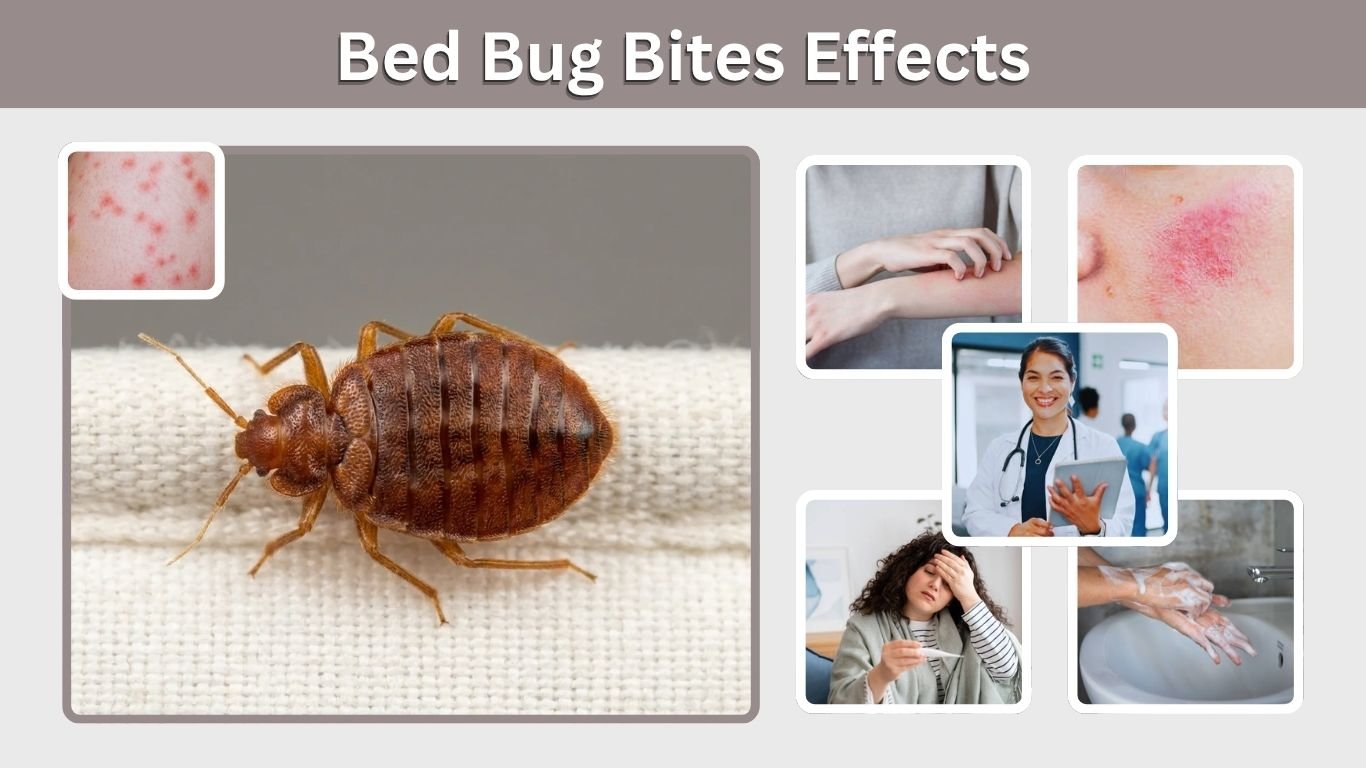
Bed bug bites effects can range from no visible reaction to intensely itchy welts, swelling, sleep disruption, and, occasionally, more serious complications. Bed bugs are not known to transmit diseases to humans, but repeated bites can still affect physical and emotional well-being. Excessive scratching may cause skin infections, while allergic reactions and anemia are rare complications associated with severe exposure. Understanding the immediate and long-term side effects of bed bug bites can help you recognize normal reactions and know when medical attention is appropriate.
What Are the Common Effects of Bed Bug Bites?
Bed bug bites affect everyone differently. Some people show no physical signs, whereas others develop noticeable red, swollen, intensely itchy welts. Reactions may appear within hours or several days after exposure. The most common effects involve the skin, but repeated nighttime biting can also disturb sleep and create considerable stress when an infestation continues.
Common Physical Side Effects
Typical effects may include:
- Red or pink raised welts
- Intense itching
- Localized swelling
- Mild burning or irritation
- Bites appearing in clusters or lines
- Tenderness around irritated skin
- Blisters in more sensitive individuals
- Scratches or broken skin from repeated itching
CDC notes that reactions can vary from no physical signs to small bite marks and, rarely, serious allergic reactions.
Why Do Reactions Differ?
Your immune response determines much of what happens after a bite. Some people may barely notice bed bugs feeding, while others become increasingly sensitive after repeated exposure.
The American Academy of Dermatology notes that first-time reactions can take days to appear, whereas people repeatedly exposed may develop itchy welts much more rapidly.
Side Effects of Bed Bug Bites on Skin
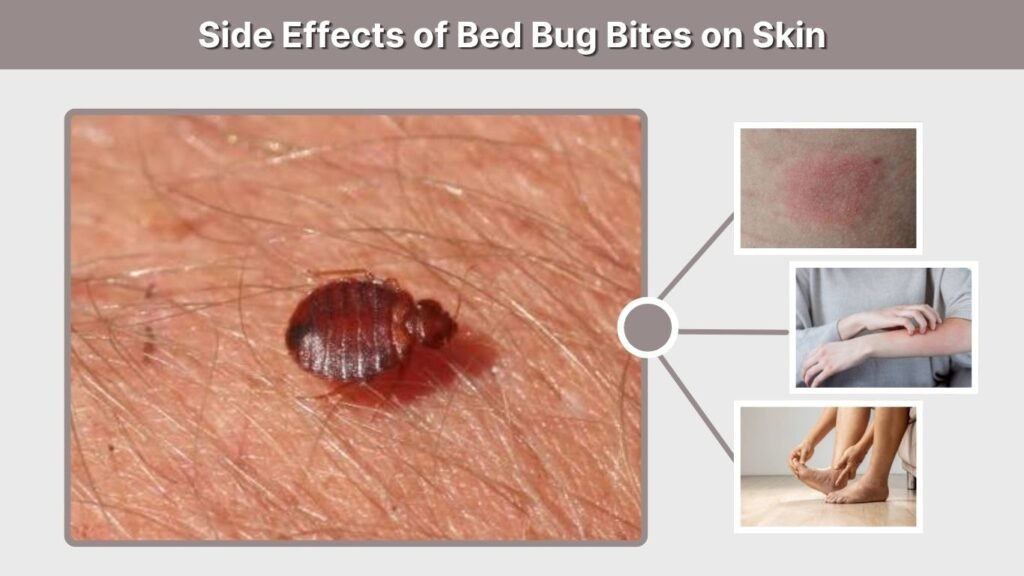
Skin irritation is the most recognizable effect of bed bug bites. Although most uncomplicated bites heal without lasting damage, vigorous scratching can break the protective skin barrier. This increases inflammation and creates an opportunity for bacteria to enter. More intense inflammatory reactions can also leave temporary discoloration after the original bite has healed.
Secondary Skin Infection
Repeated scratching can lead to secondary infections such as impetigo, ecthyma, or lymphangitis. Warning signs can include increasing tenderness, warmth, spreading redness, or drainage.
CDC recommends avoiding scratching and maintaining good hygiene to reduce infection risk. When secondary infection develops, antibiotics may sometimes be needed.
Dark Marks and Scarring
Inflammation or injury from insect bites can sometimes leave post-inflammatory pigmentation, particularly when bites are repeatedly scratched. These marks may persist longer than the original itching or swelling.
Permanent scarring is less typical, but damaging the skin through vigorous scratching increases the possibility of scars and pigmentation changes.
Long-Term Side Effects of Bed Bug Bites
For most people, individual bites resolve within approximately one to two weeks and do not cause permanent physical problems. Long-term effects are more likely to result from repeated exposure, persistent scratching, severe infestation, or psychological stress than from a single uncomplicated bite. Bed bugs themselves have not been shown to transmit infectious diseases to humans.
Can Bed Bug Bites Cause Lasting Health Problems?
Potential longer-lasting effects can include:
- Persistent skin discoloration after inflammation
- Scarring from repeated scratching
- Recurrent secondary skin infections
- Ongoing sleep disruption
- Anxiety related to continued infestation
- Rare anemia during extremely heavy infestations
Most people will not develop these complications. A recent systematic review found systemic complications to be uncommon and generally associated with severe infestations.
Can Too Many Bed Bug Bites Cause Anemia?
In ordinary infestations, anemia is not expected. However, rare medical reports describe significant blood loss and anemia in people experiencing massive, prolonged infestations.
AAD specifically lists anemia as a rare complication when someone receives numerous bites, and published case reports have linked extreme infestations with chronic blood loss.
Psychological Effects of Bed Bug Bites
The effects of an infestation are not limited to visible bite marks. Knowing insects may be feeding while you sleep can significantly disrupt rest and increase worry. Continued infestations can be particularly stressful because eliminating bed bugs may require repeated inspections, treatment, cleaning, and changes to sleeping environments.
Anxiety and Loss of Sleep
CDC and EPA identify anxiety and insomnia among recognized consequences associated with bed bug infestations.
Poor sleep may occur because bites itch at night or because a person becomes concerned about being bitten again. Even after treatment begins, worry about whether bed bugs remain can interfere with normal sleep.
Stress From an Ongoing Infestation
A prolonged infestation can create ongoing emotional stress as people repeatedly examine bedding, furniture, clothing, and skin.
A 2026 systematic review of reported clinical cases found psychological symptoms such as anxiety, stress, and hopelessness in a subset of patients, although these effects were not present in most reported cases.
Allergic and Serious Effects of Bed Bug Bites
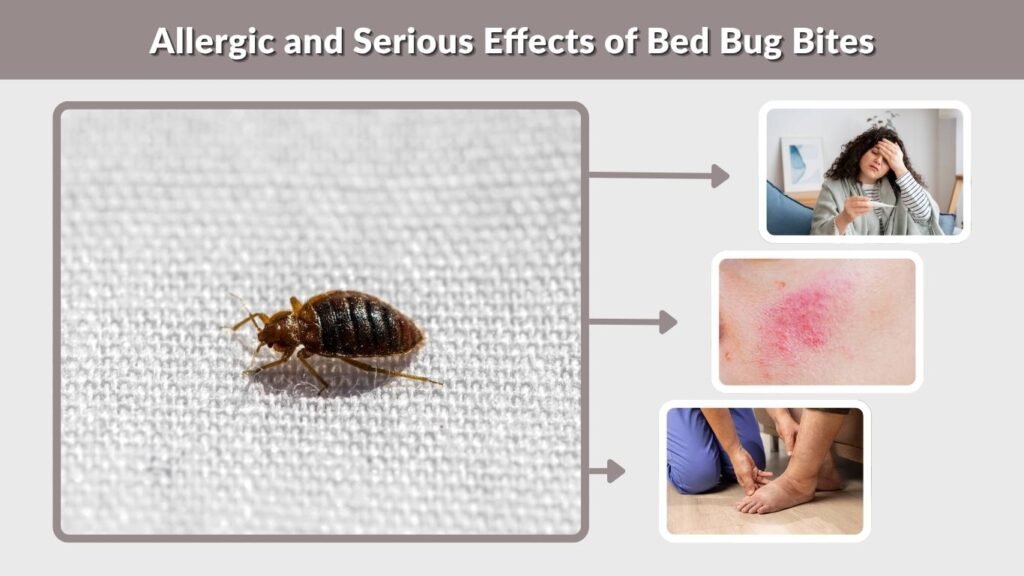
Most bed bug bites require little more than basic symptom care. However, some people develop stronger hypersensitivity reactions. These may produce larger swollen lesions, blisters, or more widespread symptoms. Serious reactions are uncommon, but knowing the warning signs is important because severe allergic responses can require immediate medical treatment.
Signs of a Strong Reaction
Seek medical advice for symptoms such as:
- Large painful swellings
- Extensive redness
- Large blisters
- Widespread hives
- Fever or feeling significantly unwell
- Increasing pain or pus suggesting infection
AAD recommends prompt medical attention for serious reactions or signs that bites have become infected.
When Is It an Emergency?
Difficulty breathing, swelling of the tongue or face, an irregular or forceful heartbeat, dizziness, or other signs of a severe systemic allergic reaction require urgent medical care.
Anaphylaxis from bed bug bites is rare, but EPA and AAD recognize it as a possible severe reaction.
Bed Bug Bite Effects on Babies and During Pregnancy
Babies, children, and pregnant people can develop the same general skin reactions as other people. The key concerns remain itching, scratching, infection, allergic reactions, disrupted sleep, and continued exposure. Because medication choices and the consequences of significant blood loss can differ between individuals, medical guidance becomes particularly important for vulnerable people with extensive symptoms.
Effects on Babies and Children
Children may scratch itchy bites repeatedly, increasing the risk of broken skin and secondary infection.
Very heavy infestations have rarely been associated with anemia, including historical reports involving infants and children. Such cases are unusual and typically involve extensive exposure rather than ordinary isolated bites.
Bed Bug Bites During Pregnancy
Bed bugs are not known to transmit diseases to humans, so the main concerns during pregnancy are the bite reaction itself, infection from scratching, sleep disruption, and safe management of the infestation.
Pregnant people should check with a healthcare professional before using medications for severe reactions and follow pesticide safety instructions carefully when treating an infestation.
How to Reduce the Effects of Bed Bug Bites
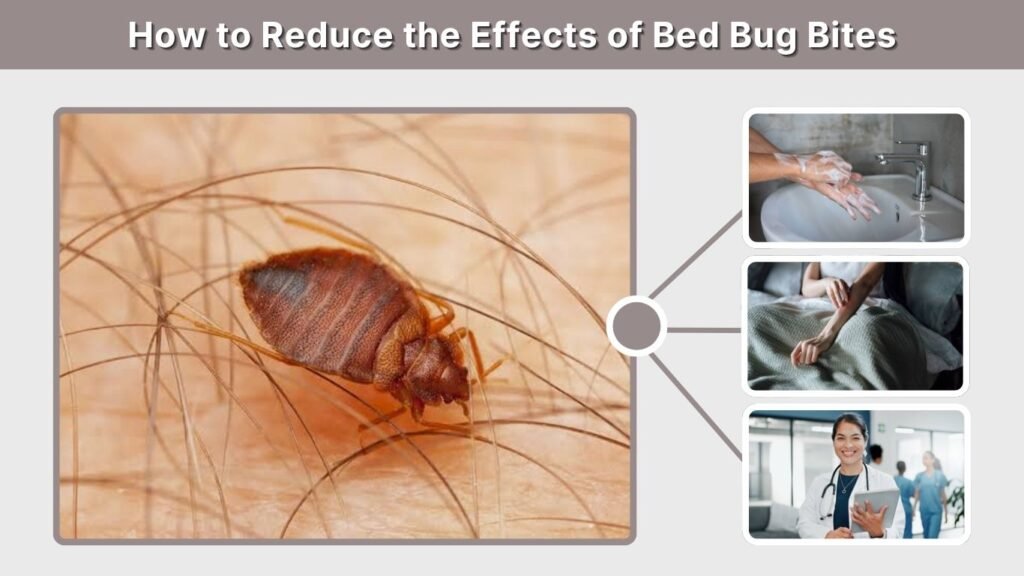
Most uncomplicated bed bug bites heal naturally. Treatment focuses on reducing itching, protecting the skin, and preventing secondary infection. However, treating the skin alone does not prevent new bites. Confirmed infestations must also be eliminated so that repeated exposure and its associated physical and psychological effects can stop.
Basic Bite Care
For mild reactions:
- Wash bites gently with soap and water.
- Avoid scratching the affected skin.
- Keep fingernails short.
- Consider an appropriate anti-itch treatment.
- Monitor bites for signs of infection.
- Seek medical advice for severe swelling or reactions.
- Address the underlying infestation promptly.
CDC notes that topical corticosteroids and antihistamines may help control more significant itchy inflammatory reactions.
Eliminating the Cause Matters
Repeatedly treating new bites without addressing the infestation will not solve the underlying problem.
Inspect mattresses, box springs, headboards, furniture cracks, and nearby sleeping areas for live insects, shed skins, dark fecal spots, or rusty blood stains. Professional pest management may be appropriate when bed bugs are confirmed or an infestation is difficult to control.
FAQs
1. What are the main side effects of bed bug bites?
The most common effects are itching, redness, swelling, and skin irritation. Some people develop no visible reaction at all. Less commonly, scratching may lead to bacterial infection, while sensitive individuals can experience large swollen bites, blisters, or allergic reactions. Bed bugs can also contribute to sleep loss and anxiety.
2. Are there long-term side effects of bed bug bites?
Most bites heal within one or two weeks without permanent effects. Longer-lasting problems can include skin discoloration or scars after intense scratching, secondary infection, sleep disruption, and anxiety from persistent infestation. Serious systemic complications are uncommon and are generally associated with unusually severe or prolonged exposure.
3. Can excessive bed bug bites make you sick?
Large numbers of bites can cause significant itching, loss of sleep, allergic reactions, and skin infection from scratching. In exceptionally severe infestations, repeated blood loss has also been associated with anemia. Such anemia is considered rare and should not be expected from a few ordinary bed bug bites.
4. Can bed bug bites cause psychological effects?
Yes. Living with an ongoing infestation can contribute to anxiety, stress, and insomnia. These effects may result from interrupted sleep and persistent concern about being bitten. EPA recognizes mental health consequences as one reason bed bugs are considered a pest of public-health importance.
5. When should I worry about bed bug bite effects?
Seek medical advice if bites become increasingly painful, warm, swollen, blistered, or begin producing pus. Urgent care is necessary for difficulty breathing, facial or tongue swelling, dizziness, or other signs of a serious allergic reaction. Numerous bites accompanied by unusual weakness or fatigue also deserve medical evaluation.