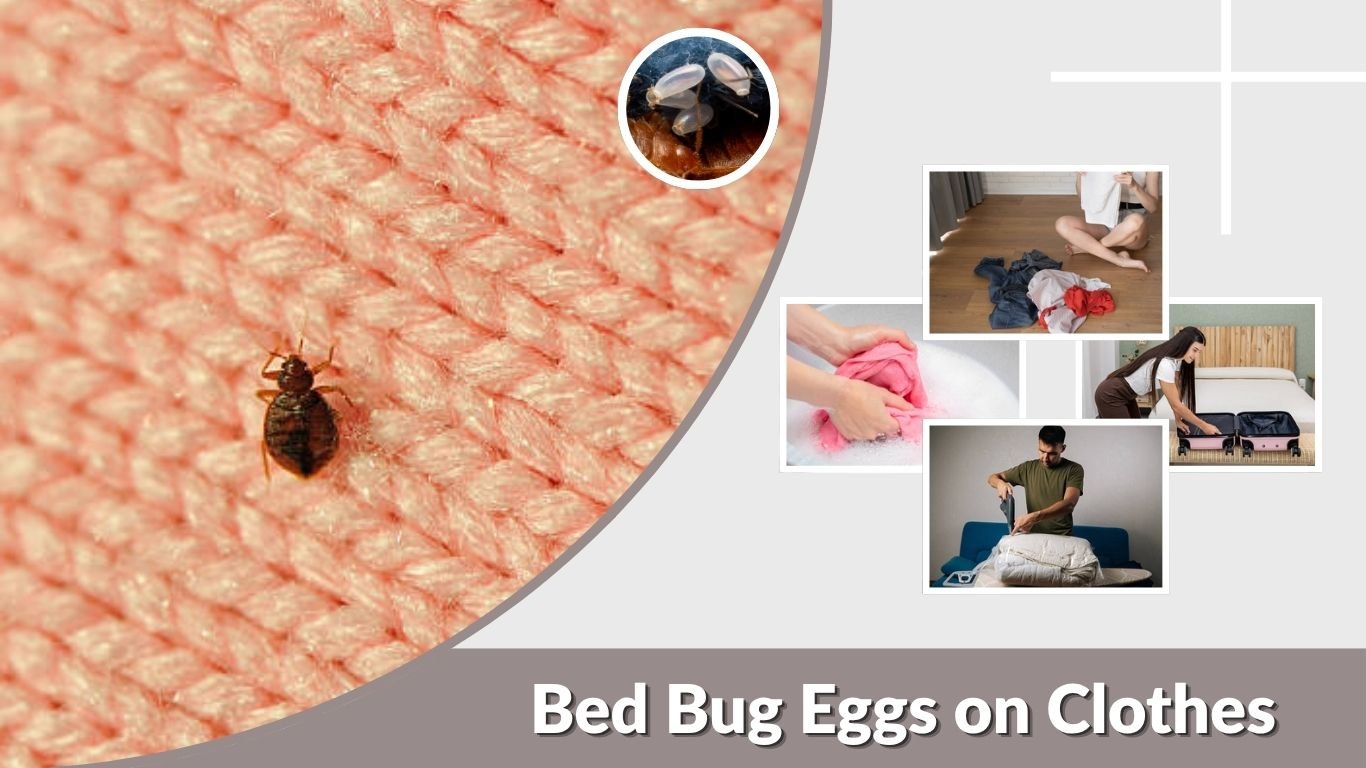
Bed bug eggs on clothes can be difficult to notice because they are tiny, pale, and often hidden inside fabric folds or seams. Although bed bugs prefer sheltered locations near sleeping areas, they can also deposit eggs on clothing, particularly when garments remain near an infestation. These eggs may stick to fabric and travel with your belongings, potentially spreading bed bugs to other locations. Understanding what bed bug eggs look like, where they hide, and how to remove them using washing and heat can help protect your clothes and home.
Do Bed Bugs Lay Eggs in Clothes?
Yes, bed bugs can lay eggs on clothes, although clothing is not usually their preferred egg-laying location. Female bed bugs generally deposit their eggs in protected spaces near sleeping or resting areas, including mattresses, furniture joints, and bed frames.
However, clothes stored near an infested bed or left undisturbed on the floor can also provide suitable hiding places.
Where Do Bed Bugs Lay Eggs on Clothes?
Bed bugs prefer narrow, sheltered spaces where their eggs are less likely to be disturbed. Clothing with folded fabric, stitching, or multiple layers may provide these conditions.
Common locations include:
- Clothing seams: Tiny gaps between stitched fabric layers.
- Collars and cuffs: Folded materials where insects can hide.
- Pockets: Protected interior spaces in pants and jackets.
- Waistbands: Multiple fabric layers and stitching.
- Stored clothing: Clothes inside drawers, closets, or laundry baskets.
Bed bugs are more likely to deposit eggs on stationary clothing than on garments being worn and regularly moved.
What Do Bed Bug Eggs Look Like on Clothes?
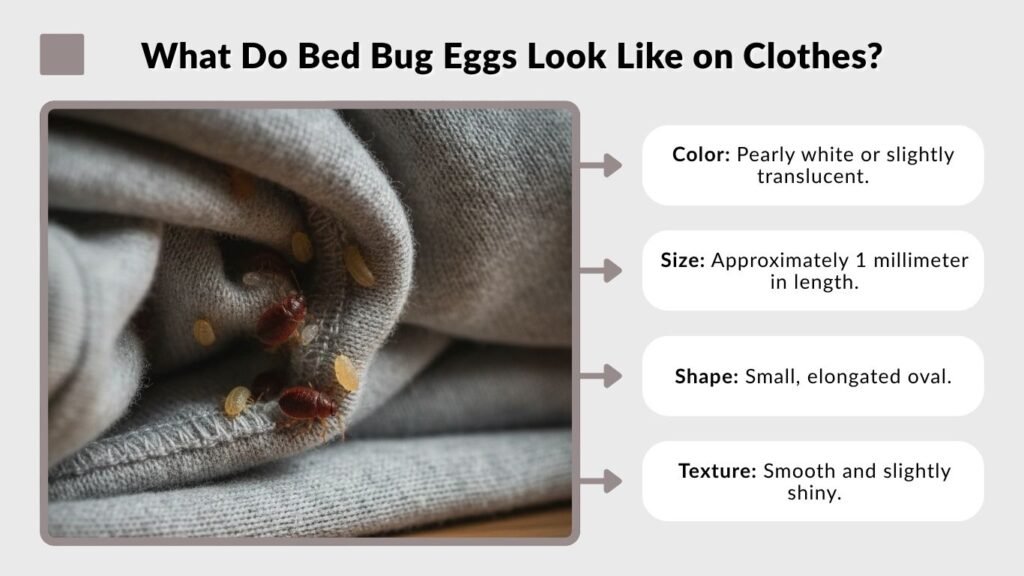
Bed bug eggs are small, oval-shaped, and usually pearly white. They measure approximately 1 millimeter long and resemble miniature grains of rice.
Their light coloration makes them particularly difficult to distinguish from lint, dust, or loose fabric fibers on white clothing.
Identifying Bed Bug Eggs on Clothing
Look for these characteristics when inspecting suspicious particles:
- Color: Pearly white or slightly translucent.
- Size: Approximately 1 millimeter in length.
- Shape: Small, elongated oval.
- Texture: Smooth and slightly shiny.
- Attachment: Often firmly attached to fabric.
- Arrangement: Found individually or in small groups.
Older developing eggs may show a tiny eye spot. Empty eggshells can also remain attached to clothing after the nymphs hatch.
Bed Bug Eggs vs. Lint on Clothes
Lint and fabric debris may resemble bed bug eggs, especially on dark clothing. However, lint usually consists of loose, irregular fibers, while bed bug eggs have a more uniform oval shape.
Bed bug eggs are also attached using a sticky secretion, making them harder to brush away.
Finding dark fecal spots, shed insect skins, or live bed bugs nearby increases the likelihood that suspicious white objects are eggs.
Can Bed Bug Eggs Stick to Clothes?
Yes, bed bug eggs can stick to clothing because female bed bugs produce a glue-like secretion when depositing them. This adhesive helps secure eggs to surfaces, including fabric fibers.
Consequently, shaking clothes may not remove every attached egg.
Can Bed Bug Eggs Travel on Clothes?
Bed bug eggs can be transported on clothing, luggage, backpacks, and other personal belongings.
Unlike adult bed bugs, eggs cannot crawl or move independently. However, they can remain attached to materials while those belongings are carried to another location.
This creates a potential pathway for infestations to spread between homes, hotels, and other buildings.
Eggs attached to clothing are not the only concern. Live bed bugs may also hide inside fabric folds and travel unnoticed.
How to Check Clothes for Bed Bug Eggs
Careful inspection can help identify eggs before they spread to other areas of your home. Pay particular attention to clothing stored near beds, upholstered furniture, or other suspected infestation sites.
Steps to Inspect Clothing
- Choose a well-lit area: Use a flashlight to examine suspicious garments.
- Inspect seams and folds: Turn clothes inside out to expose stitching and hidden fabric layers.
- Check pockets and cuffs: Look inside narrow spaces where insects may remain concealed.
- Use magnification: A magnifying glass can help identify tiny oval eggs.
- Look for other evidence: Check for dark fecal spots, shed skins, or live bed bugs.
Place potentially infested clothes directly into sealed bags until they can be treated. Avoid shaking garments around your home because moving insects may escape.
How to Get Rid of Bed Bug Eggs on Clothes
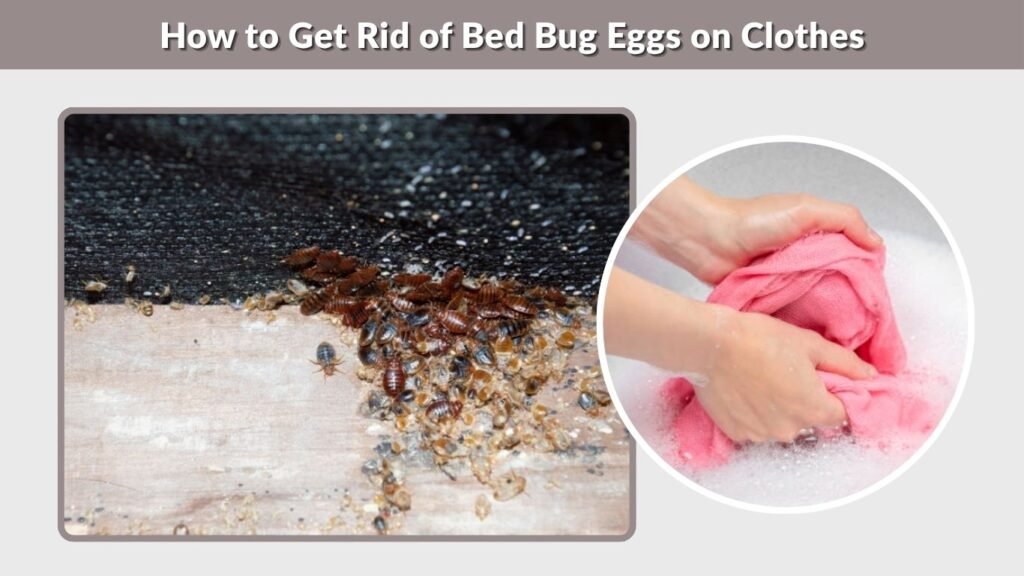
Removing bed bug eggs requires treatment that reaches the eggs and kills developing insects. Simply brushing clothing or using ordinary household sprays may leave viable eggs behind.
Fortunately, heat-based laundry treatment can eliminate bed bugs and eggs from many washable and dryer-safe garments.
1. Use a Clothes Dryer on High Heat
A clothes dryer is one of the most dependable household methods for killing bed bug eggs on suitable clothing.
The U.S. Environmental Protection Agency recommends drying clothing on high heat for at least 30 minutes.
The heat must reach the entire load, so avoid overloading the dryer. Check fabric care labels to ensure the materials can safely withstand the treatment.
After drying, immediately place treated clothes into clean, sealed bags or containers to prevent reinfestation.
2. Wash Clothes Using Appropriate Temperatures
Washing clothes can help remove insects, debris, and some eggs. However, washing alone may not reliably kill every bed bug egg.
Use the hottest water temperature permitted by the garment’s care label, then complete an appropriate high-heat dryer cycle whenever the fabric allows.
Remember that a normal cold-water wash is not a substitute for effective heat treatment.
3. Treat Delicate Clothing Carefully
Some garments cannot tolerate high dryer temperatures, including certain wool, silk, leather, and specialty fabrics.
For these items, consult a professional dry cleaner or pest management specialist about suitable treatment options.
Always inform the cleaner that the clothes may contain bed bugs, and transport the garments in sealed bags.
Avoid applying rubbing alcohol, bleach, or insecticide directly to clothing unless the product is specifically labeled for that use.
Does Washing or Drying Clothes Kill Bed Bug Eggs?
Both washing and drying can help manage bed bugs, but properly applied dryer heat offers more dependable egg control.
| Treatment | Effect on bed bug eggs |
| Cold-water washing | Not reliably effective |
| Warm-water washing | May not kill every egg |
| Hot-water washing | May kill eggs if sufficient heat is achieved |
| High-heat drying for 30 minutes | Effective when heat reaches the entire load |
| Air drying | Not reliable |
| Professional heat treatment | Effective when properly performed |
Heat treatment should never damage clothing or create additional safety hazards. Use professional guidance for items unsuitable for household dryers.
How to Prevent Bed Bug Eggs From Getting on Clothes
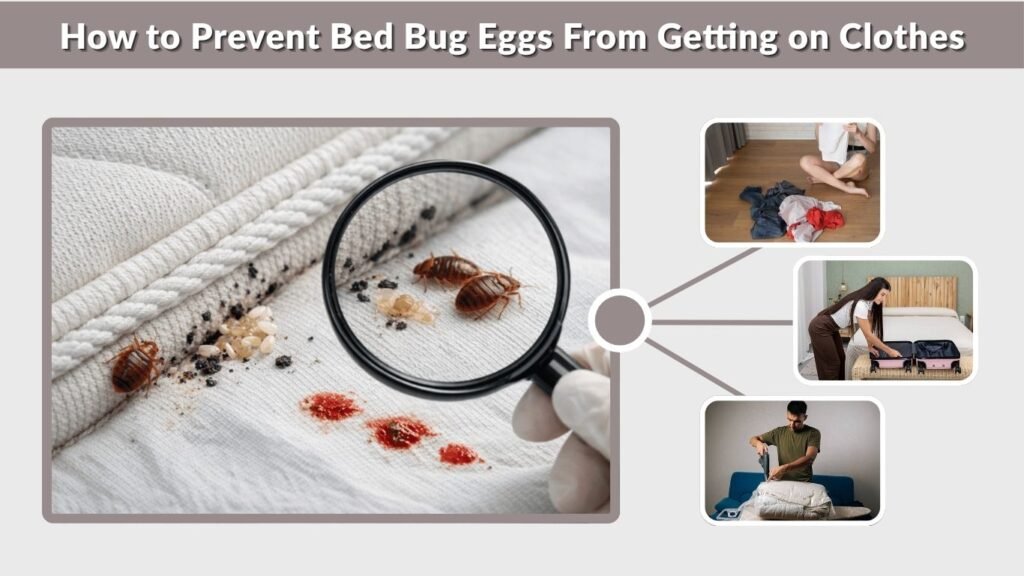
Preventing contact between clothing and infested surfaces reduces the chances of transporting bed bugs and their eggs.
Good storage habits are particularly helpful when traveling or dealing with an existing infestation.
Practical Prevention Tips
- Keep clothes off the floor: Avoid leaving garments beside beds or upholstered furniture.
- Inspect luggage: Examine seams, pockets, and compartments after traveling.
- Use sealed storage: Store treated clothes in clean bags or containers.
- Check secondhand clothing: Inspect garments carefully before placing them with other clothes.
- Clean laundry baskets: Examine hampers and nearby storage spaces for insects or eggs.
- Monitor sleeping areas: Inspect mattresses, bed frames, and headboards for signs of infestation.
If bed bugs are already present in your home, clothing treatment should be part of a broader pest control plan. Cleaning garments alone will not eliminate insects hiding in furniture or walls.
FAQs
1. Can You See Bed Bug Eggs on Clothes?
Yes, bed bug eggs are visible to the naked eye, but they are extremely small. Their pearly white color makes them difficult to notice on light fabrics. A flashlight and magnifying glass can make identification easier.
2. How Long Can Bed Bug Eggs Survive on Clothes?
Bed bug eggs generally hatch within approximately one to two weeks under favorable conditions. Cooler temperatures can delay development. Eggs may remain attached to clothing until they hatch or are removed through effective treatment.
3. Does Drying Clothes Kill Bed Bug Eggs?
Yes. Drying clothing on high heat for at least 30 minutes can kill bed bugs and their eggs when the heat reaches the entire load. Always follow garment care instructions and avoid overloading the dryer.
4. Can Bed Bug Eggs Spread Through Secondhand Clothes?
Yes, bed bug eggs can be transported on secondhand clothing if they remain attached to fabric. Inspect used garments and treat dryer-safe items with appropriate heat before storing them alongside other clothes.
5. Are Bed Bug Eggs Hard to Remove From Clothing?
Bed bug eggs can be difficult to remove manually because they are tiny and attached with a sticky secretion. Proper dryer heat is more reliable than shaking, brushing, or ordinary washing alone.