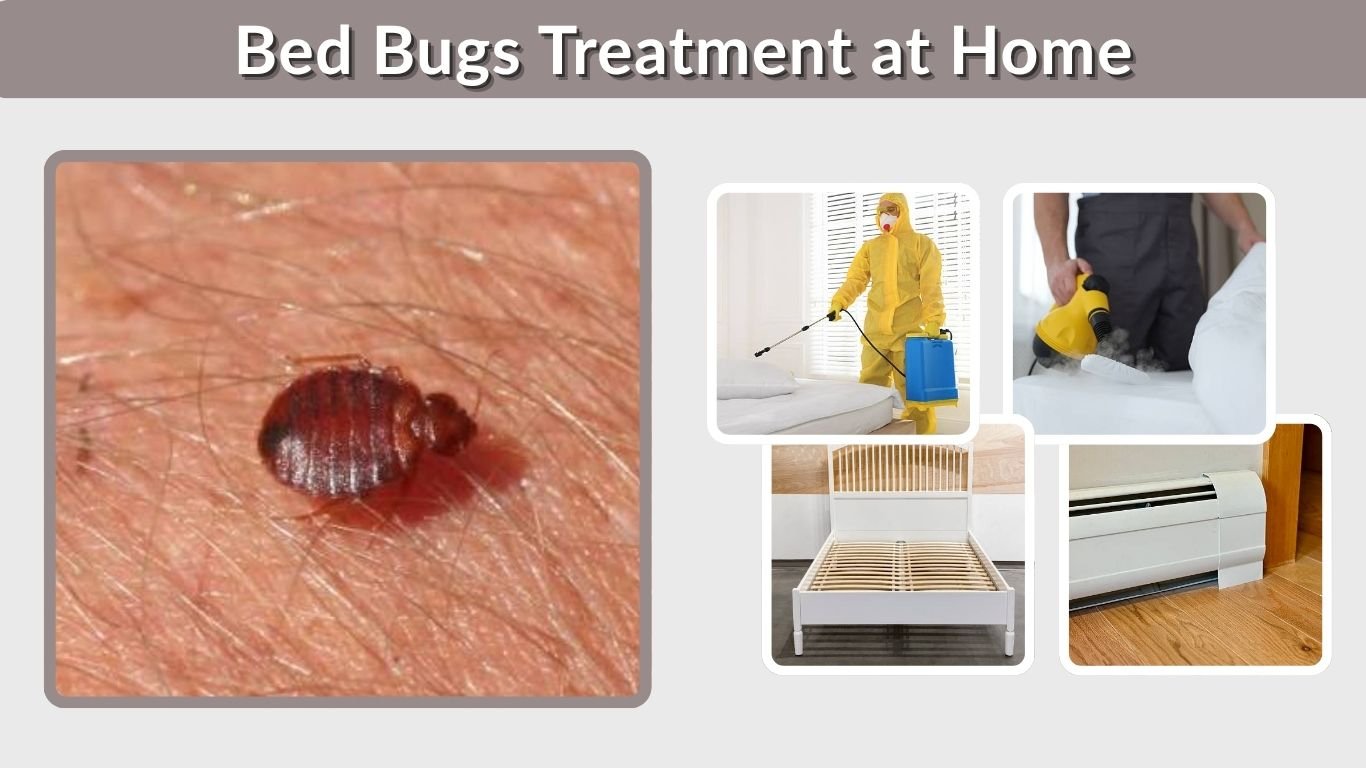
Bed bugs treatment at home works best when several proven control methods are used together instead of relying on a single spray or home remedy. Bed bugs hide in mattresses, furniture, cracks, and other small spaces, while their eggs can survive some treatments. Effective home control may include high-heat drying, vacuuming, steam, mattress encasements, monitoring, and properly labeled pesticides. Knowing what actually works—and what does not—can help you control a small infestation safely and recognize when professional treatment is necessary.
Best Bed Bugs Treatment at Home
Successful home treatment requires patience because bed bugs can remain hidden and eggs may hatch after the first treatment. An integrated approach combines physical removal, heat, monitoring, and appropriate pesticide use. EPA guidance recommends using several compatible methods rather than depending on one technique alone, particularly when an infestation has spread beyond a small area.
Effective Home Treatment Methods
Useful methods include:
- High-heat clothes drying
- Vacuuming mattresses and furniture
- Steam treatment
- Mattress and box-spring encasements
- Bed bug interceptors
- Clutter reduction
- Sealing cracks and crevices
- Properly labeled bed bug pesticides
- Regular follow-up inspections
Start With a Careful Inspection
Inspect mattress seams, box springs, headboards, bed frames, baseboards, upholstered furniture, and cracks close to sleeping areas.
Look for live insects, eggs, shed skins, or rusty-colored spotting. Bed bugs frequently hide in narrow spaces during the day, so a quick inspection of the mattress surface alone may miss an infestation.
Heat Treatment for Bed Bugs at Home
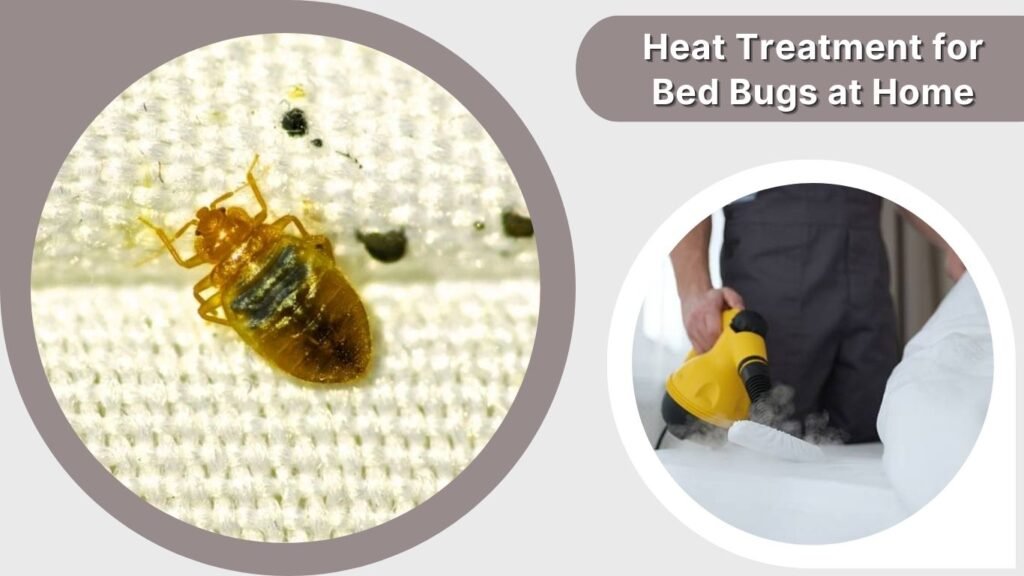
Heat can kill bed bugs when sufficiently high temperatures reach the insects for the required amount of time. However, treating clothing in a dryer is very different from attempting whole-room heat treatment. Professional systems carefully control and monitor temperatures throughout rooms, while improvised home heating can leave cool hiding places or create serious safety risks.
Use a Clothes Dryer
For suitable clothing, bedding, curtains, and similar items:
- Place infested items carefully into bags.
- Transport them without spreading bugs.
- Use a dryer on high heat when the fabric allows.
- Run suitable items on high heat for about 30 minutes.
- Transfer treated items into clean containers or sealed bags.
- Keep clean and untreated items separated.
EPA guidance states that a household dryer on high heat for 30 minutes can kill bed bugs and eggs; washing alone may not be sufficient.
Can DIY Heat Damage Your Home?
Attempting to heat an entire room with ordinary space heaters, propane heaters, fireplaces, or a household thermostat is not recommended.
These methods may fail to heat hidden spaces evenly and can create fire or carbon-monoxide hazards. Professional whole-room heat treatments use specialized equipment, airflow management, and temperature monitoring.
Steam Treatment for Bed Bugs
Steam is useful because heat can penetrate mattress seams, furniture joints, carpet edges, and some cracks where bed bugs hide. Unlike a pesticide with residual activity, steam only affects bugs and eggs that receive adequate heat during treatment. Careful, slow application is therefore necessary for good coverage.
Where to Use Steam
Steam may be applied to suitable:
- Mattress seams and edges
- Bed frames
- Headboards
- Upholstered furniture
- Carpet edges
- Baseboards
- Cracks and crevices
EPA recommends steam temperatures of at least 130°F and warns against forceful airflow that can scatter bed bugs. Always make sure the treated material can tolerate heat and moisture.
Steam Is Not a Complete Solution
Steam works only where heat reaches the insects. Bugs hidden behind walls, deep inside furniture, or in untreated areas may survive.
For this reason, combine steaming with laundering, vacuuming, encasements, monitoring, and other appropriate control methods rather than expecting one steaming session to eliminate an entire infestation.
Cleaning and Vacuuming Bed Bugs at Home
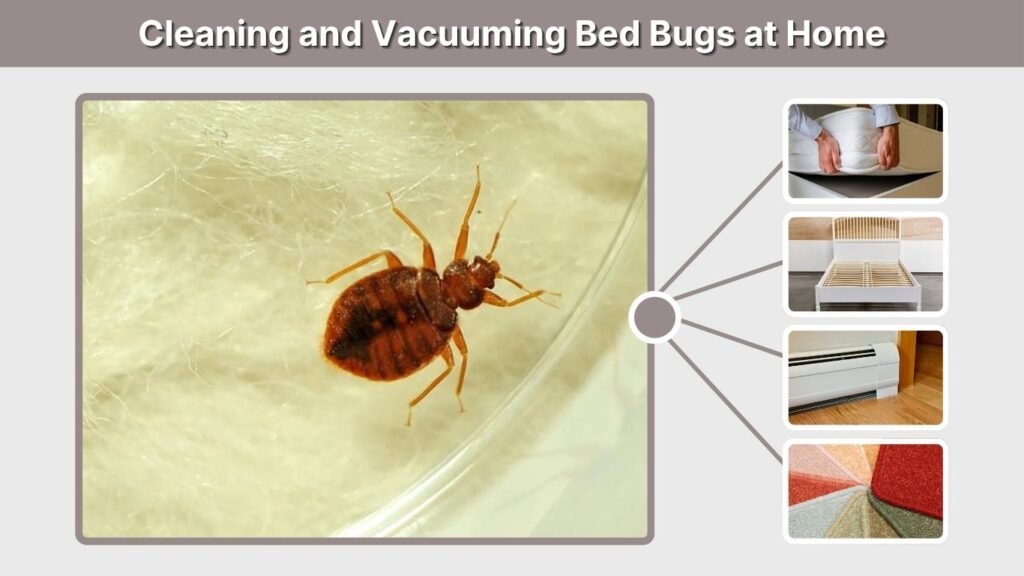
Cleaning does not automatically eliminate bed bugs, but it can substantially reduce the number of insects and make other treatments easier. Removing clutter also reduces hiding places and makes inspection more effective. Vacuuming is particularly useful for physically collecting visible bugs, shed skins, eggs, and debris from accessible surfaces.
Vacuum Infested Areas Carefully
Concentrate on:
- Mattress seams
- Box springs
- Bed frames
- Headboards
- Baseboards
- Furniture joints
- Carpet edges
- Cracks around sleeping areas
After vacuuming, contain and dispose of the vacuum contents carefully so captured bed bugs cannot escape. EPA advises sealing discarded vacuum material in a plastic bag and placing it in outdoor trash.
Reduce Hiding Places
Do not move untreated clutter from an infested bedroom into another room because this can spread bed bugs.
Instead, inspect items where they are, treat suitable belongings, and store cleaned objects separately. Seal appropriate wall cracks and loose gaps around baseboards where insects could hide.
Mattress Treatment for Bed Bugs at Home
A bed bug infestation does not automatically mean the mattress must be discarded. Mattresses and box springs can often remain in place when appropriately inspected, treated, and enclosed. Bed bug-proof encasements simplify future inspections by eliminating many folds and hiding locations.
Use Bed Bug Encasements
Choose encasements specifically designed for bed bugs and use them on:
- Mattresses
- Box springs
Encasements trap bed bugs already inside while preventing additional insects from easily entering mattress seams.
EPA includes mattress and box-spring encasements as part of nonchemical bed bug management.
Isolate the Bed
Moving the bed slightly away from walls and preventing bedding from touching the floor can make access more difficult.
Bed bug interceptors under bed legs can help capture and monitor insects moving toward or away from the bed. Monitoring is valuable because it provides evidence about whether the infestation is declining.
Chemical Treatment for Bed Bugs at Home
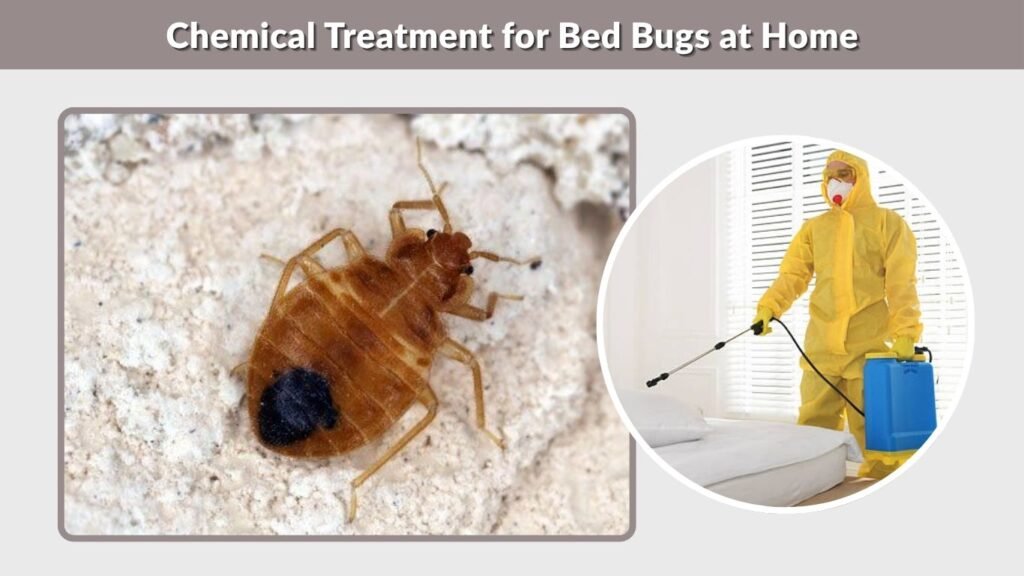
Pesticides can be useful, but they should be one component of a larger treatment plan. Some bed bug populations have developed resistance to certain insecticides, and sprays cannot work when they fail to reach hiding areas. Correct product selection, preparation, and application are important for both effectiveness and safety.
Using Bed Bug Products Safely
When using pesticides:
- Choose products specifically labeled for bed bugs.
- Read the entire label before application.
- Apply only to locations permitted by the label.
- Follow ventilation and re-entry instructions.
- Keep products away from children and pets as directed.
- Never apply more than the label specifies.
- Avoid using outdoor pesticides indoors.
Do not assume that using more pesticide will provide better control.
Avoid Relying on Bug Bombs
Total-release foggers or “bug bombs” should not be the primary bed bug treatment. Fog may fail to penetrate the cracks and crevices where bed bugs hide, and improper use can cause health, fire, or explosion hazards. EPA specifically cautions against relying on foggers as the sole control method.
Do Bed Bug Home Remedies Work?
Many home remedies are promoted online, including baking soda, essential oils, alcohol, vinegar, and homemade sprays. Their popularity does not necessarily mean they can eliminate an infestation. Bed bugs hide deeply and reproduce effectively, so treatments that kill only a few exposed insects are unlikely to provide complete control.
Baking Soda and Homemade Remedies
Baking soda is not a reliable substitute for established bed bug control methods. Similarly, simply spraying household mixtures around a mattress may miss bugs and eggs hidden elsewhere.
A better home-control strategy focuses on proven physical methods such as high-heat drying, vacuuming, steam, encasements, monitoring, and appropriately registered pesticides.
Why Home Treatments Fail
DIY treatment often fails because:
- Hidden bugs are missed.
- Eggs survive.
- Treatment is stopped too soon.
- Clutter provides untreated hiding places.
- Bugs spread into other rooms.
- Pesticides are applied incorrectly.
- The population is resistant to a pesticide.
- Treated rooms become reinfested.
EPA emphasizes continued monitoring because retreatment may be necessary when eggs hatch or insects were missed initially.
Bed Bug Bite Treatment at Home
Treating bites does not eliminate bed bugs, but mild skin reactions can usually be managed separately while the infestation is addressed. Most bed bug bites resolve without extensive medical treatment, although scratching can damage the skin and increase the possibility of secondary infection.
Caring for Bed Bug Bites
Keep the affected skin clean and avoid scratching whenever possible.
The CDC states that most bed bug bites need only minimal symptomatic treatment and good hygiene. More severe itchy reactions may sometimes benefit from topical corticosteroids or antihistamines under appropriate medical guidance.
Seek medical attention for significant allergic reactions, worsening skin infection, severe swelling, or symptoms that cause concern.
When Home Bed Bug Treatment Is Not Enough
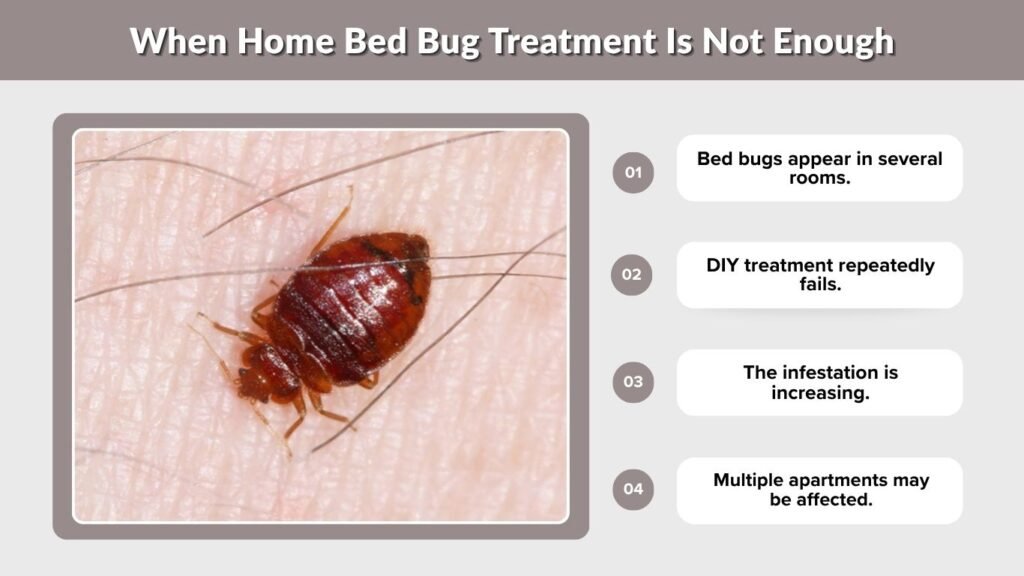
DIY treatment becomes increasingly difficult as an infestation grows. Bed bugs can spread through bedrooms, living areas, furniture, and neighboring units in multi-family housing. Continuing unsuccessful treatment can give the insects additional time to reproduce and spread.
Consider Professional Treatment When
Professional help may be appropriate when:
- Bed bugs appear in several rooms.
- DIY treatment repeatedly fails.
- The infestation is increasing.
- Multiple apartments may be affected.
- You cannot locate the hiding places.
- Whole-room heat treatment is required.
- Bugs continue appearing after repeated treatment.
An experienced pest-management professional can inspect the home and design a treatment program using appropriate chemical and nonchemical methods.
FAQs
1. What is the best bed bug treatment at home?
A combination of high-heat drying, vacuuming, steam, encasements, monitoring, clutter reduction, and appropriately labeled pesticides generally works better than relying on one method.
2. Can I completely get rid of bed bugs at home?
Small infestations may sometimes be controlled through careful DIY treatment, but bed bugs are difficult to eliminate. Persistent or widespread infestations often require professional pest management.
3. Does washing clothes kill bed bugs?
Washing alone may not kill every bed bug or egg. EPA recommends using a household dryer on high heat for suitable items, with about 30 minutes of high-heat drying as a useful control measure.
4. Does baking soda kill bed bugs?
Baking soda is not considered a reliable stand-alone bed bug treatment. Proven methods such as heat, steam, vacuuming, encasements, monitoring, and correctly used pesticides are more appropriate.
5. Can home heat treatment damage a house?
Improvised whole-room heating can create serious hazards and may damage belongings or fail to reach lethal temperatures uniformly. Do not use fireplaces, propane heaters, or ordinary space heaters for DIY whole-home bed bug treatment.