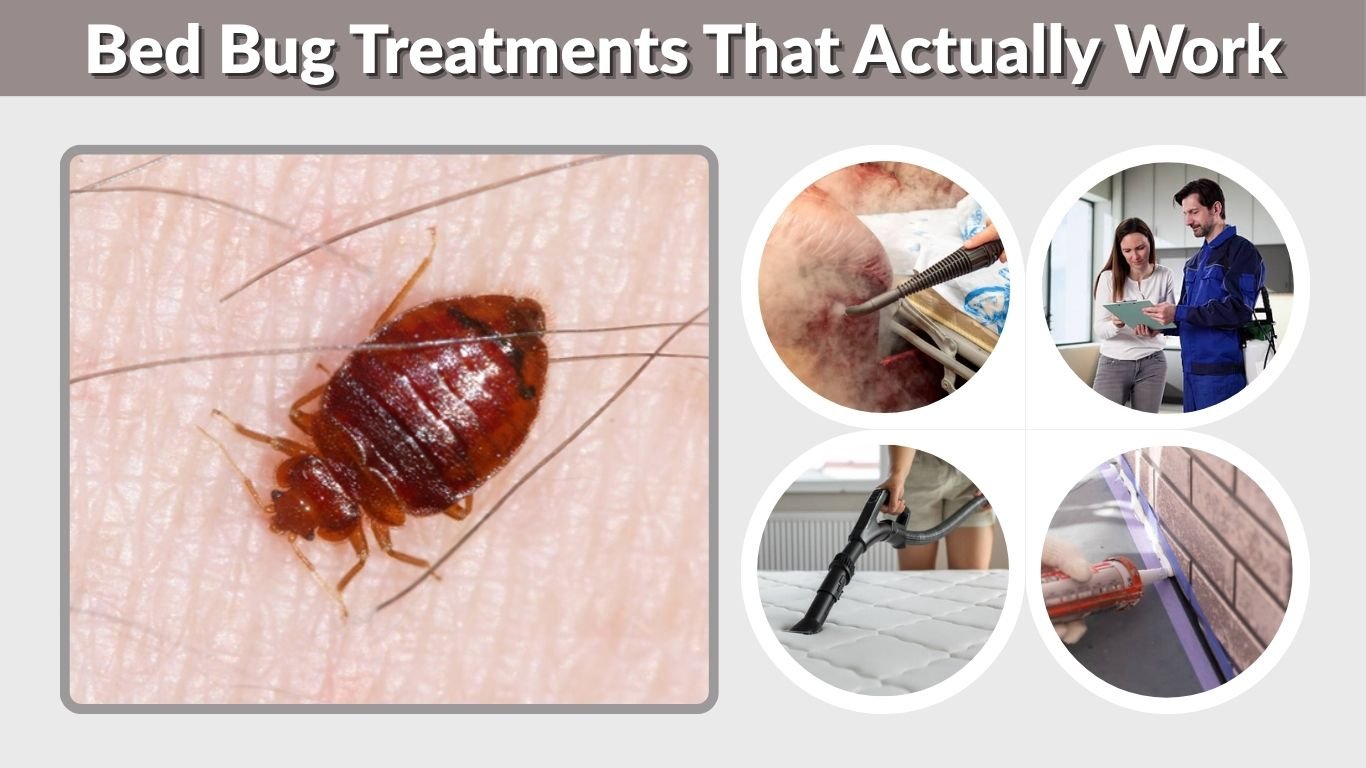
Finding bed bug treatments that actually work can be difficult because these pests hide in tiny cracks, reproduce quickly, and may survive poorly planned treatments. Successful control usually requires more than one method. Heat, steam, laundering, vacuuming, mattress encasements, monitoring, and correctly used pesticides can all play a role. The most reliable strategy combines several techniques while repeatedly checking for remaining bugs. This guide explains effective bed bug treatments, home control methods, professional options, and what to do after treatment.
Bed Bug Treatments That Actually Work
There is no single treatment that works perfectly in every infestation. The U.S. Environmental Protection Agency recommends an integrated pest management approach that combines appropriate chemical and nonchemical methods. The best combination depends on infestation size, where the bugs are hiding, the items affected, and whether professional equipment is available.
Effective Treatment Options
Methods commonly used against bed bugs include:
- Professional heat treatment
- Steam treatment
- High-heat clothes drying
- Vacuuming
- Mattress and box-spring encasements
- Bed bug interceptors
- EPA-registered pesticides
- Crack and crevice treatment
- Clutter reduction
- Repeated inspection and monitoring
Using several compatible methods usually provides better control than relying on a single spray or home remedy.
Why One Treatment May Not Be Enough
Bed bugs can hide in mattress seams, bed frames, baseboards, furniture joints, cracks, and other narrow spaces. Eggs may also survive treatments that kill exposed adults.
This is why monitoring after treatment is important. Seeing another bug does not always mean the entire treatment failed; it can mean an untreated hiding place was missed or eggs have hatched.
Heat Treatment for Bed Bugs
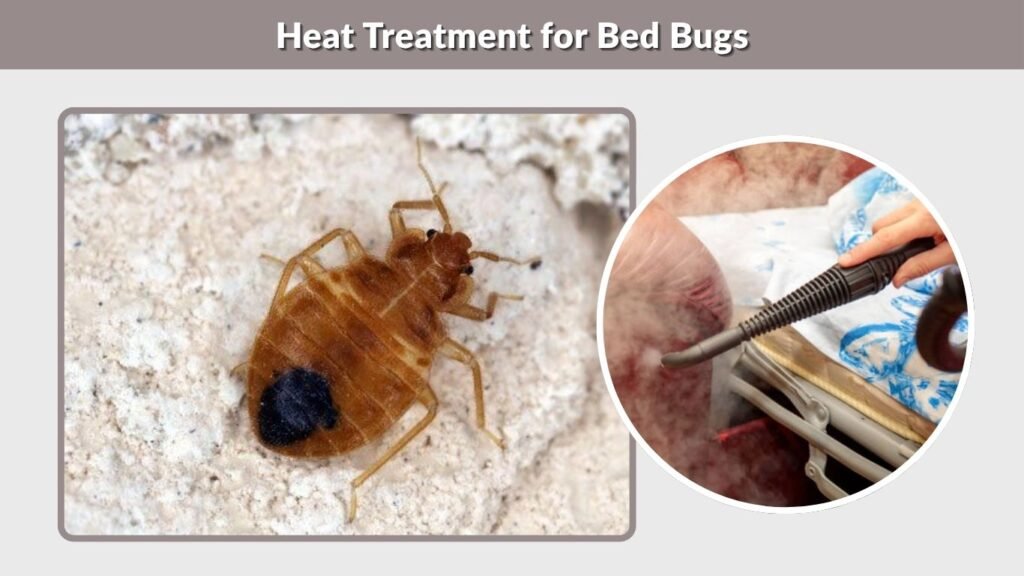
Heat is one of the best-known nonchemical options because sufficiently high temperatures can kill bed bugs at every life stage, including eggs. However, successful heat treatment requires the target temperature to reach every hiding place. Professional whole-room treatments use specialized equipment and monitoring rather than simply making a room feel hot.
Does Heat Treatment Kill Bed Bugs?
Yes. EPA guidance states that infested objects or areas can be heated to at least 120°F (about 49°C) for 90 minutes to ensure eggs are killed. Higher temperatures may require less exposure time.
The challenge is ensuring heat penetrates furniture, mattresses, cracks, and other hiding areas.
Professional Heat Treatment
Professional technicians may use heaters, fans, temperature sensors, and other equipment to distribute and monitor heat throughout an infested space.
Professional treatment can be particularly useful for significant infestations because technicians can identify cold spots where bed bugs might otherwise survive.
Heat does not provide lasting pesticide residue, so precautions are still needed to prevent bed bugs from being brought back into the home.
Avoid DIY Whole-Room Heating
Do not attempt to heat an entire home using fireplaces, propane heaters, or ordinary space heaters. EPA guidance warns that these approaches may be ineffective and can create serious fire hazards.
Professional equipment is safer for whole-room heat treatment.
Home Treatment for Bed Bugs
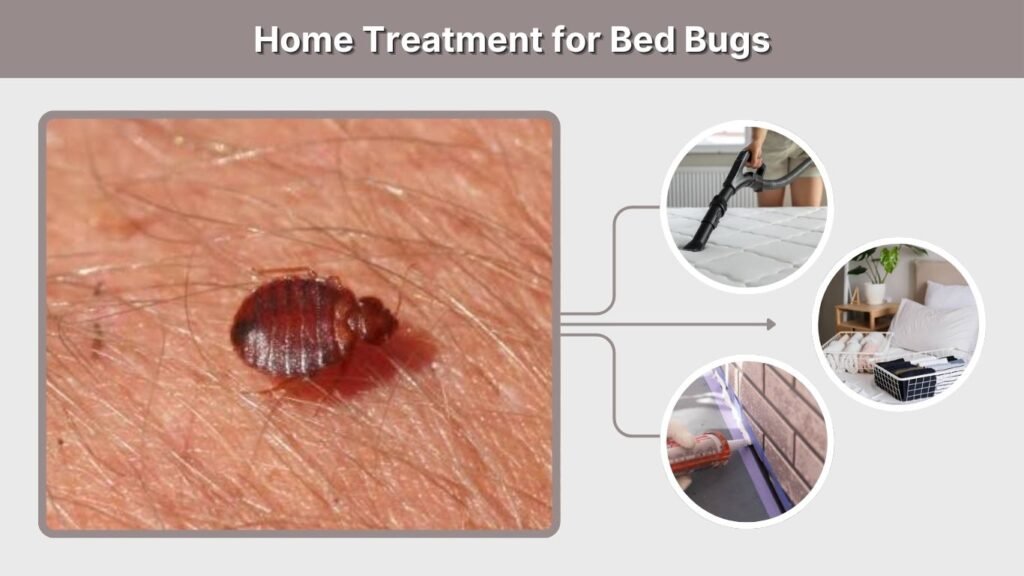
A small infestation may sometimes be reduced through careful home control, but bed bugs are challenging to eliminate completely. Home treatment should focus on reducing bugs, destroying eggs where possible, removing hiding places, and monitoring results. If the infestation continues spreading, professional pest management is usually the more practical option.
Home Treatment Steps
Useful control measures include:
- Put suitable bedding and clothing in a hot dryer.
- Vacuum mattresses, bed frames, and surrounding areas.
- Reduce clutter near sleeping areas.
- Install mattress and box-spring encasements.
- Place interceptors under bed legs.
- Move beds slightly away from walls.
- Keep bedding from touching the floor.
- Seal appropriate cracks and crevices.
- Continue inspecting regularly.
EPA guidance notes that a household dryer on high heat for about 30 minutes can kill bed bugs and eggs on suitable items; washing alone may not be enough.
Vacuuming Bed Bugs
Vacuuming can physically remove adults, nymphs, shed skins, and some eggs from accessible surfaces.
Concentrate on mattress seams, bed frames, baseboards, furniture joints, and nearby cracks. Vacuum contents should be contained and disposed of carefully so captured bed bugs cannot escape back into the home.
Vacuuming helps reduce populations but should not normally be used as the only treatment.
Steam Treatment for Bed Bugs
Steam can reach bed bugs hiding in fabric, seams, cracks, carpeting, bed frames, and some furniture. Unlike whole-room heat treatment, steam is applied directly to selected surfaces. It can be useful when correctly combined with other methods, particularly where pesticide use is undesirable or difficult.
Does Steam Kill Bed Bugs?
Properly applied steam can kill bed bugs and eggs that receive sufficient heat exposure.
EPA guidance recommends steam of at least 130°F and cautions against using strong airflow that could blow bed bugs away from the treatment area.
Where Steam Can Be Used
Steam may be useful on:
- Mattress seams
- Bed frames
- Upholstered furniture
- Carpet edges
- Baseboards
- Cracks and crevices
Always consider whether the material can safely tolerate heat and moisture.
Steam is not a residual treatment, meaning it only affects bugs reached during application.
Chemical Treatment for Bed Bugs
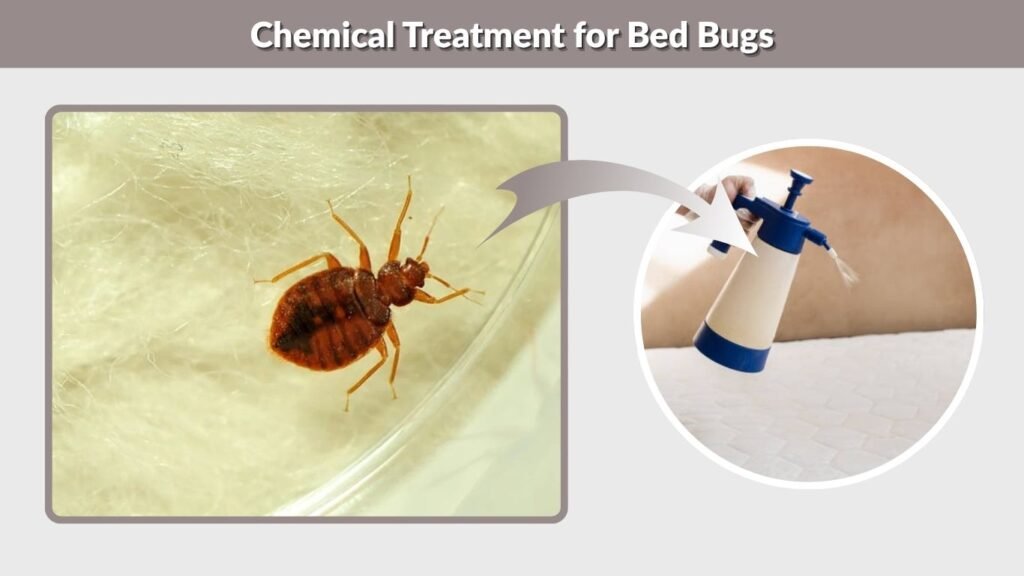
Chemical treatments remain an important part of many bed bug control programs. However, pesticide performance depends on correct selection, application, coverage, and insecticide resistance. Repeatedly spraying random products is unlikely to solve an infestation and may create unnecessary exposure or make control more difficult.
Choosing a Bed Bug Pesticide
Use only pesticide products specifically registered and labeled for bed bug control in your jurisdiction.
In the United States, EPA advises choosing EPA-registered products whose labels specifically list bed bugs and following all label instructions. More than 300 registered products are available for bed bug control, although some are restricted to trained professionals.
Why Bed Bug Sprays Sometimes Fail
Treatment failure may occur because:
- Hidden bugs were missed.
- Eggs survived the first treatment.
- Nearby rooms were not inspected.
- Furniture was inadequately treated.
- Preparation was incomplete.
- The pesticide was incorrectly applied.
- Bed bugs were resistant to the active ingredient.
- New bed bugs were reintroduced.
This is why chemical control works best as part of a broader treatment strategy rather than as a stand-alone spray.
Mattress, Bedding, and Clothing Treatment
Beds are central to many infestations because bed bugs commonly stay close to sleeping areas. However, throwing away the mattress is not automatically necessary. Proper treatment, laundering, encasements, and monitoring can often allow suitable mattresses and furniture to remain in use.
Treating Bedding and Clothes
For items that tolerate heat:
- Place clothing and bedding in appropriate sealed containers or bags before moving them.
- Transfer them carefully to the laundry area.
- Use a high-heat dryer for suitable materials.
- Keep treated items separate from infested ones.
- Store clean items in sealed bags or containers until control is complete.
EPA notes that high dryer heat is more important for killing bed bugs than washing alone.
Mattress Encasements
Bed bug-proof encasements completely surround mattresses and box springs. They can trap bugs already inside and reduce the number of folds and seams available as hiding locations.
Encasements also make future inspections easier because bed bugs are easier to spot against a clean outer surface.
Professional Bed Bug Treatment
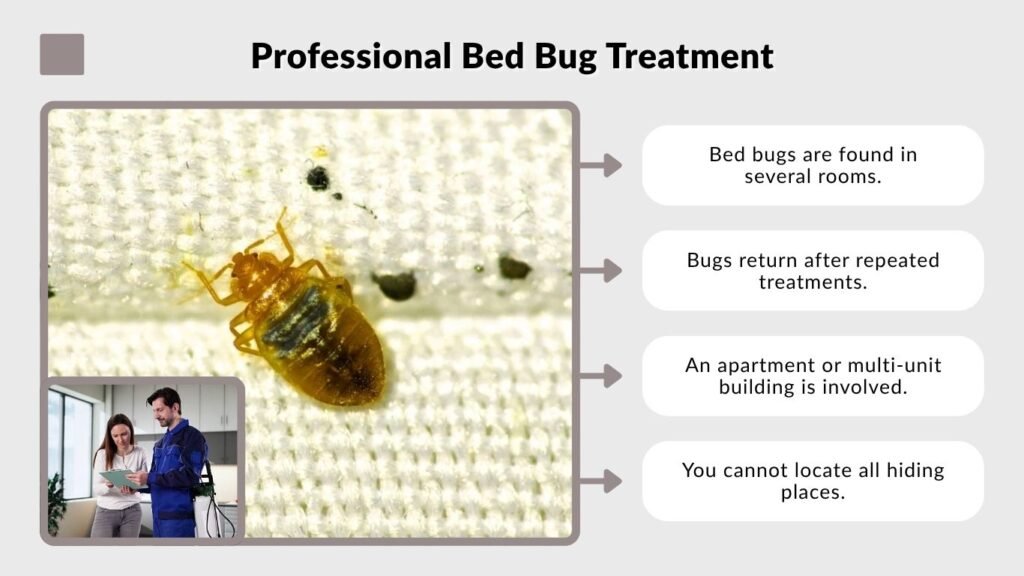
Bed bugs are among the more difficult household pests to eliminate. Professional treatment becomes especially valuable when multiple rooms are infested, DIY treatment has failed, bugs have spread between apartments, or the infestation has existed for a long period.
When Professional Treatment Makes Sense
Consider professional help when:
- Bed bugs are found in several rooms.
- Bugs return after repeated treatments.
- An apartment or multi-unit building is involved.
- You cannot locate all hiding places.
- Whole-room heat treatment is needed.
- The infestation is growing quickly.
- Several household members continue getting bitten.
EPA recommends choosing a pest professional experienced with bed bugs who uses integrated pest management and provides monitoring and follow-up when necessary.
Heat vs Chemical Treatment
Neither approach automatically wins in every situation. Heat can kill multiple life stages quickly when the required temperature reaches all hiding places, while properly selected pesticides can provide residual activity in treated locations.
Professionals may combine methods according to the structure, severity of the infestation, and bed bug hiding patterns.
Bed Bug Bite Treatment
Treating bites is different from eliminating the infestation. Killing bed bugs prevents future bites, while skin treatment addresses itching or inflammation already caused by feeding. Most bite reactions are mild and improve without extensive medical treatment.
Caring for Bed Bug Bites
For uncomplicated bites:
- Keep the affected skin clean.
- Avoid scratching.
- Monitor for signs of infection.
- Use symptom-relief treatments appropriately if necessary.
The CDC states that most bed bug bites require only minimal symptomatic care and good hygiene. More significant reactions may sometimes be managed with topical corticosteroids or antihistamines under appropriate medical guidance.
Seek medical attention if you develop a severe allergic reaction, significant infection, or symptoms that concern you.
How to Know if Treatment Worked
An infestation should not be considered eliminated simply because bites stop for several nights. Some people do not react to bites, and surviving bed bugs can remain hidden. Monitoring helps determine whether the population is actually gone.
Signs Treatment Is Working
Look for:
- No live bed bugs during inspections
- No new eggs or shed skins
- No fresh fecal spotting
- No bugs in interceptors
- No unexplained recurring activity
- Declining evidence over repeated inspections
Continue monitoring after treatment because eggs may hatch or hidden bugs may become active later.
FAQs
1. What bed bug treatment actually works?
Integrated treatment works best. Heat, steam, high-heat drying, vacuuming, encasements, monitoring, and correctly used registered pesticides can all contribute to successful control.
2. Does heat treatment completely kill bed bugs?
Properly performed heat treatment can kill bed bugs and eggs, but all hiding areas must reach lethal temperatures. Missed cold spots can allow some insects to survive.
3. Can I treat bed bugs at home?
Small infestations may sometimes be managed with careful DIY control, but eliminating bed bugs can be difficult. Widespread or persistent infestations often benefit from professional treatment.
4. Do bed bug sprays work?
Registered bed bug pesticides can work when properly selected and applied according to their labels. Resistance, poor coverage, and missed hiding places can reduce effectiveness.
5. Can bed bugs return after professional treatment?
Yes. Surviving bugs, newly hatched eggs, missed hiding areas, or reintroduction from another location can cause activity to return. Continued inspection and follow-up are therefore important.