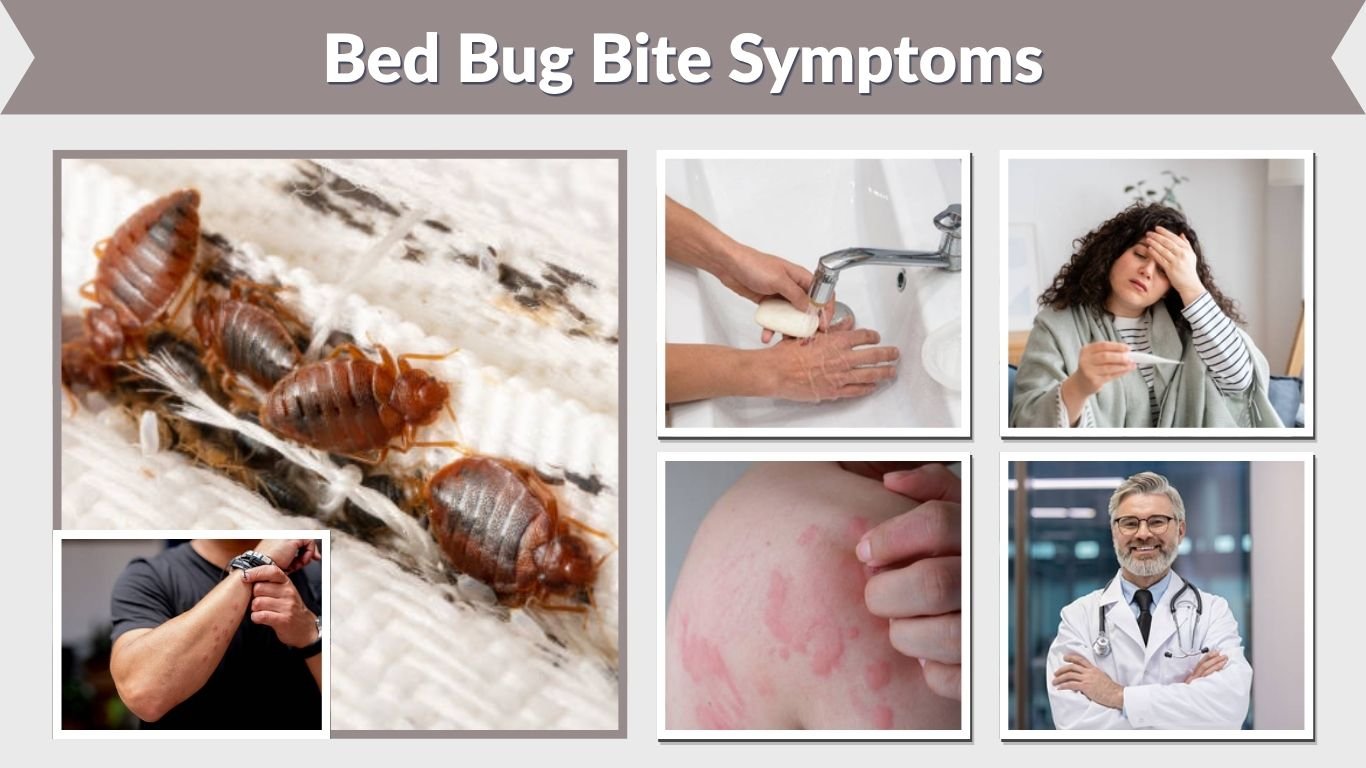
Bed bug bite symptoms vary significantly from person to person. Some people develop small, itchy, swollen bumps, while others may have little or no visible reaction. Symptoms can appear within hours, but they more commonly become noticeable one to several days after a bite, especially after a first exposure. Bites may occur in clusters, lines, or scattered patterns on exposed skin. This guide explains early and day-one bed bug bite symptoms, their appearance, symptom timeline, allergic reactions, infection warning signs, and treatment options.
What Are the Common Bed Bug Bite Symptoms?
Bed bugs usually feed while people are sleeping, and the bite itself is often painless because they inject substances that help prevent immediate detection. Symptoms develop afterward as the body reacts to the bite. According to the CDC, reactions range from no physical signs to small bite marks and, rarely, significant allergic reactions.
Common Symptoms of Bed Bug Bites
- Small, raised bumps or welts
- Itchy skin around the bites
- Mild swelling
- Red, pink, purple, or darker discoloration
- Several bites close together
- Bites appearing in a line or zigzag pattern
- Irritated skin after scratching
- Occasionally, larger swollen reactions
Not everyone experiences all these symptoms. Some people can be repeatedly bitten without developing obvious marks, while others experience intense itching and noticeable welts.
Do Bed Bug Bites Hurt?
Most people do not feel bed bugs biting them. Bed bugs feed for several minutes and then return to hiding places near beds or furniture. The discomfort usually begins later when itching and inflammation develop.
The American Academy of Dermatology notes that people are often unaware they were bitten until they notice itchy welts afterward.
Day 1 Bed Bug Bite Symptoms
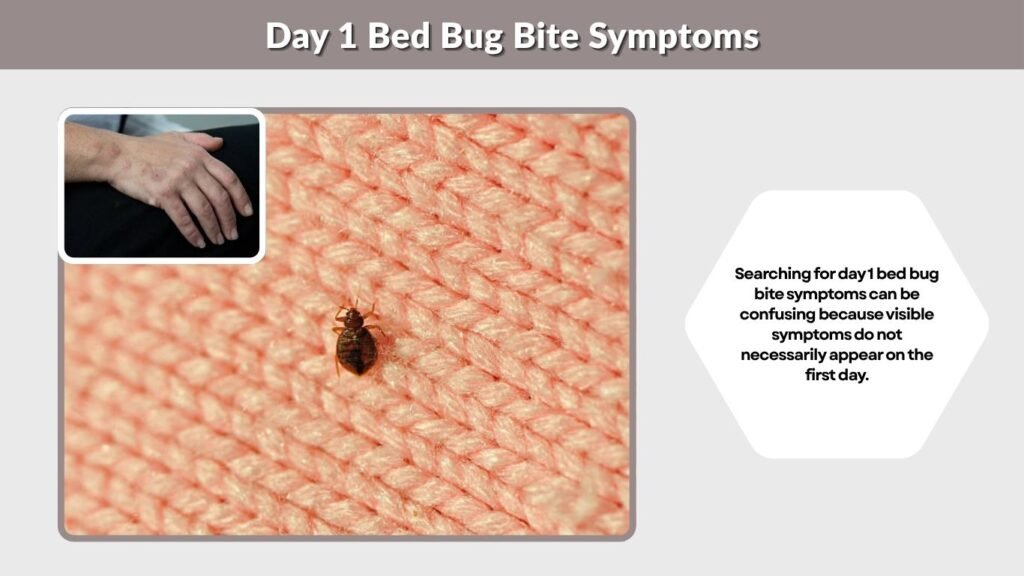
Searching for day 1 bed bug bite symptoms can be confusing because visible symptoms do not necessarily appear on the first day. A person’s immune response and previous exposure strongly influence timing. Some experienced reactions may develop quickly, while someone bitten for the first time may not notice anything for several days.
What Happens on the First Day?
During the first 24 hours, a bite may appear as a small raised spot accompanied by mild itching or irritation. Some people notice several bumps after waking, particularly if they have reacted to previous bed bug bites.
Other people have completely normal-looking skin on day one. This does not rule out bed bug exposure. CDC guidance says bite marks most commonly become apparent one to several days after the original bite.
Can Symptoms Appear Much Later?
Yes. Initial reactions can be delayed considerably.
The American Academy of Dermatology reports that after a person’s first bed bug bites, itchy welts may take several days to develop and can sometimes take as long as about 14 days. With repeated exposure, some people become more sensitive and react much sooner.
What Do Bed Bug Bite Symptoms Look Like on Skin?
Bed bug bites do not have one distinctive appearance. They can resemble mosquito bites, flea bites, hives, eczema, and other skin conditions. For this reason, skin symptoms alone cannot confirm that bed bugs are responsible. Looking for environmental evidence around the mattress and sleeping area provides stronger identification.
Typical Skin Appearance
- Small swollen spots
- Raised itchy welts
- Multiple closely spaced bumps
- Linear or zigzag bite arrangements
- Scattered individual bites
- Mild surrounding inflammation
- Marks on exposed areas such as arms, legs, face, or neck
A straight or zigzag pattern can suggest bed bug activity, but it is not unique to bed bugs.
Bed Bug Bite Symptoms on Black or Dark Skin
On darker skin tones, inflammation may not appear bright red. Affected areas can look purple, reddish-brown, dark brown, or simply darker than nearby skin.
Texture can therefore be useful when examining the area. Look for raised bumps, swelling, tenderness, itching, and changes from the person’s normal skin rather than relying exclusively on redness.
Bed Bug Bite Symptoms Timeline
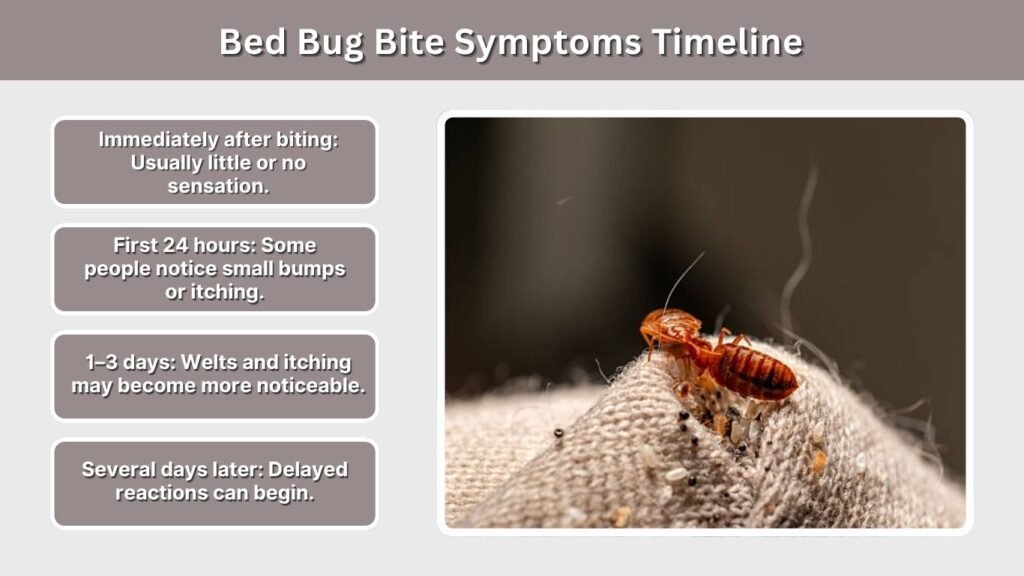
There is no exact timeline that applies to everyone. Reactions depend on immune sensitivity, previous bites, scratching, and the number of bites received. A bite may remain unnoticed, become itchy after several days, or cause a much faster reaction in someone who has been repeatedly exposed. Most uncomplicated skin reactions gradually settle with time.
Typical Symptom Timeline
- Immediately after biting: Usually little or no sensation.
- First 24 hours: Some people notice small bumps or itching.
- 1–3 days: Welts and itching may become more noticeable.
- Several days later: Delayed reactions can begin.
- Up to about 14 days: First-time reactions may occasionally take this long to appear.
- Healing period: Swelling and itching gradually decrease if the bites are not repeatedly irritated.
The timing of visible bites therefore cannot reliably tell you exactly when exposure occurred.
How Long Do Symptoms Last?
Mild bite reactions generally improve as the body’s inflammatory response settles. Scratching can prolong irritation and may leave temporary discoloration after swelling disappears.
If new marks continue appearing, consider the possibility of continued exposure rather than assuming that all new-looking marks came from the same night.
Bed Bug Bite Allergy and Infection Symptoms
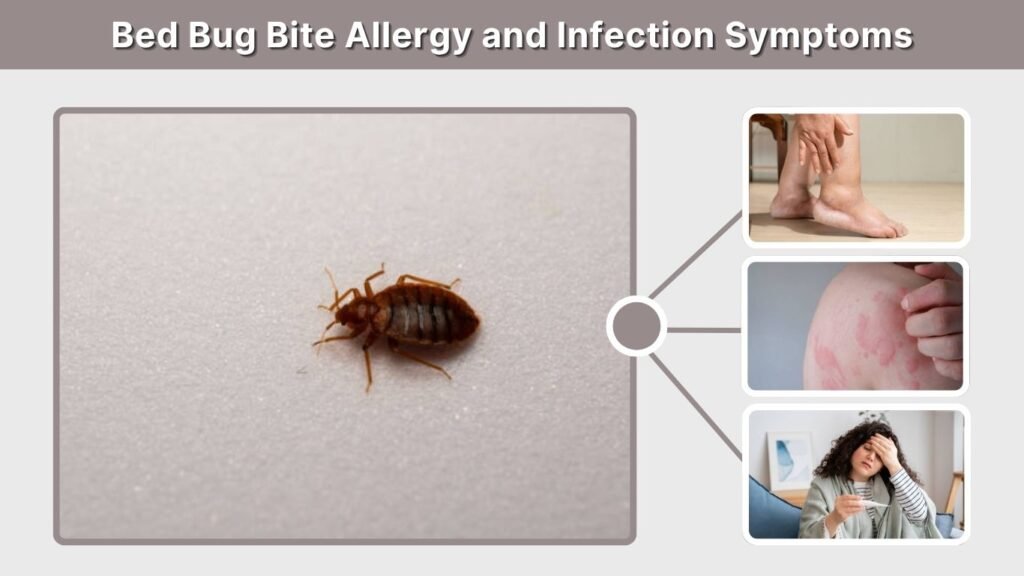
Most bed bug bites cause mild skin reactions, but stronger allergic responses can occasionally occur. Excessive scratching can also break the skin, allowing bacteria to enter and cause a secondary infection. Serious reactions are uncommon, but knowing the warning signs is important, particularly when symptoms are rapidly becoming more severe.
Signs of a Severe or Allergic Reaction
- Extensive swelling
- Large blisters
- Hives
- Swollen tongue
- Difficulty breathing
- Fever or feeling seriously unwell
- Irregular or forceful heartbeat
Difficulty breathing or significant tongue or throat swelling requires urgent medical attention.
What Do Infected Bed Bug Bites Feel Like?
Scratching repeatedly can damage the protective surface of the skin. An infected bite may become increasingly painful, warm, tender, or swollen instead of gradually improving. Pus or other drainage can also suggest infection.
Nausea is not considered a typical uncomplicated bed bug bite symptom. If nausea occurs together with breathing problems, major swelling, widespread hives, fever, or severe illness, seek medical evaluation rather than assuming it is a normal bite reaction.
How to Treat Bed Bug Bite Symptoms
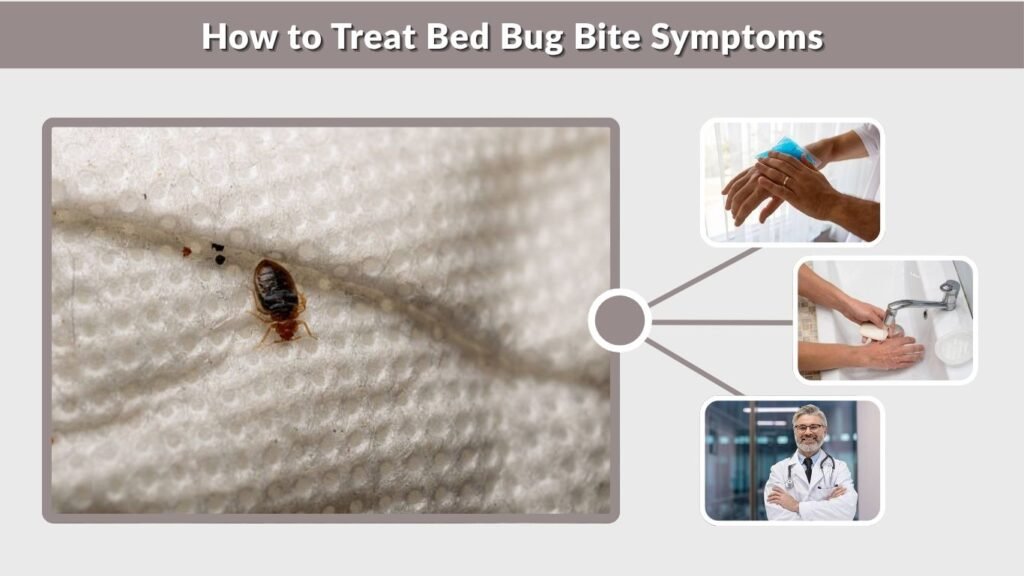
Most bed bug bites can be managed with simple skin care, but treatment does not eliminate the infestation itself. Preventing additional bites requires finding and controlling the bed bugs. Because symptoms can resemble many other conditions, unexplained or persistent rashes should be assessed by a healthcare professional when the cause is uncertain.
Relieving Itching and Irritation
Wash the affected skin gently with soap and water and avoid scratching whenever possible. Cool compresses may help soothe itching and swelling.
For stronger reactions, a pharmacist or healthcare professional may recommend an appropriate anti-itch treatment or antihistamine based on your symptoms and medical circumstances. Avoid using multiple medications without checking whether they are appropriate for you.
When Should You See a Doctor?
Seek medical advice if bites become increasingly painful, develop pus, blister extensively, or show signs of infection. Medical evaluation is also appropriate for persistent or severe skin reactions.
The AAD recommends medical care for significant allergic reactions, blistering, or signs that scratching has caused a skin infection.
How to Confirm Bed Bugs Are Causing the Symptoms
Bite appearance is not enough to diagnose an infestation because mosquitoes, fleas, other insects, and several skin conditions can cause similar marks. The EPA recommends looking for physical evidence around sleeping areas. Finding bed bugs or characteristic infestation signs provides considerably stronger evidence than relying solely on a rash.
Signs to Check Around Your Bed
Look around mattress seams, box springs, headboards, bed frames, couches, and nearby cracks. Important clues include live bed bugs, dark fecal spots, reddish stains on bedding, pale eggs, eggshells, and shed skins.
If you cannot identify the pest but repeatedly develop new unexplained bites, consider professional pest inspection and medical evaluation for the skin symptoms.
FAQs
1. What are the first symptoms of a bed bug bite?
Early symptoms may include a small raised bump, itching, mild swelling, or skin discoloration. However, some people develop no symptoms on the first day.
2. How long after a bed bug bite do symptoms appear?
Symptoms commonly appear one to several days after a bite, although first-time reactions can sometimes take up to about two weeks to become noticeable.
3. Do bed bug bites always itch?
No. Reactions vary greatly. Some people experience intense itching, while others have minor marks or no noticeable reaction.
4. What are symptoms of an allergic reaction to bed bug bites?
Possible symptoms include extensive swelling, hives, large blisters, or other strong skin reactions. Difficulty breathing or tongue or throat swelling requires urgent medical care.
5. How are bed bug bite symptoms different from mosquito bites?
Both can cause itchy, swollen bumps, so appearance alone may not distinguish them. Bed bug bites sometimes occur in groups or lines after sleeping, but environmental evidence such as live bugs, fecal spots, eggs, or shed skins is more reliable for confirmation.