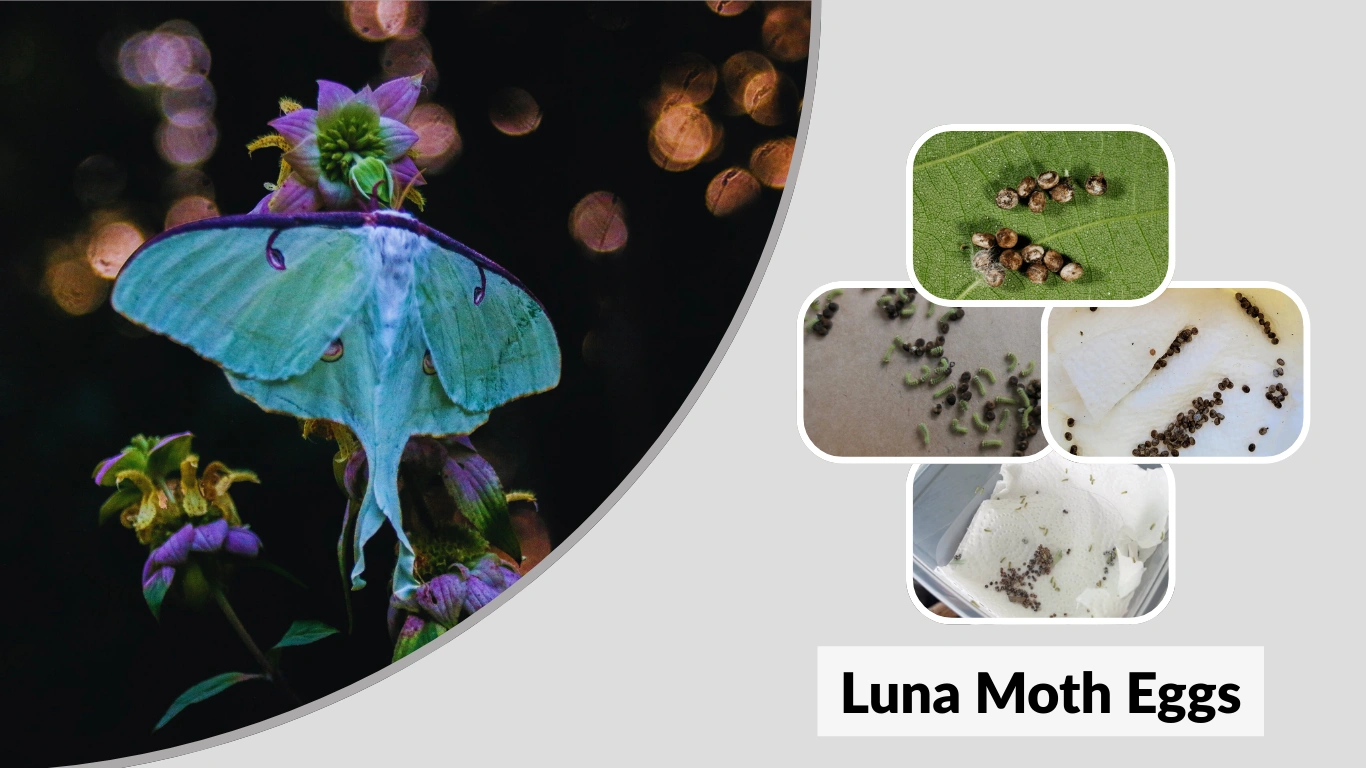
Luna moth eggs mark the beginning of one of North America’s most enchanting insect life cycles. These delicate, pearl-like eggs are easy to overlook in the wild, yet they are essential to the survival of this short-lived but iconic species. Whether you want to identify eggs on host plants, raise them at home, or understand their development, this guide covers everything you need to know. From egg appearance to care, hatching, dormancy, and behavior, you’ll find clear answers and practical guidance based on real world observations.
Luna Moth Egg Appearance
Luna moth eggs are small, rounded, and typically pale green or off-white. At first glance, they resemble tiny pearls or miniature marbles, usually no larger than a pinhead. Their color often shifts as the developing larva grows—beginning as milky or greenish, then becoming darker with time.
The eggs are usually laid in small clusters on the underside of leaves. When held up to light, some may appear faintly translucent, revealing a developing caterpillar inside as hatching nears. While their size can vary slightly, most average about 1.5–2 mm in diameter. Because of their subtle color and placement, they can blend in easily with surrounding foliage.
Where Luna Moths Lay Their Eggs

Female luna moths are selective when choosing where to deposit their eggs. They prefer specific hardwood trees that support their larvae, ensuring newly hatched caterpillars have immediate food access. Common host trees include:
- Hickory
- Birch
- Sweet gum
- Walnut
- Persimmon
- Alder
Females typically place their eggs on the underside of leaves to protect them from predators and harsh sunlight. This strategic placement also helps maintain the ideal temperature and humidity level needed for egg development.
Season plays a major role as well. In warmer regions, eggs may be laid earlier in spring, while in northern climates, females may not appear until late May or June. Because luna moth adults live for only about a week and do not eat, egg-laying is their sole purpose once they emerge from their cocoons.
Life Cycle From Egg to Cocoon

The transformation of a luna moth from egg to cocoon follows a beautifully structured timeline. The entire life cycle can be divided into four main stages:
- Egg
- Caterpillar (Larva)
- Cocoon (Pupa)
- Adult Moth
Once the egg hatches, the caterpillar spends several weeks feeding and growing, progressing through multiple instars, or molting stages. Each stage brings a noticeable change in size and coloration. During the final larval stage, the caterpillar becomes thicker and brightly green, with a velvety appearance.
When fully grown, the caterpillar drops to the forest floor to spin a cocoon made from silk and leaf fragments. Inside, it pupates and undergoes metamorphosis before emerging as an adult months later—or, in some cases, the following spring if overwintering.
How to Hatch Luna Moth Eggs

Hatching luna moth eggs at home requires simple but specific conditions. Temperature and humidity play the biggest roles in determining hatch success and timing. Eggs kept at room temperature—typically 70–75°F (21–24°C)—hatch the fastest.
To hatch eggs successfully:
- Keep eggs in a breathable container or deli cup.
- Maintain moderate humidity but avoid condensation.
- Provide fresh host leaves as soon as larvae emerge.
- Keep eggs out of direct sunlight to prevent overheating.
- Ensure good ventilation to prevent mold.
Most eggs hatch within 7–14 days, though cooler conditions can extend the timeline. As hatching approaches, eggs often darken, signaling that the caterpillar is fully formed inside and ready to emerge.
How to Care for Luna Moth Eggs

Caring for luna moth eggs is relatively easy, but paying attention to details increases hatch rates. Eggs should be kept dry, clean, and slightly warm. Avoid placing them in airtight containers, as lack of airflow encourages mold. If the eggs are laid on a leaf, keep the leaf fresh by placing its stem in a vial of water or replacing it as needed.
Care guidelines include:
- Keep eggs on clean, pesticide-free host leaves.
- Avoid high humidity and excess moisture.
- Do not handle eggs directly unless necessary.
- Monitor color changes to track development.
- Provide fresh leaves immediately after hatching.
Some breeders refrigerate eggs to delay hatching, but this requires experience because improper chilling can injure or kill developing larvae.
Finding Luna Moth Eggs in the Wild

Locating luna moth eggs outdoors requires patience and familiarity with their preferred host plants. Because the eggs blend into the natural color of leaves, they’re often overlooked by casual observers. The best approach is to search the underside of leaves on hardwood trees such as hickory, birch, walnut, sweet gum, and persimmon. These trees offer ideal food sources for newly hatched caterpillars.
Look closely during late spring and early summer, when female moths are most active. Eggs may appear singly or in small groups of three to seven. Forest edges, mixed woodlands, and areas with natural tree diversity offer the highest chances of spotting them. Even if the eggs are small, the subtle color change or shine on a leaf surface can help you spot a cluster.
Buying and Selling Luna Moth Eggs
Luna moth eggs are legal to buy and sell in many places, but regulations vary by region. Because luna moths are native to North America and not classified as endangered, hobbyists and breeders often raise them to study their development, support local populations, or enjoy the experience of watching their full metamorphosis.
Before purchasing, consider the following:
- Check state regulations.
Some states restrict the movement of live insects across state lines. - Choose reputable breeders.
Quality breeders offer captive-bred, healthy eggs and guarantee shipment viability. - Inspect shipping and hatch timelines.
Luna moth eggs are sensitive to temperature; fast, insulated shipping prevents premature hatching. - Confirm host plant availability.
Buyers must have access to appropriate leaves before larvae emerge.
Prices usually range from $10 to $35 per batch, depending on season and availability. Because luna moth adults live only a week, eggs are typically available in waves, following peak mating periods.
Dormancy and Winter Behavior
Luna moth eggs occasionally enter a dormant phase, especially in late-season clutches or in northern climates. This dormancy is a natural survival mechanism designed to prevent caterpillars from hatching during cold periods when food is scarce.
Dormancy behaviors include:
- Development slow-down: Eggs may remain pale for weeks.
- Extended incubation: Cold temperatures pause development.
- Early spring hatching: Once warmth returns, eggs resume developing.
To intentionally keep eggs dormant, some breeders refrigerate them in breathable containers. However, this technique must be handled with care—excess moisture or temperature swings can harm the embryo. Dormancy can last several weeks or even months depending on environmental conditions.
Common Problems When Raising Eggs

Hobbyists raising luna moth eggs often encounter predictable challenges. Fortunately, most can be avoided with proper preparation and monitoring.
Mold and Moisture Issues
Excess humidity or a lack of ventilation creates mold, which can smother eggs or weaken larvae. Containers should always allow airflow and remain dry.
Infertile Eggs
Some eggs never hatch due to infertility. These often remain pale, chalky, or unchanged for long periods. Darkening is usually a sign of healthy development.
Temperature Fluctuations
Sudden shifts in temperature—especially overheating—can kill developing larvae. Keeping eggs away from windows or direct sunlight helps maintain stability.
Lack of Fresh Leaves
Caterpillars require pesticide-free leaves immediately after hatching. Without them, larvae may starve or weaken within hours.
Understanding these issues ahead of time improves success rates significantly and ensures healthier caterpillars as they progress through their developmental stages.
Comparison Table: Egg Stages vs. Caterpillar Stages
| Stage | Duration | Appearance | Key Needs |
| Egg | 7–14 days | Pale, round, 1.5–2 mm | Warmth, dry air, ventilation |
| Early Larva | 3–5 days | Tiny green worm | Soft, fresh leaves |
| Mid Larva | 1–2 weeks | Larger segmented body | Consistent food supply |
| Late Larva | 5–7 days | Thick green caterpillar | High leaf intake |
This table helps illustrate how quickly luna moths move through their early stages and how essential continuous feeding and stable conditions are during growth.
FAQ
How long do luna moth eggs take to hatch?
Luna moth eggs typically hatch in 7–14 days depending on temperature. Warmer rooms accelerate development, while cooler or unstable temperatures slow the process significantly. Eggs usually darken just before the larva emerges.
Where do luna moths lay their eggs?
Females lay eggs on the leaves of hardwood trees such as hickory, sweet gum, walnut, birch, and persimmon. They prefer the underside of leaves, where developing eggs are protected from sunlight and predators.
How many eggs does a luna moth lay?
A female luna moth lays anywhere from 200 to 400 eggs over several nights. She distributes them in small clusters or single placements across multiple trees to improve survival odds for the species.
Do luna moths die after laying eggs?
Yes. Adult luna moths do not possess functional mouths and cannot eat. As a result, they live for only about a week, solely to mate and lay eggs. Females die shortly after completing the egg-laying process.
Can luna moth eggs stay dormant in winter?
In cold climates or late-season cycles, eggs may enter a dormant state that pauses development. Dormancy allows them to survive winter conditions. Once warmth returns, the eggs resume development and hatch normally.