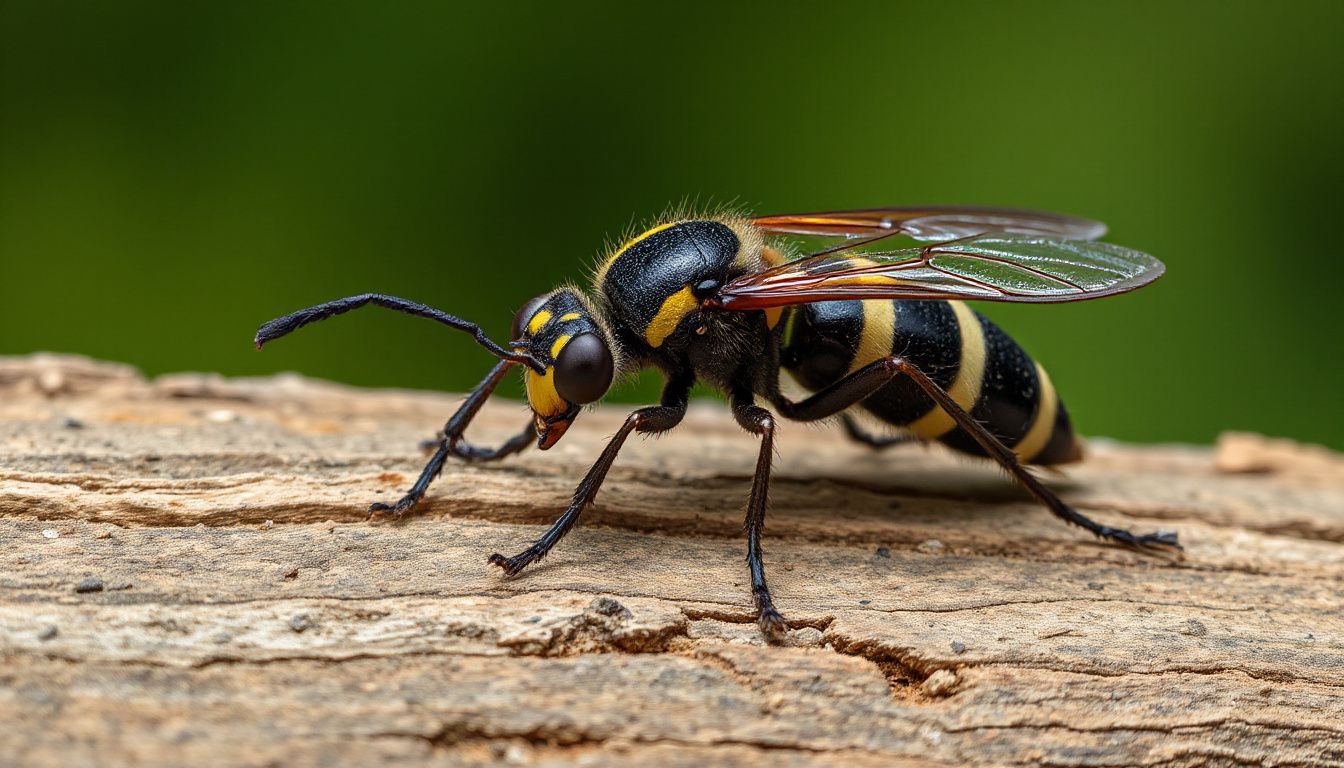
At a backyard barbecue, someone swats a wasp and says, “It’s not an animal, it’s a bug.” A biology teacher nearby pauses, then asks the question that changes the conversation: Are insects considered animals?
The answer matters more than it sounds. Classification shapes how we teach science, write laws, and even label products. Once you know where insects sit on the tree of life, common debates become clearer. Fast.
Insects are animals in the scientific sense: they belong to Kingdom Animalia, just like birds, fish, and humans. They are multicellular, they consume organic material for energy, and they respond to their environment through specialized tissues and organs. Different body plan. Same kingdom.
Look, this comes up in practical settings. For example, a school district updating its curriculum may need to decide whether “animal studies” includes insects for lab observation and humane-handling rules, especially when students raise monarch butterflies in class.
You will see this topic intersect with:
- Education (biology standards and classroom ethics)
- Food and farming (insect protein, pest management)
- Law and policy (wildlife definitions, research oversight)
- Public health (mosquito control and disease prevention)
What “animal” means in biology (and why definitions matter)
So, before you can answer Are insects considered animals, you need a clean biological definition of “animal.” Everyday language uses “animal” to mean pets, wildlife, or “not a plant.” Biology is stricter. It draws lines that hold up in labs, textbooks, and conservation policy.
In biology, animals are organisms in Kingdom Animalia. Most are multicellular, get energy by eating other organisms (heterotrophs), and have cells without rigid walls. Many animals also develop from a blastula stage during embryonic development. Not always visible. Still diagnostic.
Definitions matter because they control how evidence is grouped and compared. If you change the definition, you change the answer. Look at how biologists separate major kingdoms using consistent criteria:
- Cell structure: animals lack cell walls; plants and fungi do not
- Nutrition: animals ingest food; plants photosynthesize; fungi absorb nutrients
- Development: animals follow characteristic embryological patterns
- Movement and nerves: many animals have muscles and nervous tissue, though there are exceptions
Now, here’s a practical example. A pest-control technician identifies a “bug” in a kitchen. If it is an insect (animal), the control plan targets behavior, life cycle, and reproduction. If it is a fungus or bacterium, the tools shift toward sanitation chemistry and growth conditions. Same word in conversation. Different biology. Different decisions.
Where insects fit in taxonomy: Animalia → Arthropoda → Insecta
Once “animal” is defined as membership in Kingdom Animalia, classification becomes a placement problem. Taxonomy is the system biologists use to organize life by shared traits and evolutionary relationships. It is not just naming. It is a map of relatedness.
Insects sit comfortably inside Animalia because they meet core animal criteria: multicellular bodies, heterotrophic feeding, and animal-type development. From there, they fall under Arthropoda, the phylum defined by jointed legs, an exoskeleton made largely of chitin, and segmented bodies. Insects are one specialized branch within that phylum.
Here is the path, simplified but accurate:
- Kingdom: Animalia (animals)
- Phylum: Arthropoda (jointed appendages, exoskeleton)
- Class: Insecta (three body regions, six legs)
To recognize an insect specifically, biologists look for a typical body plan: head, thorax, abdomen; three pairs of legs; one pair of antennae; and often wings. A spider fails that checklist because it is an arachnid (also an arthropod) with eight legs and two main body regions.
Real-world example: a gardener finds leaf damage and sees a “tiny red bug.” If it is a mite (Arachnida), treatments and timing differ from an aphid (Insecta). Same garden. Different class. Taxonomy keeps the diagnosis honest.
Key traits insects share with other animals (cells, feeding, movement)
Once you place insects in Animalia on the taxonomy tree, the next step is confirming they meet the same core biological “animal” criteria as a dog, fish, or bird. The label is not about size or “cuteness.” It is about shared traits that define animals at a cellular and functional level.
First: cells. Insects are multicellular eukaryotes. Their cells have nuclei and specialized roles, forming tissues and organs (gut, muscles, nervous system). They also lack cell walls, which separates them from plants and most fungi.
Second: feeding. Like other animals, insects are heterotrophs, meaning they must consume organic material for energy and nutrients. Their digestive systems break food down internally, and many have highly specialized mouthparts tied to diet and ecology.

- Chewing mandibles (grasshoppers) for plant tissue
- Sponging mouthparts (houseflies) for liquids
- Piercing-sucking mouthparts (mosquitoes) for blood or plant sap
Third: movement. Insects actively move using coordinated muscles and a nervous system that processes sensory input. Even when they appear still, they regulate posture, respiration, and behavior through nerve signaling and muscle control.
Practical example: when ants find a dropped hot dog at a picnic, they do what animals do—detect food via chemical cues, recruit nestmates, physically transport resources, and allocate energy to growth and reproduction. Complex, purposeful animal behavior. Just scaled down.
How insects differ from other animals (exoskeletons, metamorphosis, senses)
Insects are animals, but they are not built like vertebrates. Their differences come from being arthropods, a design that prioritizes external armor, modular body plans, and extreme ecological flexibility. Look closely and the contrasts are striking.
The biggest structural difference is the exoskeleton, a rigid outer covering made largely of chitin. It protects against injury and dehydration, but it creates a constraint: insects must molt to grow. That shedding process is risky, since the new cuticle starts soft.
- Protection: armor-like body covering
- Water control: reduced water loss on land
- Trade-off: growth requires molting (ecdysis)
Metamorphosis is another major separator. Many insects undergo complete metamorphosis—egg, larva, pupa, adult—where body form and lifestyle can change dramatically. A caterpillar is essentially a feeding machine; the butterfly is a dispersal and reproduction specialist. Not all insects do this, but it is common and highly successful.
Insect senses also differ in emphasis and hardware. Their compound eyes excel at detecting motion; antennae are sophisticated chemical sensors; and many detect vibrations through specialized organs. Some even “hear” with structures on legs or abdomens rather than external ears.
Practical example: a moth circling a porch light is not “confused like a pet.” It is navigating with a sensory system tuned to moonlight, and artificial lights can disrupt that orientation—an animal sensory mismatch with modern environments.
Common misconceptions: bugs vs insects vs animals vs “pests”
Now that the biology is clear, the confusion usually comes from everyday labels. People use “bug,” “insect,” “animal,” and “pest” as if they are interchangeable. They are not. Different words. Different scopes.
In casual speech, “bug” often means any small crawling thing. In biology, “true bugs” are a specific group (Hemiptera), which means many “bugs” people mention are not bugs at all. An ant is an insect, not a true bug.
“Pest” is even trickier because it is not a taxonomic category. It is a human-centered role assigned to an organism that damages crops, spreads disease, or invades homes. The same species can be a pest in one setting and beneficial in another.
- Insect: a specific class with defined features; always an animal.
- Bug (everyday): any small creature; often inaccurate.
- Bug (scientific): “true bugs” with piercing-sucking mouthparts.
- Pest: a context label based on impact, not biology.
Practical example. A homeowner sees “bugs” on tomatoes and sprays broadly. But here’s the thing: lady beetles are insects and animals, yet they are allies because they eat aphids. A quick ID step changes the decision from blanket spraying to targeted control.
Look, language shortcuts are normal. They just blur biology. When someone asks Are insects considered animals, the correct answer does not depend on whether you like them, fear them, or pay an exterminator to remove them.
Edge cases and tricky comparisons: worms, spiders, crustaceans, and microbes
Once you move past labels, the next stumbling block is comparison. People notice “worm-like” bodies, extra legs, or microscopic size and assume “not an animal.” That assumption fails often.
Worms are animals, but they are not insects. Earthworms are annelids; flatworms are platyhelminths; roundworms are nematodes. They lack the insect body plan, yet they still fit Animalia, and many have complex behaviors despite simple shapes.
Spiders are another classic mix-up. They are animals and arthropods, but not insects. A fast field check works: spiders have eight legs and two main body regions; insects have six legs and three main body regions.
Crustaceans complicate things because they feel “seafood,” not “animal” to many people. Crabs, shrimp, and pill bugs are animals and arthropods, closely related to insects, but placed in different groups. Pill bugs even live on land, which makes the confusion worse.
- Worms: animals, not arthropods.
- Spiders: animals, arthropods, not insects.
- Crustaceans: animals, arthropods, not insects.
- Microbes: mostly not animals; animals are multicellular.
Microbes are the boundary case. Most microbes (bacteria, many protists) are not animals because they are single-celled. Some tiny multicellular organisms can be animals, but “microscopic” alone is not the deciding factor.

Quick answers: are insects animals, and why it matters in school, law, and ethics
Now that the “bug vs. insect vs. animal” confusion is cleared up, the practical question is simple: Are insects considered animals? Yes. In most scientific, educational, and regulatory contexts, insects are treated as animals, even when everyday speech separates “animals” from “bugs.”
In school, that classification affects grading and lab expectations. Students are expected to place insects under Animalia in diagrams, explain life processes using animal terminology, and follow animal-handling rules in classroom investigations.
In law and policy, the answer can change what protections, permits, or testing standards apply. Definitions vary by jurisdiction and statute, so “animal” may include or exclude insects depending on the specific rule. Look at the wording. Always.
- Education: curriculum standards, dissections, classroom care protocols
- Research: ethics review scope, housing and euthanasia methods, reporting requirements
- Regulation: pesticide labeling, invasive species control, transport and quarantine rules
Ethically, classifying insects as animals pushes harder questions about welfare, suffering, and proportionality. Some frameworks treat insect harm as morally relevant but not equivalent to vertebrate harm, especially when evidence is uncertain.
Practical example: a school plans a live “mealworm metamorphosis” project. If insects are animals (they are), the teacher may need an approved care plan, limits on student handling, and a humane endpoint for disposal, even if no vertebrate rules are triggered.
Quick Answers
Now that the biology, labels, and edge cases are clear, the remaining questions are usually practical. People want to know how to speak accurately, what schools expect, and when the “animal” label changes real decisions. Here are quick, usable answers.
Are insects considered animals in science class and exams?
Yes. If you are answering a biology question, treat insects as animals. Use the taxonomic wording if needed: insects are in Animalia. On tests, avoid casual terms like “not an animal, it’s a bug,” because that is a language shortcut, not science.
Why do people say “animals and insects” like they are different groups?
It is everyday speech, not taxonomy. People often use “animal” to mean mammals or larger wildlife, then separate “insects” for convenience. If clarity matters, say “animals, including insects” or “vertebrates and insects” depending on what you mean.
Are spiders, ticks, and scorpions insects or animals?
They are animals, but not insects. If you need accuracy, call them “arachnids.” Actionable rule: if it has eight legs and no antennae, do not label it an insect. Use “arthropod” when you are grouping insects and arachnids together.
Do insects count as animals for food labels and dietary choices?
Generally, yes. If you avoid animal products, treat insect-based ingredients as non-vegan. Check labels for terms like “cricket flour” or “cochineal/carmine.” When in doubt, ask the manufacturer what organism the ingredient comes from and how it is processed.
Are insects treated as animals under animal welfare laws?
Sometimes, but it depends on jurisdiction and context. Many laws focus on vertebrates, while research or farming standards may extend protections to some invertebrates. If compliance matters, read the specific statute or institutional policy, not just the headline definition of “animal.”
How should I explain this to a kid without getting too technical?
Keep it simple: insects are animals, just small ones with six legs. Then give one anchor example: “A butterfly and a dog are both animals.” If they ask why, say animals eat food and move on their own, unlike plants.
What This All Means
Verdict: Are insects considered animals? Yes, and treating that as optional is where most confusion starts. The word “animal” has a strict scientific meaning, while everyday conversation uses it as a vibe-based category. That mismatch is why people confidently say “animals and bugs” even when they are trying to be factual.
So what should you do with the label in real life? Use the setting to choose your level of precision. In school, healthcare, research, agriculture, and environmental work, be literal: insects are animals. In casual conversation, you can still speak naturally, but choose phrases that do not create false categories when accuracy matters.
Look, this is not just semantics. The label can shape decisions about education, compliance, and consumer choices. A practical example: you are buying a “high-protein” snack and see “cricket powder” on the ingredient list. If you avoid animal-derived foods, you should treat that product as animal-based and pick a plant protein alternative instead.
If you want a fast communication checklist, use these defaults:
- Need precision? Say “insects are animals” and, if relevant, “invertebrates” or “arthropods.”
- Need clarity for non-experts? Use simple traits and one familiar example (bee, butterfly, ant).
- Need to follow rules? Check the specific policy or law definition of “animal” for that context.
Wrap-up recommendation: keep the biology correct, then tailor the phrasing to your audience. You will sound clearer, avoid avoidable mistakes, and stop the barbecue argument before it starts.
Related read: Wolf Spiders Poisonous: Venom, Bites & Real Risks