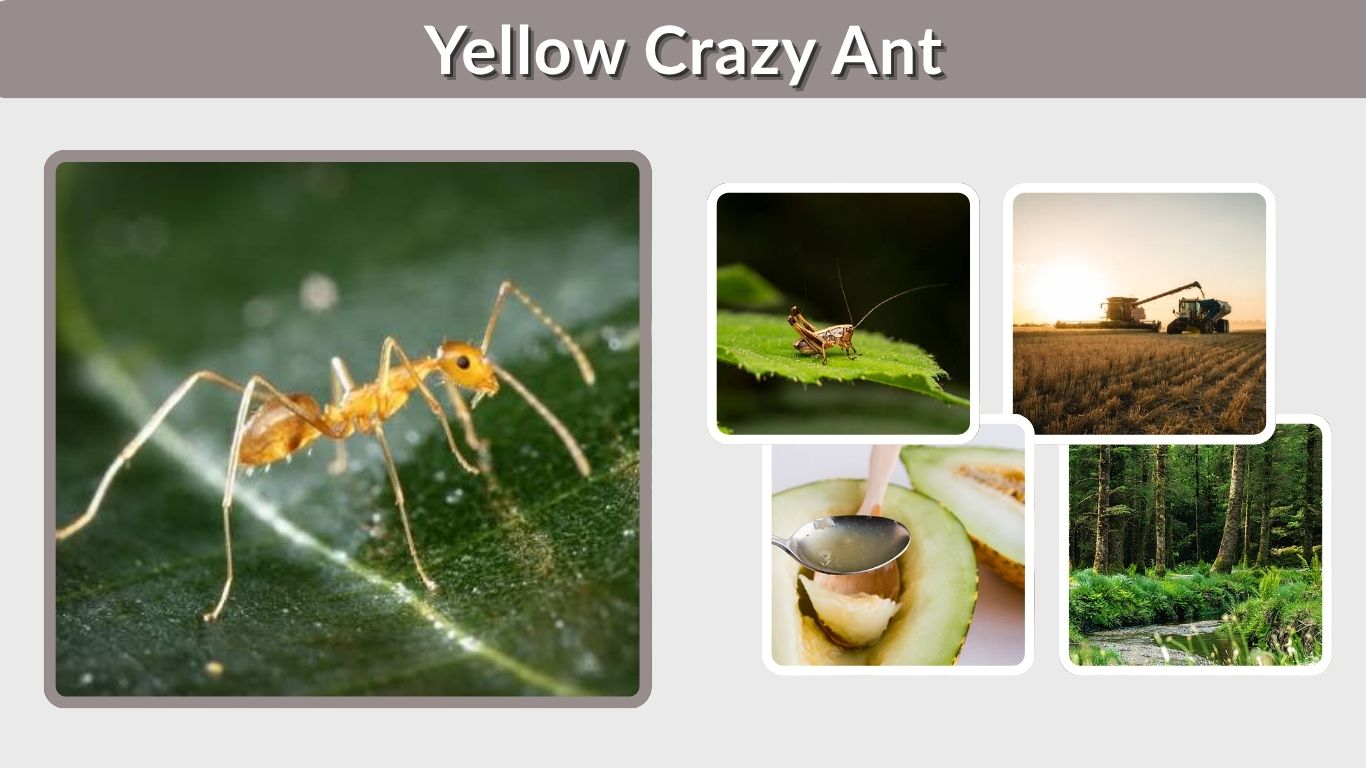
The yellow crazy ant is one of the most invasive ant species in the world. It gets its name from its yellowish body and fast, erratic walking style. Unlike many ants that follow neat trails, yellow crazy ants move quickly and unpredictably when disturbed. They are especially known for forming huge colonies, spreading through human activity, spraying formic acid, and damaging native ecosystems in tropical and subtropical regions.
What Is a Yellow Crazy Ant?
The yellow crazy ant is a long-legged invasive ant with the scientific name Anoplolepis gracilipes. It is often called a “tramp ant” because it spreads easily through trade, cargo, plants, soil, timber, landscaping materials, and other transported goods. Its exact native range is uncertain, but experts commonly suspect a Southeast Asian origin.
These ants are now found in many warm regions, including parts of Australia, Pacific islands, Indian Ocean islands, and other tropical areas. Their ability to form large colonies makes them difficult to control once established.
Yellow Crazy Ant Identification
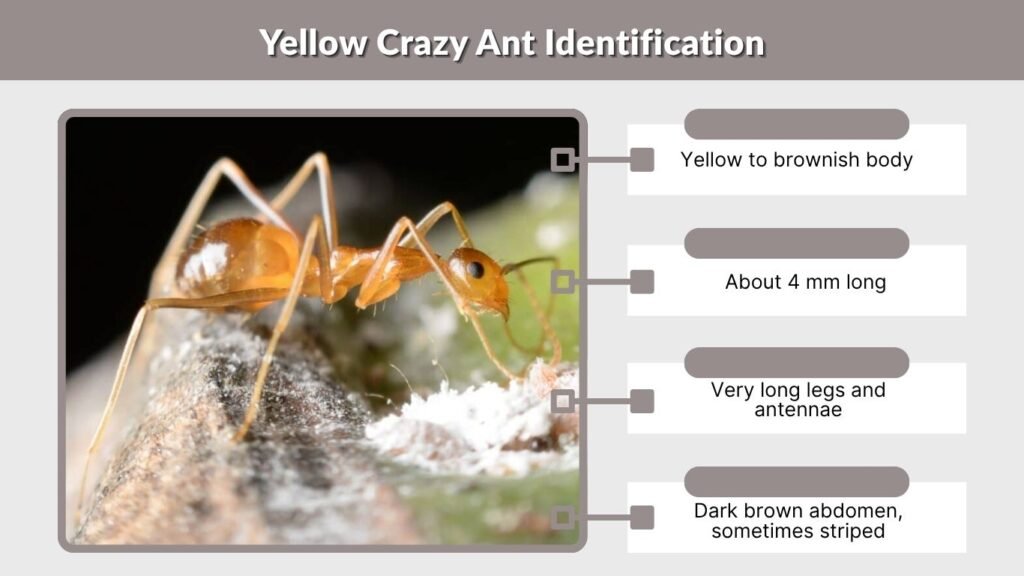
Yellow crazy ants are easier to recognize by movement and body shape than by color alone. They are not always bright yellow; some look golden-brown, yellow-brown, or orange-brown.
Key Characteristics
- Yellow to brownish body
- About 4 mm long
- Very long legs and antennae
- Dark brown abdomen, sometimes striped
- Slender body shape
- Fast, erratic walking pattern
- Often found in large numbers
Townsville City Council describes yellow crazy ants as yellow to brownish ants with long, slender bodies, very long legs and antennae, a darker abdomen, and erratic movement.
Yellow Crazy Ant Scientific Name
| Common Name | Scientific Name | Family |
| Yellow crazy ant | Anoplolepis gracilipes | Formicidae |
The scientific name is important because “crazy ant” can describe several different ants. For example, tawny crazy ants, black crazy ants, and longhorn crazy ants are different from yellow crazy ants.
Where Do Yellow Crazy Ants Live?
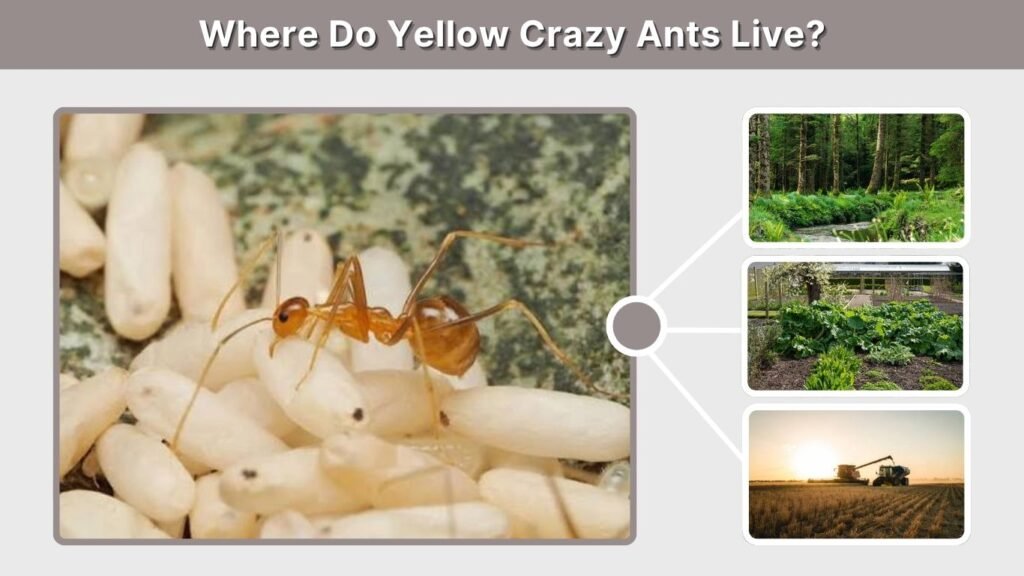
Yellow crazy ants prefer warm, humid areas. They are commonly found in tropical forests, gardens, farms, plantations, urban edges, creek lines, and disturbed habitats. Around homes, they may nest under rocks, at tree bases, in leaf litter, around logs, in soil, and inside man-made structures.
Common Nesting Sites
- Base of trees
- Under rocks
- Leaf litter
- Logs and timber piles
- Garden beds
- Creek lines
- Wall gaps and structures
- Around stored materials
In infested parts of Australia, authorities advise people to check near tree bases, under rocks, and in man-made structures along creek lines.
Why Are Yellow Crazy Ants Invasive?
Yellow crazy ants are invasive because they spread easily, reproduce quickly, and form dense supercolonies. In large numbers, they overwhelm native insects, crabs, reptiles, birds, and other animals. They also disturb plant life by affecting pollination, seed dispersal, and decomposition.
They are listed among the world’s 100 worst invasive alien species and are considered a serious threat to biodiversity, agriculture, horticulture, and community assets in affected areas.
Yellow Crazy Ants on Christmas Island
Yellow crazy ants are especially famous for their impact on Christmas Island. There, they attack red crabs, which are a keystone species. Parks Australia reports that yellow crazy ants attack crabs and cause deaths, disrupting important ecosystem processes on the island.
Christmas Island National Park has used baiting, biological control, and even drone-based treatments to reduce yellow crazy ant supercolonies. These control efforts have helped protect the annual red crab migration. Parks Australia reported that the red crab population more than doubled in five years, from about 50 million to more than 100 million, after long-term protection work, including suppression of yellow crazy ant supercolonies.
What Do Yellow Crazy Ants Eat?
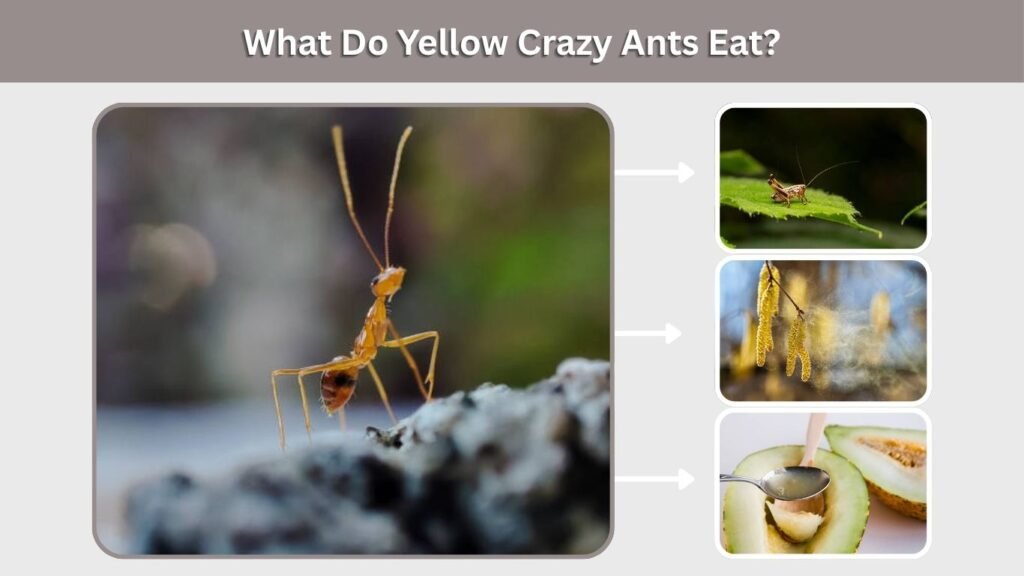
Yellow crazy ants are opportunistic feeders. They eat insects, small animals, carrion, nectar, plant fluids, and sugary honeydew from sap-sucking insects such as scale insects and aphids. Their relationship with honeydew-producing insects is a major reason they can damage plants.
When yellow crazy ants protect scale insects, those pests can increase in number. This may lead to more plant stress, sooty mold, and reduced plant health.
Yellow Crazy Ant Queen and Colony
A yellow crazy ant colony may have many queens. This helps colonies grow quickly and form connected supercolonies. Instead of relying only on winged queens flying away, colonies can spread by “budding,” where queens and workers move together to create nearby nests.
Colony Features
- Multiple queens may be present
- Colonies can grow very dense
- Nests may connect into supercolonies
- Workers travel in large numbers
- New nests may form close to old ones
This colony structure makes eradication difficult. Killing visible workers does not always solve the problem because queens and hidden nests may remain active.
Are Yellow Crazy Ants Dangerous to Humans?
Yellow crazy ants are not known for killing humans. They do not sting like fire ants. However, they can still be unpleasant and potentially irritating because they spray formic acid. This acid can irritate skin and eyes, especially when ants occur in large numbers.
They may also affect pets and livestock. Townsville City Council notes that yellow crazy ants can spray formic acid that burns and irritates skin and eyes, and pets and livestock may be at risk if they encounter them.
Yellow Crazy Ant Bite and Acid Spray
People often search for “yellow crazy ant bite,” but the bigger concern is usually acid spraying. Yellow crazy ants defend themselves by spraying formic acid. This can cause burning, irritation, or eye discomfort.
| Concern | Yellow Crazy Ant |
| Sting | No painful fire-ant-like sting |
| Bite | Possible but usually not the main issue |
| Defense | Sprays formic acid |
| Human risk | Skin and eye irritation |
| Pet risk | Acid irritation, especially in heavy infestations |
How Do Yellow Crazy Ants Spread?
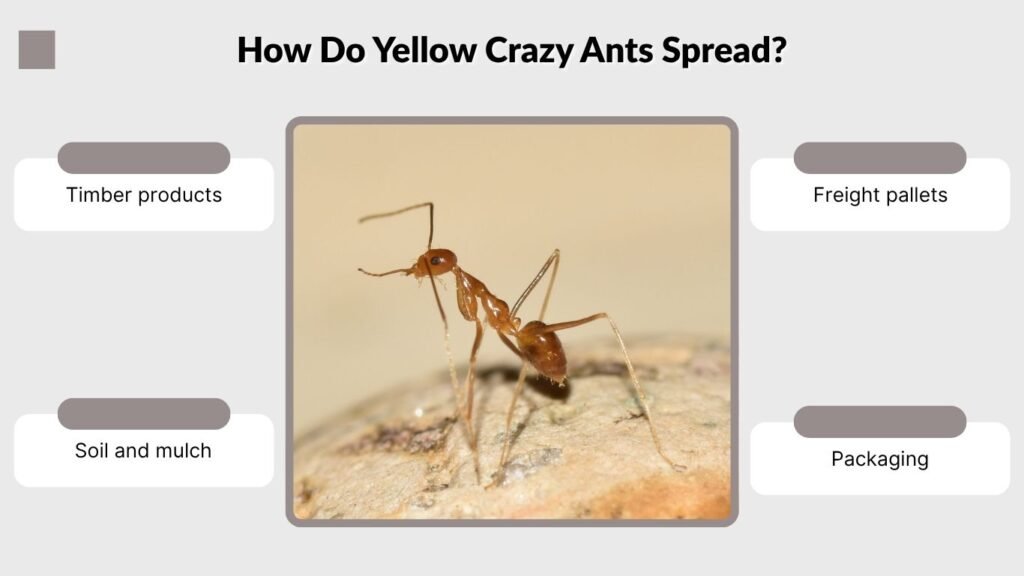
Yellow crazy ants spread naturally and through human movement. Natural spread may happen along waterways, during flooding, or through colony expansion. However, human-assisted spread is often more important.
Common Spread Pathways
- Freight pallets
- Packaging
- Timber products
- Soil and mulch
- Nursery plants
- Landscaping supplies
- Farm equipment
- Garden waste
Townsville City Council says human-assisted spread is more common than natural spread, and yellow crazy ants are often moved unknowingly in freight, pallets, packaging, timber products, and landscaping supplies.
How to Get Rid of Yellow Crazy Ants
Yellow crazy ant control is difficult because colonies can be large, hidden, and spread across wide areas. Small household infestations may be reduced with sanitation and baiting, but larger infestations often need professional or government-led control.
Control Steps
- Confirm the ant species before treatment.
- Take a clear close-up photo if reporting is required in your area.
- Avoid moving soil, plants, timber, or mulch from infested sites.
- Remove garden debris, leaf litter, and unused stored materials.
- Seal entry points around buildings.
- Use suitable ant bait rather than only contact sprays.
- Contact local pest or biosecurity authorities for suspected infestations.
In regulated areas, reporting is important because yellow crazy ants are treated as a serious biosecurity threat. Townsville’s program asks residents to report suspected sightings with clear photos.
Yellow Crazy Ants vs Fire Ants
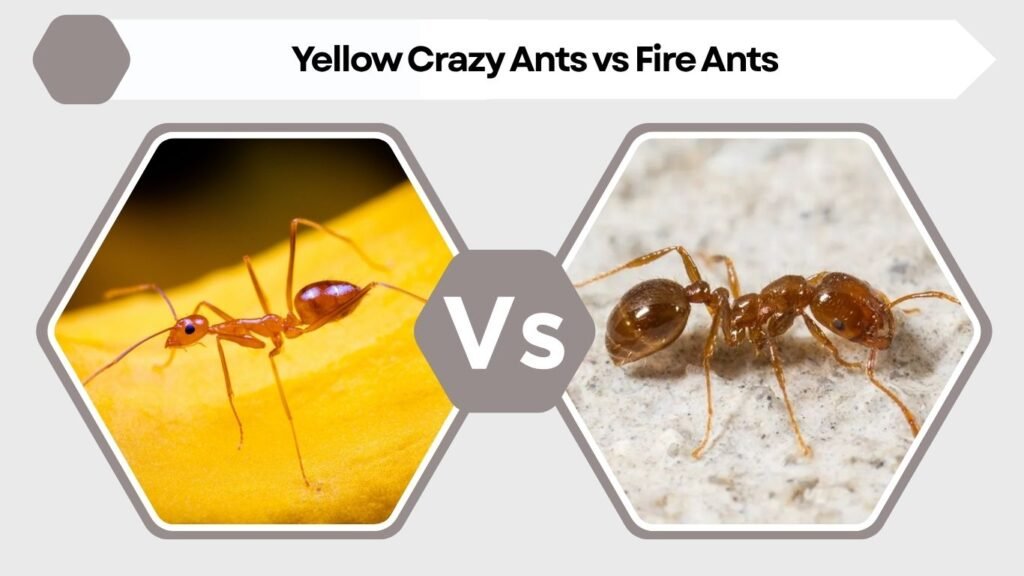
Yellow crazy ants and fire ants are different pests. Fire ants are known for painful stings and mound-building. Yellow crazy ants are known for erratic movement, long legs, formic acid spray, and huge supercolonies.
| Feature | Yellow Crazy Ant | Fire Ant |
| Main color | Yellow-brown to orange-brown | Reddish-brown |
| Movement | Fast and erratic | More direct trailing |
| Sting | No major sting | Painful sting |
| Defense | Formic acid spray | Venomous sting |
| Nest | Often hidden | Often visible mounds |
FAQs
Are yellow crazy ants dangerous?
Yellow crazy ants are not usually deadly to humans, but they can spray formic acid that irritates skin and eyes. They are more dangerous to ecosystems, pets, livestock, and native wildlife when colonies become very large.
Can yellow crazy ants kill humans?
Yellow crazy ants are not known as human-killing ants. Their main defense is formic acid spray, which can irritate skin and eyes. The bigger danger is ecological damage, especially in places where they form supercolonies.
Where are yellow crazy ants native to?
Their exact native origin is uncertain, but many experts suspect they came from Southeast Asia. They have spread widely through tropical and subtropical regions because they are easily transported by human trade and movement.
What do yellow crazy ants eat?
Yellow crazy ants eat insects, small animals, carrion, nectar, and sugary honeydew from sap-sucking insects. Their dependence on honeydew can increase scale insects and aphids, which may harm plants and trees.
How do you control yellow crazy ants?
Control usually requires correct identification, baiting, reducing nesting sites, stopping spread, and reporting infestations in regulated areas. Large infestations should be handled by pest-control professionals or local biosecurity programs because colonies can be widespread and difficult to eliminate.