

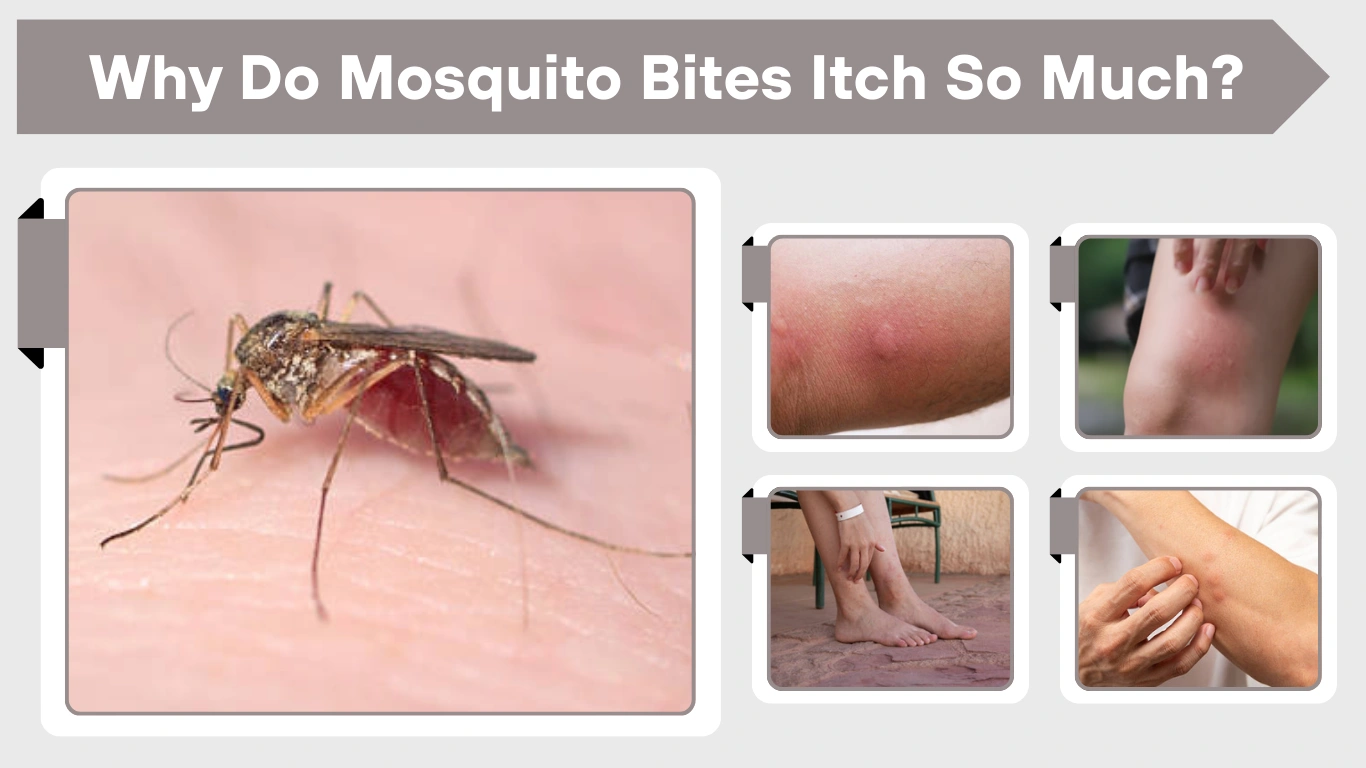
Mosquito bites are a universal annoyance—itchy, swollen, and sometimes incredibly persistent. While most people consider them minor irritations, the science behind why they itch, why some itch more than others, and why the itching lasts so long is surprisingly complex. Understanding the causes behind the itch can help you manage symptoms better, avoid scratching, and reduce the chances of swelling, infection, or prolonged irritation. This article explains everything from immune reactions to why bites on your feet itch the most.
Identification: What Mosquito Bites Look Like

Mosquito bites typically appear as small, raised bumps that are pink or red in color. A tiny puncture mark may be visible in the center where the mosquito inserted its proboscis. For some people, itching begins within minutes, while for others, the reaction may take hours.
Common features include:
- A round, raised bump
- Pink or red coloring
- Itching that develops quickly or later
- Swelling that varies by person
- Larger welts especially on legs, feet, and ankles
- Occasional blisters in people with stronger reactions
How intense the bite appears depends heavily on your immune system and the area of the body bitten.
Why Mosquito Bites Itch

The Role of Mosquito Saliva
When a mosquito bites, it injects saliva into the skin. This saliva contains anticoagulants and proteins that prevent your blood from clotting while the mosquito feeds. The immune system recognizes these proteins as foreign substances.
Histamine and the Itch Response
To combat the foreign saliva, your body releases histamine, a chemical that triggers inflammation. Histamine widens blood vessels and stimulates nerve endings, leading to:
- Itching
- Redness
- Swelling
- Warmth at the bite site
This itching isn’t caused by the bite itself—it’s caused by your immune system’s response to mosquito saliva.
Why Scratching Makes It Worse
Scratching a mosquito bite temporarily distracts your nerves from the itch, but it ultimately causes more inflammation.
Here’s why scratching intensifies itching:
- Scratching causes the skin to release even more histamine
- Inflammation increases, making the bump bigger
- Nerve endings become more sensitive
- Skin can break open, increasing irritation
This becomes a cycle: the more you scratch, the worse it itches.
Why Mosquito Bites Itch More at Night

Many people notice that mosquito bites itch more intensely at night, especially when trying to sleep.
Higher Histamine Levels in the Evening
Your body’s natural circadian rhythm increases histamine production later in the day. This means inflammation and itching feel stronger at night.
Increased Sensitivity Before Bed
When you’re trying to rest, the brain is less distracted by activities or movement. With fewer distractions, the sensation of itching feels more noticeable.
Body Heat Rises at Night
Your body warms slightly as you prepare to sleep. Warm skin increases:
- Blood flow
- Inflammation
- Nerve activation
All of which intensify itchiness.
Why Some Mosquito Bites Itch More Than Others
Not all mosquito bites feel the same. Some barely itch at all, while others become huge, painful, intensely irritated welts.
Immune Sensitivity Differences
Some people naturally release more histamine when bitten, causing stronger swelling and itchiness.
Different Mosquito Species
Each mosquito species has slightly different saliva chemistry. Some cause mild reactions; others cause extremely itchy or swollen welts.
Repeated Exposure Changes Your Response
Your immune system may react differently over time:
- Some people become desensitized, and bites itch less
- Others become more reactive, causing bigger, longer-lasting welts
Bite Location Matters
Bodies react differently depending on where the mosquito bites:
- Feet and ankles → itch more due to more nerve endings
- Face → sensitive skin causes swelling
- Arms and legs → mild to moderate itching
Why Mosquito Bites Itch More on Feet, Ankles & Legs

Feet and ankles are notorious for producing the most intense mosquito bite itching.
Higher Density of Nerve Endings
The feet contain more nerve endings than most body areas, increasing itch sensation.
Thinner Skin and Greater Sensitivity
Mosquito saliva spreads more easily through thinner skin, fueling irritation.
Gravity Increases Swelling
Fluid naturally pools in the lower legs and ankles, causing:
- Bigger bumps
- Longer-lasting swelling
- More intense itching
These bites often become the worst because the area is both sensitive and prone to inflammation.
Why Mosquito Bites Itch for Days—or Even Weeks
For some people, bites itch long after they appear.
Prolonged Histamine Response
Your immune system may continue reacting to mosquito saliva for several days, even after the mosquito is long gone.
Secondary Irritation
Even light scratching aggravates the skin, significantly extending itch duration.
Allergic Reactions (Skeeter Syndrome)
A stronger-than-normal reaction to mosquito saliva causes:
- Large, painful swelling
- Warm, red patches
- Blisters or fluid-filled bumps
- Itch lasting 7–14 days
Mild Infection From Scratching
If bacteria enter the bite, the skin can:
- Stay inflamed
- Itch longer
- Develop crusting or swelling
This is why avoiding scratching is essential.
Why Mosquito Bites Swell and Itch More When Scratched
Scratching feels good for a moment, but it intensifies swelling and itching. When you scratch, you stimulate more blood flow, which brings more immune cells to the area. These immune cells release even more histamine, making the bite larger and itchier. Scratching also irritates nearby nerves, amplifying the sensation. If scratching breaks the skin, the body responds with additional inflammation to protect the wound—causing even more swelling and itching.
Eventually, this creates a cycle of itch → scratch → inflammation → more itch, which is why bites get bigger and more painful when scratched repeatedly.
Why Flea Bites Itch More Than Mosquito Bites

Flea bites often itch more than mosquito bites because fleas inject a more potent blend of allergens into the skin. Their saliva contains stronger irritants and enzymes that trigger an immediate and intense histamine reaction.
Mosquito Bite vs Flea Bite Comparison
| Feature | Mosquito Bites | Flea Bites |
| Location | Anywhere on exposed skin | Usually ankles/legs |
| Pattern | Random, isolated | Clusters or lines |
| Itch Level | Moderate–severe | Extremely intense |
| Reaction Time | Delayed | Immediate |
| Allergen Strength | Moderate | High |
Flea bites tend to appear in groups and itch sharply, while mosquito bites usually appear individually and have a slower onset of itching.
Why Some People Don’t Itch From Mosquito Bites
While most people feel strong itching, others barely react at all. This isn’t due to luck—it’s biology.
Low Histamine Release
Some individuals naturally produce less histamine in response to mosquito saliva, leading to minimal swelling and almost no itchiness.
Genetic Differences
Genes influence immune sensitivity, nerve response, and skin chemistry. Some genetic variations reduce inflammation or nerve irritation.
Long-Term Desensitization
People who have been exposed to mosquitoes frequently—especially in certain climates—may become partially immune to the saliva. Their bodies no longer overreact, drastically reducing itching.
Why Mosquito Bites Burn as Well as Itch
The burning sensation that accompanies some mosquito bites is caused by inflammation in the deeper layers of skin. As the immune system responds, blood vessels widen, increasing warmth and pressure around nerve endings. This combination produces a burning, stinging feeling that often appears alongside itching.
If the bite is scratched or irritated, the burning sensation becomes stronger due to enhanced nerve sensitivity and minor tissue damage.
Prevention: How to Reduce Itching and Reactions

Preventing mosquito bites is the most effective way to avoid itching altogether. Several strategies can help reduce both the severity of reactions and the likelihood of being bitten.
Reduce Immune Response
- Taking oral antihistamines—reduces itch and swelling.
- Apply hydrocortisone cream—calms inflammation.
- Use cold compresses—numbs itch receptors immediately.
- Try calamine lotion or aloe vera—cools and soothes irritated skin.
Avoid the Itch-Scratch Cycle
- Keep nails short to avoid breaking the skin.
- Cover bites with a bandage to prevent nighttime scratching.
- Apply anti-itch creams before bed when itching peaks.
- Use menthol or cooling gels to calm nerve endings.
Prevent Future Mosquito Bites
- Wear long sleeves and pants in mosquito-prone areas.
- Use repellents containing DEET, picaridin, IR3535, or oil of lemon eucalyptus.
- Keep windows screened and eliminate standing water.
- Use fans outdoors—mosquitoes struggle to fly in moving air.
- Treat clothing with permethrin for enhanced protection.
FAQs
Why do mosquito bites itch more at night?
Your body’s histamine levels naturally rise during the evening, and your skin warms as you prepare to sleep. With fewer distractions at night, your brain becomes more aware of itching sensations, making bites feel much itchier.
Why do my mosquitoes itch for days?
Your immune system may continue reacting to mosquito saliva long after the bite occurs. Scratching increases inflammation, which prolongs itching. In some cases, a mild allergic reaction or minor skin infection can extend symptoms.
Why do mosquito bites on my feet or ankles itch the worst?
Feet and ankles have more nerve endings, thinner skin, and increased swelling due to gravity. This combination makes bites in these areas significantly more irritating than bites on other parts of the body.
Why do some mosquito bites swell so much?
Large swelling is usually a sign of an enhanced immune reaction. Some people naturally produce more histamine, while others may be experiencing an allergic reaction such as skeeter syndrome, which causes big, warm, painful welts.
Why do mosquito bites stop itching and then itch again later?
As inflammation fluctuates, nerve endings may calm down and then become re-irritated. Heat, scratching, stress, or increased blood flow can also reactivate itch signals hours or even days later.
