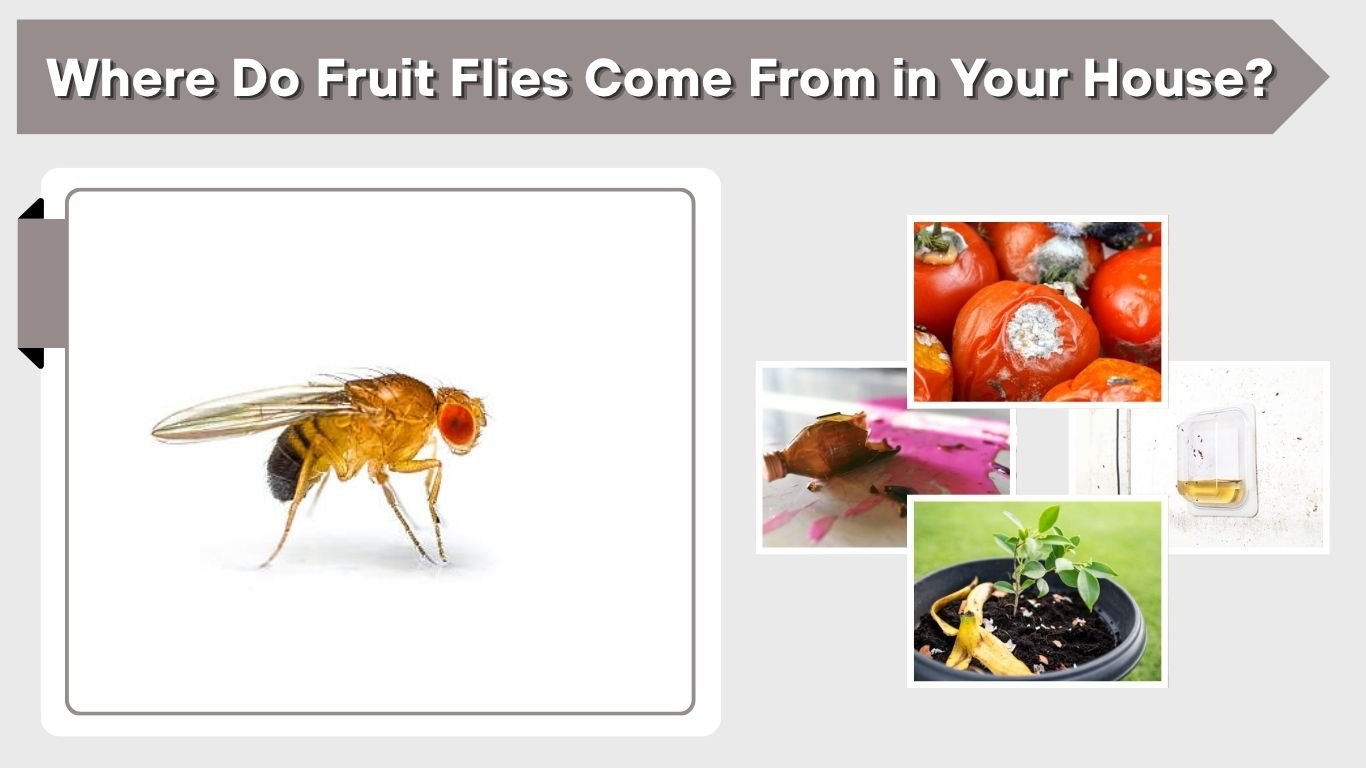
Fruit flies often seem to appear from nowhere, especially when a banana becomes overripe or an open glass of wine is left on the counter. In reality, these tiny flies usually enter through doors and windows, arrive on produce, or develop from eggs already laid near fermenting organic material.
They reproduce quickly in kitchens, trash bins, drains, recycling containers, and other damp places containing food residue. Finding and removing the breeding source is more effective than killing only the adult flies.
What Are Fruit Flies?
Fruit flies are tiny insects commonly associated with ripe, damaged, or fermenting fruits and vegetables. The species most often found indoors belong to the genus Drosophila.
Adults are usually about 1/8 inch long. They often have tan or yellowish-brown bodies, darker markings near the abdomen, and noticeable red eyes. Their small size allows them to enter through window screens, cracks, and gaps around doors.
Fruit flies are attracted to the smell of fermentation. Yeast and microorganisms begin breaking down sugars as fruit ripens or decays, producing odors that fruit flies can detect from a considerable distance.
Where Do Fruit Flies Come From?
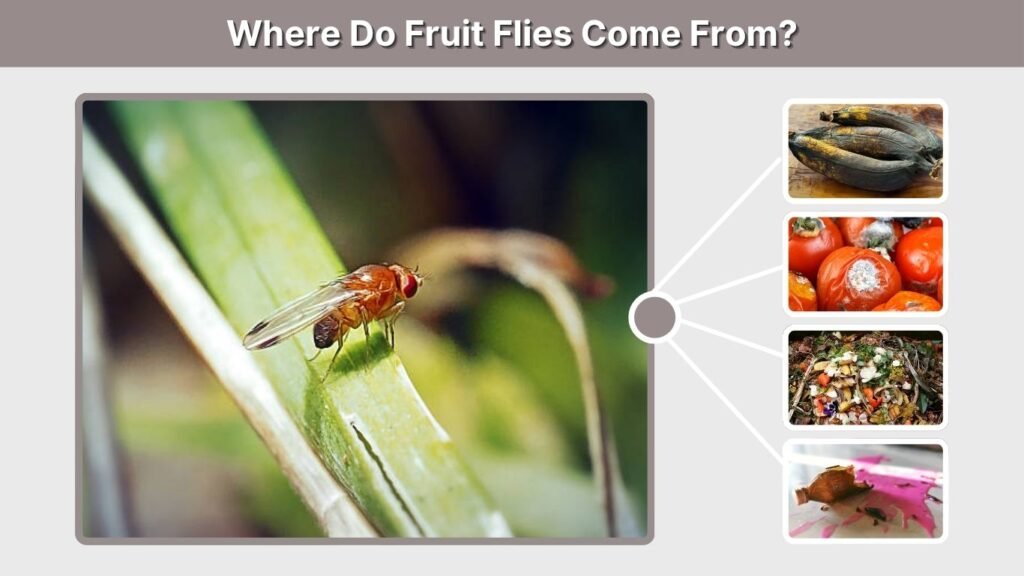
Fruit flies generally enter a home in one of two ways: adults fly indoors from outside, or eggs and larvae arrive on produce.
Adult females lay their eggs on moist, fermenting material. Because the eggs are extremely small, they are difficult to see without magnification.
Common sources include:
- Overripe fruit
- Damaged vegetables
- Fermenting juice
- Open wine or beer
- Trash and compost
- Dirty recycling containers
- Food residue in drains
- Forgotten potatoes or onions
- Spilled syrup and sugary drinks
- Wet cleaning cloths and mops
A single overlooked food source can support many developing fruit flies.
Why Do Fruit Flies Appear All of a Sudden?
Fruit flies do not suddenly materialize. Their rapid life cycle makes an infestation seem to appear overnight.
A female fruit fly can lay hundreds of eggs during her life. Under warm conditions, eggs may hatch within about a day. The larvae feed on yeast and decaying material before becoming pupae and then adults.
The complete development from egg to adult may take approximately one to two weeks, depending on temperature and food availability. Several adults can therefore become a noticeable population within a short period.
| Life stage | Approximate duration | What happens |
| Egg | About 1 day | Laid on moist fermenting material |
| Larva | 4–6 days | Feeds and grows |
| Pupa | 4–6 days | Transforms into an adult |
| Adult | Several weeks | Mates and lays new eggs |
Warm kitchens speed up their development, which is why infestations often increase quickly during summer.
Where Do Fruit Flies Come From in the Kitchen?
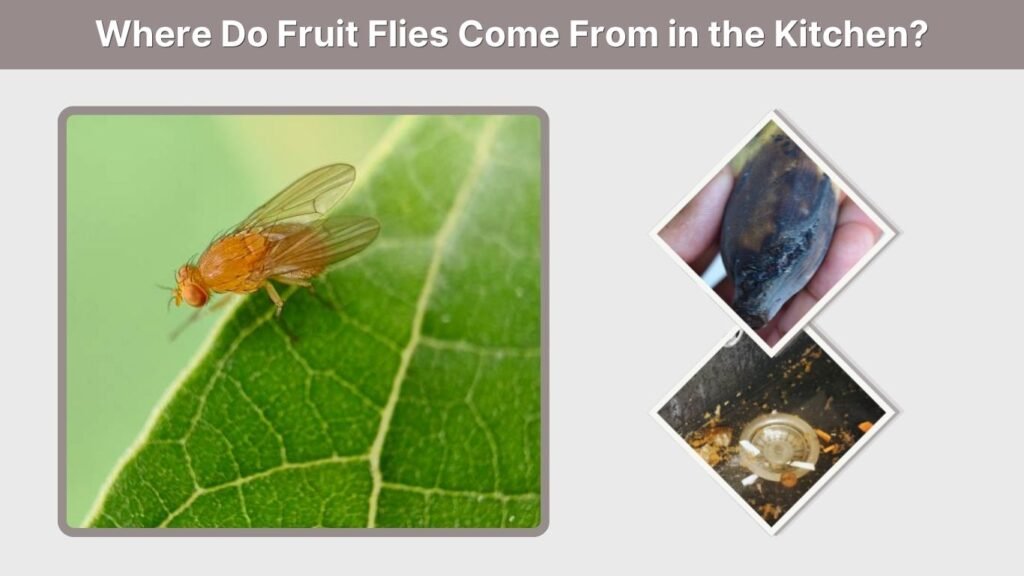
The kitchen is the most common location for fruit flies because it contains food, moisture, and suitable breeding material.
Ripe and Overripe Produce
Fruit flies are strongly attracted to bananas, peaches, tomatoes, grapes, melons, mangoes, and other ripe produce. They are especially interested in fruit with damaged skin or exposed flesh.
A bowl of fruit left on the counter can attract adult flies through an open door or window. It may also contain eggs that were laid before the produce entered the home.
Check beneath and behind the fruit bowl because leaking juice can create a hidden breeding spot.
Trash and Recycling Bins
A small amount of fruit juice, wine, beer, soda, or food residue can support fruit fly larvae. Trash cans and recycling bins frequently provide both moisture and fermented material.
Simply removing the bag may not solve the problem. Liquid and food particles can remain at the bottom, around the lid, or beneath the bin liner.
Wash the entire container with soap and water, then allow it to dry completely.
Garbage Disposals and Drains
Fruit flies may breed in food residue around a garbage disposal or kitchen drain. However, not every small fly near a sink is a fruit fly.
True fruit flies are attracted to fermentation, while drain flies usually breed in the slimy organic film inside drains. Phorid flies may also emerge from drains, damaged pipes, or sewage-contaminated areas.
Cleaning only the drain opening is not enough. The sticky buildup along the inner walls must be removed with a stiff drain brush.
Do Fruit Flies Come From Bananas?
Fruit flies do not originate inside bananas, but bananas can bring them into the home or attract adults from outside.
Eggs may be laid on the banana peel, especially around damaged areas, cracks, or the stem. These eggs are too small to notice easily. Once the banana ripens, its strong fermented odor attracts additional adult flies.
To reduce the risk:
- Inspect bananas for splits and bruises.
- Wash the peel after bringing them home.
- Avoid leaving overripe bananas on the counter.
- Refrigerate ripe fruit when appropriate.
- Remove damaged produce quickly.
Washing fruit may remove dirt and some surface eggs, but it will not prevent flies from reaching produce later.
Where Do Fruit Flies Come From in the Bathroom?
Fruit flies are less likely to breed in a clean bathroom unless it contains fermenting organic material. Small flies around a bathroom sink or shower are often drain flies rather than fruit flies.
Possible bathroom sources include:
- Residue inside sink drains
- Damp trash containing organic waste
- Wet towels or cleaning cloths
- Spilled mouthwash or sugary products
- Empty drink containers
- Dirty mop buckets
- Plumbing leaks
Fruit flies have smooth-looking bodies and usually fly around food or drinks. Drain flies appear fuzzier and often rest on walls near sinks, tubs, or showers.
Correct identification is important because fruit fly traps will not eliminate larvae developing deep inside a dirty drain.
Can Fruit Flies Come From Houseplants?
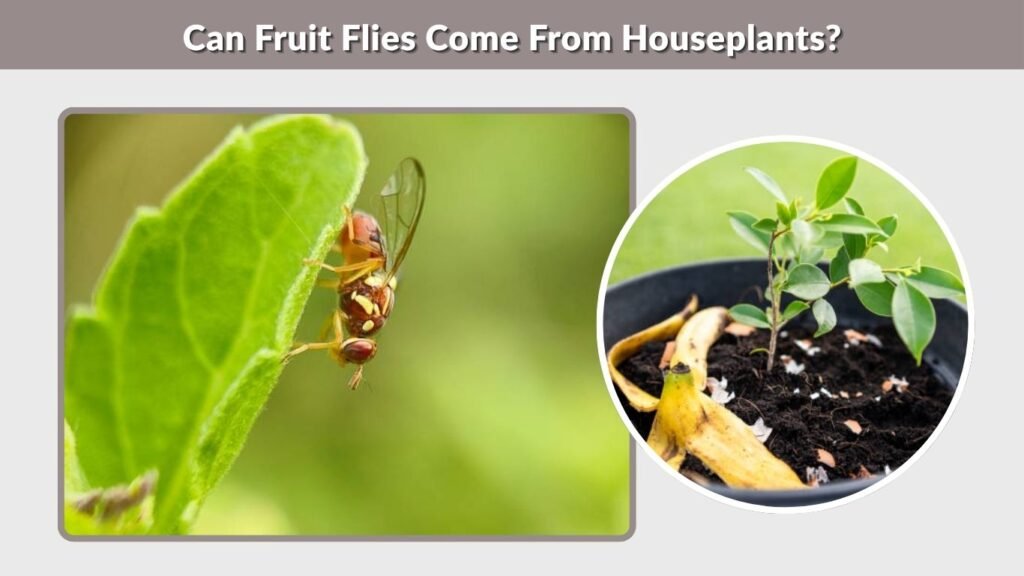
Fruit flies may visit houseplants, especially when fallen fruit, compost, or sugary residue is present. However, the small flies emerging directly from potting soil are usually fungus gnats.
Fungus gnats have slender dark bodies, long legs, and an appearance similar to tiny mosquitoes. Their larvae live in moist soil and feed on fungi and decaying plant matter.
Fruit flies are stockier and are more strongly attracted to fruit, vinegar, wine, and fermented liquids.
Overwatering plants can encourage fungus gnats, but it does not normally create a true fruit fly infestation unless organic food waste is mixed into the soil.
Where Do Fruit Flies Come From in Winter?
Fruit flies can remain active indoors during winter because heated homes provide warm conditions. They may arrive on store-bought produce or survive in hidden breeding areas.
Common winter sources include:
- Produce stored in cupboards
- Forgotten potatoes and onions
- Indoor compost containers
- Recycling waiting to be removed
- Residue beneath refrigerators
- Open wine and fermented drinks
- Dirty drains and garbage disposals
Outdoor temperatures may reduce fruit fly activity, but indoor heating allows their life cycle to continue throughout the year.
Fruit Flies vs. Gnats
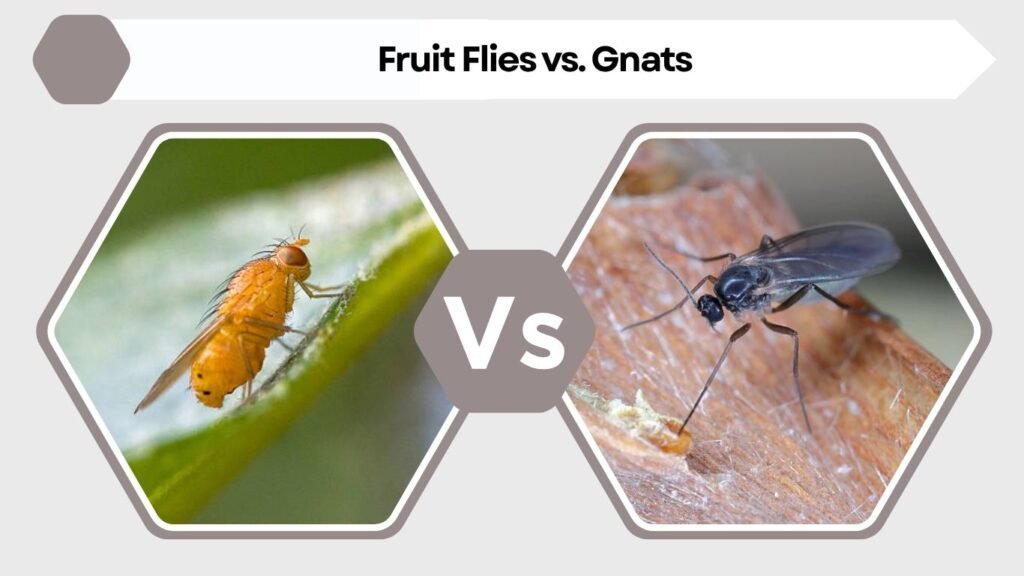
People frequently use the word “gnat” for any tiny flying insect. Several species can infest homes, but their breeding sources differ.
| Feature | Fruit fly | Fungus gnat | Drain fly |
| Common location | Kitchen and fruit bowl | Houseplant soil | Sinks and drains |
| Body shape | Small and rounded | Slender with long legs | Fuzzy and moth-like |
| Main attraction | Fermenting food | Moist soil and fungi | Drain slime |
| Typical eye color | Often red | Usually dark | Dark |
| Main solution | Remove food source | Let soil dry | Scrub drain buildup |
If flies continue after all fruit and food residue are removed, check houseplants and drains for another pest.
How to Find the Fruit Fly Breeding Source
Killing adults provides only temporary relief if eggs and larvae remain. Begin by checking every place where wet organic material may collect.
Inspect Hidden Food Sources
Look beneath appliances, shelves, cabinets, and trash cans. Check bags of potatoes and onions, forgotten lunch boxes, spilled drinks, and reusable grocery bags.
One rotting vegetable behind a cabinet can produce a large infestation.
Check Liquids and Containers
Inspect open bottles of juice, wine, vinegar, syrup, and cooking sauces. Even a loosely fitted cap may allow flies to enter.
Rinse cans, bottles, and jars before placing them in recycling. Clean sticky residue from bottle openings and countertops.
Test Suspected Drains
Cover the drain with clear tape overnight, leaving part of the opening uncovered for airflow. Flies trapped beneath the tape may indicate activity in the drain.
This method helps locate the source but does not identify every species reliably.
How to Get Rid of Fruit Flies
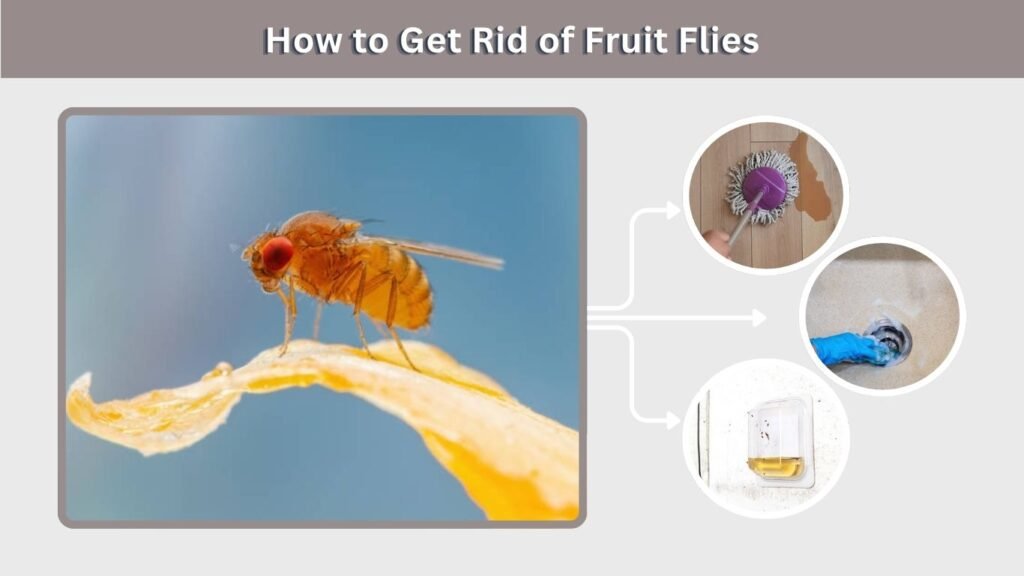
Start by removing the material in which they are breeding. Traps can reduce adult numbers, but sanitation breaks the life cycle.
Remove Their Food
Discard spoiled produce and place ripe fruit in the refrigerator. Empty trash and compost regularly. Clean recycling bins and rinse beverage containers.
Wipe up spills immediately, including juice beneath appliances and residue inside cabinets.
Clean Drains Properly
Scrub the inner drain walls and garbage disposal components with a drain brush and suitable cleaner. Flush the loosened material away with water.
Pouring bleach or boiling water into a drain may kill some organisms, but it often fails to remove the organic film supporting larvae.
Use a Vinegar Trap
Pour a small amount of apple cider vinegar into a glass. Add one drop of dish soap to break the liquid’s surface tension.
Place the trap near the area with the greatest activity. Adult fruit flies will be attracted to the fermented odor and may drown in the liquid.
Traps should support cleaning efforts rather than replace them.
How to Prevent Fruit Flies
Store ripe produce in the refrigerator whenever possible. Use covered trash and compost containers, and empty them frequently.
Clean spills, drains, recycling bins, and garbage disposals before residue begins fermenting. Repair damaged screens and seal gaps around doors and windows.
Regularly inspect stored potatoes, onions, and other produce. One forgotten item can restart an infestation even after the visible adult flies disappear.
FAQs
Can Fruit Flies Come Through the Drain?
Fruit flies may feed or breed in drains containing fermented food residue. However, fuzzy flies emerging from drains are more likely to be drain flies. Scrubbing away the organic buildup is necessary regardless of the species.
Do Fruit Flies Lay Eggs on Fruit?
Yes. Females lay tiny eggs on or near ripe, damaged, or fermenting fruit. They may also use spilled juice, trash, compost, and dirty containers. The larvae feed on microorganisms growing in the decaying material.
Why Are Fruit Flies Around Wine?
Wine produces fermented odors that fruit flies find highly attractive. An open bottle or glass can quickly draw nearby adults. Rinse empty bottles, clean spills, and close wine containers tightly after use.
Can Fruit Flies Survive Without Fruit?
Yes. They can breed in many fermenting materials besides fresh fruit, including vegetables, juice, wine, beer, soda, compost, trash residue, and organic buildup around drains or garbage disposals.
How Long Does a Fruit Fly Infestation Last?
Adult activity may decline within several days after every breeding source is removed. However, pupae already present can continue producing adults for one to two weeks. Continued cleaning and trapping are necessary until no new flies appear.