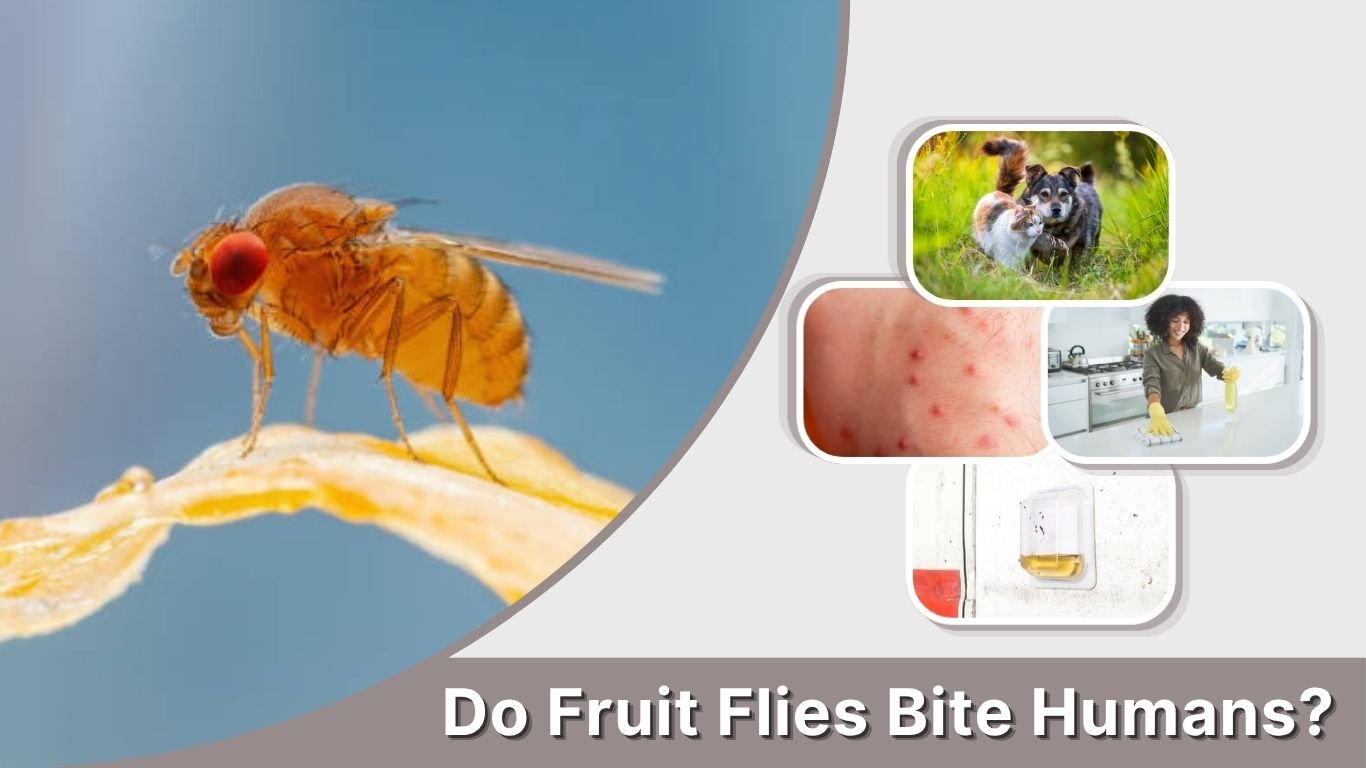
Fruit flies do not bite humans, pets, or other animals. The common fruit flies found around ripe bananas, trash cans, open wine, and kitchen drains have mouthparts designed to feed on liquids and microorganisms found in fermenting material. They cannot pierce human skin like mosquitoes, fleas, or biting midges.
When small red or itchy bumps appear while tiny flies are present, another pest is usually responsible. Mosquitoes, fleas, bed bugs, biting midges, or mites may be mistaken for fruit flies because several of these insects are small and difficult to identify.
Can Fruit Flies Bite Humans?
Common household fruit flies do not bite people. They are interested in fermenting fruit, sugary liquids, yeast, and moist organic residue rather than blood.
Fruit flies cannot sting either. They have no stinger, biting jaws, or piercing mouthparts capable of breaking human skin.
Their mouthparts function like a small sponge. They release saliva onto soft food and then absorb the resulting liquid. This feeding method works on overripe fruit and fermented residue but not on human or animal skin.
| Question | Answer |
| Do fruit flies bite humans? | No |
| Do fruit flies sting? | No |
| Do they drink blood? | No |
| Do they bite at night? | No |
| Can they bite dogs or cats? | No |
| Can they contaminate food? | Yes |
| Can another small fly bite? | Yes |
Why Do People Think Fruit Flies Bite?
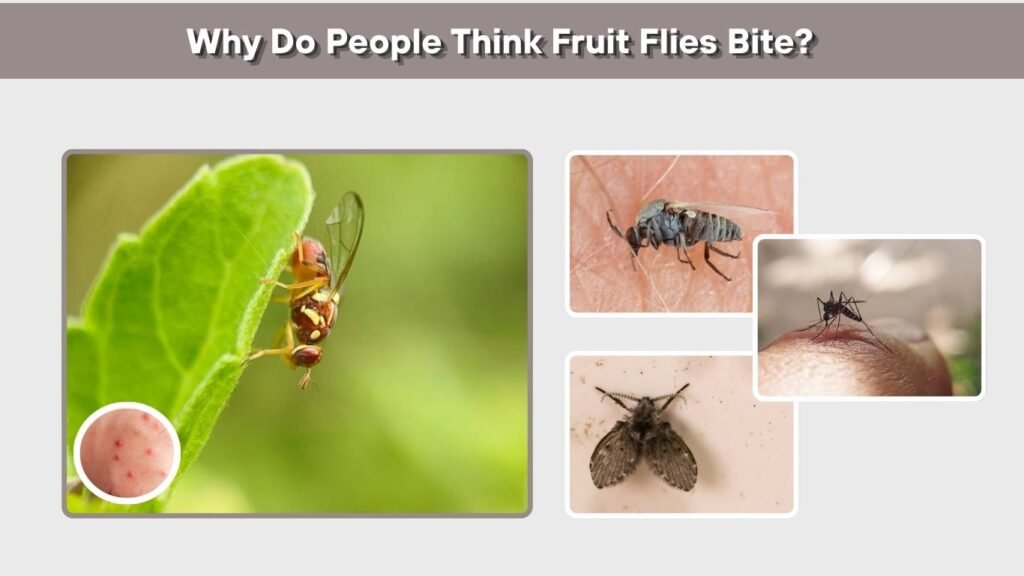
People often blame fruit flies for unexplained skin irritation because the flies are visible around the home. However, the insect that is easiest to see is not always the one causing the problem.
A home may contain fruit flies in the kitchen and mosquitoes, fleas, or bed bugs in another room. The fruit flies receive the blame simply because they are noticeable.
Mistaken Identity
Several tiny flying insects are commonly called fruit flies or gnats. Some do not bite, while others can.
Possible look-alikes include:
- Biting midges
- Mosquitoes
- Fungus gnats
- Drain flies
- Phorid flies
- Eye gnats
- Fleas
- Small black flies
Biting midges are especially easy to confuse with harmless gnats. They are extremely small and can leave itchy, red marks. True household fruit flies do not produce these symptoms.
Existing Skin Irritation
Dry skin, allergic reactions, contact dermatitis, heat rash, and irritation from cleaning products can also cause itching or small bumps.
When fruit flies are nearby, it is easy to assume that the insects caused the reaction. A true fruit fly infestation and an unrelated skin condition can occur at the same time.
Crawling Sensations
A fruit fly may land on exposed skin because it is attracted to moisture, food residue, perfume, or a sweet drink nearby. Its tiny feet can create a faint tickling sensation.
This may feel like a bite, especially when the person cannot clearly see the insect. However, landing or walking on the skin does not mean the fly is feeding on blood.
What Do Fruit Fly Bites Look Like?
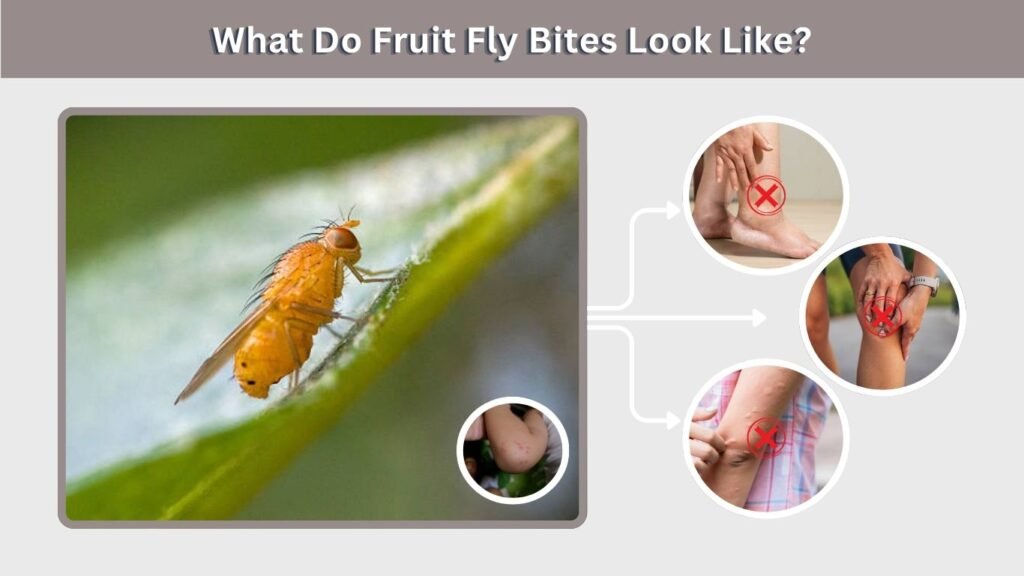
There is no recognized fruit fly bite because fruit flies cannot pierce the skin. Therefore, a red, swollen, painful, or itchy bump is not a true fruit fly bite.
Marks blamed on fruit flies may actually come from:
- Mosquitoes
- Fleas
- Bed bugs
- Biting midges
- Chiggers
- Mites
- Ants
- Skin allergies
The location and pattern of the marks can provide useful clues. Flea bites commonly appear around the ankles and lower legs. Bed bug bites may appear in lines or clusters after sleeping. Mosquito bites usually form raised, itchy welts on exposed skin.
Biting midges may cause small, intensely itchy spots, particularly after time outdoors near damp soil, marshes, or standing water.
Do Fruit Flies Bite at Night?
Fruit flies do not bite during the day or at night. They are generally more active during daylight and around food preparation areas, although indoor lighting can affect their activity.
If bites appear overnight, investigate other pests rather than fruit flies.
Possible Nighttime Biters
Bed bugs are a common concern when unexplained bites appear after sleeping. They hide in mattress seams, bed frames, furniture joints, and small cracks during the day.
Mosquitoes may also enter bedrooms and feed at night. Fleas can bite at any time, particularly in homes with pets or wildlife activity.
Biting midges are more commonly associated with outdoor areas, although they may pass through window screens because of their extremely small size.
Fruit fly traps near the bed will not solve a problem caused by these pests.
Do Fruit Flies Bite Dogs and Cats?
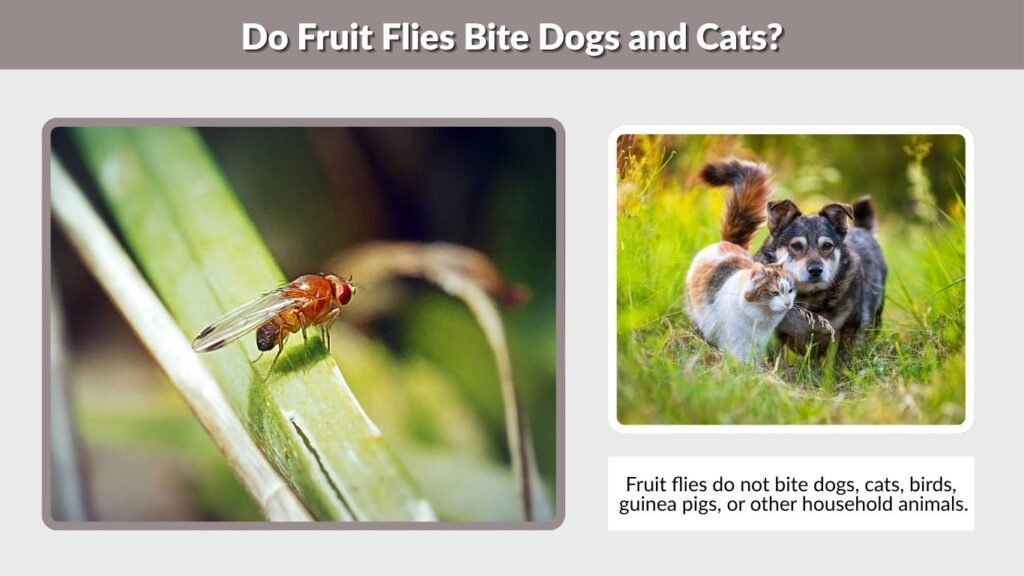
Fruit flies do not bite dogs, cats, birds, guinea pigs, or other household animals. They do not feed on blood and cannot pierce animal skin.
However, they may gather around:
- Pet food bowls
- Overripe fruit used as pet food
- Dirty water dishes
- Animal waste
- Damp bedding
- Fermenting food residue
- Unclean cages or enclosures
Their presence around an animal does not mean they are attacking it. The flies are usually attracted to food, moisture, or organic waste.
When a pet is scratching excessively, check for fleas, mites, ticks, allergies, or skin infections. A veterinarian should examine persistent itching, hair loss, sores, swelling, or signs of discomfort.
Do Gnats and Fruit Flies Bite?
The word “gnat” describes many different small flies rather than one specific species. Whether a gnat bites depends on its identity.
Fruit Flies
Fruit flies do not bite. They breed around fermenting fruit, vegetables, drinks, trash, and food residue.
Adults are commonly tan or yellowish-brown and may have noticeable red eyes.
Fungus Gnats
Fungus gnats do not normally bite people or pets. They live around moist houseplant soil, where their larvae feed on fungi and decaying organic material.
They have slender bodies, long legs, and an appearance similar to tiny mosquitoes.
Drain Flies
Drain flies do not bite humans. They are fuzzy, moth-like flies that breed in the organic film inside drains, sewage systems, and other damp locations.
They often rest on bathroom or kitchen walls near sinks.
Biting Midges
Biting midges can bite people and animals. They are sometimes called no-see-ums because they are extremely small and difficult to notice.
Female biting midges may feed on blood and leave itchy red marks. They are often found near wetlands, damp soil, ponds, coastal areas, and other moist outdoor environments.
Why Are Fruit Flies Flying Around Me?
Fruit flies may circle a person without biting. Several scents and substances can attract them.
Sweet Food and Drinks
Fruit flies are strongly attracted to wine, beer, juice, soda, vinegar, and ripe fruit. A fly hovering near your face may actually be following the smell of a drink or food item.
Even a small spill on clothing or skin can attract them.
Breath and Body Odors
Carbon dioxide, warmth, moisture, cosmetics, and scented personal products may contribute to a fruit fly’s interest in the area around a person.
The fly is not looking for blood. It is investigating smells that may indicate food or fermentation.
Food Residue
Fruit flies may land near the mouth or hands when sticky food residue is present. Washing your hands and wiping nearby surfaces can reduce this behavior.
Are Fruit Flies Harmful?
Fruit flies do not injure people through biting or stinging. However, an infestation should not be ignored.
They frequently move between trash, drains, decaying produce, dirty containers, and food preparation surfaces. During this movement, microorganisms may be carried mechanically on their bodies.
Fruit flies can also enter open food and drinks, making them unpleasant and unsanitary. Their rapid reproduction allows a small problem to become a large infestation within a short period.
The primary concern is food contamination and poor sanitation rather than bites.
How to Identify a Fruit Fly
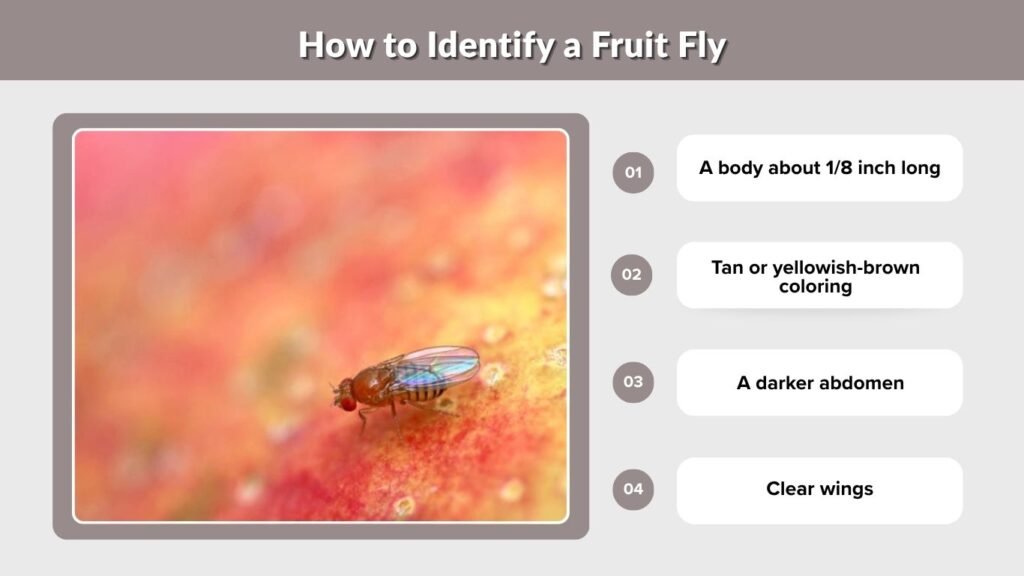
Correct identification is important before choosing a treatment.
Appearance
Common household fruit flies generally have:
- A body about 1/8 inch long
- Tan or yellowish-brown coloring
- A darker abdomen
- Clear wings
- Large eyes that are often red
- A rounded body shape
Dark-eyed fruit flies may also enter homes. Eye color does not affect their ability to bite; they are still unable to pierce human skin.
Behavior
Fruit flies frequently gather around:
- Bananas and other ripe fruit
- Open wine bottles
- Beer and soda containers
- Kitchen trash
- Compost bins
- Recycling containers
- Garbage disposals
- Fermenting vegetables
- Sugary spills
Flies centered around houseplant soil are more likely to be fungus gnats. Fuzzy flies resting near drains are probably drain flies.
How to Get Rid of Fruit Flies
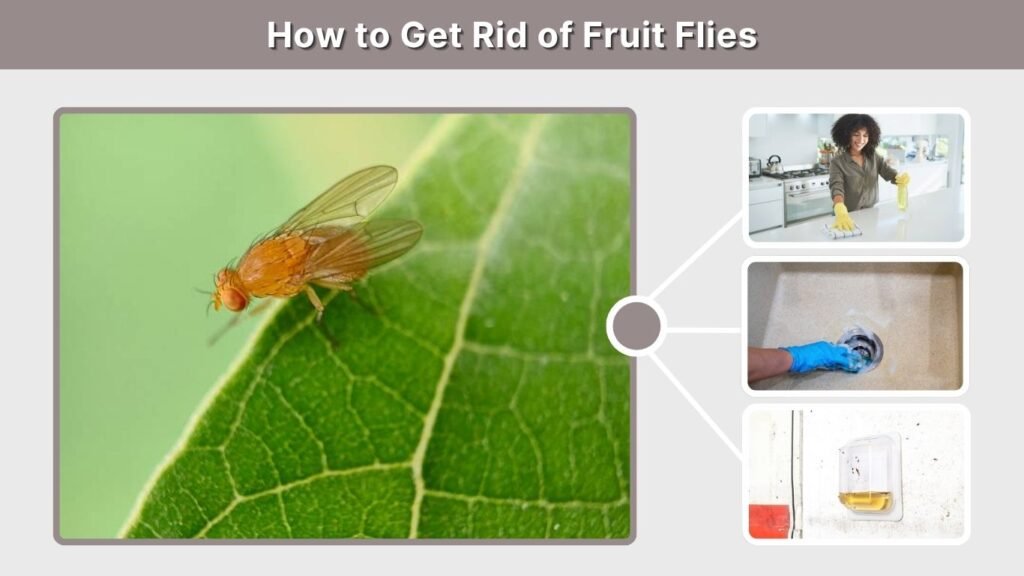
Removing adult flies alone will not end an infestation. Their eggs and larvae may continue developing inside hidden breeding material.
Remove Breeding Sources
Discard overripe or damaged produce. Inspect bags of potatoes, onions, and other vegetables stored in cupboards.
Empty trash and compost containers frequently. Wash the containers to remove liquid and food residue from the bottom, sides, and lid.
Rinse bottles and cans before placing them in recycling.
Clean Kitchen Surfaces
Wipe counters, floors, cabinet shelves, and areas beneath appliances. Pay special attention to spilled juice, wine, syrup, and soda.
A small amount of fermented liquid beneath a refrigerator or trash can may support fruit fly development.
Clean Drains
Use a stiff drain brush to scrub food residue from the inside walls of kitchen drains and garbage disposals.
Pouring bleach or hot water into the drain may not remove the organic buildup where larvae feed. Physical scrubbing is generally more effective.
Use a Vinegar Trap
Add a small amount of apple cider vinegar to a glass and mix in one drop of dish soap. Place it near the area where adult flies are most active.
The vinegar attracts the flies, while the soap reduces the liquid’s surface tension. This trap can reduce adult numbers but will not eliminate hidden eggs and larvae.
How to Prevent Fruit Flies
Store ripe fruit in the refrigerator when possible. Keep produce clean, dry, and regularly inspected for damage.
Close wine, juice, and vinegar containers tightly. Rinse beverage containers and clean spills immediately.
Use covered trash and compost bins, and avoid leaving food waste indoors for extended periods. Repair damaged screens to reduce the number of flies entering from outside.
Continue sanitation for at least one to two weeks after adult activity declines because new flies may still emerge from existing pupae.
FAQs
Can Fruit Flies Make Your Skin Itch?
Fruit flies do not bite and should not directly create an itchy bite mark. Itching may come from another insect, an allergic reaction, dry skin, or an unrelated irritation. Persistent or severe symptoms should be evaluated by a healthcare professional.
Why Do Fruit Flies Land on People?
They may be attracted to moisture, sweet food residue, scented products, or a nearby drink. Landing on the skin does not mean they are biting or feeding on blood.
Do Wingless Fruit Flies Bite?
No. Wingless fruit flies are commonly bred as food for reptiles, amphibians, and small animals. They have similar feeding structures to flying fruit flies and cannot bite humans or pets.
Can Fruit Flies Sting Humans?
No. Fruit flies have no stinger and cannot inject venom. A sharp or painful sensation associated with a tiny flying insect likely comes from another species.
What Tiny Flies Actually Bite Humans?
Biting midges, black flies, mosquitoes, and some other small fly species can bite humans. Correct identification depends on the insect’s appearance, location, activity, and breeding source.