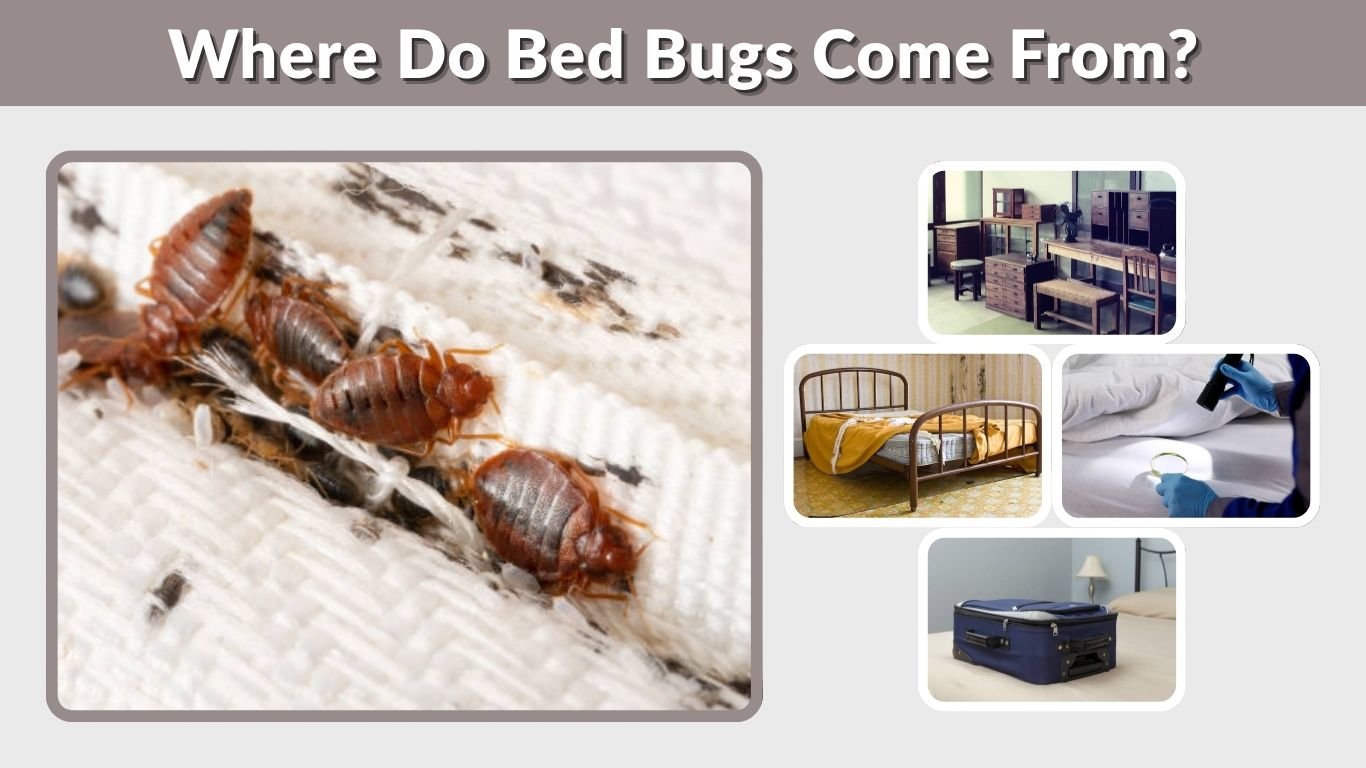
Bed bugs usually come into homes by hitchhiking on luggage, clothing, bedding, furniture, boxes, and other belongings rather than appearing because a home is dirty. They can be picked up in hotels, apartments, dorms, public spaces, or anywhere infested items are present. Once indoors, they hide close to places where people sleep and feed on blood at night. Understanding where bed bugs come from helps explain how infestations start, why clean houses can get them, and how they spread between rooms and buildings.
Where Do Bed Bugs Come From in the First Place?
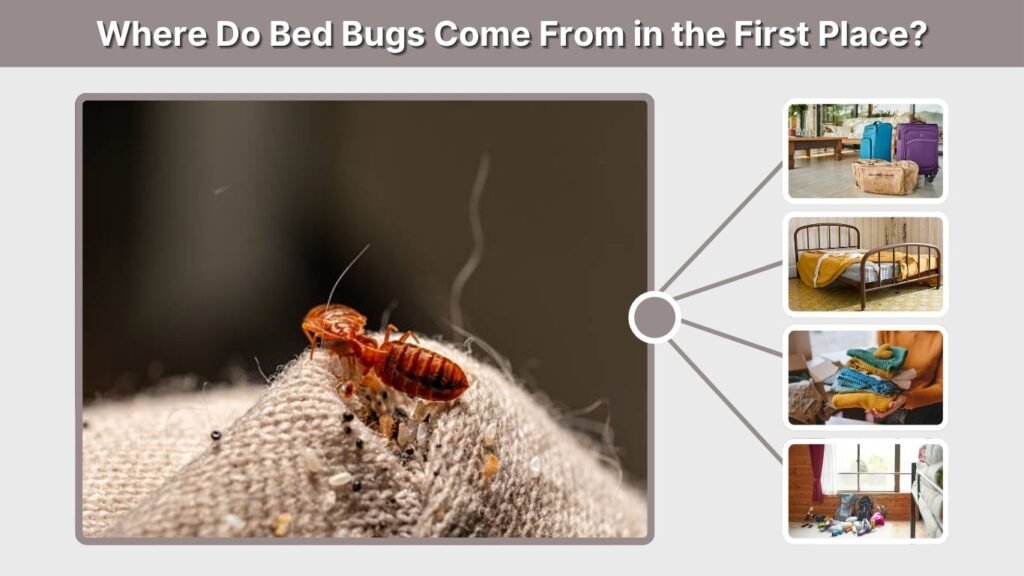
Modern household infestations usually begin when one or more bed bugs are accidentally transported from an infested location. Their flat bodies allow them to hide in tiny spaces, making them excellent hitchhikers. People often carry them without realizing it. Once introduced into a home with access to people or other warm-blooded hosts, they can establish a breeding population.
Common Sources of Bed Bugs
- Luggage brought home after travel
- Used mattresses or bed frames
- Secondhand couches and upholstered furniture
- Clothing from an infested location
- Bedding and blankets
- Backpacks and overnight bags
- Boxes and stored belongings
- Movement between neighboring apartments
- Personal belongings placed near infested items
The EPA specifically notes that bed bugs can travel from one location to another on furniture, bedding, luggage, boxes, and clothing.
Do Bed Bugs Suddenly Appear?
Bed bugs do not spontaneously develop inside a mattress or dirty bedroom. An infestation starts after bugs or their eggs are introduced from another location or, particularly in connected housing, after insects move from an infested area nearby.
Because they hide extremely well, an infestation may remain unnoticed until it has grown. This can make bed bugs seem as though they suddenly appeared overnight.
Where Do Bed Bugs Come From Originally?
Bed bugs have been associated with humans for thousands of years, long before modern mattresses, hotels, or apartment buildings existed. Scientists studying the common bed bug, Cimex lectularius, have found evidence of an ancestral connection with bats. One leading hypothesis suggests early humans encountered bat-associated bugs while living in caves, after which some populations adapted increasingly to human hosts.
Where Do Bed Bugs Come From in Nature?
The broader bed bug family includes species associated with bats and birds as well as humans. Research has identified distinct human-associated and bat-associated lineages of the common bed bug.
This historical connection helps explain why bed bugs existed long before beds. Human settlement, travel, trade, and increasingly dense living environments later provided opportunities for human-associated bed bugs to spread across large geographic areas.
Where Did Modern Bed Bug Infestations Come From?
Bed bugs were greatly reduced in many places during the mid-20th century but later resurged internationally. Scientific research has linked this resurgence to factors including increased international travel and commerce and widespread insecticide resistance.
Today, bed bugs occur across many parts of the world and can infest everything from homes to hotels and dormitories.
Where Do Bed Bugs Come From in Your House?
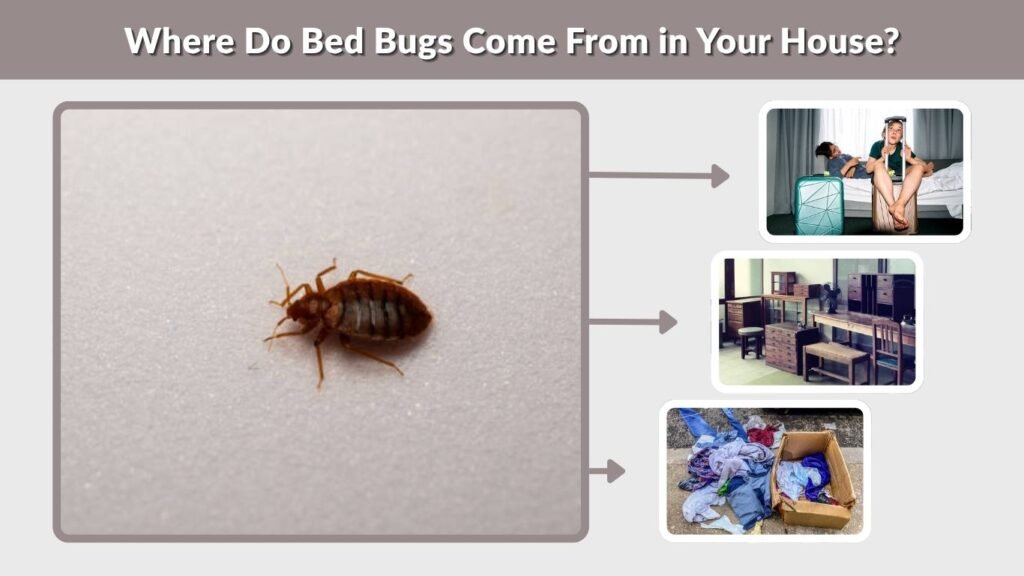
Finding bed bugs at home does not necessarily reveal where you originally encountered them. A traveler may unknowingly bring home a bug inside a suitcase, or an infested piece of furniture may introduce them. In multi-unit housing, bed bugs can also move between nearby spaces. Cleanliness does not determine whether a home can become infested.
Common Ways They Enter a House
- Returning luggage after hotel or vacation stays
- Secondhand furniture brought indoors
- Used mattresses or upholstered items
- Clothing transported from an infested place
- Bags or backpacks placed near infested belongings
- Visitors carrying bugs in personal belongings
- Moving boxes from an infested residence
- Nearby infestations in connected housing
Can Bed Bugs Come Into a Clean House?
Yes. Bed bugs are attracted to available hosts rather than dirt. The CDC states that the cleanliness of a location does not determine whether bed bugs are present. They have been found in homes as well as high-end hotels and resorts.
Clutter can provide additional hiding places and make detection or treatment more difficult, but clutter itself does not create bed bugs.
Where Do Bed Bugs Come From on a Mattress?
Bed bugs do not originate inside mattresses. Instead, they move toward beds because sleeping people provide a dependable blood source. Once present in a room, their flattened bodies allow them to hide along mattress seams, box springs, bed frames, headboards, and nearby cracks during the day.
Common Bed Bug Hiding Places
- Mattress seams and piping
- Box springs
- Bed-frame joints
- Behind headboards
- Under nearby furniture
- Baseboard cracks
- Wall crevices
- Behind loose wallpaper
- Around bedside furniture
- In luggage stored near beds
The CDC reports that bed bugs generally concentrate around areas where people sleep, although they can travel considerable distances during the night.
Why Are Bed Bugs Found Near Beds?
Bed bugs feed primarily while people are resting. Staying close to a sleeping host reduces the distance they must travel for a blood meal.
After feeding, they return to protected cracks or crevices. Over time, eggs, nymphs, adults, shed skins, and dark fecal spots may accumulate near established hiding areas.
Where Do Bed Bugs Come From in Apartments?
Apartments can present additional challenges because multiple living spaces are physically connected. An infestation may be brought into one unit through travel, furniture, or belongings and then potentially spread to neighboring spaces. Bed bugs can move through cracks, wall voids, or other structural connections, which means controlling a multi-unit infestation may require cooperation beyond a single apartment.
How Bed Bugs Spread Between Apartments
Bed bugs do not need to live permanently inside one mattress. In connected buildings, they may move into neighboring units while searching for hosts or new hiding places.
EPA guidance for multi-family housing recommends reducing potential movement by sealing cracks around baseboards and other openings and using measures such as door sweeps where appropriate.
Can You Tell Which Apartment Started the Infestation?
Not always. By the time bed bugs are discovered, they may have been present for weeks or longer and may have moved between connected spaces. Simply finding more bugs in one room does not necessarily establish the original source.
A professional inspection of surrounding units may be needed when infestations occur in multi-family buildings.
Do Bed Bugs Come From Outside or From Pets?
Bed bugs are different from ticks and many outdoor insects. Human-associated bed bugs are strongly adapted to indoor environments where sleeping hosts are consistently available. They are more commonly introduced through belongings or movement from another infestation than by wandering into a home from lawns or gardens.
Can Bed Bugs Come From Dogs?
Bed bugs can feed on other warm-blooded animals if necessary, but the two species commonly responsible for human infestations primarily use humans as hosts. The CDC notes that other mammals and birds can also be used when human hosts are unavailable.
Dogs therefore do not normally carry bed bugs around in their fur in the way fleas commonly live on animals. However, bed bugs may hide in pet bedding or nearby cracks if those areas are close to an infestation.
Do Bed Bugs Live Outside?
Human-associated bed bugs are primarily indoor pests. Their relatives may be associated with bats or birds in natural settings, but household bed bug infestations are typically connected with human living and sleeping environments.
How Can You Prevent Bringing Bed Bugs Home?
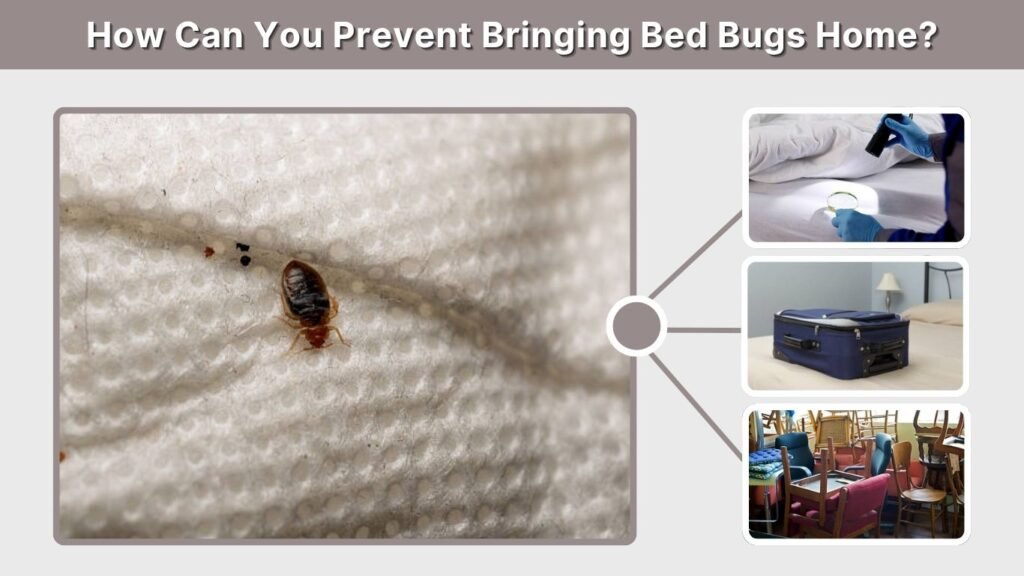
Because hitchhiking is one of the primary ways bed bugs spread, prevention focuses on inspecting belongings and limiting opportunities for bugs to travel with you. Hotels, used furniture, shared residential buildings, and previously infested belongings deserve particular attention. Catching a small introduction early can also make an infestation easier to address.
Ways to Reduce Your Risk
- Inspect hotel mattresses and headboards.
- Check luggage racks before using them.
- Keep suitcases away from beds when traveling.
- Inspect luggage when returning home.
- Check secondhand furniture before bringing it inside.
- Inspect used beds and couches carefully.
- Reduce unnecessary clutter around sleeping areas.
- Watch for dark spots, shed skins, eggs, or live bugs.
- Use care when moving belongings from an infested location.
The EPA also advises travelers to inspect luggage after returning home and notes that sufficiently high dryer heat can kill bed bugs.
FAQs
1. What causes bed bugs in the first place?
Bed bugs usually enter a property after being transported from an existing infestation on luggage, furniture, clothing, bedding, boxes, or similar belongings. They can also spread between connected living spaces.
2. Where do baby bed bugs come from?
Baby bed bugs, called nymphs, hatch from eggs laid by adult females in sheltered locations such as mattress seams, box springs, baseboards, or other cracks and crevices.
3. Do bed bugs come from dirty houses?
No. Bed bugs can infest both clean and cluttered properties. Cleanliness does not determine whether they are present, although reducing clutter can remove some hiding places.
4. Can bed bugs come from hotels?
Yes. An infested hotel room can provide an opportunity for bed bugs to hide inside luggage, clothing, or other belongings and travel home with a guest.
5. Where do bed bugs hide during the day?
They commonly hide near sleeping areas, including mattress seams, box springs, headboards, bed frames, furniture, baseboards, wall cracks, and other narrow crevices. They generally emerge to feed when hosts are resting.