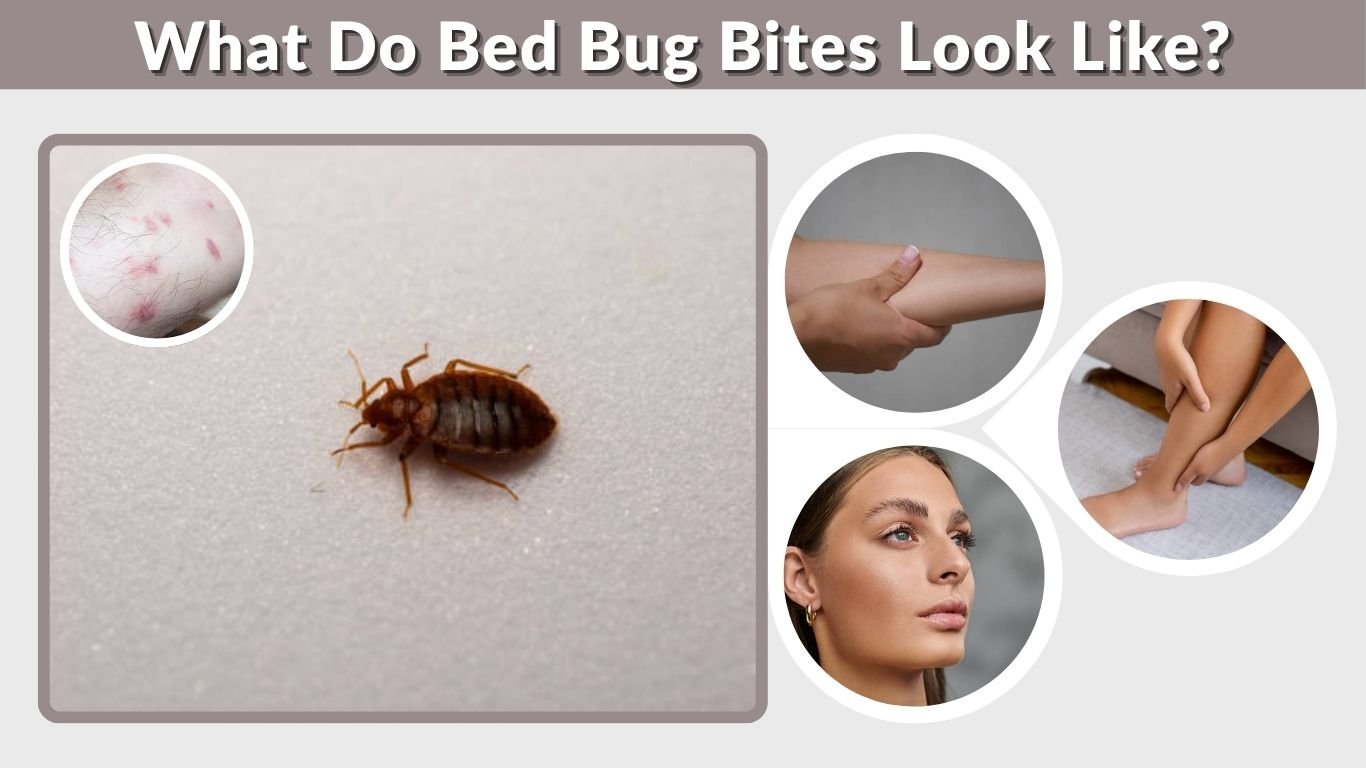
Bed bug bites often appear as small, itchy, swollen bumps or welts, sometimes grouped in clusters or arranged in a line or zigzag pattern. However, their appearance varies widely from person to person, and some people develop little or no visible reaction. Fresh bites may be subtle before becoming more noticeable over the following days. This guide explains what bed bug bites look like on human skin, including different skin tones, common body locations, early bites, healing stages, and how they compare with flea and mosquito bites.
What Do Bed Bug Bites Look Like on Humans?
Bed bug bites do not have one appearance that reliably identifies them. Many reactions resemble mosquito bites, flea bites, hives, or other skin irritation. Typical reactions involve itchy, raised areas that may occur individually or in groups. According to the CDC, bite marks can appear from one to several days after exposure, although some people may take considerably longer to react.
Common Appearance of Bed Bug Bites
- Small raised bumps or welts
- Itchy or irritated skin
- Pink, red, reddish-purple, or darker discoloration
- Several bites grouped closely together
- Bites arranged in a line or zigzag pattern
- Mild swelling around individual bites
- Occasionally a tiny central puncture point
- Larger swollen reactions in sensitive individuals
The American Academy of Dermatology notes that clusters may contain several bites and often develop in a zigzag pattern. Still, the EPA emphasizes that skin bites alone are a poor way to confirm bed bugs because many insects and skin conditions create similar marks.
What Do Fresh or Early Bed Bug Bites Look Like?
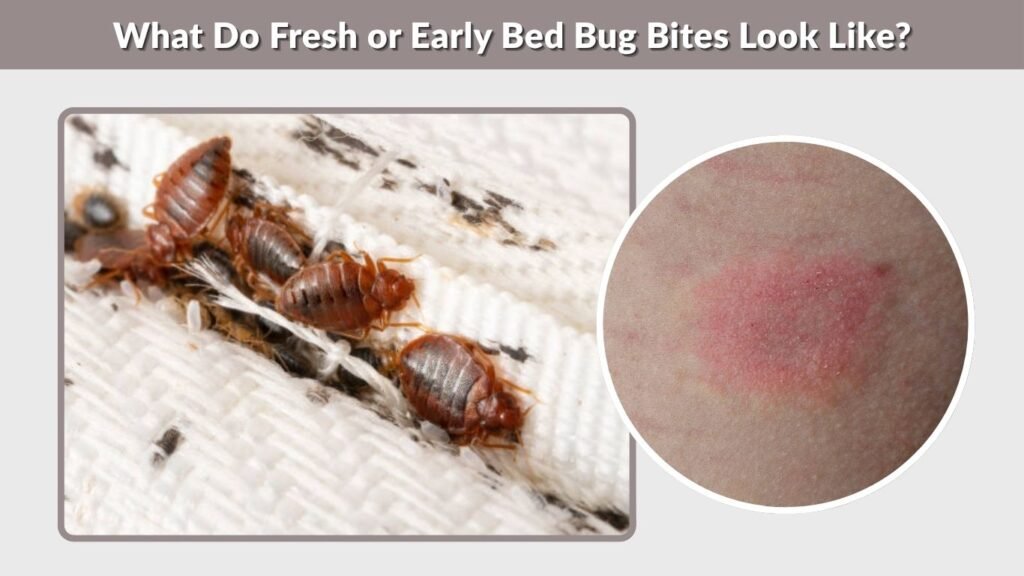
Fresh bed bug bites can be difficult to recognize because the skin may not react immediately. Bed bugs inject saliva while feeding, and the visible reaction results largely from the body’s response to that exposure. Some people notice marks relatively quickly, while others may not develop obvious itching or swelling until days later. A person can also have no noticeable reaction at all.
What Bed Bug Bites Look Like at First
An early bite may begin as a small, slightly raised spot with mild discoloration. It can initially resemble a mosquito bite or another minor irritation. Over time, itching and swelling may become more noticeable.
People who have previously been exposed to bed bugs may sometimes react more quickly than someone being bitten for the first time. The AAD reports that an initial reaction can take days and, in some cases, as long as about two weeks to become noticeable.
What Do Nymph Bed Bug Bites Look Like?
Young bed bugs, called nymphs, also feed on blood. Their bites do not have a unique appearance that allows you to distinguish them from adult bed bug bites.
The size of the bug does not reliably determine the size of the skin reaction. A person’s immune response plays a much larger role in whether a bite becomes small, large, itchy, or barely visible.
What Do Bed Bug Bites Look Like on Different Skin Tones?
Bed bug bites can occur on every skin tone, but redness is not equally visible on all skin. This can make descriptions centered only on “red bumps” misleading. It is often more useful to look for changes in color, swelling, texture, itching, and the pattern of lesions rather than relying only on redness.
Bed Bug Bites on Light Skin
On lighter skin, bites may look pink to red and can develop into raised, itchy welts. The surrounding area may become mildly swollen, especially after scratching or with a stronger reaction.
Several bites close together can create a noticeable cluster. Individual reactions still vary widely, so not every bite will appear bright red or significantly swollen.
Bed Bug Bites on Black or Dark Skin
On Black, brown, and other darker skin tones, bites may appear red-brown, purple, deep brown, or darker than the surrounding skin rather than clearly bright red. Raised texture and swelling can therefore be important clues.
After inflammation improves, some people may notice lingering areas of darker discoloration. Because bite appearance alone is nonspecific, suspected bed bug bites should be considered alongside evidence from the sleeping area.
Where Do Bed Bug Bites Usually Appear?
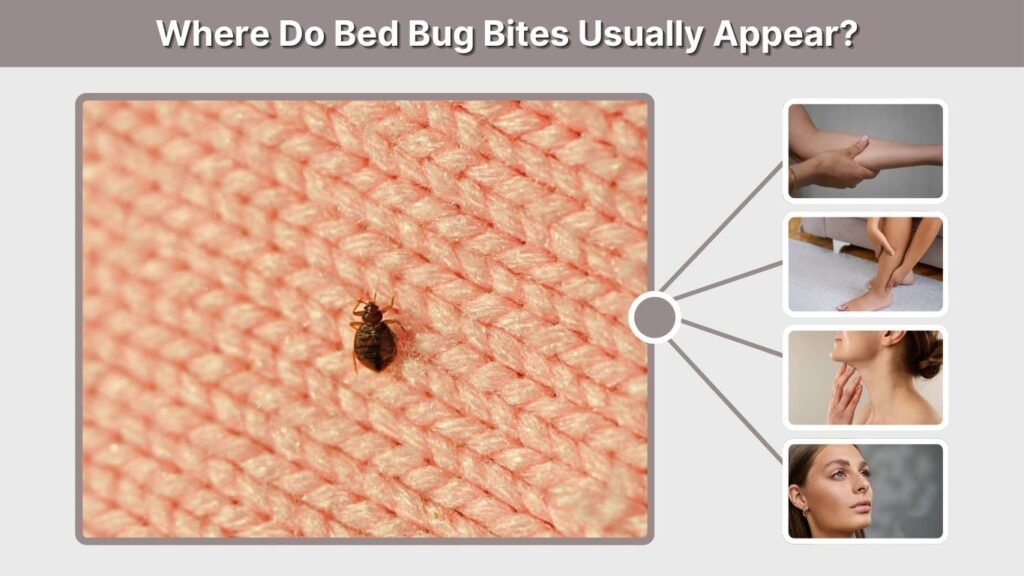
Bed bugs feed while people are resting or sleeping, so bites frequently occur on skin that is uncovered or easily accessible. The CDC specifically identifies the face, neck, arms, and hands among commonly noticed locations. However, bites can occur elsewhere when bed bugs gain access beneath loose clothing or bedding.
Common Body Locations
- Arms and forearms
- Hands and fingers
- Legs
- Ankles and feet
- Neck
- Face
- Shoulders
- Back
- Other exposed areas during sleep
Bed bug bites on the face can resemble pimples, mosquito bites, or allergic bumps. Bites on the legs or arms may be easier to recognize when several occur in a cluster or irregular line.
The location can offer a clue, but it cannot confirm the cause by itself.
Bed Bug Bites vs. Flea and Mosquito Bites
Bed bug, flea, and mosquito bites can all cause itchy raised bumps, so visual identification is often difficult. The CDC specifically notes that bed bug bites can resemble flea and mosquito bites. Considering the pattern, body location, timing, and evidence of insects in the environment provides more useful information than judging a single bite.
Key Differences to Look For
- Bed bug bites: May occur in clusters, lines, or zigzag arrangements, often after sleeping.
- Flea bites: Frequently affect lower legs and ankles, although they can occur elsewhere.
- Mosquito bites: Often appear as individual puffy, itchy bumps on exposed skin.
- Bed bug exposure: May be accompanied by stains, shed skins, fecal spots, eggs, or live bugs near the bed.
- Other skin conditions: Hives, eczema, contact reactions, and other problems can sometimes resemble insect bites.
No pattern is completely diagnostic. The EPA specifically advises that bites alone are not reliable evidence of a bed bug infestation.
What Do Bed Bug Bites Look Like When Healing?
Most uncomplicated bite reactions gradually improve without leaving permanent damage. Swelling and itching usually lessen as the inflammatory reaction settles. Scratching, however, can damage the skin and delay healing. It may also introduce bacteria into broken skin, resulting in a secondary infection. How quickly marks disappear depends on the person’s reaction and how much the area has been irritated.
Normal Healing of Bed Bug Bites
As a bite heals, the raised area generally becomes flatter and itching decreases. Discoloration may fade more slowly than swelling. Some people, particularly those prone to post-inflammatory pigmentation, may notice a darker mark that remains after the active irritation has resolved.
Avoiding scratching can reduce skin damage and the chance of infection.
What Do Infected Bed Bug Bites Look Like?
An infected bite may become increasingly tender, warm, swollen, or painful rather than gradually improving. Drainage such as pus can also indicate infection.
The AAD recommends medical evaluation when bites become infected, develop significant blistering, or cause an allergic skin reaction. Seek urgent medical attention for serious symptoms such as difficulty breathing or significant swelling of the tongue or throat.
How to Know If Bites Are Really From Bed Bugs
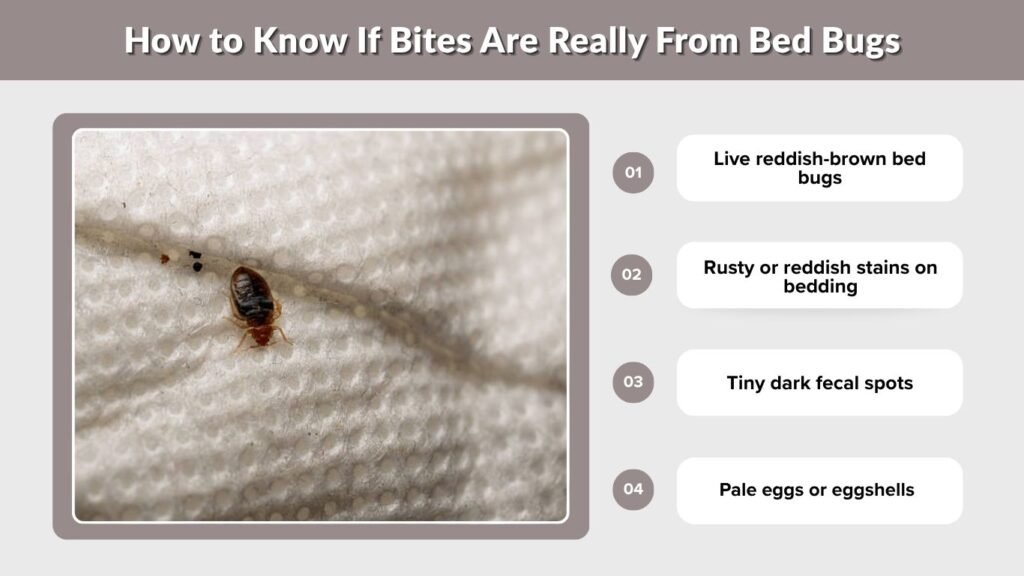
Because bed bug bites can imitate many other conditions, confirming an infestation requires inspecting the environment. Concentrate on mattresses, box springs, headboards, bed frames, upholstered furniture, cracks, and nearby crevices. Finding physical evidence is much more convincing than trying to identify the insect solely from the appearance of your skin.
Signs of Bed Bugs Around Your Bed
- Live reddish-brown bed bugs
- Rusty or reddish stains on bedding
- Tiny dark fecal spots
- Pale eggs or eggshells
- Shed skins from growing bed bugs
- Bugs hiding along mattress seams or furniture cracks
- A noticeable musty odor in heavier infestations
If you continue waking with new bites but cannot find the source, a qualified pest-control professional can inspect the property. A dermatologist or other healthcare professional can help when the skin reaction is severe or its cause remains uncertain.
FAQs
1. What do bed bug bites look and feel like?
They often appear as itchy, raised bumps or welts that may occur individually, in clusters, or in a line. Reactions range from almost invisible marks to larger swollen areas.
2. Do bed bug bites always appear in a straight line?
No. A line or zigzag pattern can occur, but bites may also be scattered or clustered. Pattern alone cannot prove that bed bugs caused them.
3. What do bed bug bites look like after a week?
After a week, uncomplicated bites may be flatter, less itchy, and less inflamed. Some discoloration can remain after the swelling disappears. Continued scratching may make them last longer.
4. Can bed bug bites appear without itching?
Yes. People react differently to bed bug bites. Some develop intense itching, while others have mild marks or no noticeable skin reaction at all.
5. How can I confirm that I have bed bugs?
Do not rely only on bite appearance. Inspect mattresses, bedding, furniture, and nearby cracks for live bugs, fecal spots, rusty stains, eggs, and shed skins. Finding physical evidence provides much stronger confirmation of an infestation.