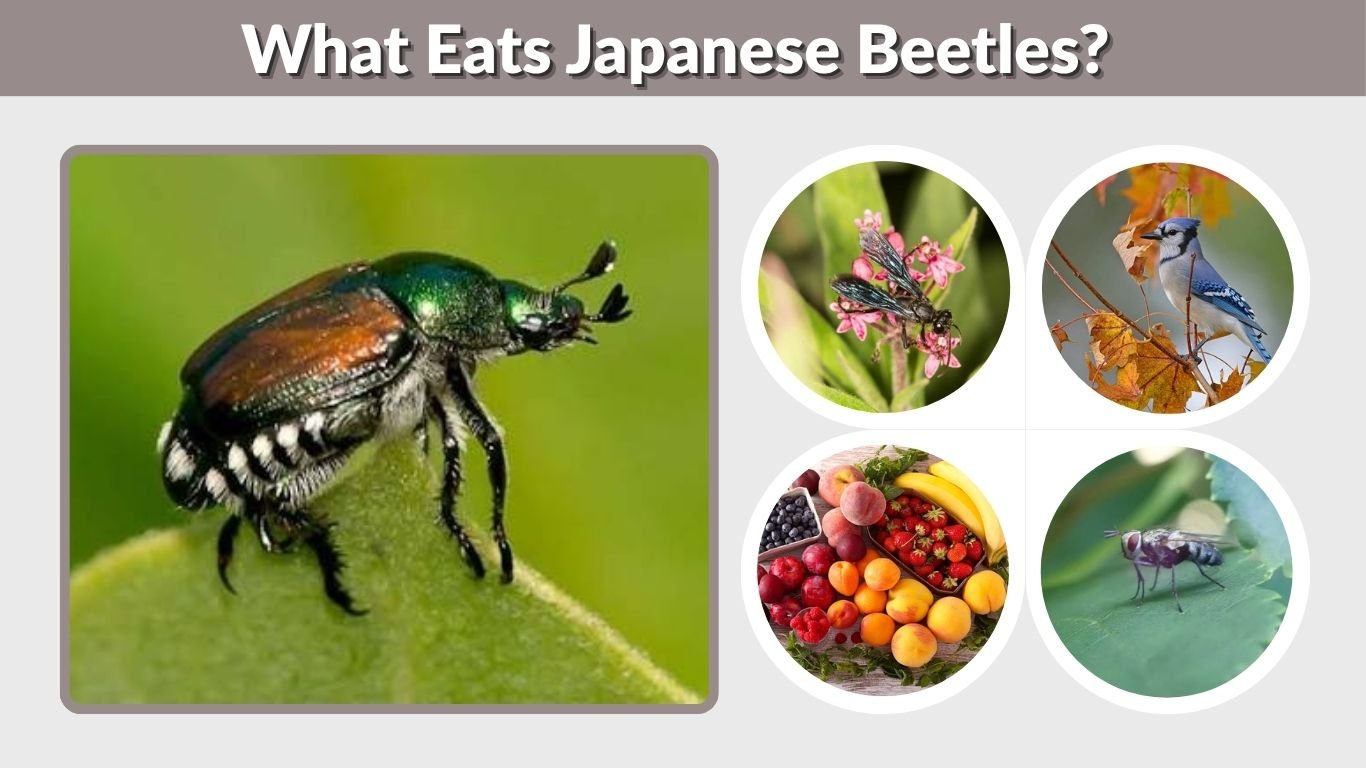
Japanese beetles (Popillia japonica) are destructive garden pests that feed on the leaves, flowers, and fruits of hundreds of plant species. Fortunately, several natural predators help control their populations, including birds, chickens, praying mantises, spiders, and small mammals. Some predators attack adult beetles, while others feed on their underground grubs. Beneficial insects, such as parasitic wasps and tachinid flies, also play important roles in biological control. Understanding what eats Japanese beetles can help gardeners protect their plants while reducing their dependence on chemical pesticides.
What Animals Eat Japanese Beetles?
Japanese beetles have several natural enemies that prey on them during different stages of their development. Adult beetles are vulnerable to birds and predatory insects, while their underground grubs provide food for mammals and ground-foraging birds. Although these predators can reduce beetle numbers, they rarely eliminate a large infestation completely.
Common Japanese Beetle Predators
Several animals and beneficial insects consume Japanese beetles or their developing larvae:
- Birds: Starlings, robins, crows, and grackles feed on Japanese beetles or their grubs.
- Chickens: Domestic chickens can eat adult beetles and grubs while foraging.
- Ducks: Some ducks consume beetles and other insects they encounter.
- Praying mantises: These generalist predators may capture adult Japanese beetles.
- Spiders: Certain spiders catch adult beetles in webs or through active hunting.
- Skunks: They dig through lawns to locate beetle grubs.
- Raccoons: These mammals search beneath turfgrass for grubs.
- Moles: They feed on underground insects, including beetle larvae.
Predator activity varies depending on habitat, prey availability, and the stage of the beetle’s life cycle.
What Birds Eat Japanese Beetles?
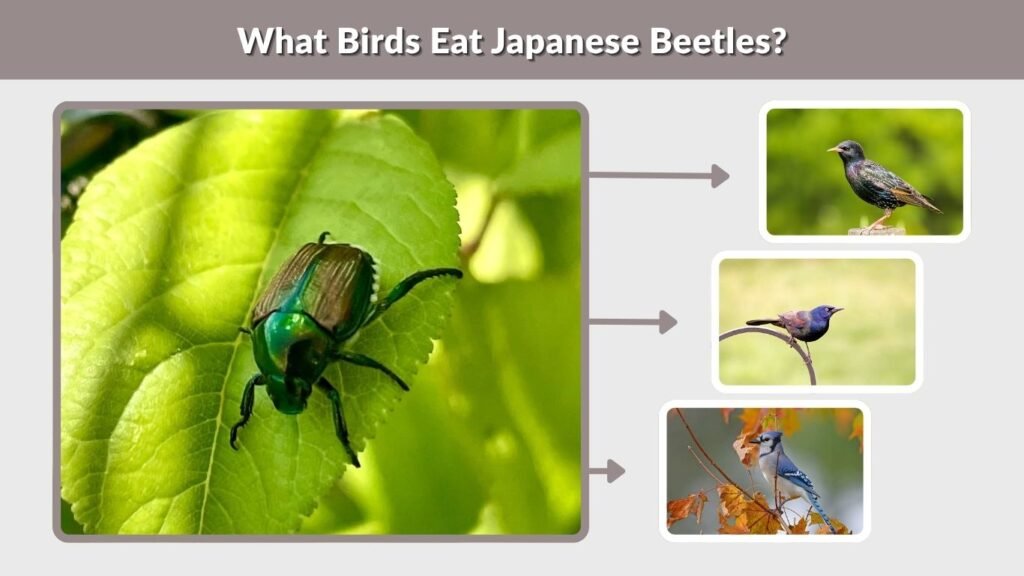
Birds are among the most visible natural predators of Japanese beetles. Some species capture adults feeding on plants, while others search for grubs in lawns and soil. Their feeding habits vary, but insect-eating birds can help reduce beetle numbers in gardens, agricultural areas, and residential landscapes.
Birds That Eat Japanese Beetles
Several birds are known to consume Japanese beetles or their larvae:
- European starlings: Eat adult beetles and search lawns for grubs.
- Common grackles: Feed on various insects, including Japanese beetles.
- American robins: Search the ground for grubs and other invertebrates.
- American crows: Consume insects and beetle larvae when available.
- Blue jays: Opportunistically feed on beetles and other insects.
- Sparrows: Some species occasionally consume small beetles and other insects.
Do Birds Help Control Japanese Beetles?
Birds can reduce local beetle populations by feeding on adults and larvae. However, their effectiveness depends on the number of birds, the availability of alternative food, and the severity of the infestation.
Encouraging insect-eating birds may support natural pest control, but it should be combined with other garden management practices when Japanese beetle numbers become excessive.
Do Chickens Eat Japanese Beetles?
Yes, chickens can eat Japanese beetles. These birds are opportunistic omnivores that consume insects, seeds, vegetation, and other available food. When allowed to forage, chickens may catch adult Japanese beetles on low-growing plants or pick them from the ground. They can also consume grubs exposed while scratching through soil.
Can Chickens Eat Japanese Beetles Safely?
Japanese beetles are not generally considered poisonous to chickens, and unsprayed beetles can provide supplemental protein.
However, gardeners should avoid feeding chickens beetles collected from pesticide-treated plants. Beetles containing chemical residues may expose poultry to harmful substances. It is also preferable to avoid feeding beetles collected in soapy water or chemical traps.
Do Chickens Eat Japanese Beetle Grubs?
Chickens readily consume many types of insect larvae, including white grubs found in soil. Scratching chickens may uncover and eat Japanese beetle grubs when they are close to the surface.
However, free-ranging chickens can also damage garden beds, seedlings, and delicate plants. Supervised access is usually more practical than allowing unrestricted foraging.
What Bugs Eat Japanese Beetles?
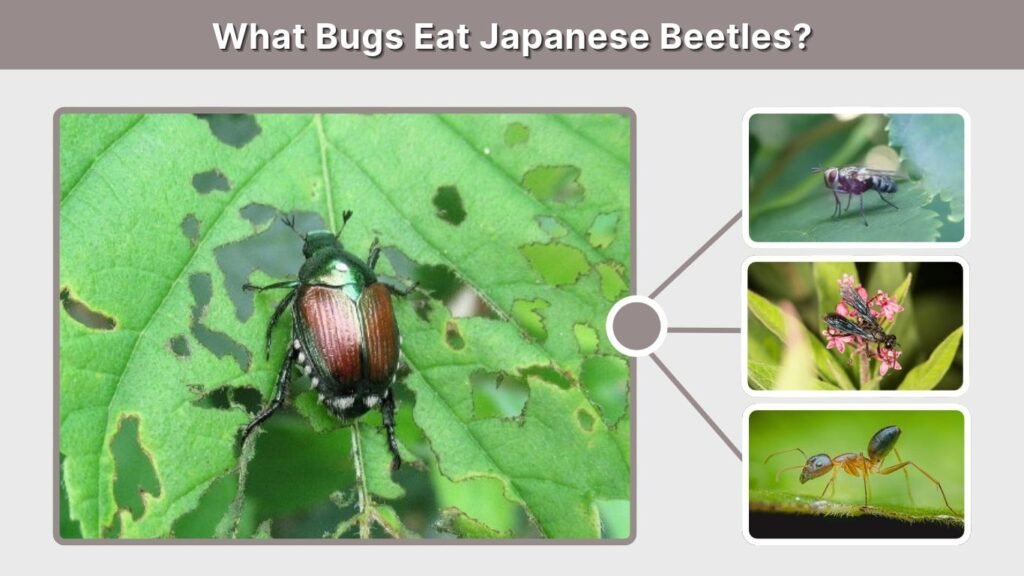
Several predatory and parasitic insects attack Japanese beetles. Some catch and consume adult beetles, while others lay eggs on or inside beetles and their larvae. These beneficial insects contribute to natural pest management, although their populations and effectiveness vary considerably between regions.
Praying Mantises and Assassin Bugs
Praying mantises are generalist predators that capture insects using their powerful front legs. They may eat Japanese beetles when they encounter them, but they are not specialized Japanese beetle predators.
Assassin bugs and predatory stink bugs can also attack adult beetles. They use piercing mouthparts to feed on insect prey.
Parasitic Wasps and Tachinid Flies
Two important biological control agents are particularly associated with Japanese beetles:
- Winsome fly (Istocheta aldrichi): A tachinid fly that lays eggs on adult Japanese beetles. Developing fly larvae enter and eventually kill their hosts.
- Spring tiphia wasp (Tiphia vernalis): A parasitic wasp that attacks Japanese beetle grubs in the soil.
- Summer tiphia wasp (Tiphia popilliavora): Another parasitoid that targets Japanese beetle larvae during their development.
- Ground beetles: Some predatory ground beetles consume Japanese beetle eggs and young larvae.
- Ants: Certain ants feed on Japanese beetle eggs and small larvae.
These natural enemies can contribute to biological control, but their presence does not guarantee complete protection against infestations.
What Animals Eat Japanese Beetle Grubs?
Japanese beetle grubs are C-shaped, creamy-white larvae that live underground and feed mainly on grass roots. Because they remain in the soil for much of the year, they are vulnerable to animals that dig or forage beneath the surface. These predators can reduce grub populations, but their feeding activity sometimes damages lawns.
Mammals That Feed on Japanese Beetle Grubs
- Skunks: Dig small holes in lawns while searching for grubs.
- Raccoons: Pull back sections of turfgrass to reach underground larvae.
- Moles: Hunt soil-dwelling insects, including white grubs.
- Shrews: Consume various small invertebrates, including insect larvae.
- Armadillos: Dig through soil to locate grubs and other underground insects.
Do Toads and Frogs Eat Japanese Beetles?
Toads and frogs are opportunistic predators that consume many insects. They may eat Japanese beetles when suitable individuals are encountered.
However, they are not considered major specialized predators of Japanese beetles. Their presence can support broader insect control in gardens, particularly where suitable shelter and moisture are available.
How to Attract Natural Predators of Japanese Beetles
Encouraging natural predators can support long-term Japanese beetle management. A garden with diverse plants, suitable shelter, and fewer unnecessary pesticide applications can provide better conditions for beneficial insects and wildlife. However, natural predators alone may not prevent heavy feeding damage during peak beetle activity.
Ways to Encourage Beneficial Predators
- Grow diverse flowers: Nectar-producing plants can support beneficial parasitoid flies and wasps.
- Provide bird-friendly habitat: Native shrubs, trees, and appropriate shelter encourage insect-eating birds.
- Avoid unnecessary insecticides: Broad-spectrum products may kill beneficial predators alongside pests.
- Maintain healthy soil: Suitable soil conditions support a diverse community of ground-dwelling organisms.
- Protect beneficial insects: Recognize parasitoid flies, predatory bugs, and other natural enemies before treating plants.
- Remove beetles manually: Handpicking adults into soapy water can reduce plant damage when populations are manageable.
Can Natural Predators Eliminate Japanese Beetles?
Natural enemies can suppress Japanese beetle populations, but they rarely provide complete control. Adult beetles can fly into gardens from surrounding areas, and new individuals emerge throughout the summer.
Combining biological control with regular monitoring, hand removal, plant protection, and appropriate lawn management usually provides more reliable results.
What Do Japanese Beetles Eat?
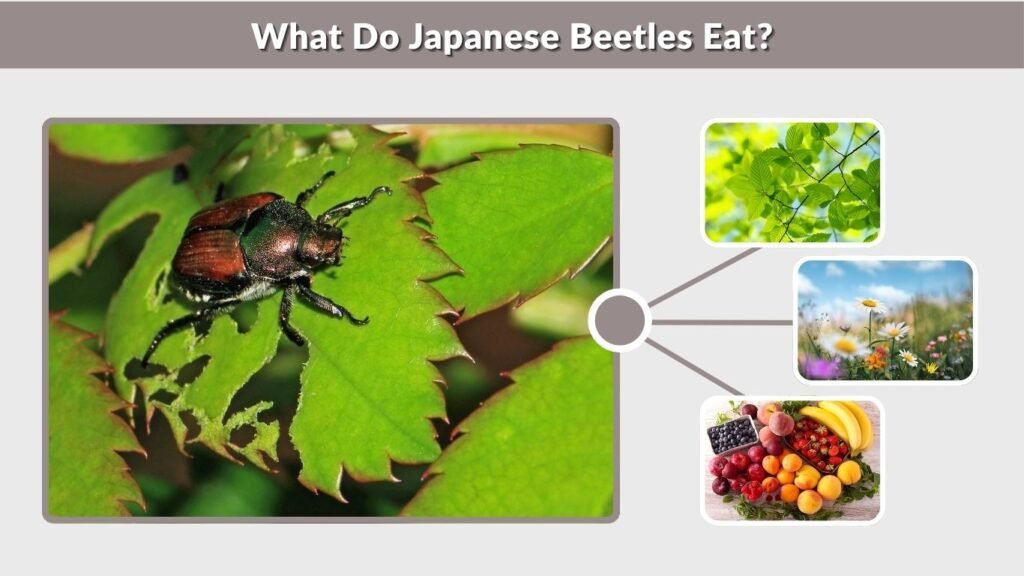
While many animals eat Japanese beetles, these beetles also consume a wide variety of plants. Adult Japanese beetles feed on leaves, flowers, and fruits, while their grubs primarily consume grass roots and other underground plant material.
What Plants Do Japanese Beetles Eat?
Japanese beetles feed on more than 300 plant species. Commonly affected plants include roses, grapes, raspberries, blackberries, Japanese maples, birch trees, and linden trees.
They are also known to damage certain vegetable plants, including beans and corn.
Adult beetles often chew tissue between leaf veins, creating a skeletonized or lace-like appearance. Severe infestations can damage flowers and weaken susceptible plants.
Do Japanese Beetles Eat Aphids?
No, Japanese beetles are primarily plant-feeding insects rather than predators. They do not normally hunt aphids or other garden pests.
Adult beetles feed on plant foliage, flowers, and fruits, while the larvae develop underground by consuming plant roots. Their feeding behavior makes them agricultural and ornamental plant pests.
FAQs
1. What Is the Main Natural Predator of Japanese Beetles?
Japanese beetles have several important natural enemies, including starlings, grackles, parasitoid flies, and parasitic wasps. No single predator consistently controls every population. Birds consume adults and grubs, while specialized parasitoids attack particular life stages.
2. Do Praying Mantises Eat Japanese Beetles?
Yes, praying mantises can eat Japanese beetles when they successfully capture them. However, mantises are generalist predators and do not specifically target Japanese beetles. Their presence in a garden does not guarantee effective control of a large beetle infestation.
3. Do Dragonflies Eat Japanese Beetles?
Dragonflies primarily catch flying insects such as mosquitoes, flies, and other relatively small prey. Although a dragonfly might occasionally capture a suitably sized beetle, Japanese beetles are not considered a major or well-documented food source for dragonflies.
4. Do Ladybugs Eat Japanese Beetles?
Ladybugs are primarily predators of soft-bodied insects such as aphids, although their diets vary by species. They are not important predators of adult Japanese beetles. Their relatively small size and feeding adaptations make them more effective against soft-bodied garden pests.
5. What Is the Best Natural Way to Control Japanese Beetles?
A combination of handpicking, monitoring, protecting vulnerable plants, and conserving natural predators is usually most effective. Remove adults early in the morning when they are sluggish. Beneficial nematodes may help control grubs when applied under suitable soil conditions, but no single method provides complete control.