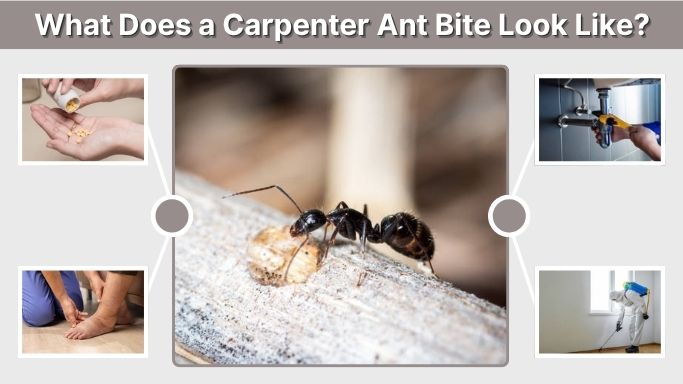
A carpenter ant bite usually looks like a small red bump, mild welt, or irritated spot on the skin. It may feel like a sharp pinch at first, followed by itching, soreness, or a brief burning feeling. Carpenter ants do not sting, but they can bite with strong jaws and may spray formic acid into the bite, which can make it hurt more. Most bites are mild and heal with simple care.
Do Carpenter Ants Bite?
Yes, carpenter ants can bite people, especially when they are handled, trapped against skin, or their nest is disturbed. They are not usually aggressive toward humans. Their bite is mainly defensive.
Ohio State University notes that carpenter ants have strong jaws, can bite when handled, and can inject formic acid into the wound. They do not sting.
What Does a Carpenter Ant Bite Look Like?
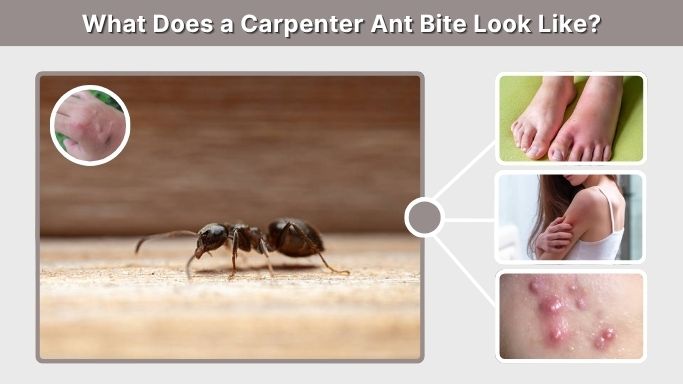
A carpenter ant bite often looks like a tiny red bump or pea-sized red mark. The skin may be slightly raised, swollen, itchy, or tender. In many cases, the bite looks similar to a mosquito bite, small ant bite, or minor skin irritation.
Common appearance:
- Small red bump
- Mild swelling
- Slight raised welt
- Tiny pinch mark
- Itchy skin
- Tender or sore spot
- Burning sensation for a short time
Most carpenter ant bites stay localized and do not spread widely.
Carpenter Ant Bite Identification
The easiest way to identify a carpenter ant bite is to see the ant biting you. Without seeing the ant, the bite can be hard to confirm because many insect bites look similar.
Key Signs
A carpenter ant bite may be identified by:
- One bite mark instead of many clustered bites
- Sharp pinch-like pain
- Mild redness around the bite
- No white pus-filled blister
- No large spreading rash
- No deep wound
- Symptoms that improve within 1–2 days
Cleveland Clinic explains that ant bites can cause redness, itching, swelling, pain, and sometimes allergic reactions, especially because ants can release formic acid.
Carpenter Ant Bite Symptoms
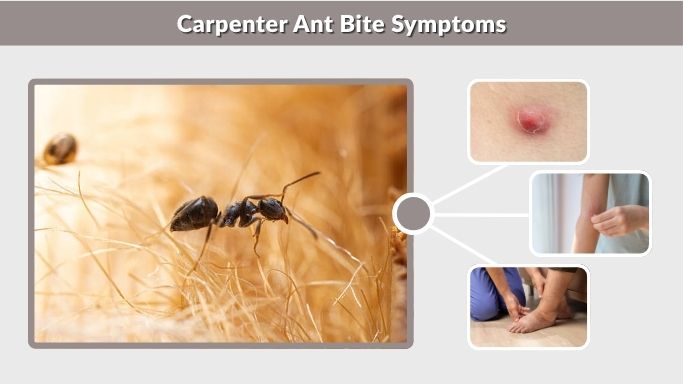
Most symptoms are mild and short-lived. Sensitive skin may react more strongly.
| Symptom | What It May Mean |
| Red bump | Normal mild reaction |
| Itching | Common skin irritation |
| Burning | Possible formic acid irritation |
| Swelling | Usually mild and local |
| Pain | Often from the ant’s jaws |
| Pus | Possible infection, not typical |
| Spreading redness | May need medical attention |
How Long Does a Carpenter Ant Bite Last?
Most carpenter ant bites improve within 24 to 48 hours. Itching or redness may last a little longer if the skin is scratched or irritated.
A bite may take longer to heal if:
- You scratch it
- The skin breaks open
- Bacteria enter the wound
- You have sensitive skin
- Multiple ants bite the same area
If the bite worsens after two days, it may be infected or may not be a carpenter ant bite.
Carpenter Ant Bite vs Fire Ant Sting
Carpenter ant bites and fire ant stings can look similar at first, but they are different.
| Feature | Carpenter Ant Bite | Fire Ant Sting |
| Pain | Sharp pinch, mild burning | Strong burning pain |
| Mark | Red bump or welt | Red bump with white pustule |
| Number | Often single | Often multiple |
| Cause | Bite with jaws | Sting with venom |
| Severity | Usually mild | Often more painful |
Fire ant stings commonly form white pustules. Carpenter ant bites usually do not.
Carpenter Ant Bite vs Spider Bite
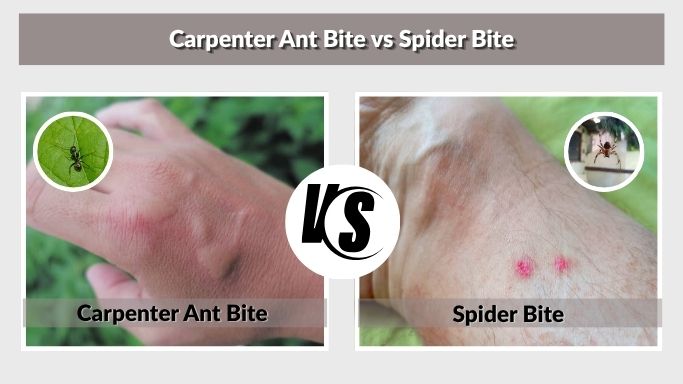
A carpenter ant bite is usually smaller and milder than a concerning spider bite. Spider bites may sometimes show two puncture marks, more swelling, bruising, or worsening pain.
A carpenter ant bite usually:
- Stays small
- Does not form a deep wound
- Does not turn black
- Does not spread quickly
- Improves with basic care
If a bite becomes dark, very painful, or forms an open sore, it should be checked by a doctor.
Are Carpenter Ant Bites Dangerous?
Carpenter ant bites are usually not dangerous. They do not spread disease like ticks or mosquitoes. The main problems are pain, itching, skin irritation, or infection from scratching.
A serious allergic reaction is rare but possible with ant bites. Cleveland Clinic notes that allergic reactions can happen after ant bites, especially in people sensitive to formic acid.
When to See a Doctor
Most bites do not need medical treatment. However, you should get medical help if symptoms become severe or unusual.
Warning Signs
Seek care if you notice:
- Trouble breathing
- Swelling of lips, face, or throat
- Dizziness
- Widespread hives
- Fever
- Pus or drainage
- Red streaks from the bite
- Severe swelling
- Pain that gets worse
- Redness spreading after 24–48 hours
These signs may suggest allergy or infection.
How to Treat a Carpenter Ant Bite
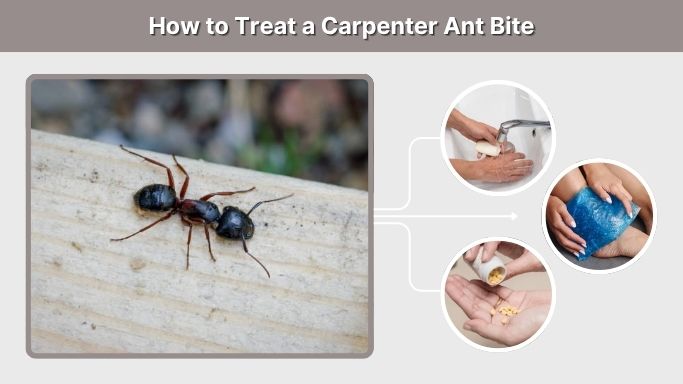
Simple home care usually works well.
Home Treatment Steps
- Wash the bite with soap and water
- Apply a cold compress for 10–15 minutes
- Avoid scratching
- Use anti-itch cream if needed
- Take an oral antihistamine if itching is strong
- Keep the area clean and dry
- Cover the bite if clothing rubs it
Do not cut, squeeze, or scratch the bite.
How to Identify the Carpenter Ant
Identifying the ant helps confirm the bite. Carpenter ants are usually larger than many household ants. They may be black, reddish-black, brown, or red depending on species.
Carpenter Ant Identification Features
Carpenter ants often have:
- Large body size
- Narrow waist
- Elbowed antennae
- Smooth rounded thorax
- Black or red-and-black color
- Workers of different sizes
- Winged swarmers during mating season
Rutgers Extension says black carpenter ants are large, often uniformly black, and have an arch-shaped thorax when viewed from the side.
Why Carpenter Ants Bite
Carpenter ants bite for defense. They are most likely to bite when they are trapped or when their nest is disturbed.
You may get bitten while:
- Moving old wood
- Handling firewood
- Cleaning sheds or garages
- Disturbing a nest
- Picking up an ant
- Sitting near an active ant trail
- Wearing clothing where an ant is trapped
Does a Bite Mean You Have an Infestation?
One bite does not always mean you have an infestation. However, repeated carpenter ant sightings indoors can be a warning sign.
Possible Infestation Signs
Look for:
- Large black ants indoors
- Ant trails at night
- Sawdust-like frass
- Rustling sounds in walls
- Winged ants inside
- Ants near damp wood
- Ants around windows, sinks, or bathrooms
Carpenter ants do not eat wood, but they tunnel through it to build nests. This can damage damp or weakened wood over time.
How to Prevent Carpenter Ant Bites
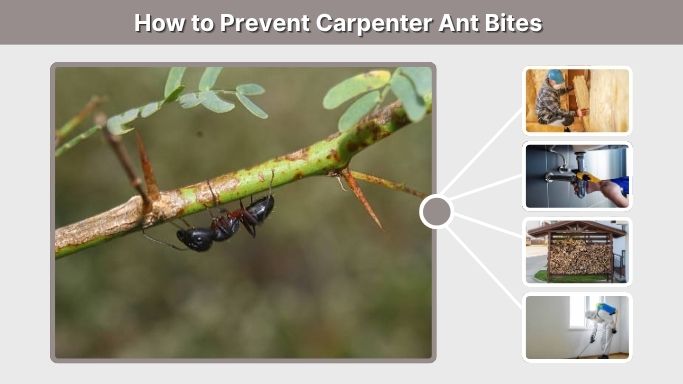
Preventing bites means reducing contact with ants and controlling nesting areas.
Prevention Tips
- Wear gloves when moving wood
- Do not handle ants with bare hands
- Fix leaks and moisture problems
- Remove rotting wood near the home
- Store firewood away from the house
- Seal cracks around doors and windows
- Keep food sealed
- Clean ant trails
- Trim branches touching the roof
- Call pest control for heavy indoor activity
FAQs
What does a carpenter ant bite look like?
A carpenter ant bite usually looks like a small red bump or mild welt. It may be slightly swollen, itchy, sore, or burning. Most bites stay small and heal within one or two days.
Do carpenter ant bites hurt?
Yes, carpenter ant bites can hurt. They often feel like a sharp pinch because carpenter ants use strong jaws. The bite may also burn briefly if formic acid irritates the skin.
How do I identify a carpenter ant bite?
The best clue is seeing the ant bite you. The bite usually appears as one small red bump with mild swelling and short-lasting pain. It usually does not form a white pustule like a fire ant sting.
Are carpenter ant bites dangerous?
Carpenter ant bites are usually not dangerous. Most cause only minor redness, itching, or soreness. Medical care is needed if you develop severe swelling, trouble breathing, fever, pus, or spreading redness.
How long does a carpenter ant bite last?
Most carpenter ant bites last 24 to 48 hours. Mild itching or redness may last longer if the bite is scratched. If symptoms get worse after two days, see a healthcare provider.