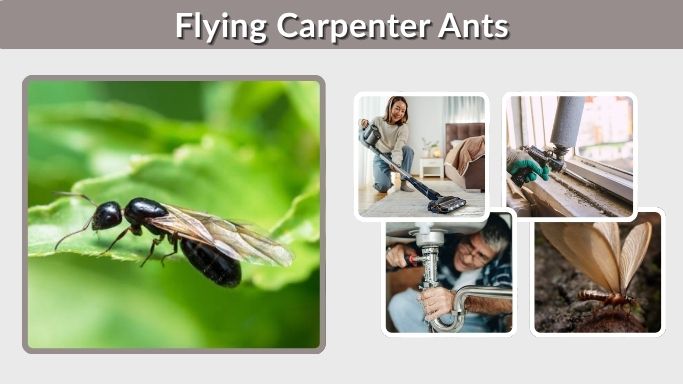
Flying carpenter ants can be alarming, especially when they appear inside the house. These winged ants are usually reproductive carpenter ants, also called swarmers. Their main job is to leave the colony, mate, and start new nests. Seeing one or two outdoors may be normal, but seeing many flying carpenter ants indoors can be a warning sign of a hidden nest in damp or damaged wood.
Do Carpenter Ants Fly?
Yes, carpenter ants can fly, but not all of them have wings. Only reproductive males and queens grow wings during swarming season. Worker carpenter ants do not fly because their job is to search for food, expand tunnels, and care for the colony.
Flying carpenter ants usually appear when a mature colony is ready to spread. They may fly around windows, lights, doors, basements, bathrooms, kitchens, or damp wooden areas.
When Do Carpenter Ants Fly?
Carpenter ants usually swarm during warm months, often in spring or early summer. Indoors, they may appear earlier if the house is warm.
Common swarming signs include:
- Winged ants near windows or lights
- Piles of shed wings
- Large black ants crawling indoors
- Rustling sounds inside walls
- Small piles of wood shavings near trim or beams
What Do Flying Carpenter Ants Look Like?
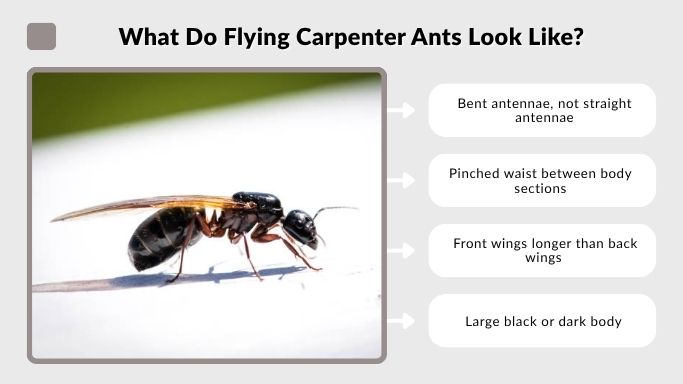
Flying carpenter ants are often black, dark brown, or reddish-black. They are usually larger than many household ants and may measure about 1/4 to 1/2 inch long. Queens can be larger than males.
| Feature | Flying Carpenter Ant |
| Body shape | Narrow waist, segmented body |
| Wings | Two pairs, front wings longer |
| Color | Black, brown, reddish-black |
| Size | Usually medium to large |
| Antennae | Bent or elbowed |
| Common location | Damp wood, walls, windows, basements |
Flying Carpenter Ant Identification
Look for these features:
- Bent antennae, not straight antennae
- Pinched waist between body sections
- Front wings longer than back wings
- Large black or dark body
- Often found near damp wood or moisture
If the insect has a thick waist and equal-sized wings, it may be a flying termite instead.
Flying Carpenter Ants vs Flying Ants
The phrase “flying ants” can describe many ant species with wings. Carpenter ants are only one type. So, not all flying ants are carpenter ants.
| Comparison | Flying Carpenter Ants | Other Flying Ants |
| Size | Usually larger | Often smaller |
| Nesting habit | Tunnel in wood | Soil, walls, lawns, cracks |
| Damage risk | Can damage wood | Usually less damaging |
| Body color | Black, brown, red-black | Varies |
| Concern indoors | Higher concern | Depends on species |
Flying carpenter ants are more concerning because they may suggest a wood-nesting colony inside or near the home.
Flying Carpenter Ants vs Termites
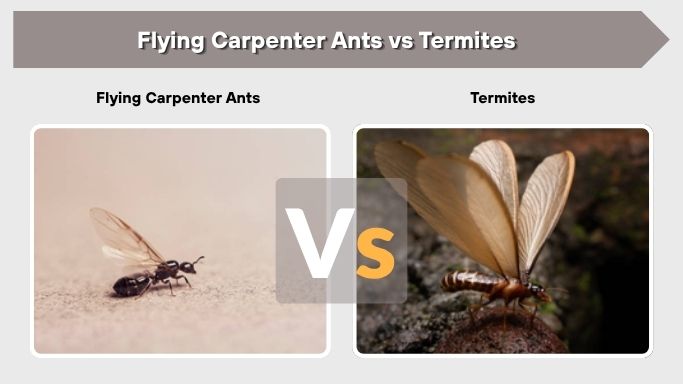
Many people confuse flying carpenter ants with flying termites. This matters because both can be linked to wood problems, but they behave differently.
| Feature | Flying Carpenter Ant | Flying Termite |
| Waist | Narrow and pinched | Thick and straight |
| Antennae | Bent | Straight |
| Wings | Front wings longer | Wings equal length |
| Body | Segmented | More uniform |
| Wood damage | Tunnels through wood | Eats cellulose/wood |
Carpenter ants do not eat wood like termites. Instead, they excavate tunnels to build nests. However, a large colony can still weaken wood over time.
Why Are Flying Carpenter Ants in the House?
Flying carpenter ants inside the house may mean a nest is already nearby. They are often attracted to moisture, damaged wood, and warm indoor spaces.
Common indoor causes include:
- Leaky pipes or roof leaks
- Damp window frames
- Wet bathroom or kitchen wood
- Old wooden beams
- Firewood stored indoors
- Tree branches touching the house
- Poor attic or crawl space ventilation
A few ants may enter from outside, but repeated sightings indoors should be checked carefully.
Are Flying Carpenter Ants Dangerous?
Flying carpenter ants are not usually dangerous to people. They do not sting, and bites are uncommon. If handled, they may bite, but the bite is usually mild.
The bigger concern is the nest. Carpenter ants can indicate moisture damage and hidden wood problems. Their presence may also mean the colony is mature enough to produce swarmers.
How to Get Rid of Flying Carpenter Ants
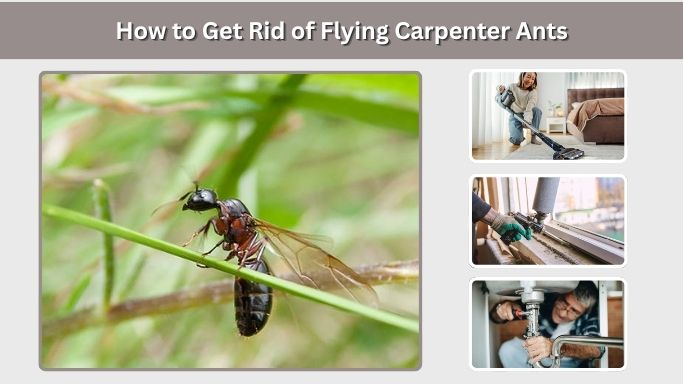
Killing the flying ants you see will not remove the full colony. You need to locate and treat the nest.
Step-by-Step Removal
- Vacuum visible flying ants and dispose of the bag or contents outside
- Check damp wood near windows, sinks, bathrooms, basements, and crawl spaces
- Look for sawdust-like frass near walls, trim, or wooden beams
- Fix leaks and reduce moisture
- Seal cracks around doors, windows, pipes, and foundation gaps
- Trim branches away from the roof and siding
- Avoid storing firewood against the house
- Use carpenter ant bait near activity trails
Baits are often better than sprays because worker ants may carry bait back to the colony. Sprays may kill only the ants you see and cause the colony to move deeper into walls.
When to Call Pest Control
Call a pest control professional if you see many flying carpenter ants indoors, notice wood shavings, hear sounds in walls, or keep seeing ants after basic treatment.
Professional help is useful when:
- The nest is inside walls
- The colony is large
- There are multiple nesting sites
- Moisture damage is present
- Ants return every year
- You cannot identify whether they are ants or termites
FAQs
Do carpenter ants fly?
Yes, carpenter ants can fly, but only reproductive ants have wings. Worker carpenter ants do not fly. Winged carpenter ants usually appear when a mature colony is ready to swarm and create new nests.
Are all flying ants carpenter ants?
No, all flying ants are not carpenter ants. Many ant species produce winged reproductive ants. Carpenter ants are usually larger and are more strongly linked to damp or damaged wood around homes.
Do flying carpenter ants bite?
Flying carpenter ants can bite if handled, but they are not usually aggressive. They do not sting. The main problem is not the bite, but the possible hidden nest and wood damage.
Why do I have flying carpenter ants in my house?
Flying carpenter ants inside may mean there is a mature nest in or near your home. They are often linked to damp wood, leaks, poor ventilation, or old moisture-damaged structures.
How do I get rid of flying carpenter ants fast?
Vacuum visible ants, reduce moisture, seal entry points, and use carpenter ant bait near trails. For fast and complete control, the nest must be found and treated, especially if ants are coming from walls.