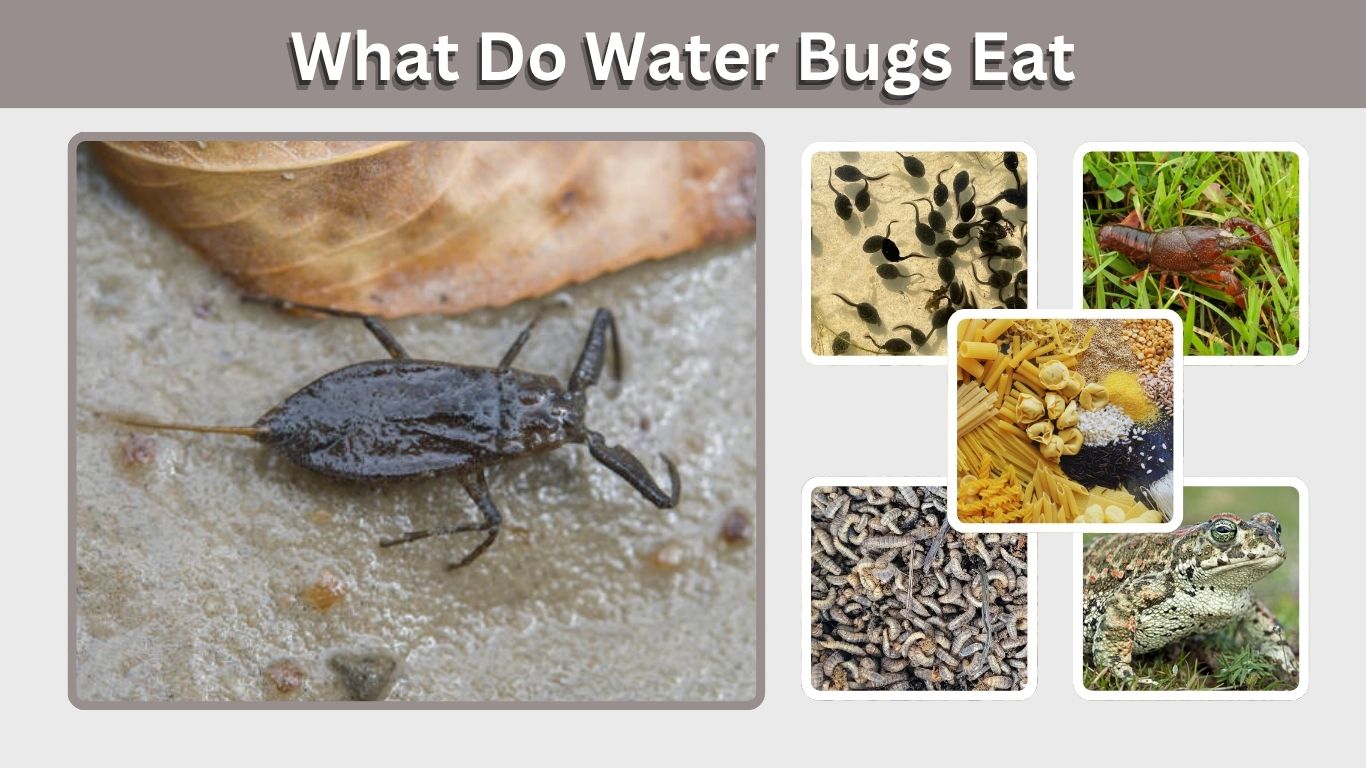
Water bugs eat different foods depending on the species. True aquatic water bugs usually feed on small insects, tadpoles, fish, snails, and other pond animals. Giant water bugs are powerful predators that can even catch frogs and small fish. However, many people use the name “water bug” for cockroaches found indoors, and those insects eat leftover food, grease, trash, and decaying matter.
What Are Water Bugs?
Water bugs are insects that live in or near water. Some spend most of their lives in ponds, lakes, ditches, marshes, slow streams, and wetlands. Others are household pests that people call “water bugs” because they appear in damp places like bathrooms, kitchens, drains, basements, and laundry rooms.
True water bugs belong to aquatic insect groups. They may swim, dive, skate on the water surface, or wait underwater for prey. Some are predators, while others eat algae, plants, or tiny organic particles.
Common insects called water bugs include:
- Giant water bugs
- Water boatmen
- Backswimmers
- Water scorpions
- Creeping water bugs
- Toe-biters
- Some aquatic beetles
- Cockroaches called “water bugs” indoors
The diet depends on which insect you are talking about. A giant water bug does not eat the same food as a water boatman or a house cockroach.
What Do True Water Bugs Eat?
True aquatic water bugs mostly eat small animals found in water. Many species are predators. They use sharp mouthparts to pierce prey and suck out body fluids. This makes them different from insects that chew leaves or crumbs.
Most true water bugs eat:
- Mosquito larvae
- Small aquatic insects
- Tadpoles
- Tiny fish
- Small frogs
- Snails
- Worms
- Crustaceans
- Other water bugs
- Dead or weak aquatic animals
Some water bugs are hunters, while others are scavengers. Predatory species usually wait quietly near plants, mud, or the water surface. When prey comes close, they grab it with their front legs.
Small water bugs usually eat tiny insects and larvae. Large water bugs can catch larger prey, including frogs and fish.
What Do Giant Water Bugs Eat?
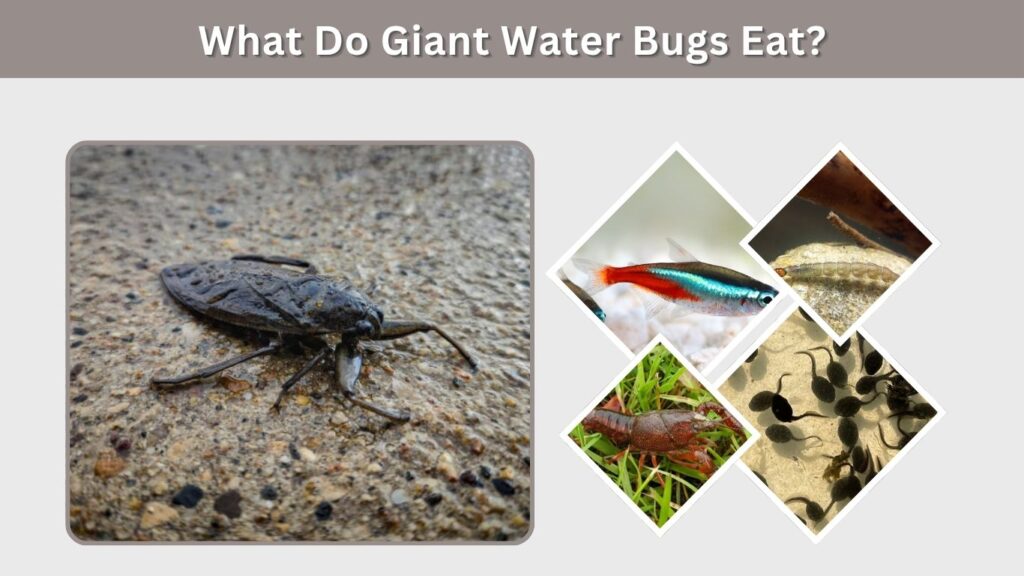
Giant water bugs are among the strongest aquatic insect predators. They are often called “toe-biters” because their bite can be painful if handled carelessly. In nature, they eat live prey from ponds, lakes, and slow-moving water.
Giant water bugs commonly eat:
- Small fish
- Tadpoles
- Frogs
- Aquatic insects
- Snails
- Crayfish
- Small turtles in rare cases
- Small snakes in rare cases
- Other water bugs
A giant water bug hunts by ambush. It waits near underwater plants or muddy areas. When prey swims close, it grabs the animal with its strong front legs. Then it pierces the prey with its beak-like mouthpart and injects digestive saliva. After that, it sucks out the liquefied tissues.
This feeding method sounds harsh, but it is normal for many aquatic predators. Giant water bugs help control populations of insects, tadpoles, and small fish in freshwater habitats.
Do Water Bugs Eat Fish?
Yes, some water bugs eat fish. Giant water bugs and other large predatory aquatic insects can catch small fish. They do not usually attack large fish, but young fish and weak fish can become prey.
Water bugs may eat fish when:
- The fish is small enough to hold
- The fish is injured or slow
- The water bug is large and hungry
- The habitat has many hiding places
- The fish swims close to the bug
In ponds and aquariums, large predatory water bugs can be dangerous to small fish. They may hide among plants and attack when fish pass by. This is why wild aquatic insects should not be added to fish tanks without proper identification.
Do Water Bugs Eat Frogs and Tadpoles?
Yes, many large water bugs eat tadpoles, and giant water bugs can eat frogs. Tadpoles are easier prey because they are soft-bodied and often swim slowly. Small frogs may also be caught if they enter shallow water.
A giant water bug eating a frog is not unusual in nature. These bugs are strong enough to hold slippery prey with their front legs. They use their piercing mouthpart to subdue the frog and feed.
However, not every water bug can eat frogs. Small species usually focus on mosquito larvae, tiny aquatic insects, and small worms. The size of the bug controls the size of the prey.
What Do Small Water Bugs Eat?
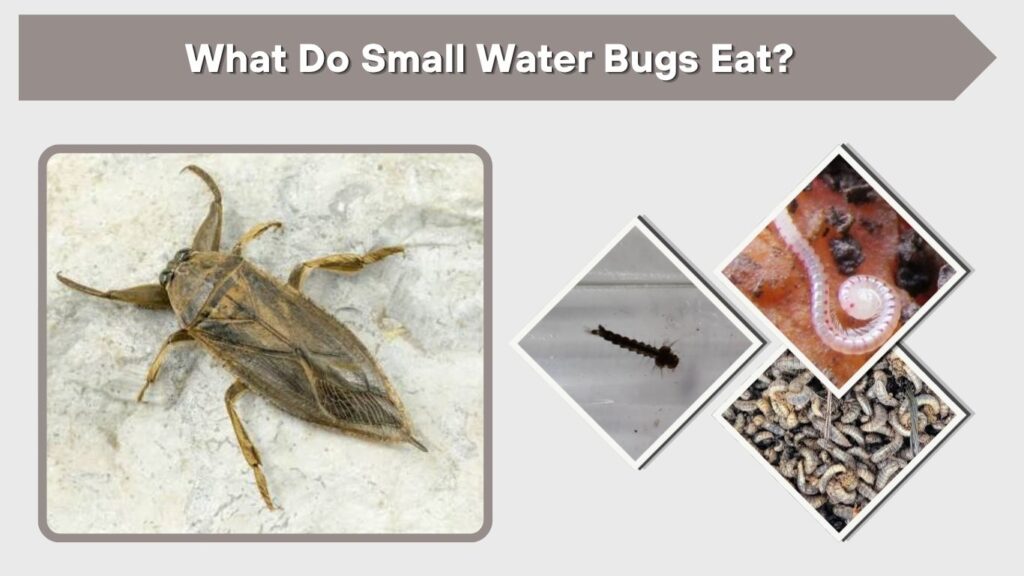
Small water bugs usually eat small aquatic organisms. Their diet is much less dramatic than giant water bugs. They often feed on tiny insects, larvae, algae, plant matter, and organic particles.
Small water bugs may eat:
- Mosquito larvae
- Tiny worms
- Small insect larvae
- Algae
- Decaying plant material
- Microscopic organisms
- Small crustaceans
- Dead organic matter
Some small water bugs are important in pond ecosystems because they help recycle nutrients. Others reduce mosquito larvae and other small pests.
What Do Water Boatmen Bugs Eat?
Water boatmen are small aquatic insects often confused with backswimmers. Their diet is different from many predatory water bugs. Many water boatmen feed on algae, plant material, and tiny organic particles from the bottom of ponds or pools.
Water boatmen may eat:
- Algae
- Plant debris
- Tiny aquatic organisms
- Organic matter
- Small insect eggs
- Microbes on underwater surfaces
They use their mouthparts to scrape and collect food. Unlike giant water bugs, water boatmen are not famous for catching frogs or fish. They are usually harmless and play a useful role in freshwater habitats.
What Do Backswimmers Eat?
Backswimmers are active predators. They swim upside down and often attack small animals near the water surface. Their bite can be painful, so they should not be handled.
Backswimmers eat:
- Mosquito larvae
- Small insects
- Tiny crustaceans
- Tadpoles
- Small fish fry
- Other aquatic larvae
They are useful in ponds because they help control mosquito larvae. However, in small fish tanks or garden ponds with tiny fish, they may become a problem.
What Do House Water Bugs Eat?
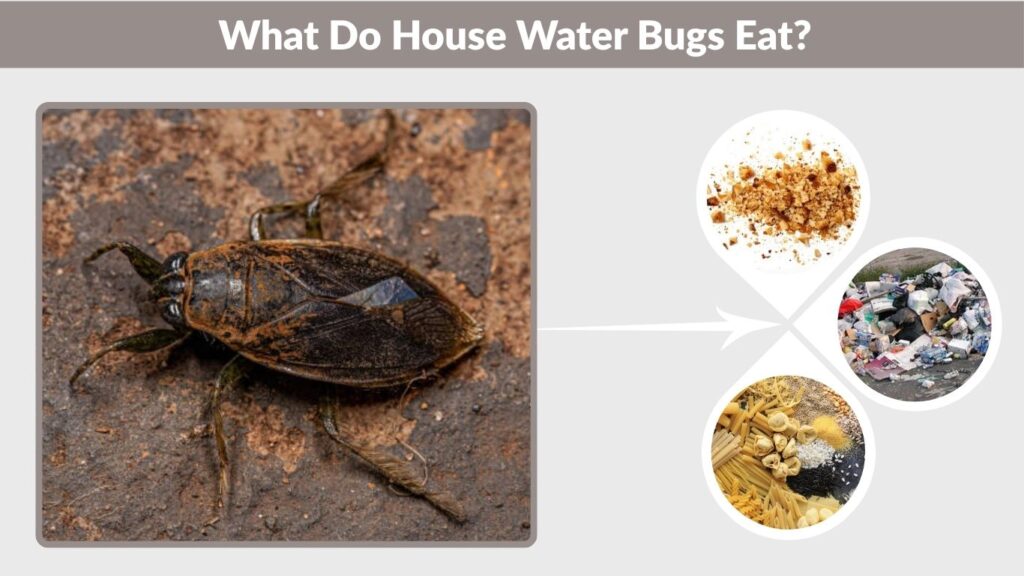
When people say “water bug” inside the house, they often mean a large cockroach. The American cockroach, oriental cockroach, and other roaches are commonly called water bugs because they like damp places.
House water bugs eat almost anything organic. They are scavengers, not aquatic hunters.
House water bugs commonly eat:
- Food crumbs
- Grease
- Trash
- Pet food
- Starchy foods
- Sweets
- Meat scraps
- Dead insects
- Paper glue
- Soap residue
- Decaying organic matter
They may enter kitchens, bathrooms, basements, drains, and storage areas. Food, moisture, and shelter attract them. Cleaning crumbs and sealing food can reduce their activity.
Do Water Bugs Eat Roaches?
True aquatic water bugs do not normally hunt household roaches because they live in different environments. Aquatic water bugs live in water, while roaches live on land.
However, house “water bugs” are often roaches themselves. So when someone asks, “Do water bugs eat roaches?” the answer depends on the meaning.
A giant water bug may eat almost any small animal that falls into water, including insects. But it is not a common roach-control insect. Indoor cockroach-type water bugs may eat dead insects, but they do not solve a roach problem.
Do Water Bugs Eat Human Food?
House water bugs can eat human food. This is one reason they become serious indoor pests. They feed on leftover food, dirty dishes, open trash, spilled drinks, and pet bowls.
They may eat:
- Bread
- Rice
- Fruit
- Meat
- Sugar
- Oil
- Grease
- Cereal
- Pet food
- Leftover meals
True aquatic water bugs do not usually enter homes looking for human food. If you see a large bug in the kitchen, bathroom, or basement, it is more likely a cockroach-type water bug than a true aquatic insect.
Can Water Bugs Eat Through Plastic?
Water bugs usually do not eat through hard plastic. Cockroach-type water bugs may chew thin plastic bags, paper packaging, or weak food wrappers if they smell food inside. They are more attracted to the food than the plastic itself.
To protect food from house water bugs, use sealed containers made from glass, metal, or thick plastic. Avoid leaving dry food in thin bags, especially in damp kitchens or storage rooms.
True aquatic water bugs do not eat plastic. They hunt live prey or feed on natural material in water.
What Eats Water Bugs?
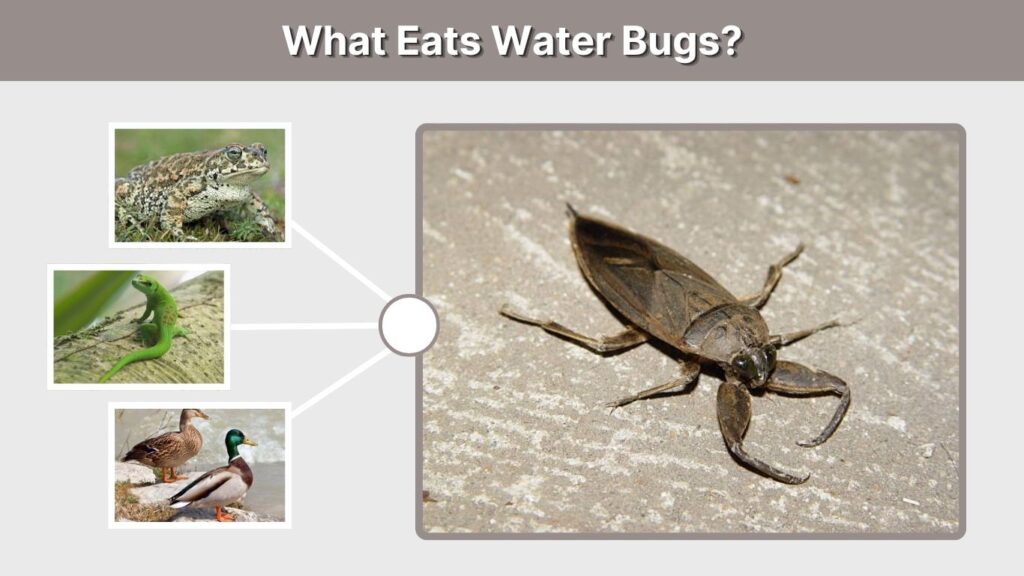
Water bugs are predators, but they also become prey. Many animals eat them in ponds, wetlands, and near water.
Animals that eat water bugs include:
- Fish
- Frogs
- Toads
- Lizards
- Turtles
- Ducks
- Wading birds
- Snakes
- Spiders
- Larger aquatic insects
- Bats near water
- Small mammals in some cases
Fish often eat small water bugs and larvae. Frogs and toads may catch insects near the water surface. Birds also pick them from shallow water or muddy edges.
Giant water bugs are harder to eat because they are large and can bite. Still, larger fish, birds, turtles, and frogs may prey on them.
Do Fish, Frogs, and Lizards Eat Water Bugs?
Yes, fish, frogs, and lizards can eat water bugs. Small water bugs are common prey for many freshwater animals.
Fish may eat water bugs when they are small enough to swallow. Frogs often catch water bugs at the pond edge or water surface. Lizards may eat water bugs that crawl near land or lights.
However, giant water bugs can be risky prey. They can bite and fight back. A small frog or small fish may become prey instead of predator if it attacks a large giant water bug.
Can Cats, Dogs, or Bearded Dragons Eat Water Bugs?
Cats and dogs may chase or eat insects, including house water bugs. A single cockroach-type water bug may not always cause serious harm, but it can carry germs from drains, trash, or dirty areas. Some pets may vomit or have stomach upset after eating one.
Bearded dragons and other reptiles should not be fed random wild water bugs. Wild insects may carry parasites, pesticides, bacteria, or toxins. Aquatic bugs may also bite or injure small reptiles.
For pet reptiles, it is safer to use clean feeder insects from a trusted source, such as crickets, dubia roaches, mealworms, or other recommended feeders.
Can People Eat Water Bugs?
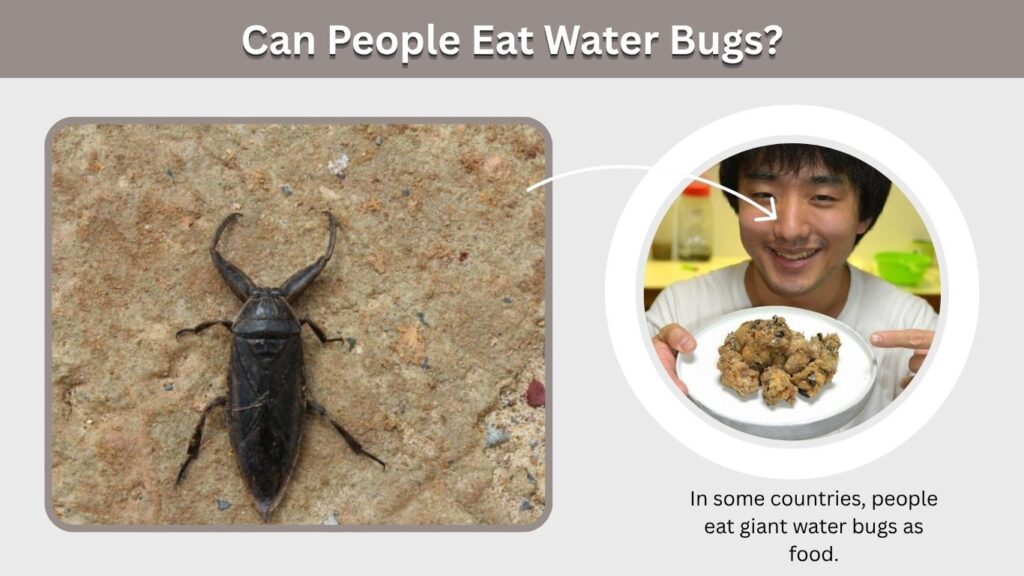
In some countries, people eat giant water bugs as food. They may be roasted, fried, steamed, or used as flavoring. In parts of Southeast Asia, giant water bugs are known for their strong smell and are sometimes used in sauces.
However, people should not eat random water bugs from ponds, drains, or homes. Wild insects may carry parasites, pollution, pesticides, or bacteria. House water bugs, especially cockroach-type insects, are not safe food because they may contact sewage, trash, and harmful germs.
Eating insects should only be done when they are properly sourced, cleaned, and prepared as food.
Why Water Bug Diet Matters
Understanding what water bugs eat helps you identify whether they are useful insects, pond predators, or indoor pests. True aquatic water bugs can help control mosquito larvae and support the food chain. Giant water bugs are powerful hunters that eat fish, tadpoles, frogs, and other aquatic animals.
House water bugs are different. They are usually cockroaches that eat leftover food, grease, trash, and decaying matter. Their presence often means there is moisture, food waste, or an entry point nearby.
If you see water bugs outdoors in a pond, they may be part of a healthy ecosystem. If you see them indoors, focus on cleaning food sources, drying damp areas, sealing cracks, and removing trash regularly.
FAQs
What do water bugs like to eat?
True water bugs like to eat small aquatic animals such as mosquito larvae, tadpoles, small fish, snails, worms, and other insects. Some smaller species eat algae and plant debris. Indoor “water bugs,” which are often cockroaches, eat crumbs, grease, trash, pet food, and leftover human food.
What does a giant water bug eat?
A giant water bug eats fish, tadpoles, frogs, aquatic insects, snails, and sometimes small snakes or turtles. It is an ambush predator that grabs prey with strong front legs. Then it pierces the prey and sucks out the softened body fluids.
Do water bugs eat cockroaches?
True aquatic water bugs do not normally eat cockroaches because they live in water, not inside homes. A giant water bug could eat an insect that falls into water, but it is not a roach-control solution. Indoor “water bugs” are usually cockroaches themselves.
What do water bugs eat in the house?
House water bugs usually eat food crumbs, grease, trash, pet food, sweets, starchy foods, dead insects, and decaying organic matter. They also need moisture, which is why they appear near drains, sinks, bathrooms, basements, and laundry areas.
What animals eat giant water bugs?
Giant water bugs may be eaten by large fish, frogs, turtles, birds, snakes, and other predators. They are difficult prey because they are large, strong, and can bite. Young or smaller water bugs are easier for fish, frogs, and birds to catch.