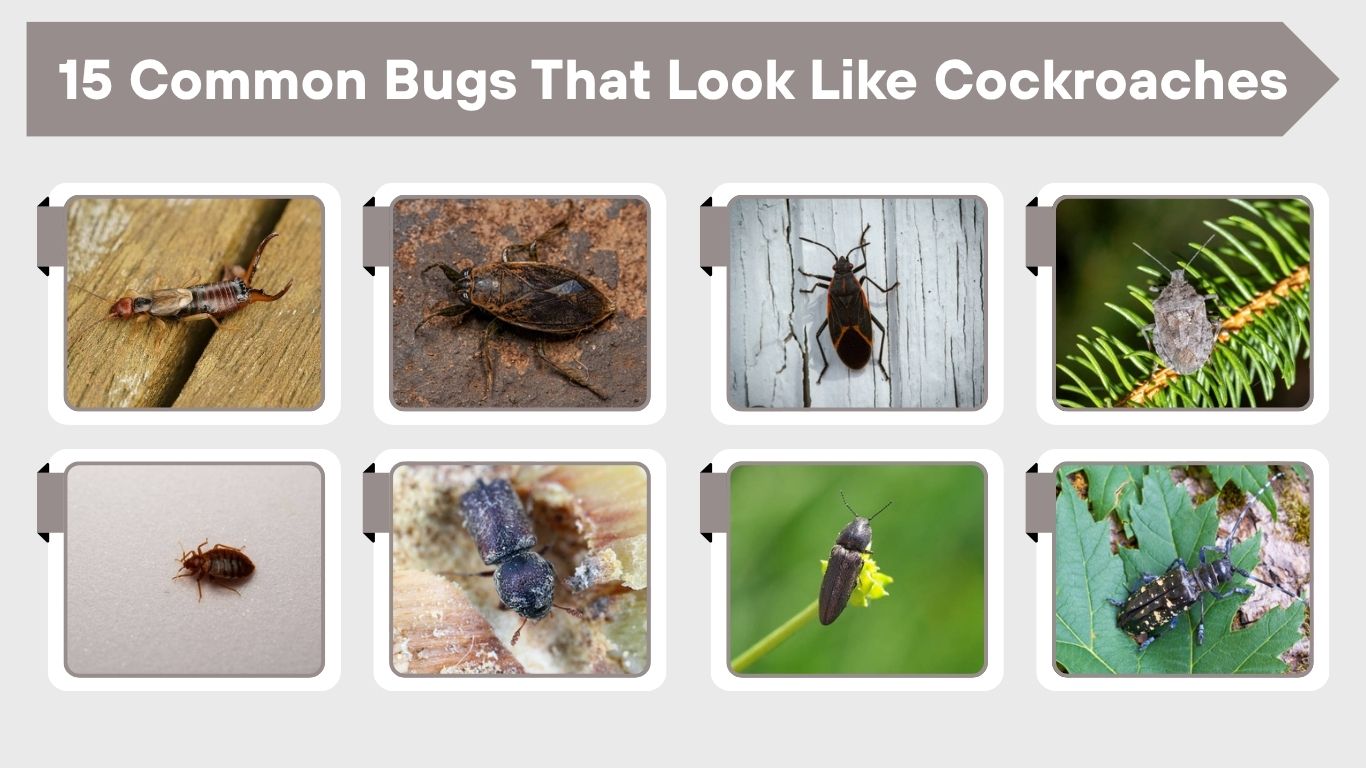
Many insects look like cockroaches at first glance because they have dark bodies, long antennae, flat shapes, or quick movement. However, not every bug in your home, garden, basement, or near water is a roach. Some are harmless beetles, true bugs, crickets, or moisture-loving insects. This guide explains 15 common bugs that look like cockroaches and how to tell them apart.
1. Water Bug
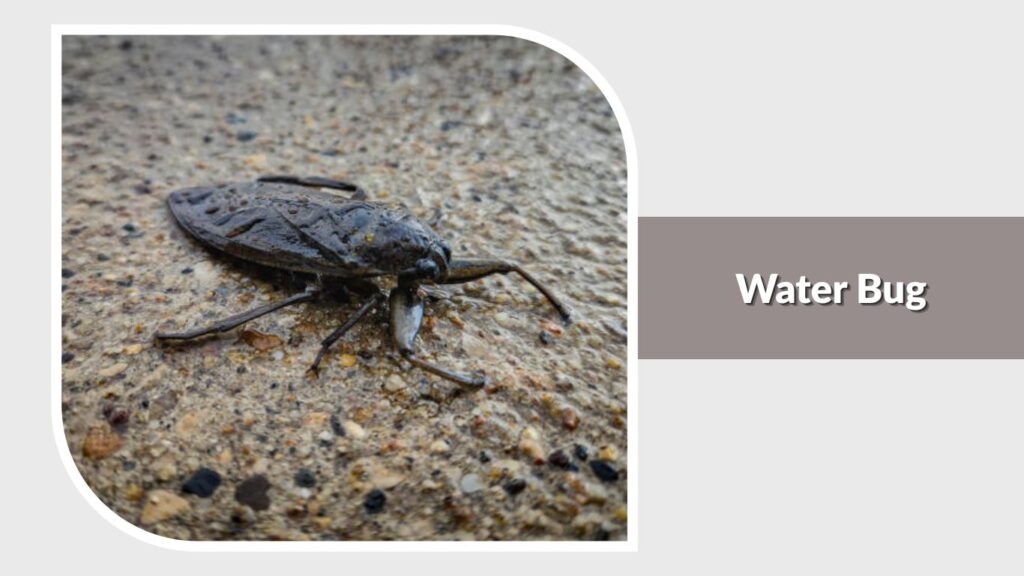
Water bugs are one of the most common insects people confuse with cockroaches. They have dark, flattened bodies and quick movement, which can make them look very similar at first glance. However, true water bugs usually live near ponds, drains, wet soil, or other damp places, while cockroaches prefer warm indoor hiding spots.
Identification
- Large, flat, oval-shaped body
- Usually dark brown or black
- Long legs made for swimming or moving in wet areas
- Some species have strong front legs for catching prey
- Often found near water, drains, basements, or damp spaces
Why Water Bugs Look Like Cockroaches
Water bugs and cockroaches both have shiny, dark bodies and a similar oval shape. Because of this, many people call large roaches “water bugs,” especially when they appear in bathrooms or basements. The confusion is common, but true water bugs are aquatic insects, not household roaches.
Habitat and Behavior
Water bugs usually stay close to water. They may live in ponds, marshes, wet gardens, or drainage areas. Some can fly toward lights at night and accidentally enter homes. Unlike cockroaches, they do not usually infest kitchens or feed on leftover food.
Are Water Bugs Dangerous?
Water bugs are not usually dangerous to humans, but some larger species can bite if handled. Their bite may be painful, but it is not normally serious. The best way to avoid them is to keep damp areas clean and seal small entry points around doors, windows, and drains.
2. Ground Beetle
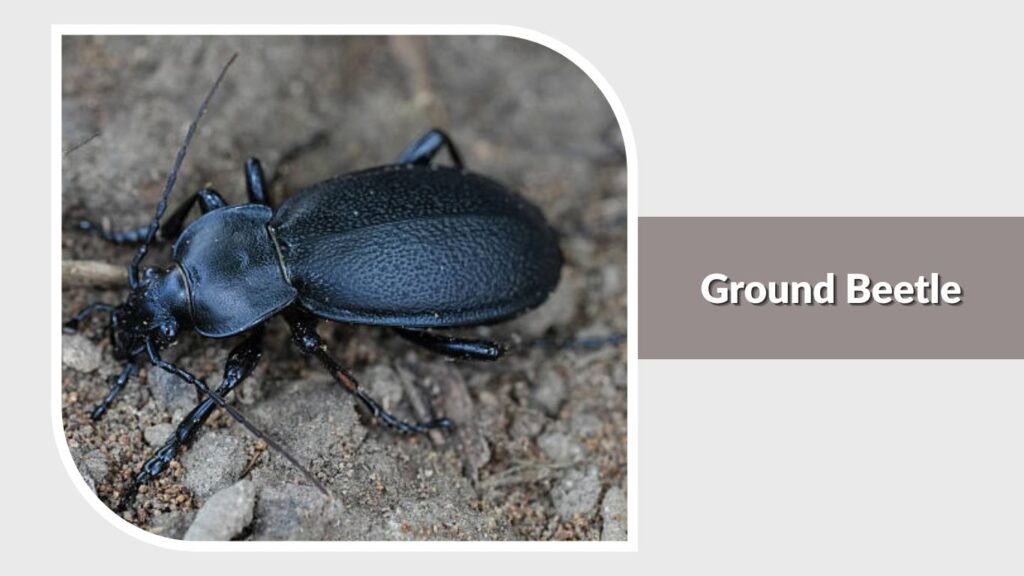
Ground beetles are often mistaken for cockroaches because they have dark, shiny bodies and move quickly across floors, patios, and garden areas. They are not household pests like roaches. Most ground beetles are outdoor insects that help control smaller bugs, larvae, and other pests in the soil.
Identification
- Shiny black, brown, or dark metallic body
- Hard wing covers on the back
- Long legs for fast running
- Narrow head with strong jaws
- Usually found on the ground, under stones, or near soil
Why Ground Beetles Look Like Cockroaches
Ground beetles can look like small cockroaches because of their dark color, flat body, and quick movement. When they enter homes at night, people may think they are roaches. However, ground beetles have harder wing covers and a more beetle-like body shape.
Habitat and Behavior
Ground beetles usually live outside in gardens, lawns, fields, and wooded areas. They hide under leaves, logs, mulch, and rocks during the day. At night, they come out to hunt insects, worms, and small larvae. They may enter homes by accident but do not usually breed indoors.
Are Ground Beetles Harmful?
Ground beetles are not harmful to people, pets, or furniture. They may release a bad-smelling liquid when disturbed, but they do not spread disease like cockroaches. Most are helpful insects because they eat pests that damage plants and gardens.
3. June Beetle
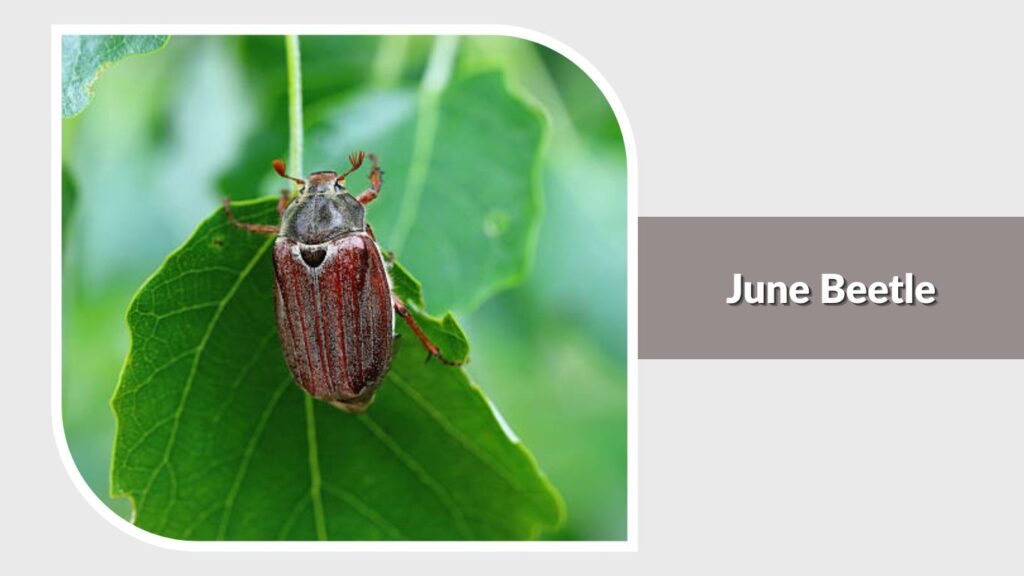
June beetles, also called June bugs, can sometimes be confused with cockroaches because they are brown, oval-shaped, and often appear around lights at night. They are beetles, not roaches, and they usually live outdoors. Their clumsy flying often makes them noticeable near doors, windows, and porches.
Identification
- Oval, rounded body shape
- Brown, reddish-brown, or dark color
- Hard outer wing covers
- Short antennae compared with cockroaches
- Often seen flying around lights at night
Why June Beetles Look Like Cockroaches
June beetles can resemble cockroaches because of their brown color and oval body. From a distance, their hard shell may look similar to a roach’s back. However, June beetles are usually more rounded and bulky, while cockroaches are flatter and faster on indoor surfaces.
Habitat and Behavior
June beetles live in lawns, gardens, fields, and wooded areas. Adults are active at night and are strongly attracted to outdoor lights. Their larvae, known as white grubs, live in soil and feed on plant roots. Adult June beetles do not infest kitchens or bathrooms like cockroaches.
Are June Beetles Harmful?
June beetles are not dangerous to humans. They do not bite, sting, or spread disease. However, their larvae can damage grass roots and garden plants if many are present in the soil. Adult beetles may annoy people when they fly near lights, but they are mostly harmless.
4. Asian Longhorned Beetle
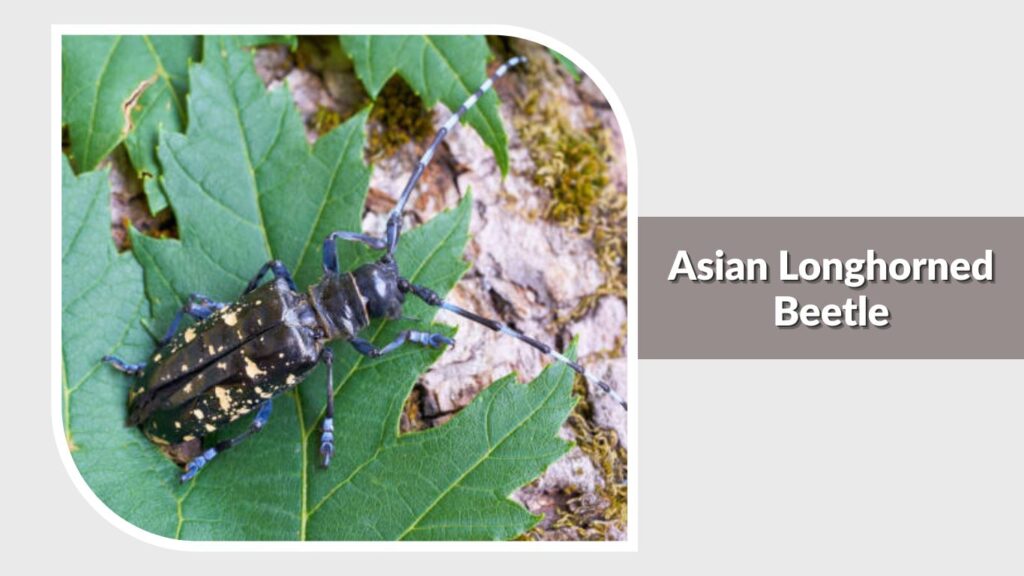
The Asian longhorned beetle is a large beetle that may be mistaken for a cockroach because of its dark body and long antennae. However, it has a very different pattern and body structure. This beetle is better known as a tree pest because its larvae damage hardwood trees.
Identification
- Glossy black body with white spots
- Very long black-and-white banded antennae
- Hard wing covers
- Body is usually longer than many common roaches
- Often found near trees, wood, or outdoor areas
Why Asian Longhorned Beetles Look Like Cockroaches
At first glance, the dark body and long antennae may make this beetle look like a cockroach. The confusion happens more often when it is seen indoors near windows or lights. Unlike roaches, Asian longhorned beetles have clear white spots and extremely long, patterned antennae.
Habitat and Behavior
Asian longhorned beetles usually live around hardwood trees such as maple, birch, elm, and willow. The adults may be seen on tree trunks, branches, or nearby surfaces. Their larvae tunnel inside wood, which can weaken trees over time. They are not indoor food pests.
Are Asian Longhorned Beetles Harmful?
Asian longhorned beetles are not harmful to humans, but they can be very damaging to trees. Their larvae bore deep into wood and may kill healthy trees if the infestation becomes severe. If you find one, it is often important to report it to local agricultural authorities.
5. Palo Verde Beetle
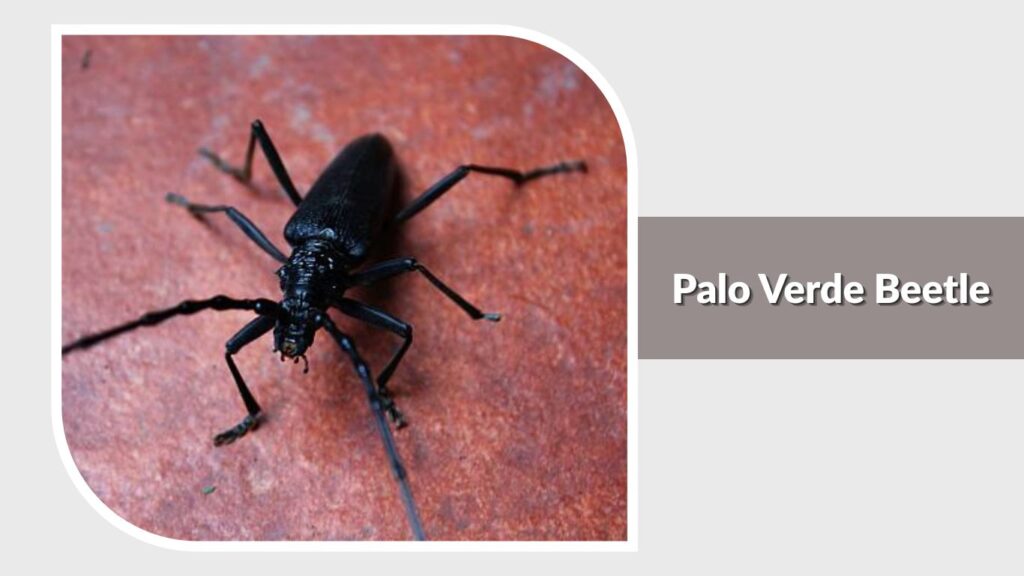
Palo Verde beetles are large, dark beetles that can easily scare people because they look somewhat like giant cockroaches. Their size, color, and long legs make them appear alarming. However, they are beetles, not roaches, and they spend most of their life underground as larvae.
Identification
- Large dark brown or black body
- Long antennae and strong legs
- Hard, shiny wing covers
- Can grow much larger than common cockroaches
- Often seen near desert trees, lights, or patios
Why Palo Verde Beetles Look Like Cockroaches
Palo Verde beetles look like cockroaches because they are dark, shiny, and move across the ground at night. Their large size can make them seem like oversized roaches. The main difference is their hard beetle shell, heavier body, and connection to trees rather than indoor infestations.
Habitat and Behavior
These beetles are common in desert and dry regions, especially near Palo Verde trees and other woody plants. Their larvae live underground and feed on tree roots for several years. Adults come out during warm months, especially after rain, and may fly toward outdoor lights.
Are Palo Verde Beetles Harmful?
Palo Verde beetles are not dangerous to humans, but they can look intimidating. They may pinch if handled, so it is better not to touch them. Their larvae can damage tree roots, but adults do not infest homes, contaminate food, or behave like cockroaches.
6. Click Beetle
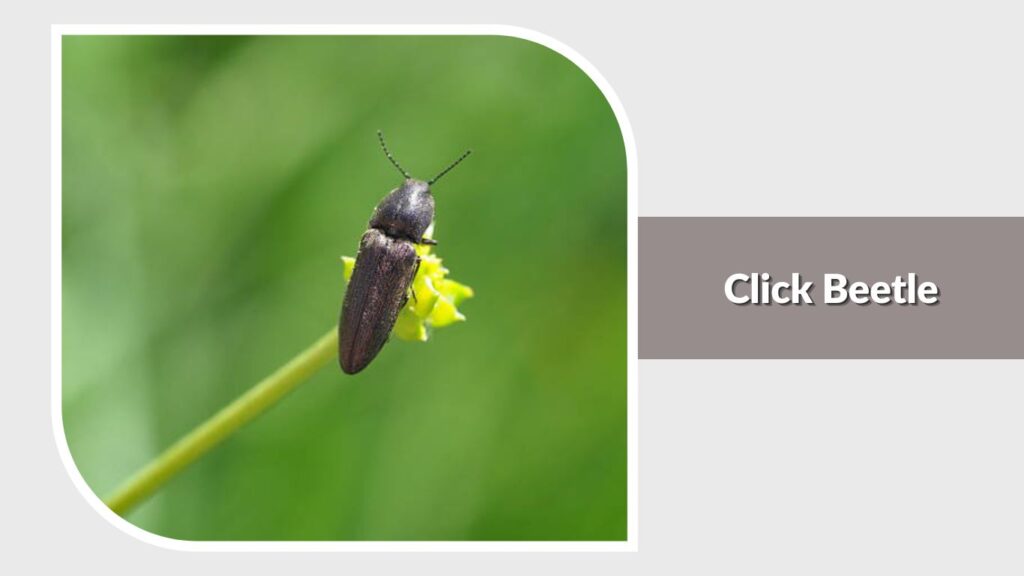
Click beetles are sometimes confused with cockroaches because they have long, narrow, dark bodies and may appear indoors near lights. They are harmless beetles with a special ability to “click” and flip themselves upright when placed on their backs.
Identification
- Long, narrow body shape
- Brown, black, or gray color
- Hard wing covers
- Small head partly hidden under the body
- Makes a clicking sound when flipping itself
Why Click Beetles Look Like Cockroaches
Click beetles can look like small cockroaches because they are dark, flat, and fast-moving. When they crawl across floors at night, people may mistake them for roaches. However, click beetles have a longer, slimmer body and harder shell than most cockroaches.
Habitat and Behavior
Click beetles usually live outdoors in soil, grass, gardens, and wooded areas. Their larvae, called wireworms, live in the ground and may feed on plant roots. Adults are often attracted to lights and may enter homes accidentally through open doors or windows.
Are Click Beetles Harmful?
Click beetles are not harmful to humans or pets. They do not bite, spread disease, or infest kitchens. Some wireworm larvae can damage crops or garden plants, but adult click beetles are mostly a nuisance when they accidentally get inside.
7. Darkling Beetle
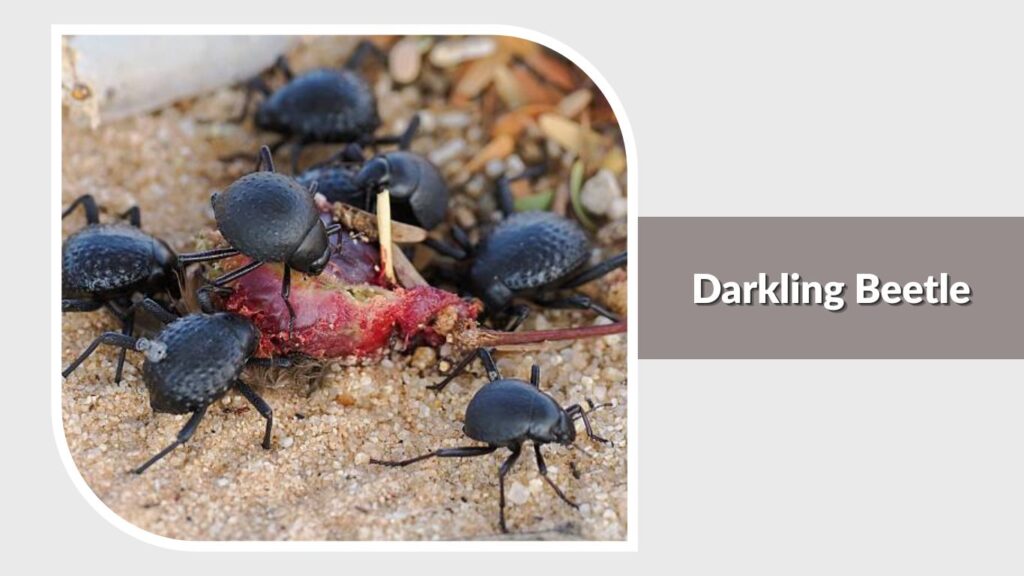
Darkling beetles often look like cockroaches because of their dark color, oval body, and slow crawling movement. They are common in dry places and are usually found around stored grains, animal feed, soil, or decaying plant material.
Identification
- Dark brown or black body
- Oval or slightly long body shape
- Hard outer shell
- Shorter antennae than cockroaches
- Often found in dry, hidden areas
Why Darkling Beetles Look Like Cockroaches
Darkling beetles resemble cockroaches because they are dark, shiny, and often appear in low-light areas. Their body shape may look similar from a distance. Unlike cockroaches, they have hard wing covers and usually move more slowly.
Habitat and Behavior
Darkling beetles live in dry soil, under rocks, in barns, storage areas, and sometimes near animal feed. Some species are linked with stored products, while others live outdoors. They feed on decaying plants, grains, fungi, and organic matter.
Are Darkling Beetles Harmful?
Darkling beetles are not dangerous to humans, but they can become a nuisance if they gather in large numbers. Some species may contaminate stored grains or feed. They do not spread disease like cockroaches and usually do not create serious indoor infestations.
8. Wood-Boring Beetle
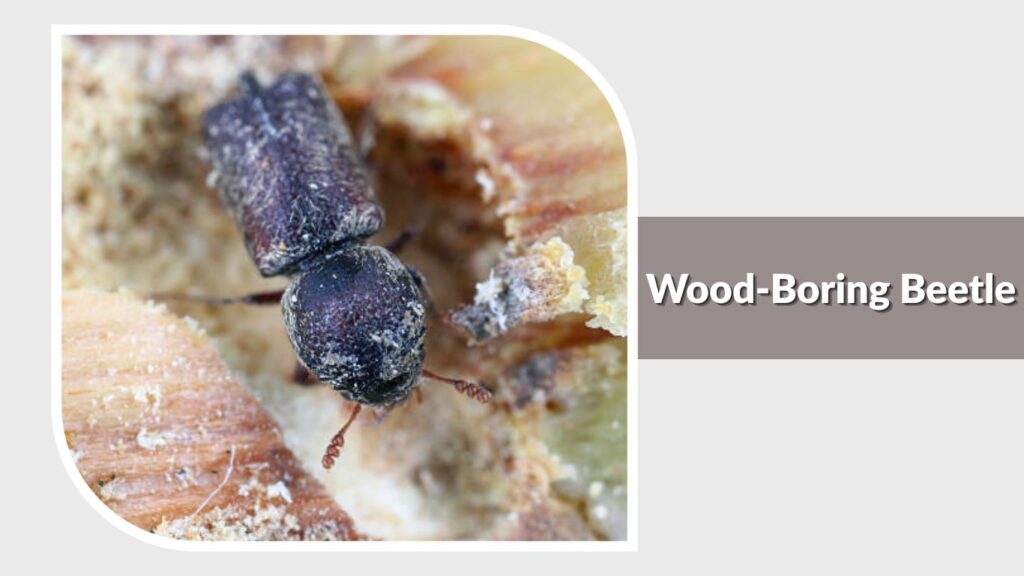
Wood-boring beetles may be mistaken for cockroaches when adults emerge indoors from furniture, flooring, or wooden structures. They usually have brown or dark bodies and a hard shell. Their main concern is wood damage, not food contamination.
Identification
- Small to medium brown or dark body
- Hard wing covers
- Often cylindrical or oval-shaped
- Tiny round exit holes in wood may be nearby
- Fine powdery dust may appear around wood
Why Wood-Boring Beetles Look Like Cockroaches
Some wood-boring beetles look like small cockroaches because they are brown, oval, and may crawl indoors. The confusion is common when they appear on floors or walls. However, they are usually smaller and have a harder beetle-like body.
Habitat and Behavior
Wood-boring beetles live in wood during their larval stage. They may infest furniture, beams, flooring, firewood, or dead trees. Adults leave small holes when they exit the wood. They do not live in kitchens or feed on crumbs like cockroaches.
Are Wood-Boring Beetles Harmful?
Wood-boring beetles are not harmful to people, but they can damage wood. Heavy infestations may weaken furniture or wooden structures over time. If you notice exit holes and powdery dust, it may be important to inspect the wood carefully.
9. Bed Bug
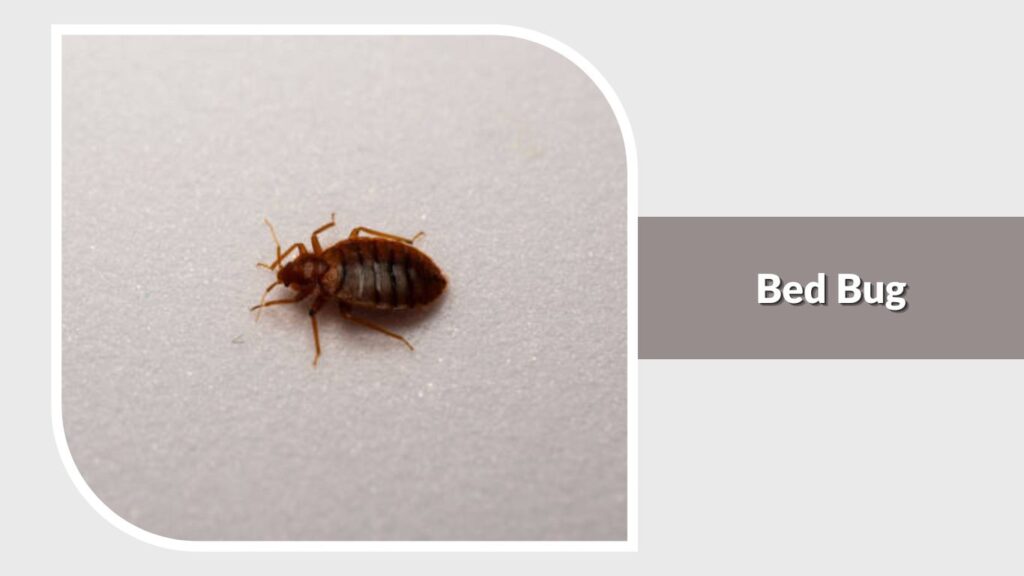
Bed bugs are much smaller than cockroaches, but some people confuse young roaches or small brown bugs with them. Bed bugs have flat, oval bodies and hide in cracks, bedding, furniture, and mattress seams. They are blood-feeding insects, not kitchen pests.
Identification
- Small, flat, oval body
- Reddish-brown color
- No wings
- Often hides in mattress seams and furniture cracks
- May leave dark stains or shed skins nearby
Why Bed Bugs Look Like Cockroaches
Bed bugs can look like tiny cockroaches because they are brown, oval, and flat. From a quick glance, a young cockroach and a bed bug may seem similar. The main difference is that bed bugs are smaller, wingless, and usually found near sleeping areas.
Habitat and Behavior
Bed bugs hide close to where people sleep or rest. They may live in mattresses, bed frames, couches, baseboards, and small cracks. They come out mostly at night to feed on blood, then return to hiding places. They do not feed on food scraps.
Are Bed Bugs Harmful?
Bed bugs are not known for spreading disease, but their bites can cause itching, redness, and sleep problems. Some people may have stronger skin reactions. Because they spread quickly through furniture, luggage, and clothing, early control is very important.
10. Boxelder Bug
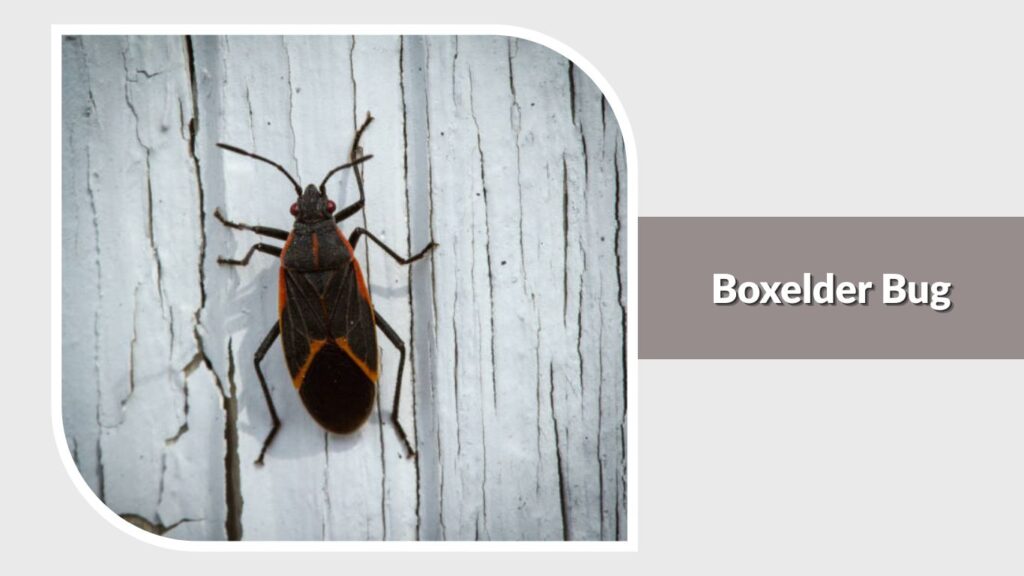
Boxelder bugs are often mistaken for cockroaches because they enter homes in groups and have dark bodies. However, they are true bugs, not roaches. They are usually black with red or orange markings and are strongly linked to boxelder, maple, and ash trees.
Identification
- Black body with red or orange lines
- Flattened, oval body shape
- Long antennae
- Wings overlap on the back
- Often gathers on sunny walls or windows
Why Boxelder Bugs Look Like Cockroaches
Boxelder bugs may look like cockroaches because they are dark, flat, and crawl indoors. When many appear near windows or walls, homeowners may think they have a roach problem. Their red or orange markings help separate them from cockroaches.
Habitat and Behavior
Boxelder bugs live outdoors around boxelder trees, maples, and ash trees. In fall, they often gather on warm sunny walls and may enter homes to overwinter. Indoors, they do not reproduce in large numbers or feed on household food.
Are Boxelder Bugs Harmful?
Boxelder bugs are mostly harmless. They do not bite, sting, damage furniture, or spread disease. However, they can be annoying when they gather in large numbers. Crushing them may leave stains or an unpleasant smell, so gentle removal is better.
11. Stink Bug
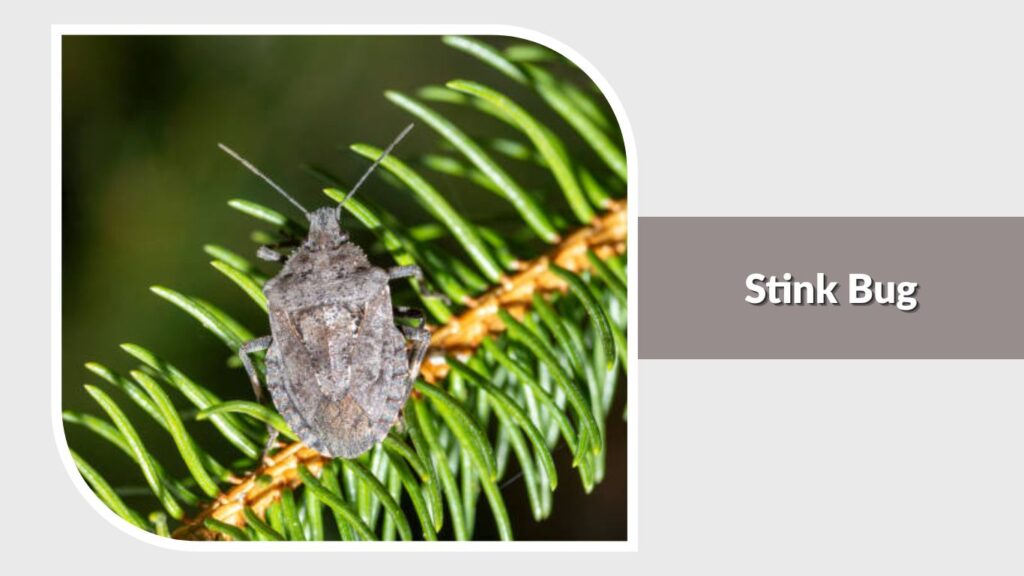
Stink bugs are sometimes mistaken for cockroaches because they have flat bodies, dark coloring, and may enter homes in large numbers. However, stink bugs have a more shield-shaped body and are usually connected with plants, fruits, and outdoor vegetation rather than indoor food waste.
Identification
- Shield-shaped body
- Brown, green, or gray color
- Long antennae
- Flat back with folded wings
- Releases a bad smell when disturbed
Why Stink Bugs Look Like Cockroaches
Stink bugs can look like cockroaches from a distance because they are flat, brown, and crawl on walls or windows. The confusion happens more when they enter homes during cooler months. Their shield-like body shape is the easiest way to tell them apart from roaches.
Habitat and Behavior
Stink bugs usually live outdoors on plants, trees, crops, and garden vegetation. They feed by piercing plant tissue and sucking sap. In fall, they often move toward warm buildings and may enter through cracks, vents, doors, or windows to overwinter.
Are Stink Bugs Harmful?
Stink bugs are not dangerous to humans or pets. They do not bite, sting, or spread disease. Their main problem is their strong odor and possible damage to garden plants or crops. Indoors, they are mostly a nuisance pest.
12. Giant Water Bug
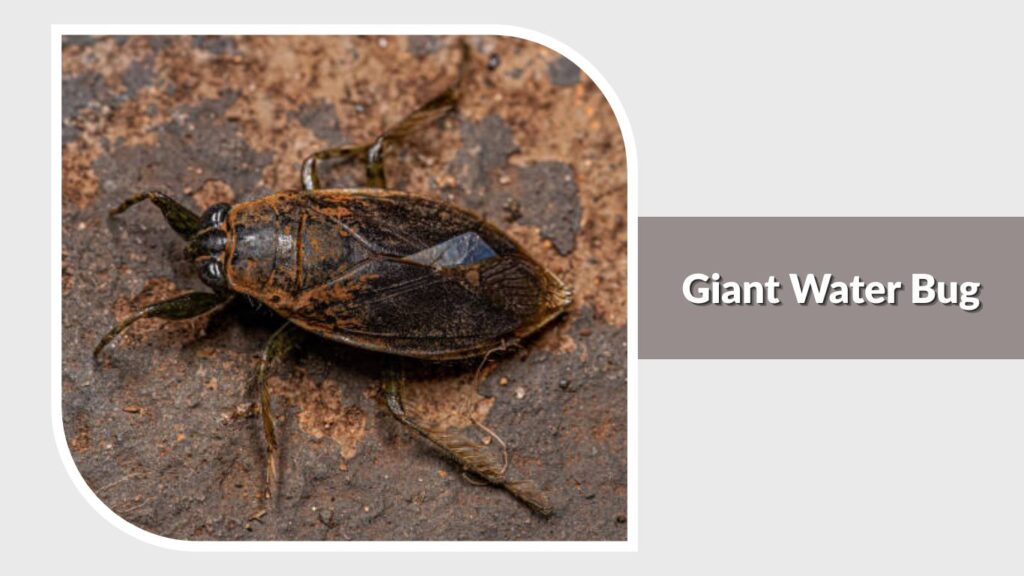
Giant water bugs are large aquatic insects that can easily be confused with oversized cockroaches. They have dark, flat bodies and strong legs, but they live mostly in ponds, streams, marshes, and other freshwater habitats. They are predators, not indoor scavengers.
Identification
- Very large, oval, flat body
- Brown or dark brown color
- Strong front legs for catching prey
- Short antennae hidden under the head
- Usually found near freshwater areas
Why Giant Water Bugs Look Like Cockroaches
Giant water bugs look like cockroaches because of their flat body, brown color, and tough outer surface. Their large size can make them alarming when found near lights or water sources. Unlike roaches, they have powerful front legs and are built for aquatic hunting.
Habitat and Behavior
Giant water bugs live in ponds, lakes, slow streams, marshes, and drainage areas. They hunt small fish, tadpoles, insects, and other aquatic animals. Adults may fly at night and are sometimes attracted to bright lights near homes, pools, or porches.
Are Giant Water Bugs Harmful?
Giant water bugs are not aggressive toward people, but they can bite if handled. Their bite can be painful, which is why they are sometimes called “toe-biters.” They do not infest homes or spread disease like cockroaches.
13. Cricket
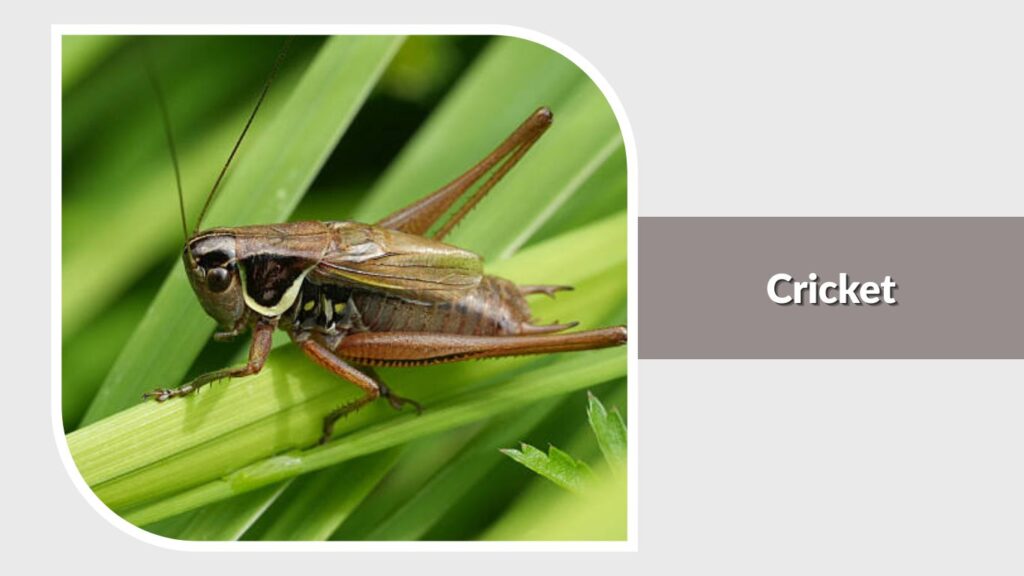
Crickets are often confused with cockroaches because they are brown or black, move quickly, and may appear indoors at night. However, crickets have larger jumping legs and are known for their chirping sound. They are usually outdoor insects that enter homes by accident.
Identification
- Brown, black, or tan body
- Long antennae
- Large back legs for jumping
- Makes chirping sounds
- Often found near grass, basements, or lights
Why Crickets Look Like Cockroaches
Crickets can look like cockroaches because both insects have long antennae and dark bodies. When a cricket runs across a floor quickly, it may be mistaken for a roach. The easiest difference is that crickets jump, while cockroaches usually run and hide.
Habitat and Behavior
Crickets live in lawns, gardens, fields, mulch, basements, and damp outdoor areas. They feed on plant matter, small insects, and organic debris. Some may enter homes during weather changes, especially through gaps around doors, windows, and foundations.
Are Crickets Harmful?
Crickets are not dangerous to humans. They do not spread disease like cockroaches, but they can be noisy at night. In some cases, indoor crickets may chew fabric, paper, or plants. Sealing entry points helps reduce cricket problems inside the home.
14. Silverfish
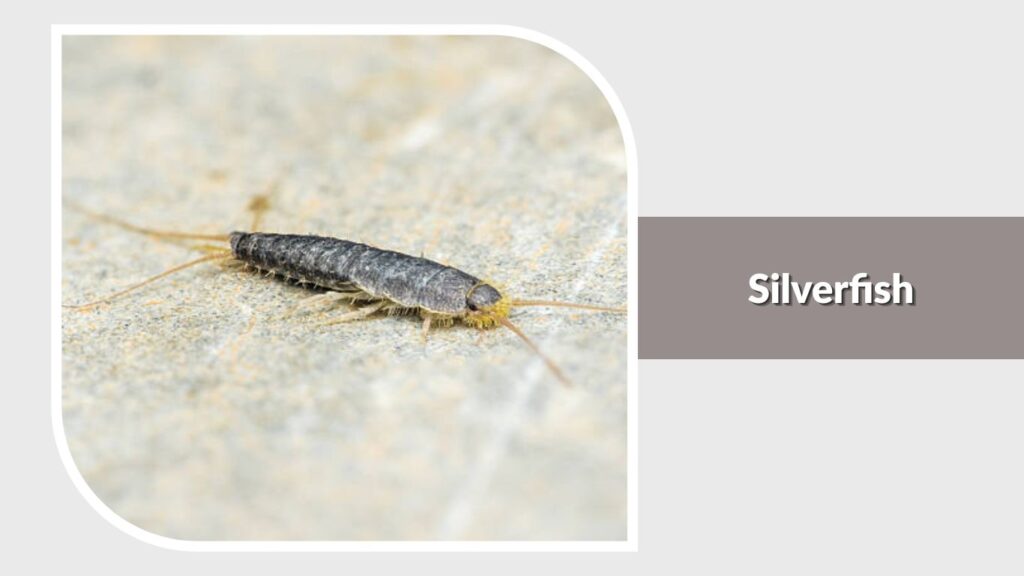
Silverfish may not look exactly like cockroaches, but people often confuse them with small roach nymphs because they move quickly and hide in dark indoor spaces. They have a silvery body, long antennae, and tail-like bristles at the end of the body.
Identification
- Small, silver-gray body
- Fish-like, tapered shape
- Long antennae
- Three tail-like bristles
- Fast movement in dark areas
Why Silverfish Look Like Cockroaches
Silverfish may look like baby cockroaches because they are small, fast, and often appear in bathrooms, kitchens, and basements. Their dark hiding habits also create confusion. However, silverfish have a thinner, tapered body and three long bristles at the rear.
Habitat and Behavior
Silverfish prefer humid, dark places such as bathrooms, laundry rooms, basements, closets, and storage boxes. They feed on starches, paper, glue, cardboard, books, and fabric fibers. They are mostly active at night and hide during the day.
Are Silverfish Harmful?
Silverfish are not harmful to people or pets. They do not bite or spread disease. However, they can damage books, paper, wallpaper, clothing, and stored items. Reducing moisture and keeping storage areas clean can help prevent them.
15. Earwig
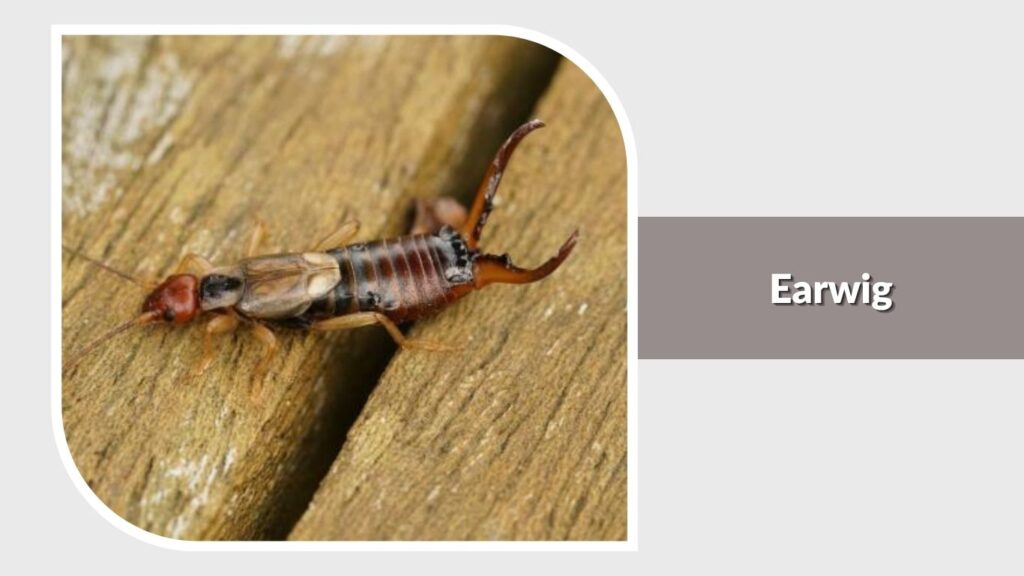
Earwigs are commonly mistaken for cockroaches because they are dark, fast-moving insects that sometimes enter homes. Their most noticeable feature is the pair of pincers at the end of the body. They usually live outdoors in damp, hidden places.
Identification
- Brown or dark reddish body
- Long, narrow shape
- Pair of pincers on the tail end
- Long antennae
- Often found in damp hiding spots
Why Earwigs Look Like Cockroaches
Earwigs can look like small cockroaches because of their dark color, long antennae, and quick crawling movement. They may appear in kitchens, bathrooms, or basements. The clear difference is their rear pincers, which cockroaches do not have.
Habitat and Behavior
Earwigs live in mulch, leaf litter, soil, flower beds, under stones, and around damp wood. They are mostly active at night and feed on decaying plants, small insects, and soft plant material. They may enter homes during wet or hot weather.
Are Earwigs Harmful?
Earwigs are not dangerous to humans. They may pinch if handled, but they are not venomous. They do not spread disease or infest food like cockroaches. Indoors, they are usually accidental visitors and can be controlled by reducing moisture and sealing gaps.