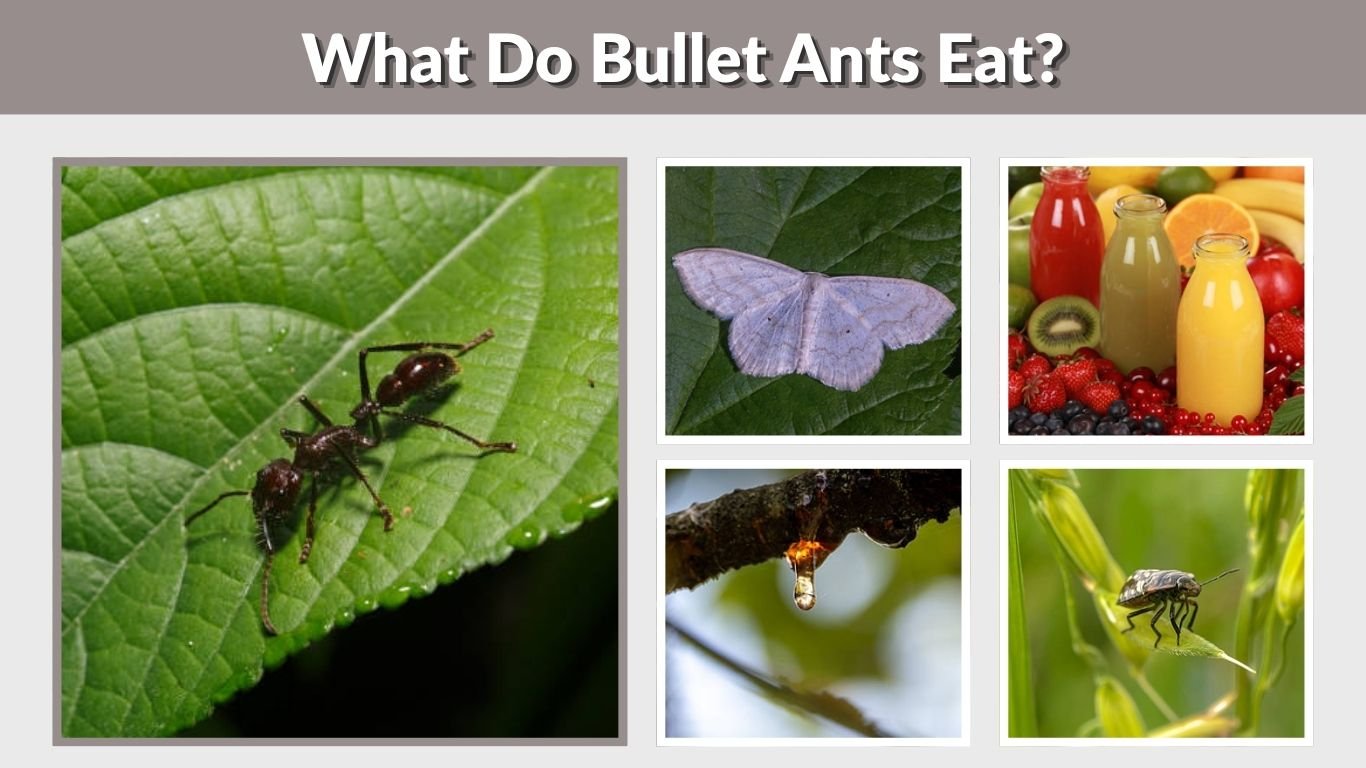
Bullet ants are opportunistic omnivores that consume both sugary plant liquids and animal-based foods. Worker ants spend much of their time climbing rainforest trees in search of nectar, sap, insects, spiders, and other small prey. Sugary liquids mainly provide energy for adult workers, while protein-rich prey supports growing larvae. Nectar is generally the food most frequently carried back to bullet ant nests, although insect prey offers a much larger energy reward when successfully captured.
What Do Bullet Ants Eat?
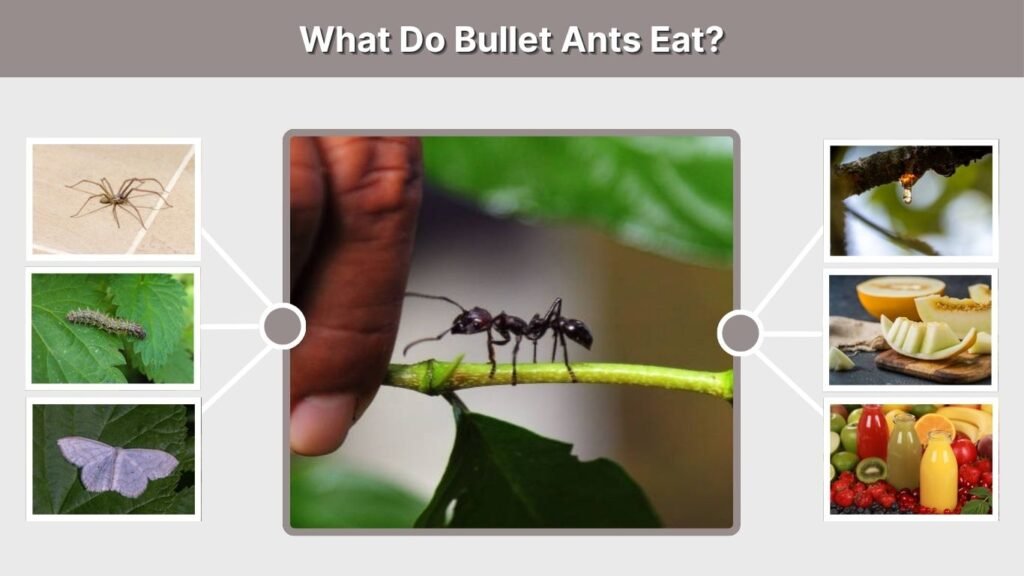
Bullet ants do not depend on a single food. Their diet changes according to season, location, weather, and the resources available in the rainforest canopy.
| Food | Main nutritional benefit |
| Tree sap | Sugar and moisture |
| Extrafloral nectar | Fast energy |
| Honeydew | Carbohydrates |
| Fruit juice | Sugar and water |
| Caterpillars | Protein and fat |
| Moths and butterflies | Protein |
| Spiders | Protein |
| Other ants | Protein |
| Cockroach egg cases | Protein and fat |
| Dead insects and small carcasses | Protein and minerals |
1. Tree Sap
Tree sap is one of the most important liquid foods collected by bullet ants. Workers may gather large droplets between their open mandibles and carry them back to the underground colony.
In one field observation, approximately 77% of returning foragers were carrying sap. This suggests that sugary tree fluids can form a major part of the colony’s everyday food supply when they are readily available.
2. Extrafloral Nectar
Extrafloral nectar is produced by special glands located outside a plant’s flowers. Many tropical trees produce this sweet liquid to attract ants that may help defend the plant from herbivorous insects.
Bullet ants climb trees above their nests and visit these nectar-producing structures. Large nectar droplets are among the foods most frequently transported back to their colonies. The carbohydrates provide adult workers with energy for climbing, hunting, nest defense, and foraging.
3. Honeydew
Honeydew is a sugary liquid released by sap-feeding insects such as scale insects, treehoppers, and aphids. Bullet ants may collect honeydew found on rainforest leaves and branches.
Because honeydew is rich in simple carbohydrates, it provides energy in much the same way as nectar or sap. Observations of returning workers carrying unidentified sugary fluid suggest that honeydew may contribute to their liquid diet where sap-feeding insects are abundant.
4. Fruit Juice and Soft Fruit
Ripe or damaged tropical fruits can provide bullet ants with sweet juice. Workers may drink liquid leaking from cracked fruit or gather droplets to take back to the nest.
Fruit is probably an opportunistic food rather than the colony’s main resource. Bullet ants primarily forage in vegetation, so they can encounter ripe fruit, damaged fruit tissue, and fermenting juice while moving through the canopy.
5. Caterpillars
Caterpillars are valuable protein-rich prey. Bullet ants can seize caterpillars with their strong mandibles, sting them, and carry them toward the nest.
Field studies have examined bullet ants as predators of tropical caterpillars because their hunting can reduce the number of plant-eating insects on trees. Some caterpillars possess chemical defenses that make them unpleasant to bullet ants, but undefended species may be captured and eaten.
6. Moths and Butterflies
Bullet ants may capture adult moths and butterflies when these insects are resting, injured, or unable to escape. A field observation recorded a worker returning with a moth, while experiments found that bullet ants accepted certain butterflies as prey.
Not every butterfly is equally suitable. Some tropical species acquire defensive chemicals from their host plants, making them unpalatable. Bullet ants therefore appear capable of accepting or rejecting potential prey according to its chemical defenses.
7. Spiders
Spiders are another protein-rich food taken by bullet ants. Although spiders are predators themselves, a large bullet ant can overpower a suitably sized individual using its mandibles and sting.
Researchers have observed bullet ants accepting spiders and carrying them toward their nests. Spiders probably represent occasional prey rather than a constant food because encounters depend on what the ants find while searching branches, leaves, and tree trunks.
8. Other Ants
Bullet ants occasionally prey on other ant species. Workers have been observed carrying leafcutter ants belonging to the genus Atta back to their nests.
These encounters may happen when bullet ants patrol trees or cross trails used by neighboring ant colonies. Other ants offer protein but may also fight back, so capturing them can require more effort than collecting nectar or sap.
9. Cockroach Egg Cases
A cockroach egg case, known as an ootheca, contains numerous developing eggs enclosed within a protective covering. One field study recorded a bullet ant returning to its colony with a cockroach ootheca.
An egg case can provide concentrated protein and fat for larvae. However, this is probably an occasional food found during opportunistic foraging rather than something bullet ants specifically search for every day.
10. Dead Insects and Small Carcasses
Bullet ants do not always kill the food they collect. Workers may scavenge dead or injured insects and carry them home. Natural-history observations have repeatedly recorded workers transporting medium-sized dead insects.
There are also occasional reports of bullet ants consuming small vertebrate carcasses. Such scavenging is uncommon compared with nectar collection and insect hunting, but it allows the colony to use an available source of protein without spending energy subduing live prey.
How Bullet Ants Collect Their Food
Bullet ants usually build underground nests near the bases of rainforest trees but perform much of their foraging above ground. Workers climb trunks and search through connected branches, sometimes reaching high sections of the canopy.
A worker that discovers a useful food source may leave a chemical trail that helps recruit other workers. Recruitment is generally stronger for large prey or valuable food than for a small amount of sugary liquid.
Capturing Live Prey
When attacking an insect or spider, a bullet ant grips the prey with its powerful mandibles. It may then use its sting to immobilize the animal. Small prey can be carried by one worker, while a large or awkward item may attract additional ants.
Transporting Liquid Food
Bullet ants commonly transport nectar or sap as a visible droplet held between their mandibles. Inside the colony, liquid food can be shared with nestmates. Research also shows that bullet ants respond differently to liquid foods depending on their sugar and protein concentrations.
What Do Bullet Ant Larvae Eat?
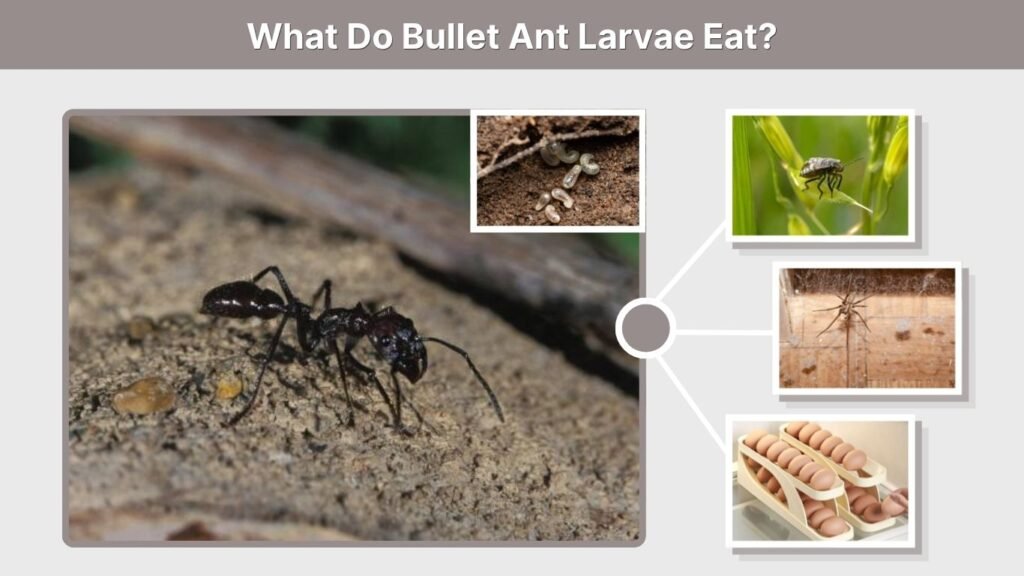
Adult workers obtain much of their energy from sugary liquids, but larvae require more protein for growth. Workers bring captured insects, spiders, egg cases, and scavenged animal material into the nest, where the food can be processed and given to developing larvae.
This division helps the colony maintain a balanced diet: carbohydrates power the workers, while animal protein supports larval development and the production of new adults.
FAQs
Are bullet ants carnivores?
Bullet ants are not strictly carnivorous. They are omnivores that collect sugary plant liquids as well as animal prey. Nectar and sap provide energy, while insects, spiders, and other protein-rich foods are particularly important for feeding larvae.
Do bullet ants eat plants?
They normally do not consume healthy leaves like leafcutter ants. Instead, they obtain plant-based nutrition from sap, nectar, fruit juice, and other sweet secretions. Workers may carry pieces of plant material, although these objects are not necessarily used as food.
Do bullet ants eat other ants?
Yes, bullet ants can prey on other ants. Workers have been observed carrying leafcutter ants back to their nests. However, other ants are only one part of a much broader diet containing nectar, sap, insects, spiders, and scavenged material.
Do bullet ants eat humans?
No. Bullet ants do not hunt or consume humans. They sting when threatened, trapped, handled, or when their nest is disturbed. Their painful sting is defensive and is also useful for subduing small animal prey.
What is the main food of bullet ants?
Sugary liquids, particularly nectar and tree sap, appear to be their most frequently collected foods. Nevertheless, insect prey delivers valuable protein and a high energetic return, making both plant liquids and animal prey essential to the colony.