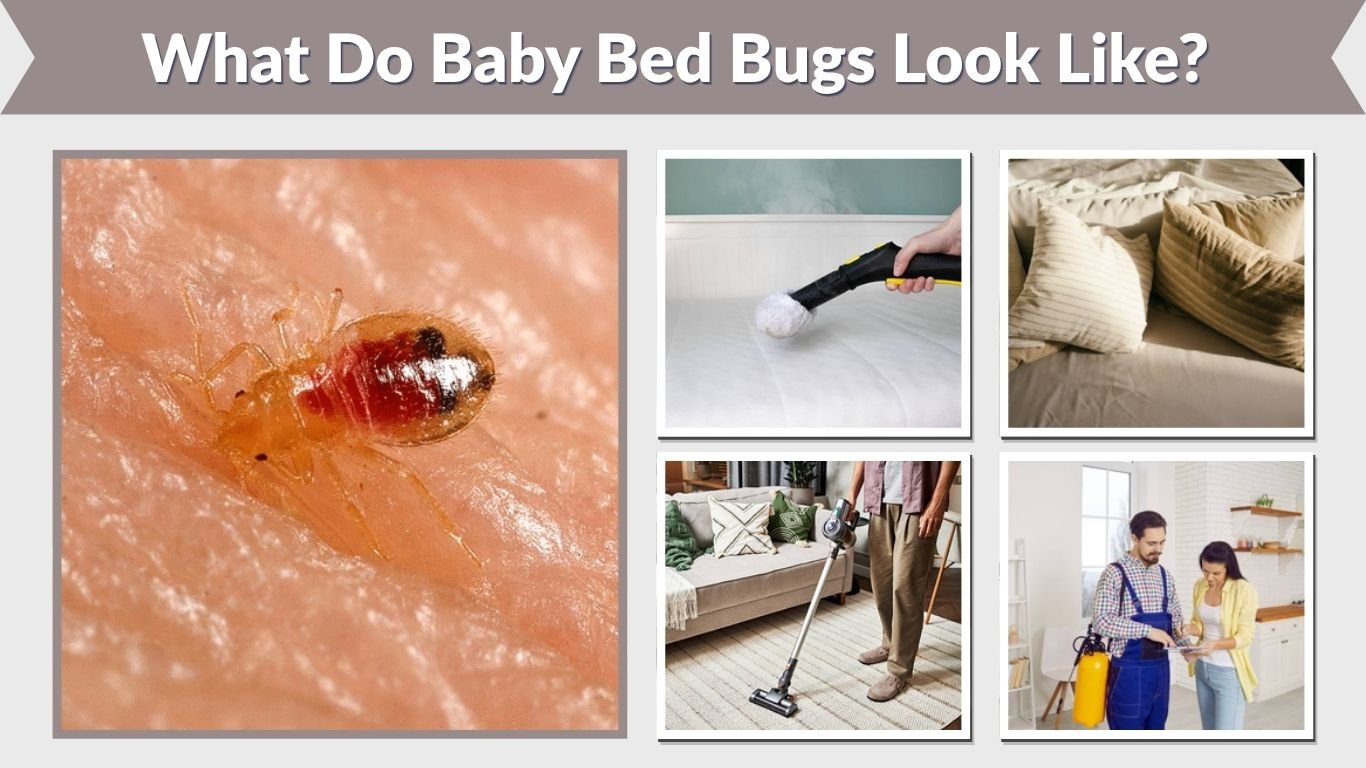
What do baby bed bugs look like? These tiny insects, also called bed bug nymphs, have pale yellow or nearly transparent bodies, six legs, and a flat, oval shape. They are much smaller than adult bed bugs, making them difficult to spot on mattresses, bedding, and furniture. After feeding on blood, their bodies often appear reddish and more noticeable. Recognizing baby bed bugs early is essential because their presence may indicate an active infestation. This guide explains their appearance, size, life stages, and differences from similar household insects.
What Do Baby Bed Bugs Look Like to the Human Eye?
Baby bed bugs resemble miniature versions of adult bed bugs, although their color and size are noticeably different. Newly hatched nymphs are pale, almost transparent, and approximately the size of a pinhead. As they grow, their bodies become larger and more visible. Their flattened appearance allows them to hide in narrow cracks around sleeping areas.
Baby Bed Bug Identification Features
Baby bed bugs have several recognizable physical characteristics:
- Body shape: Flat, oval, and slightly elongated after feeding.
- Body color: Whitish-yellow, cream, or nearly transparent when unfed.
- Legs: Six thin, jointed legs.
- Antennae: Two short, segmented antennae.
- Eyes: Small, dark eyes on either side of the head.
- Body segments: Visible abdominal divisions, especially under magnification.
- Movement: They crawl but cannot jump or fly.
Young nymphs are particularly difficult to identify against light-colored bedding because their bodies blend into the fabric.
Can You See Baby Bed Bugs Without a Microscope?
Yes, baby bed bugs are visible to the naked eye, but newly hatched individuals can be difficult to notice.
The first nymph stage measures approximately 1.5 millimeters. Their tiny size and pale coloring make them easy to overlook.
A flashlight and magnifying glass can help reveal their outlines. After feeding, their darker abdomens are generally easier to distinguish.
How Big Are Baby Bed Bugs?
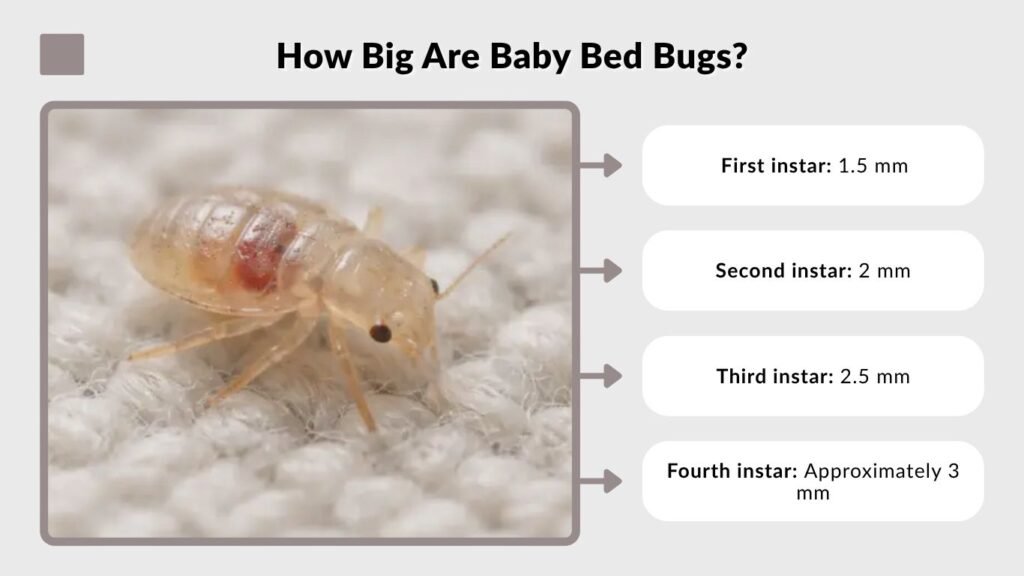
Baby bed bugs grow through five immature stages before becoming adults. Each stage is called an instar, and the insect must shed its exoskeleton to advance to the next stage. Their size gradually increases, while their overall body shape remains similar. Understanding these stages helps distinguish recently hatched nymphs from older juveniles and adults.
Baby Bed Bug Size by Life Stage
The approximate sizes of common bed bugs are:
- First instar: 1.5 mm, pale and extremely small.
- Second instar: 2 mm, slightly larger and easier to see.
- Third instar: 2.5 mm, with more noticeable body segments.
- Fourth instar: Approximately 3 mm, becoming increasingly visible.
- Fifth instar: Approximately 4.5 mm, resembling a small adult.
- Adult bed bug: Usually 5–7 mm, with a darker reddish-brown body.
These measurements are approximate and may vary with feeding condition.
Baby Bed Bugs vs. Adult Bed Bugs
The clearest differences are size, color, and reproductive maturity.
Adult bed bugs are generally reddish-brown, while young nymphs are much lighter when unfed. Adults also have a broader, more recognizable body.
Both possess six legs, antennae, and piercing-sucking mouthparts. Neither young nor adult bed bugs can fly.
What Color Are Baby Bed Bugs Before and After Feeding?
Baby bed bug coloration changes noticeably after a blood meal. Their pale, partially transparent bodies allow the contents of their digestive system to become visible. This can make the same insect appear completely different before and after feeding. Color is therefore an important identification clue, but it should always be considered alongside body shape and size.
Unfed Baby Bed Bugs
An unfed nymph generally appears translucent, whitish-yellow, or pale cream.
Because its abdomen is relatively flat, the insect may resemble a tiny moving speck on light-colored fabric.
Newly hatched nymphs are especially difficult to detect without close inspection.
Baby Bed Bugs After Feeding
After feeding on blood, a baby bed bug develops a visibly darker abdomen.
The insect may appear bright red, reddish-brown, or dark red depending on its developmental stage and how recently it fed.
Its abdomen also becomes fuller and somewhat elongated. As digestion progresses, the visible blood changes appearance.
Do Baby Bed Bugs Look Like Glitter?
No. Baby bed bugs do not naturally resemble glitter, although their small bodies may reflect light slightly.
A recently fed nymph can appear glossy under strong illumination, but it does not produce the sparkling appearance associated with glitter.
Tiny reflective particles on bedding are not reliable evidence of bed bugs.
What Bugs Look Like Baby Bed Bugs?
Several household insects resemble baby bed bugs, particularly when viewed without magnification. Young cockroaches, booklice, fleas, and certain other tiny arthropods may be mistaken for bed bug nymphs. However, differences in body shape, antennae, movement, and feeding behavior can help distinguish them. Accurate identification is important because different household pests require different control methods.
Baby Cockroaches vs. Baby Bed Bugs
Baby cockroaches, also called cockroach nymphs, can resemble darker bed bug nymphs.
However, cockroach nymphs generally have longer antennae and a more elongated body shape. They also often possess two small appendages, called cerci, at the rear of their abdomen.
Bed bugs have broader, flattened bodies without prominent rear cerci.
Cockroach nymphs commonly scatter quickly when disturbed, while bed bugs tend to retreat toward protected hiding places.
Fleas, Booklice, and Other Lookalikes
Fleas have narrow, laterally flattened bodies and powerful hind legs adapted for jumping. Baby bed bugs cannot jump.
Booklice are often pale and tiny, resembling newly hatched bed bugs. However, their heads and antennae are proportionally different, and they commonly occur in damp environments.
Carpet beetle larvae are generally hairy and elongated rather than smooth and oval.
Ticks and mites may also be confused with small bed bugs, but their leg arrangements and body structures differ.
Where Do Baby Bed Bugs Hide?
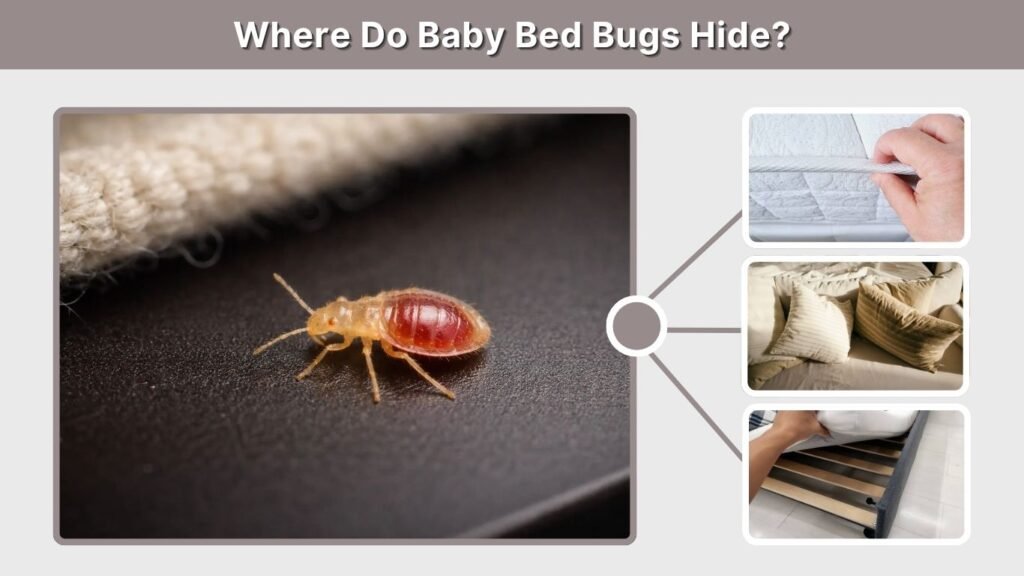
Baby bed bugs usually remain close to locations where people sleep or rest. Their flattened bodies allow them to squeeze into extremely narrow spaces, including mattress seams, furniture joints, and small gaps in bed frames. They often hide during daylight and emerge to feed when a suitable host is nearby, although daytime activity is possible.
Common Baby Bed Bug Hiding Places
Inspect these locations carefully:
- Mattress seams: Especially piping, stitching, and folded edges.
- Box springs: Beneath fabric coverings and around wooden supports.
- Headboards: Within cracks, screw holes, and joints.
- Bed frames: Along connections between wood or metal parts.
- Pillow and bedding areas: Particularly near seams and folds.
- Nearby furniture: Inside drawers, joints, and narrow gaps.
- Baseboards: Within small cracks close to sleeping locations.
Finding baby bed bugs in one location does not necessarily mean the entire infestation is confined there.
Other Signs of Baby Bed Bugs
Besides live nymphs, look for tiny dark fecal spots, pale shed skins, and small white eggs.
Reddish stains may appear on bedding when a recently fed bed bug is crushed.
The presence of several developmental stages can suggest that reproduction is occurring nearby.
Do Baby Bed Bugs Bite Humans?
Yes. Baby bed bugs require blood meals to grow and molt into their next developmental stage. Like adults, they feed through specialized piercing-sucking mouthparts. They commonly feed on sleeping people, although their bites are not always noticed immediately. The appearance of the resulting skin reaction depends more on individual sensitivity than on the age of the insect.
What Do Baby Bed Bug Bites Look Like?
Baby bed bug bites may cause itchy, slightly swollen spots or raised welts.
Some people develop clusters of marks, while others experience isolated reactions or no visible symptoms.
Bites from baby bed bugs cannot reliably be distinguished from adult bed bug bites by appearance alone.
Similarly, skin marks cannot confirm a bed bug infestation without supporting insect evidence.
Are Baby Bed Bug Bites Dangerous?
Bed bugs are not known to transmit diseases to humans through their bites.
However, repeated feeding may cause itching, sleep disruption, and skin irritation. Excessive scratching can sometimes lead to secondary infection.
Seek medical advice for severe reactions, worsening skin symptoms, or suspected infection.
What Should You Do If You Find Baby Bed Bugs?
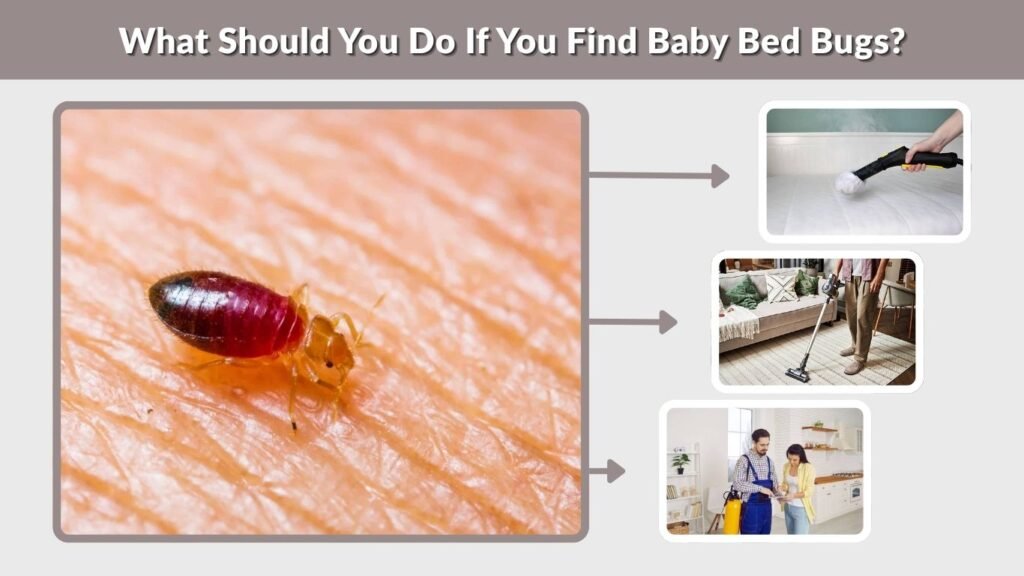
Discovering baby bed bugs may indicate that eggs have hatched within your sleeping environment. Because nymphs are small and difficult to detect, a few visible insects may not represent the full infestation. Effective management requires confirming identification, inspecting nearby hiding places, and addressing multiple life stages rather than simply eliminating the insects you can see.
Steps to Take After Finding Baby Bed Bugs
Follow these practical actions:
- Capture a specimen: Place a suspicious insect in a sealed container for accurate identification.
- Inspect nearby areas: Examine mattress seams, headboards, bed frames, and furniture.
- Contain affected bedding: Place washable items in sealed bags before moving them.
- Use appropriate heat treatment: Tumble-dry suitable fabrics on high heat for at least 30 minutes.
- Vacuum carefully: Clean accessible hiding places and dispose of collected debris in a sealed bag.
- Install bed bug encasements: Use properly designed covers to protect mattresses and box springs.
- Seek professional assistance: Contact a qualified pest control specialist when an infestation is confirmed.
Continued monitoring is important because surviving eggs may hatch after initial treatment.
Does Baby Powder Keep Baby Bed Bugs Away?
Baby powder is not a reliable or proven method for eliminating bed bugs.
Sprinkling powder around sleeping areas does not address hidden eggs, nymphs, and adults.
Avoid relying on unproven household remedies. Effective bed bug control typically combines inspection, targeted treatment, prevention, and follow-up monitoring.
FAQs
1. Do baby bed bugs look like ants?
Not usually. Baby bed bugs have flattened, oval bodies without the narrow waist characteristic of ants. Their antennae and movements also differ.
2. Are baby bed bugs white or red?
Unfed baby bed bugs are usually whitish-yellow or nearly transparent. After feeding, the blood visible through their abdomen can make them appear bright red or darker.
3. Do baby bed bugs look like baby roaches?
They can look similar at a glance. However, baby cockroaches typically have longer antennae, a more elongated body, and small appendages at the rear.
4. Can baby bed bugs survive without feeding?
Yes. Bed bug nymphs can survive for extended periods without feeding, although they need blood meals to progress through their developmental stages.
5. Are baby bed bugs a sign of an infestation?
Finding a confirmed baby bed bug indicates that reproduction has occurred, but it does not establish the size of the infestation. A thorough inspection is necessary to determine how widespread the problem is.