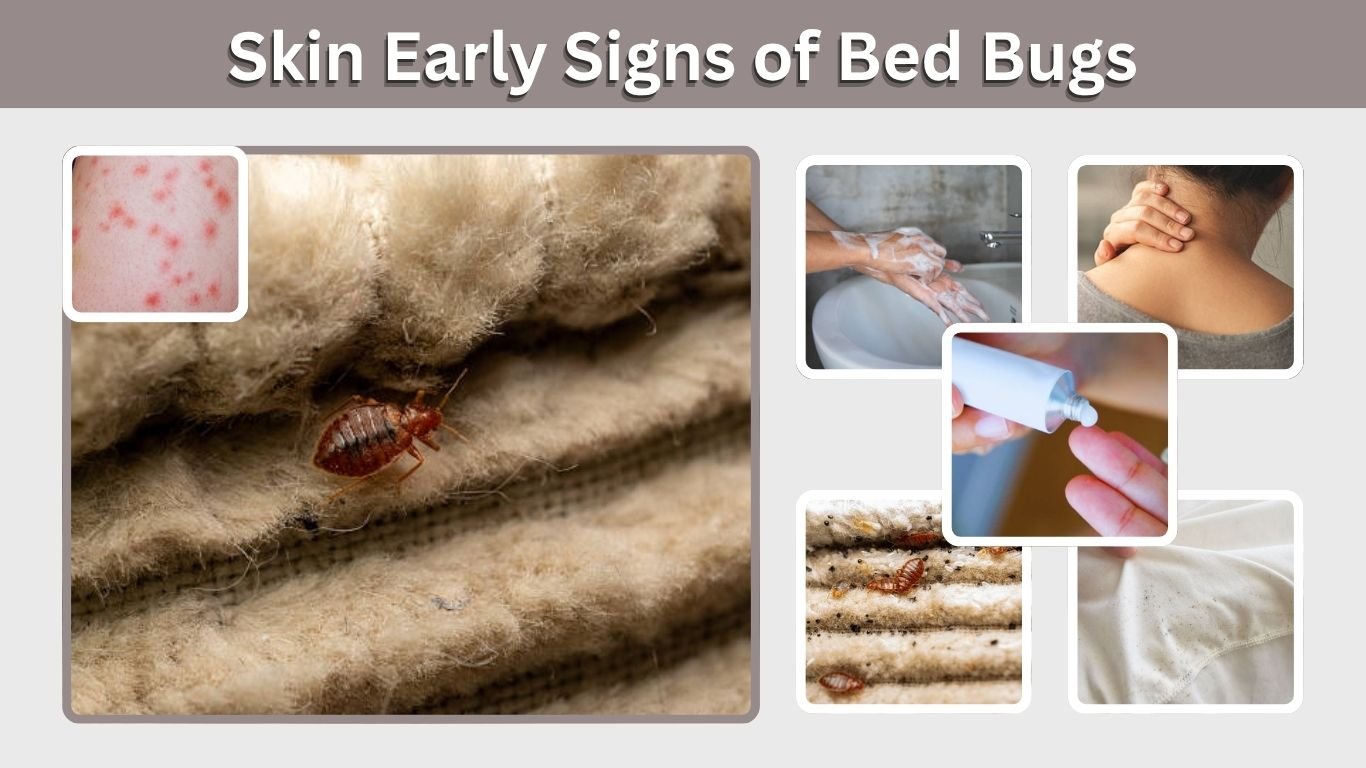
Early signs of bed bugs on skin often include small, itchy bumps, red or discolored welts, and clusters of bite marks that develop after sleeping. These reactions commonly appear on exposed areas such as the arms, legs, neck, and face. However, not everyone reacts immediately, and some people develop no visible marks at all. Bed bug bites can also resemble flea bites, dust mite allergies, or other skin conditions. Understanding their appearance, timing, and accompanying mattress signs can help identify possible infestations.
What Are the Early Signs of Bed Bugs on Skin?
The earliest skin symptoms of bed bug exposure vary considerably between individuals. Some people notice small bumps shortly after sleeping, while others develop delayed reactions several days later. Bed bugs inject saliva while feeding, which may trigger inflammation and itching. Although characteristic bite patterns can raise suspicion, skin symptoms alone cannot confirm the presence of bed bugs.
Common Early Skin Symptoms
Possible early signs include:
- Small red bumps: Slightly raised, inflamed areas on lighter skin.
- Darkened welts: Purple, brown, or darker bumps on deeper skin tones.
- Itching: Mild to intense irritation around affected areas.
- Clustered bites: Several marks appearing close together.
- Linear patterns: Bumps arranged in straight or irregular lines.
- Swelling: Localized inflammation around bite locations.
- Blisters: Occasionally develop in people with stronger reactions.
How Soon Do Bed Bug Bites Appear?
Bed bug bite reactions do not always appear immediately.
Some individuals notice itching or raised bumps within hours, while others develop symptoms several days afterward.
According to the CDC, reactions may sometimes take up to 14 days to become noticeable.
This delay makes it difficult to determine exactly when exposure occurred.
Where Do Bed Bug Bites Appear on the Body?
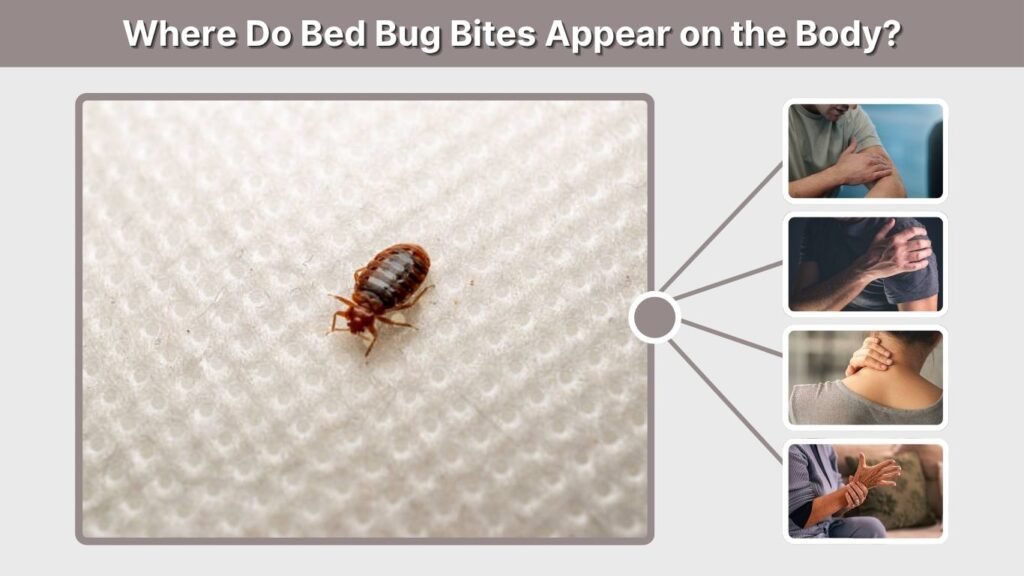
Bed bugs usually feed on skin that remains exposed while a person sleeps. Their feeding behavior means certain areas are more frequently affected than others. However, bite location depends on sleeping position, clothing, and bedding arrangements. Understanding where these marks commonly occur can help identify suspicious reactions, although their location cannot establish the insect responsible.
Common Bed Bug Bite Locations
Bed bug bites may appear on the arms, shoulders, neck, face, hands, and legs.
These areas are often exposed during sleep, making them accessible to feeding insects.
Multiple bites may develop close together, creating clusters or irregular lines.
However, similar patterns can also result from mosquitoes, fleas, and other biting insects.
Early Bed Bug Signs on Black or Brown Skin
On darker skin tones, bed bug bites may appear violet, brown, or darker than the surrounding skin.
Redness may be less noticeable, making swelling, raised texture, and itching more useful clues.
Repeated scratching can also cause post-inflammatory hyperpigmentation, leaving dark marks after the original irritation heals.
Dust Mites vs. Early Signs of Bed Bugs on Skin
Dust mites and bed bugs are frequently confused because both are associated with mattresses and bedding. However, they affect human skin differently. Bed bugs are blood-feeding insects that cause bites, while dust mites feed on shed skin cells and do not bite people. Dust mite allergens can worsen eczema or other allergic symptoms, creating irritation that resembles insect bites.
Do Dust Mites Cause Bite Marks?
Dust mites do not bite, sting, or burrow into human skin.
Instead, proteins from dust mite waste and body fragments can trigger allergic reactions.
People with dust mite allergies may experience sneezing, nasal congestion, watery eyes, or worsening eczema.
Therefore, an itchy rash associated with bedding does not necessarily indicate bed bugs.
Other Skin Conditions That Resemble Bed Bug Bites
Flea bites commonly affect the ankles and lower legs, while mosquito bites can cause itchy welts on exposed skin.
Contact dermatitis, eczema, and hives can also resemble bed bug reactions.
Scabies may cause severe nighttime itching and characteristic burrows in certain body areas.
A healthcare professional can help distinguish these conditions when the cause remains uncertain.
Early Signs of Bed Bugs on Mattresses and Sheets
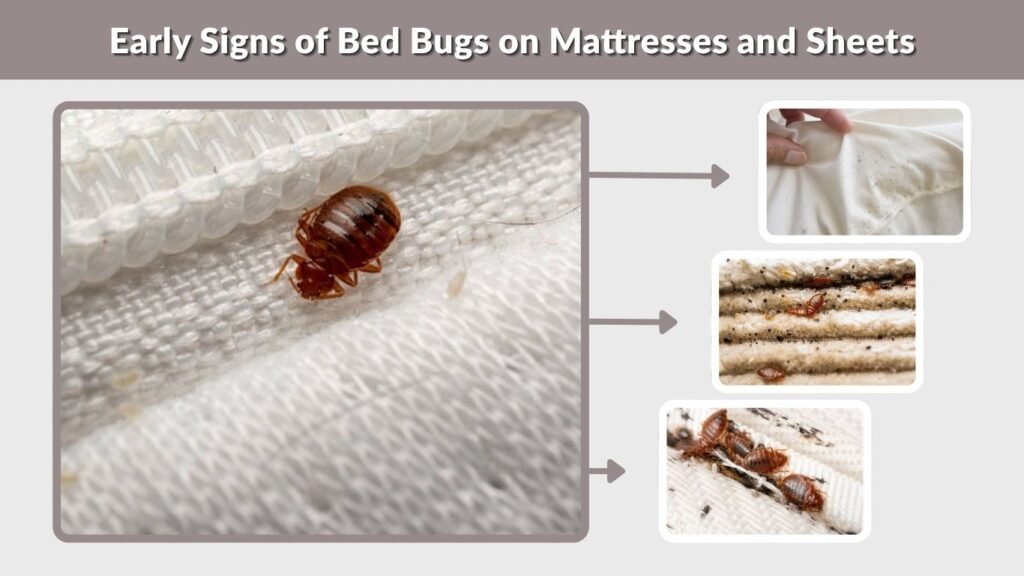
Skin reactions are less reliable for confirming bed bugs than physical evidence found around sleeping areas. Bed bugs spend much of their time hiding inside mattress seams, bed frames, and nearby furniture cracks. During feeding and development, they may leave distinctive stains, shed skins, or eggs. Checking these locations can provide stronger evidence of an infestation.
Physical Signs to Look For
Common evidence includes:
- Rusty stains: Reddish marks caused by crushed, blood-fed bed bugs.
- Black spots: Small fecal stains that may resemble ink dots.
- Shed skins: Pale exoskeletons left behind by growing nymphs.
- Tiny eggs: Whitish, oval eggs approximately 1 mm long.
- Live bed bugs: Flattened, reddish-brown insects hiding in cracks.
- Musty odor: Sometimes noticeable during substantial infestations.
Can You Have Bites Without Mattress Signs?
Yes. Small bed bug infestations can be difficult to detect because the insects hide in narrow spaces.
A person may notice skin reactions without immediately finding live insects or stains.
However, unexplained bumps are not proof of bed bugs.
Continued monitoring and identification of physical evidence are important before beginning pest-control treatment.
How to Check for Bed Bugs When You Notice Bites
Discovering unexplained skin bumps can make people suspect their mattress contains bed bugs. However, careful inspection is more useful than immediately applying insecticides. Bed bugs typically remain close to sleeping areas, particularly within protected cracks and seams. Examining these locations systematically can help identify a possible infestation while reducing the risk of unnecessary or inappropriate treatment.
Step-by-Step Bed Bug Inspection
Follow these steps:
- Inspect bedding: Look for rusty stains, dark spots, or insects.
- Examine mattress seams: Check stitching, labels, and piping.
- Inspect the bed frame: Search joints, screw holes, and headboard cracks.
- Check nearby furniture: Examine bedside tables and upholstered surfaces.
- Use monitoring devices: Bed bug interceptors beneath bed legs can help detect activity.
- Preserve evidence: Collect suspected insects in a sealed container for identification.
What if You Cannot Find Bed Bugs?
If inspections reveal no physical evidence, continue monitoring rather than assuming an infestation exists.
Other biting insects or skin conditions may explain the symptoms.
A qualified pest-control professional can investigate persistent concerns, while a dermatologist can evaluate unexplained skin reactions.
How to Treat Early Bed Bug Bites on Skin
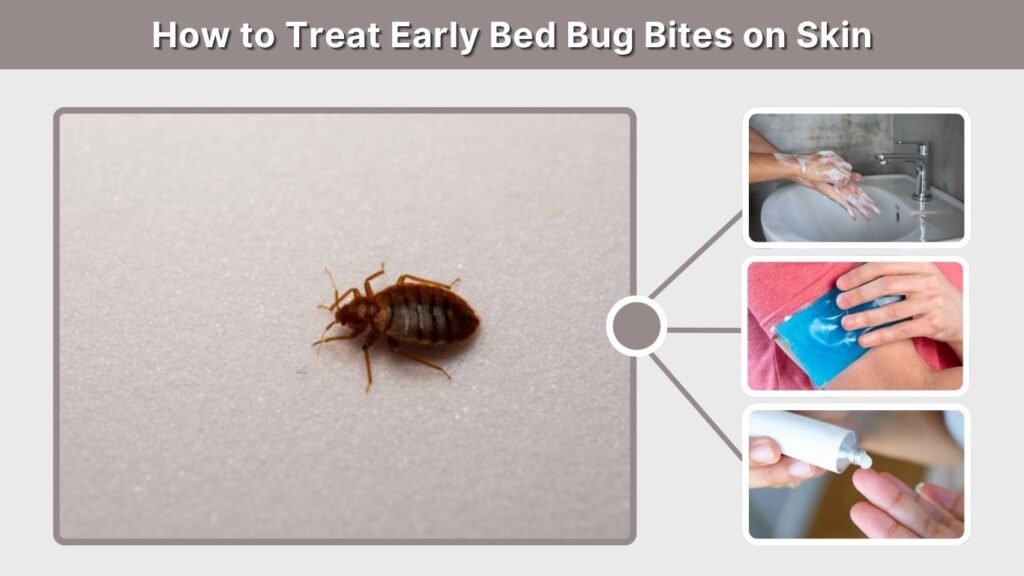
Most uncomplicated bed bug bites heal naturally without extensive medical treatment. However, itching and inflammation can cause discomfort, particularly when multiple bites occur. Gentle cleaning, suitable anti-itch products, and avoiding scratching can help protect irritated skin. Severe allergic reactions and secondary bacterial infections require additional care, making it important to recognize symptoms that extend beyond ordinary irritation.
Home Treatment for Bed Bug Bites
For mild reactions, consider these steps:
- Wash the bites: Clean gently with soap and water.
- Apply a cold compress: Reduce swelling and itching.
- Use hydrocortisone cream: Follow age restrictions and product instructions.
- Consider antihistamines: Appropriate oral medications may relieve itching.
- Avoid scratching: Prevent skin damage and infection.
When Should You See a Doctor?
Most bed bug bites improve within one to two weeks.
However, increasing pain, warmth, pus, or spreading inflammation may indicate infection.
Large blisters or persistent allergic reactions also warrant medical assessment.
Difficulty breathing, facial swelling, or throat tightness requires immediate emergency care.
FAQs
Early bed bug symptoms often raise questions because their appearance overlaps with other insect bites and skin disorders. Some individuals develop obvious welts, while others experience little or no reaction. Understanding the timing of symptoms and the difference between bites and physical infestation evidence can help prevent misidentification and unnecessary treatment.
1. What Is the First Sign of Bed Bugs on Skin?
The first noticeable sign may be a small, itchy, raised bump or welt. However, some people do not develop visible reactions, so skin symptoms alone cannot confirm bed bugs.
2. Do Bed Bug Bites Appear Immediately?
Not always. Reactions may develop within hours or several days. In some individuals, visible symptoms can take up to 14 days to appear.
3. Can Dust Mites Cause Marks Like Bed Bug Bites?
Dust mites do not bite people, but their allergens can worsen eczema and other allergic skin conditions that may resemble insect-bite reactions.
4. Can You Have Bed Bugs Without Skin Bites?
Yes. Some people show no visible reaction to bed bug feeding. Physical evidence around mattresses and furniture is more reliable for identifying an infestation.
5. How Long Do Early Bed Bug Bites Last?
Most mild reactions improve within one to two weeks. Strong allergic responses or repeated scratching may extend healing time.