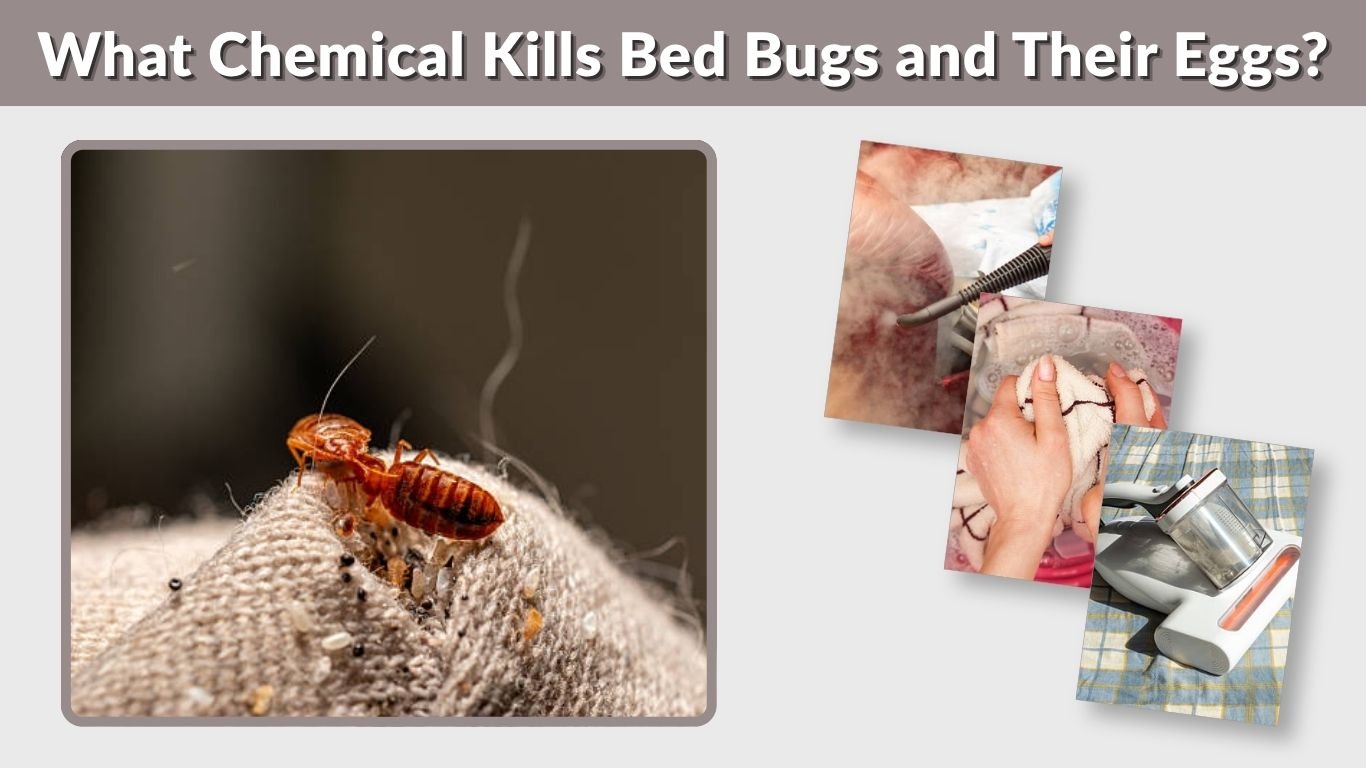
Bed bugs are difficult to eliminate, especially when their tiny eggs remain hidden in furniture, mattresses, and narrow cracks. If you’re wondering what chemical kills bed bugs and their eggs, several registered pesticides can help, but not every insecticide destroys eggs. Heat, steam, and carefully selected egg-killing products are often important parts of successful treatment. Understanding which methods work, which household remedies fail, and how to prevent new infestations can help you choose a safer and more effective approach.
What Chemicals Kill Bed Bugs and Their Eggs?
Several insecticide classes are approved for bed bug control, but effectiveness against eggs depends on the specific formulation. Some products kill adult insects without preventing eggs from hatching. Therefore, choosing a registered pesticide with an explicit egg-killing claim is important when treating an infestation.
Pyrethrins and Pyrethroids
Pyrethrins and pyrethroids are commonly used insecticides for controlling bed bugs. They affect the insects’ nervous systems, causing paralysis and death.
However, some bed bug populations have developed resistance to these chemicals. Additionally, not every pyrethroid formulation effectively kills eggs.
Products should be selected according to their approved labels rather than their active ingredients alone.
Chlorfenapyr and Neonicotinoids
Chlorfenapyr works by disrupting essential functions inside bed bug cells. Neonicotinoids affect the nervous system and may control populations resistant to certain other insecticides.
Both chemical classes are used in registered bed bug treatments. However, effectiveness against eggs varies by product, so an insecticide that kills adults should not automatically be considered an egg killer.
Cold-Pressed Neem Oil
Certain registered formulations containing cold-pressed neem oil have demonstrated activity against adult bed bugs, nymphs, and eggs.
According to the EPA, laboratory performance trials supporting specific registered formulations showed control of all three life stages.
This does not mean homemade neem oil mixtures or ordinary cosmetic neem oils will produce the same results.
Which Bed Bug Treatments Actually Kill Eggs?
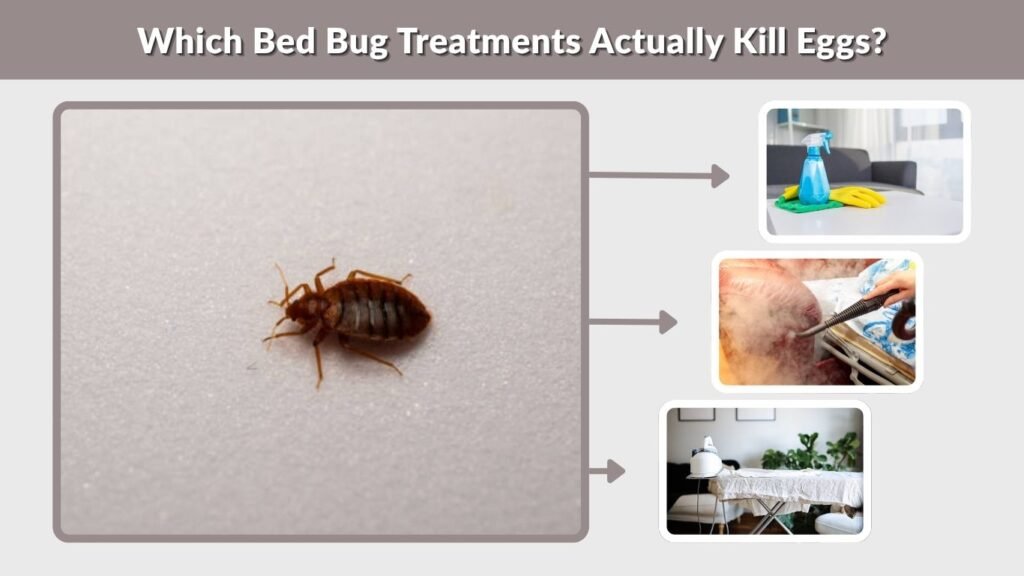
Bed bug eggs have a protective outer covering, making them difficult to eliminate with some insecticides. Even after adult insects disappear, surviving eggs may hatch and restart the infestation. A successful treatment needs to address every life stage rather than focusing only on visible insects.
| Treatment | Effect on Bed Bug Eggs |
| Egg-killing registered pesticides | Effective when specifically labeled for eggs |
| Professional heat treatment | Effective at proper temperatures |
| Steam treatment | Effective with sufficient heat exposure |
| Hot clothes dryer | Effective for suitable fabrics |
| Rubbing alcohol | Unreliable and hazardous |
| Household bleach | Not recommended |
| Diatomaceous earth | Does not reliably kill eggs directly |
| Vinegar or baking soda | Not proven reliable |
Do Harris, Hot Shot, and CrossFire Kill Bed Bug Eggs?
Some commercial bed bug products advertise egg-killing activity. However, products within the same brand can contain different ingredients and carry different approved claims.
Check the current product label for explicit references to killing bed bug eggs. An ordinary bed bug spray should not be assumed to kill eggs simply because it kills adult insects.
The EPA also explains that many pesticides do not kill eggs, making follow-up treatment necessary.
Does Alcohol or Bleach Kill Bed Bug Eggs?
Rubbing alcohol and bleach frequently appear in home treatment recommendations. Although these substances can harm insects under certain direct-contact conditions, neither is a dependable solution for eliminating hidden bed bug eggs. They also introduce avoidable household safety risks, especially when applied to bedding, furniture, or sleeping areas.
Does Rubbing Alcohol Kill Bed Bug Eggs?
Rubbing alcohol is not a reliable bed bug egg treatment. It evaporates quickly, provides little lasting protection, and may fail to reach eggs concealed in cracks.
Alcohol is also highly flammable. The EPA warns that using rubbing alcohol against bed bugs has caused house fires.
Even higher-concentration alcohol should not be used as a homemade bed bug pesticide.
Does Bleach Kill Bed Bugs and Their Eggs?
Bleach may damage insects through direct contact, but it is not a recommended bed bug control method.
It cannot reliably reach hidden eggs, may discolor furniture and fabrics, and can release irritating fumes.
Never mix bleach with ammonia, vinegar, or other household cleaners. Use properly labeled bed bug treatments instead.
What Temperature Kills Bed Bugs and Their Eggs?
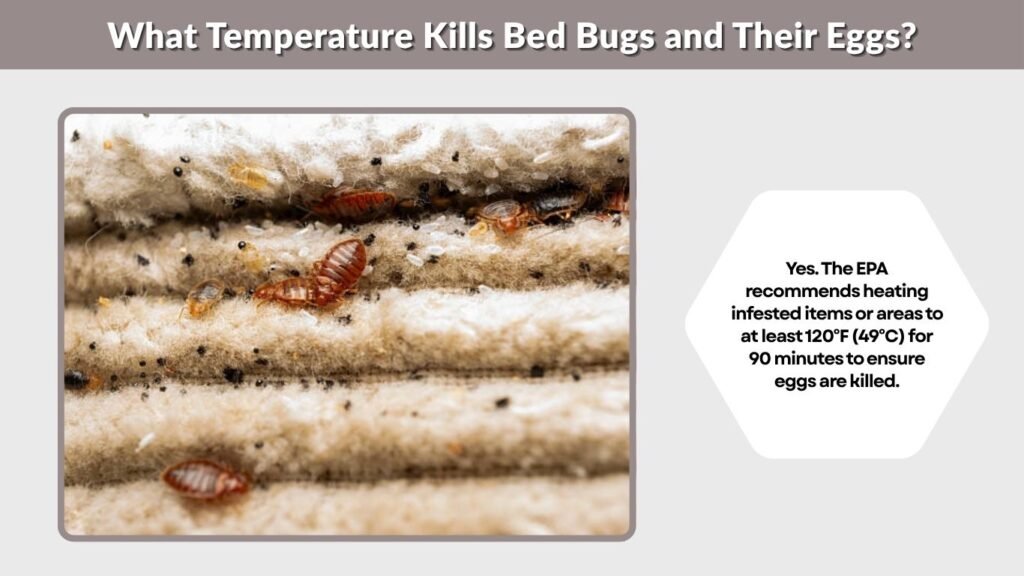
Heat is one of the most useful nonchemical methods for eliminating bed bugs and their eggs. Unlike pesticides that may leave some eggs unharmed, sufficiently high temperatures can kill all life stages. However, success depends on the temperature actually reaching the insects and remaining high enough for an appropriate period.
Does Heat Kill Bed Bug Eggs?
Yes. The EPA recommends heating infested items or areas to at least 120°F (49°C) for 90 minutes to ensure eggs are killed.
The temperature must reach the places where the eggs are hiding, not merely the surrounding air.
Professional heat treatments use specialized equipment to distribute and monitor temperatures. Household space heaters and ovens should not be used for improvised bed bug treatments.
Does Steam Kill Bed Bug Eggs?
Yes. Steam can destroy bed bug eggs when enough heat reaches them.
The EPA advises using steam temperatures of at least 130°F (54°C), with gentle airflow that does not scatter insects.
Steam may be useful on mattress seams, furniture joints, and certain upholstered surfaces. Follow equipment instructions and avoid electrical components or moisture-sensitive materials.
Does a Clothes Dryer Kill Bed Bug Eggs?
A hot clothes dryer can eliminate bed bugs and eggs from suitable fabrics.
The EPA recommends drying clothing and bedding on high heat for 30 minutes. Washing alone may not eliminate every life stage.
Keep treated clothing in sealed, clean bags to prevent reinfestation.
How to Kill Bed Bug Eggs and Prevent Reinfestation
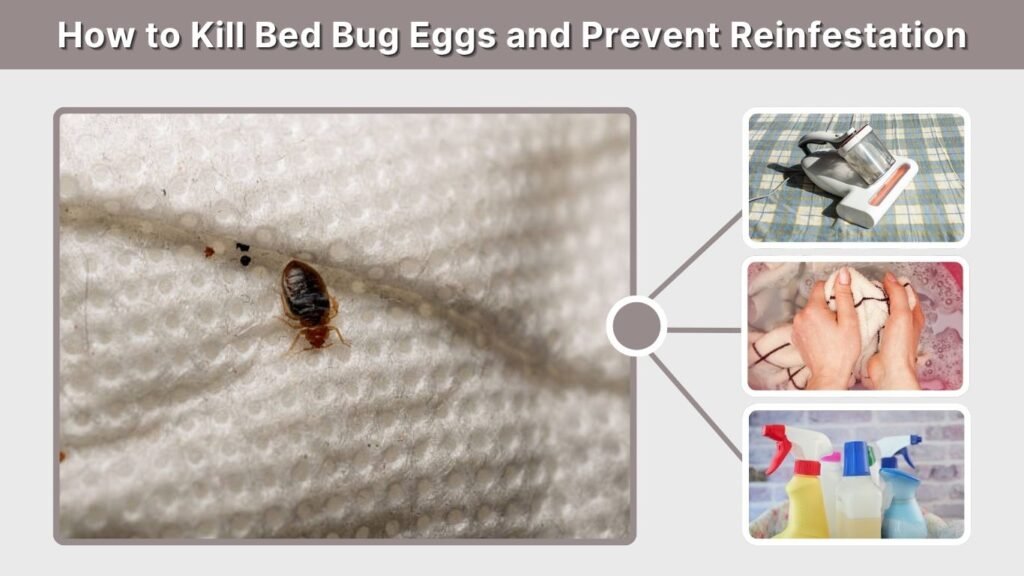
Eliminating visible bed bugs is only part of successful control. Eggs may remain hidden around mattresses, bed frames, furniture joints, and other protected spaces. Combining inspection, cleaning, heat treatment, approved pesticides, and ongoing monitoring helps prevent surviving insects from rebuilding the population.
Practical Steps for Bed Bug Egg Control
- Inspect hiding places: Check mattress seams, bed frames, headboards, and nearby furniture for insects and eggs.
- Heat-treat washable items: Use a high-temperature dryer for suitable bedding and clothing.
- Vacuum carefully: Clean seams and crevices, then seal and dispose of vacuum contents outside.
- Use registered pesticides: Follow the label and select formulations appropriate for the affected surfaces and life stages.
- Monitor for new activity: Inspect regularly and arrange follow-up treatment when needed.
Severe or persistent infestations often require professional pest management. Combining chemical and nonchemical approaches generally provides better control than relying on a single treatment.
FAQs
1. What Kills Bed Bug Eggs Instantly?
Sufficient direct heat can kill bed bug eggs quickly, but the required exposure time depends on temperature. No household chemical should be assumed to kill hidden eggs instantly.
2. Does Diatomaceous Earth Kill Bed Bug Eggs?
Diatomaceous earth primarily works by dehydrating mobile bed bugs. It does not reliably destroy intact eggs directly. Use only pesticide-registered products labeled for bed bugs and follow their instructions.
3. Does Vinegar Kill Bed Bugs and Their Eggs?
Vinegar is not a proven, reliable treatment for bed bug eggs. It should not replace registered pesticides, heat treatment, or professional control.
4. Does Cold Kill Bed Bugs and Their Eggs?
Yes. The EPA identifies temperatures below 0°F (-19°C) for at least four days as a possible treatment. However, household freezers may not consistently reach the necessary temperature.
5. What Is the Best Way to Kill Bed Bugs and Their Eggs?
An integrated approach combining heat, steam, careful cleaning, monitoring, and appropriately labeled pesticides is generally most effective. Professional treatment may be necessary for extensive infestations.