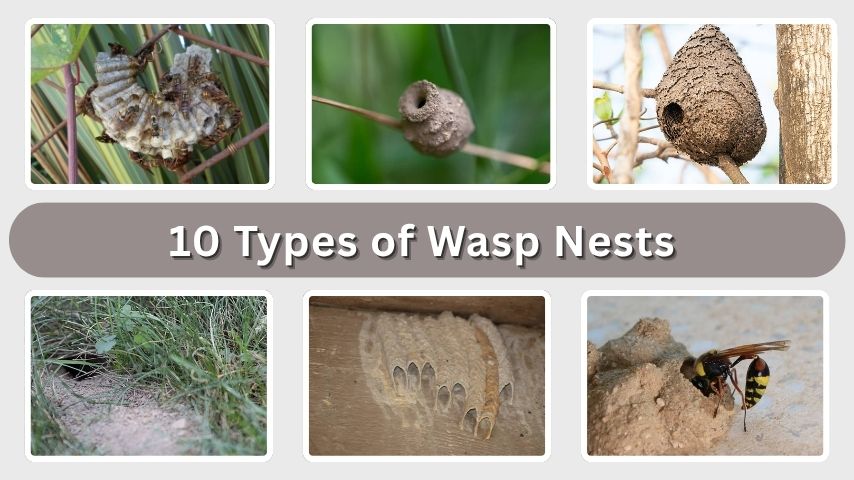
Wasp nests come in many shapes, sizes, and materials, each reflecting the species that built them. From small paper wasp nests to large bald-faced hornet or Asian hornet nests, understanding these differences is essential for identification and safety. Some wasps are solitary, like mud daubers and potter wasps, while others form large colonies that can be aggressive if disturbed. This guide explores 10 common types of wasp nests, detailing their appearance, habitat, behavior, and construction so you can recognize them safely and take appropriate precautions.
1. Paper Wasp Nest
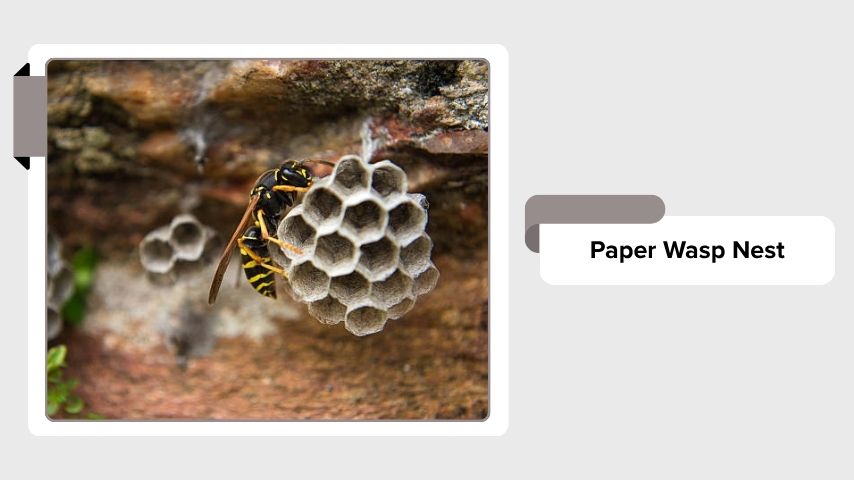
Paper wasps are among the most common social wasps, known for their small, open-comb nests. These nests are typically found in sheltered areas such as under eaves, in shrubs, or low tree branches. They are made from chewed plant fibers mixed with saliva, giving them a papery texture. Paper wasp nests are usually modest in size but host multiple wasps working collectively.
Identification
- Small umbrella-shaped nest
- Open hexagonal combs visible
- Brown or tan in color
- Often attached under eaves or branches
Habitat and Location
Paper wasps prefer sheltered outdoor spaces. You’ll often find their nests under roof overhangs, in garden shrubs, or along fences. They choose locations that are dry, protected from rain, and relatively close to a food source like nectar or insects.
Behavior and Colony
Colonies are relatively small, usually containing 20–50 wasps. Paper wasps are generally non-aggressive but will defend their nest if threatened. They are active during the day and are often seen flying near flowers, feeding on nectar, or capturing caterpillars for larvae.
Nest Construction
The nest is built from plant fibers chewed into a pulp. Wasps shape the pulp into thin hexagonal cells, which remain open and exposed. Unlike hornet nests, paper wasp nests are not fully enclosed and appear delicate, yet they are strong enough to support the colony’s daily activities.
2. Bald-Faced Hornet Nest
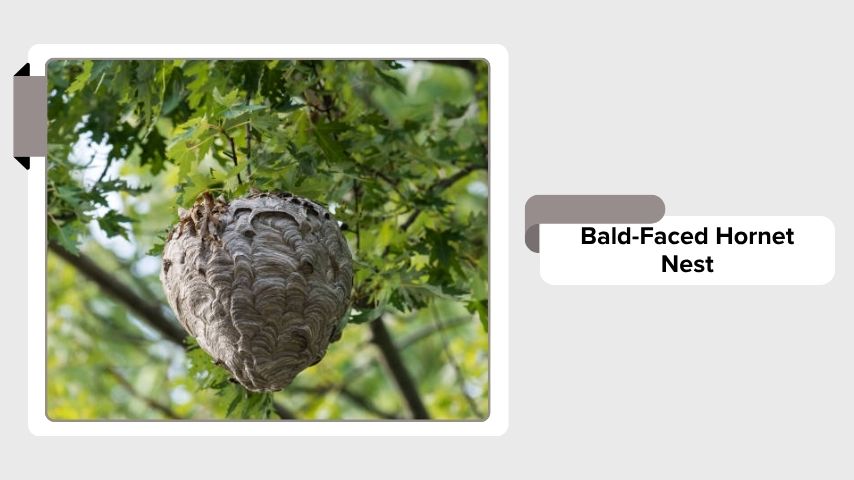
Bald-faced hornets are a type of wasp that build large, enclosed nests. These nests are typically football-shaped, made from paper-like material, and are often gray in color. They are commonly found in trees, shrubs, or under building eaves. Bald-faced hornet nests are highly protective of the colony, and disturbing them can trigger aggressive defensive behavior.
Identification
- Large, enclosed, football-shaped nest
- Smooth gray paper-like exterior
- Usually 1–2 feet in height
- Suspended from tree branches, shrubs, or eaves
Habitat and Location
Bald-faced hornets prefer elevated and sheltered sites, such as tree limbs, tall shrubs, or roof overhangs. They select locations with minimal human disturbance and access to building materials like wood fibers and plant material to construct their nests.
Behavior and Colony
Colonies are much larger than paper wasps, often housing hundreds of hornets. Bald-faced hornets are more aggressive than smaller wasps and will vigorously defend the nest when threatened. Their daily activity includes foraging for insects and nectar to feed the larvae.
Nest Construction
The nest is made from chewed wood fibers mixed with saliva to form gray, papery layers. Unlike paper wasp nests, the cells are fully enclosed within the protective outer layer. This design shields the colony from weather and predators, making bald-faced hornet nests highly durable.
3. Yellow Jacket Nest
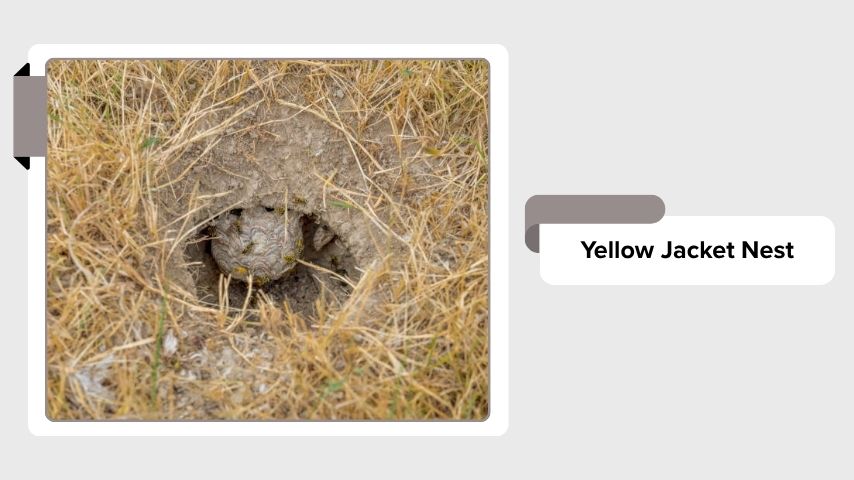
Yellow jackets are social wasps known for their aggressive behavior and subterranean nests. These nests are often hidden underground, in wall voids, or in hollow spaces, making them less visible than other wasp nests. Yellow jacket colonies can grow quickly, containing hundreds of wasps, and are highly defensive when disturbed.
Identification
- Typically underground or hidden in cavities
- Covered with a paper-like layer, smaller than hornet nests
- Brownish in color
- Often irregular in shape, depending on location
Habitat and Location
Yellow jackets prefer dark, concealed locations such as rodent burrows, wall cavities, or under decks. Some nests may be partially exposed but are usually difficult to spot due to their hidden nature. They choose areas near food sources like garbage, fruit, or nectar.
Behavior and Colony
Colonies are large and highly aggressive. Yellow jackets are active foragers during the day and will sting repeatedly if the nest is disturbed. Unlike paper wasps, they are particularly drawn to human food, increasing the risk of encounters in outdoor areas.
Nest Construction
The nest is made from chewed wood fibers mixed with saliva, forming paper layers. Underground nests have multiple layers of cells stacked inside the cavity. The paper covering protects the colony and keeps larvae safe from environmental hazards.
4. Mud Dauber Nest
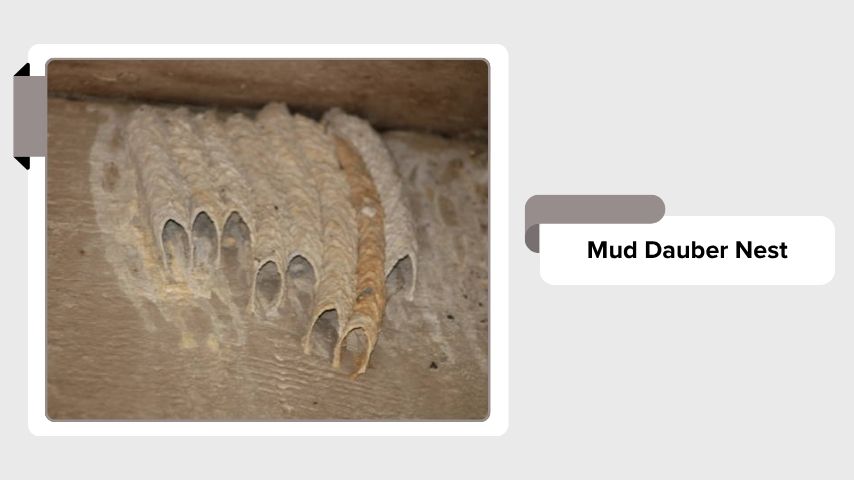
Mud daubers are solitary wasps that build small, tubular nests from mud. Unlike social wasps, they do not live in colonies. Mud dauber nests are usually found in sheltered areas like under eaves, in garages, or on walls. They are known for their neat, cylindrical mud tubes and relatively harmless behavior toward humans.
Identification
- Small, tubular mud structures
- Usually dark brown or gray
- Individual cells stacked inside each tube
- Commonly attached to walls, eaves, or sheltered corners
Habitat and Location
Mud daubers prefer dry, protected spaces such as under roof overhangs, inside garages, barns, or even on fences. They select sites sheltered from rain and wind to ensure the mud nests remain intact.
Behavior and Colony
Mud daubers are solitary and non-aggressive. Females build the nests alone, provision them with paralyzed spiders for their larvae, and rarely sting humans. Because they do not defend a colony, they are much less dangerous than social wasps like yellow jackets or hornets.
Nest Construction
Each mud dauber nest consists of several cylindrical mud tubes. The female packs each tube with paralyzed spiders, lays an egg inside, and seals the tube. The larvae feed on the spiders until they emerge as adults. The mud construction provides both protection and stability.
5. Potter Wasp Nest
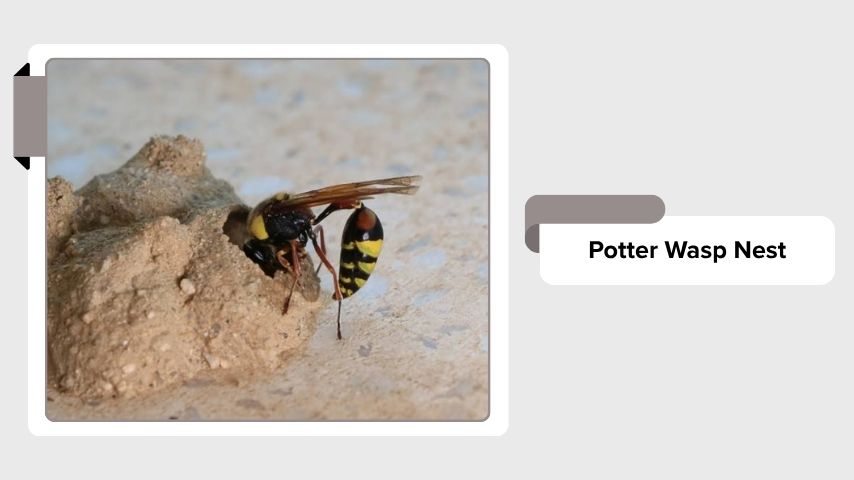
Potter wasps are solitary wasps that build distinctive jug-shaped mud nests. These nests are usually attached to branches, walls, or other vertical surfaces. Each nest houses a single egg and is provisioned with paralyzed caterpillars or insects for the larva. Potter wasp nests are small, delicate, and easily recognizable by their unique shape.
Identification
- Small, jug- or pot-shaped mud nests
- Smooth exterior, often tan or brown
- Single-cell structure inside
- Usually attached to vertical surfaces like walls or branches
Habitat and Location
Potter wasps prefer sheltered outdoor areas, such as under eaves, on walls, fences, or tree branches. The location is chosen to protect the nest from rain and predators while allowing the adult wasp easy access for hunting and provisioning.
Behavior and Colony
Potter wasps are solitary and non-aggressive. Each female builds and provisions her nest independently. They rarely sting unless directly threatened. Their activity is focused on hunting for caterpillars or other insects to feed the larvae.
Nest Construction
The nest is made from mud molded into a small jug-like container. Inside, the female places prey and lays a single egg. After sealing the nest, the larva develops inside, feeding on the paralyzed insects until it emerges as an adult wasp.
6. Cicada Killer Wasp Nest
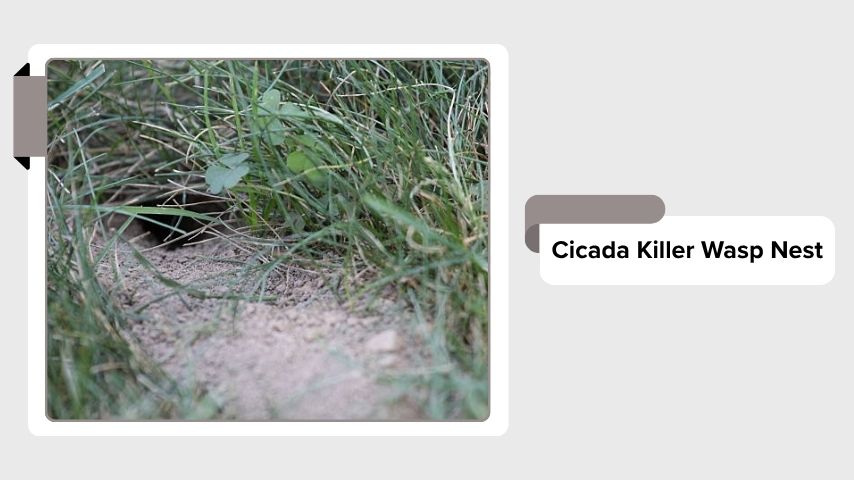
Cicada killer wasps are large, solitary wasps that build underground nests. They are named for their habit of paralyzing cicadas to provision their larvae. These nests are often burrows in sandy or loose soil, and while the wasps are intimidating due to their size, they are generally non-aggressive toward humans.
Identification
- Large, vertical burrows in sandy or loose soil
- May have small mounds of soil around the entrance
- Each burrow houses one or more cells
- Nests are typically near sunny, open areas
Habitat and Location
Cicada killer wasps prefer sandy, well-drained soil in sunny areas such as lawns, fields, or gardens. The females dig burrows to create multiple cells where each egg is placed along with a paralyzed cicada.
Behavior and Colony
Cicada killers are solitary; each female builds and provisions her own nest. They rarely sting humans unless handled. Males may hover near the nest entrance to defend territory but cannot sting. The wasps’ primary activity is hunting cicadas for their larvae.
Nest Construction
The female excavates a burrow and digs several cells underground. Each cell is stocked with a paralyzed cicada, and a single egg is laid inside. After sealing the cell with soil, the larva develops while feeding on the cicada until it emerges as an adult wasp.
7. Thread-Waisted Wasp Nest
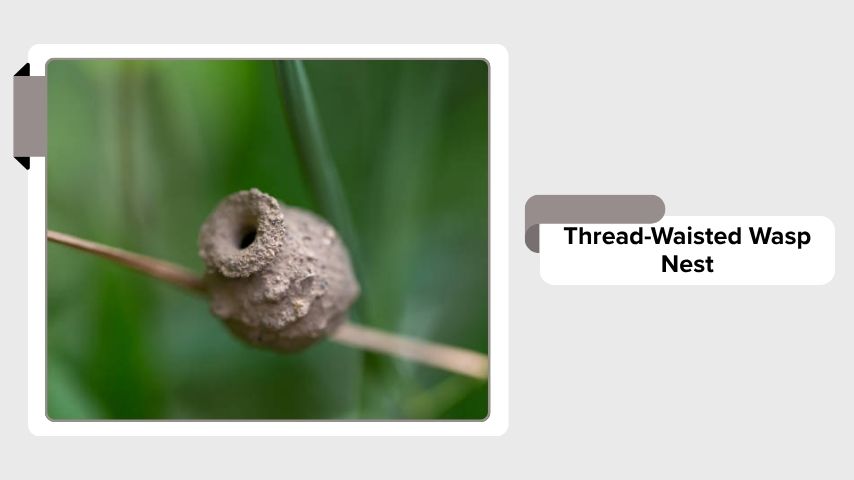
Thread-waisted wasps are solitary wasps known for their slender “thread-like” waist. They build small, individual nests in sheltered locations, often in soil, plant stems, or crevices. These nests are provisioned with insects or spiders to feed their larvae, and the wasps are generally non-aggressive toward humans.
Identification
- Small nests, often in soil, stems, or crevices
- Nest may contain one or a few cells
- Insects or spiders provisioned inside
- Typically hidden and difficult to spot
Habitat and Location
Thread-waisted wasps prefer dry, protected areas for their nests. Common locations include underground burrows, hollow plant stems, wall cracks, or under rocks. They select sites that provide safety from rain and predators.
Behavior and Colony
These wasps are solitary and rarely sting. Each female builds and provisions her own nest, hunting spiders or other insects for the larvae. Adults are most active during the day while foraging and hunting.
Nest Construction
The female wasp creates small burrows or uses pre-existing cavities. Each cell is stocked with paralyzed prey, and an egg is laid inside. The larva feeds on the prey until maturation. Nests are compact and carefully concealed.
8. European Hornet Nest
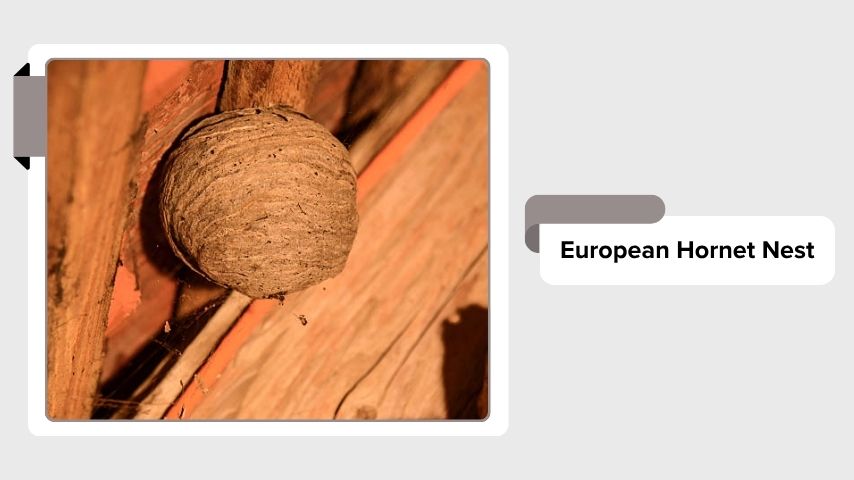
European hornets are large social wasps that build enclosed paper-like nests. These nests are often found in hollow trees, attics, or wall voids. The nests are sizable and can house hundreds of hornets. They are generally active at night and can be aggressive if the nest is disturbed.
Identification
- Large, enclosed, paper-like structure
- Brownish-gray color
- Often football-shaped or oval
- Usually hidden in hollow trees, attics, or wall cavities
Habitat and Location
European hornets prefer sheltered, elevated locations. Hollow trees, attics, and wall voids provide protection from weather and predators while allowing the colony to grow large. Nests are usually not visible from the ground.
Behavior and Colony
European hornets are social, with large colonies containing hundreds of individuals. They are primarily nocturnal but can be active during the day. The colony aggressively defends the nest if threatened.
Nest Construction
The nest is made from chewed wood fibers mixed with saliva, forming a sturdy paper-like material. The cells inside are used to house larvae, and the outer layer provides protection against weather and predators.
9. Asian Hornet Nest
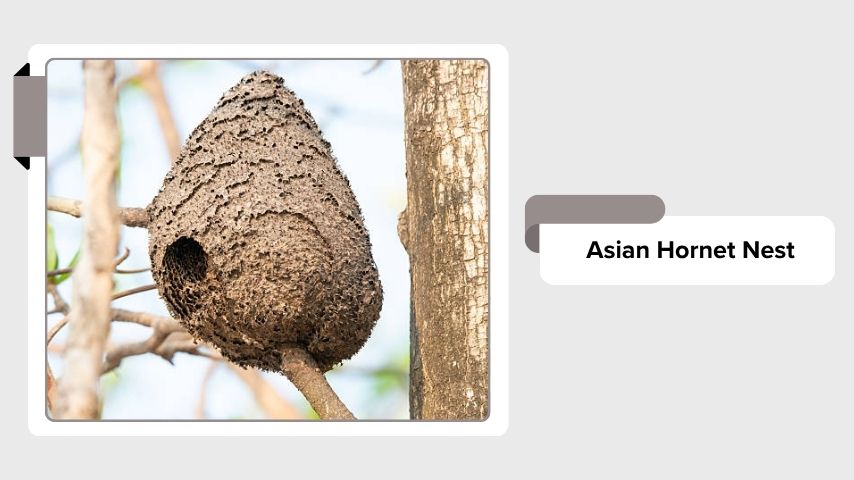
Asian hornets are an invasive species known for their aggressive predation on other insects. They build large, enclosed, spherical nests, usually high in trees or tall shrubs. These nests are made from paper-like material and can house hundreds of hornets, posing a risk to local pollinators and humans if disturbed.
Identification
- Large, spherical, paper-like nest
- Smooth gray or brown exterior
- Usually suspended high in trees or shrubs
- Houses hundreds of hornets
Habitat and Location
Asian hornets prefer high, secluded locations such as tall trees, dense shrubs, or sometimes on the exterior of buildings. They avoid heavily trafficked human areas unless foraging.
Behavior and Colony
These hornets are highly aggressive and territorial. Colonies are large and actively hunt other insects, including bees. They defend the nest vigorously if disturbed.
Nest Construction
The nest is made from chewed plant fibers mixed with saliva, forming smooth layers of paper-like material. Inside, the nest contains cells for larvae, with the outer layer providing protection from weather and predators.
10. Polistes Wasp Nest
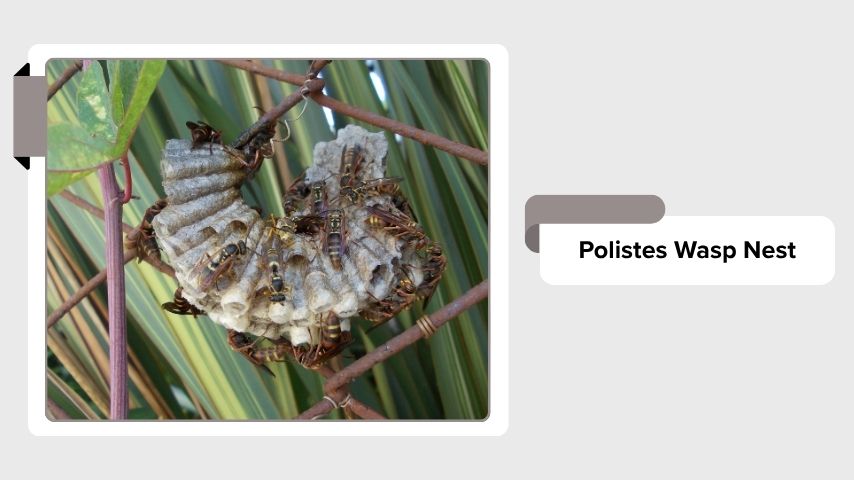
Polistes wasps are social paper wasps that build small, open-comb nests. These nests are commonly found under eaves, in shrubs, or on tree branches. The nests are delicate, umbrella-shaped, and house relatively small colonies compared to hornets, making them easier to identify and less aggressive.
Identification
- Small, umbrella-shaped open-comb nest
- Brown or tan in color
- Exposed hexagonal cells
- Usually attached under eaves, branches, or shrubs
Habitat and Location
Polistes wasps prefer sheltered, dry areas such as under roof overhangs, fences, shrubs, or low tree branches. The location provides protection from rain while allowing easy access to nearby food sources.
Behavior and Colony
Colonies are small, typically containing 20–50 wasps. Polistes wasps are moderately defensive and generally sting only when provoked. Adults are active during the day and are often seen foraging for nectar or hunting small insects to feed their larvae.
Nest Construction
The nest is made from chewed plant fibers mixed with saliva, forming papery hexagonal cells. Unlike hornet nests, Polistes nests are open-comb and exposed to the air, yet strong enough to support the colony’s daily activity.
FAQs
How can I identify a paper wasp nest?
Paper wasp nests are small, umbrella-shaped, with open hexagonal combs. They are usually brown or tan and found under eaves, shrubs, or branches. The exposed comb and modest colony size make them easy to distinguish from larger, enclosed hornet nests.
Are bald-faced hornet nests dangerous?
Yes, bald-faced hornets are highly protective of their large, enclosed nests. Disturbing the nest can provoke aggressive stinging. These nests are typically found in trees, shrubs, or eaves and house hundreds of hornets. Caution is required when near their colonies.
Where do yellow jackets usually build their nests?
Yellow jackets often nest underground in rodent burrows, wall voids, or hollow spaces. Their nests are covered with a paper-like layer, smaller than hornet nests, and are hidden from view. They are aggressive and actively defend the nest if disturbed.
What is unique about mud dauber and potter wasp nests?
Mud daubers and potter wasps build solitary nests from mud. Mud dauber nests are tubular, while potter wasps construct jug-shaped nests. Both are provisioned with paralyzed insects for the larvae. They are non-aggressive and do not defend the nest collectively.
How do I safely deal with Asian or European hornet nests?
These nests are large, enclosed, and house hundreds of wasps. They are aggressive and should not be disturbed by untrained individuals. Professional pest control is recommended for removal, and it’s safest to maintain distance to avoid stings and colony defense behavior.