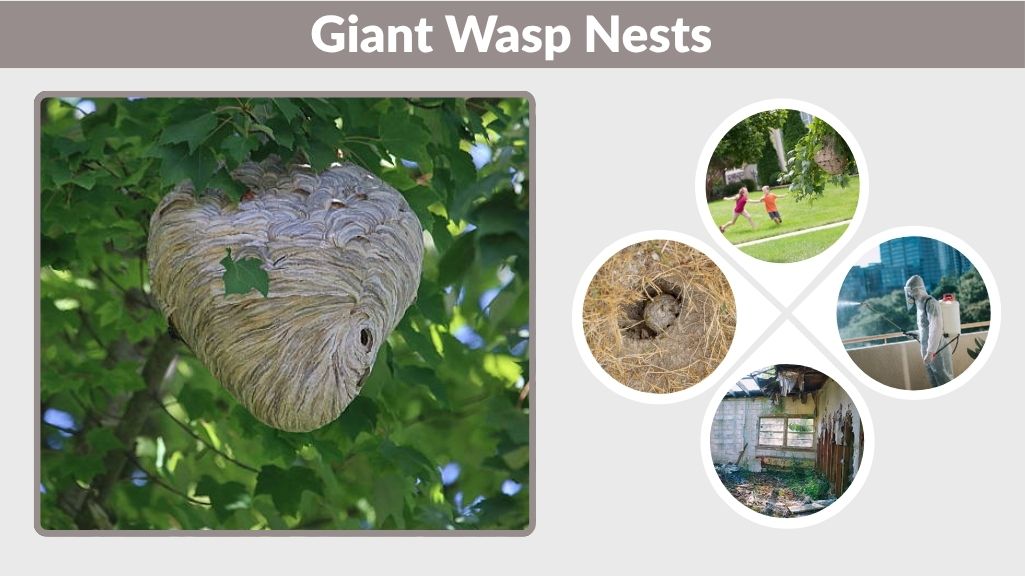
Giant wasp nests are fascinating but potentially dangerous structures built by large wasps such as Asian giant hornets, bald-faced hornets, and paper wasps. These nests vary in size, shape, and location, from tree branches and attics to underground burrows. Proper identification, understanding nest behavior, and knowing safe removal methods are essential to protect yourself, pets, and property from aggressive colonies. This guide covers types, locations, identification, and practical safety tips for handling giant wasp nests.
Types of Giant Wasp Nests
Giant wasp nests come in multiple forms, reflecting the species that builds them. Some are open-comb paper nests, others are fully enclosed, and some are underground burrows. Recognizing the type of nest helps identify the species, estimate colony size, and determine the risk level.
Paper Wasp Nests
- Umbrella-shaped open comb
- Brown or tan in color
- Usually attached under eaves or low branches
Bald-Faced Hornet Nests
- Large, enclosed, football-shaped
- Gray paper-like exterior
- Houses hundreds of hornets
Asian Giant Wasp Nests
- Massive spherical nests high in trees
- Smooth gray or brown exterior
- Very aggressive species
Cicada Killer Wasp Nests
- Underground burrows
- Provisioned with paralyzed cicadas
- Solitary, non-aggressive
Giant Wasp Nest Locations and Habitats
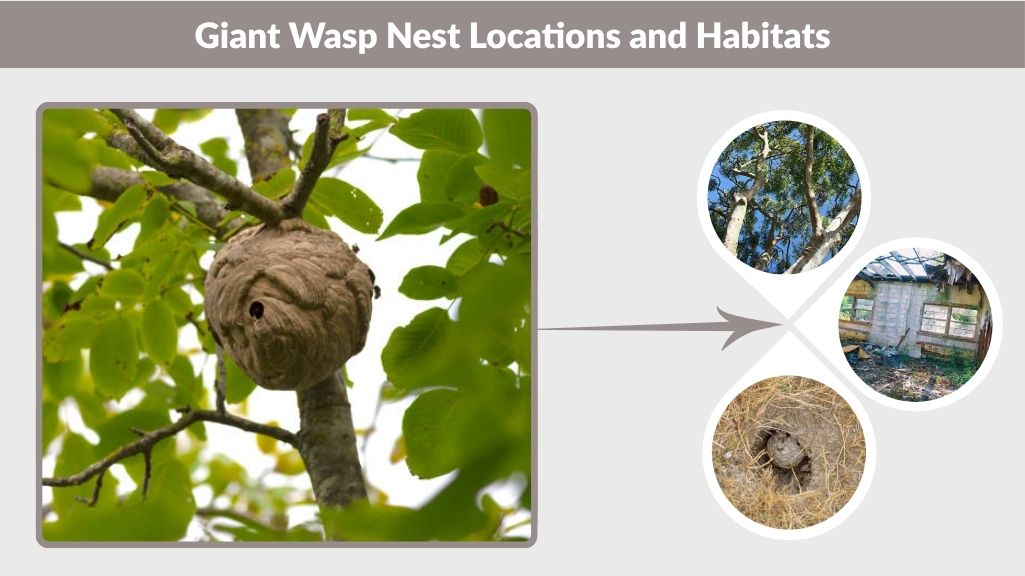
Location is a major clue for identifying giant wasp nests. Some nests are above ground, suspended from trees, branches, or eaves. Others are underground or hidden in human structures like attics, sheds, and walls. Understanding typical nesting habitats helps avoid accidental encounters with these aggressive insects.
Above Ground Locations
- Trees and shrubs
- Roof eaves and overhangs
- Attics, sheds, garages
Underground Nests
- Yellow jackets and cicada killers
- Burrows in loose or sandy soil
- Hidden from view
Human Structures
- Abandoned houses and wall cavities
- Cars or camper interiors
- Sheltered outdoor areas
Giant Wasp Nests Identification Features
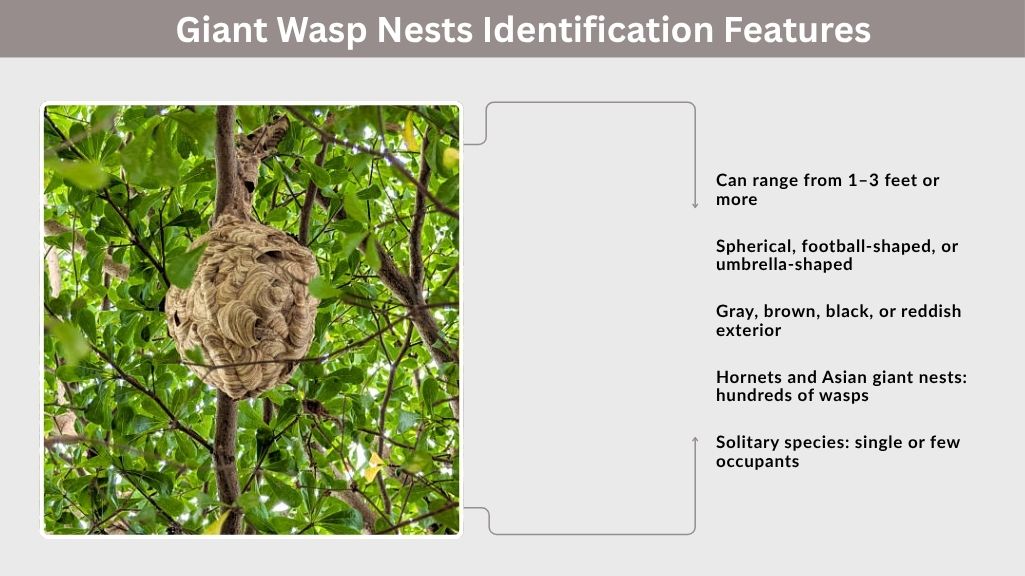
Giant wasp nests can be distinguished by size, shape, texture, color, and colony size. Hornet nests are typically enclosed and smooth, while paper wasp nests are smaller and open-combed. Observing these characteristics reduces the risk of disturbing the nest accidentally.
Size and Shape
- Can range from 1–3 feet or more
- Spherical, football-shaped, or umbrella-shaped
Color and Texture
- Gray, brown, black, or reddish exterior
- Smooth paper-like vs open comb
Colony Size
- Hornets and Asian giant nests: hundreds of wasps
- Solitary species: single or few occupants
Giant Wasp Nests Behavior and Aggression
Understanding the behavior of giant wasps is essential for safety. Colony size, defensive tendencies, and foraging habits vary by species. Some, like bald-faced hornets or Asian giant hornets, are highly aggressive, while solitary wasps, like mud daubers, rarely sting humans.
Defensive Behavior
- Asian giant hornets and bald-faced hornets are highly protective
- Paper wasps show moderate defense
Foraging and Activity
- Active mostly during the day
- Hunt insects or collect nectar for larvae
Giant Wasp Nests Risks and Safety Concerns
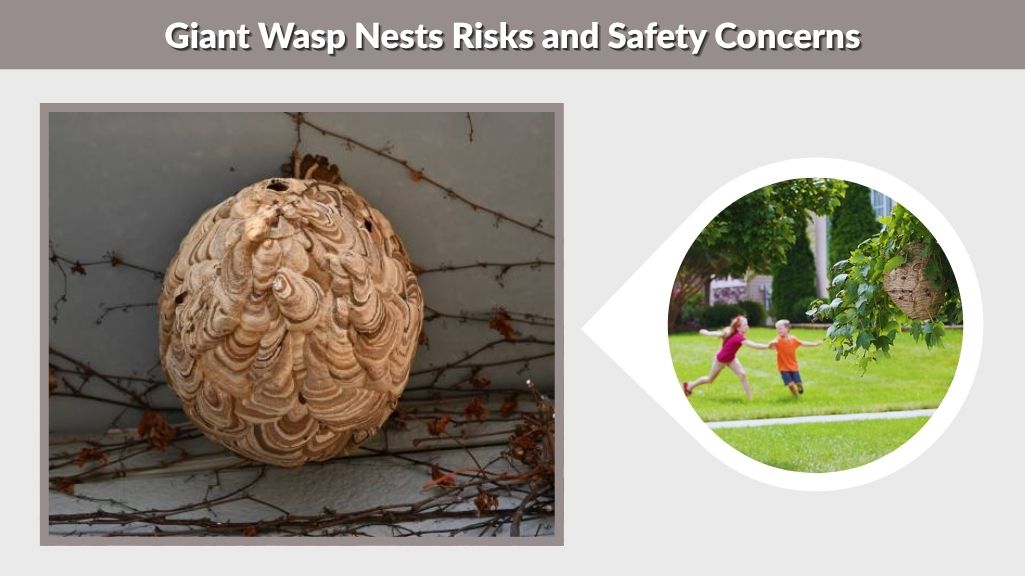
Giant wasp nests pose serious risks due to venomous stings and aggressive behavior. Knowing how to identify and avoid nests can prevent injuries to humans and pets. Some nests, particularly bald-faced hornets and Asian giant hornets, are highly defensive, making professional handling the safest option.
Human and Pet Safety
- Avoid nest areas and keep children and pets away
- Use protective clothing if working nearby
Health Risks
- Multiple stings can cause severe pain, swelling, or allergic reactions
- Immediate medical attention may be necessary in case of severe reactions
Giant Wasp Nests Removal and Control
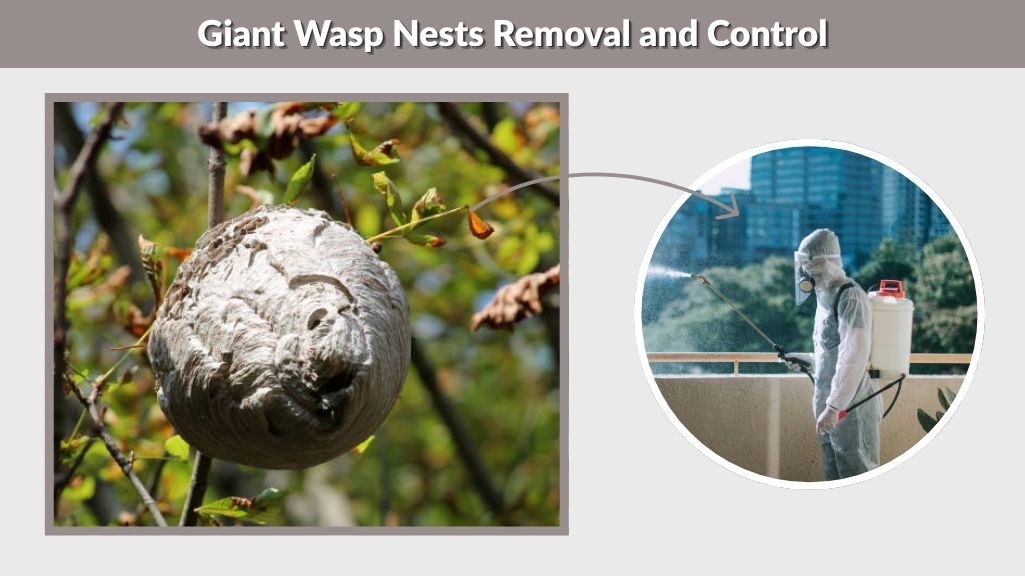
Safe removal of giant wasp nests depends on species, location, and nest size. DIY removal is limited to small, low-risk nests, while large or enclosed nests require professional pest control. Timing, protective gear, and proper technique are critical to prevent stings and colony disturbance.
DIY Removal
- Spray insecticide at night when wasps are less active
- Wear protective clothing and have an escape route
Professional Pest Control
- Recommended for large hornet or Asian giant hornet nests
- Ensures complete removal safely
Seasonal Considerations
- Late fall or early spring is ideal
- Reduces colony size and activity
Notable Sightings Around the World
Giant wasp nests have been documented globally, highlighting their size, diversity, and habitats. From North America to Asia and Oceania, these nests attract attention due to their size and the potential risk they pose to humans and pollinators.
United States
- Alabama, Florida, South Carolina, Ohio
- Abandoned houses, attics, trees
International
- Japan, New Zealand, Australia, UK, Spain, Brazil
- Often found in tall trees, dense shrubs, or wall cavities
Inside a Giant Wasp Nest
Giant wasp nests have complex internal structures. They contain multiple cells for larvae, arranged in layers protected by paper-like walls. Understanding the interior helps explain the nest’s size, resilience, and how colonies are organized for feeding and reproduction.
Nest Cells and Layers
- Larval chambers stacked inside
- Honeycomb-like structure for strength
Materials Used
- Chewed wood fibers and plant material
- Provides insulation, protection, and durability
Comparison Table of Giant Wasp Nests
A quick reference table helps identify different types of giant wasp nests based on key features such as size, location, appearance, and aggression.
| Nest Type | Size | Location | Appearance | Aggression | Colony Size |
| Paper Wasp | Small | Eaves, branches | Open comb, brown/tan | Moderate | 20–50 |
| Bald-Faced Hornet | Large | Trees, shrubs, eaves | Enclosed, gray | High | Hundreds |
| Asian Giant Hornet | Very Large | Trees, tall shrubs | Spherical, smooth gray | Very High | Hundreds |
| Cicada Killer | Medium | Underground | Burrow with soil mound | Low | Solitary |
| Mud Dauber | Small | Sheltered walls, eaves | Tubular mud | Low | Solitary |
| Potter Wasp | Small | Walls, branches | Jug-shaped mud | Low | Solitary |
FAQs
How can I identify a giant wasp nest?
Giant wasp nests are usually large, paper-like, and may be spherical, football-shaped, or umbrella-like. They can be found in trees, attics, abandoned houses, or underground. Observing the size, shape, texture, and location helps distinguish them from smaller wasp nests.
Are giant wasp nests dangerous?
Yes, giant wasp nests, especially bald-faced hornets or Asian giant hornets, can be highly aggressive. Disturbing the nest may provoke multiple stings, which can be painful and potentially dangerous for people allergic to wasp venom.
Where are giant wasp nests commonly found?
They can be found above ground on trees, shrubs, or roof eaves; inside attics, sheds, or abandoned houses; and underground in burrows. Some species build nests in vehicles or walls, making hidden nests a risk.
How can I safely remove a giant wasp nest?
Small nests may be removed at night using insecticide sprays with full protective clothing. Large or high nests, such as Asian giant or bald-faced hornet nests, require professional pest control for safe and complete removal.
What’s inside a giant wasp nest?
Giant wasp nests contain multiple layers of paper-like cells. Each cell houses a larva provisioned with food by the adult wasps. The outer layer protects the colony from weather and predators, while the inner cells support larval growth and development.