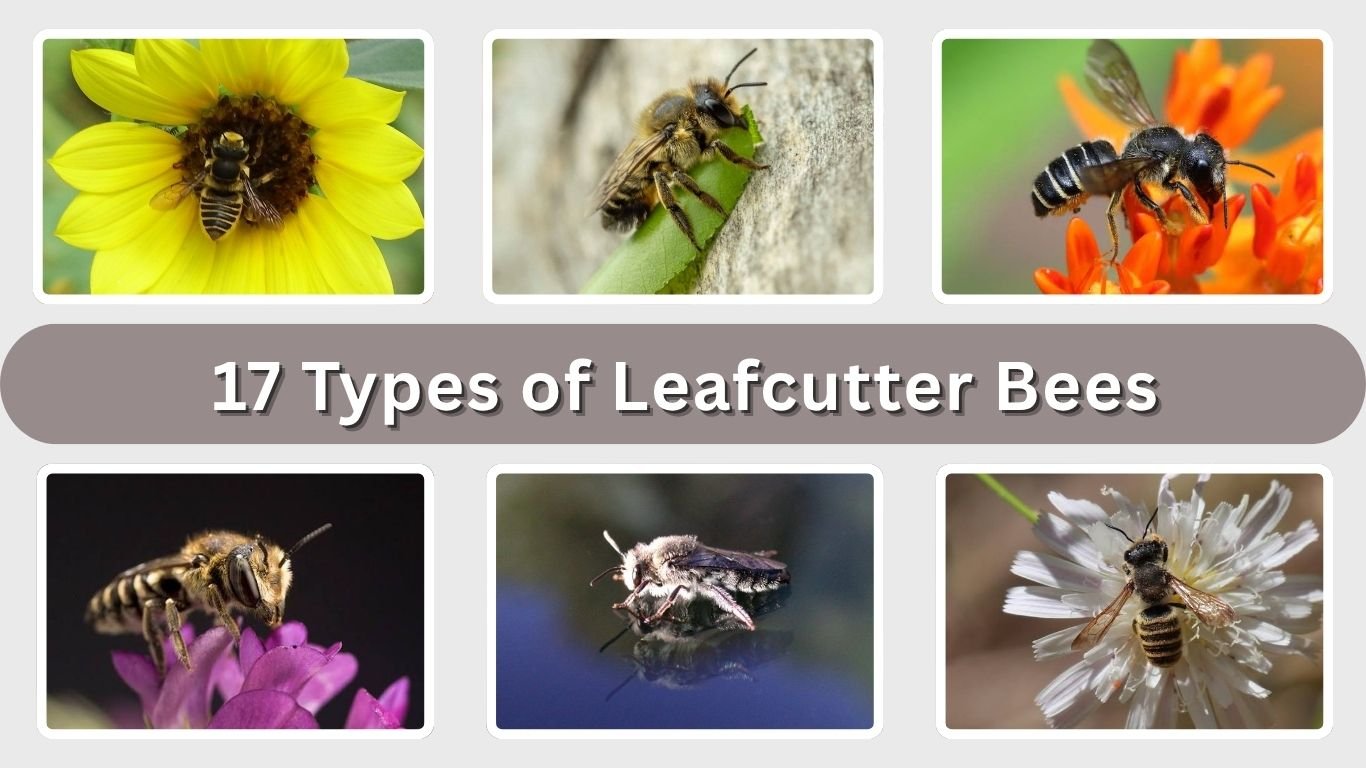
Leafcutter bees are solitary pollinators known for cutting neat circular or oval pieces from leaves to build protective brood cells. Found across diverse habitats, these industrious insects play an essential role in pollinating wildflowers, garden plants, and important crops. Although their leaf-cutting activity may look destructive, it rarely causes lasting plant damage. This guide examines 17 types of leafcutter bees, covering their size, appearance, habitat, geographic distribution, diet, nesting habits, behavior, and identification characteristics to help gardeners recognize these gentle and valuable native pollinators.
1. Alfalfa Leafcutter Bee
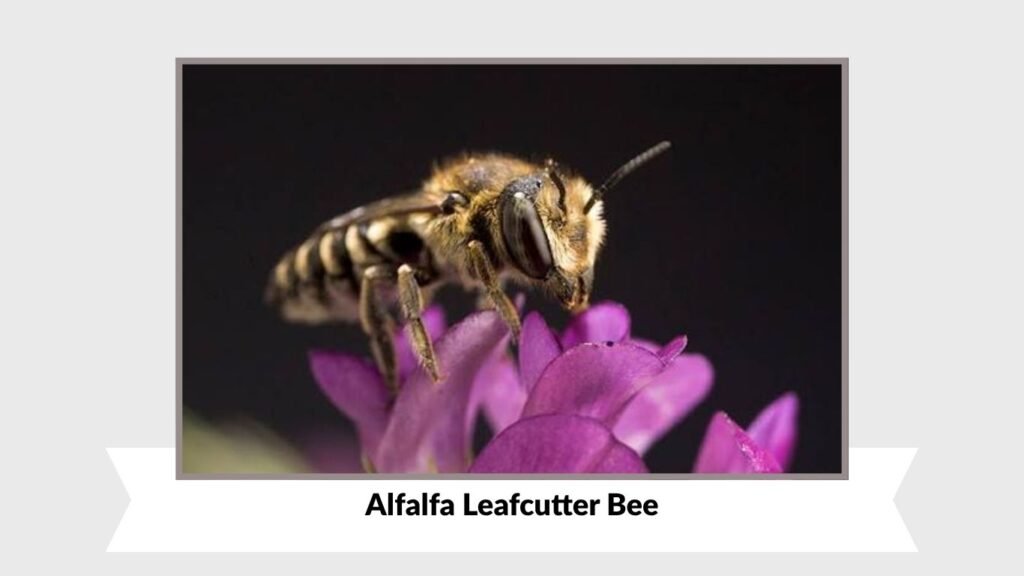
The alfalfa leafcutter bee (Megachile rotundata) is a small solitary bee valued for its exceptional ability to pollinate alfalfa. Farmers frequently manage these bees as agricultural pollinators because they work efficiently and are relatively easy to house.
Identification
- Approximately 7–9 mm long
- Dark gray or black body
- Narrow bands of pale hair across the abdomen
- Broad head with powerful jaws
- Females have white pollen-carrying hairs beneath the abdomen
Habitat and Distribution
This species originated in Europe and southwestern Asia but has been introduced into North America, Australia, and several other regions. It commonly inhabits agricultural fields, gardens, grasslands, and suburban areas where flowering plants and suitable nesting cavities are available.
Nesting and Diet
Females nest in hollow stems, cracks in wood, abandoned insect tunnels, and artificial nesting boards. They cut circular pieces from soft leaves and arrange them inside the cavity to create individual brood cells. Each cell receives a mixture of pollen and nectar before an egg is deposited. Although strongly associated with alfalfa, these bees also visit clover, sweet clover, sunflowers, and numerous garden flowers.
Behavior and Sting
Alfalfa leafcutter bees are solitary, although many females may nest close together. They do not defend their nesting areas aggressively. Males cannot sting, while females usually sting only when squeezed or handled. Their sting is generally milder than that of a honeybee.
2. Pugnacious Leafcutter Bee
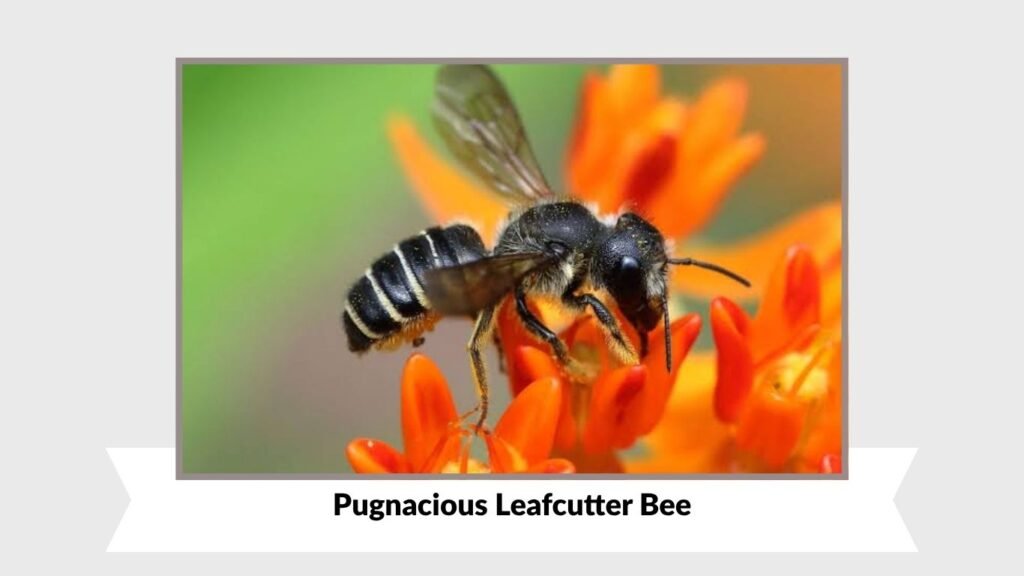
The pugnacious leafcutter bee (Megachile pugnata) is a large native North American bee commonly observed around sunflowers. Despite its intimidating name and powerful jaws, it is a peaceful pollinator that presents little danger to people.
Identification
- Females measure approximately 12–18 mm
- Males usually measure 11–13 mm
- Large head with prominent jaws
- Dark body covered with gray or yellowish hairs
- Pale hair bands along the abdomen
- Females have dense pollen brushes underneath the abdomen
Habitat and Distribution
This species is distributed across much of North America, from southern Canada to several regions of the United States. It occupies gardens, farms, prairies, woodland edges, roadsides, and other sunny areas containing abundant composite flowers.
Nesting and Diet
Females usually construct nests in existing cavities, including hollow stems, beetle tunnels, and holes in wood. They use carefully cut leaf sections to form protective brood cells. Pollen and nectar are collected to produce a food mass for each developing larva. The species particularly favors plants in the aster family, including sunflowers, coneflowers, asters, and goldenrods.
Behavior and Sting
Pugnacious leafcutter bees are solitary and do not have workers or defensive colonies. Their large jaws are used for cutting leaves and constructing nests rather than attacking people. Males have no stingers, and females rarely sting unless trapped against the skin.
3. Texas Leafcutter Bee
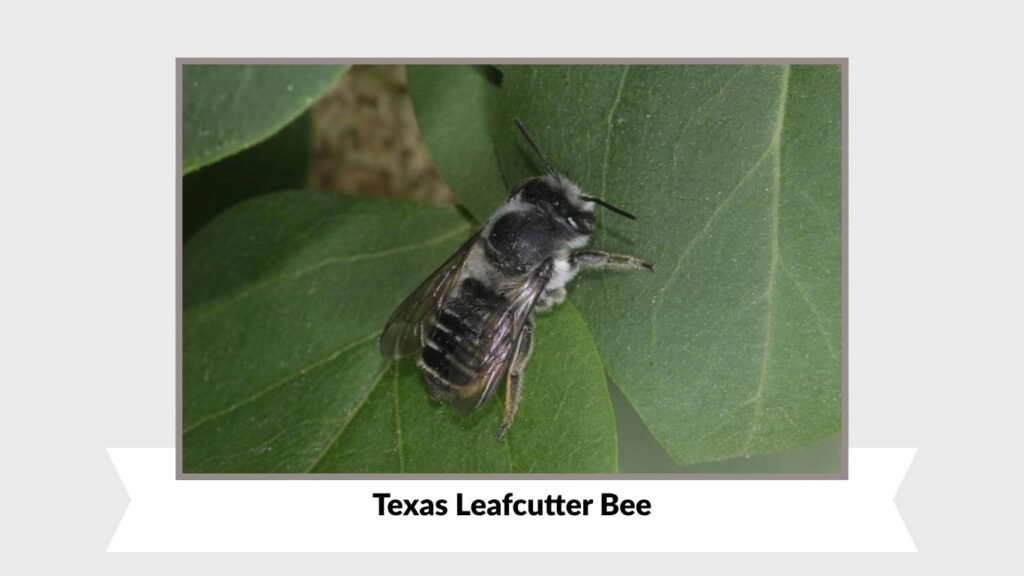
The Texas leafcutter bee (Megachile texana) is a widespread native pollinator recognized for its dark body and pale abdominal bands. It visits many native wildflowers and can be found far beyond Texas despite what its common name suggests.
Identification
- Approximately 9–14 mm long
- Robust black or dark gray body
- Pale gray or whitish hairs on the thorax
- Distinct light-colored bands across the abdomen
- Strong jaws for cutting leaf pieces
- Females transport pollen beneath the abdomen
Habitat and Distribution
Texas leafcutter bees occur across large portions of the United States and extend into southern Canada and Mexico. They live in prairies, grasslands, open woodlands, deserts, gardens, farms, roadsides, and urban green spaces.
Nesting and Diet
Females construct nests in protected cavities in soil, wood, hollow stems, and other sheltered locations. Pieces of leaves are used to line the nest and separate its brood chambers. Every chamber contains one egg and enough pollen and nectar to support the larva until it completes development. Adults visit numerous flowering plants, including sunflowers, thistles, asters, legumes, and wild herbs.
Behavior and Sting
This species is active during warm, sunny weather and spends much of its time gathering nesting materials or visiting flowers. It is solitary but may nest near other females when suitable sites are limited. Females can sting, but they are not aggressive and normally fly away when disturbed. Males are incapable of stinging.
4. Western Leafcutter Bee
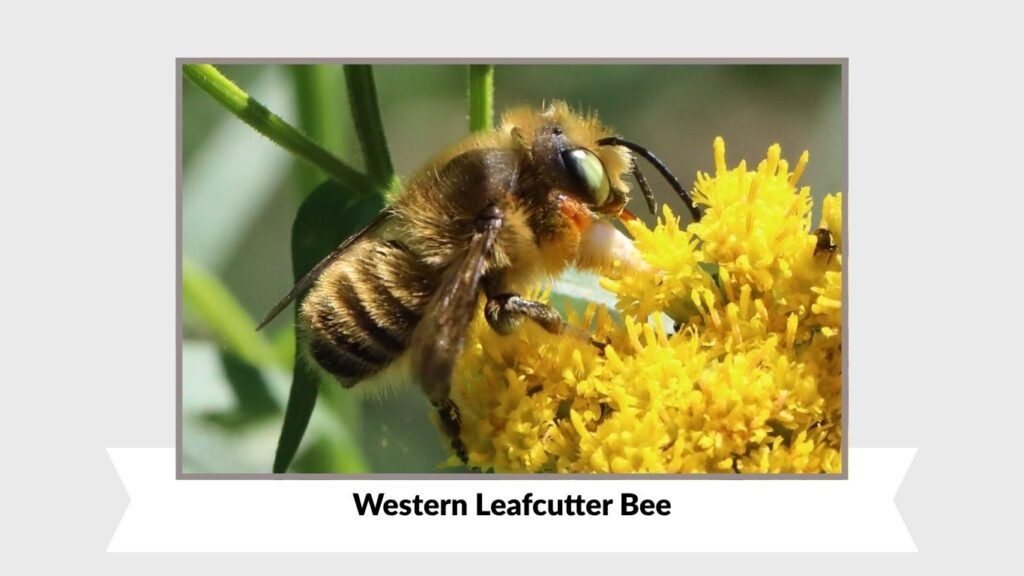
The western leafcutter bee (Megachile perihirta) is a relatively large, hairy species native to western North America. It is an important pollinator in dry landscapes and can often be seen visiting wildflowers during the warmer months.
Identification
- Approximately 11–15 mm long
- Broad, sturdy body
- Dense pale or golden-gray hair
- Dark abdomen with visible light hair bands
- Large jaws and a wide head
- Females have thick pollen-collecting hairs beneath the abdomen
Habitat and Distribution
This species occurs throughout much of western Canada and the western United States. It is associated with grasslands, sagebrush country, open forests, mountain valleys, agricultural land, desert edges, and residential gardens. It generally prefers sunny places with exposed soil, dead wood, or hollow stems nearby.
Nesting and Diet
Western leafcutter bees establish nests in sheltered tunnels and cavities, sometimes close to or beneath the ground. Females use pieces of leaves to create capsule-shaped cells within the nest. They place a ball of pollen and nectar inside each cell and lay one egg on the stored food. Adults gather nourishment from many flowering plants, including asters, sunflowers, clover, rabbitbrush, and other native western wildflowers.
Behavior and Sting
These bees are independent and do not live in organized colonies. Females focus on gathering food and constructing nests rather than defending territory. Although their large jaws can look threatening, they use them primarily for cutting vegetation. Females sting only in self-defense, while males have no functional stinger.
5. Flat-Tailed Leafcutter Bee
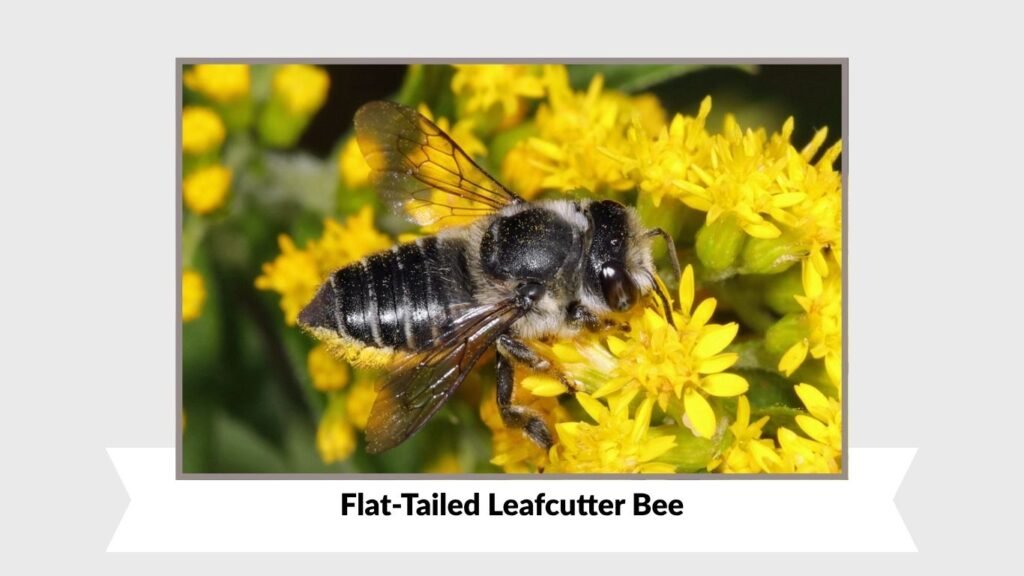
The flat-tailed leafcutter bee (Megachile mendica) is named for the flattened shape of the final abdominal segment of the female. This widely distributed North American species is an adaptable pollinator found in both natural and human-modified environments.
Identification
- Approximately 8–12 mm long
- Mostly black body with pale hairs
- Light hair bands along the abdominal segments
- Broad head and noticeable jaws
- Female has a characteristically flattened abdominal tip
- Pollen brush located beneath the female’s abdomen
Habitat and Distribution
Flat-tailed leafcutter bees occur across much of the United States, particularly in eastern and central regions. They inhabit gardens, parks, farms, meadows, woodland edges, roadsides, and urban areas. Their adaptability allows them to survive wherever suitable flowers and nesting holes are present.
Nesting and Diet
Females select existing cavities such as hollow stems, holes in wood, and abandoned beetle tunnels. They cut rounded pieces from leaves and use them to line the cavity and form separate brood cells. Each cell is provisioned with pollen and nectar before an egg is laid and the chamber is sealed. Adults visit many flowers, including asters, sunflowers, legumes, goldenrods, and cultivated garden plants.
Behavior and Sting
This bee is solitary and generally ignores people, even when nesting near homes or gardens. The rounded holes it leaves in plant foliage are primarily cosmetic and rarely damage plant health. Only females can sting, and they normally do so only when directly handled or trapped.
6. Patchwork Leafcutter Bee
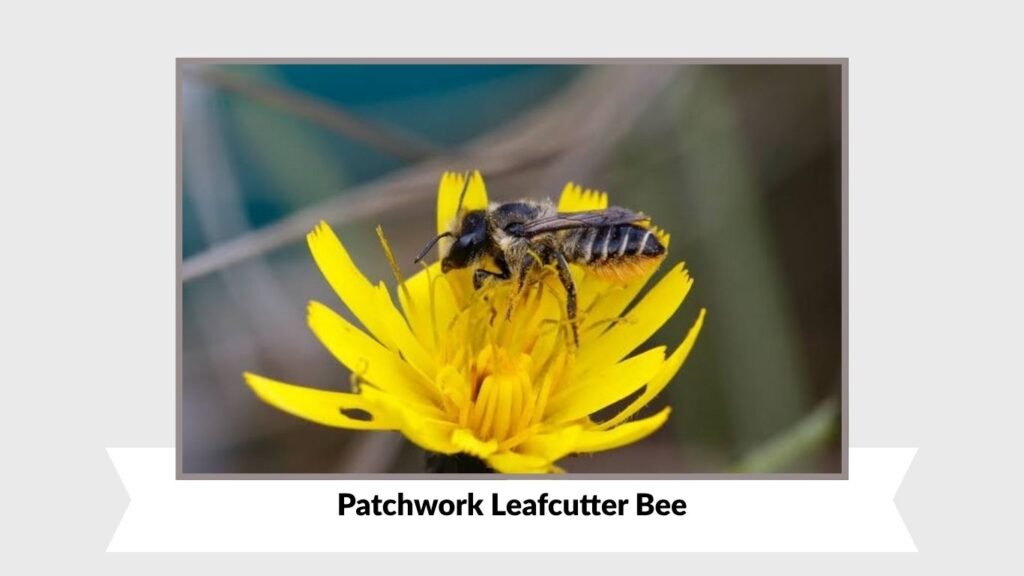
The patchwork leafcutter bee (Megachile centuncularis) is a medium-sized solitary bee named for the overlapping leaf pieces used to build its brood cells. It is an adaptable pollinator that frequently appears in gardens, parks, and flower-rich countryside.
Identification
- Approximately 8–12 mm long
- Broad, predominantly black body
- Short gray or brownish hairs on the thorax
- Narrow pale hair bands across the abdomen
- Strong jaws for cutting leaves
- Orange or yellowish pollen brush beneath the female’s abdomen
Habitat and Distribution
This species is widely distributed across Europe, Asia, and North America. It occupies gardens, grasslands, farmland, woodland edges, hedgerows, parks, and urban environments. Sunny locations containing plentiful flowers and small nesting cavities are particularly attractive to females.
Nesting and Diet
Females nest in hollow stems, old beetle tunnels, cracks in walls, holes in wood, and artificial bee houses. They cut rounded sections from leaves and arrange them like overlapping patches inside the nest. Individual cells are filled with pollen and nectar before eggs are deposited. Adults visit brambles, thistles, knapweeds, asters, legumes, and numerous garden flowers.
Behavior and Sting
Patchwork leafcutter bees live independently, although several females may use cavities in the same structure. The holes they cut in leaves rarely cause serious harm to plants. These bees are calm around people and do not defend their nests aggressively. Females can sting if trapped or squeezed, but males cannot sting.
7. Silvery Leafcutter Bee
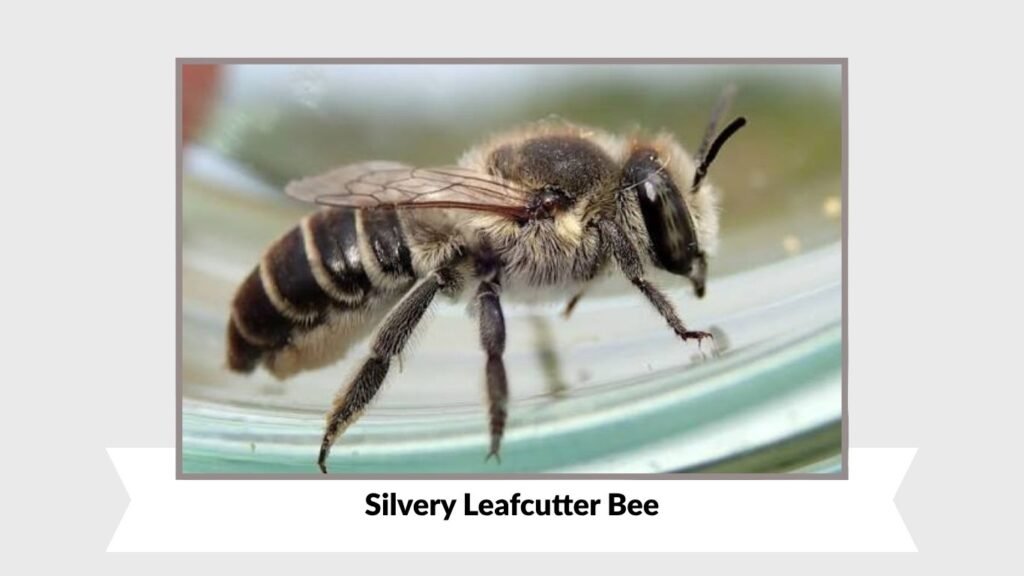
The silvery leafcutter bee (Megachile leachella) is one of the smaller leafcutter species. Its pale, silvery body hairs make it especially noticeable when sunlight reflects from its back while it visits low-growing flowers.
Identification
- Approximately 7–10 mm long
- Compact black body
- Dense silvery-gray hairs
- Narrow white bands across the abdomen
- Pale pollen-carrying hairs beneath the female’s abdomen
- Males generally have longer and lighter facial hairs
Habitat and Distribution
Silvery leafcutter bees occur across Europe, North Africa, and parts of western and central Asia. They are particularly associated with coastal dunes, sandy grasslands, heathland, brownfield sites, and other dry locations. They may also visit gardens near suitable nesting habitats.
Nesting and Diet
Females use small existing cavities in dead wood, hollow stems, compact soil, walls, and other protected structures. Cut leaf sections are carried back to the nest and shaped into individual brood cells. Each developing larva receives a supply of pollen mixed with nectar. Adults commonly visit bird’s-foot trefoil, restharrow, bramble, knapweed, thistles, and other flowers growing in sandy habitats.
Behavior and Sting
This species is most active during warm, sunny summer weather. It is solitary and does not produce honey or maintain a communal colony. Although females may nest close to one another, each one constructs and provisions her own cells. Females rarely sting, and males have no stinger.
8. Cranberry Leafcutter Bee
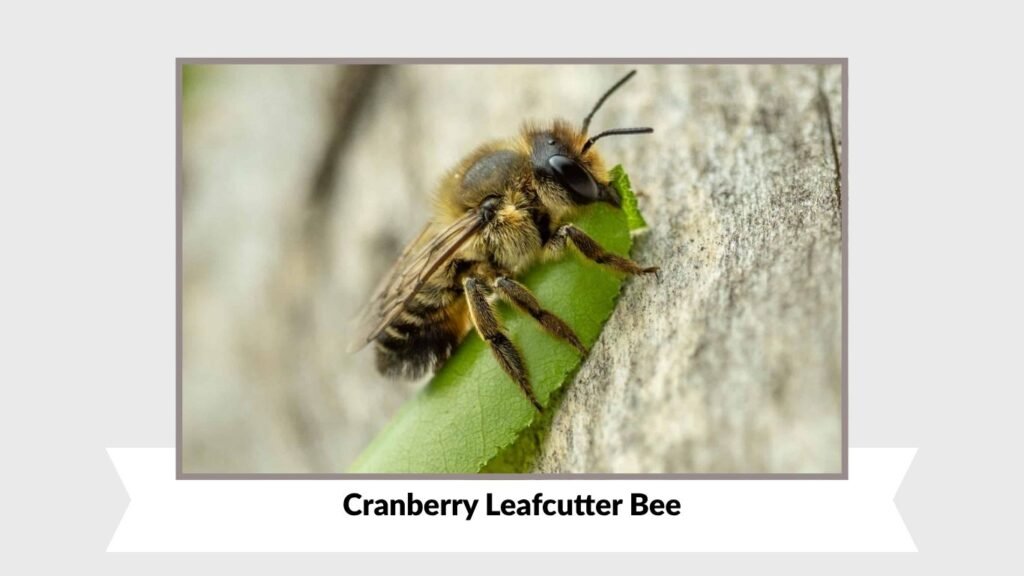
The cranberry leafcutter bee (Megachile addenda) is a native North American pollinator closely associated with cranberries and other plants in the heath family. Its flower-visiting behavior makes it valuable in both natural wetlands and commercial berry-growing areas.
Identification
- Approximately 9–13 mm long
- Stout black or dark brown body
- Pale gray hairs on the head and thorax
- Light-colored bands across the abdomen
- Powerful leaf-cutting jaws
- Dense pollen brush beneath the female’s abdomen
Habitat and Distribution
This species occurs mainly in eastern and central North America. It can be found around cranberry bogs, blueberry fields, wetlands, sandy grasslands, coastal areas, woodland edges, farms, and gardens. Populations are usually most noticeable where heath-family plants flower abundantly.
Nesting and Diet
Females create nests in protected ground-level or underground cavities, especially in areas with loose, well-drained soil. They line the nesting space with pieces cut from suitable leaves and divide it into several brood chambers. Each chamber contains pollen, nectar, and one egg. Cranberries are an important food source, but adults also visit blueberries, huckleberries, sheep laurel, and other related plants.
Behavior and Sting
Cranberry leafcutter bees are solitary, efficient foragers that may continue visiting flowers under conditions when some other bees are less active. They do not form defensive colonies. Females possess stingers but generally use them only when physically threatened. Males are harmless and cannot sting.
9. Robust Sunflower Leafcutter Bee
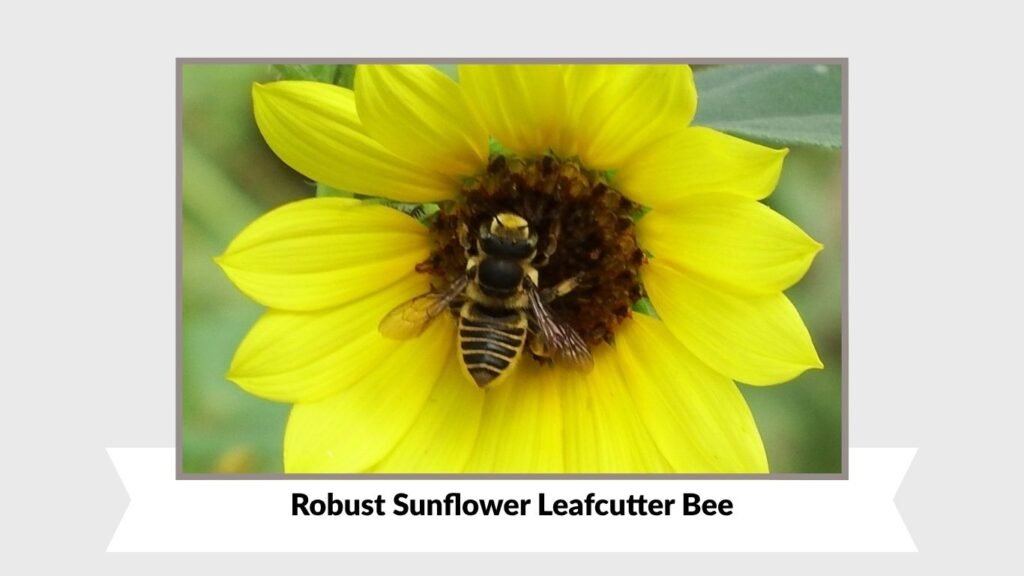
The robust sunflower leafcutter bee (Megachile fortis) is a large, strongly built North American species. It is closely associated with native sunflowers and other members of the aster family, making it an important specialist pollinator in prairie ecosystems.
Identification
- Approximately 12–17 mm long
- Large, broad, muscular-looking body
- Primarily black coloration
- Gray or yellowish hairs on the thorax
- Pale hair bands along the abdomen
- Large jaws and dense abdominal pollen brush in females
Habitat and Distribution
This bee occurs primarily in central North America, particularly across prairie and Great Plains regions. Its habitats include native grasslands, open fields, roadsides, agricultural margins, and other sunny places containing abundant sunflower-family plants. Habitat loss has made it less common in portions of its historical range.
Nesting and Diet
Detailed nesting behavior is less frequently observed than that of common managed species. Females construct brood cells in protected cavities and use cut plant material to line and separate them. Each cell is stocked with pollen and nectar before an egg is laid. The species depends heavily on sunflowers, asters, coneflowers, and other plants belonging to the Asteraceae family.
Behavior and Sting
Robust sunflower leafcutter bees are solitary and spend most of their active period searching for pollen, nectar, and nesting material. Their impressive size and jaws may appear threatening, but they are not naturally aggressive. Only females can sting, and stinging is unlikely unless a bee is caught or handled roughly.
10. Centaurea Leafcutter Bee
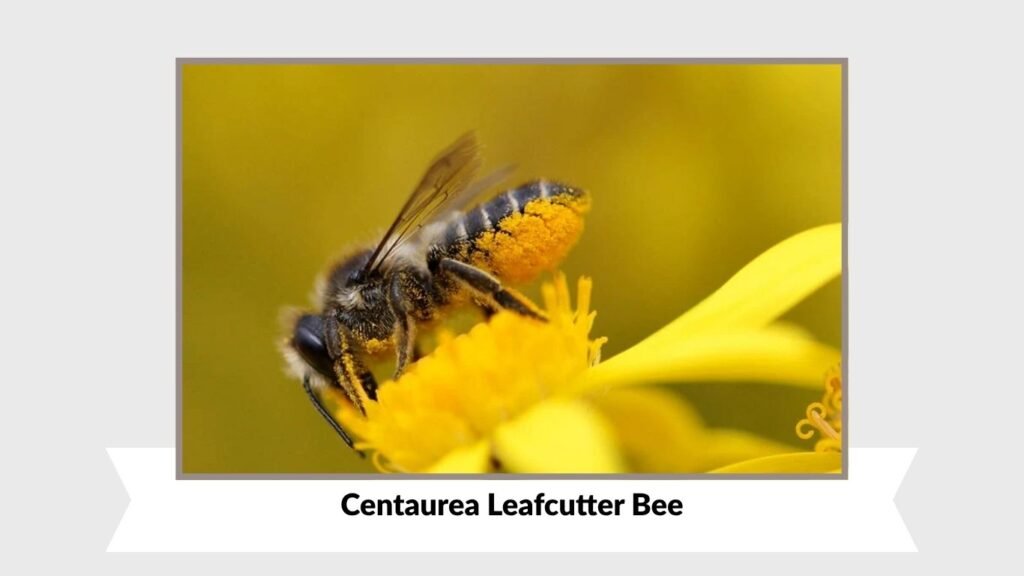
The Centaurea leafcutter bee (Megachile apicalis) is named for its close association with knapweeds and related plants in the genus Centaurea. It is a versatile solitary bee that can thrive in disturbed landscapes where its preferred flowers grow.
Identification
- Approximately 8–12 mm long
- Mostly black body
- Pale gray hairs around the face and thorax
- Thin whitish bands across the abdomen
- Rusty or orange hairs may appear near the abdominal tip
- Females have pollen-carrying hairs beneath the abdomen
Habitat and Distribution
This species originated in southern Europe, North Africa, and neighboring parts of Asia. It has also become established in portions of North America. Typical habitats include dry grasslands, roadsides, farmland, gardens, vacant lots, and disturbed areas containing knapweed.
Nesting and Diet
Females construct nests inside hollow stems, holes in wood, abandoned insect tunnels, and other narrow cavities. Leaf pieces are used to line the tunnel and create separate chambers for the offspring. The female supplies each chamber with a mixture of pollen and nectar. Knapweeds are particularly important food plants, although the bees also visit thistles, asters, legumes, and various garden flowers.
Behavior and Sting
Centaurea leafcutter bees are solitary but may gather around productive flower patches. Their leaf-cutting activity causes only minor cosmetic damage to plants. They normally ignore people and do not defend nesting sites. Males cannot sting, while females sting only when seriously threatened.
11. Coquillett’s Leafcutter Bee
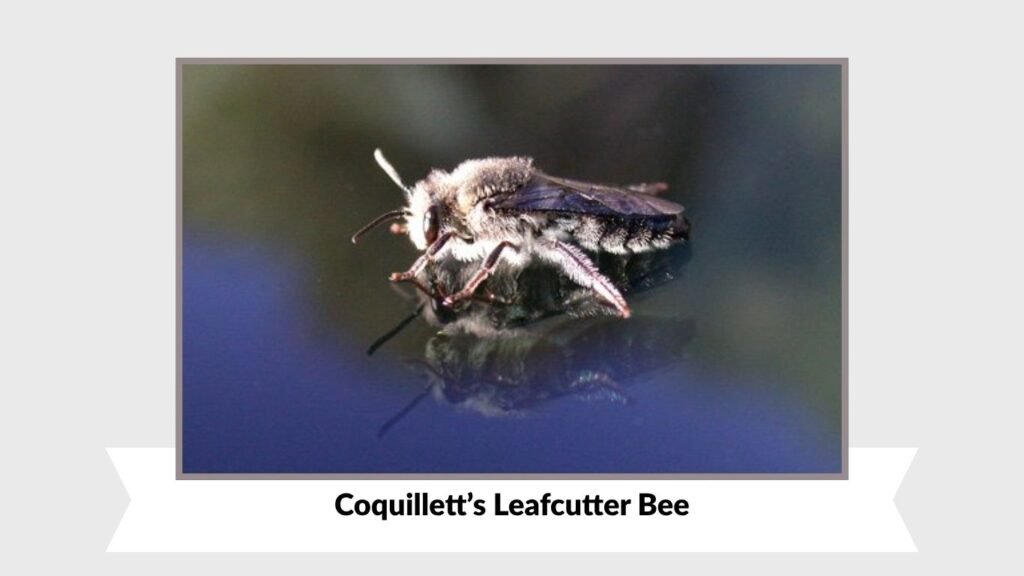
Coquillett’s leafcutter bee (Megachile coquilletti) is a solitary North American bee named after entomologist Daniel William Coquillett. It is most often associated with warm, open environments where flowering plants and natural nesting cavities are available.
Identification
- Approximately 9–13 mm long
- Stout black or dark brown body
- Grayish hairs covering the head and thorax
- Pale bands along the abdominal segments
- Large jaws adapted for cutting leaves
- Females carry pollen on hairs beneath the abdomen
Habitat and Distribution
This species is recorded mainly in western and central North America. It inhabits dry grasslands, prairies, open woodlands, shrublands, roadsides, farms, and gardens. Females need areas that provide both abundant flowers and sheltered nesting spaces.
Nesting and Diet
Females typically establish nests in existing cavities, including hollow stems, holes in wood, and abandoned insect tunnels. They cut rounded pieces from suitable leaves and use them to line and divide the nest. Each brood cell receives a supply of pollen and nectar before the female deposits an egg. Adults visit asters, sunflowers, legumes, and numerous native wildflowers.
Behavior and Sting
Coquillett’s leafcutter bees live independently and do not produce workers or establish defensive colonies. Their leaf-cutting behavior may leave smooth, semicircular holes along plant edges, but the damage is usually cosmetic. Males cannot sting, while females sting only when trapped or handled roughly.
12. Relative Leafcutter Bee
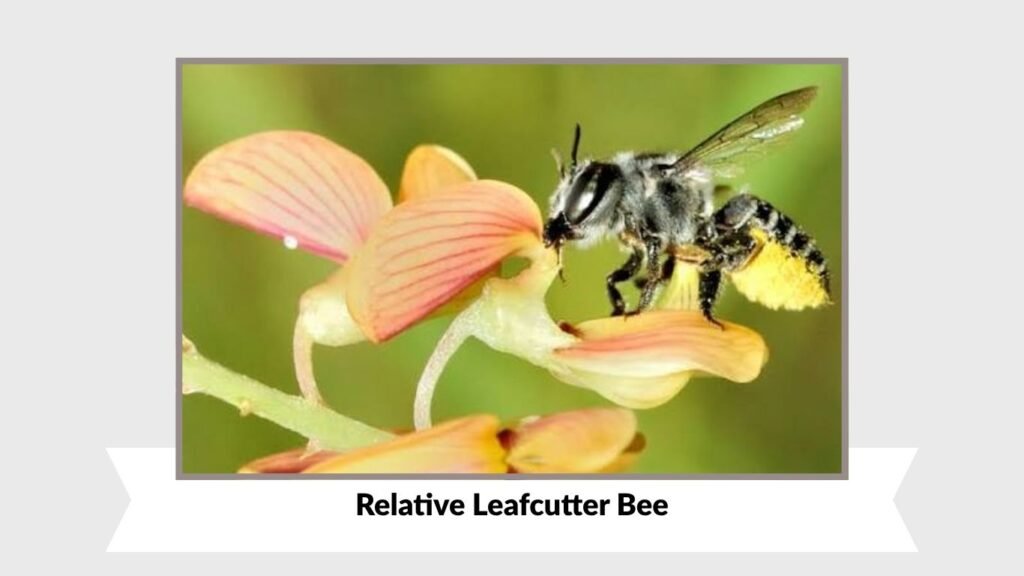
The relative leafcutter bee (Megachile relativa) is a widely distributed North American pollinator. Its name comes from its close physical resemblance to related Megachile species, making precise identification difficult without examining small anatomical features.
Identification
- Approximately 9–13 mm long
- Broad, predominantly black body
- Gray or yellowish hairs on the thorax
- Narrow pale bands across the abdomen
- Strong jaws and a rounded abdominal shape
- Female has a pollen brush beneath the abdomen
Habitat and Distribution
This species occurs across Canada and much of the United States, especially in northern and temperate regions. It occupies meadows, prairies, forest clearings, woodland edges, farms, roadsides, parks, and residential gardens.
Nesting and Diet
Females use existing holes in dead wood, hollow plant stems, old beetle tunnels, and artificial bee houses. They carry cut leaf pieces beneath their bodies and arrange them into capsule-shaped brood cells. Each cell contains one egg and a stored mixture of nectar and pollen. Adults visit a broad selection of plants, including asters, sunflowers, goldenrods, clover, roses, and various garden flowers.
Behavior and Sting
Relative leafcutter bees are solitary, although multiple females may occupy separate cavities in the same piece of wood. They are most active during warm summer weather. These bees do not normally react aggressively when people approach their nests. Only females can sting, and they rarely do so unless physically threatened.
13. Frigid Leafcutter Bee
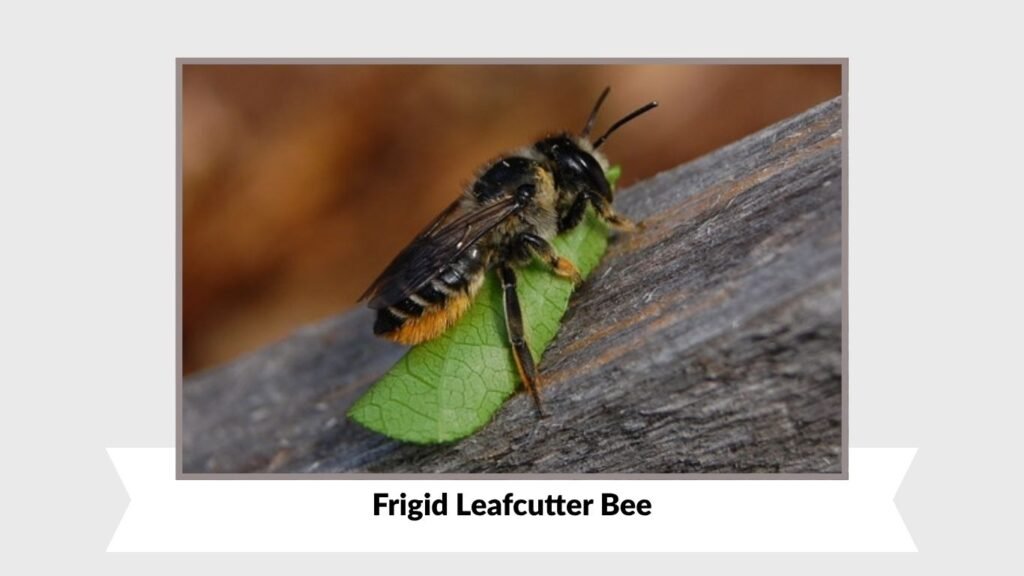
The frigid leafcutter bee (Megachile frigida) is a cold-tolerant species native to North America. It is frequently associated with northern landscapes and elevated areas, although it also inhabits warmer temperate regions where suitable flowers are present.
Identification
- Approximately 10–14 mm long
- Robust black body
- Thick gray, brown, or yellowish thoracic hairs
- Pale hair bands across the abdomen
- Large head with powerful cutting jaws
- Females possess dense pollen-carrying hairs underneath
Habitat and Distribution
Frigid leafcutter bees are found throughout Canada and across northern and western portions of the United States. Their habitats include boreal forest edges, mountain meadows, open woodlands, prairies, roadsides, farms, and gardens. They usually appear from late spring through summer.
Nesting and Diet
Females select existing cavities in wood, hollow stems, bark, or other protected materials. Smooth leaf sections are cut and carried to the nest, where they are shaped into individual brood chambers. Each chamber is supplied with a pollen-and-nectar mixture before being sealed. Adults obtain food from asters, goldenrods, sunflowers, clover, fireweed, and many other summer flowers.
Behavior and Sting
This species does not live in colonies or produce honey. Females work independently to construct and provision their nests. Their activity is generally concentrated on sunny days when temperatures permit efficient flight. Males cannot sting, while females are unlikely to sting unless they are squeezed, trapped, or deliberately handled.
14. Wheeler’s Leafcutter Bee
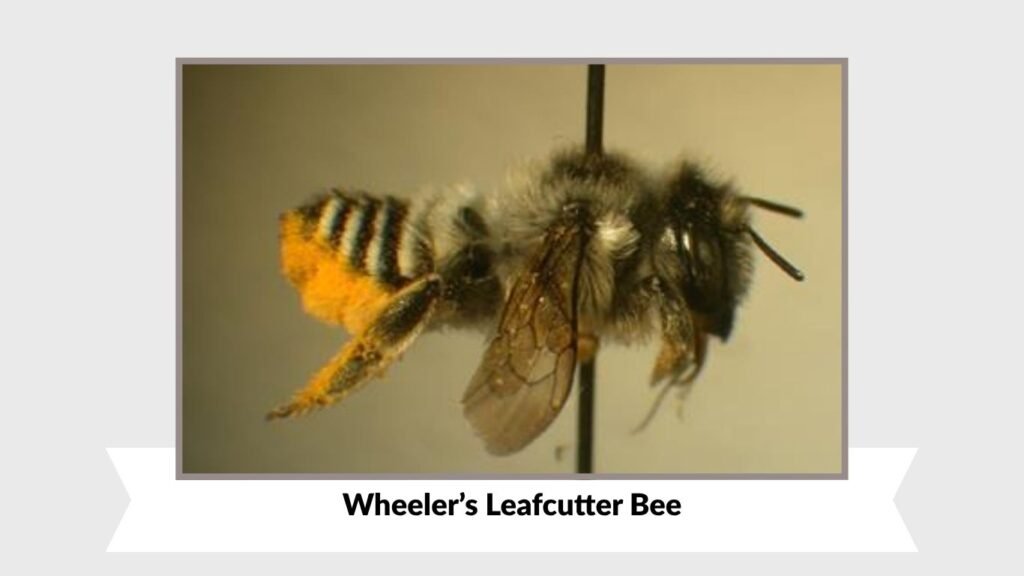
Wheeler’s leafcutter bee (Megachile wheeleri) is a native North American species found mainly in western landscapes. It is less familiar than many widespread leafcutter bees, but it contributes to the pollination of native plants in dry and open habitats.
Identification
- Approximately 8–12 mm long
- Compact black or dark gray body
- Pale hairs around the face and thorax
- Light bands or patches along the abdomen
- Strong jaws for removing sections of leaves
- Female pollen brush located beneath the abdomen
Habitat and Distribution
This bee occurs principally in western North America, including parts of the western United States. It favors dry grasslands, shrublands, open forests, desert margins, mountain valleys, roadsides, and areas containing native wildflowers.
Nesting and Diet
Detailed information about its nesting biology is limited, but females are believed to follow the typical leafcutter pattern of using protected cavities and lining them with plant pieces. Suitable nesting locations may include hollow stems, holes in dead wood, and abandoned insect tunnels. Adults collect pollen and nectar from native asters, sunflowers, legumes, and other seasonal flowers.
Behavior and Sting
Wheeler’s leafcutter bee is solitary and does not maintain a hive. Females dedicate most of their adult lives to gathering food, cutting nesting material, and preparing brood cells. They generally avoid humans and do not aggressively defend their nests. Males lack stingers, and females sting only when directly restrained or threatened.
15. Horn-Faced Leafcutter Bee
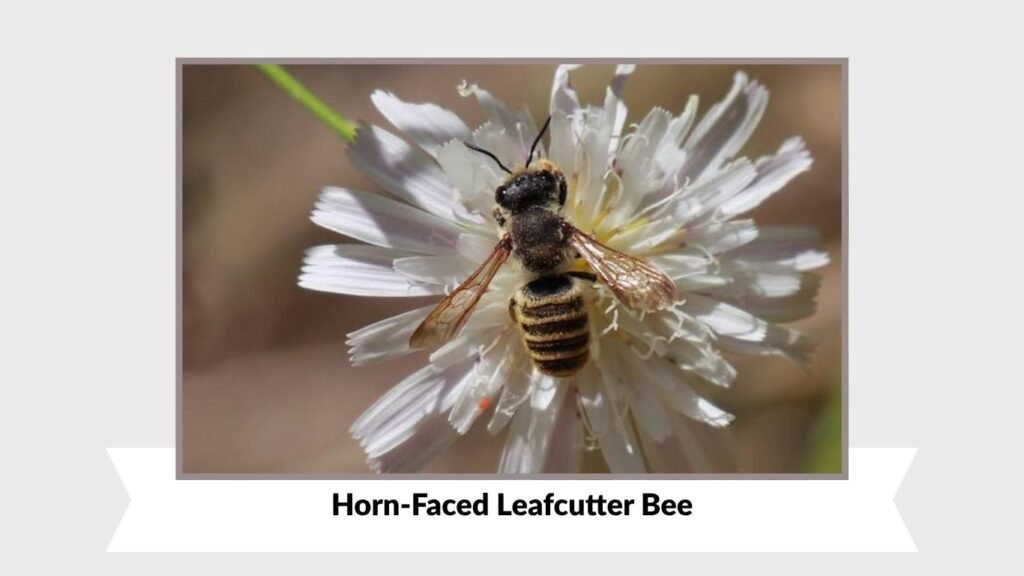
The horn-faced leafcutter bee (Megachile fidelis) is a large western North American species distinguished by its robust build and unusual facial structure. It is also sometimes called the flap-faced leafcutter bee.
Identification
- Approximately 11–16 mm long
- Large, broad black body
- Dense pale or golden-gray thoracic hairs
- Prominent pale bands across the abdomen
- Distinctive facial shape visible under close examination
- Females have thick pollen brushes beneath the abdomen
Habitat and Distribution
Horn-faced leafcutter bees occur across western North America, from southern Canada through the western United States and into Mexico. They inhabit grasslands, chaparral, desert edges, open forests, mountain valleys, farms, and flower-rich gardens.
Nesting and Diet
Females build nests in existing holes in wood, hollow stems, rock crevices, and other sheltered cavities. They cut circular or oval pieces from leaves and arrange them into protective brood cells. Each cell is provisioned with pollen and nectar. Adults visit sunflowers, asters, thistles, rabbitbrush, legumes, and numerous native shrubs and wildflowers.
Behavior and Sting
These bees are strong fliers that may travel between widely separated flower patches. Their large size and prominent jaws can make them look intimidating, but they are not naturally aggressive. They do not defend nesting areas as social bees defend hives. Males cannot sting, and females rarely sting unless caught or handled.
16. Southwest Leafcutter Bee
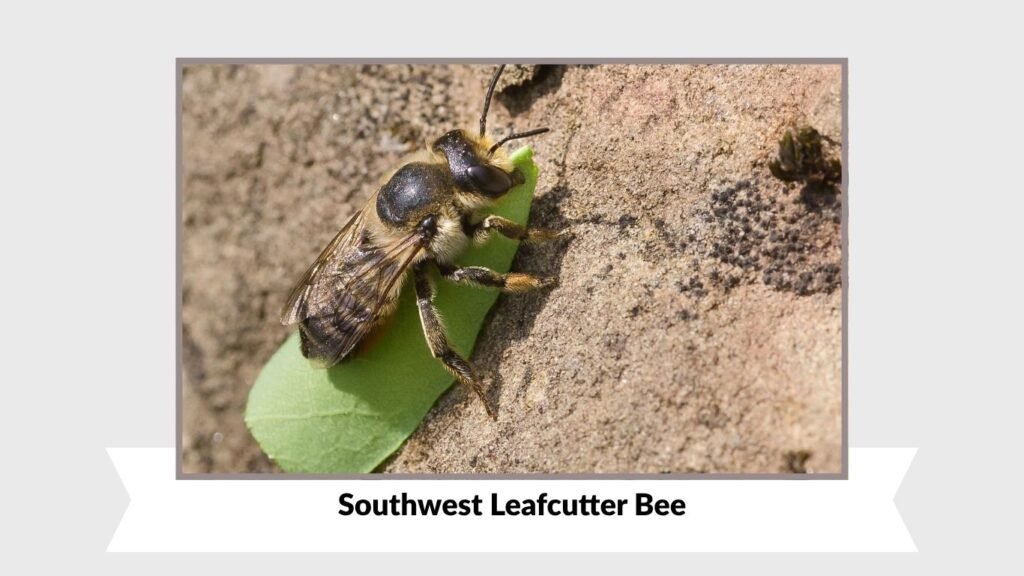
The Southwest leafcutter bee (Megachile melanderi) is a rare native species historically recorded in the southwestern United States. It depends on dry, flower-rich environments and may be threatened by habitat loss and changes to native plant communities.
Identification
- Approximately 10–14 mm long
- Stout dark brown or black body
- Grayish hairs on the face and thorax
- Pale abdominal bands
- Broad head with noticeable jaws
- Females carry pollen beneath the abdomen
Habitat and Distribution
This species has historically been recorded in Arizona, New Mexico, and Texas. It is associated with desert grasslands, open shrublands, dry prairies, sandy areas, and other southwestern habitats. Recent records are limited in some parts of its former range.
Nesting and Diet
Females construct separate brood cells in protected cavities, using cut pieces of vegetation as lining and partitions. Potential nesting sites include natural tunnels in soil, hollow stems, and holes in dead wood. Each larva develops on a stored supply of pollen and nectar. Adults likely depend on native desert wildflowers, including asters, sunflowers, legumes, and other drought-tolerant plants.
Behavior and Sting
Southwest leafcutter bees are solitary and naturally avoid confrontation. The female’s time is divided between collecting pollen, cutting plant material, and building brood cells. They do not swarm or defend a communal nest. Males cannot sting, and females are unlikely to sting unless they are trapped against the skin.
17. Pale Leafcutter Bee
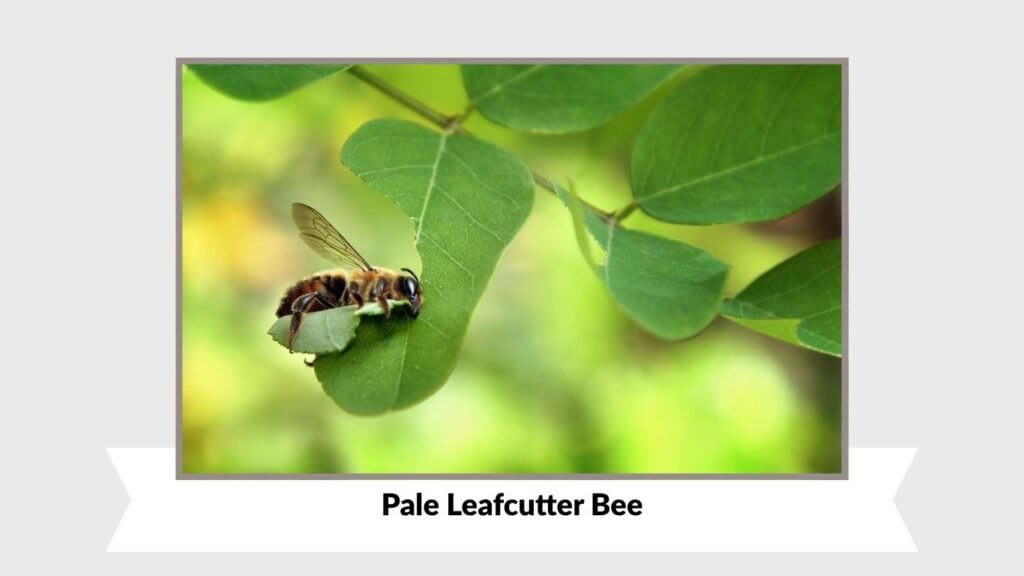
The pale leafcutter bee (Megachile concinna) is a small species recognized by the light-colored bands and hairs contrasting with its dark body. Originally associated with Africa, it has become established in several tropical and subtropical regions.
Identification
- Approximately 6–9 mm long
- Small, compact black body
- Noticeable pale hairs on the face and thorax
- Distinct whitish abdominal bands
- Broad jaws for cutting plant material
- Female has pale pollen-carrying hairs underneath
Habitat and Distribution
Pale leafcutter bees occur in parts of Africa and have been introduced into areas of the Americas, including the southeastern United States and Caribbean region. They inhabit gardens, farms, grasslands, disturbed areas, woodland edges, and tropical or subtropical urban environments.
Nesting and Diet
Females use small existing cavities in hollow stems, dead wood, walls, and artificial nesting blocks. They cut soft leaves into rounded pieces and use them to form a sequence of brood cells. Every cell receives a mixture of pollen and nectar before an egg is laid. Adults visit legumes, asters, sunflowers, herbs, and a variety of ornamental garden flowers.
Behavior and Sting
This species is solitary but may nest near other females when suitable cavities are concentrated in one place. It is generally calm and spends most of its active time visiting flowers or gathering leaves. The small holes left in foliage do not normally threaten plant health. Males cannot sting, and females sting only when directly threatened.