Sweat bees are small bees that can look very different depending on the species. Some shine metallic green, blue, or purple, while others are dark brown or black with pale abdominal stripes. Most have slender bodies, two pairs of wings, noticeable antennae, and fine body hairs used for collecting pollen. Their small size sometimes causes people to mistake them for flies or tiny wasps. This guide explains what sweat bees, females, nests, stingers, and sweat bee stings look like and how to identify them correctly.
What Does a Sweat Bee Look Like?
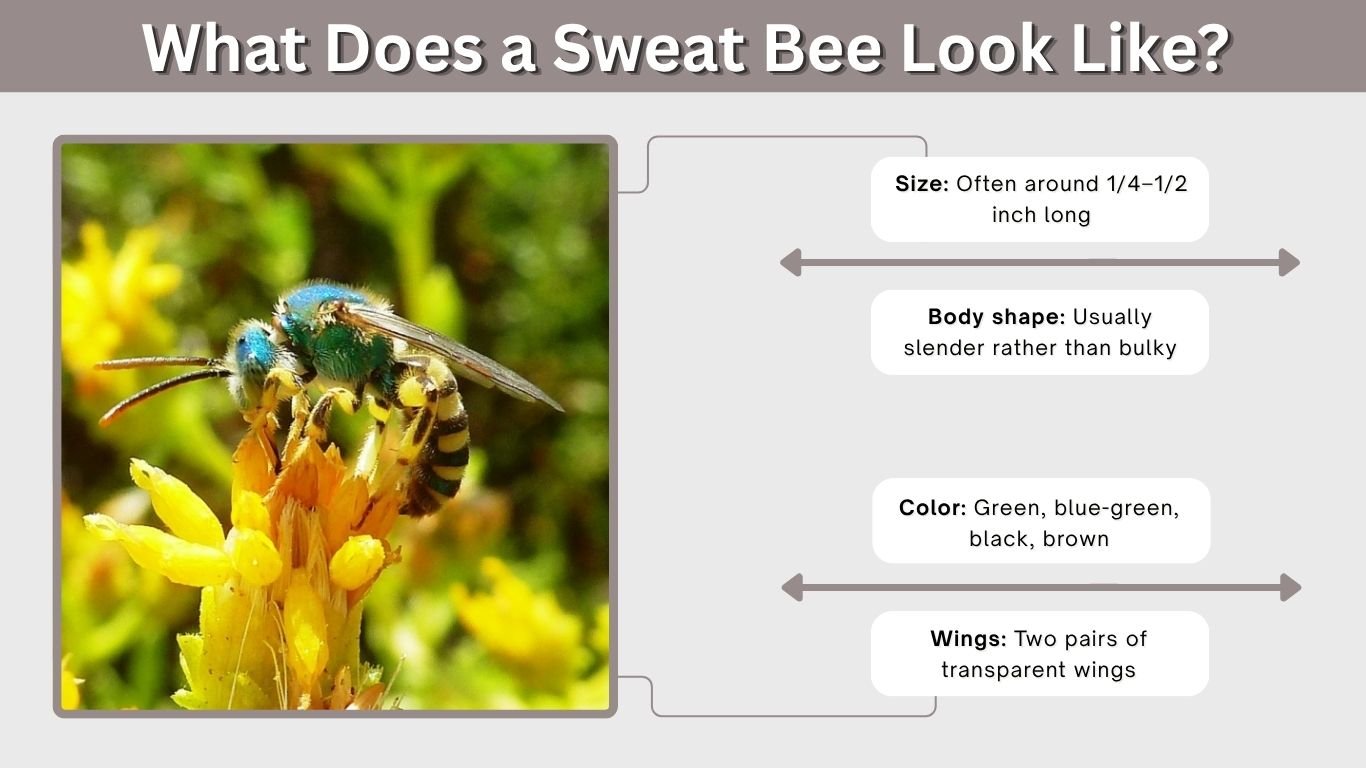
Sweat bees belong to the family Halictidae, which contains many species with considerable variation in size and coloration. Most are smaller and slimmer than familiar honey bees or bumble bees. Depending on the species, they can appear metallic and jewel-like or fairly plain and dark.
Sweat Bee Identification
Common features include:
- Size: Often around 1/4–1/2 inch long
- Body shape: Usually slender rather than bulky
- Color: Green, blue-green, black, brown, copper, or purple
- Wings: Two pairs of transparent wings
- Antennae: Clearly visible and segmented
- Eyes: Large compound eyes on either side of the head
- Body hairs: Fine hairs may be visible on the thorax and legs
- Hind legs: Females of many species have hairs for carrying pollen
Some sweat bees are extremely small, while others approach the size of smaller honey bees. Utah State University describes sweat bees as generally small to medium-sized, with green or black heads and thoraxes and abdomens that may be solid-colored or striped.
What Color Is a Sweat Bee?
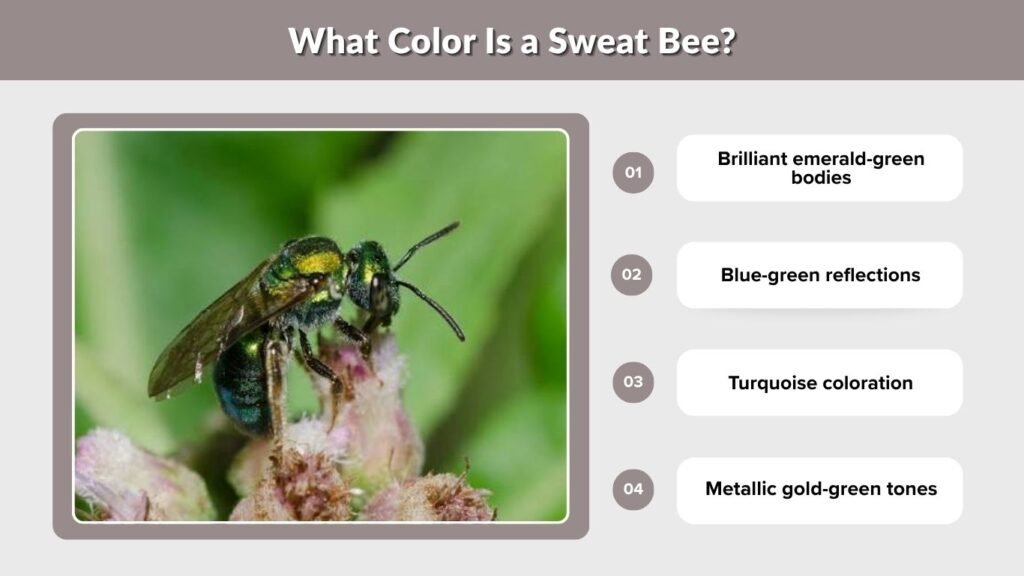
Color is one of the most recognizable characteristics of many sweat bees, but assuming every sweat bee is bright green can lead to misidentification.
Some species have spectacular metallic coloration, whereas others resemble ordinary small black or striped bees.
Metallic Green Sweat Bees
The most recognizable sweat bees often have:
- Brilliant emerald-green bodies
- Blue-green reflections
- Turquoise coloration
- Metallic gold-green tones
- Copper highlights
- Iridescent blue or purple areas
The pure gold-green sweat bee, Augochlora pura, for example, has striking green iridescence.
Black and Striped Sweat Bees
Many species are less colorful.
They may have:
- Black heads and thoraxes
- Dark brown bodies
- Pale abdominal bands
- Yellow-and-black striping
- Gray or whitish body hairs
UF/IFAS notes that many halictids are dull to metallic black, while other species display green, blue, or purple coloration.
What Does a Female Sweat Bee Look Like?
Male and female sweat bees often look similar from a distance. However, females possess several characteristics associated with collecting pollen and building nests.
The differences may require a close view because sweat bees are so small.
Female Sweat Bee Identification
A female may have:
- A somewhat heavier body than a male
- Shorter antennae relative to males
- Pollen-carrying hairs on the hind legs
- Visible yellow or orange pollen packed onto those hairs
- A functional stinger at the end of the abdomen
Female halictids commonly carry pollen on hairs located on the tibia and femur of their hind legs, although parasitic sweat bee species are exceptions.
Male bees generally have longer antennae and lack a stinger.
Sweat Bee vs Honey Bee Appearance
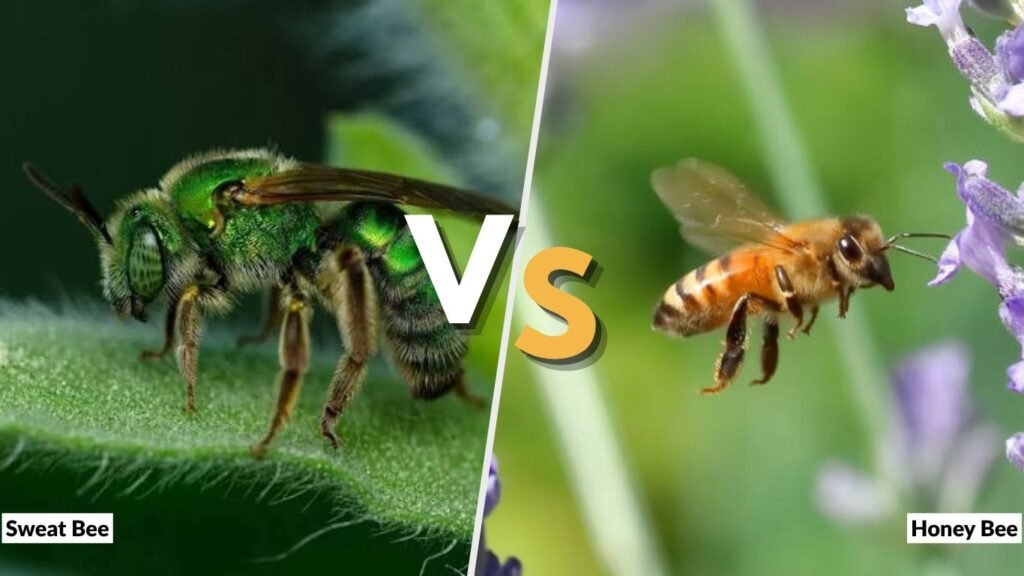
A small brown or striped sweat bee can sometimes be mistaken for a honey bee. Size, body structure, and coloration can help separate them.
Sweat bees are generally smaller and often slimmer, while honey bees typically have a more robust, fuzzy appearance.
Key Visual Differences
Sweat bee:
- Often 1/4–1/2 inch long
- May be metallic green or blue
- Usually relatively slender
- Some species have narrow pale stripes
- Many females carry pollen on hind-leg hairs
Honey bee:
- Usually around 1/2 inch long
- Typically golden-brown, amber, and dark
- More robust appearance
- Hairier thorax
- Familiar brown-and-black abdominal pattern
Not every specimen fits these descriptions perfectly, so several characteristics should be considered together.
Sweat Bee vs Hover Fly Appearance
Hover flies are another frequent source of confusion. Many imitate bees with striped bodies, but they are true flies rather than bees.
Looking closely at the eyes, antennae, and wings is usually helpful.
How to Tell Them Apart
A hover fly usually has:
- One functional pair of wings
- Very large fly-like eyes
- Short antennae
- A smoother-looking body
- Strong hovering flight
A sweat bee usually has:
- Two pairs of wings
- Longer antennae
- A hairier body
- More obvious bee-like proportions
- Pollen-carrying hairs in many females
Bee-mimicking flies generally have short antennae, prominent eyes, and one pair of wings, according to Utah State University’s native bee identification guide.
What Does a Sweat Bee Nest Look Like?
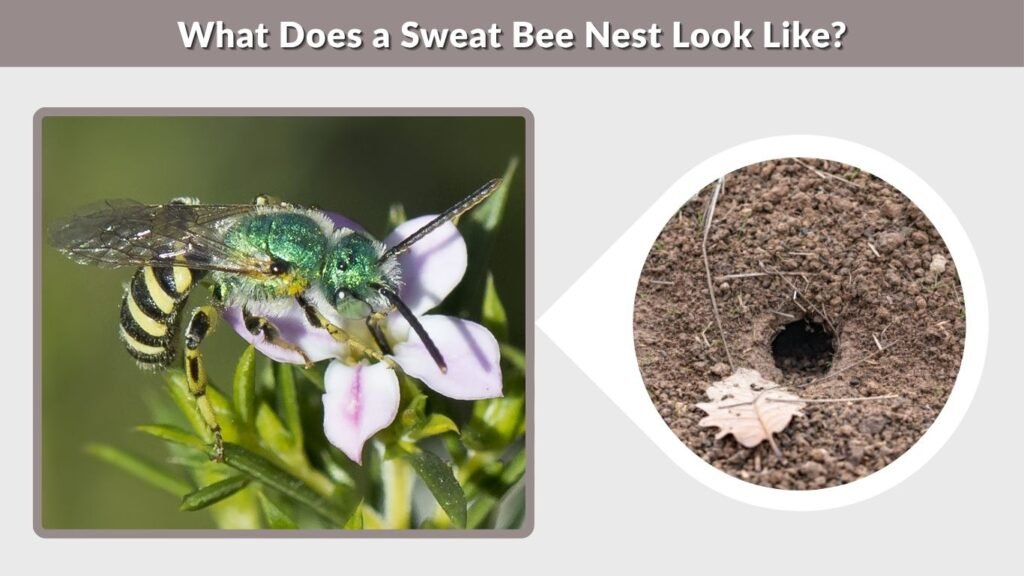
Many sweat bees nest in the ground rather than constructing the hanging hive people commonly associate with honey bees.
Their nest entrances can be extremely inconspicuous and may resemble tiny holes made by ants or other insects.
Sweat Bee Nest Identification
A ground nest may look like:
- A small round hole in bare soil
- A pencil-sized or smaller opening
- Loose soil surrounding the entrance
- Several holes clustered in one area
- Bees repeatedly entering and leaving the ground
Bare or lightly vegetated soil is especially suitable for many ground-nesting bees. Sweat bees may nest individually while numerous females establish separate nests close together in a favorable location.
What Does a Sweat Bee Hive Look Like?
Sweat bees generally do not produce a large wax-comb hive like honey bees.
Many species are solitary, although social behavior varies considerably within Halictidae. Ground-nesting females usually construct tunnels containing individual brood cells where eggs are supplied with pollen and nectar.
Therefore, a cluster of small holes in the ground may represent numerous neighboring nests rather than one enormous hive.
What Does a Sweat Bee Sting Look Like?
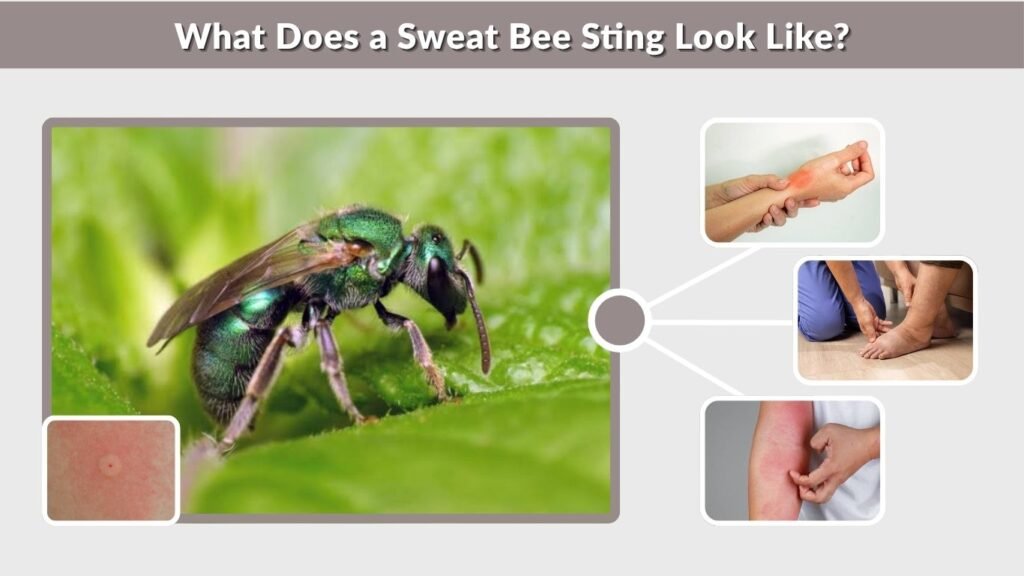
A sweat bee sting usually looks similar to a minor sting from another small bee. There is no single appearance that can reliably identify a sweat bee as the cause based on the skin reaction alone.
Female sweat bees can sting, although ground-nesting sweat bees generally present little risk and their stings are typically mild.
Typical Sting Appearance
You may notice:
- A small red spot
- A slightly raised welt
- Mild swelling
- Redness surrounding the site
- Itching
- Tenderness
- Burning or sharp pain
Most mild bee-sting reactions involve immediate burning pain, a welt, and some swelling, which often improves within hours.
A sweat bee sting does not normally have a unique bite pattern that allows you to identify the insect from the mark alone.
What Does a Sweat Bee Bite Look Like?
People frequently refer to a “sweat bee bite,” but sweat bees primarily defend themselves by stinging, not biting people.
If someone develops a small red welt after a sweat bee was pressed against the skin, it is more likely the result of a sting.
Sting vs Bite
A typical sting can produce:
- One localized red area
- Minor swelling
- A small central point
- Burning or itching
Other insects can create very similar marks, so skin appearance alone is not enough to confirm that a sweat bee caused it.
What Does a Sweat Bee Stinger Look Like?
The stinger is located at the rear of a female bee’s abdomen. Because sweat bees are so small, the stinger is generally difficult to see without close examination.
It is not normally projecting prominently while the bee is simply walking or feeding.
Sweat Bee Stinger Facts
- Only females have functional stingers.
- The stinger emerges from the tip of the abdomen.
- It is small relative to the bee’s body.
- Males cannot sting.
- A female usually stings defensively rather than attacking without provocation.
Male bees lack a stinger and commonly have proportionally longer antennae.
Where Are You Most Likely to See Sweat Bees?
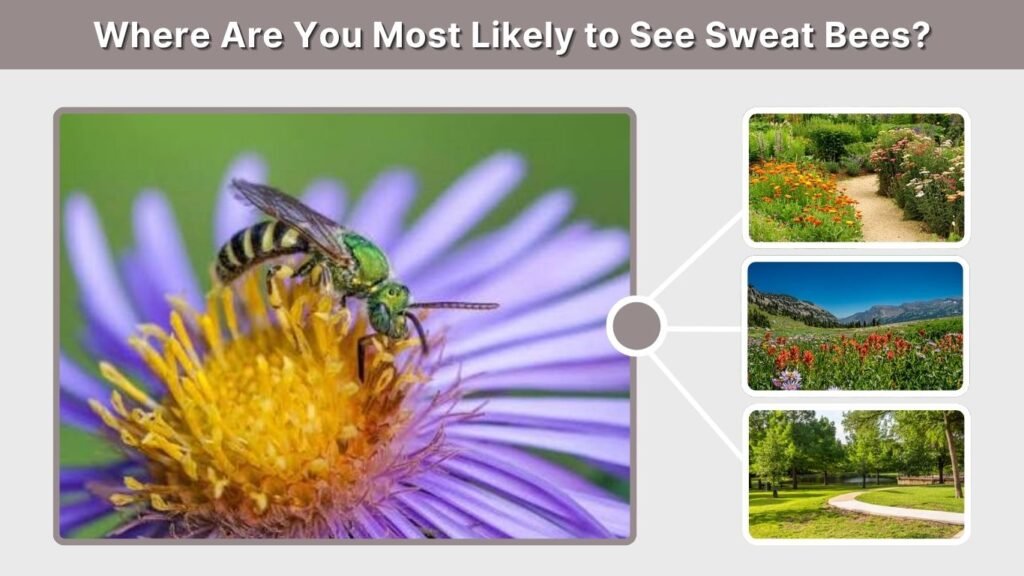
Sweat bees are commonly noticed around flowers because adults collect nectar and pollen. Some species are also attracted to salts in human perspiration, explaining their habit of landing on sweaty arms and legs.
Common Places to Find Them
Look for sweat bees around:
- Flower gardens
- Vegetable gardens
- Wildflowers
- Bare soil
- Lawns with thin patches
- Parks
- Farms
- Hiking areas
- Pools and other outdoor spaces
- People perspiring during hot weather
A tiny metallic-green bee repeatedly visiting flowers or landing on sweaty skin is a strong candidate for a sweat bee.
Are Sweat Bees Dangerous?
Sweat bees are generally docile native pollinators. Females can sting when trapped, squeezed, or threatened, but they are not typically aggressive toward people.
A serious allergic response is possible after any bee sting. Trouble breathing, swelling of the face or throat, fainting, or widespread hives are reasons to seek emergency medical help.
FAQs
1. What does a green sweat bee look like?
A green sweat bee may have a shiny emerald, turquoise, blue-green, or gold-green head and thorax. Some species have an entirely metallic abdomen, while others have darker striped abdomens.
2. How big is a sweat bee?
Many sweat bees are approximately 1/4–1/2 inch long, although individual species vary considerably in size.
3. What does a sweat bee nest look like?
It commonly appears as a small hole in exposed soil. Several nest entrances may occur close together where the ground provides suitable nesting conditions.
4. What does a sweat bee sting look like?
A mild sting may leave a small red welt accompanied by minor swelling, itching, tenderness, or burning. The appearance alone cannot reliably identify which bee caused the sting.
5. How can I recognize a sweat bee quickly?
Look for a small, slender bee with obvious antennae and two pairs of wings. Metallic green or blue coloration is a useful clue, although many sweat bee species are black, brown, or striped instead.