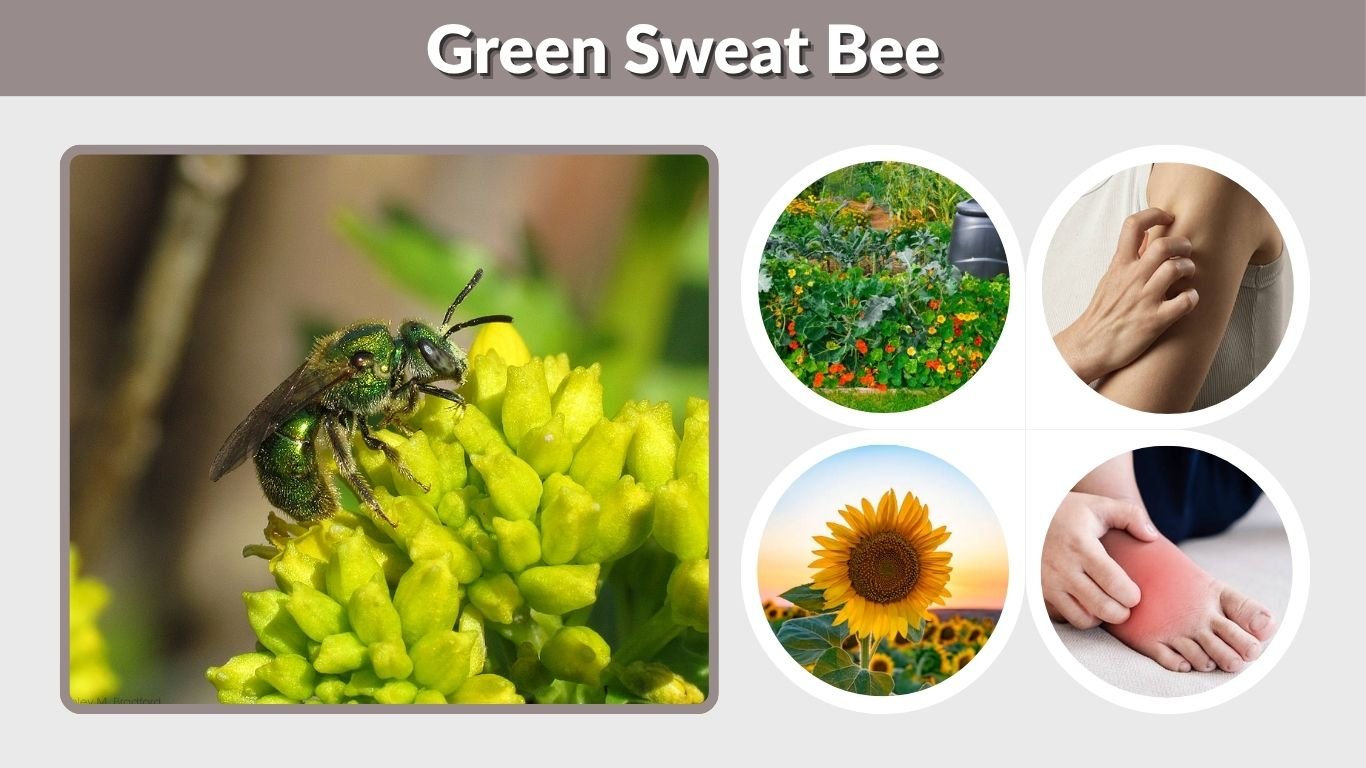
The green sweat bee is a small, brilliantly colored native bee known for its metallic green, blue-green, or golden body. These bees belong to the family Halictidae and are important pollinators of wildflowers, garden plants, and crops. Some species are attracted to human sweat because it provides salts and moisture, which explains their unusual common name. Although a green sweat bee can sting when trapped or handled, it is generally gentle and rarely aggressive. Most spend their lives visiting flowers and nesting quietly in soil or wood.
What Is a Green Sweat Bee?
Green sweat bees are members of the sweat bee family, Halictidae. The name does not refer to a single species but to several metallic-looking bees, especially species in genera such as Agapostemon, Augochlora, Augochlorella, and Augochloropsis. Their brilliant coloration makes them some of the easiest small native bees to notice around flowers.
Green Sweat Bee Identification
Common identification features include:
- Metallic green, blue-green, or golden-green body
- Small to medium body size
- Six legs and two antennae
- Two pairs of transparent wings
- Fine hairs used to collect pollen
- Dark or striped abdomen in some species
- Brightly reflective head and thorax
- Slenderer appearance than many bumblebees
Color varies considerably. Some individuals appear emerald green, while others look turquoise, bronze-green, or almost blue under strong sunlight.
Green Sweat Bee Scientific Name
There is no single scientific name for every green sweat bee. Several species share this common description.
One frequently encountered metallic species is Augochloropsis metallica. Other green sweat bees belong to genera such as Agapostemon and Augochlora.
Correct identification usually requires looking beyond body color because several unrelated species can appear similarly metallic.
Metallic Green Sweat Bee Appearance
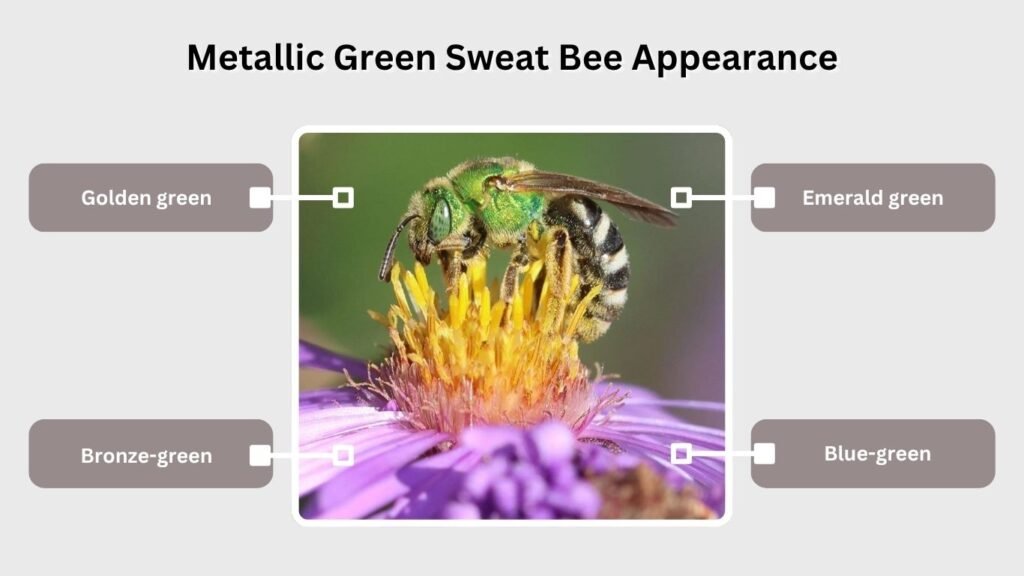
The metallic appearance of these bees can make them look almost artificial. Their body surfaces reflect light in ways that produce shimmering greens, blues, golds, and occasionally purple tones. Color alone does not indicate whether a bee is male or female, and different species may show different combinations of metallic coloration and abdominal markings.
Common Color Variations
Green sweat bees may appear:
- Emerald green
- Blue-green
- Golden green
- Bronze-green
- Turquoise
- Dark metallic green
- Green with yellow abdominal markings
Some male Agapostemon sweat bees have a metallic green head and thorax combined with a yellow-and-black striped abdomen, producing a very different appearance from all-green females.
Pure and Ultra Green Sweat Bees
Terms such as pure green sweat bee and ultra green sweat bee are often used informally to describe especially vivid metallic species.
An intensely green bee is not necessarily a separate biological group. Species identification depends on features such as body structure, hair patterns, wing veins, facial markings, and geographic range rather than the intensity of the green color alone.
Green Sweat Bee Size
Most green sweat bees are relatively small compared with honey bees and bumblebees. Their compact size allows them to visit flowers that larger bees may have difficulty accessing. Exact dimensions depend on the species, sex, and age of the individual.
Typical Size
Many commonly encountered green sweat bees measure approximately:
- Body length: about 1/4 to 1/2 inch
- Females: often slightly heavier-bodied
- Males: frequently slimmer
- Wing length: proportional to their small body size
A particularly large green bee may be mistaken for another bee species, while very tiny individuals can easily go unnoticed despite their bright coloration.
Green Sweat Bee Habitat and Range
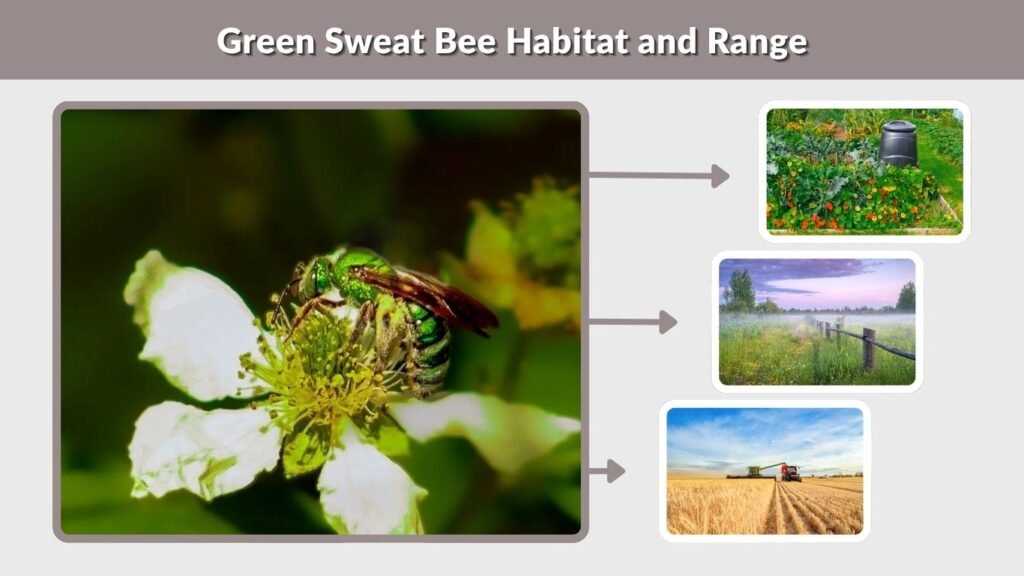
Green sweat bees occupy many habitats wherever suitable flowers and nesting sites are available. In North America, metallic sweat bees can occur in gardens, meadows, farms, woodland edges, parks, roadsides, and natural grasslands. Their abundance often increases in places where native flowering plants grow throughout spring and summer.
Where Green Sweat Bees Live
Typical habitats include:
- Flower gardens
- Meadows and prairies
- Agricultural fields
- Forest edges
- Open woodlands
- Parks and yards
- Sandy or exposed soil
- Areas rich in native flowers
Green sweat bees occur in many parts of the United States, including Florida, Texas, California, Colorado, Ohio, Michigan, Maine, and New York, although the exact species present differs by region.
Green Sweat Bees in Florida and Texas
Warm climates can support long periods of bee activity because flowering plants remain available for much of the year.
In Florida and Texas, green metallic bees may be seen visiting asters, sunflowers, herbs, and other flowering plants. Individual species have different distributions, so not every green sweat bee occurs throughout both states.
Green Sweat Bee Nest
Most green sweat bees do not live in large colonies like honey bees. Many nest in the ground, although some species use decaying wood or other protected cavities. Their social behavior varies greatly, ranging from solitary nesting to small communal or primitively social groups.
Ground Nests
A typical ground-nesting female may:
- Dig a narrow entrance tunnel
- Build underground side chambers
- Collect pollen and nectar
- Form food provisions for larvae
- Lay one egg in each chamber
- Seal developing young inside individual cells
Bare or lightly vegetated soil often provides attractive nesting conditions.
Wood-Nesting Species
Some metallic green sweat bees make nests in rotten or soft wood rather than soil.
They may use existing cracks or excavate small tunnels where they create brood cells. Dead branches and old logs can therefore provide valuable nesting habitat for certain native bees.
What Do Green Sweat Bees Eat?
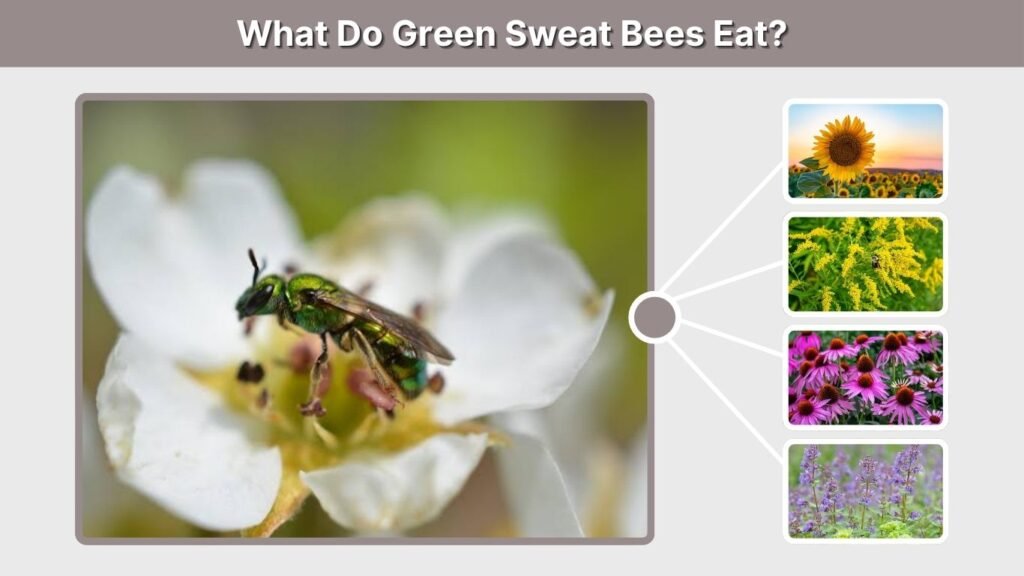
Adult green sweat bees feed primarily on nectar and gather pollen from flowers. Females transport pollen back to their nests as food for developing larvae. Because they visit a wide variety of flowers, these bees can contribute significantly to pollination in gardens and natural ecosystems.
Common Food Sources
Green sweat bees may visit:
- Sunflowers
- Asters
- Goldenrod
- Coneflowers
- Mint flowers
- Salvia
- Fruit blossoms
- Vegetable flowers
- Native wildflowers
They are often generalist foragers, meaning they use pollen and nectar from many different plant species rather than relying on a single flower.
Why Do Green Bees Like Sweat?
Some sweat bees land on human skin because perspiration contains salts and other minerals.
The bee may gently lick sweat rather than attempting to bite or sting. This behavior can be surprising, particularly during hot weather when people are perspiring heavily.
Usually, the bee flies away if left undisturbed.
Do Green Sweat Bees Sting?
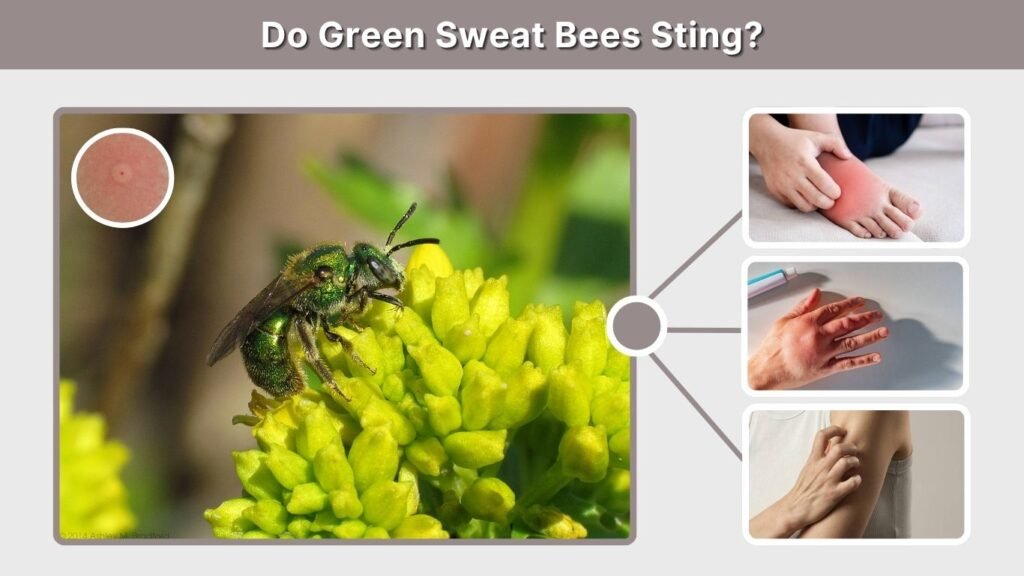
Yes, female green sweat bees are capable of stinging, but they are generally not aggressive. Stings usually occur when a bee is squeezed against the skin, trapped in clothing, stepped on, or deliberately handled. Males do not possess functional stingers.
Green Sweat Bee Sting Symptoms
A sting may cause:
- Brief sharp pain
- Redness
- Mild swelling
- Itching
- Tenderness
- Temporary burning sensation
Most local reactions improve without serious complications.
People with known severe insect-sting allergies should treat any bee sting cautiously and follow their medical emergency plan.
Do Green Sweat Bees Bite?
Green sweat bees do not normally bite people as a defensive strategy.
When one lands on sweaty skin, it may appear to be nibbling or licking, but it is usually collecting moisture and salts rather than trying to injure the person.
Avoid swatting at it, since trapping or crushing a female bee may trigger a defensive sting.
Are Green Sweat Bees Beneficial?
Green sweat bees are beneficial native pollinators. Their small size enables them to work on many flowers that are difficult for larger bees to access. They also help maintain wild plant communities and can contribute to the pollination of crops and home garden plants.
Benefits of Green Sweat Bees
They can:
- Pollinate native wildflowers
- Visit vegetable blossoms
- Support fruit production
- Maintain plant diversity
- Provide food for other wildlife
- Contribute to healthy ecosystems
Avoiding unnecessary pesticide use and planting diverse flowers can help support local populations.
How to Attract Green Sweat Bees
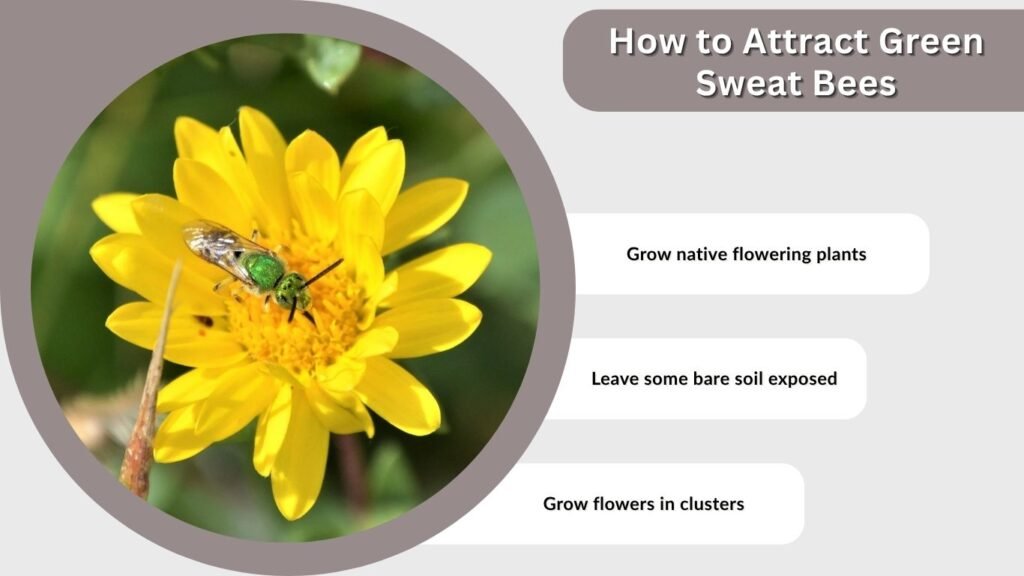
Gardeners can encourage green sweat bees by providing flowers, water, and suitable nesting habitat. Because many species nest in soil, completely covering every patch of ground with mulch can reduce available nesting opportunities.
Bee-Friendly Garden Tips
Try to:
- Grow native flowering plants
- Provide flowers from spring through fall
- Avoid broad-spectrum insecticides
- Leave some bare soil exposed
- Preserve old wood where appropriate
- Grow flowers in clusters
- Provide shallow water sources
- Avoid disturbing active nests
A diverse garden can support not only green sweat bees but many other native pollinators.
FAQs
1. What is a green sweat bee?
A green sweat bee is a metallic-colored bee belonging to the family Halictidae. Several different genera contain species commonly described as green sweat bees.
2. Do green sweat bees sting?
Female green sweat bees can sting, but they are generally gentle and usually sting only when trapped, squeezed, or handled.
3. How big is a green sweat bee?
Most are relatively small, commonly around 1/4 to 1/2 inch long, although exact size varies between species.
4. Where do green sweat bees make their nests?
Many species nest in soil, while others may use decaying wood or protected cavities. Some are solitary, while others share nesting areas.
5. Why do green sweat bees land on people?
They may be attracted to perspiration because sweat contains moisture and salts. They usually land to collect these minerals rather than to sting.